 Author: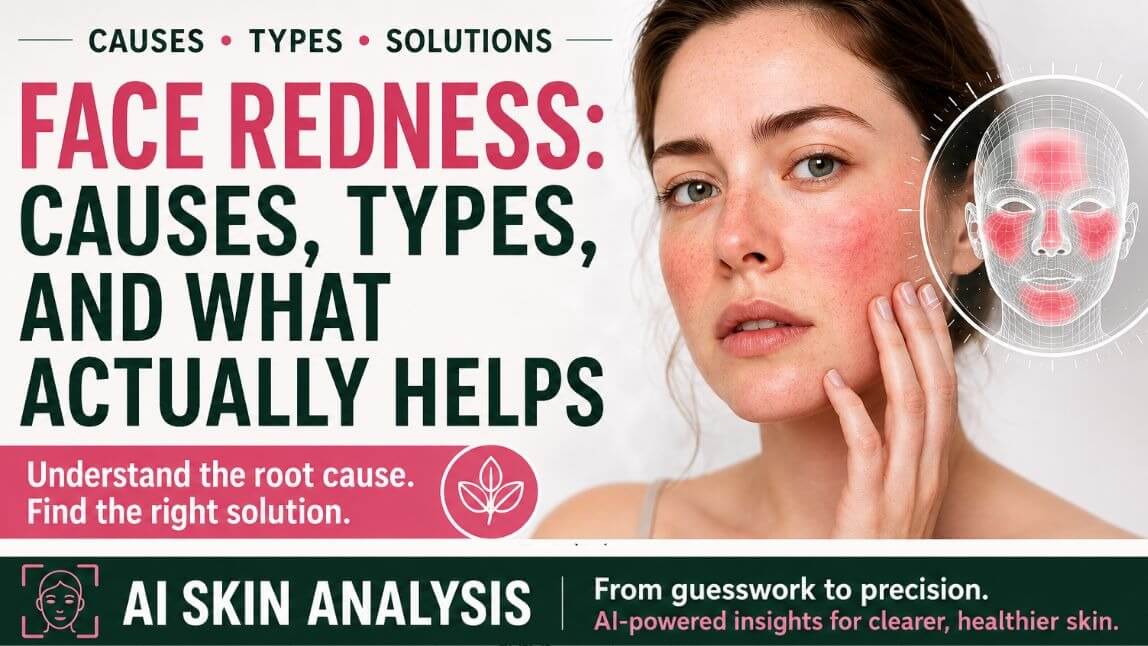
Your face flushes after a glass of wine. It stays red for days after a breakout. It burns in the cold — and nothing in your skincare drawer seems to fix it. If that sounds familiar, you're not imagining things. Facial redness is one of the most common — and most misunderstood — skin complaints, and treating it without knowing its root cause is like putting out a fire with the wrong extinguisher.
This guide walks through every major cause of facial redness, how to tell them apart, what actually helps, and how AI skin analysis is changing the way beauty brands and consumers identify and address redness — faster than ever before.
What Is Facial Redness — and Why Does It Happen?
Facial redness occurs when small blood vessels near the skin's surface dilate in response to irritation, inflammation, heat, or a chronic skin condition. The result: a flushed, blotchy, or persistently pink complexion that ranges from mildly annoying to a confidence-affecting daily reality.
Not all redness is the same. The location, pattern, and triggers are your best clues — and correctly identifying the type is the first step toward finding a solution that actually works.
What Are the Most Common Causes of Facial Redness?
1. Rosacea
Rosacea is a chronic inflammatory skin condition affecting an estimated 16 million Americans. It typically targets the central face — cheeks, nose, forehead, and chin — and causes persistent redness, visible blood vessels, and sometimes pimples that resemble acne. It's more common in fair-skinned individuals and tends to worsen over time without medical management.
- Often triggered by alcohol, spicy food, heat, sun, and stress
- Can be mistaken for acne or sensitive skin
- Requires long-term management, not just topical relief
2. Sensitive Skin
Sensitive skin is a skin characteristic — not a condition — where the skin reacts easily to products, weather changes, or even gentle touching. It often presents as generalized facial flushing, stinging, or redness that doesn't follow a clear pattern. Strengthening the skin barrier is usually the most effective long-term strategy.
3. Contact Dermatitis
Contact dermatitis is an inflammatory response triggered when the skin encounters an allergen or irritant — think fragrances, preservatives, nickel, or certain skincare actives. The redness typically appears where the product or substance was applied, and may come with itching, swelling, or blistering.
4. Acne and Post-Inflammatory Erythema (PIE)
Active acne lesions are red by nature — but even after a breakout clears, flat pink or red marks (post-inflammatory erythema) can linger for weeks or months. PIE is especially common in lighter skin tones and is distinct from post-inflammatory hyperpigmentation (PIH), which leaves brown marks instead.
5. Sun Damage
UV exposure triggers immediate flushing (sunburn) and long-term vascular damage that causes persistent redness and broken capillaries. Repeated sun exposure over time permanently dilates blood vessels close to the surface — one of the most preventable causes of chronic facial redness.
6. Seborrheic Dermatitis
This common skin condition causes a red, scaly rash — often on the nose, eyebrows, and hairline — where oil glands are most active. The skin may look greasy or flaky simultaneously. It typically requires medicated treatment to clear, and tends to recur.
7. Environmental Triggers
- Cold weather: Constricts and then rapidly dilates blood vessels
- Wind: Strips moisture and breaks down the skin barrier
- Heat: Causes immediate flushing and sweating
- Pollution: Generates free radicals that drive chronic inflammation
How Do You Identify Your Type of Facial Redness?
| Pattern | Likely Cause | Key Feature |
| Central face, persistent | Rosacea | Visible blood vessels |
| Where product was applied | Contact dermatitis | Itching, burning |
| Around breakouts | Acne-related | Flat pink patches (PIE) |
| Comes and goes quickly | Flushing / sensitivity | Triggered by heat, emotion |
| Scaly, oily patches | Seborrheic dermatitis | Flaking at brow/nose line |
That said, identifying redness by eye — even a trained eye — has its limits. This is exactly where AI skin analysis tools are making a measurable difference.
Perfect Corp.'s AI Skin Analysis uses 180° face mapping and HD resolution to detect redness patterns across 15 skin concerns simultaneously — including classifying skin type as "redness," "dry & redness," "oily & redness," or "combination & redness." This level of precision allows beauty brands and skincare professionals to move from guesswork to data-driven recommendations.
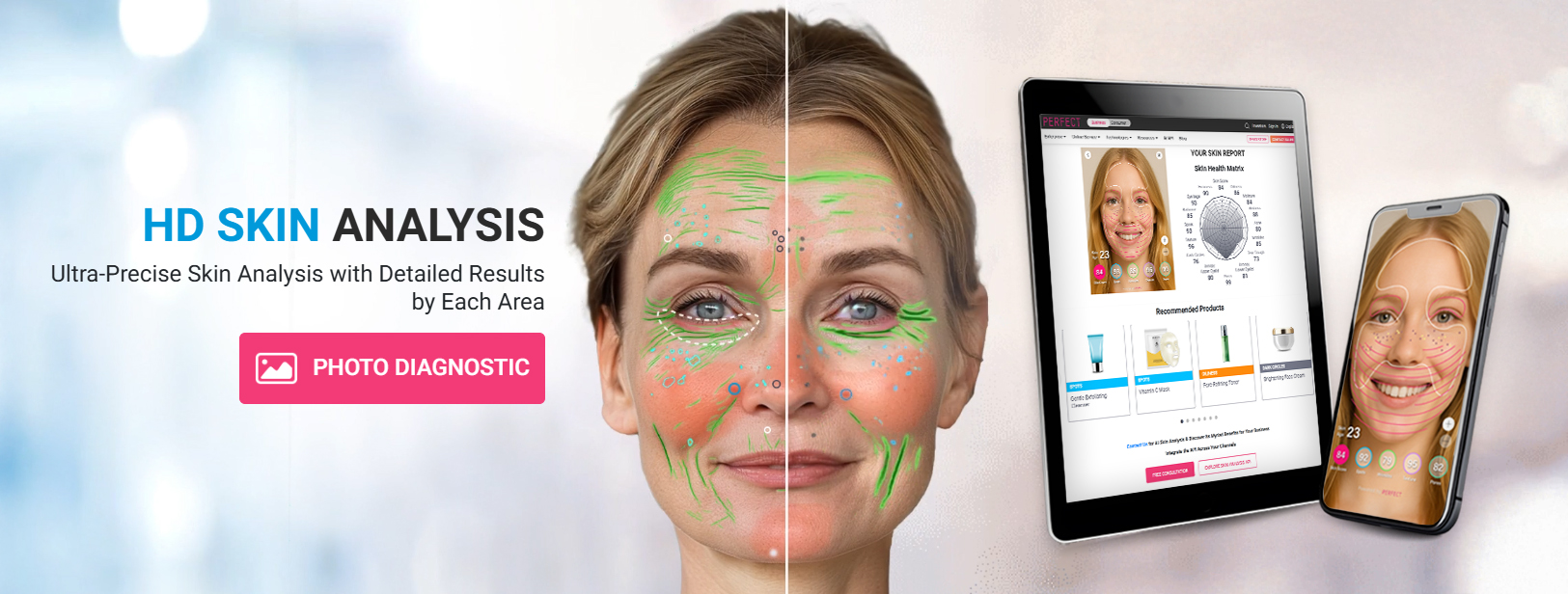
Want to see how AI detects facial redness in real time? Explore Perfect Corp's AI Skin Analysis
What Treatments Actually Work for Facial Redness?
Skincare Ingredients That Help
- Niacinamide: Strengthens the skin barrier, reduces redness and blotchiness
- Centella Asiatica (Cica): Potent anti-inflammatory, widely used in K-beauty for sensitive and rosacea-prone skin
- Azelaic Acid: Clinically proven to reduce redness in rosacea; also tackles PIE
- Green Tea Extract: Rich in EGCG, a powerful antioxidant that calms inflammation
- Aloe Vera: Soothes acute redness, especially from sun or heat exposure
- Ceramides: Repair and maintain the skin barrier to reduce reactivity over time
What to Avoid
- Alcohol-based toners and astringents
- Fragrances and essential oils in leave-on products
- Harsh physical exfoliants
- Very hot water (cleanse with lukewarm)
- Menthol, eucalyptus, peppermint in skincare
Professional Treatments
- IPL (Intense Pulsed Light): Targets and reduces visible blood vessels
- Vascular lasers: Reduce persistent redness from broken capillaries
- Prescription medications: Metronidazole, ivermectin, or brimonidine for rosacea
- LED light therapy: Low-level red and near-infrared light to reduce inflammation
How Is AI Changing the Way We Diagnose and Treat Facial Redness?
Traditionally, identifying the cause of facial redness meant booking a dermatologist appointment, waiting weeks, and relying on subjective visual assessment. AI skin analysis is disrupting this model — and the numbers reflect it.
The AI skin analysis market was valued at USD 1.61 billion in 2025 and is projected to reach USD 7.75 billion by 2035 (Metatech Insights, 2025). For beauty brands, this is more than a tech trend — it's a conversion and retention engine.
Perfect Corp.'s AI Skin Analysis detects early signs of redness before visible irritation appears, categorizes skin type by redness subtype, and generates personalized skincare routines matched to each user's specific skin profile — all from a selfie. Deployed via API or SDK, it integrates directly into brand websites, apps, and in-store kiosks.
For consumers, this means guidance that's faster, more objective, and more actionable than a general quiz or a salesperson's recommendation. For brands, it means higher conversion, fewer returns, and customers who actually see results.
Ready to help your customers find the right solution for their skin? See how leading beauty brands are using Perfect Corp's AI Skin Analysis

Daily Habits That Reduce Facial Redness Over Time
- Use lukewarm water only — never hotPat dry gently with a soft cotton cloth (no rubbing)
- Apply skincare with clean fingertips or cotton pads
- Use a mineral sunscreen (zinc oxide or titanium dioxide) daily — UV is one of the top redness triggers
- Keep a simple trigger diary to identify personal aggravators
- Consider green-tinted primers or color-correcting products for immediate visual correction
When Should You See a Dermatologist?
Consult a dermatologist if:
- Redness is persistent and worsening over weeks
- You notice visible blood vessels or small bumps
- Over-the-counter products aren't making a difference after 6–8 weeks
- Redness is accompanied by eye irritation or vision changes
- You suspect rosacea, seborrheic dermatitis, or an allergic reaction
AI skin analysis tools like Perfect Corp's can be a powerful first step in identifying what you're dealing with — but for chronic or worsening conditions, professional medical advice remains essential.
Conclusion
Facial redness isn't one problem — it's many different problems wearing the same face. Getting the right answer starts with identifying the right cause, and that's where the combination of expert knowledge and AI precision changes everything.
For beauty brands looking to give customers that accurate first step at scale, Perfect Corp's AI Skin Analysis offers real-time, 15-concern skin diagnostics — including redness detection and skin type classification — deployable across any digital touchpoint.
Curious how it works for your platform?

Frequently Asked Questions
What is the most common cause of facial redness?

Rosacea and skin sensitivity are the two most common underlying causes of persistent facial redness in adults. Temporary redness from sun exposure, heat, alcohol, or exercise is also extremely common but usually resolves on its own.
Can an AI tool accurately detect facial redness?
Yes. Advanced AI skin analysis platforms — including Perfect Corp's AI Skin Analysis — use computer vision trained on millions of facial images to detect redness patterns, classify skin type by redness subtype, and identify early-stage irritation before it becomes visible to the naked eye.
What skincare ingredients are best for facial redness?
Niacinamide, azelaic acid, centella asiatica (cica), ceramides, and aloe vera are among the most well-researched and clinically supported ingredients for reducing facial redness. Fragrance-free, barrier-repairing formulas are generally safest for reactive skin.
Does sunscreen help with facial redness?
Absolutely. UV exposure is one of the leading causes of both acute and chronic facial redness. Mineral sunscreens containing zinc oxide or titanium dioxide are typically better tolerated by sensitive and redness-prone skin than chemical UV filters.
How can beauty brands help customers with facial redness?
By deploying AI skin analysis tools that accurately identify redness type and subtype, beauty brands can offer personalized product recommendations that match a customer's specific skin condition — reducing returns, increasing satisfaction, and building long-term brand loyalty.