 Author:
You cleansed. You blotted. You skipped moisturizer (bad idea, we'll get to that). And by noon, your T-zone is shining like it has its own lighting setup. Sound familiar?
Oily skin isn't a hygiene problem — it's a biology problem. And the frustrating part is that most common fixes either make it worse or only work until lunchtime. This guide cuts through the noise: what actually causes excess sebum, which ingredients regulate it without wrecking your barrier, and how AI skin analysis is helping beauty brands and consumers finally get oily skin right — from the first click.
What Causes Oily Skin? It's More Than Just Genetics
Sebum is an oily, waxy substance produced by the sebaceous glands. In normal amounts, it protects the skin barrier and locks in moisture. When the glands overproduce, you get clogged pores, a persistent shine, and skin that feels like it's one blotting paper away from a crisis.
Here's what's actually driving overproduction:
Genetics
If oily skin runs in your family, your sebaceous glands are likely genetically more active. This isn't a flaw — it's a skin type. But it does mean your skincare routine needs to work with your biology, not against it.
Hormones
Androgens (male hormones present in all sexes) directly stimulate sebum production. Levels spike during puberty, pregnancy, the menstrual cycle, and menopause transitions. Adult hormonal oily skin that's new or worsening — particularly if accompanied by irregular cycles or hair thinning — is worth discussing with a doctor.
Climate and Season
Sebum production increases in warm, humid conditions and peaks in summer. Research published via the NIH confirms sebum secretion is measurably higher during warmer months — which is why a routine that works in winter can completely fall apart in July.
Over-Washing
Stripping the skin of all its oil triggers a compensatory rebound: the glands detect the deficit and produce even more sebum. Over-cleansing is one of the most common reasons oily skin gets worse, not better.
Skipping Moisturizer
Same principle. Dehydrated skin sends a distress signal, and the sebaceous glands respond by producing more oil to compensate. Counterintuitive? Yes. True? Absolutely.
Wrong Products
Heavy, comedogenic formulas clog pores and trap sebum beneath the skin's surface. Thick creams, certain silicones, and occlusive oils can all aggravate an already oily skin type. Product selection matters enormously — and it's where personalized AI recommendations make a real difference.
What Are the Best Ingredients for Oily Skin?
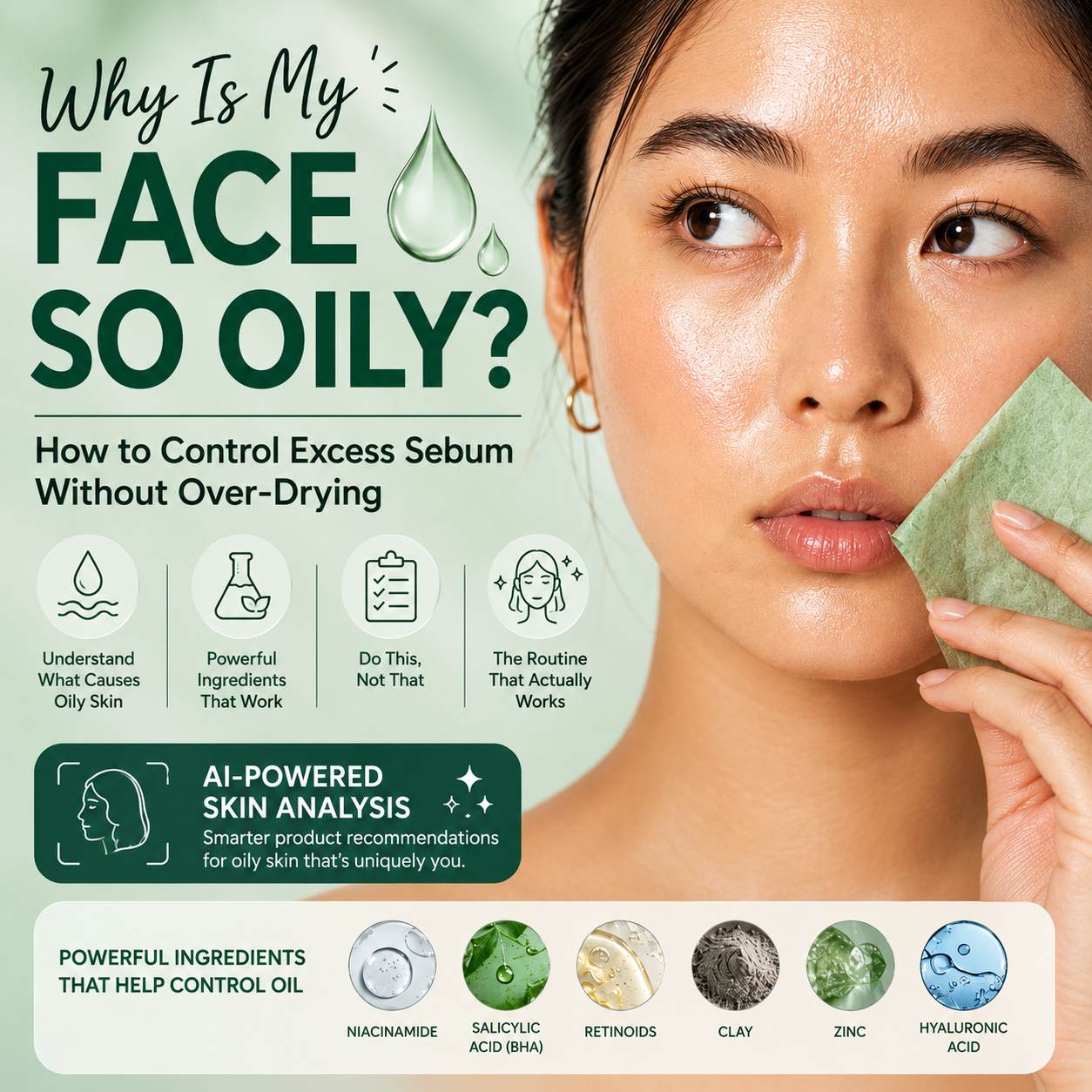
| Ingredient | What It Does | Best For |
| Niacinamide | Regulates sebum production, minimizes pores | Daily use, all oily skin types |
| Salicylic Acid (BHA) | Dissolves inside pores, reduces congestion | Oily skin with blackheads or acne |
| Retinoids | Reduces sebocyte activity, normalizes oil production over time | Persistent oiliness, adult acne |
| Clay (Kaolin / Bentonite) | Absorbs excess oil from the surface | T-zone targeted treatments, masks |
| Zinc | Anti-inflammatory, controls oil, antimicrobial | Oily and acne-prone skin |
| Hyaluronic Acid | Hydrates without adding oil | Oily but dehydrated skin |
How to Control Oily Skin: Do This, Not That
✅ DO This
- Cleanse twice daily — no more, or you trigger rebound oil
- Use a gentle, foaming cleanser (not a stripping one)
- Apply a lightweight, oil-free moisturizer — always
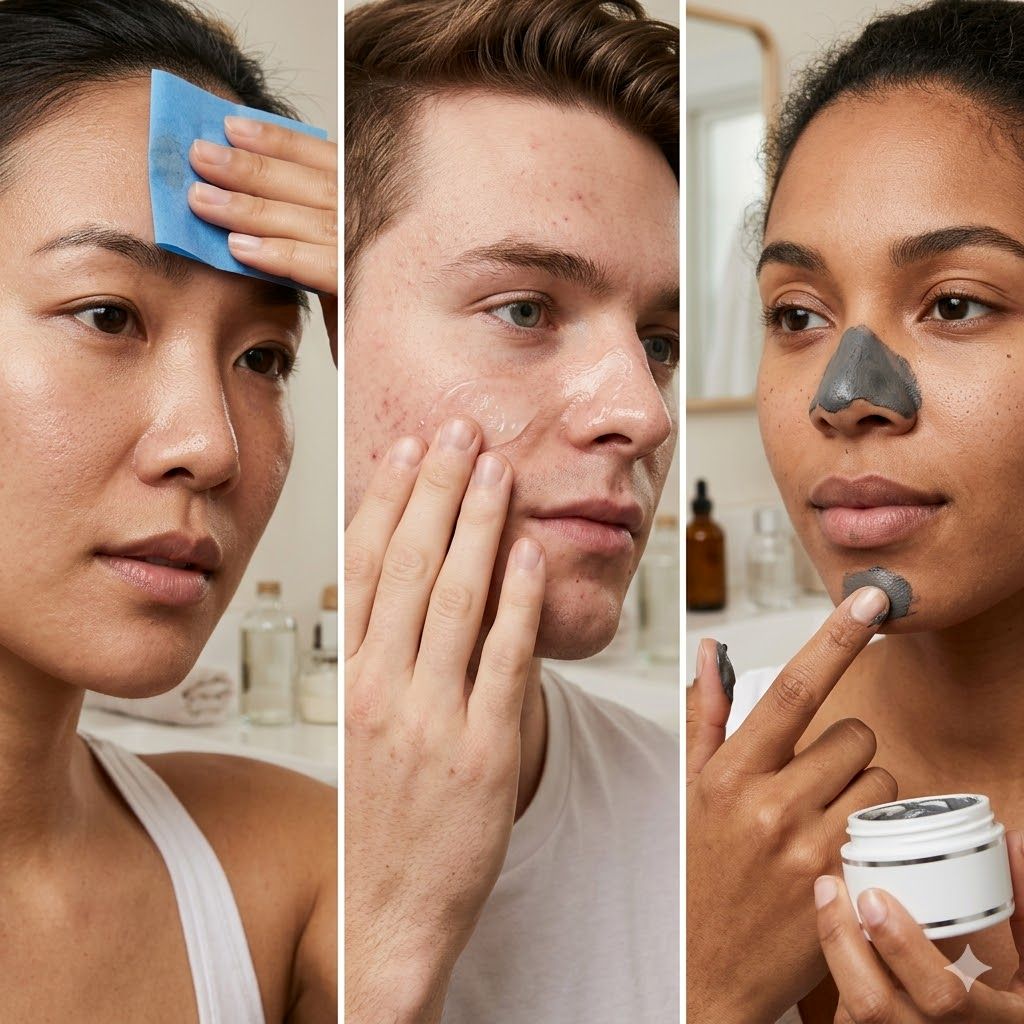
- Try blotting papers throughout the day (lifts oil without spreading it)
- Look for niacinamide or BHA in your serum or moisturizer
- Use non-comedogenic sunscreen — SPF is non-negotiable even for oily skin
❌ DON'T Do This
- Over-cleanse — it triggers more oil production
- Skip moisturizer — dehydration makes oiliness worse
- Use alcohol-heavy products — drying, rebound-triggering
- Touch your face frequently — transfers bacteria and spreads sebum
- Use aggressive scrubs — irritation stimulates oil glands
- Apply heavy, comedogenic products — they trap oil beneath the surface
The Oily Skin Routine That Actually Works
Morning Routine
- Foaming cleanser
- Toner with niacinamide or BHA
- Lightweight, oil-free moisturizer
- Non-comedogenic mineral sunscreen (SPF 30+)
- Optional: mattifying primer
Evening Routine
- Foaming cleanser (removes sebum and sunscreen)
- Exfoliating toner (2–3× weekly, BHA-based)
- Treatment serum (retinoid or niacinamide)
- Retinoid (2–3× weekly, if using)
- Oil-free moisturizer
Throughout-the-Day Tips
- Blotting papers absorb oil without disturbing makeup
- Mattifying primers create an oil-controlling base
- Setting powder over oily zones extends shine control
- Don't touch your face — transfers oil and bacteria to skin
- Change pillowcases often — oil builds up on fabric
How Does AI Skin Analysis Help Oily Skin?
Here's the problem with oily skin advice: it's usually generic. "Use a cleanser. Apply moisturizer. Avoid heavy products." That's like telling someone with a broken arm to "take care of their health."
The real challenge is that oily skin isn't one thing. It's oily-and-dehydrated, oily-and-acne-prone, oily-in-summer-but-normal-in-winter, or oily-in-the-T-zone-but-dry-on-the-cheeks. Getting the recommendation right depends entirely on getting the diagnosis right.
That's exactly what Perfect Corp.'s AI Skin Analysis is built to solve. Using 180° face mapping and HD analysis trained on millions of skin images, it detects oiliness levels across facial zones, measures pore size and congestion, identifies skin type combinations (including oily, combination, and oily + redness), and generates personalized product recommendations — all from a selfie.
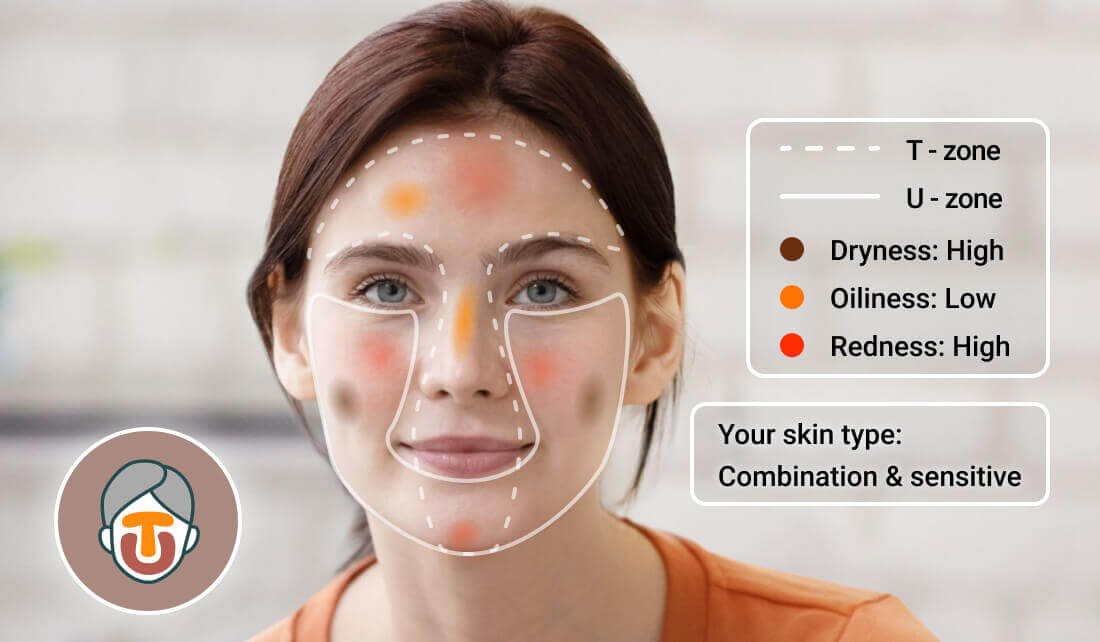
For beauty brands, this transforms a generic product browse into a guided, high-confidence experience. Consumers who receive a skin analysis convert at significantly higher rates and return with lower churn — because the products they buy are matched to what their skin actually needs.
The AI skin analysis market is projected to grow from USD 1.61 billion in 2025 to USD 7.75 billion by 2035 (Metatech Insights, 2025). Oily skin management — one of the most searched and highest-intent skincare concerns — is a primary growth driver.
Want to offer your customers a precision oily skin diagnosis at scale?

The Silver Lining: Oily Skin Has Advantages
Worth knowing: oily skin naturally retains more moisture and tends to develop fewer fine lines and wrinkles than dry skin types. Sebum isn't the enemy — overproduction is. With the right routine and the right products, oily skin is highly manageable and, long-term, ages more gracefully than most.
Frequently Asked Questions
Does oily skin age slower?
There's some truth to this. Sebum provides a natural moisture barrier that helps maintain skin suppleness, and people with oily skin tend to develop fine lines and wrinkles later than those with dry skin. However, unmanaged oily skin can still lead to enlarged pores and acne scarring, so the goal is balance — not maximum oil.
Should I skip moisturizer if I have oily skin?
No — and this is one of the most damaging myths in skincare. Skipping moisturizer dehydrates the skin, which triggers the sebaceous glands to compensate with more oil. The solution is choosing a lightweight, oil-free, non-comedogenic moisturizer — not eliminating hydration entirely.
Why is my face so oily by midday?
Midday shine is usually a combination of your skin's natural sebum cycle (production peaks in the morning and afternoon), heat exposure, and product choices. Using blotting papers, a mattifying primer, and a setting powder can significantly extend shine-control throughout the day.
Can diet affect oily skin?
Potentially, yes. High-glycemic foods and dairy have both been associated with increased sebum production in some studies, likely through their effect on insulin and androgen levels. It's not a universal trigger, but if your oiliness seems food-related, a low-GI diet may be worth testing.
How does AI skin analysis measure oiliness?
Advanced AI platforms like Perfect Corp's use computer vision to analyze pore size, surface texture, and light reflectance from facial images — indicators that correlate with sebum levels. The system categorizes skin as normal, oily, combination, or combination + oily, and cross-references those findings with other skin concerns to generate precise, personalized recommendations.
The Bottom Line
Oily skin is manageable — but only when you understand what's driving it. Stripping routines make it worse. Skipping moisturizer makes it worse. Generic product recommendations that don't account for your specific skin type, zone, and concern combination? Also make it worse.
The answer is precision: the right ingredients for your skin's actual needs, in the right formulas, delivered at the right moments. AI skin analysis makes that precision scalable — for brands serving millions of customers, and for individuals who just want to stop fighting their own reflection by noon.
Help your customers find their perfect oily skin routine in seconds.

Sources
- Medical News Today – Causes of oily skin and 6 at-home treatments (2023). medicalnewstoday.com
- LiVDerm – Treatment Options for Oily Skin. livderm.org
- NIH / PubMed Central – Use of Advanced Imaging Techniques for the Characterization of Oily Skin. ncbi.nlm.nih.gov
- Curology – How to Reduce Sebum Production (2024). curology.com
- Metatech Insights – AI Skin Analysis Market Report (2025).
- Perfect Corp. – AI Skin Analysis Solution for Beauty Brands & Clinics. perfectcorp.com