 Author: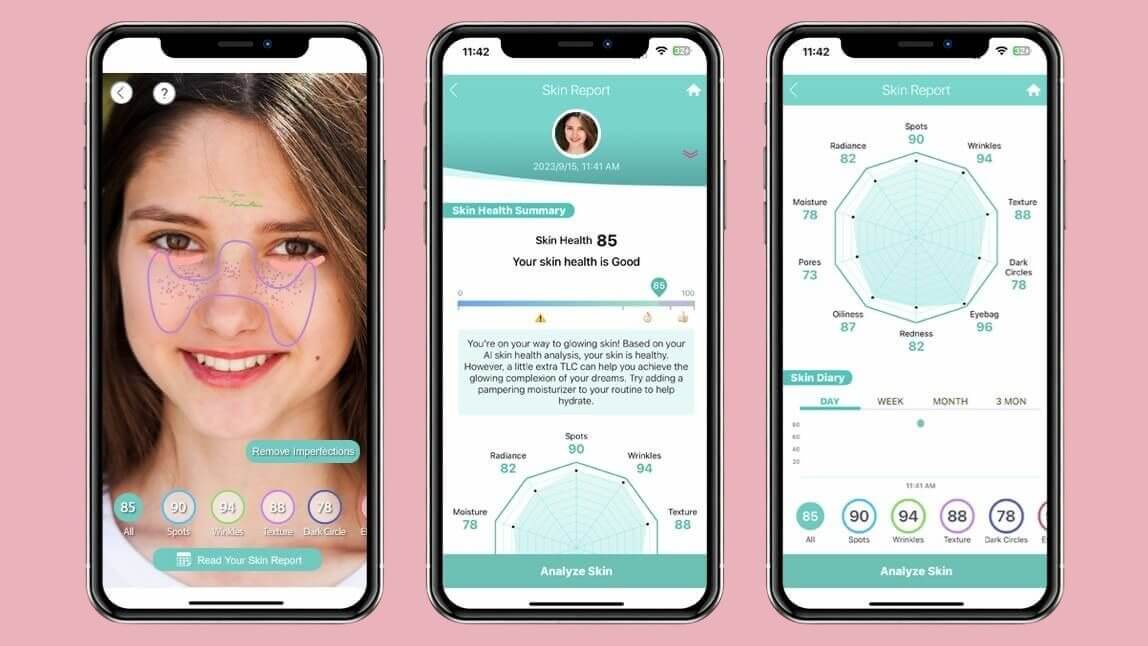
Small skincare businesses — independent estheticians, boutique spas, single-location salons, med spa startups — are increasingly being asked by clients to provide the kind of precise, personalized skin assessments that were once only possible in a dermatologist's office or at a prestige counter with a dedicated skin consultant.
AI skin detector apps have changed that equation. Running on an iPad, iPhone, or Android tablet, today's software-based skin analysis tools can assess wrinkles, pigmentation, oiliness, hydration, and pore visibility in under 10 seconds — without dedicated hardware, a lab setup, or a large technology budget.
The challenge for small businesses isn't access anymore. It's knowing which tool actually fits the way they operate.
This guide evaluates 7 skin detector apps available to SMBs in 2026, covering what each does well, where it's limited, and which business context it's best suited for.
"The most common mistake small skincare businesses make when evaluating AI tools is comparing features instead of workflows. The right question isn't which app detects the most skin concerns — it's which app fits the consultation model you're actually running." — Beauty technology consultant, SMB market focus
| Table of Contents |
|---|
|
What Is a Skin Detector App?
A skin detector app uses a device camera and trained AI models to analyze visible skin conditions — identifying concerns such as acne, wrinkles, hyperpigmentation, redness, oiliness, and pore size — and translating that analysis into a scored report or product recommendation.
The practical value for small businesses is in consultation quality. Without a technology assist, a solo esthetician or beauty advisor is making recommendations based on visual judgment alone, which varies by lighting, experience, and client self-description. An AI skin detector gives both the practitioner and the client an objective, scored baseline — something concrete to anchor a consultation and track over time.
For businesses that sell skincare products alongside services, the recommendation-to-purchase connection is equally significant. A client who has seen their hydration score and received a specific product recommendation is in a very different purchasing mindset than one who received general skincare advice.
How to Evaluate These Tools as a Small Business
Before diving into the list, it's worth establishing the criteria that actually matter for SMB deployment — because not all of these tools are solving the same problem.
Setup and hardware requirements. Some apps run on any tablet with a camera. Others require specific professional imaging devices. For most small businesses, software-only is the practical requirement.
Depth of analysis. There's a meaningful difference between apps that detect 3–5 skin concerns and those that assess 12–15 parameters. The depth should match what your clients expect from a consultation.
Product or treatment linkage. Can you connect analysis results to specific products you carry or services you offer? This is what turns a skin assessment into a revenue-generating consultation tool.
Client-facing output. Will clients receive a report they can take home or access digitally? Shareable results increase perceived value and give clients a reason to return.
Pricing model. Monthly SaaS subscriptions, per-scan fees, and enterprise licensing all exist in this category. At small business scale, the cost-per-consultation calculation matters.
Clinical vs. retail fit. Some tools are built for retail skincare consultation. Others are designed for clinical environments (dermatology, aesthetic medicine) and may be over-engineered — or under-suited — for a boutique spa context.
The 7 Apps: Practical Comparison
1. Skincare AI by Perfect Corp.
Best for: Skincare boutiques, independent estheticians, salons, med spas integrating skincare consultation into service menus
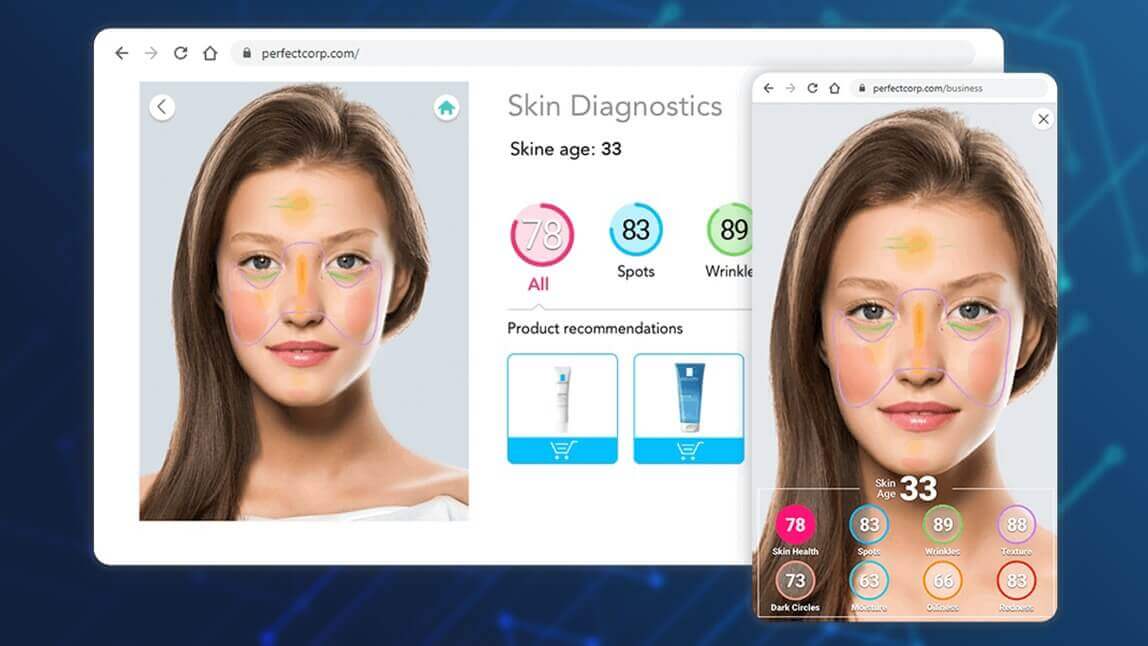
What it does: Skincare AI analyzes skin across 15 parameters — including wrinkles, spots, acne, hydration, oiliness, redness, pore visibility, skin firmness, and dark circles — using an iPad or iPhone camera. Results are displayed via an AR overlay mapped to the client's face, with each concern scored individually and combined into an overall skin age estimate.
The product recommendation engine is the key operational feature for retail-adjacent businesses: brands and practices configure the system to map detected concerns to specific SKUs, so the consultation flow ends with a concrete product suggestion rather than general skincare advice.

Hardware requirements: iPad or iPhone only (iOS-native). No specialized imaging equipment needed.
Deployment options: In-store kiosk, tablet-based consultation, web-embedded (for brands with e-commerce).
Standout capability: The skin emulation feature generates a visual simulation of projected skin improvement from consistent product use, rendered directly on the client's photo. For consultations where clients need to see rather than just hear the benefit case, this is a meaningful differentiator.
Clinical validation: Perfect Corp.'s AI skin diagnostic technology has been independently validated in a peer-reviewed study by Dr. Steven Feldman, Professor of Dermatology at Wake Forest School of Medicine, showing high correlation with physician skin assessments across tested parameters. For small businesses that need to stand behind the accuracy of what they tell clients, this peer-reviewed foundation matters.
Limitations: iOS-only at the tablet/kiosk level, which rules out Android-first setups. Lighting quality affects accuracy — consistent, neutral lighting in the consultation space produces the most reliable results. Free trial available; enterprise pricing is subscription-based and scales with deployment scope.
2. Skin Imaging System – AI Skin Analysis

Best for: Dermatology practices, aesthetic clinics, and skincare professionals who need consultation documentation and treatment tracking
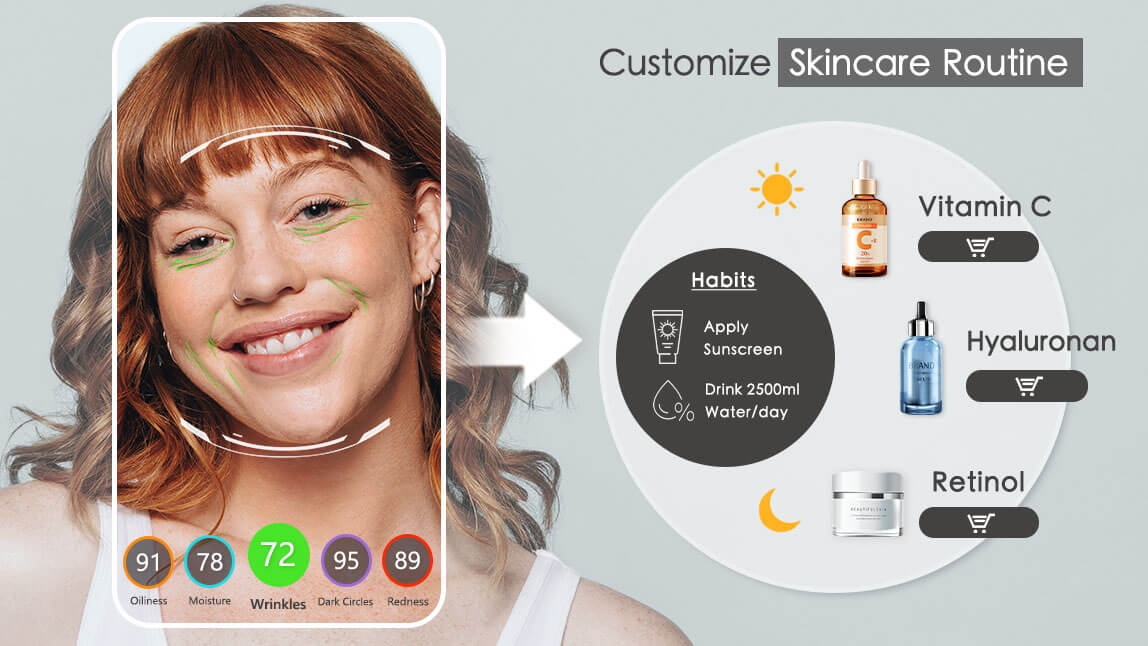
What it does: AI-based facial analysis covering skin tone, texture, wrinkles, pigmentation, and acne, with output formatted for clinical consultation and treatment planning. The system generates client-facing reports designed for use in professional settings — useful for documenting baseline conditions before treatment and tracking progress over subsequent appointments.
Hardware requirements: Compatible with professional camera setups or mobile devices, depending on configuration.
Standout capability: The reporting format is oriented toward clinical use — printable, structured, and designed to support treatment discussion rather than just product recommendation.
Limitations: Better suited to clinical environments than retail. For a boutique salon or independent esthetician whose primary output is a skincare product recommendation, the clinical depth may be more infrastructure than the business needs. Setup complexity varies by configuration.
3. Troveskin
Best for: Independent beauty advisors and small product sellers who want a client engagement and habit-tracking tool
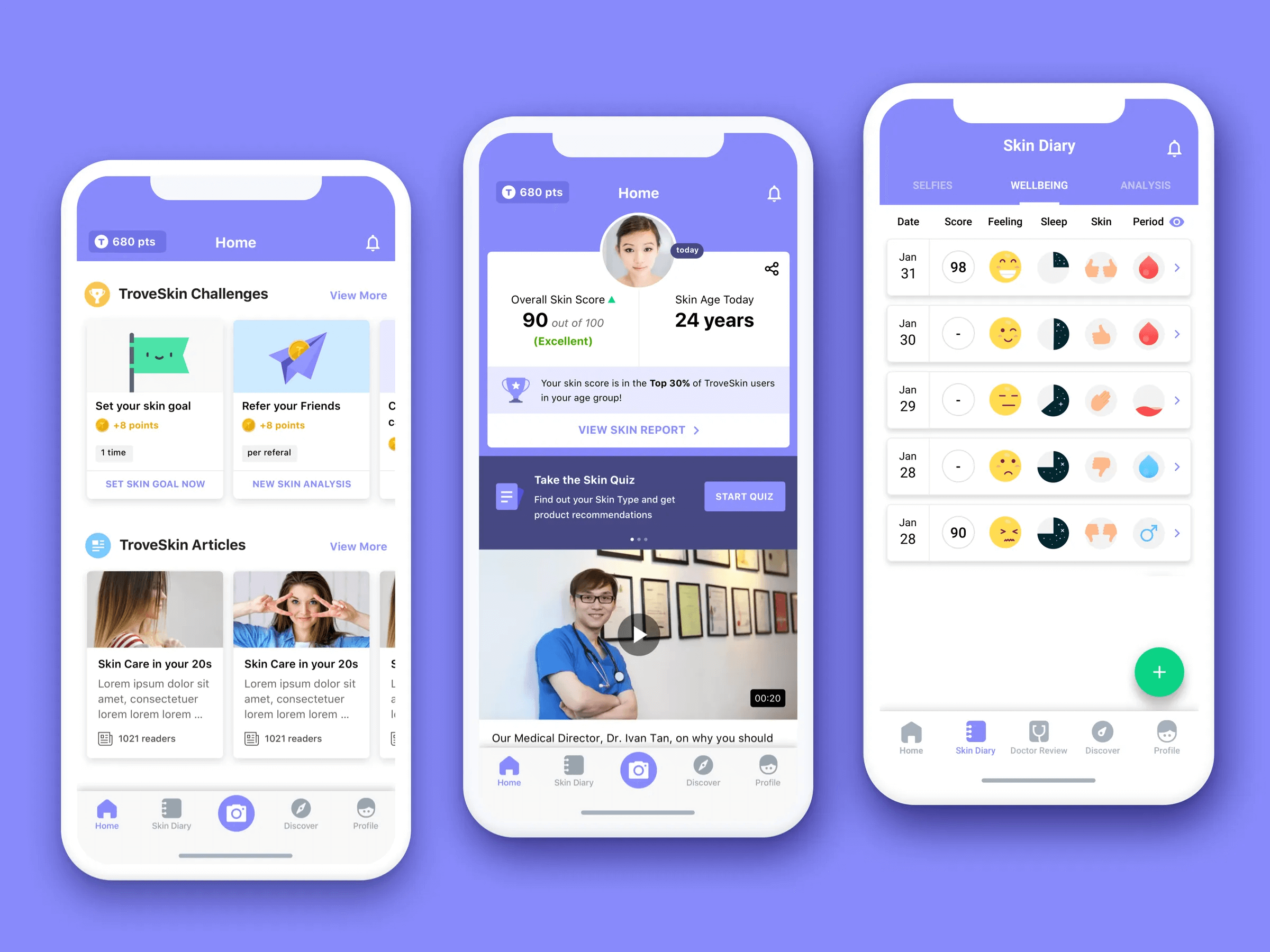
What it does: Troveskin focuses on skin health tracking over time — photographing and logging skin condition across sessions, monitoring routine adherence, and maintaining a product journal. It's less a point-of-consultation analysis tool and more a client engagement platform that supports ongoing relationship building.
Standout capability: The visual timeline of skin progress is useful for demonstrating the value of a routine to a client over weeks or months — making it a retention and re-booking tool as much as a diagnostic one.
Limitations: The analysis depth is narrower than clinical or enterprise-grade tools. Troveskin works well as a supplement to a broader consultation process, but it's not a standalone diagnostic system. Best for businesses where the primary goal is client retention and routine adherence rather than initial skin assessment.
4. Miiskin
Best for: Clinics or skincare advisors with clients concerned about mole monitoring and long-term skin changes
What it does: Miiskin is designed specifically for tracking moles and skin lesions over time, using photo documentation and comparison to flag visible changes. It generates structured reports for dermatologist review and is designed to complement professional skin surveillance workflows.
Standout capability: For businesses that operate in a wellness or preventative health context — and have clients with ongoing concerns about changing skin lesions — Miiskin fills a genuinely specific need that general skincare analysis tools don't address.
Limitations: This is a specialized tool, not a general skincare analysis platform. It doesn't analyze cosmetic skin concerns (wrinkles, texture, pigmentation) or connect to product recommendations. A small spa offering Miiskin as a service would be positioning itself in a clinical wellness niche — that's a deliberate choice, not an add-on. Not suitable as a replacement for primary skin analysis software.
5. SkinVision
Best for: Medical spas, wellness clinics, and practitioners who want to offer skin cancer risk assessment as part of a broader wellness offering
What it does: SkinVision uses AI to assess photos of skin spots and moles for early indicators of melanoma and other skin cancers. The system has been clinically validated and provides risk assessment outputs with recommended follow-up actions. Results include a risk level and guidance on whether dermatologist consultation is advised.
Standout capability: Clinically validated skin cancer screening that goes meaningfully beyond cosmetic analysis. For wellness-oriented businesses whose clients skew toward health-conscious demographics, this fills a real gap.
Limitations: SkinVision is a medical screening tool, not a cosmetic consultation platform. It doesn't support product recommendations or general skin health analysis. Businesses should be clear with clients about the nature and limits of AI-based skin screening — and ensure they have a referral pathway for clients who receive elevated risk assessments. Not appropriate as a standalone skincare consultation tool for retail contexts.
Shared Materials by Strapi
*Adjust the size of images ONLY. Please go to Strapi to edit the materials info.
6. MDance
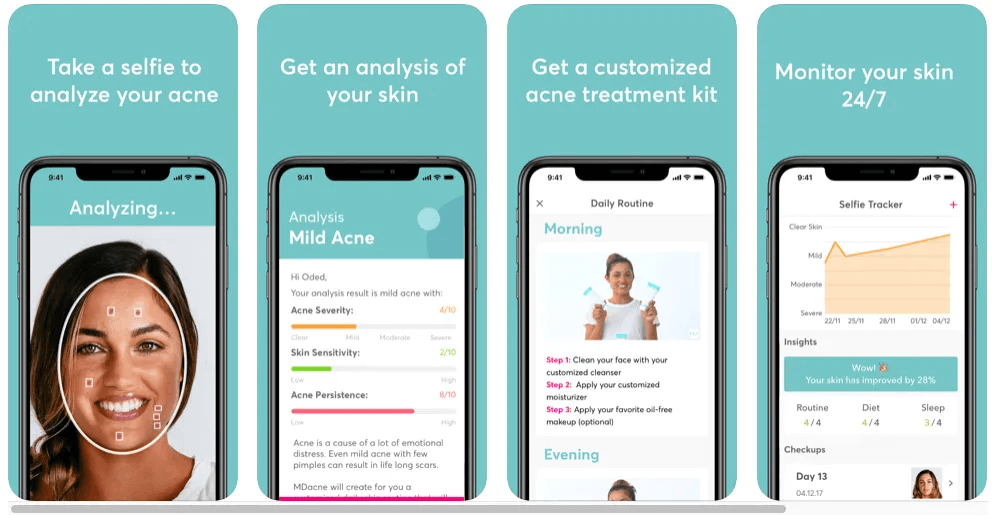
Best for: Estheticians, salons, or skincare advisors with a client base focused on acne treatment
What it does: MDacne uses AI-based skin analysis focused specifically on acne — scanning for concern type, severity, and distribution across the face. The app generates personalized acne treatment routines developed in consultation with dermatologists, and tracks skin condition changes over time to adjust recommendations.
Standout capability: The acne-specific focus means the analysis and recommendation logic is optimized for that concern in a way that general multi-parameter tools are not. For businesses whose client base is primarily dealing with active acne or post-acne scarring, the specificity can be an advantage.
Limitations: The narrow focus is also the limitation — MDacne is not a full-spectrum skin analysis tool. Clients with concerns beyond acne (aging, pigmentation, hydration) won't get a complete picture. Best used as a specialty complement in practices that see high acne consultation volume, not as a primary skin analysis solution.
7. Aysa – Skin Symptom Checker
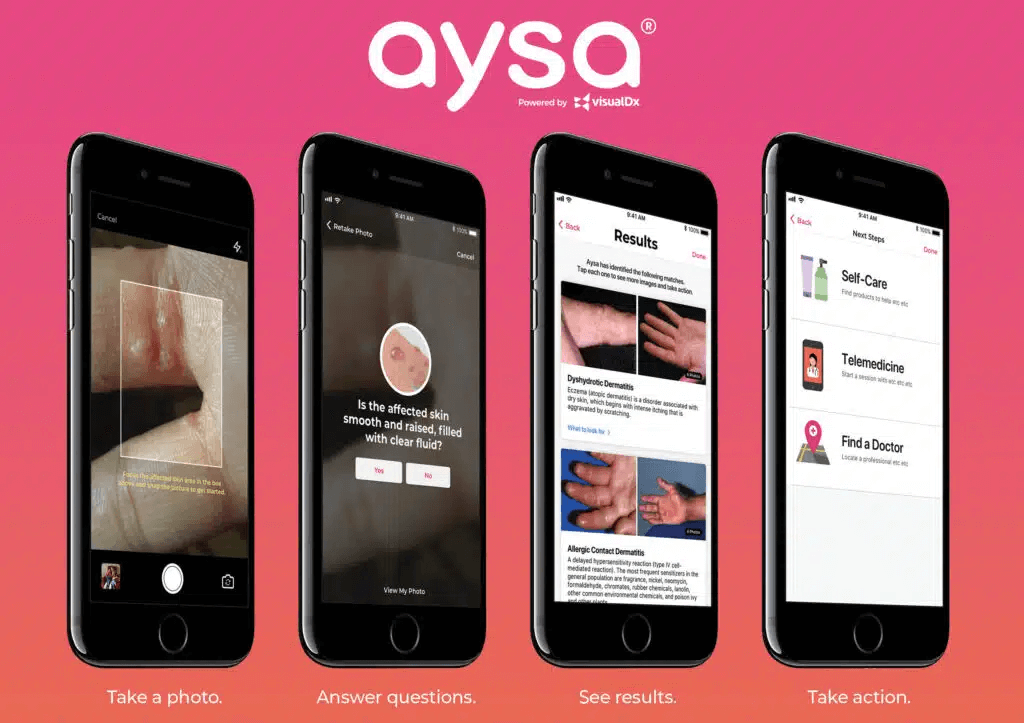
Best for: Wellness professionals, estheticians, or general skincare advisors who want a supplementary educational tool for clients with visible skin symptoms
What it does: Aysa is an AI skin symptom checker grounded in medical literature and dermatology databases. Clients photograph a skin concern — rash, bump, discoloration — and the app returns a set of possible conditions with general information about each. It's designed as an educational starting point, not a diagnostic tool.
Standout capability: Aysa addresses a consultation gap that most skincare apps don't touch — helping clients contextualize visible skin symptoms they're concerned about. For estheticians who regularly field questions about skin symptoms that fall outside cosmetic analysis, Aysa gives them a structured way to engage before referring to a dermatologist.
Limitations: Aysa is explicitly not a diagnostic tool and should not be used as one. It provides general information drawn from medical literature, not clinical assessments. Its role in a small business context is supportive and educational — not a replacement for specialist advice, and not a product recommendation engine. Clients should be clearly informed of these limits before use.
Side-by-Side Comparison Table
| App | Primary Use Case | Analysis Depth | Product Recommendation | Hardware |
| Skincare AI (Perfect Corp.) | Full skin consultation | 15 parameters | Yes — configurable | iPad |
| SkinScanner AI | Clinical documentation | High | Limited | Flexible |
| Troveskin | Client retention / habit tracking | Moderate | No | Mobile |
| Miiskin | Mole & lesion monitoring | Specialized | No | Mobile |
| SkinVision | Skin cancer risk screening | Specialized (medical) | No | Mobile |
| MDacne | Acne-specific treatment | Acne-focused | Yes (acne only) | Mobile |
| Aysa | Symptom education | Symptom identification | No | Mobile |
How to Choose the Right Skin Detection App for Your Small Business
If you're a salon, spa, or independent esthetician offering skin consultations alongside services and product sales, you need a tool that assesses multiple skin concerns, links findings to product recommendations, and delivers results in a format clients find engaging. Skincare AI by Perfect Corp. is designed for this workflow — the 15-parameter analysis, AR overlay, and configurable product recommendation engine are built for exactly this consultation model.
If you run an aesthetic clinic or dermatology-adjacent practice, you may need more clinical depth and documentation capability. An AI imaging system with structured reporting is better suited, though you'd likely use it alongside a patient management system rather than as a standalone tool.
If your focus is a specific concern niche — acne-only, mole monitoring, or skin cancer screening — the specialized tools (MDacne, Miiskin, SkinVision) are built for that context. They work well within their scope but shouldn't be expected to replace general consultation tools.
If client retention and long-term relationship building is the primary goal, Troveskin's tracking and routine-logging approach can complement a broader consultation process — though it works best when paired with an initial diagnostic tool rather than used in isolation.
"Small skincare businesses that deploy AI skin analysis as a consultation layer — rather than a standalone novelty — tend to see the most durable impact on conversion and return visit rates. The technology works best when it's embedded in the client journey, not bolted onto it." — SMB beauty technology implementation consultant
For businesses evaluating Skincare AI specifically, the showcase environment provides a working demonstration of the full 15-parameter analysis and product recommendation flow — no technical integration required to evaluate the experience firsthand.
Skin Detector App FAQs
What is a skin detector app?

A skin detector app uses AI and a device camera to analyze visible skin conditions — such as acne, wrinkles, pigmentation, oiliness, and hydration — and generate a scored assessment or recommendation. Enterprise-grade tools like Skincare AI by Perfect Corp. assess up to 15 skin parameters and connect findings to specific product recommendations, while consumer-facing apps typically offer narrower analysis and limited business integration.
What is considered the best skin diagnostics tool for clinics?
For clinics, tools that combine accuracy, fast analysis, and clinical reliability are top choices. Perfect Corp.'s Skincare AIdelivers up to 15 skin concern metrics in seconds, making it one of the best tools available.
Are AI skin detector apps accurate enough for professional use?
Accuracy varies significantly between tools. Perfect Corp.'s AI skin diagnostic technology has been independently validated in a peer-reviewed study by Dr. Steven Feldman at Wake Forest School of Medicine, showing high correlation with physician assessments. Consumer apps with limited clinical validation should be used as educational or supplementary tools rather than the basis for product prescribing. When evaluating any AI skin tool for professional use, ask the vendor directly about their validation methodology and training dataset composition.
What is the difference between a skin detector app and a professional skin diagnostic system?
Skin detector apps run on consumer devices (tablets, smartphones) and are optimized for speed, accessibility, and ease of use in a consultation setting. Professional skin diagnostic systems typically involve more specialized hardware, deeper clinical analysis, and reporting formats suited for treatment planning. The line between the two has narrowed significantly — tools like Skincare AI deliver 15-parameter analysis with peer-reviewed accuracy on standard iOS devices, which was not possible even 3–4 years ago.
Do skin detector apps work on all skin tones?
Performance across skin tones depends on the diversity of the training dataset used to develop the AI models. Not all tools publish this information transparently. When evaluating tools for use with a diverse client base, request specifics on training data composition and, if possible, test the tool across different skin tones during the trial period before committing to deployment.
How much do skin detector apps cost for small businesses?
Pricing models vary: some tools offer free consumer tiers with limited features, monthly SaaS subscriptions, per-analysis pricing, or enterprise licensing. Skincare AI by Perfect Corp. offers a free trial for businesses to evaluate the product before committing. For SMBs, the relevant calculation is cost-per-consultation versus the incremental revenue generated from analysis-driven recommendations — not the headline subscription price.