 Author: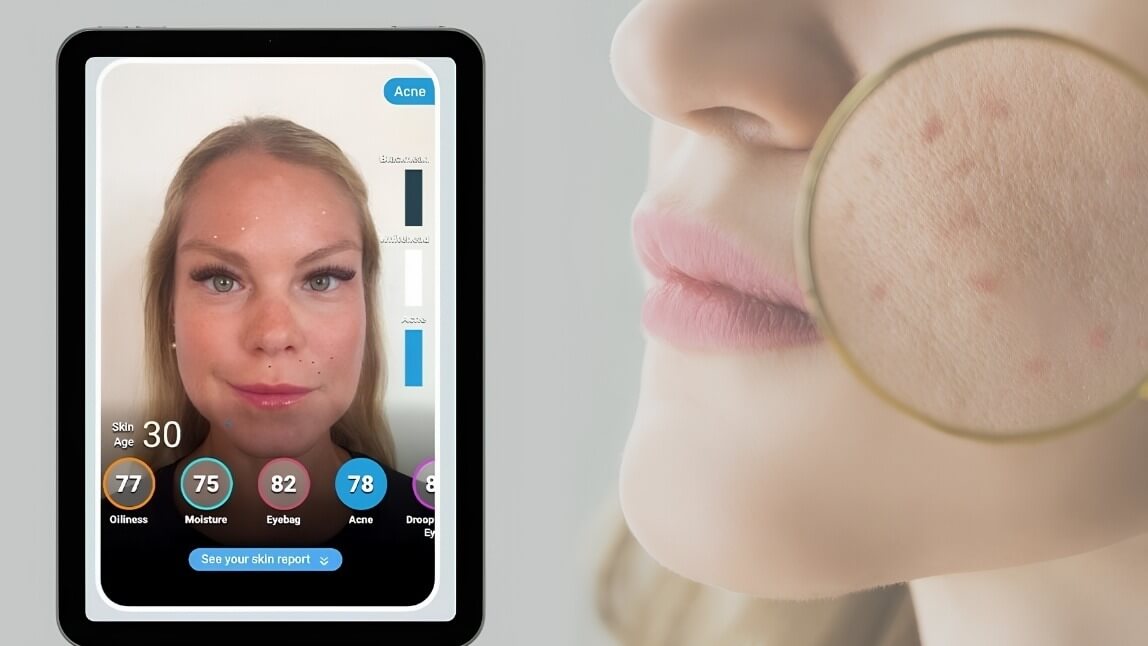
A dermatology AI skin assessment tool now lets brands and medical spas deliver individualized, data-backed skin evaluations at every client touchpoint, without adding headcount or extending appointment time.
For operators competing in a market where personalization is expected, not optional, this technology has moved from differentiator to baseline requirement.
| Table of Contents |
|---|
How a Dermatology AI Skin Assessment Tool Works
At its core, AI skin analysis is a computer vision workflow. Instead of asking users to describe their skin concerns manually, the system reads visual signals from a face image and converts them into measurable skin data.
A typical process looks like this:
1. Image Capture
The user takes a photo or opens a live camera scan. The system checks for usable conditions such as face angle, lighting, distance, and image clarity.
2. Feature Extraction
The AI identifies eyes, visible pores on the cheeks, pigmentation clusters, redness zones, or texture irregularities. This is where facial skin mapping happens.
3. Data Benchmarking
Next, the system compares the detected features against a trained image database. This benchmarking allows the AI to generate severity scores or condition-specific indicators.
4. Product or Routine Recommendation
The final step is translating analysis into action. Based on the user’s visible skin concerns, skin type, and severity scores, the platform can suggest a personalized skincare routine, treatment pathway, or customized product recommendations.
Key Parameters Analyzed by AI Skin Analysis
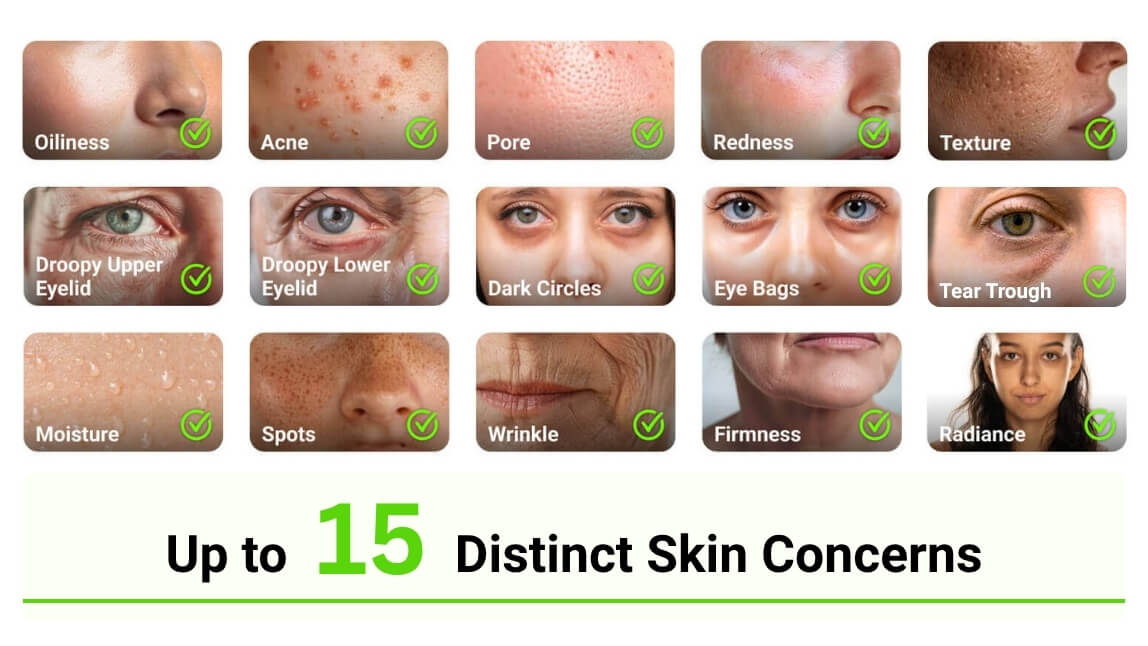
A strong clinical-grade skin analysis tool should provide instant, dermatologist-grade assessments, separate skin concerns into actionable categories so professionals can explain what is happening and what to do next.
Acne and Texture
These parameters help identify surface-level irregularities that affect skin smoothness and clarity.
- Pores: Detects visible pore size and concentration.
- Texture: Evaluates uneven surface appearance.
- Acne: Identifies visible acne-related areas.
- Oiliness: Assesses shine or oil-prone facial zones.
Aging and Firmness
These signals are useful for anti-aging consultations and treatment planning.
- Wrinkles: Supports wrinkle detection across visible facial zones.
- Firmness: Evaluates visible firmness-related indicators.
- Moisture: Estimates hydration-related appearance.
- Droopy upper eyelid: Analyzes visible eyelid positioning.
- Droopy lower eyelid: Assesses lower-eye laxity indicators.
Tone and Pigmentation
These parameters support brightening, tone-correction, and sensitivity-related routines.
- Spots: Supports hyperpigmentation analysis and dark spot mapping.
- Redness: Detects visible redness-prone regions.
- Radiance: Evaluates overall skin glow and dullness.
- Dark circles: Analyzes under-eye discoloration.
- Eye bags: Detects visible puffiness.
- Tear trough: Evaluates under-eye hollowing appearance.
For med spas and skincare brands, this structured breakdown is critical. Instead of saying “your skin looks tired,” an advisor can explain which factors are contributing to the result: moisture, texture, dark circles, redness, or firmness.
Clinical vs. Cosmetic AI Skin Analysis
Not all skin AI tools serve the same purpose. A useful distinction is between clinical-oriented AI and brand-led cosmetic AI.
Clinical-Oriented AI
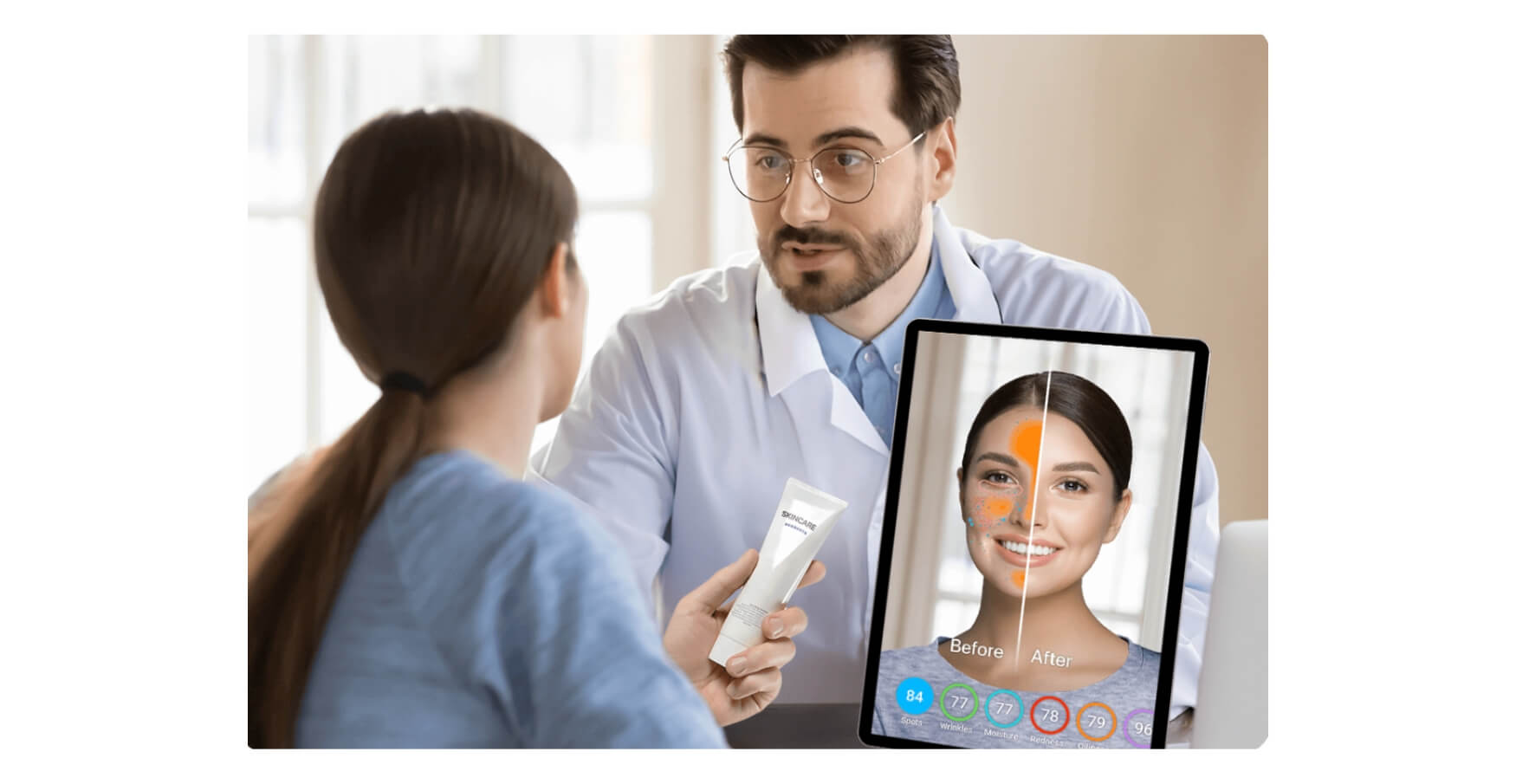
Clinical-oriented platforms are designed to support professional consultations, skin documentation, and more standardized assessment workflows. These tools may use dermatologist-validated AI, structured severity scores, and secure data handling standards.
The tool can help quantify visible skin concerns and support more consistent consultation experiences. For dermatology clinics and medical spas, that consistency is valuable when tracking progress over time or explaining treatment plans to clients.
Brand-Led Cosmetic AI
Brand-led tools, such as skincare quizzes or virtual consultation experiences from beauty brands, usually focus on product discovery. They may ask users about their skin type, concerns, goals, and preferences, then recommend products from the brand’s catalog.
These experiences are useful for e-commerce conversion and customer engagement, but they are often less diagnostic in structure. Many rely heavily on self-reported answers rather than visual analysis.
The strongest commercial applications combine both: computer vision dermatology for objective skin mapping and brand logic for product matching.
The Key Difference
The difference is not simply “medical vs. beauty.” It is about depth, validation, and workflow.
A clinical-oriented tool helps professionals interpret visible skin data. A cosmetic tool helps shoppers find products. A modern AI skincare assistant can do both when designed responsibly.
The Benefits of AI Skin Analysis for Brands, Medical Spas, and Consumers
1. More Personalized Skincare Routines
AI skin analysis helps move skincare recommendations beyond generic skin type labels. Instead of asking whether someone has “dry” or “oily” skin, the tool can evaluate multiple visible concerns at once.
This enables a more precise personalized skincare routine, such as:
- Gentle cleanser for sensitive or redness-prone skin
- Hydrating serum for low moisture indicators
- Retinol or peptide products for visible fine lines
- Brightening products for spots and uneven tone
- Non-comedogenic products for acne-prone users
For brands, this improves product discovery. For med spas, it gives advisors a clearer foundation for consultation.
2. Multi-Channel Consultation
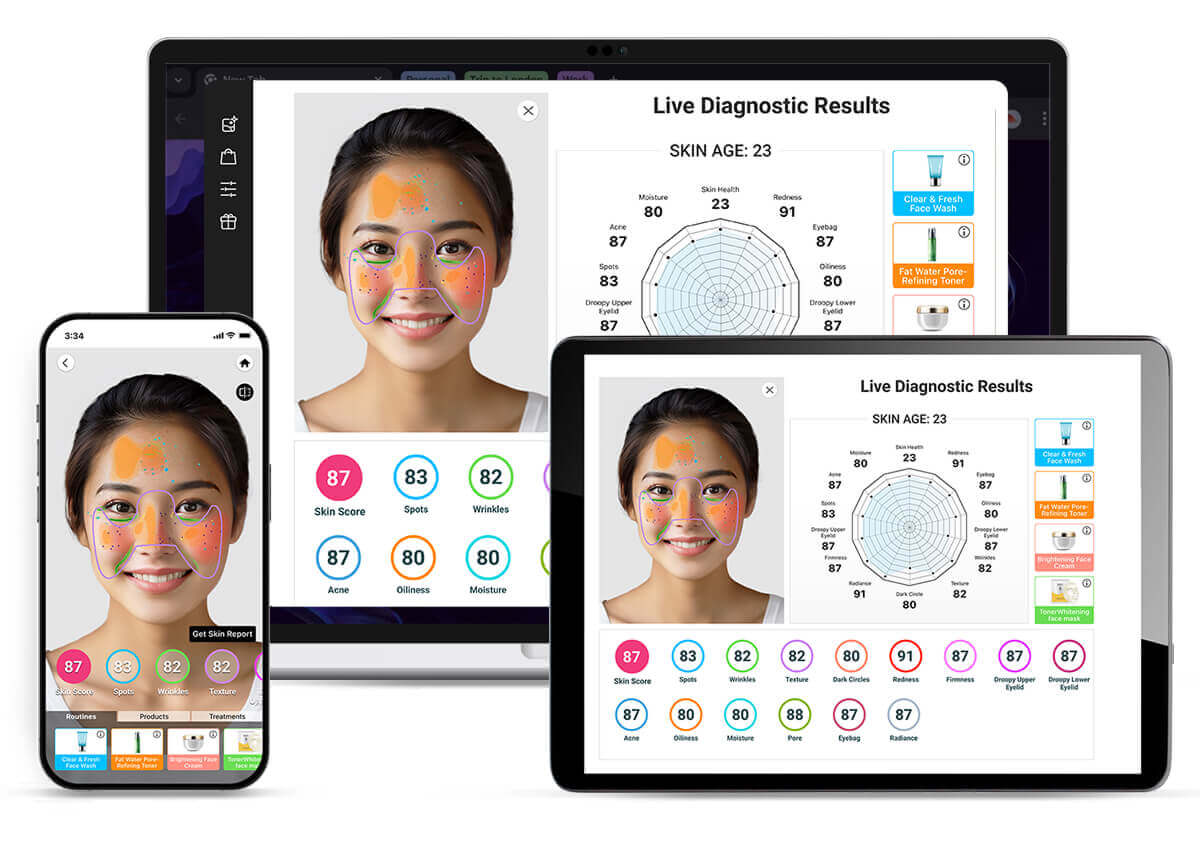
A major advantage of AI skin analysis is that it works across both online and offline channels.
In-store, beauty advisors or clinic staff can use tablets to run a guided skin scan during consultation. Online, brands can integrate a skin analysis API into their website or app, allowing shoppers to upload a photo, receive a skin report, and get product recommendations in the same journey.
This creates a connected skincare journey: scan, understand, recommend, purchase, and track.
3. Greater Accessibility
Dermatology access can be limited by geography, cost, appointment availability, or consumer hesitation. AI tools can help people start with a guided skin check before deciding whether they need professional care, supporting education, pre-screening, and routine guidance.
Conclusion
A Dermatology AI Skin Assessment Tool helps brands and medical spas deliver more consistent consultations and more measurable customer journeys. With capabilities such as AI skin analysis, digital skin scan, wrinkle detection, and hyperpigmentation analysis, these platforms bridge the gap between professional skin expertise and scalable digital experiences.
Perfect Corp.’s skin analysis technology helps brands and aesthetic businesses deliver AI-powered consultations across stores, med spas, websites, and apps, turning visible skin data into personalized, trust-building skincare guidance.
Contact us to explore Perfect Corp.’s AI Skin Analysis solution to deliver smarter virtual skin consultations.