 Author:


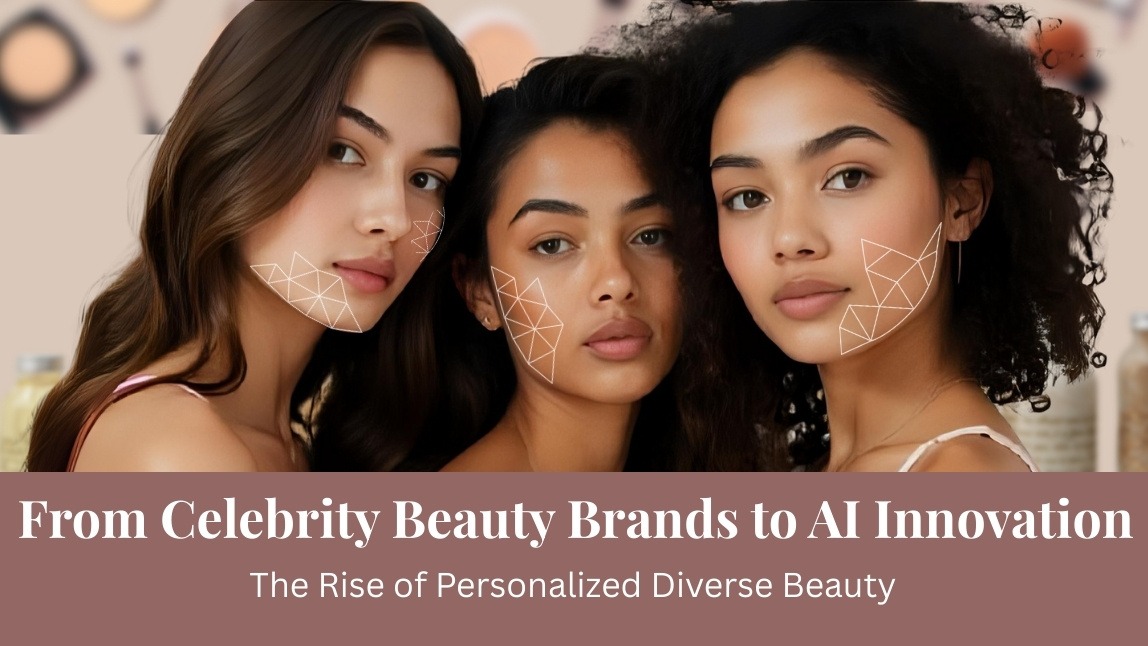
Understanding your skin undertone is essential for choosing the right makeup shades, skincare products, and even clothing colors. While many people know their skin tone (fair, medium, deep), identifying their skin undertone is often more confusing
That’s where an undertone test comes in.
In this guide, we’ll explain what undertones are, walk through the most popular undertone tests, and explore how modern AI skin analysis technology can now detect undertones more accurately than traditional methods.
| Table of Content |
|---|
|
What Is a Skin Undertone?
A skin undertone refers to the subtle color beneath the surface of your skin. Unlike skin tone, which may change with sun exposure or seasons, your undertone typically remains consistent throughout your life.

Most undertones fall into three categories:
Warm Undertones
Warm undertones usually contain hints of gold, yellow, or peach. People with warm undertones tend to look better in gold jewelry and warm-toned makeup shades.
Cool Undertones
Cool undertones have subtle pink, red, or bluish hues beneath the skin. Silver jewelry and cooler makeup shades often complement these undertones best.
Neutral Undertones
Neutral undertones are a balanced mix of warm and cool tones, making them versatile with a wider range of colors.
Knowing your undertone can help with:
- Selecting foundation shades
- Choosing flattering lipstick colors
- Finding clothing colors that enhance your complexion
- Personalizing skincare recommendations
To identify your undertone, many people rely on simple undertone tests.
Shared Materials by Strapi
*Adjust the size of images ONLY. Please go to Strapi to edit the materials info.
The 5 Most Popular Undertone Tests
There are several methods commonly used to determine skin undertones. While these tests can offer helpful clues, they can sometimes be influenced by lighting conditions or individual interpretation.
Here are five widely used undertone tests.
1. The Vein Test
The vein test is one of the simplest ways to estimate your undertone.

Look at the veins on your wrist in natural lighting.
- Blue or purple veins → Cool undertone
- Greenish veins → Warm undertone
- A mix of both → Neutral undertone
This test works because undertones influence how blood vessels appear beneath the skin.
However, the results can vary depending on lighting and skin depth, which means the vein test isn’t always definitive.
2. The Jewelry Test
Another popular undertone test is the jewelry comparison method.
Ask yourself which metal looks better against your skin:
- Gold jewelry looks better → Warm undertone
- Silver jewelry looks better → Cool undertone
- Both look equally good → Neutral undertone
This test works because warm undertones harmonize with yellow-toned metals, while cool undertones complement silvery tones.
Shared Materials by Strapi
*Adjust the size of images ONLY. Please go to Strapi to edit the materials info.
3. The White Paper Test
The white paper test compares your skin against a bright white surface.
Hold a sheet of white paper next to your face in natural lighting.

If your skin appears:
- Yellow or golden → Warm undertone
- Pink or rosy → Cool undertone
- Neither strongly warm nor cool → Neutral undertone
This method can help reveal subtle undertone differences that are harder to see on their own.
4. The Sun Reaction Test
Your skin’s reaction to sunlight can also provide clues about undertones.
- Burns easily, rarely tans → Often cool undertone
- Tans easily, rarely burns → Often warm undertone
- Sometimes burns, sometimes tans → Neutral undertone
This test is loosely connected to how melanin responds to UV exposure.
However, this method is not always precise because many factors influence sun sensitivity.
5. The AI Undertone Test
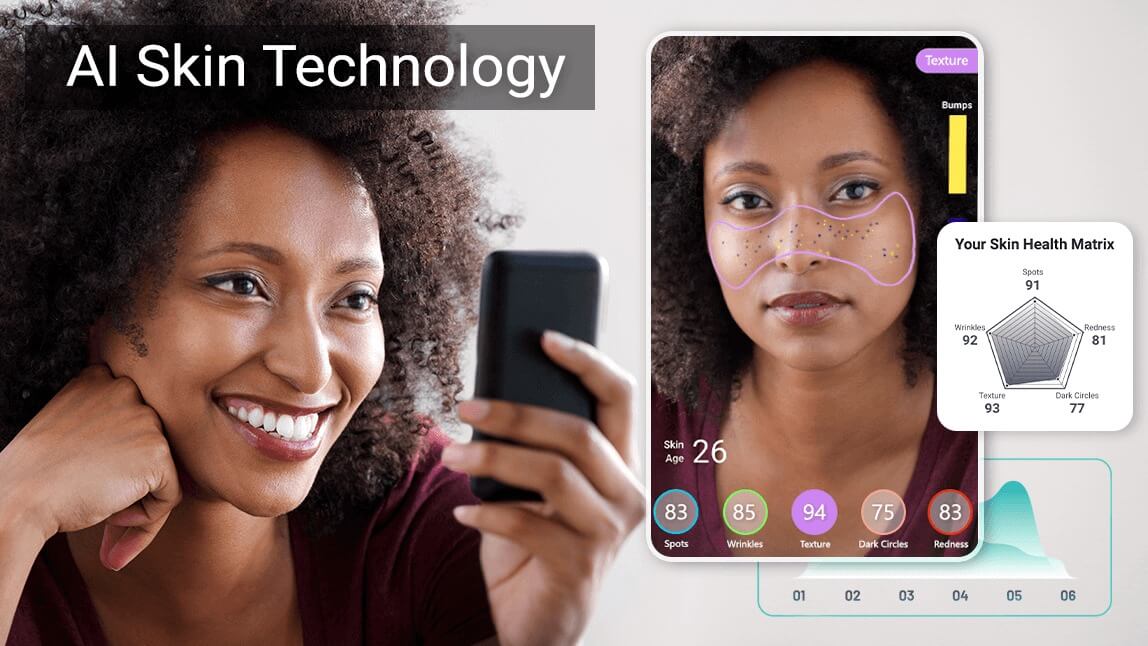
With advances in computer vision and dermatology-focused machine learning, modern AI skin analysis tools can now perform an automated undertone test.
Instead of relying on subjective observations, AI systems analyze a facial image to detect subtle color patterns and pigmentation characteristics.
An AI undertone test typically evaluates:
- Skin color spectrum distribution
- Melanin patterns across facial regions
- Lighting-adjusted skin tone analysis
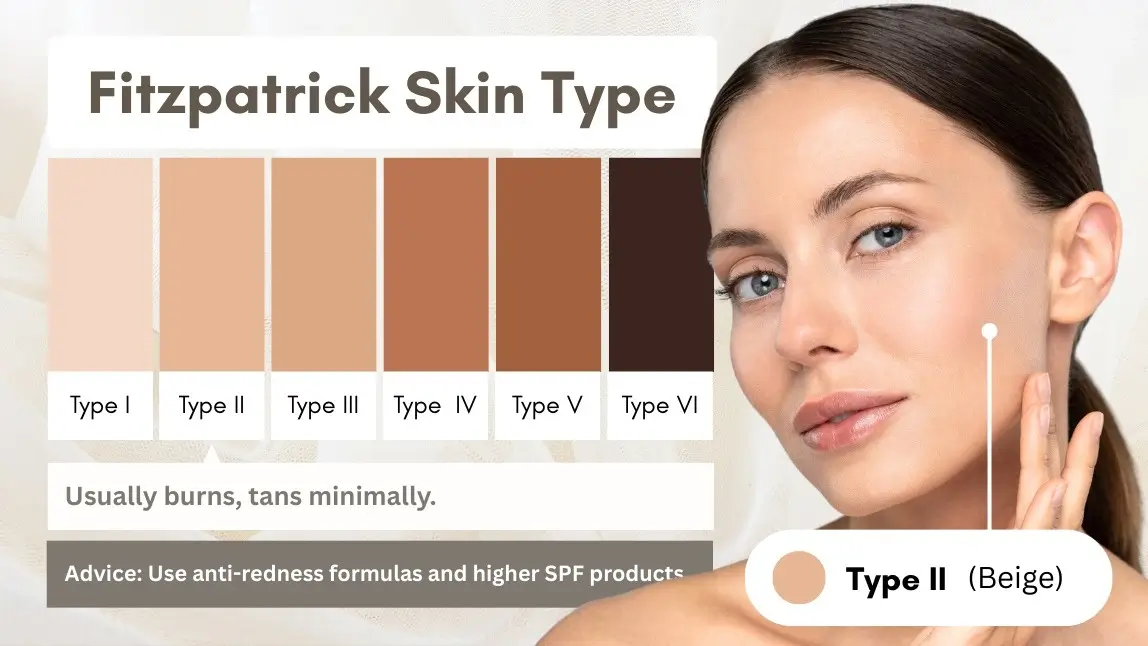
- Fitzpatrick skin type indicators
By processing these data points simultaneously, AI can determine whether a person’s undertone is warm, cool, or neutral with greater consistency than manual tests.
Many beauty brands and skincare platforms now integrate AI skin analysis technology to deliver personalized beauty recommendations.
Try an AI Skin Undertone Test
Traditional undertone tests can be helpful, but they often rely on subjective interpretation.
AI analysis provides a faster and more consistent approach.
You can try an AI undertone test by uploading a selfie. The system analyzes facial skin data in real time to determine your undertone and other skin characteristics.
Unlike manual tests, AI skin analysis evaluates multiple facial regions simultaneously and adjusts for lighting variations, helping improve detection accuracy.
Shared Materials by Strapi
*Adjust the size of images ONLY. Please go to Strapi to edit the materials info.
How Undertones Relate to the Fitzpatrick Skin Scale
One of the most advanced ways to analyze skin characteristics is by combining undertone detection with the Fitzpatrick skin type scale.
The Fitzpatrick scale is a dermatological classification system used to categorize skin types based on how skin responds to ultraviolet (UV) exposure.

The six Fitzpatrick skin types are:
| Type | Skin Reaction to Sun |
| Type I | Always burns, never tans |
| Type II | Usually burns, tans minimally |
| Type III | Sometimes burns, gradually tans |
| Type IV | Rarely burns, tans easily |
| Type V | Very rarely burns |
| Type VI | Never burns |
While undertones describe the color characteristics beneath the skin, the Fitzpatrick scale describes how skin biologically reacts to sunlight.
Modern AI skin analysis systems can detect both of these attributes from a single facial image.

By analyzing pigmentation distribution and melanin levels, AI can estimate a user’s Fitzpatrick skin type while also determining undertone characteristics.
This combined analysis helps provide more accurate insights for skincare personalization and cosmetic product recommendations.
Why AI Undertone Tests Are Becoming More Popular
As beauty technology evolves, AI skin diagnostics are becoming increasingly common in both consumer beauty apps and professional skincare platforms.
AI undertone tests offer several advantages compared to traditional methods.
1. Lighting Compensation
AI systems can adjust for lighting conditions when analyzing skin images. This helps reduce the inaccuracies that often occur with mirror-based undertone tests.
2. Multi-Region Facial Analysis
Instead of evaluating just one area of skin, AI analyzes multiple facial regions simultaneously to identify consistent undertone patterns.
3. Dermatology-Based Skin Classification
Advanced skin analysis systems integrate dermatology frameworks such as the Fitzpatrick scale, enabling deeper insights beyond basic undertone detection.

4. Data-Driven Accuracy
AI models are trained on large image datasets containing diverse skin tones and types. This helps improve the reliability of undertone classification across different skin conditions.
Because of these advantages, AI skin analysis is increasingly used by:
- skincare brands
- beauty retailers
- dermatology platforms
- virtual beauty try-on apps

These systems enable more personalized product recommendations and skin diagnostics directly from a smartphone camera.
How Beauty Brands Use AI Skin Analysis
Many beauty and skincare companies are now integrating AI skin analysis technology into their digital platforms.
These systems can evaluate multiple skin attributes in seconds, including:
- skin tone and undertone
- wrinkles and fine lines
- skin texture
- pores
- acne and blemishes
- redness
- hydration indicators

Undertone detection is one important part of this analysis because it helps match users with suitable cosmetic shades and skincare routines.
When combined with broader skin diagnostics, undertone insights contribute to a more comprehensive understanding of a user’s skin profile.
This is why AI skin analysis technology is increasingly used across e-commerce platforms, beauty apps, and dermatology tools.
What Is the Most Accurate Undertone Test?
Traditional undertone tests like the vein test or jewelry test can provide helpful hints, but they are not always reliable.
Lighting conditions, skin depth, and subjective interpretation can influence the results.
AI undertone tests offer a more advanced alternative by analyzing facial skin data using computer vision and machine learning models.
These systems can detect subtle color patterns that may not be visible to the human eye.
By combining undertone detection with Fitzpatrick skin analysis, AI tools provide a deeper and more objective evaluation of skin characteristics.

For this reason, AI-based undertone testing is becoming an increasingly popular approach for both consumers and beauty brands.
Final Thoughts
Identifying your skin undertone can make a significant difference when choosing makeup shades, skincare products, and color palettes that enhance your natural complexion.
While traditional undertone tests such as the vein test or jewelry test are simple starting points, modern AI skin analysis technology provides a more advanced way to evaluate skin characteristics.
By analyzing facial images and incorporating dermatology-based frameworks like the Fitzpatrick scale, AI systems can detect undertones and other skin attributes with greater precision.
As beauty technology continues to evolve, AI skin analysis is expected to play an increasingly important role in delivering personalized skincare and cosmetic experiences.