 Author: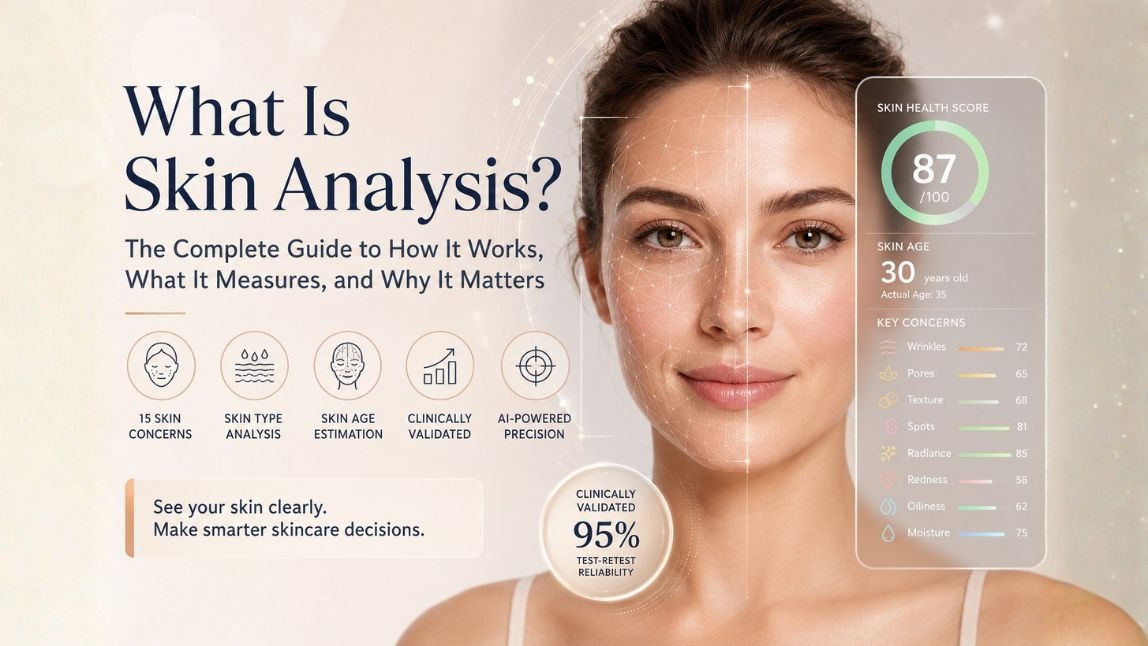
Most people learn about their skin the slow way — by trying products that don't work, noticing changes that have already been happening for months, or getting advice from a counter associate who's had three minutes to look at their face. Skin analysis changes that. Instead of guessing, you get a structured, measurable picture of what's actually going on with your skin — and a starting point for doing something about it.
This guide covers what skin analysis is, the different methods used today, what a good analysis actually measures, and how AI has changed what's now possible.
| Table of Contents |
|---|
What Is Skin Analysis?
Skin analysis is the process of systematically evaluating the condition of the skin — assessing visible concerns, identifying skin type, and measuring indicators of skin health — in order to guide treatment, product selection, or routine-building.
The key word is systematic. A glance in the mirror tells you something; a skin analysis tells you something specific, comparable, and trackable over time. That difference matters whether you're a consumer trying to build a better routine, a brand trying to make useful product recommendations, or a clinic trying to demonstrate treatment results.
A complete skin analysis typically evaluates:
- Skin type — oily, dry, combination, sensitive, normal, or some combination
- Surface concerns — acne, pores, texture, oiliness, redness
- Aging indicators — fine lines, wrinkles, firmness, elasticity, droopy eyelids
- Tone and radiance — dark spots, pigmentation, uneven tone, dark circles, overall radiance
- Hydration and moisture — surface dehydration and moisture retention
- Skin age — how visibly aged the skin appears relative to chronological age
No single method measures all of these equally well, which is why the method you use matters.

Types of Skin Analysis: From Manual to AI
1. Visual Assessment by a Professional
The oldest and still widely practiced form. A trained aesthetician or dermatologist examines the skin under good lighting — often with magnification — and documents what they see. In experienced hands, this is genuinely valuable: a good aesthetician can catch things most tools miss, like early signs of sensitivity or unusual texture patterns.
The limitation is that it doesn't scale, doesn't produce standardized data, and varies significantly between practitioners. Two aestheticians can look at the same face and reach different conclusions. For a spa with multiple staff members, this creates real inconsistency in consultation quality.
2. Skincare Quizzes
The first attempt to make skin assessment accessible at scale. Digital questionnaires ask customers about their skin type, concerns, and current routine, then generate product recommendations based on the answers.
The accuracy ceiling here is real and structural: the quiz is only as good as the customer's ability to describe their own skin. Most people can't accurately distinguish between surface dehydration and genuine dryness, or identify whether their breakout pattern suggests hormonal or congestion-related acne. They report what they notice, which is often incomplete.
Quizzes still have value for gathering preferences and lifestyle context — but as a diagnostic tool, they consistently underperform against methods that look at the skin directly.
3. Hardware Imaging Devices
Professional-grade imaging systems like VISIA use multi-spectrum lighting — including UV — to reveal sub-surface concerns invisible to the naked eye: UV damage, deep pigmentation, vascular patterns, sebaceous follicle activity. The output is detailed and clinical-grade.
The practical limitations are significant: these devices cost tens of thousands of dollars, require trained operators to interpret the output, and are fixed installations. They work well in high-end dermatology clinics and flagship retail environments, but they're not deployable at scale across a retail network or an e-commerce channel.
4. AI Skin Analysis
The most significant development in accessible skin diagnostics in the past decade. AI skin analysis uses computer vision models — trained on large datasets of clinically annotated images — to evaluate the face through a standard camera, in real time, without specialized hardware.
The model maps facial zones and simultaneously assesses multiple parameters: texture, tone, wrinkle depth, pore size, oiliness, redness, pigmentation, and more. The output is structured, consistent, and produced in seconds.
"AI skin analysis does something neither quizzes nor in-person consultations could do at scale: it produces a standardized, data-backed skin profile that any staff member can use as a consultation starting point — and that can be tracked over time."
What Does AI Skin Analysis Actually Measure?
A good AI skin analysis doesn't just tell you "your skin is dry." It measures specific, defined parameters — which is what makes the output useful rather than generic.
Here's what a comprehensive AI skin analysis covers:
Acne and Texture
- Pores — size and visibility of pore openings across facial zones
- Texture — surface smoothness and irregularity
- Acne — active breakout presence and distribution
- Oiliness — sebum production indicators across the T-zone and cheeks
Aging and Firmness
- Wrinkles — depth and distribution of lines across forehead, eye area, and nasolabial folds
- Moisture — surface hydration levels
- Firmness — skin elasticity and contour integrity
- Droopy eyelids — upper eyelid positioning as an aging indicator
Tone and Pigmentation
- Spots — hyperpigmentation, age spots, post-inflammatory marks
- Dark circles — periorbital pigmentation and shadowing
- Radiance — overall skin luminosity and evenness
- Redness — diffuse redness, broken capillary visibility, inflammation markers
Skin Type
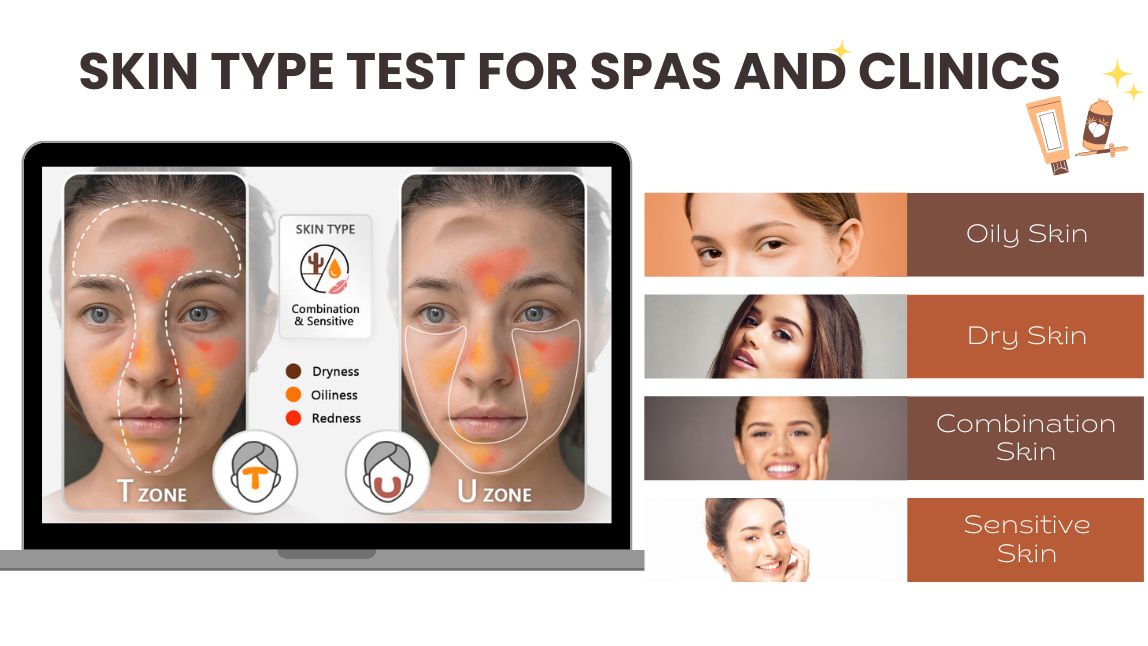
Determined by analyzing the T-zone and U-zone separately across three dimensions: oiliness, dryness, and redness. This produces a classification across the five main types — oily, dry, combination, sensitive, normal — with more nuance than a self-report quiz can provide.
Skin Age
One of the most commercially useful outputs: an estimate of how old the skin appears relative to chronological age, based on the cumulative reading of aging indicators. Someone who is 35 chronologically might have a skin age of 30 or 42, depending on their genetics, sun exposure history, and skincare consistency. Skin age gives a concrete, personal data point that makes abstract skincare advice feel specific and relevant.
How Accurate Is AI Skin Analysis?
Accuracy is the right question to ask — and the answer depends heavily on which platform you're using and what their validation methodology looks like.
The better platforms publish clinical validation data. Perfect Corp.'s AI skin analysis, for instance, was trained on over 70,000 medical-grade clinical images and validated in collaboration with board-certified dermatologists. A published clinical study confirmed a 95% test-retest reliability rate — meaning the tool produces consistent results across repeated scans under comparable conditions — and an 80% correlation with professional physician assessments.
That 80% physician correlation figure is worth pausing on. It means the AI's assessment agrees with a dermatologist's assessment 4 out of 5 times. For a tool that operates in seconds, on a standard camera, without the physical examination context a dermatologist has, that's a meaningful level of clinical relevance.
For reference, La Roche-Posay's MyRoutine AI claims 95% accuracy based on 20 years of skin research and 50,000 graded photos. The methodologies differ, but the broader point is that the leading platforms in this space have moved well beyond novelty — they're producing outputs that have real diagnostic value.
Why Skin Analysis Matters for Brands and Retailers
From a business standpoint, the shift from generic to personalized skincare recommendations isn't a nice-to-have anymore — it's becoming a baseline expectation. Brands that can offer a structured, data-backed skin assessment at the point of recommendation are operating differently from those that can't.
A few specific ways the impact shows up:
Conversion. A product recommendation tied to a customer's scan results — "this serum targets the firmness loss and early wrinkle pattern we detected" — converts at a higher rate than a generic "best seller" recommendation. The recommendation has a reason. Customers can tell the difference.
Consultation consistency. In multi-location retail or spa environments, consultation quality varies dramatically by staff. AI skin analysis creates a standardized diagnostic baseline that any staff member can use, which raises the floor on consultation quality across the board.
Client retention through progress tracking. Brands using longitudinal skin analysis — scanning at intake and at follow-up visits — can show clients measurable improvement over time. When a client sees their skin age score drop, or their radiance score improve after three months of consistent product use, the relationship shifts from transactional to something closer to a health partnership.
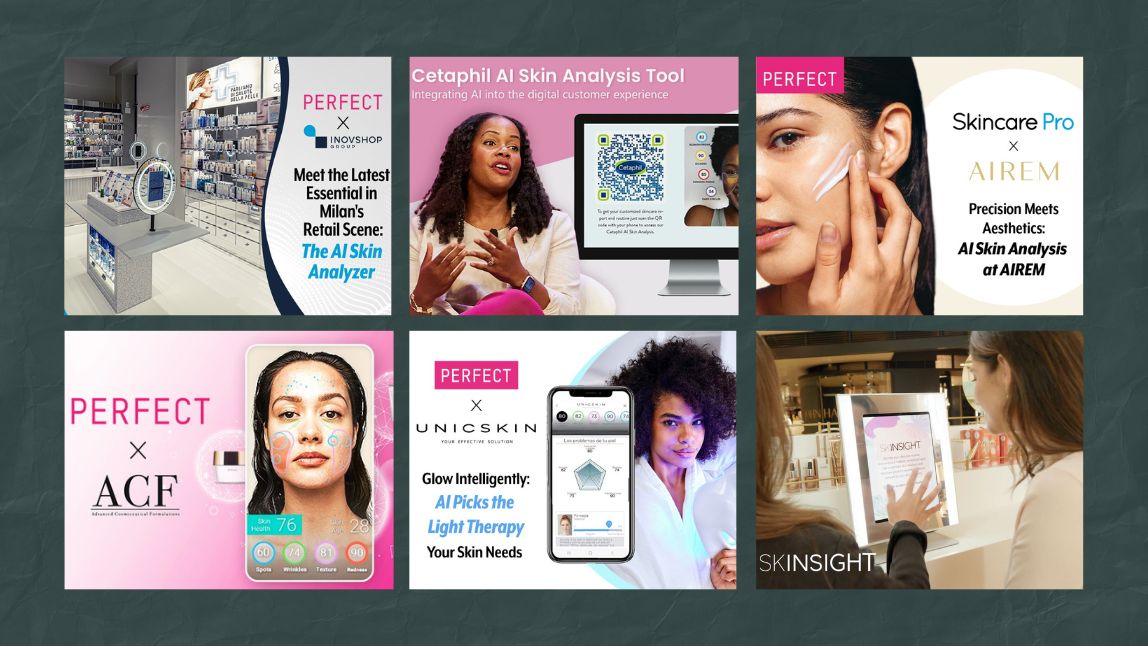
Cetaphil described their experience with Perfect Corp.'s platform this way: "We saw this was a great way to leverage AI technology — scanning someone's skin and giving them an AI-generated score identifying their skin status, and then giving them customized product recommendations and tips and tricks."
Decorté added: "When we saw that Perfect Corp. used 70,000 clinical images and validated results with all these dermatologists and skincare experts, we knew we could use this to help our customers achieve the results and the aspirations they have for their skincare and makeup.
Who Uses Skin Analysis, and How
Skincare brands and retailers integrate AI skin analysis into their website or app to guide product discovery. Instead of browsing a catalog, customers complete a scan and receive a curated routine matched to their specific skin profile. For brands with large SKU counts, this solves a real navigation problem — and produces recommendations that feel personal rather than algorithmic.
Med spas and aesthetic clinics use skin analysis as a consultation anchor. Before-and-after comparison across a treatment cycle gives practitioners objective data to support their recommendations, and clients measurable evidence that their investment is producing results. Skin age tracking is particularly relevant here — demonstrating a five-year reduction in skin age over a course of treatments is a more compelling retention and referral driver than anecdotal before/after photos alone.
E-commerce channels deploy skin analysis to replicate in-store consultation online. A customer who completes a scan and receives a personalized routine is more likely to convert — and more likely to return — than one who navigates a product listing page without guidance.
In-store retail uses skin analysis to give associates a structured conversation starter. A two-minute scan gives any associate a specific, data-backed basis for a recommendation, regardless of their level of personal skincare expertise.
How to Get Started With Skin Analysis
For consumers, the most accessible starting point is an online tool — several are available directly in-browser, requiring only a camera and a couple of minutes. The quality of the output varies significantly by platform, so it's worth choosing one backed by clinical validation rather than a consumer app built on lighter-weight models.
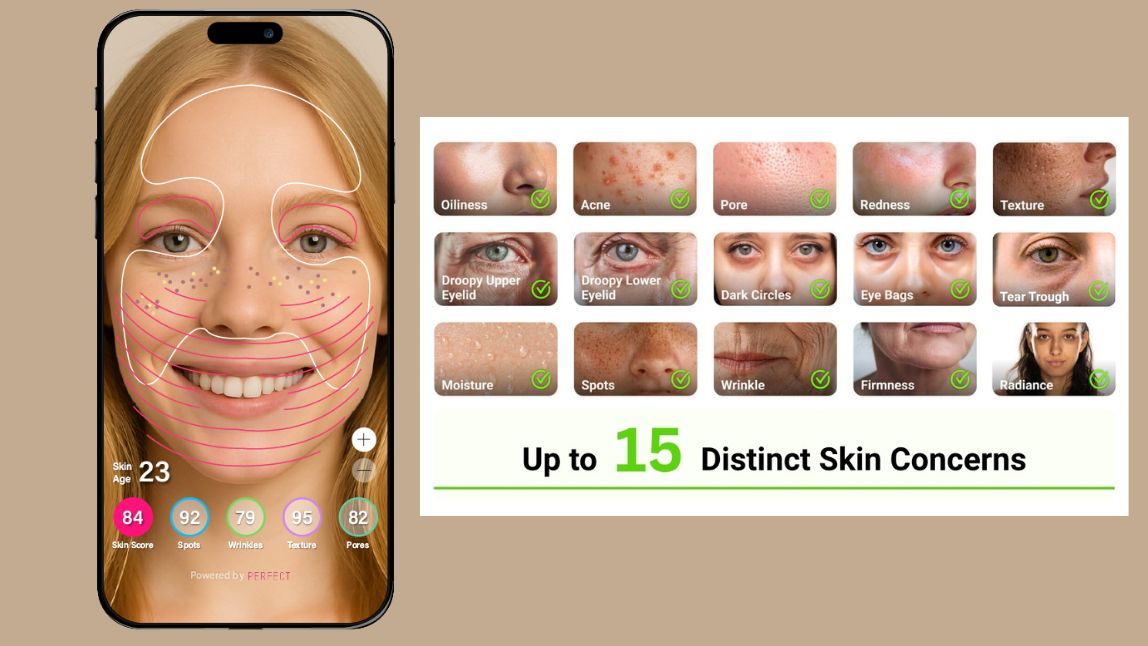
Perfect Corp.'s free online skin analysis analyzes 15 skin concerns, estimates skin age, determines skin type across T-zone and U-zone dimensions, and generates a skin health score — in seconds, using either a live camera or a photo. It's the same technology used by over 800 brands including Cetaphil, Decorté, and Bakel, available directly in-browser for free.
For businesses and brands evaluating AI skin analysis for integration, Perfect Corp. offers flexible deployment options — API for web integration, SDK for customized builds, and a pre-built Skincare Pro app for in-store iPad deployment — with a 14-day free trial available for the app.

Summary: What Good Skin Analysis Gives You
The best skin analysis tools share a few characteristics: they produce specific, parameter-level data rather than vague categorizations; they're consistent enough to be useful for tracking over time; and they're validated against clinical standards rather than just consumer satisfaction.
What that gives you — whether you're a consumer, a brand, or a clinician — is a starting point that's grounded in what's actually happening with the skin, not what someone guesses or what a quiz infers from incomplete self-report. That difference turns skincare from a largely trial-and-error process into something more like a managed outcome.
"The brands that get the most value from skin analysis aren't the ones with the most sophisticated technology — they're the ones that use the data to have a better conversation with their customers."
Perfect Corp. powers AI skin analysis for over 800 global beauty brands, with clinical-grade accuracy validated by board-certified dermatologists.