 Author:



(Updated on November 9th, 2026)
The four metrics that actually show whether beauty tech is paying off are sales lift, conversion rate, website traffic, and time spent on page — and brands that track them have real numbers to point to: Madison Reed saw a 10x rise in hair color sales, e.l.f. Cosmetics saw a 200% higher conversion rate among virtual try-on users, and Marianna Naturals saw a 300% boost in site traffic after adding AI skin diagnostics. This article breaks down why each metric matters and how to read it.
However, brands can’t just implement this tech and forget about it. If they want to use things like virtual try-on or AI shade finders, they must decide which key business metrics they want to measure, monitor, and improve. This can help them see what is working for the customer and what isn’t.
This isn’t always easy. As brands are deciding on which beauty tech solution to add to their brand experience, they may face roadblocks from the company executive team and implementation team who don’t understand the capabilities of beauty tech. By defining these key performance metrics, brands can be more informed and better make decisions about the implementation of beauty tech.

In this article, we’ll show you the top key performance indicators (KPIs) and SaaS metrics brands can and should track once they have deployed beauty tech across their channels.
Key Metrics to Focus On When Evaluating the Success of AR Powered Beauty Tech
Once implemented, beauty tech can instantly help transform the customer’s shopping experience on the site. That’s why it’s important for brands to track key SaaS metrics so they can tell what is and isn’t working. From increased time on-site to a boost in sales, these are the top KPIs to measure when evaluating the success of beauty tech:
1. Sales: AR-Powered Digital Transformation Solutions Can Significantly Increase Sales
Increased sales are just one of the KPIs to watch with beauty tech. If products are suddenly selling more after implementation, it’s likely that beauty tech is the catalyst.
The main reason for this is that beauty tech allows the customer to discover more SKUs. Instead of having to search the site for what they need, customers will receive automatic recommendations based on the shade finder recommendation or their interaction with a virtual try-on module.


They can find similar color options, shades, textures, and patterns without the need for a hard sale. The more brands that allow the consumer to try, the higher chances they’ll find the things they like and put them into the shopping cart. One example of this is the beauty company, Madison Reed.
“We can actually see the impact on our sales numbers from people using our Virtual Try-On tool,” said Corey O’Neal, Senior Product Manager at Madison Reed. “And in recent months, with more people staying at home because of the coronavirus, we’ve seen a 10x rise in our hair color sales.”
2. Conversion Rate: AR-Powered Beauty Try-On Boosts Consumer Purchasing Confidence
Tracking sales is good, but brands also need to think specifically about conversions. After all, what is it about the virtual try-on process that is convincing the shopper to make a purchase?
Ideally, conversions happen because virtual try-on gives them confidence in the product. When beauty tech is set up correctly and accurately, beauty products can be represented with extreme precision, thus giving consumers hyper-realistic digital beauty experiences.


When beauty brands take the extra time and effort to meticulously set up each SKU with great precision, it results in amazing improvements in conversion rates in return. Cosmetic company e.l.f. greatly benefited from this implementation.“We also found that those interacting with our virtual try-on had a 200% higher conversion rate — from shopping to actually purchasing,” said Ekta Chopra, VP of Digital, at e.l.f. Cosmetics “This means that augmented reality isn’t just cool technology, it’s actually working for us.”
3. Website Traffic: AR-Powered Virtual Try-On Sparks Consumer’s Curiosity
Along with sales and conversions, it’s also imperative to track website traffic. In most cases, when brands add virtual try-on, shade finder, skincare diagnostics, or another beauty tech tool, they’ll see an explosion of web activity.


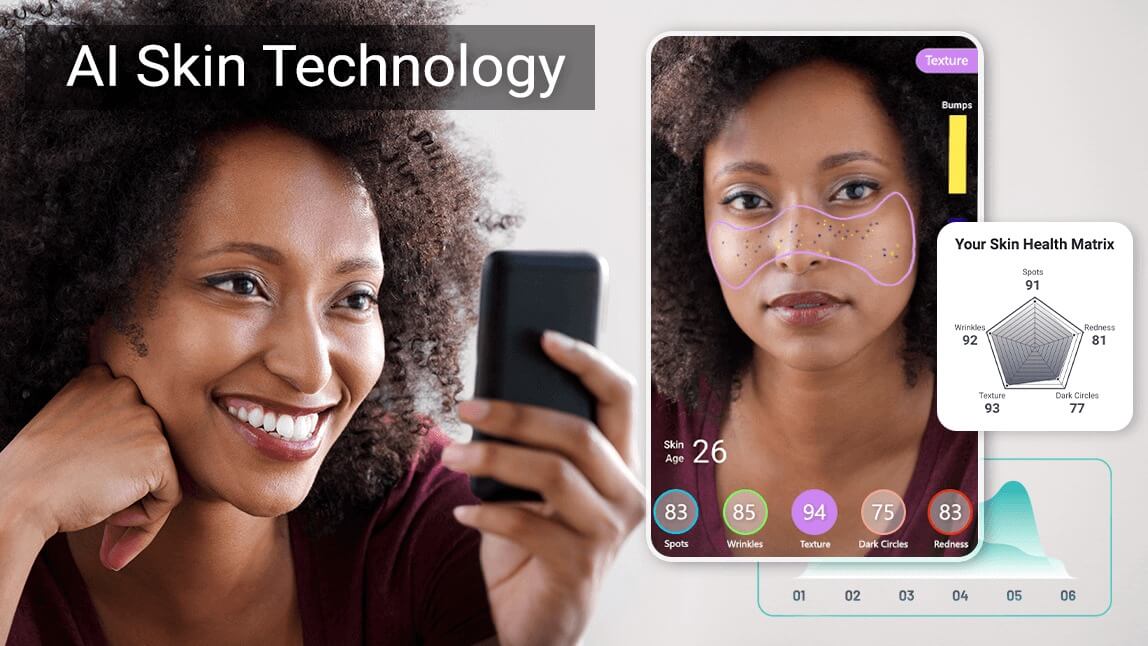
This is because consumers are curious. They like to learn more about themselves and what products would work for them, especially when the process is completely painless and efficient. As an example, artificial intelligence (AI) skincare technology allows users to learn more about the health of their skin. This is valuable both from a cosmetic standpoint as well as a medical one. One company that’s using this to their advantage already is Marianna Naturals.
“We can see the metrics for people who come to our site and use our skin diagnostics tool, so we can absolutely credit the tool with what has been a 300% boost in the traffic to our website,” said Joel DeBellefeuille, Co-Founder, President & CEO of Marianna Naturals.
4. Time Spent on Page: AR-Powered Beauty Try-On Creates Fun Shopping Experiences
Yes, beauty tech will attract more visitors. But are these page visits meaningful? Are customers browsing products or quickly clicking away? Interactive solutions like beauty tech should keep users engaged with the website, encouraging them to spend more time exploring the products and trying on new SKUs. After all, who doesn’t like to discover and explore things in a fun way? Beauty tech lets users interact with the shopping experience with personalized attention, so it’s superior to a traditional web experience.


With the right use of technology, brands are sure to see improved time-on-page SaaS metrics. Companies like Coffret D’Or have already seen a 2.48x increase in time spent on the page after implementing beauty tech. And consumers of the KATE makeup brand are similarly engaged.
“We also had users staying 4.3 times longer on the revamped campaign site compared with our previous campaign site without virtual makeup features,” said one of the company’s marketing representatives. “This proved that an enriched brand website experience leads to a more interactive and satisfying consumer journey.”
How the Four Metrics Compare
If you only report one number to your executive team, make it conversion rate: it is the metric closest to revenue that a try-on tool can influence directly. Track the other three to explain why it moved.
| Metric | What it tells you | Reported result | Who cares most |
|---|---|---|---|
| Sales | Whether shoppers find and buy more SKUs after trying products virtually | Madison Reed: 10x rise in hair color sales | Economic buyer (revenue) |
| Conversion rate | Whether try-on builds enough confidence to complete the purchase | e.l.f. Cosmetics: 200% higher conversion among try-on users | E-commerce and CRO leads |
| Website traffic | Whether the tool gives people a reason to visit and return | Marianna Naturals: 300% boost in site traffic | Marketing and brand teams |
| Time on page | Whether visits are meaningful engagement or quick exits | Coffret D’Or: 2.48x time on page; KATE: 4.3x longer on the campaign site | Digital and UX teams |
Dive Into the Beauty Tech World With these key performance metrics in hand, your brand will be unstoppable when it comes to implementing beauty tech.
Frequently Asked Questions
Which metric should we track first after launching virtual try-on?
Start with conversion rate for shoppers who used the tool versus those who did not, since it ties most directly to revenue. Sales, website traffic, and time on page then help explain what is driving the change.
How do we know beauty tech caused the lift in sales?
Compare sessions that used the try-on or shade finder with sessions that did not, and watch SKU discovery and add-to-cart behavior. As Madison Reed put it, they could see the impact of the tool in their sales numbers.
Does a traffic increase mean the tool is working?
Not on its own. Pair website traffic with time on page and conversion rate so you can tell meaningful visits from quick exits.
What are some of the most important AR tech trends?
The beauty industry has faced many challenges associated with digitizing the services and offering easier access to products for consumers. Thus, elevating online consumer shopping experience became the primary focus.
AR-powered makeup virtual try-on: the solution is one of the proven ways to help your brand drive sales with innovative AR-powered technology.
Learn more about Makeup Virtual Try-On >
AR-powered hair color virtual try-on: the innovative hair color try-on technology improves the online consumer shopping experience by allowing shoppers to virtually experience various hair dye products in the most convenient way.
Learn more about Hair Color Virtual Try-On >
AR-powered foundation virtual try-on: a solution that accurately detects a customer's skin tone and allows customers to virtually try on the perfect foundation match on their face in real time, as well as try on additional recommended warmer and cooler shades based on personal undertones.
Learn more about Foundation Virtual Try-On >
AR-powered glasses virtual try-on: a turnkey virtual glasses solution that allows shoppers to try on eyewear in real-time. It offers shoppers an accurate, true-to-life try-on experience that significantly simplifies and streamlines the shopping journey.
Learn more about Glasses Virtual Try-On >
AR-powered watch virtual try-on: The innovative solution meets consumer demand for a more engaging online watch shopping experience by offering hyper-realistic virtual try-on, allowing customers to find the perfect fit before committing to a purchase.
Learn more about Watches Virtual Try-On >
AR-powered earring virtual try-on: The AR earring try-on experience supports high resolution textures, material reflections, and simulated motion physics with rigid body dynamics.
Learn more about Earring Virtual Try-On >
AR-powered bracelet virtual try-on: A seamless, real-time AR experience on bare wrists - no extra markers required. The solution modernizes luxurious shopping experiences with an ultra-personalized, high-touch approach.
Learn more about Bracelet Virtual Try-On >
AR-powered ring virtual try-on: Help your customers feel confident in their purchase decisions – your online customers can easily find the perfect ring size and style before committing to a purchase.
Learn more about Ring Virtual Try-On >
Evaluating beauty tech for your brand? Talk to our sales team about which of these four metrics to benchmark first and how to set up try-on for your catalog.
Get expert advice from Perfect Corp. and be part of the beauty tech trend. Contact us for details on beauty tech solutions trusted by 800+ brands globally.
Shared Materials by Strapi
*Adjust the size of images ONLY. Please go to Strapi to edit the materials info.
Read our “Beauty Tech: The Complete Guide ” to unlock powerful ROI secrets