 Author:



Table of Content
- What is Multimodal AI?
- How Multimodal AI Works
- Real-World Use Cases of Multimodal AI
- Why Multimodal AI is the Future of Digital Customer Experience
- Bring Your Brand into the Future With Multimodal AI
AI is no longer on the horizon. It’s here, and it’s changing how brands engage customers, personalize customer service, and much more. While earlier AI models worked with one type of data, multimodal AI can process and integrate text, images, audio, video, and other types of data. Instead of merely scouring text on the internet to answer your prompt, multimodal AI can watch videos, crawl social media feeds, and look through other information sources.
Companies across industries are using multimodal AI tools to broaden customer understanding, predict trends, and enhance customer experiences. For example, in the healthcare industry, multimodal AI tools interpret a patient’s medical history, industry publications and studies, and medical images to suggest a diagnosis.
What is Multimodal AI?
Multimodal AI is a more complex model that uses a wider range of data to find patterns and put insights into context. It goes beyond single modal AI and offers a wider range of use cases:

- Single Modal: Works with one input, such as text or images. It includes text-only chatbots, image recognition tools that help customers find products they like online based on a photo, and AI-powered search engines that only consider search history.
- Multimodal: Works with multiple inputs for richer comprehension. This includes tools such as Amazon’s Just Walk Out, which enables customers to pay for items without checking out. This tool integrates sensor data, computer vision, and other information to track a customer’s purchase and collect payment as they walk out of the store.
Multimodal AI gives brands a comprehensive picture of customers. These tools go beyond social listening and compile data from social media, internet searches, voice searches, images, chat logs, and even customer service calls. Integrating multiple sources of data offers a clear view of customer behavior across multiple touchpoints.
Brands can use this data for personalized marketing campaigns, better customer service, and even product development.
How Multimodal AI Works
A multimodal AI system has multiple components to analyze and interpret different sources of data. Vision language models combine traditional large language models with computer vision encoders to interpret text, videos, and images.
You train a VLM model with data that combines text and visual elements, such as captioned images or captioned videos. They use diffusion models to generate high-quality images. These models learn by converting original images into static and recovering the original data. When you enter a prompt, the system starts with random noise and creates an image based on how it recovered similar data from the training material.

Multimodal AI systems use a process called embedding to convert different sources of data to a similar format so they can compare and analyze it. If you do business in multiple countries, consider how you handle pricing: you have to convert your prices into a single form of currency to compare them to your competitors and set the right price for your customers and your business goals.
Benefits for Enterprise Users
These systems can perform complex tasks. You can ask the AI to generate an image with warm lighting and glossy makeup and receive a more realistic result.
Multimodal AI also gives you more accurate recommendations and analysis. Instead of using snippets of data to predict trends and customer behaviors, it can assess a customer’s behavior in multiple formats. It also enables conversational or prompt-based workflows. The system can listen to your tone and read facial cues to contextualize your prompts.
Real-World Use Cases of Multimodal AI
Brands around the world are using modern solutions like those offered by Perfect Corp. to transform customer service and enhance user experience.
Beauty and Skincare
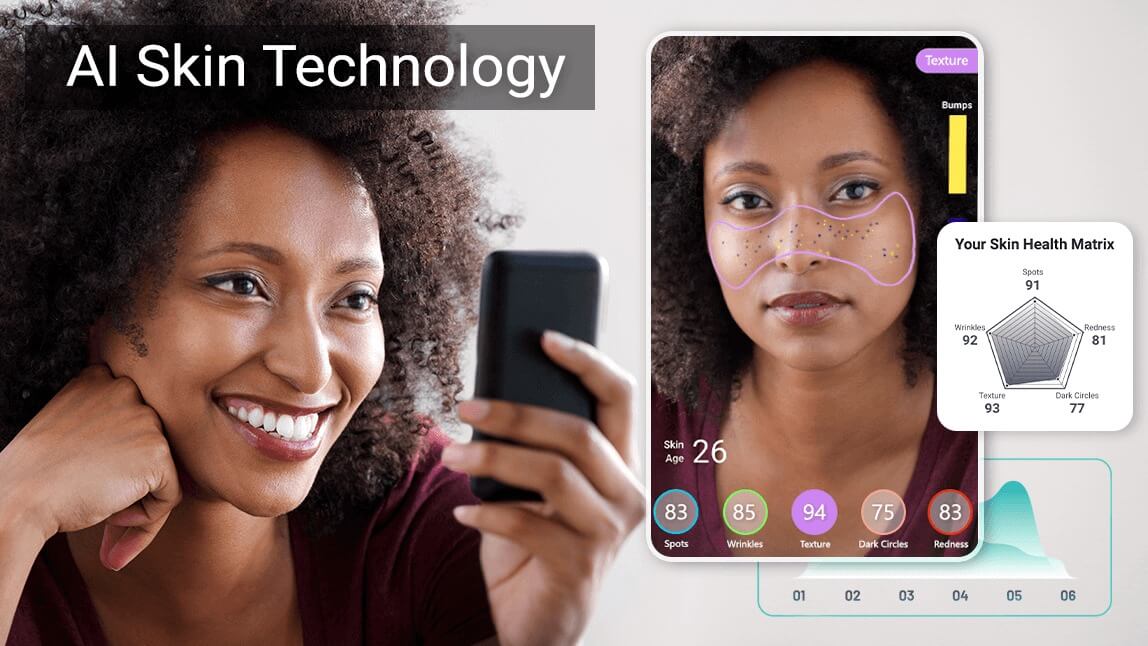
Beauty brands use multimodal AI to replicate or exceed an in-person store experience for online shoppers. Customers can take a selfie or upload a photo for a detailed skin analysis, color matching, and product recommendations. Since the AI tool adjusts the lighting, your customers aren’t getting product recommendations influenced by lights that are too warm or too cool.
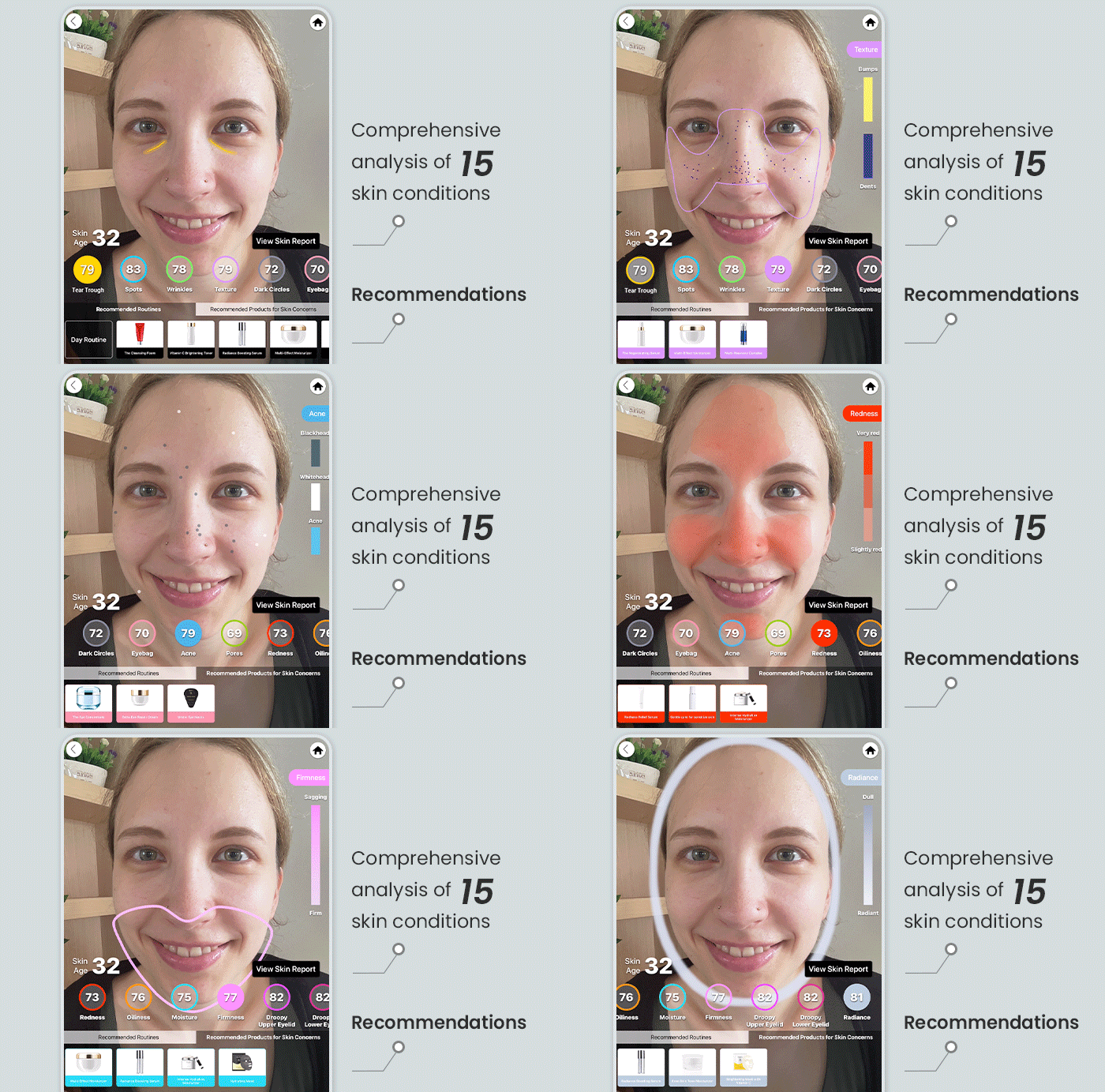
Beauty and skincare brands are also using these tools to assess a user’s browser history, purchases, and social media posts to recommend specific products for their needs.
You can also create high-quality images fast using prompts or images from previous photoshoots. Even if you’re not using AI for the whole ad campaign, AI can generate personalized variations for customers based on their online behavior.
Fashion and Accessories
Fashion and accessory brands also use multimodal AI to bring an in-store experience to online shoppers. Virtual try-on tools let customers upload photos to see realistic images of themselves in different outfits.

Engage your customers with apps that create personalized outfits based on prompts and reference photos. You can also develop a tool your customers can use to style themselves using specific prompts, such as, “create a workday outfit for a person with a short torso and a pear-shaped frame.”
Retail and E-Commerce
Retailers are adding multimodal AI search functions on their websites to enable users to combine text and images for a more accurate search. For example, searching the internet for “ballet-inspired heels” pulls up tons of different brands and styles. If your customer sees your shoes in a movie, they can upload a still of the outfit and combine it with “ballet-inspired heels” to narrow their results.

On the operations side, retailers and e-commerce companies use multimodal AI to create dynamic product imagery. You may want to create page variations that show your products in a different context. Multimodal AI can place your products into a realistic background. These tools also generate product description pages that speak to customers by analyzing their data and extracting relevant keywords.
Marketing and Creative Teams
Multimodal AI helps marketers generate campaign assets quickly. A traditional generative AI tool would give you the text you need to create a product manual or brand guidelines, and you would find the photos on your own. Multimodal AI can make the whole guide for you.

If you’re a marketer, you understand how A/B testing improves campaign performance. Multimodal AI can make these variations in seconds. You can test multiple variations of the same ad or launch your single variant A/B tests sooner.
An AI-powered marketing tool can automatically analyze campaign results and suggest successful campaign strategies. It can also adapt your ad and run new A/B tests based on recommendations.
Why Multimodal AI is the Future of Digital Customer Experience
Modern customers expect a rich digital experience. To engage them, you need an interactive interface with multimedia elements. Multimodal AI gives you the tools to engage customers in a new way. It’s easier to deliver in-store customer service to online shoppers, because they can “try on” your products.
Better Customer Experiences
Multimodal AI marketing and customer service platforms outperform single-modal tools in accuracy and relevance. You’re no longer limited to text-only sources of information. Instead, you get a 360-degree customer view based on how they interact with you visually, textually, and in voice interactions. A multimodal AI platform can read facial and vocal cues to adjust the customer service experience.
Personalized Interactions
Deep customer insights help you personalize marketing and customer service at every touchpoint with your customer. Create hyper-personal content for each user based on their behavior to build a stronger connection. Personalize the customer journey through ads, product recommendations, and customer service tools.
Accurate Content
Single-modal AI tends to hallucinate. This happens when a large language model sees a pattern or makes a connection that doesn’t exist and generates text that looks true but isn’t. Multimodal AI puts data into context, and it’s more accurateand reliable. You should still always review and fact-check content. Even though it’s not as common, multimodal AI does experience hallucinations.
Scalable Deployment
Effective multimodal AI tools like those offered by Perfect Corp. are easy to deploy at scale. We offer a comprehensive API ecosystem with generative integrations for your website, app, and AI agents.

Our API includes everything from image editing to video media analysis to virtual try-on tools to engage your customers. Our AI API tools are trained on over 500,000 expert insights and adapt quickly to your brand’s unique voice. Quickly deploy these tools across your digital ecosystem to start personalizing the customer experience.
Bring Your Brand into the Future With Multimodal AI
Multimodal AI is the next level of artificial intelligence. It benefits your company by offering accurate, in-depth customer analysis to inform branding, customer service, and product development. It offers your customers a fun way to engage with your brand from anywhere through personalized ads, virtual try-ons, and more.
Perfect Corp.’s APIs and multimodal generator give you the competitive edge. Elevate digital experiences with tools such as AI Skin Analysis. Use generative AI to tweak and personalize existing creative assets to post more digital content without spending more money.

Try it for yourself. Explore a free trial with Perfect Corp. to visualize what we can do to elevate your brand.