


AI Facial Thirds Calculator Online
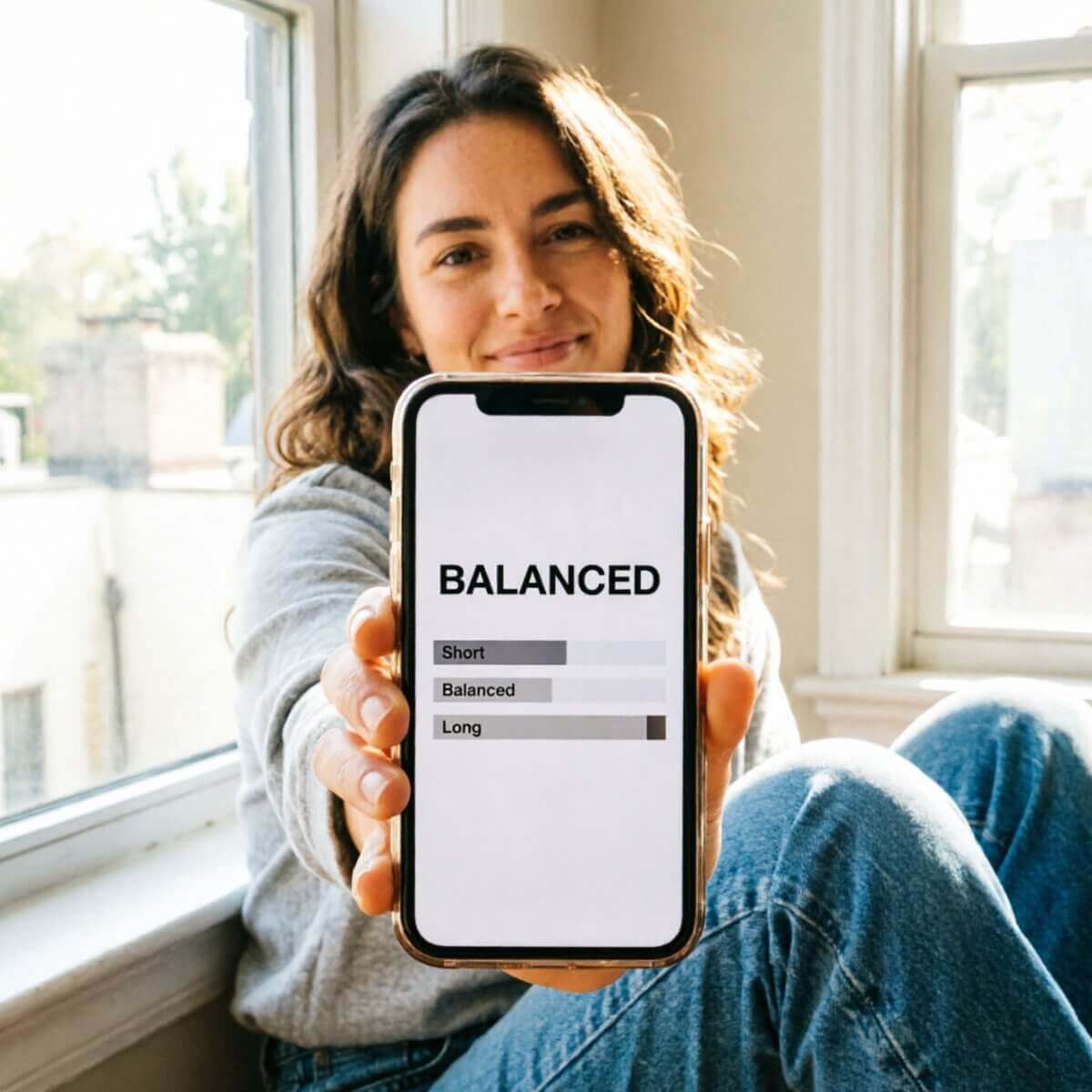
Scan one selfie and get your face thirds ratio in seconds. Our facial thirds calculator measures the upper, middle, and lower face, shows your ratio (for example 37% : 32% : 31%), and rates each section Short, Balanced, or Long against the ideal 33% : 33% : 33%. Built on the same Face AI trusted by 800+ beauty brands, with photos deleted after analysis.

FACIAL THIRDS 101What Are Facial Thirds?
What Are Facial Thirds?
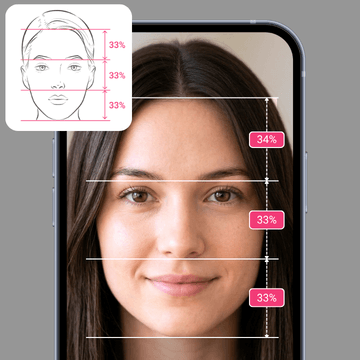
Facial thirds divide the face into three horizontal zones:
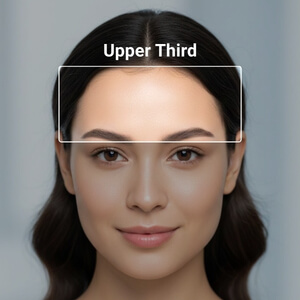
- the upper third (hairline to brow line),
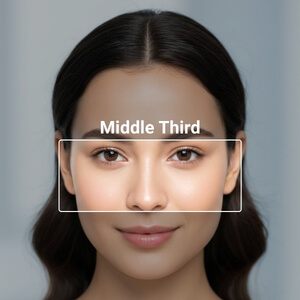
- the middle third (brow line to the base of the nose),
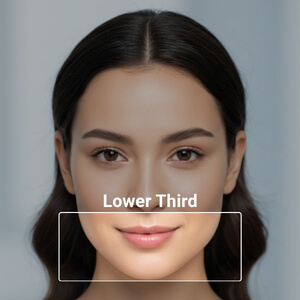
- and the lower third (nose base to the bottom of the chin).
In the classical canon described by Leonardo da Vinci and later neoclassical artists, a perfectly proportional face has equal facial thirds, a 1:1:1 ratio where each zone is about 33% of total face height. Today orthodontists, plastic surgeons, makeup artists, and eyewear stylists use this facial proportion rule as a fast reference for vertical balance. But it is just a reference point, not a beauty verdict.
How the AI Facial Thirds Scanner Works
No ruler, no calipers, no face measurer app guesswork. The facial thirds scanner turns one front-facing photo into a full facial thirds measurement in four steps. It is the easiest answer to how to check my face proportions at home.

Step 1: Scan or Upload a Selfie
Open the scanner, allow camera access, and look straight into the lens. Pull hair off your forehead so the hairline is visible, and use even light. Prefer a photo? Upload a clear front-facing JPG or PNG instead.


Step 2: AI Maps Your Facial Proportions
Perfect Corp Face AI detects the hairline, brow line, nose base, and chin. This facial mapping is the same engine behind our face analyzer for 11 facial ratios and proportions, so you can also check Face Vertical Ratio, Face Aspect Ratio, Eye Aspect Ratio, and Eyebrow Position in the same scan.

Step 3: Calculate the Facial Thirds Ratio
The facial thirds calculator expresses each zone as a percentage of total face height, shown as Your Ratio, for example 37% : 32% : 31%. In the Facial Ratio tab this result is labeled Face Horizontal Ratio, because the face is divided by horizontal lines.
How to Read Your Facial Thirds Results
Equal facial thirds are rare. Most people see at least one section marked Short or Long, and that is normal variation, not a flaw. Here is what each pattern usually means.
Balanced: Equal Facial Thirds
All three sections land close to 33% and read Balanced. This near 1:1:1 pattern is what most perfect face proportions charts show, yet it is uncommon in real life.

Long Upper Third
A taller forehead pushes the upper section toward Long, as in a 37% : 32% : 31% result. Hairline height, recession, and forehead shape drive this pattern. Curtain bangs, side parts, and fuller brows can visually shorten it.
Long Middle Third
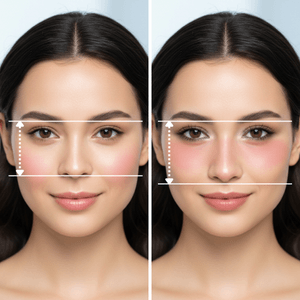
The middle third leads when the nose is longer or the brow sits higher. Horizontal blush placement and frames with a lower bridge help even out this facial proportion.

Long Lower Third
The most common deviation, especially in men. A longer lower third often reads as a strong jaw. Uneven facial thirds here are usually skeletal and can also change with bite and age.
What Each Facial Third Tells You
A facial thirds test is more useful when you know what drives each zone. This is where a facial analysis tool beats a ruler and a mirror, and where a facial test turns into real insight.
Upper Third: Hairline to Brow
Measures forehead height. It is the least stable zone because the hairline moves with age and hair loss, and bangs or a cap can hide it, so always scan with your forehead visible.
Middle Third: Brow to Nose Base
Reflects nose length and brow position. Rhinoplasty and brow lifts change it, so clinics use it for before and after facial analysis.
Lower Third: Nose Base to Chin
Reflects jaw height, lips, and chin. Orthodontists split it again: the upper lip should take about one third, and the lower lip plus chin about two thirds.
What Makes Facial Thirds Uneven?
Unbalanced facial thirds usually come from a mix of genetics, age, and how the photo was taken. Before you trust any facial thirds ratio, check these six factors.
Genetics and Bone Structure
Skull shape, jaw growth, and nose length are inherited. They set your baseline facial proportion more than anything else.
Hairline Height and Recession
A receding or naturally high hairline lengthens the upper third without any change to bone structure.
Bite, Teeth, and Jaw Growth
Overbite, open bite, and jaw growth patterns change lower third height. This is why dentists and orthodontists measure it.
Aging and Soft Tissue
Skin laxity and volume loss shift soft tissue, and tooth loss can shorten the lower third over time.
Camera Angle and Lens Distortion
Tilting your chin up shrinks the lower third, tilting down shrinks the upper third, and a phone held too close enlarges the nose. Hold the phone at eye level, about an arm's length away.
Expression and Hair Coverage
Smiling raises the cheeks and changes the lower face, and bangs hide the hairline. Use a neutral face and pull hair back.
Facial Thirds vs. Face Symmetry vs. Golden Ratio vs. Facial Harmony
These four terms get mixed up constantly. They measure different things, and a complete face analysis looks at all of them. The facial thirds scanner owns the first one.
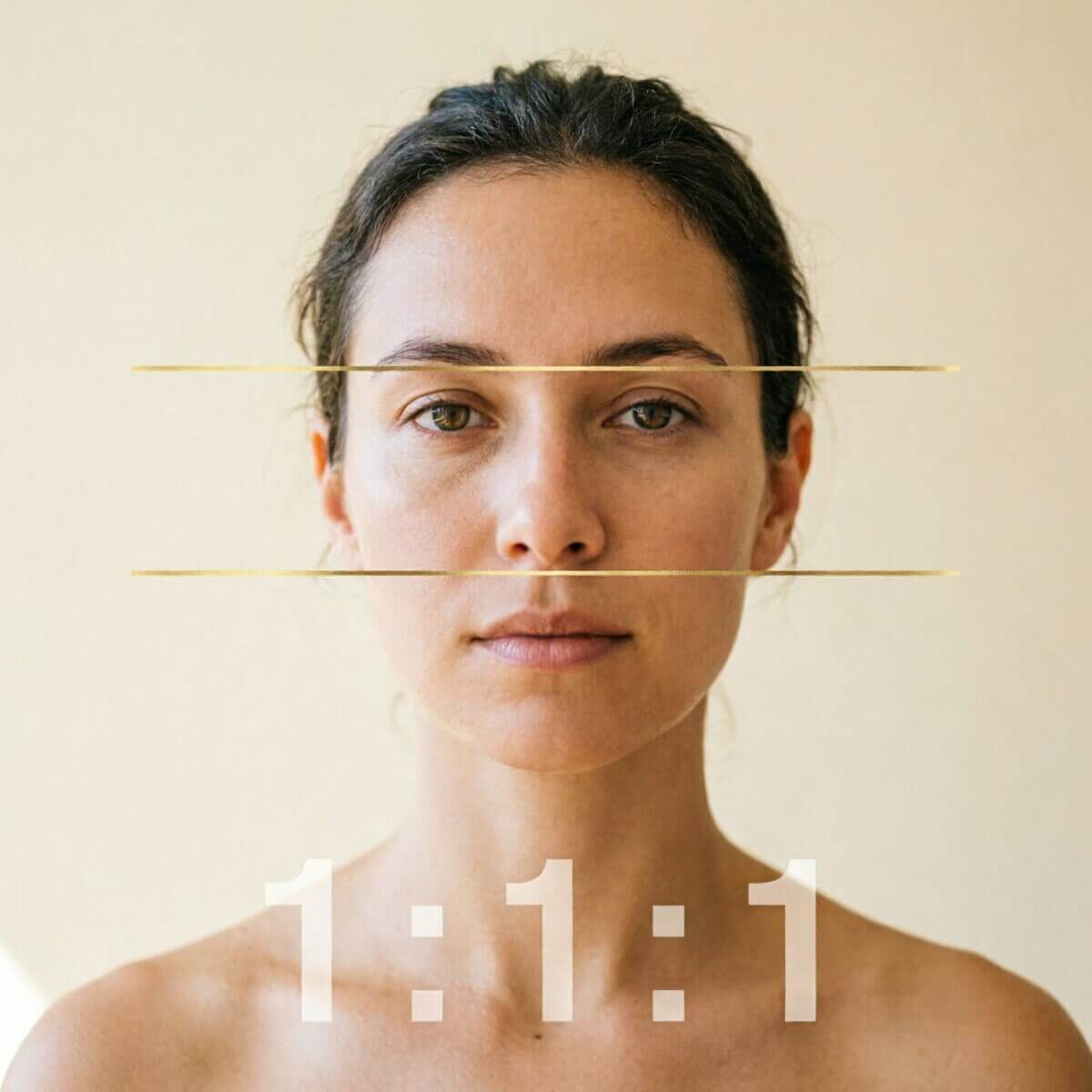
Facial Thirds: Vertical Balance
Compares top, middle, and bottom zones of the face. This is exactly what the facial thirds scanner measures.
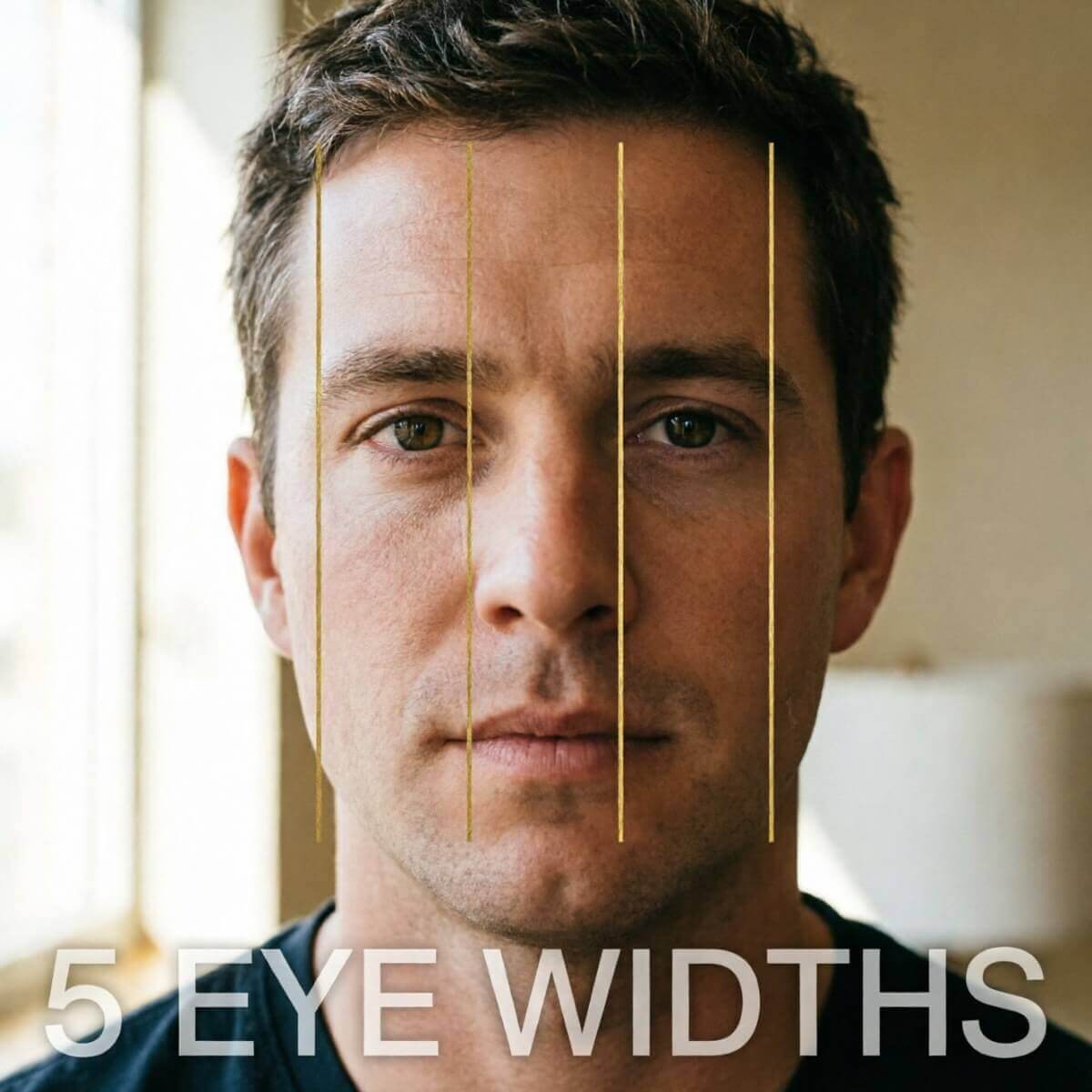
Face Symmetry: Left vs. Right
Compares the two halves of the face across a center line. Human symmetry is never perfect. The facial thirds scanner focuses on vertical balance, so for face symmetry AI that compares both halves, try our free symmetrical face test.
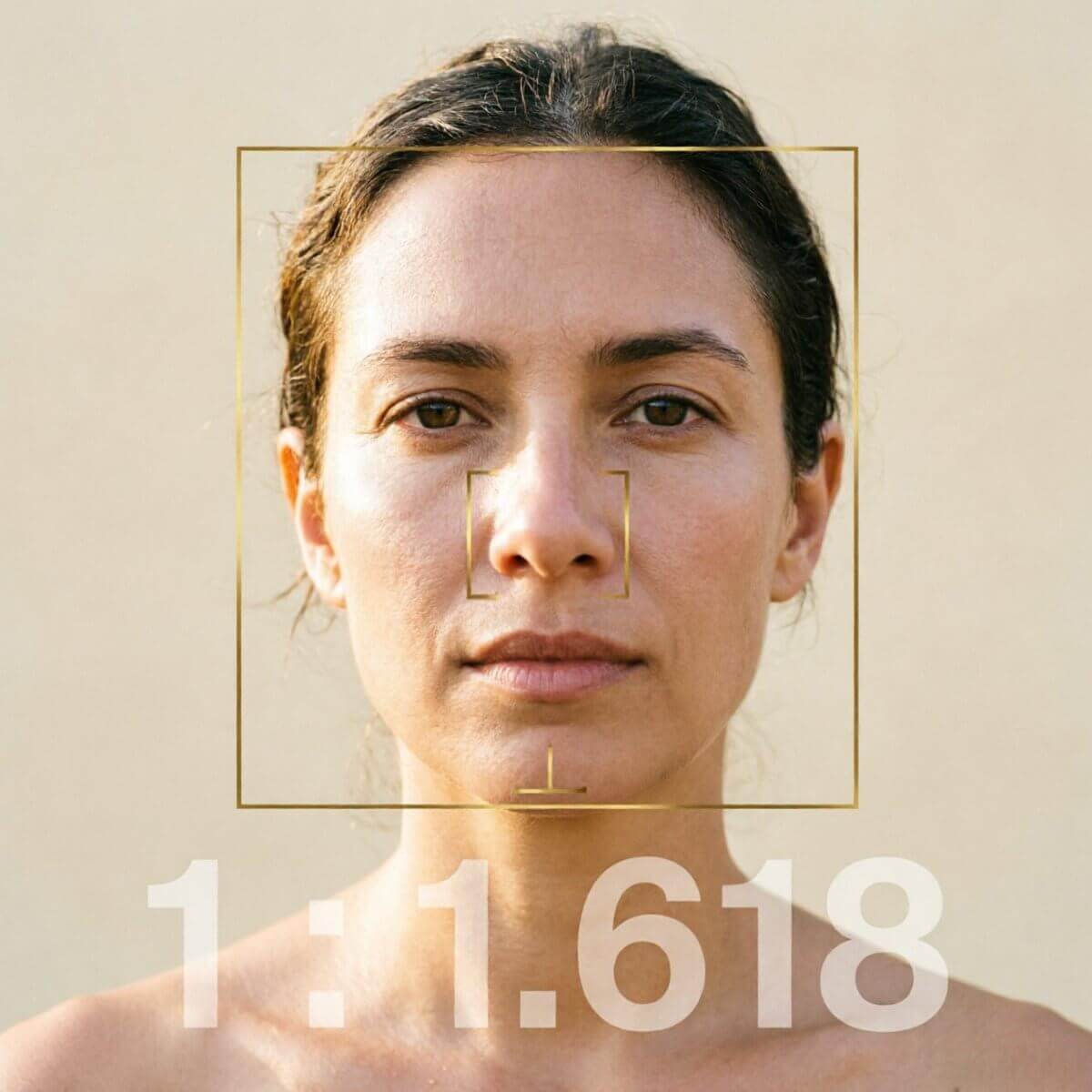
Golden Ratio: 1:1.618 Relationships
Compares distances between features against 1.618, the ratio behind the perfect ratio face idea. Golden ratio face symmetry checks are popular, yet face symmetry golden ratio scores are related but not the same, and research on attractiveness is mixed. Want the mathematical face view on its own? Use our free golden ratio face calculator.
Facial Harmony: The Big Picture
Looks at thirds, fifths, symmetry, and feature ratios together, the idea behind a facial harmony score, often searched as harmony score face or simply harmony face. Our facial harmony test and facial harmony calculator take this wider view, and your thirds result is a strong first input.
How to Balance Each Facial Third with Styling
You cannot change bone structure with a lipstick, but you can change how the eye reads proportions. Use your facial thirds results to guide these quick wins.
Upper Third: Hair, Bangs, and Brows
Shorten a long upper third with curtain bangs, side parts, a darker brow, or bronzer along the hairline. Lengthen a short one with off-face styles and a lifted brow tail.

Middle Third: Blush, Eyes, and Frames
Place blush horizontally across the cheeks to shorten a long middle third, or vertically to lengthen a short one. Glasses with a low bridge shorten the nose visually.
Lower Third: Lips, Chin, and Contour
Soften a long lower third by shading under the chin and adding lip volume. Balance a short lower third with highlight on the chin and a defined lip line.
TRY THE DEMOSee the Facial Thirds Scanner in Action
See the Facial Thirds Scanner in Action
Want to see the full consumer experience before you integrate it? Our facial thirds scanner demo shows exactly what your shoppers or patients will see: a live camera scan, a Your Ratio result, and a Short, Balanced, or Long rating for each section in seconds. The demo page also explains how facial thirds relate to symmetry, so visitors asking is my face symmetrical get a clear next step.
Who Uses an AI Facial Thirds Calculator?
From medspas to eyewear retailers, businesses add facial thirds analysis to make consultations faster, more visual, and easier to trust.
Medspas and Aesthetic Clinics
Show patients their facial proportion data during consultations and plan filler, Botox, or chin treatments with a shared visual reference.
Plastic Surgeons and Orthodontists
Capture a quick facial thirds measurement before rhinoplasty, genioplasty, or orthodontic treatment, then compare after.
Beauty and Makeup Brands
Recommend contour, blush, and brow products based on which facial third needs balance, right inside your app or website.
Eyewear Retailers
Suggest frame heights and bridge styles that suit a long or short middle third.
Hair Salons and Barbers
Pick bangs, fades, and part lines that balance the upper third.
Wellness and Looksmaxxing Apps
Give users a responsible face analysis that describes proportions instead of ranking faces.
Add Facial Thirds Analysis to Your Platform with Our Face Ratio API
Take the facial thirds scanner beyond this page. The YouCam AI Face Attributes and Ratio Analyzer API returns facial thirds (face horizontal ratio) plus other facial ratio data your product team can build on.
Leading Face AI Accuracy
Automated facial analysis replaces manual measuring, so every consultation starts from the same consistent facial thirds ratio.
Real-Time Analysis and Comparison
Results arrive in seconds, with each ratio compared against its ideal reference, such as 33% : 33% : 33% for facial thirds.
Simple Integration, High Scalability
A standardized RESTful API with clear documentation and SDK support for web and mobile, from pilot to millions of scans.
Bring the Facial Thirds Scanner to Your Customers
Get a free web demo code and integration support for web, app, or in-store devices.
Facial Thirds Scanner Frequently Asked Questions
What are facial thirds?

Facial thirds split the face into three horizontal zones: hairline to brow, brow to nose base, and nose base to chin. In the classical rule each zone is about one third of face height. It is a quick way to describe vertical facial proportion.
What are ideal facial thirds?
The classical ideal is 1:1:1, so each third is about 33% of face height. The scanner shows how far each section sits from that reference with a Short, Balanced, or Long rating, and a slightly longer lower third is very common.
How do I measure my facial thirds?
You can mark the hairline, brow line, nose base, and chin on a straight-on photo and measure each gap with a ruler. The faster option is our free AI facial thirds scanner, which does the facial thirds measurement automatically and shows the result as a percentage for each third.
Is it normal to have uneven facial thirds?
Yes. Uneven or unbalanced facial thirds are the norm, not the exception. Genetics, hairline height, bite, age, and even camera angle all shift the ratio, and studies of real faces show the perfect 1:1:1 canon is rare.
Can facial thirds change over time?
The bony framework is stable in adults, but the hairline, soft tissue, and teeth change. A receding hairline lengthens the upper third, and tooth loss or bite changes can shorten the lower third.
What is the difference between facial thirds and facial symmetry?
Facial thirds compare top to bottom. Facial symmetry compares left to right. A face can have equal facial thirds and still be asymmetrical, so use the facial thirds scanner for vertical balance and our symmetrical face test for left and right.
Is the facial thirds calculator accurate?
It is accurate for a consistent, photo-based estimate when the photo is straight-on, well lit, and the hairline is visible. It is not a clinical or medical measurement, so use it as a guide and confirm treatment decisions with a qualified professional.
Is the facial thirds scanner free and private?
Yes. The online scanner is free, needs no sign-up, and your photo is deleted after the analysis. Businesses can license the same technology through our API.
Can businesses integrate facial thirds analysis into their own app or website?
Yes. Perfect Corp offers web modules, SDKs, and a RESTful API so clinics, beauty brands, and eyewear retailers can add facial thirds and other facial ratio analysis to their own channels.
Is there a free face thirds calculator for proportional face tests?
Yes. This page is a free face thirds calculator and ratio face calculator in one. It works as a proportional face test, a face ratio test, and a facial scale for proportion face checks, so you do not need a separate face calculator for each measurement.
Can I get a free facial analysis beyond facial thirds?
Yes. The same face analyzer is a facial features analyzer with Face Attributes & Tones, Facial Ratio, and Skin Analysis tabs, covering face shape, eye and brow ratios, and more. Think of it as a face analysis test and a face features analyzer with no cost, so facial analysis free tools no longer mean basic results.
Does the scanner analyze my side profile?
The facial thirds scanner works from a front-facing photo. It does not judge nose, lip, or chin projection from the side. If you need side profile analysis AI, use a dedicated profile photo tool, then test facial proportions from both angles.
How is a facial thirds test different from a golden ratio face test?
A facial thirds test checks three vertical zones against equal thirds. A golden ratio face test checks distances between features against 1.618. Our scanner places your thirds next to the ideal 33% : 33% : 33% reference, and our golden ratio face test free tool covers the 1.618 view, so you can see the full picture.


