 Author: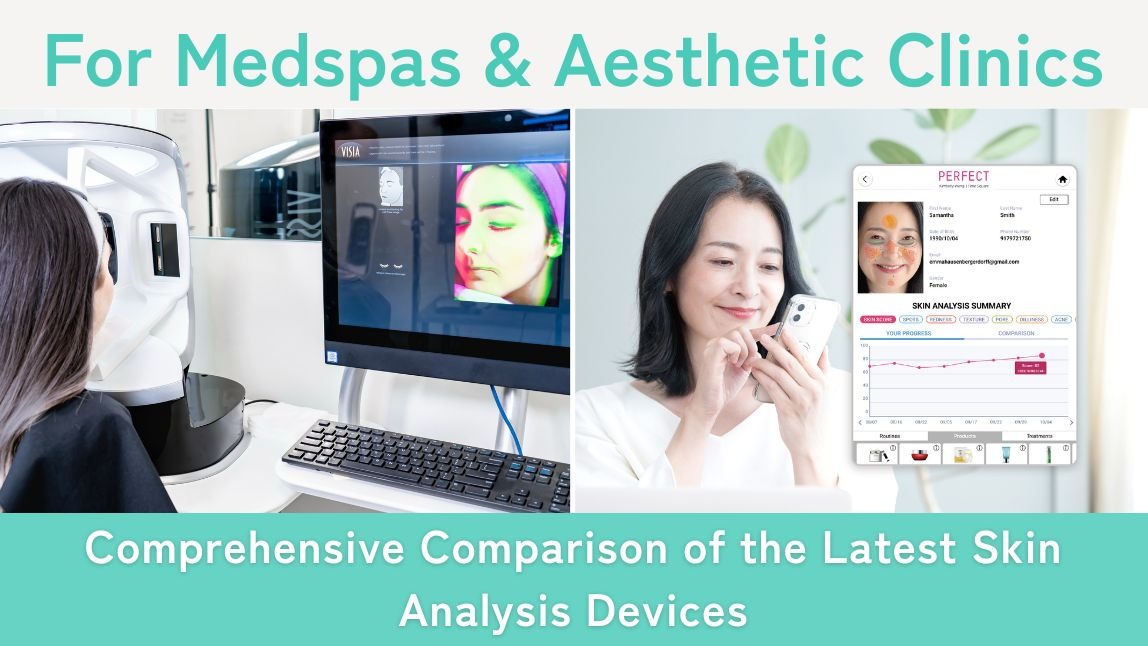
If you've searched "AI skin analysis machine," you're probably trying to figure out one of three things: what it actually is, whether it's accurate enough to trust, or whether it's worth investing in for your clinic, spa, or practice.
This guide answers all three — in plain language, backed by clinical data, and written for skincare professionals and consumers alike.
What Is an AI Skin Analysis Machine?
An AI skin analysis machine is a technology-powered device or software system that uses artificial intelligence — specifically deep learning and computer vision — to analyze a person's skin from a live camera feed or photograph. It identifies specific skin concerns, measures their severity, and often delivers personalized product or treatment recommendations, all within seconds.
Unlike a skin analysis device from a decade ago that relied on simple UV imaging or manual grading, modern AI skin analysis machines are trained on tens of thousands of dermatological images and validated against clinical standards. The result is a professional-grade skin assessment that doesn't require a dermatologist in the room.
These systems are used in:
- Medical spas and aesthetics clinics
- Dermatology and physician offices
- High-end retail beauty counters
- Wellness centers and gyms
- Consumer-facing apps and websites

How Does AI Skin Analysis Technology Actually Work?
At its core, an AI skin analysis machine runs on a deep learning model — the same type of AI used in facial recognition and medical imaging. Here's the simplified process:
- Step 1 — Image Capture: The system uses a device camera (tablet, phone, or dedicated hardware) to capture a high-resolution image or live video feed of the user's face.
- Step 2 — Facial Mapping: The AI maps the face using landmark detection, identifying zones like the forehead, cheeks, nose, chin, and under-eye area — allowing it to assess different skin zones independently.
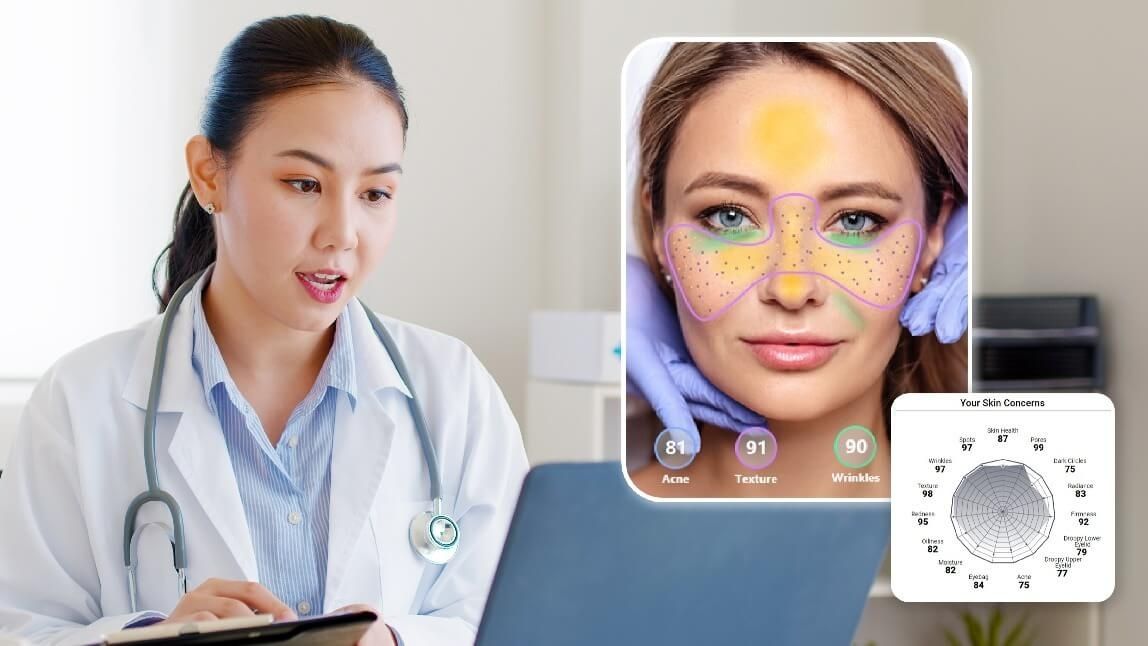
- Step 3 — Concern Detection: The trained model scans the image for specific skin concerns — wrinkles, dark spots, redness, pores, acne, texture irregularities, and more. Each concern is detected using pattern recognition learned from its training dataset.
- Step 4 — Severity Scoring: Each detected concern is given a severity score, often on a numerical scale. This makes it possible to track changes over time and measure treatment outcomes.
- Step 5 — Recommendations: Based on the analysis, the system generates personalized product suggestions or treatment recommendations tailored to what was found.
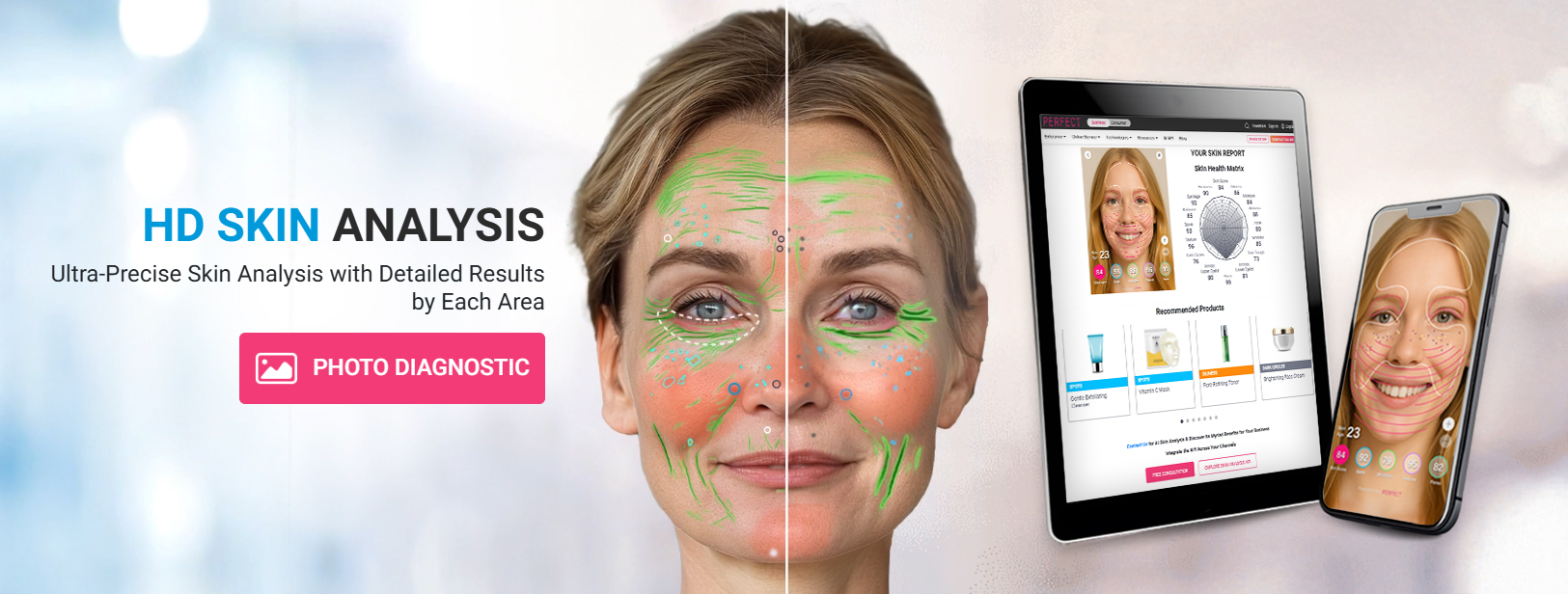
Advanced systems also support real-time live analysis — meaning the AI works on a moving camera feed, not just a static photo — and offer side-angle scanning to capture the face from multiple perspectives simultaneously.
What Skin Concerns Can an AI Skin Analysis Machine Detect?
Leading AI skin analysis platforms, such as Perfect Corp.'s AI Skin analysis machine, can detect up to 15 distinct skin concerns in a single scan. These typically include:
- Wrinkles and fine lines — around the eyes, forehead, and mouth
- Dark spots and hyperpigmentation — sun damage, melasma, post-acne marks
- Acne and breakouts — active pimples, cystic acne, comedones
- Redness and rosacea — visible capillaries, flushing, inflammation
- Enlarged pores — particularly in the T-zone
- Skin texture — roughness, uneven surface, bumps
- Dark circles — under-eye pigmentation and hollowing
- Skin firmness and loss of elasticity
- Radiance and dullness
- Oiliness and dehydration
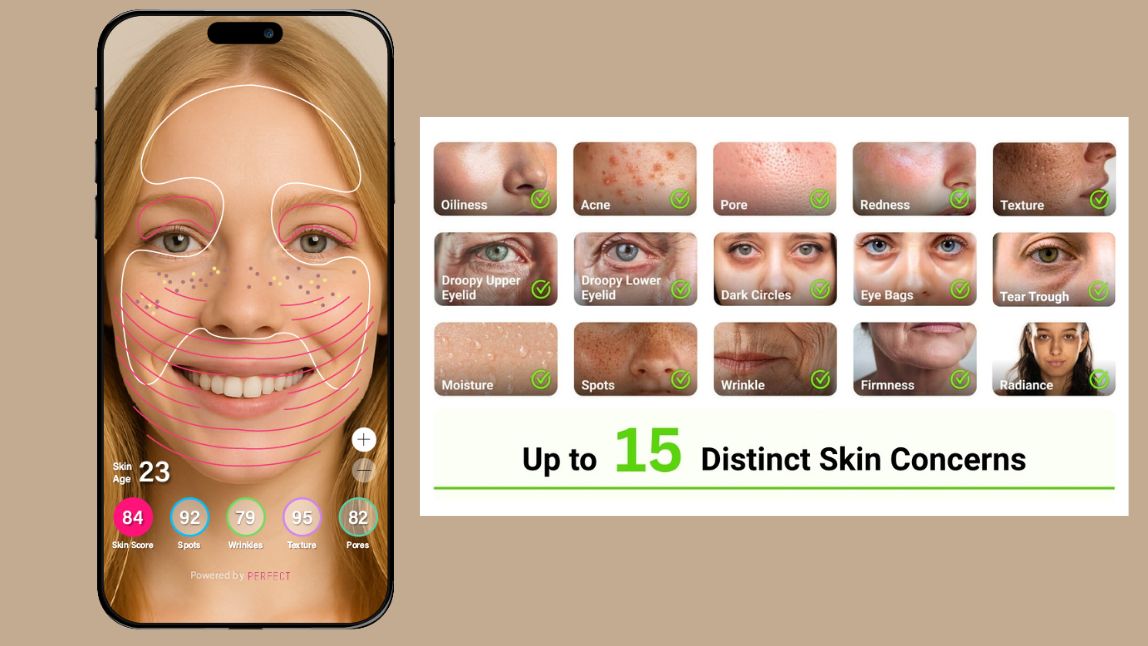
Some enterprise-grade systems are expanding this list further as their models are trained on larger datasets. The breadth of detection varies by platform, so it's worth verifying exactly which concerns a given machine covers before purchasing.
How Accurate Is AI Skin Analysis? The Clinical Evidence
This is the question that matters most — especially for professionals whose recommendations carry clinical weight.
The short answer: the technology has been independently validated, and the results are compelling.
The Wake Forest Medical Study
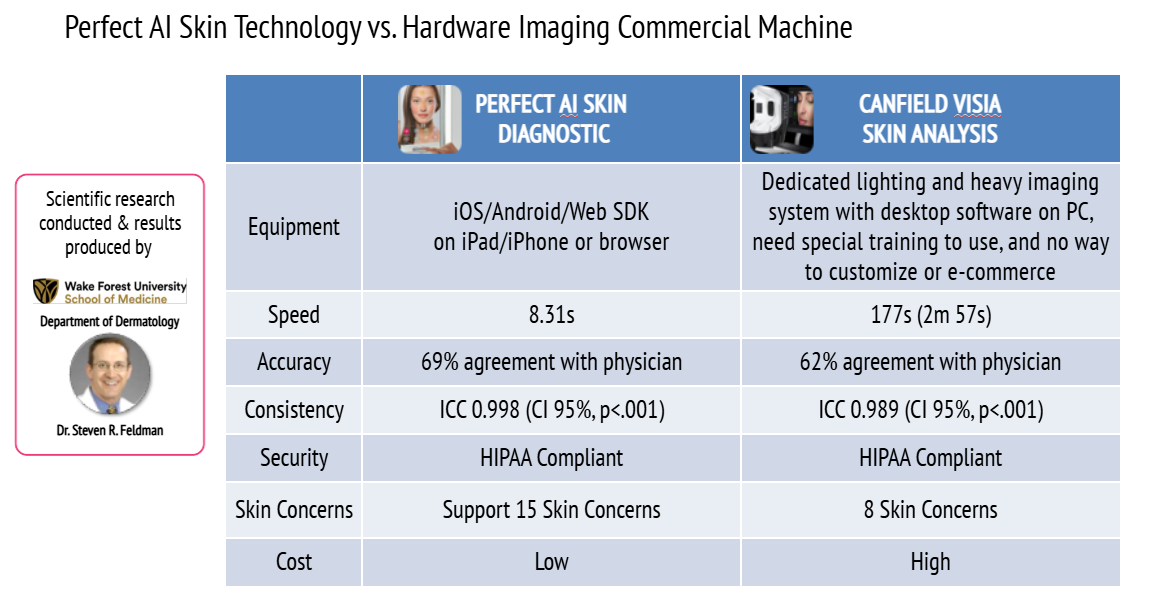
One of the most cited pieces of evidence in this space comes from research conducted by Dr. Steven R. Feldman, Professor of Dermatology at Wake Forest School of Medicine. His report examined the performance of AI skin analysis technology in real clinical settings — comparing its assessments to both physician evaluations and professional imaging devices (the gold standard in clinical research).
Key findings from the study:
- 95% test-retest reliability — meaning the system delivers highly consistent results when the same person is scanned multiple times under similar conditions.
- Over 80% correlation with physician and device assessments for specific skin concerns — a significant benchmark given that even trained dermatologists show inter-rater variability.
- The study concluded the technology is a precise, fast, and cost-effective alternative to traditional clinical skin assessment tools.
What "80% Correlation" Actually Means
Clinical imaging devices used in dermatology research are expensive, slow, and require technical expertise to operate. An AI system that achieves 80%+ correlation with those devices — at a fraction of the cost and in real time — represents a meaningful advancement for the industry. It doesn't replace a dermatologist for diagnosis, but for skin concern identification and tracking, the accuracy is clinically meaningful.
Training Data Depth
Accuracy also depends on the quality of training data. Leading systems have been trained on 70,000+ high-definition, medical-grade images representing diverse skin tones, types, ages, and textures. This breadth is important — it means the AI performs across a wide population, not just a narrow demographic slice.
Key stat: 95% test-retest reliability rate and 80%+ correlation with physician assessments, validated by Wake Forest School of Medicine.
HIPAA ComplianceFor professionals operating in the U.S., it's worth noting that leading AI skin analysis platforms have achieved HIPAA compliance, making them suitable for use in medical and clinical environments where patient data protection is required.
Shared Materials by Strapi
*Adjust the size of images ONLY. Please go to Strapi to edit the materials info.
Who Is AI Skin Analysis For?
For Estheticians and Skin Therapists
AI skin analysis gives estheticians an objective, data-driven foundation for every client consultation. Instead of relying solely on visual assessment (which varies by practitioner), the AI delivers a standardized scan that can be reviewed together with the client on a screen. It shortens consultation time, builds client trust through visible data, and provides a repeatable baseline for tracking progress across treatments.
For Medical Spas and Aesthetics Clinics
For med spas, the value proposition is both clinical and commercial. On the clinical side, AI analysis helps identify concerns that even experienced practitioners might overlook, particularly in the early stages. On the commercial side, personalized product and treatment recommendations driven by AI analysis tend to increase retail attachment rates and treatment uptake.
For Dermatologists and Physician Offices
In clinical settings, AI skin analysis is increasingly used as a pre-consultation screening tool — allowing patients to complete a skin assessment before their appointment, giving the physician richer data to work from. It's also useful for tracking treatment outcomes over time.
For Consumers
Many AI skin analysis tools are now available directly to consumers through branded websites and apps. These allow people to understand their skin at a deeper level from home, receive product recommendations, and track their skin health over time — without needing a clinic visit.
Key Features to Look For When Choosing an AI Skin Analysis Machine
Not all AI skin analysis technology is equal. If you're evaluating options for your business, here are the features that separate professional-grade systems from consumer-grade tools:
- 1. Number of Skin Concerns Detected: Look for systems that detect at least 10–15 concerns. Fewer than that limits the comprehensiveness of the assessment.
- 2. Real-Time vs. Photo-Based Analysis: Real-time live analysis (working on a moving camera feed) is more advanced and provides a more natural client experience. Photo-based systems are more common but require the client to stay still.
- 3. Clinical Validation: Ask specifically whether the technology has been validated against physician assessments or clinical imaging devices, and whether independent research supports its accuracy claims.
- 4. Multi-Angle Scanning: The best systems capture the face from both frontal and side profiles, giving a more complete picture of the skin — especially for concerns like jowling, neck texture, or side-profile wrinkles.
- 5. Product Recommendation Integration: If you're using AI analysis as a retail or treatment upsell tool, ensure the system integrates with your product catalog to generate personalized recommendations automatically.
- 6. HIPAA Compliance: Essential if you operate in a medical or clinical environment in the United States.
- 7. Reporting and Progress Tracking: Look for systems that generate client-facing reports and allow comparison between sessions over time — powerful for retention and demonstrating treatment ROI to clients.
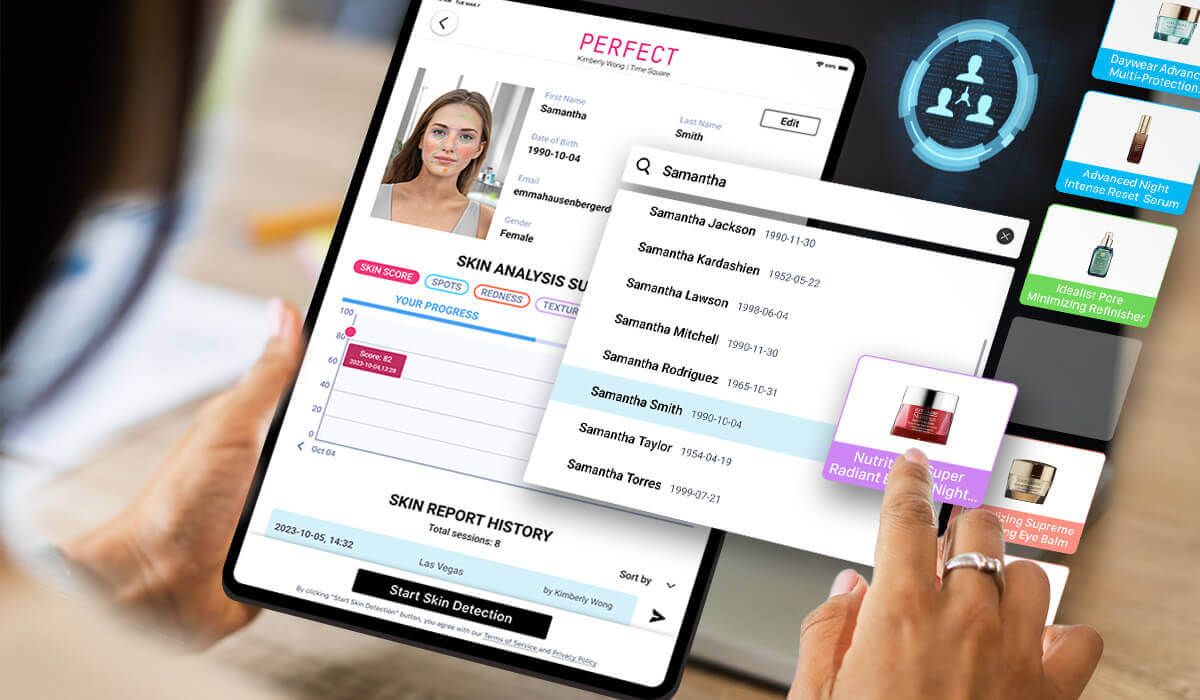
- 8. Integration with Booking or POS Systems: The smoother the workflow integration, the more your team will actually use the tool.
AI Skin Analysis vs. Traditional Skin Assessment
Feature | Traditional Assessment | AI Skin Analysis Machine |
Speed | 5–15 minutes | Under 60 seconds |
Consistency | Varies by practitioner | Standardized every time |
Skin concerns evaluated | Depends on expertise | Up to 15 concerns automatically |
Client-facing visuals | Limited | Detailed overlays and reports |
Cost per assessment | High (practitioner time) | Low (automated) |
Progress tracking | Manual, often subjective | Automated, objective scoring |
Clinical accuracy | High (experienced practitioners) | 80%+ correlation with physicians |
Is It Worth It? ROI for Skincare Professionals
For professionals considering the investment, the ROI case tends to rest on a few key pillars:
- Faster, More Confident Consultations: When the AI delivers a scan in under 60 seconds, consultation time decreases and the practitioner can focus on treatment planning. For busy clinics seeing 10–20 clients a day, this adds up quickly.
- Higher Retail Attachment: Personalized AI-generated product recommendations — tied directly to what was found on the client's skin — tend to outperform generic suggestions. Clients are more receptive to buying a product specifically flagged for a concern the AI identified.
- Client Retention Through Progress Tracking: When clients can see their skin improving across scans over time — with before/after comparisons and severity scores declining — they're more likely to return for repeat treatments.
- Market Differentiation: In a competitive aesthetics market, offering a technology-backed skin assessment is a meaningful point of differentiation, particularly with clients who respond to data and science-backed approaches.
Shared Materials by Strapi
*Adjust the size of images ONLY. Please go to Strapi to edit the materials info.
Conclusion
AI skin analysis machines have moved well past the novelty stage. Backed by clinical studies, trained on medical-grade datasets, and validated against professional dermatological tools, the best systems on the market today offer a level of speed, consistency, and accessibility that traditional skin assessment simply can't match.
Whether you're an esthetician looking to elevate your consultations, a med spa aiming to increase retail and treatment conversions, or a clinic exploring pre-consultation screening tools — AI skin analysis is worth a serious look.
Want to learn more about how AI skin analysis fits into a modern skincare practice? Visit our main page to explore how this technology can work for your business.

Frequently Asked Questions About AI Skin Analysis Machines
Is AI skin analysis accurate enough for professional use?

Yes. Leading platforms have been validated in clinical studies and show over 80% correlation with physician assessments and professional imaging devices. For skin concern identification (as opposed to medical diagnosis), the accuracy is clinically meaningful.
Can AI skin analysis replace a dermatologist?
No. AI skin analysis is a screening and tracking tool, not a diagnostic tool. It cannot diagnose skin conditions, identify skin cancer, or replace a physician evaluation. Think of it as a highly consistent first-pass assessment.
How many skin concerns can an AI skin analysis machine detect?
Leading platforms detect between 14 and 15 skin concerns in a single scan, including wrinkles, dark spots, redness, acne, pores, texture, dark circles, and firmness.
Is AI skin analysis suitable for all skin tones?
The best systems are trained on diverse datasets — including 70,000+ medical-grade images across a range of skin tones and textures — which significantly improves performance across different populations.
What's the difference between an AI skin analysis app and a professional AI skin analysis machine?
Consumer apps use the same underlying technology but are typically optimized for ease of use rather than clinical precision. Professional systems offer more skin concerns detected, real-time analysis, HIPAA compliance, reporting tools, and business software integrations.
How often should clients get an AI skin analysis?
Most professionals recommend a scan at every visit as a baseline, with formal comparison reports generated every 4–8 weeks to track treatment progress.
Is AI skin analysis HIPAA compliant?
Leading enterprise platforms such as Perfect Corp. have achieved HIPAA compliance, making them suitable for clinical and medical settings. Always verify compliance status with the specific vendor you're evaluating.