 Author: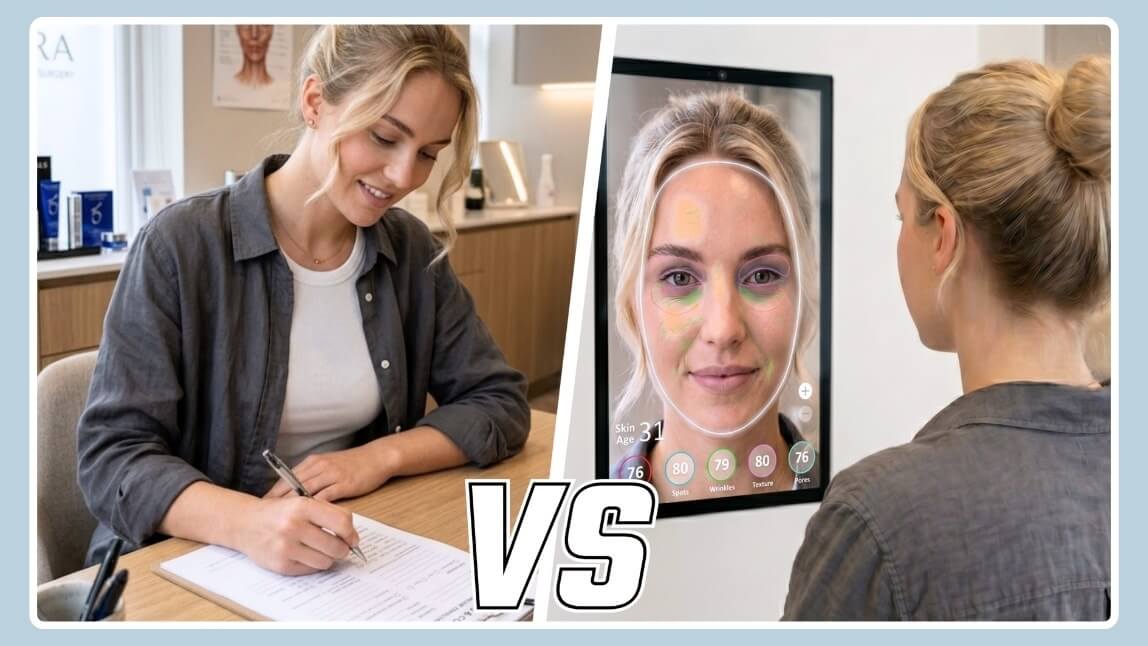
Knowing your client's skin type is the starting point for every treatment recommendation, every product suggestion, and every skincare protocol you offer. But if you're still relying on a traditional skin type quiz to make that call, you may be building your recommendations on shaky ground.
Here's a full breakdown of what a skin type quiz actually measures, where it falls short, and how AI skin analysis is changing the standard for accuracy in clinics, spas, and beauty businesses of all sizes.
| Table of Contents |
|---|
What is a Skin Type Quiz?
A skin type quiz is a questionnaire-based method for identifying a person's skin category. It typically involves 5–10 questions about how the skin looks and feels throughout the day, whether it gets shiny, feels tight after cleansing, or tends to break out in certain areas.
Quiz-Based vs. AI-Powered Skin Type Test
The traditional skin type quiz relies entirely on self-reported answers. The problem is that perception varies; the same person might answer the same questions differently depending on the season, their stress levels, or what they ate that week.
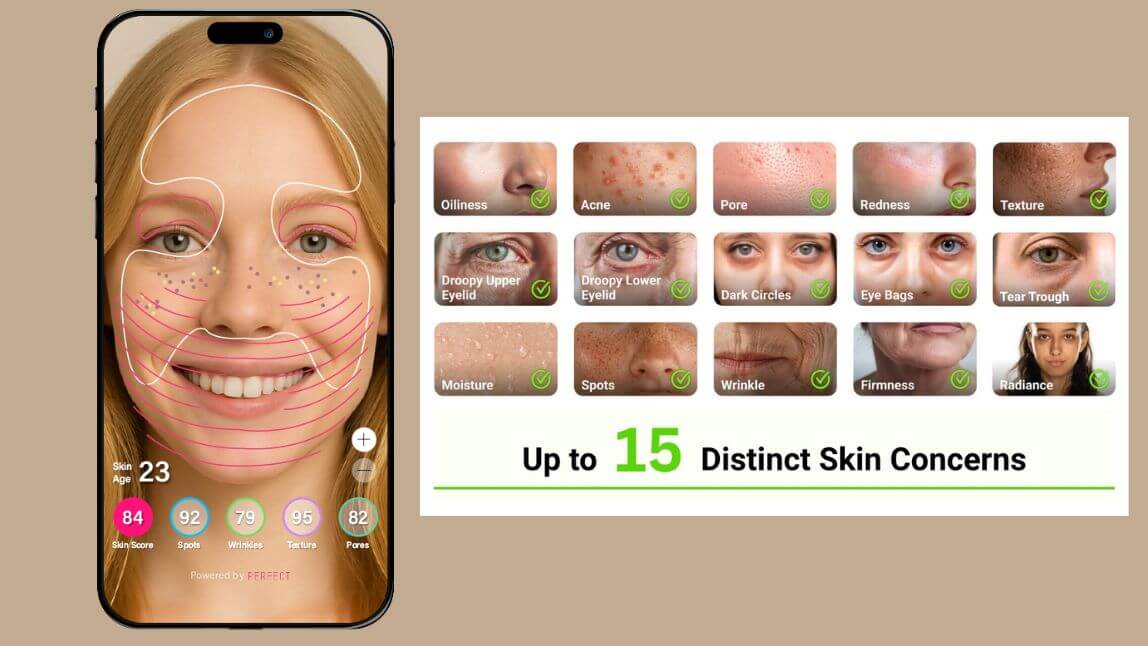
An AI-powered skin type test takes a different approach. Using a front-facing camera or dedicated skin analysis device, it scans the face directly and measures what's actually there – sebum levels, moisture distribution, pore size, texture, and more — across multiple facial zones. No questions. No subjectivity. Just data.
Why Skin Type Quizzes Are Often Inaccurate?
Traditional skin type quizzes have three core limitations. First, they rely entirely on self-perception, how the skin feels on a given day, which changes with weather, hormones, and lifestyle. Second, they treat the face as a single zone, missing the fact that T-zone and cheeks often behave completely differently. Third, they're a one-time snapshot that doesn't reflect how skin changes with age, seasons, or skincare habits.
The result is a label that may have been approximately right once, but may be steering your treatment decisions in the wrong direction.
Is the AI Skin Type Test Really Accurate?
Not all AI skin analysis tools are built for sale, and the data backs that up.
Perfect Corp's AI skin analysis has been independently validated by the Department of Dermatology at Wake Forest University School of Medicine, led by Dr. Steven R. Feldman. The research compared Perfect Corp's AI directly against both physician assessments and industry-standard hardware imaging devices, including the Canfield VISIA system.
The results are clear. Across five testing scenarios, including varying lighting conditions, different camera devices, and subjects across diverse skin tones, the AI achieved an "Excellent" reliability rating in every single case, with an Intraclass Correlation Coefficient (ICC) of 0.998 for test-retest reliability.
When compared directly to dermatologist assessments, 9 out of 14 skin concerns (64%) achieved a high match rate, with conditions like redness, eye bags, skin firmness, and wrinkles each reaching over 80% agreement with physicians. The overall average match rate was 69%.
Compared to Canfield VISIA hardware devices, which cost significantly more and take nearly 3 minutes per scan, Perfect Corp. spent an average of 8.31 seconds per analysis.
"The high agreement might make the facial analysis system a practical tool for following patients treated with medications or lasers." — Dr. Steven R. Feldman, Wake Forest University School of Medicine
This is clinical-grade accuracy delivered through a smartphone camera, at a fraction of the cost.
What Is My Skin Type? The 5 Skin Types Explained
Not sure where your clients fall? Here's a quick breakdown of the five main skin types, and what each one means from a treatment perspective.
Oily Skin
Oily skin produces excess sebum across most of the face, leading to a shiny appearance, enlarged pores, and a higher tendency toward breakouts. For clinics, clients with oily skin often benefit from treatments that regulate sebum production and minimize congestion — but over-stripping the skin can backfire and increase oil production further.
Dry Skin
Dry skin lacks sufficient moisture and lipids, causing tightness, flakiness, and a dull complexion. Fine lines tend to appear more pronounced. These clients need hydration-focused protocols and product recommendations that strengthen the skin barrier rather than just adding surface moisture.
Combination Skin
Combination skin is oily in the T-zone and dry or normal in the U-zone (cheeks and outer areas). It's the most common skin type in clinical settings, and the hardest to treat with a one-size-fits-all protocol. Zone-specific treatment is key.
Normal Skin
Normal skin is well-balanced, with small pores, even texture, and low reactivity. It's the least common type in practice. Clients with normal skin benefit most from maintenance-focused routines and preventive treatments.
Sensitive Skin
Sensitive skin reacts easily to products, temperature changes, or environmental stressors, showing redness, irritation, or stinging. It can overlap with any of the other four types, which makes accurate identification especially important before introducing new treatments or actives.
How to Know Your Skin Type with AI Skin Analysis?
AI skin analysis removes subjectivity from skin typing entirely. Instead of asking how the skin feels, it measures what's actually there.
How the AI Scan Works
Using a front-facing camera or dedicated skin analysis device, the AI captures a high-resolution image of the face and covers it across multiple zones, separating the T-zone, U-zone, eye area, and cheeks. It analyzes each zone independently for factors like sebum levels, pore visibility, moisture distribution, and skin texture. The entire process takes under a minute and requires no specialist training to operate.

What the Results Show
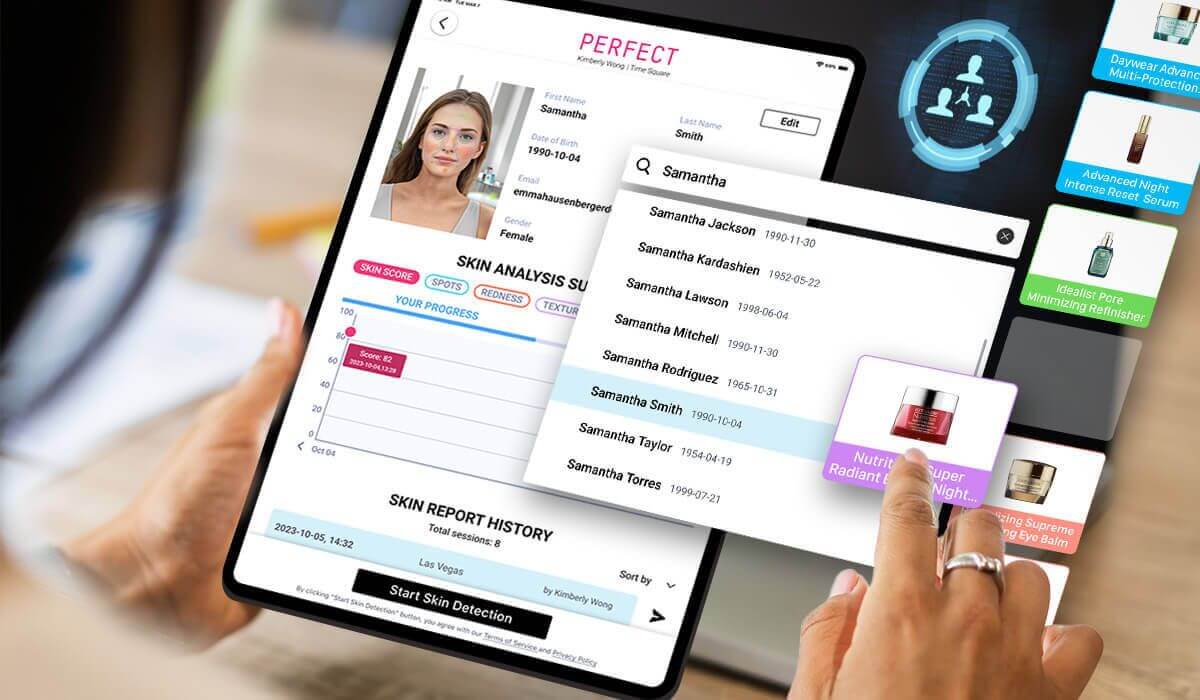
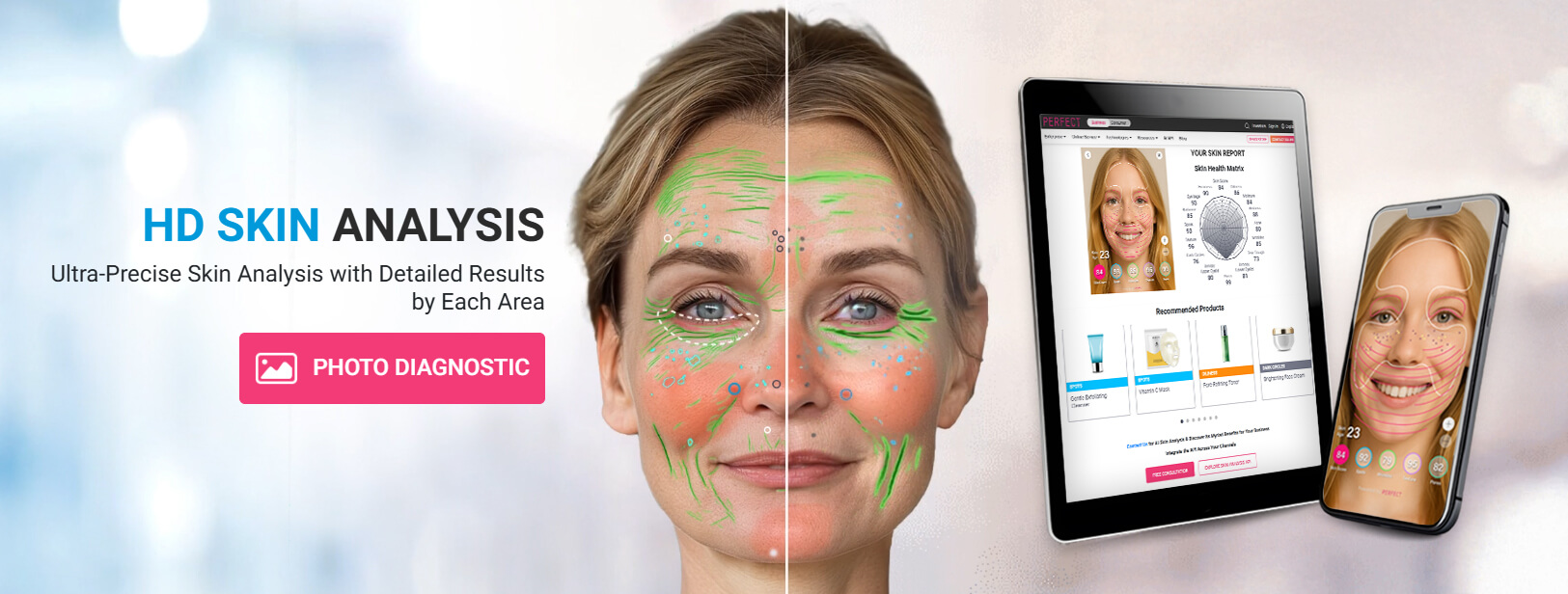
Rather than assigning a single skin type label, AI skin analysis produces a detailed breakdown of 15+ skin conditions, including oiliness, dryness, sensitivity, redness, hyperpigmentation, and fine lines, across each facial zone. Clients receive a visual skin map alongside personalized product and treatment recommendations.
Why This Matters for Your Business
For clinics and beauty professionals, this level of detail transforms the consultation experience. Instead of asking clients to describe their skin and hoping the answers are accurate, you start every appointment with an objective skin report. That means more confident treatment recommendations, fewer product mismatches, and a consultation experience that immediately builds credibility. Clients who can see their skin data are also significantly more likely to follow through on recommended treatments, which directly impacts revenue.
Take the AI Skin Type Test — Free
Perfect Corp's AI-powered skin type test is available directly online, no app download or device required. In under 60 seconds, it delivers a full skin analysis with zone-by-zone results and tailored recommendations.
Whether you're a clinic looking to elevate your consultation process or a brand wanting to personalize the product discovery journey, the AI skin type test is the most accurate place to start.
Shared Materials by Strapi
*Adjust the size of images ONLY. Please go to Strapi to edit the materials info.
Get expert advice from Perfect Corp. and be part of the beauty tech trend. Contact us for details on beauty tech solutions trusted by 800+ brands globally.