Author: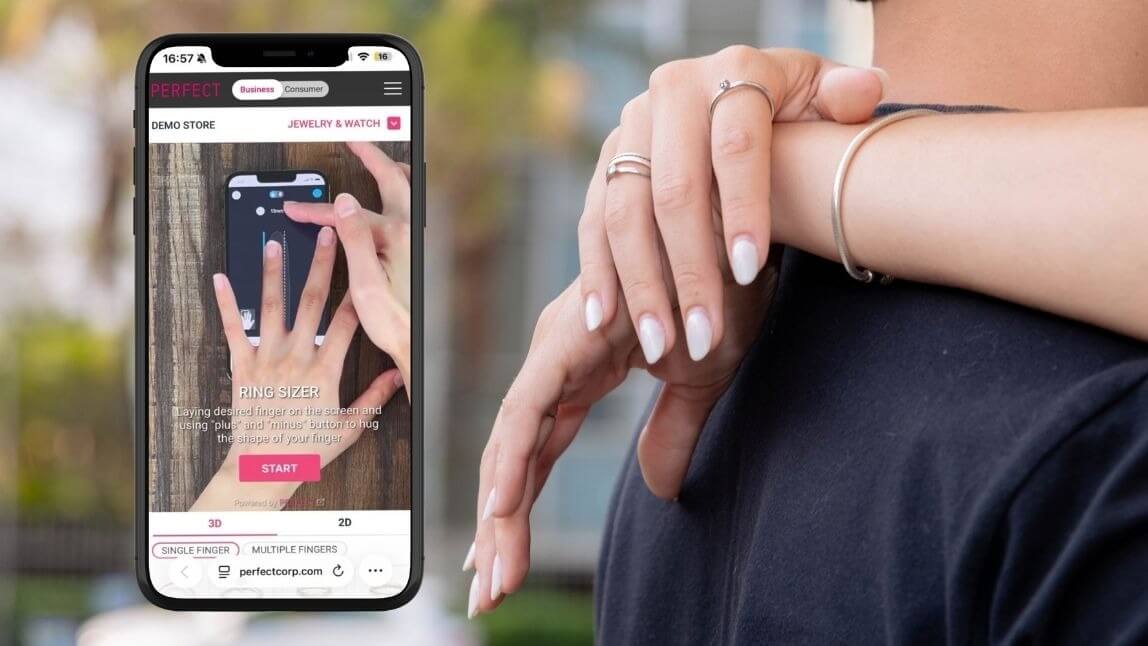
A ring sizer app can help jewelry brands reduce sizing-related returns by giving shoppers clearer guidance before checkout. It can help shoppers estimate a ring size, understand how design affects fit, and preview styles before choosing a product. It should not replace professional sizing or a transparent exchange policy, but it can reduce avoidable guesswork in an online jewelry journey.
For e-commerce leaders, the goal is not simply to add an interactive feature. The goal is to help shoppers make a more informed choice while setting realistic expectations about ring width, intended finger, local sizing systems, and final fit.
At a Glance
- A ring sizer app helps shoppers estimate or confirm ring size with measurement guidance, charts, or a digital experience.
- The strongest sizing journeys combine measurement support, product-specific fit notes, and clear exchange information.
- Virtual ring try-on can help shoppers explore visual placement, proportions, and stacking combinations before purchase.
- Digital sizing should be presented as guidance, not a guarantee of final physical fit.
Table of Contents
- What Is a Ring Sizer App?
- Why Ring Sizing Causes Returns
- Build a Ring-Sizing Workflow
- Where It Helps Most
- Limits to Consider
- Virtual Ring Try-On for Brands
- Choose Sizes With Confidence
- Ring Sizer App FAQs
What Is a Ring Sizer App?
A ring sizer app is a digital tool that helps a shopper identify a likely ring size without visiting a store. Depending on the experience, it may guide the shopper to measure an existing ring, measure their finger, compare dimensions with a size chart, or use a mobile-enabled sizing experience.
For retailers, it is useful to think of this experience in two parts:
- Measurement support: Helps answer, “What size should I select?”
- Decision support: Helps answer, “Will this ring style work for the finger, occasion, or stack I have in mind?”
A shopper may know their usual size but still hesitate over a wide wedding band, a signet ring, a stackable set, or a ring intended for another finger. A useful digital journey addresses both the measurement and the product decision.
Why Does Ring Sizing Create Return Risk?
Rings are personal purchases with little tolerance for uncertainty. If a ring is difficult to move over the knuckle, feels too loose, or was selected for the wrong finger, shoppers may request an exchange or return.
Size labels alone do not capture every fit consideration. Ring width, interior profile, knuckle size, stacking choices, and local sizing systems can influence how a ring feels. Wider bands and more complex designs may need more careful sizing consideration than a thin, standard band.
For online retailers, the main risk is not that shoppers lack a size chart. It is that they do not receive enough guidance at the moment they choose a size. A ring sizer app can help address that gap when it is available directly from product pages, size selectors, and relevant educational content.
How Should Retailers Build a Ring-Sizing Workflow?
The most helpful experience moves shoppers from a quick estimate to a more confident decision. It should be easy to find, simple to understand, and connected to the product being considered.
1. Offer More Than One Way to Measure
Not every shopper has the same reference point. Give customers more than one practical option:
- Existing-ring measurement: Let shoppers measure the inside diameter of a ring that fits the intended finger.
- Finger measurement: Provide clear instructions for a printable guide or non-stretch measuring strip.
- Digital ring sizing: Offer a mobile-based option for customers who prefer an on-screen experience.
- Professional confirmation: Recommend a jeweler visit for custom, high-value, unusually wide, or complex rings.
Offering multiple paths lets shoppers compare results rather than relying on one uncertain measurement. Link to a fuller resource on how to find your ring size online instead of placing every instruction directly on the product page.
2. Make Guidance Relevant to the Product
A generic ring size chart is useful, but it is rarely enough on its own. Add concise fit notes when a product’s design may affect comfort or sizing confidence.
- “Designed as a wider band; review our size guide before ordering.”
- “For stacked styling, select the intended finger before choosing a size.”
- “Check the sizing system before placing an international order.”
- “Between sizes? Review fit guidance and our exchange policy.”
This is not a universal set of sizing rules. The right recommendation depends on the ring’s width, profile, material, setting, and intended wearing style.
3. Make Local Size Systems Easy to Understand
Global retailers should clearly identify the size system used on each product page and provide a conversion reference. A helpful guide maps regional labels to inside diameter and circumference measurements, allowing shoppers to compare a local size with the system used by the brand.
Link to a dedicated ring size chart and conversion guide for shoppers who need more context before choosing a size.
Where Does a Ring Sizer App Help Most?
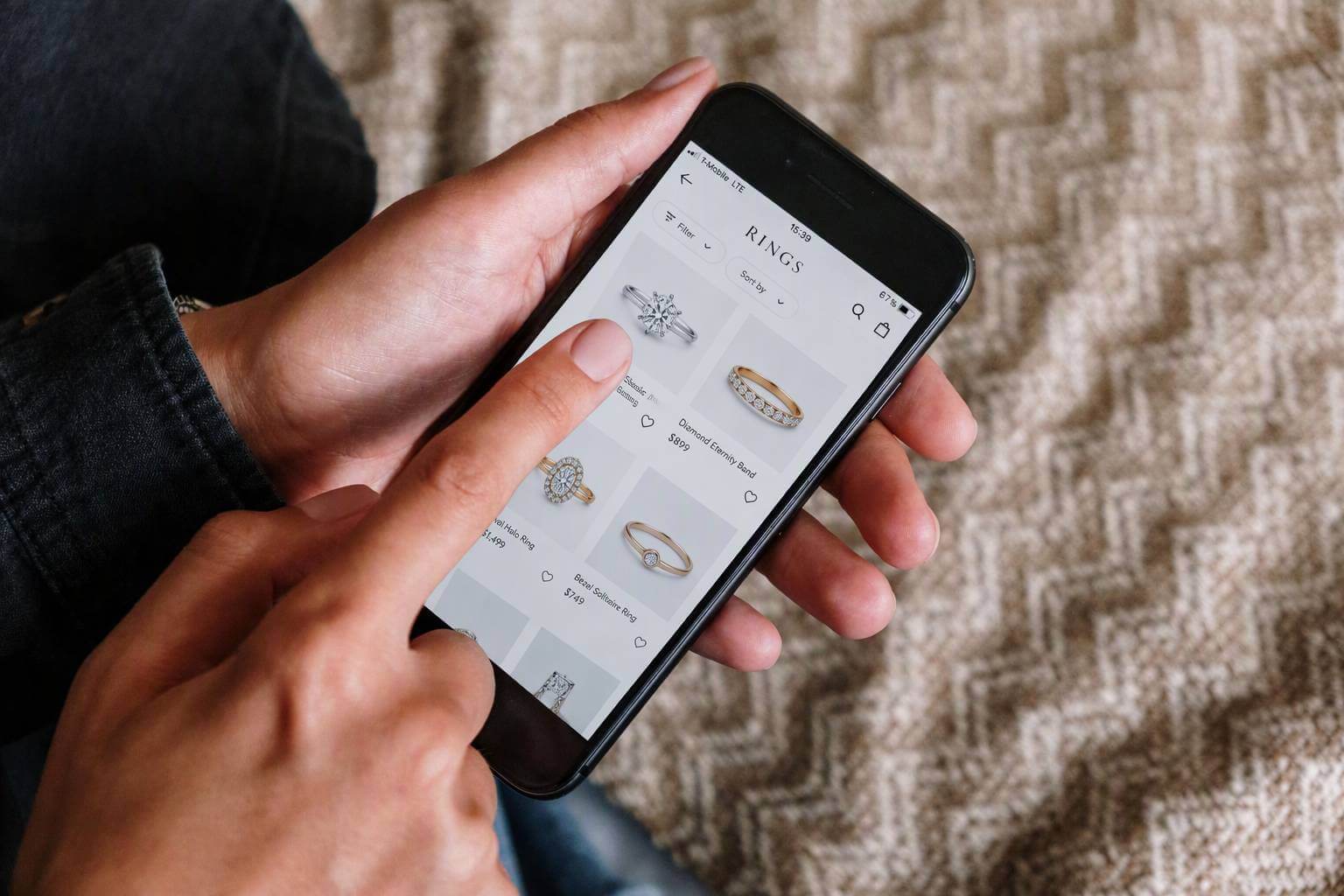
A ring sizer app is most effective when it appears as part of a connected shopping journey, rather than as a tool hidden away from the decision point.
| Shopper moment | Helpful digital support | Retailer outcome to monitor |
|---|---|---|
| First-time purchase | Measurement instructions and a visible size chart | Size-guide engagement and sizing support contacts |
| Product comparison | Fit notes and virtual ring try-on | Try-on engagement and add-to-cart behavior |
| Stackable-ring browsing | Multi-ring preview and intended-finger guidance | Set exploration and multi-item basket behavior |
| International purchase | Local labels and size conversion support | Market-level exchange and return reasons |
The purpose is not to assume that one feature will improve every metric. It is to identify where shoppers encounter uncertainty, then connect useful guidance to measurable customer behavior.
What a Ring Sizer App Cannot Solve Alone
A digital tool should guide, not overpromise. A sizing experience cannot account for every physical fit preference or product-specific variable.
Fit Can Vary
Finger size can vary over time, while ring width, interior shape, knuckle size, and stacking choices can change how a ring feels. Use clear sizing language and avoid presenting a digital result as a final guarantee.
Virtual Try-On Does Not Replace Product Details
A virtual preview can help shoppers explore style, placement, and relative scale. It does not replace accurate specifications such as band width, metal type, gemstone dimensions, resizing options, or return terms.
Camera Access Needs an Alternative
If a try-on or sizing experience asks visitors to enable a camera, explain why and provide an alternative path. A printable guide, manual measurement method, or in-store appointment option helps make the journey accessible to more shoppers.
How Perfect Corp Can Support Online Ring Sizing and Virtual Try-On
For jewelry brands that want to connect size guidance with virtual product exploration, Perfect Corp’s Virtual Ring Try-On solution supports camera-enabled ring try-on, virtual ring sizing, and ring visualization across web and app experiences.
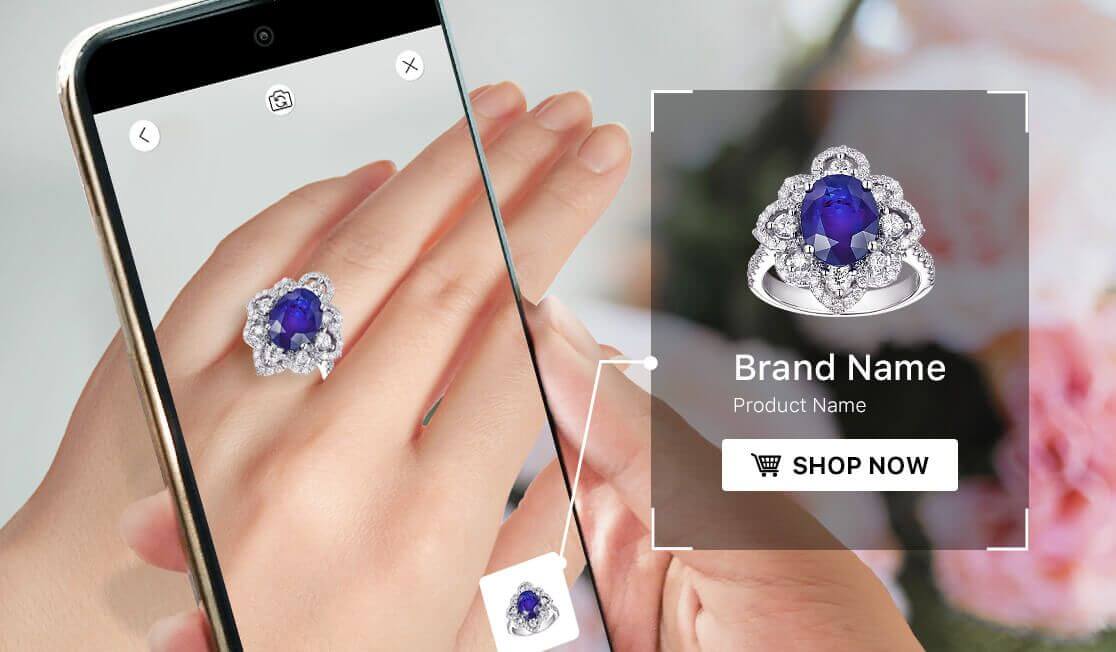
Brands can create try-on experiences using ring images or 3D models. Multiple-ring try-on can also support shoppers comparing ring sets and stacking combinations before purchase.
This can support a practical workflow: shoppers begin with sizing guidance, use virtual try-on to explore visual placement and style, then return to clear product details and fit information before selecting a size.
To see how these elements can appear in a web-based experience, explore Perfect Corp’s interactive ring showcase.
Help Shoppers Choose Ring Sizes With More Confidence
Give customers clearer measurement guidance and a more informative way to explore ring styles before they complete their purchase. Perfect Corp’s Virtual Ring Try-On can support digital ring sizing and virtual product exploration across jewelry e-commerce experiences.
Frequently Asked Questions
What Is a Ring Sizer App for E-Commerce?

A ring sizer app is a digital tool that helps online shoppers estimate or confirm a ring size before ordering. It may use a size chart, existing-ring measurements, printable guidance, mobile-screen instructions, or a camera-enabled sizing experience. For retailers, it should work alongside product-specific fit notes and a clear exchange process.
Can Virtual Ring Try-On Replace a Physical Ring Sizer?
No. Virtual try-on can help customers visualize a ring’s style, placement, and relative scale, while a physical sizing tool or professional jeweler can provide an additional fit check. The strongest online journey combines virtual visualization with clear measurement options and transparent guidance about fit limitations.
How Should a Jewelry Brand Handle International Ring Sizes?
Show the size system used for the product, provide a clear conversion chart, and avoid assuming that customers understand the local standard. A useful chart can map local sizes to inside diameter and circumference measurements, while product pages should make the selected market’s default sizing system obvious.
Should Retailers Recommend Sizing Up for Wide Rings?
Retailers should not apply one blanket rule to every wide band. Wider rings can require additional sizing consideration, so the most responsible approach is to provide ring-specific guidance, encourage shoppers to compare with a similar-width ring where possible, and offer professional sizing support for high-value purchases.
What Should Brands Track After Adding a Digital Ring-Sizing Tool?
Track the customer journey rather than one vanity metric. Useful signals can include size-guide usage, try-on engagement, size-selection changes, support contacts about sizing, exchange reasons, return reasons, and performance by SKU, market, and device. Compare these signals over a meaningful period and against an appropriate baseline.
Should a Ring Sizer App Be Available on Product Pages or in a Separate Guide?
Use both. A detailed guide helps shoppers who are still researching, while a lightweight sizing entry point on the product page helps shoppers make a decision when they are closest to checkout. Keep the product-page experience concise and link to fuller instructions for shoppers who need them.