 Author: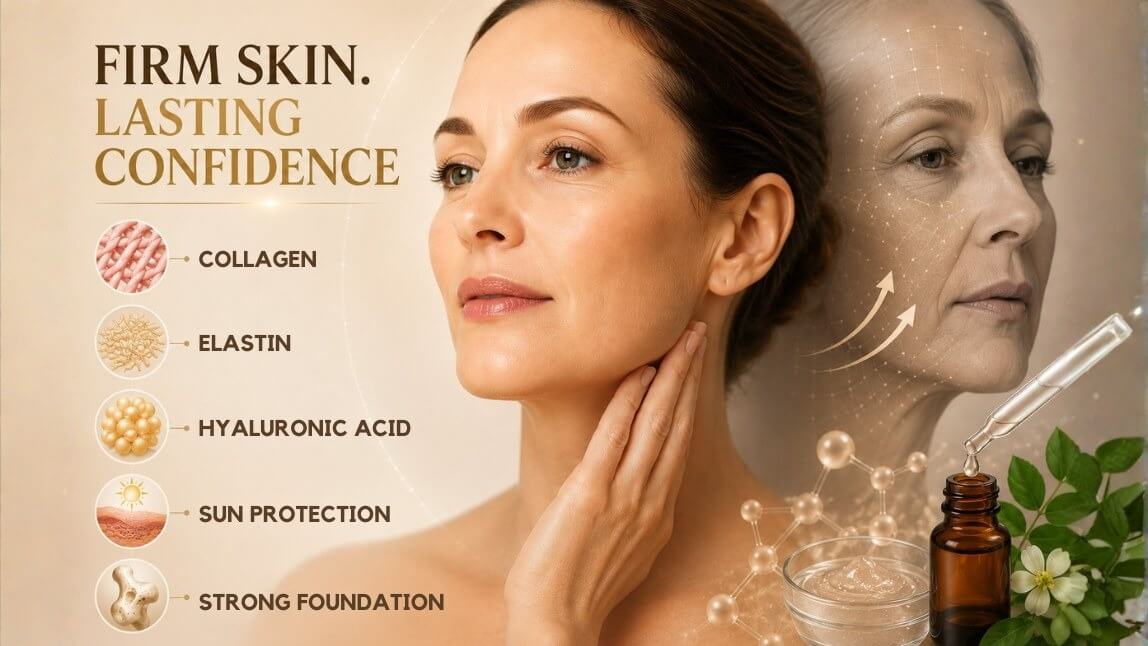
Firm skin is the quiet currency of youth. We don't notice it when we have it — we only notice when it starts to go. The gradual loosening around the jawline, the softening of the cheeks, the neck that no longer looks the way it did at thirty-five. And with it comes the overwhelming array of "firming" products that all promise the same thing and deliver wildly different results.
Here's the truth: skin firmness loss is real, measurable, and driven by well-understood biology. It's also addressable — if you know what you're actually working against. This guide covers the science of why skin loses its structure, where sagging shows up first, which ingredients and treatments have clinical backing, and how AI skin analysis is helping beauty brands and consumers track and respond to firmness changes with precision.
Why Does Skin Lose Firmness With Age?
Skin firmness is maintained by a structural matrix in the dermis — primarily collagen, elastin, and hyaluronic acid. As we age, each of these degrades, and the scaffolding that kept skin lifted and taut gradually collapses. This isn't a flaw in the system; it's the system running its course. But the timeline can be significantly influenced by lifestyle, skincare, and treatments.
Collagen Loss
Collagen is the skin's primary structural protein — the framework that gives it density and resistance to gravity. Production begins declining at roughly 1% per year starting from the mid-twenties. By the time most people notice sagging, they've been losing collagen for a decade or more. UV exposure and smoking significantly accelerate this breakdown.
Elastin Breakdown
Elastin is what allows skin to snap back after movement. Unlike collagen, it regenerates very poorly after breakdown. Once elastin fibers are damaged — through UV, oxidative stress, or repeated facial movement — skin struggles to return to its original position after being stretched or compressed.
Sun Damage
UV exposure is the single biggest accelerant of structural skin aging. UVA rays penetrate into the dermis and directly degrade collagen and elastin fibers, while triggering enzymes (MMPs) that break down existing matrix proteins. This process is called photoaging, and it's distinct from chronological aging — though both happen simultaneously.
Summary of Structural Changes
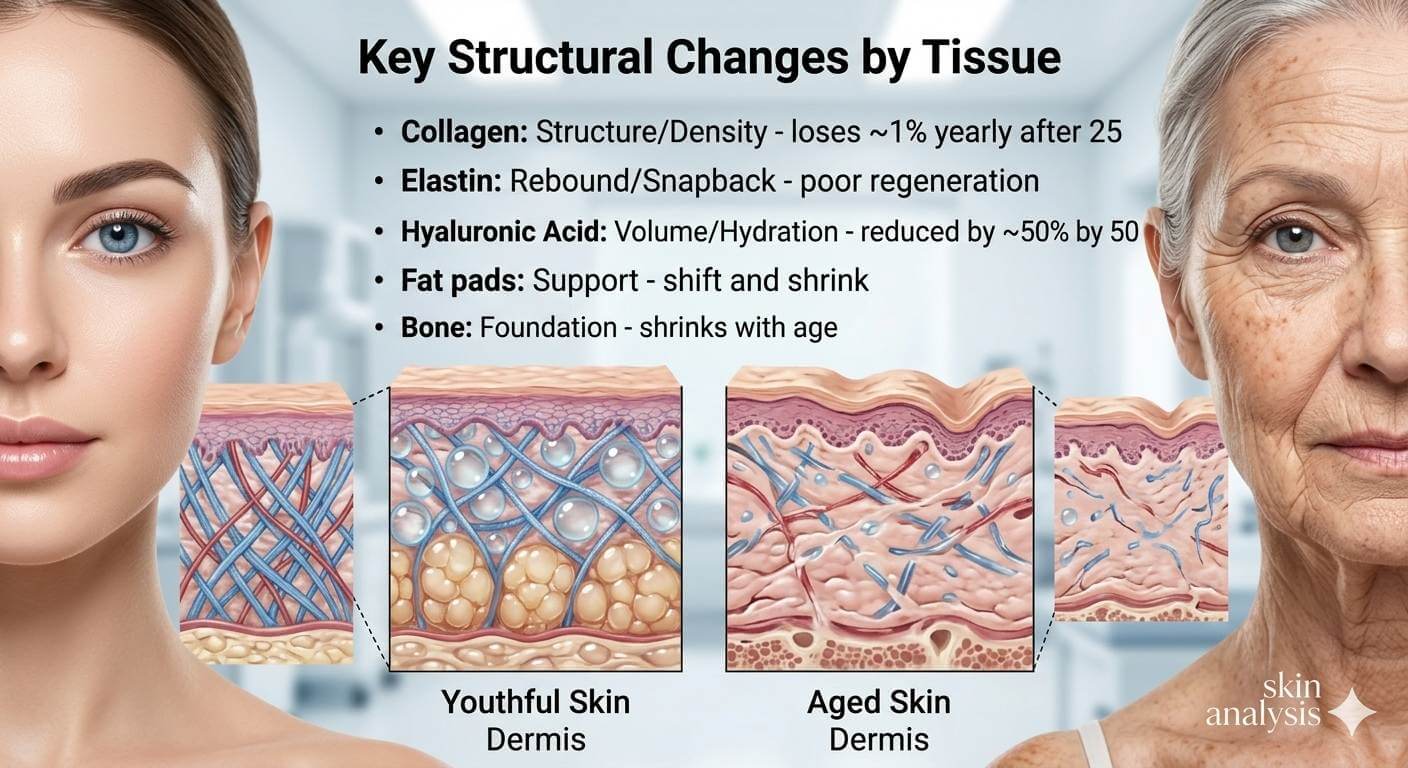
- Collagen: Decreases ~1% per year from mid-20s; builds skin density and resistance to gravity
- Elastin: Doesn't regenerate well once damaged — responsible for skin "snap-back"
- Hyaluronic Acid: Maintains volume and hydration — reduced by 50% by age 50
- Fat pads: Shift and diminish, causing hollowing and drooping
- Bone: Facial bones shrink over time, reducing the scaffolding that supports skin
Where Does Sagging Appear First?
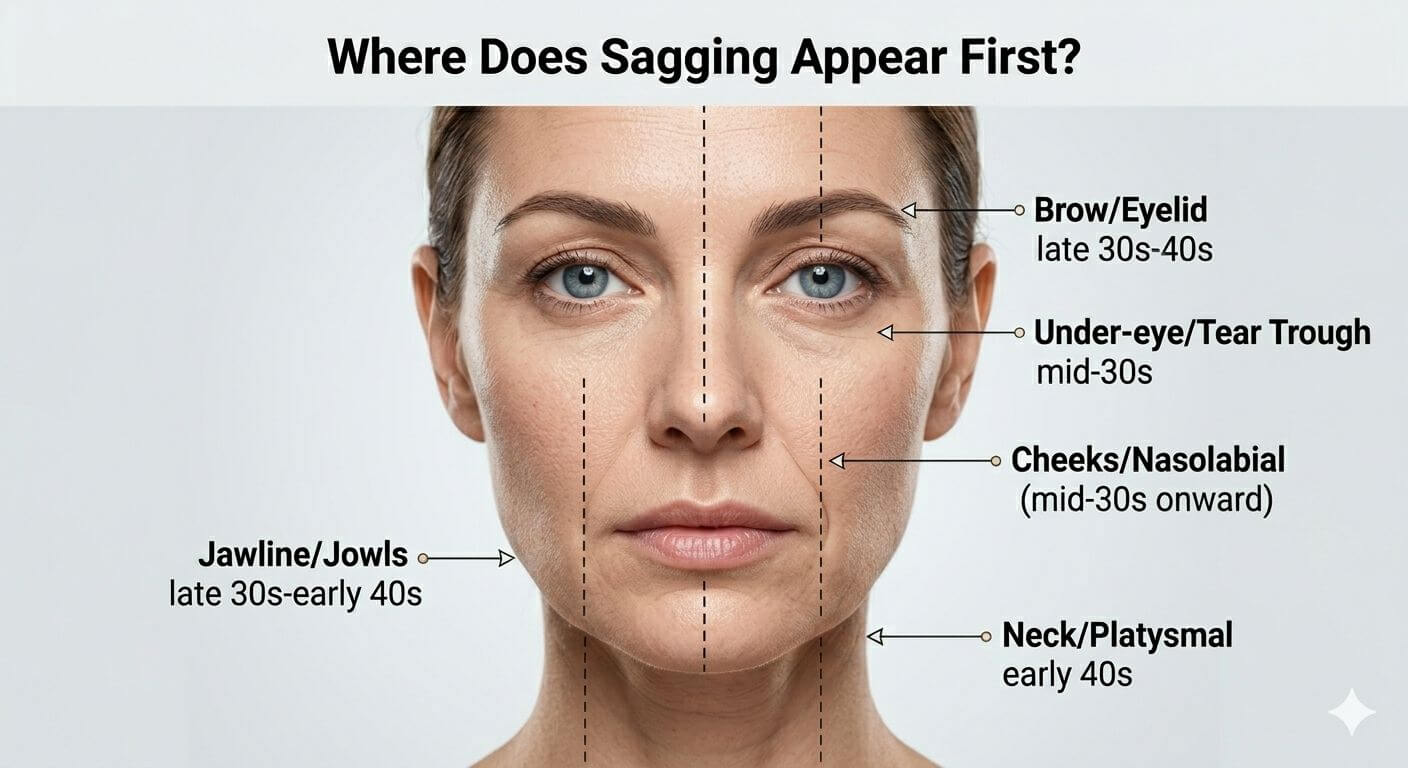
| Zone | What Happens | When It Typically Begins |
| Jawline | Loss of definition, jowls forming | Late 30s – early 40s |
| Cheeks | Downward migration of fat pads, flattening | Mid-30s onward |
| Neck | Platysmal banding, horizontal lines, laxity | Early 40s |
| Under-eye/Midface | Tear trough deepening, nasolabial fold prominence | Mid-30s |
| Forehead/Brows | Brow descent, heaviness of upper eyelids | Late 30s – 40s |
The sequence varies by genetics, lifestyle, and anatomy. People with higher body fat percentages may see midface changes earlier; those with significant sun exposure often show jaw and neck changes sooner.

What Accelerates Skin Firmness Loss?
Risk Factors (Accelerants)
- Smoking: Constricts blood vessels and depletes oxygen and nutrients in the skin, accelerating collagen breakdown
- High sugar diet: Glycation cross-links collagen fibers, making them stiff and brittle instead of pliable
- Weight fluctuations: Repeated expansion and contraction stretches skin's elastic capacity
- Poor nutrition: Collagen synthesis requires Vitamin C, zinc, copper, and amino acids
- Sun exposure: Breaks down existing collagen and halts new synthesis
- Sleep: Chronic poor sleep increases cortisol and reduces collagen production; aim for 7–9 hours nightly
Protective Habits (Daily Maintenance)
- Daily SPF 30+ — prevents collagen degradation from UV
- Dietary antioxidants (Vitamins C, E, polyphenols) — protect collagen from oxidative damage
- Building blocks: eat adequate protein, zinc, copper
- Gentle sleep positioning — minimizes sleep compression creases over time
What Skincare Ingredients Actually Tighten Skin?
Let's be direct: no topical ingredient reverses structural collagen loss at the level that energy-based or injectable treatments do. But several ingredients have meaningful, evidence-backed effects on skin firmness — particularly when used consistently over time.| Ingredient | Mechanism | Clinical Evidence |
| Retinoids (Retinol / Tretinoin) | Stimulates collagen synthesis, increases cell turnover | Strong — gold standard for topical anti-aging |
| Vitamin C | Essential cofactor for collagen synthesis; antioxidant protection | Strong — 10–20% L-ascorbic acid most effective |
| Peptides | Signal peptides trigger fibroblast activity; stimulate collagen and elastin | Moderate-strong; gentler alternative to retinoids |
| Niacinamide | Strengthens the skin barrier; antioxidant; supports collagen indirectly | Moderate — best as a supportive ingredient |
| Hyaluronic Acid | Plumps and hydrates dermis, reducing appearance of laxity | Strong for hydration, moderate for firmness perception |
| SPF (zinc oxide / titanium dioxide) | Prevents further breakdown — the best anti-sagging product you can buy | Very strong — prevention > treatment |
What Professional Treatments Restore Firmness?
Non-Invasive
- Ultrasound (Ultherapy / HIFU): Delivers focused ultrasound energy to the SMAS layer — the same tissue a surgeon lifts. Stimulates new collagen from within. Results build over 3–6 months; last up to 18 months.
- Radiofrequency (RF): Heats collagen fibers to trigger contraction and stimulate new synthesis. Effective for mild-to-moderate laxity. Treatments include Thermage, Morpheus8, and RF microneedling.
- Microneedling: Creates controlled micro-injuries that trigger the skin's repair cascade — collagen and elastin production at the wound site.
- HIFU (High-Intensity Focused Ultrasound): Consumer and clinical versions available; clinical versions deliver energy deeper for more significant lifting.
Minimally Invasive
- Collagen Biostimulators (Sculptra, Radiesse): Injectables that trigger the body's own collagen production rather than adding volume. Results develop over months and can last 2 years.
- PDO Thread Lifts: Dissolvable threads inserted under skin to physically lift tissue and stimulate collagen along the thread track.
- Botulinum Toxin: Relaxes muscles that pull skin downward (masseter, platysma) — not a firmness treatment per se, but can improve contour.
Surgical
- Facelift (Rhytidectomy): Repositions and tightens the SMAS layer and removes excess skin. Most effective and longest-lasting option for significant laxity. Results typically last 7–10 years.
- Brow Lift, Neck Lift, Eyelid Surgery (Blepharoplasty): Targeted procedures for specific zones.
Matching Treatment to Degree of Laxity
- Mild laxity (late 30s–early 40s): Retinoids, Vitamin C, consistent SPF, plus occasional professional microneedling or microneedling can maintain and modestly improve firmness.
- Moderate laxity (mid-40s–50s): Energy-based treatments (HIFU, Ultherapy, RF) combined with collagen biostimulators or strategic filler placement.
- Significant laxity: Surgical options are the most reliable; non-surgical treatments offer improvement but not equivalent results.
Frequently Asked Questions
Can I tighten sagging skin without surgery?
For mild-to-moderate laxity, yes. Energy-based treatments like HIFU and radiofrequency, combined with proven topical actives (retinoids, peptides, Vitamin C) and collagen biostimulators, can produce meaningful improvements. For significant sagging, surgical intervention produces more reliable and lasting results.
At what age does skin start to sag?
Structural changes begin in the mid-twenties with collagen decline, but sagging typically becomes visible in the mid-to-late 30s — earlier if there has been significant sun damage, weight fluctuation, or smoking. Genetics plays a strong role in timing.
Does facial exercise help with sagging?
The evidence is mixed. Some small studies suggest targeted facial exercises may modestly improve muscle tone and provide a minor lifting effect over several months. However, repeated facial movements also accelerate dynamic wrinkle formation. Facial exercise is best viewed as a complementary habit, not a replacement for collagen-stimulating treatments.
How long do skin-tightening treatments last?
Results vary by treatment: topical retinoids require ongoing use; RF and HIFU results last 12–18 months; collagen biostimulators 18–24 months; surgical lifts 7–10 years. All non-surgical treatments require maintenance, as the underlying aging process continues.
Can weight loss cause sagging skin?
Yes. Significant or rapid weight loss — especially at older ages when skin elasticity is already reduced — can leave loose, sagging skin because the dermis lacks the elasticity to contract proportionally. Slower, gradual weight loss and collagen-supporting nutrition can minimize this effect.
The Bottom Line
Skin firmness loss isn't random — it's the predictable result of collagen decline, elastin breakdown, fat redistribution, and sun damage accumulating over decades. The good news is that each of these mechanisms has corresponding interventions, from daily SPF and retinoids all the way to energy-based treatments and injectables.
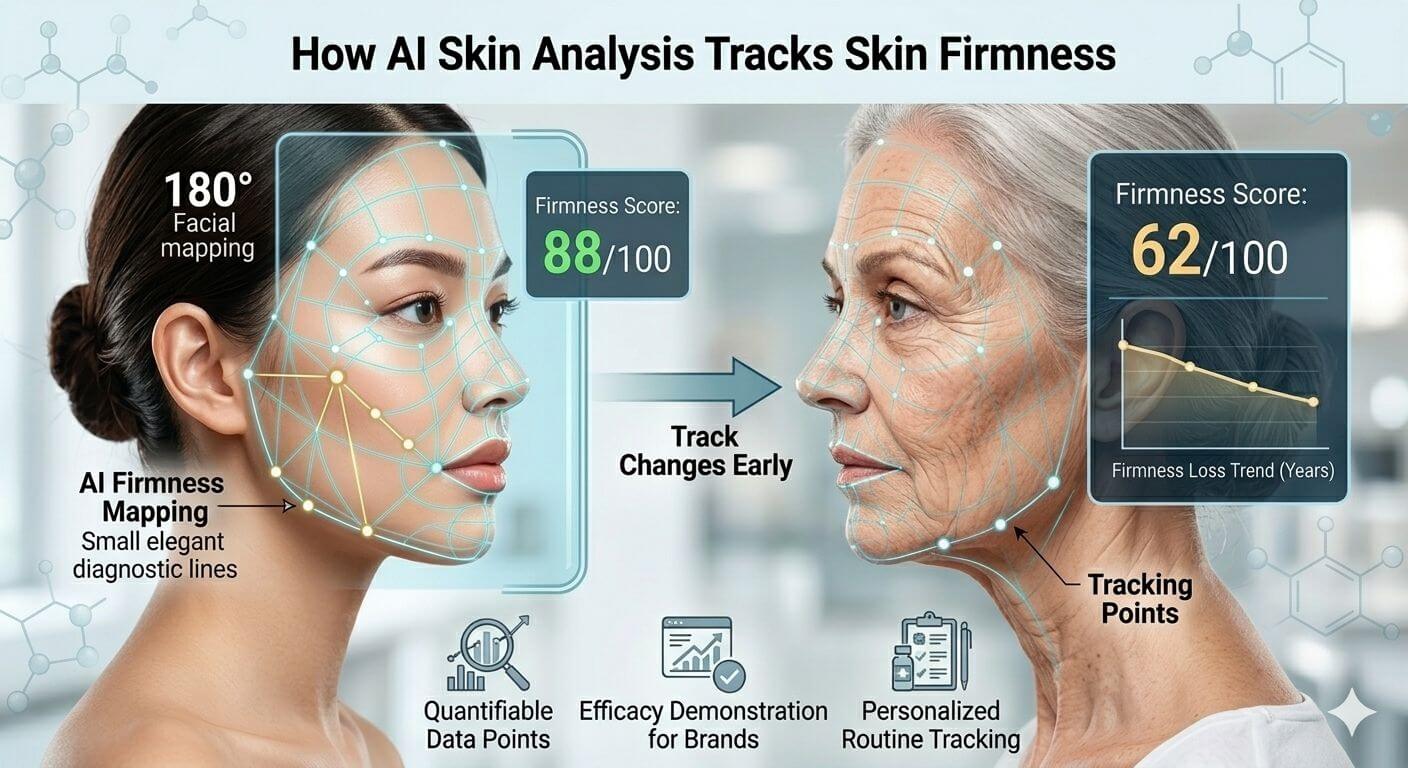
The missing piece — for both consumers and brands — has historically been measurement. Without a baseline, it's hard to know whether a routine is working. That's what AI skin analysis changes: turning firmness from a vague impression into a trackable, actionable data point.
See how Perfect Corp's AI Skin Analysis measures firmness across 15 skin concerns.

Sources
- Medical News Today – 9 ways to stimulate collagen production in skin (updated 2026). medicalnewstoday.com
- American Academy of Dermatology – Body-firming products: what dermatologists say. aad.org
- MDPI Cosmetics – Skin Aging and Type I Collagen: A Systematic Review (2025). mdpi.com
- Journal of the American Academy of Dermatology – Hyaluronic acid content and aging.
- NCH Stats – Collagen Loss By Decade (2026). nchstats.com
- Metatech Insights – AI Skin Analysis Market Report (2025).
- Perfect Corp. – AI Skin Analysis Solution for Beauty Brands & Clinics. perfectcorp.com