Author: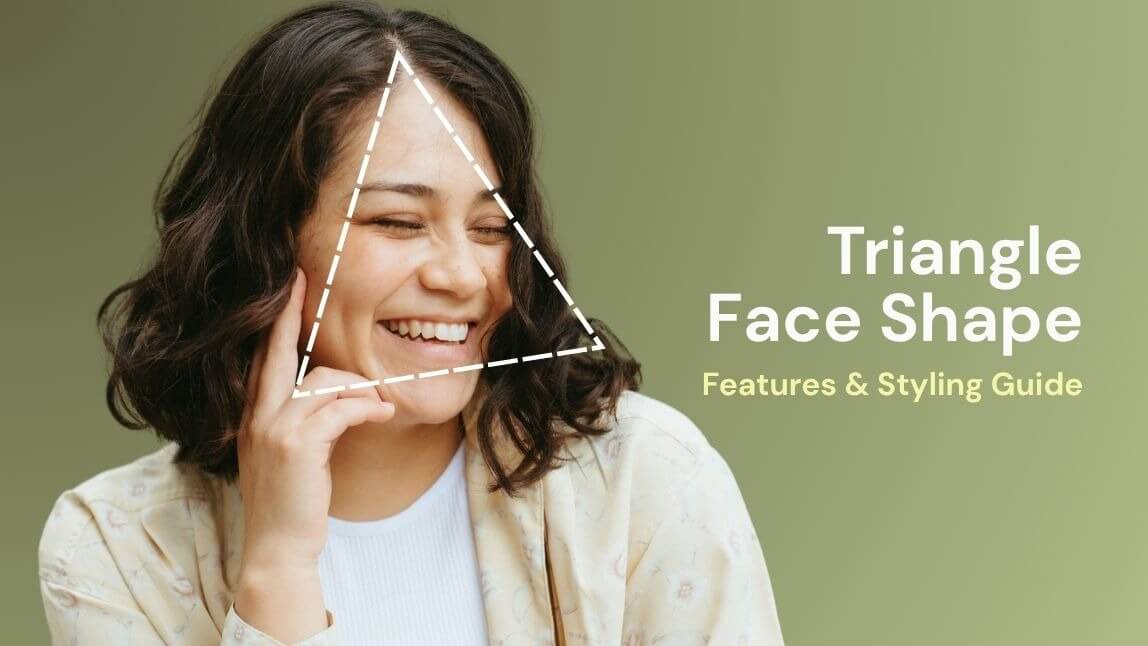
A triangle face shape is usually narrowest at the forehead and widest at the jaw. If your face gradually broadens from the temples toward the lower face, this guide will help you check the pattern, distinguish it from similar shapes, and explore styling choices—without treating any face shape as something to fix.
What Is a Triangle Face Shape?
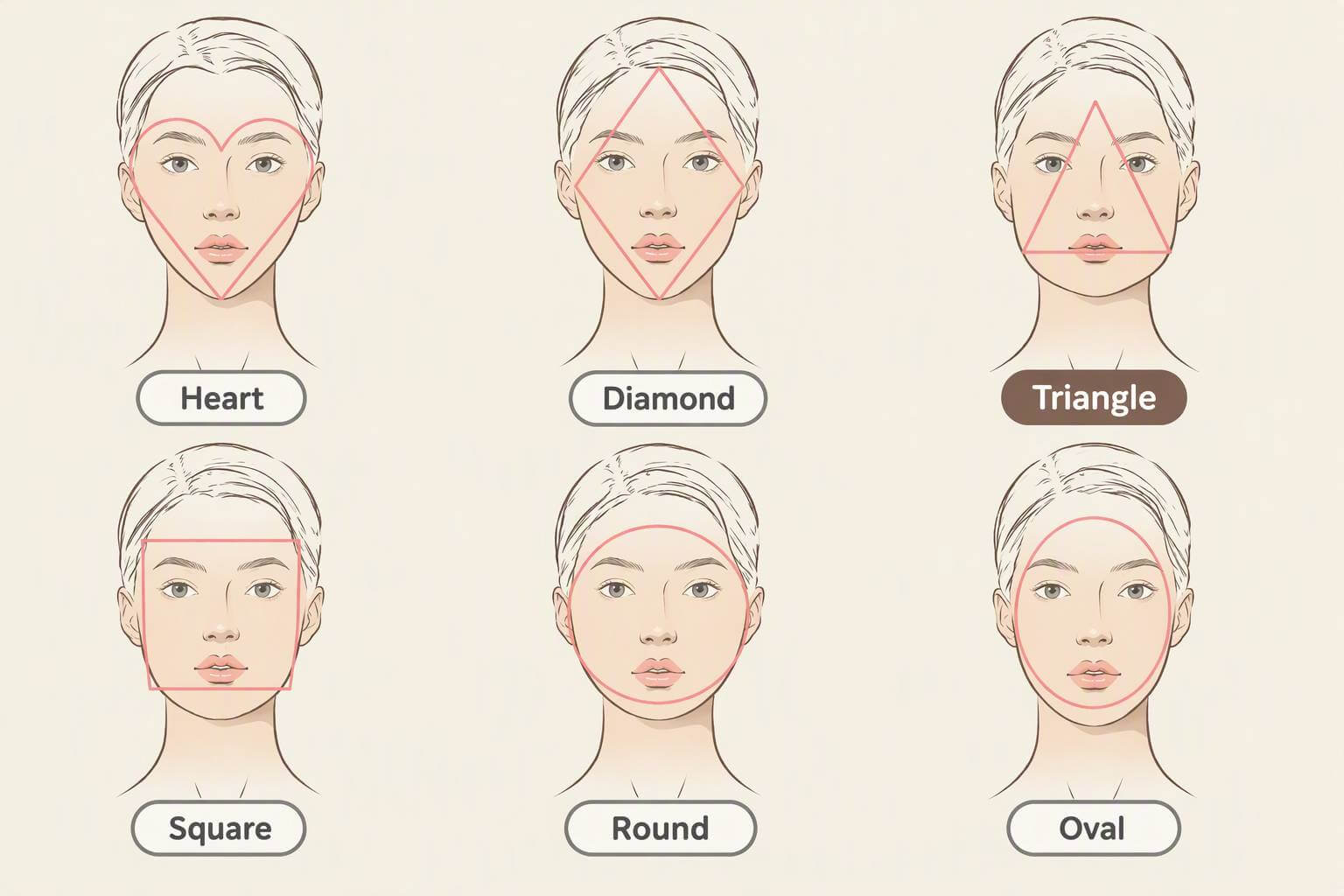
A triangle face shape, sometimes called a pear face shape, has a forehead that appears narrower than the jaw. The cheek area generally falls between them in width, giving the outer face a gradual widening from top to bottom. The jaw may look defined or softly rounded; its relative width matters more than a sharp angle.
This is different from an inverted triangle: that shape is wider at the forehead and narrows toward the chin. Because naming varies between guides, check the direction of the taper rather than relying on the word “triangle” alone.
How to Identify Your Face Shape
- Clear the outline. Pull your hair away from your temples and jaw, then look straight ahead in even light with a relaxed expression.
- Find the widest area. Compare your forehead, cheekbones, and jaw. A triangle pattern is widest at the jaw and narrower toward the forehead.
- Check the whole silhouette. Look for a consistent widening toward the lower face rather than deciding from cheek fullness or one photograph alone.
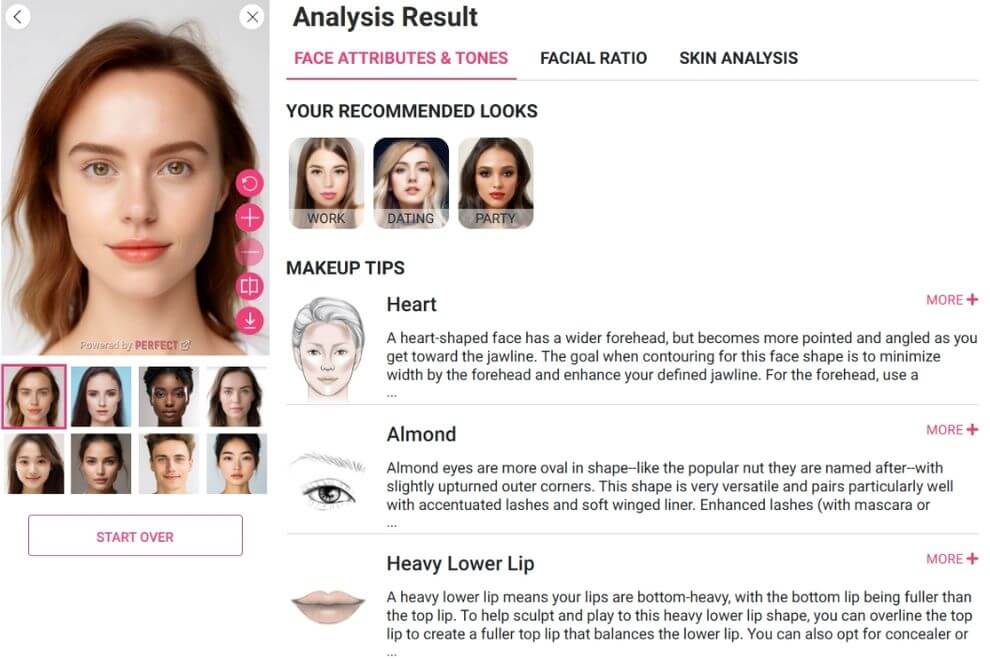
For another point of reference, try Perfect Corp.’s AI Face Analyzer demo with a clear, front-facing photo. Face-shape labels are useful styling descriptions, not exact measurements or judgments about appearance.
Triangle vs. Similar Face Shapes
| Shape | What to compare |
|---|---|
| Triangle / pear | The jaw is widest; the forehead is narrower. |
| Heart / inverted triangle | The upper face is wider and narrows toward the chin—the opposite direction. |
| Square | The forehead and jaw are closer in width, often with a more angular jawline. |
| Diamond | The cheekbones, rather than the jaw, tend to be the widest area. |
If two descriptions fit, that is normal. Focus on where your face is widest and how its outline changes from forehead to jaw. Perfect Corp.’s overview of face shapes provides a broader comparison if you are still undecided.
Styling Ideas to Explore
If you enjoy adding visual emphasis near the upper face, explore optional directions through hair, glasses, and makeup—not rules for what you should wear.

Hair
Texture around the temples, a side-swept fringe, or volume above the ears can bring visual attention to the upper face.
Glasses
Browline frames, a more noticeable top rim, or subtle detail near the temples can draw attention upward. Fit and comfort still come first.
Makeup
Defined brows or an eye-focused look can emphasize features above the cheekbones without changing the appearance of the jaw.
Face Analysis for Businesses
For beauty, eyewear, and salon businesses, face shape can be one starting point for more relevant recommendations. Perfect Corp.’s AI Face Analyzer identifies face shape alongside other facial attributes, so brands can build a customer experience that offers options rather than prescribing one “correct” style. Explore the product to see how it could fit your website, app, or consultation flow.
Frequently Asked Questions
Is a triangle face shape the same as a pear face shape?

Often, yes. Both terms commonly describe a face that is narrower at the forehead and wider at the jaw. Terminology varies, so compare the features rather than the label.
What is the difference between triangle and inverted triangle face shapes?
They taper in opposite directions. A triangle face is wider at the jaw; an inverted triangle is wider across the upper face and narrows toward the chin.
Does a wide jaw always mean I have a triangle face?
No. Compare the jaw with the forehead and cheekbones. If the forehead and jaw are similar in width, your outline may be closer to square; if the jaw is clearly widest and the forehead narrower, triangle is a better description.
Can fuller cheeks make a face look triangular?
Fuller cheeks can affect how the face looks in photos, but cheek fullness alone does not define its shape. Check whether the jaw is wider than both the cheekbone area and the forehead, rather than judging from one feature.
How can I get a clearer face-shape result from a photo?
Use a front-facing photo taken at eye level in even light. Keep your hair away from your forehead and jaw, and use a relaxed expression so the outer face is easy to see. You can then compare the outline yourself or try the AI Face Analyzer demo as a second point of reference.