 Author:
Finding that perfect pair of spectacles is about how glasses are supposed to fit unique face shapes, ensuring unparalleled comfort, clear vision, and a look that truly elevates your personal style. Ill-fitting eyeglasses can cause discomfort, slippage, and even headaches, but don't worry! We're diving deep into every secret of a flawless fit, and revealing how cutting-edge AI glasses technology is revolutionizing the entire experience!
Key Takeaways: The Ultimate Guide to Perfect Glasses Fit
- Why Proper Eyeglass Fit is Non-Negotiable
- The Anatomy of a Perfect Fit: Where Should Glasses Sit?
- Traditional Fitting vs. AI: The Evolution of Eyewear Comfort
- How Perfect Corp.'s AI Unlocks Your Perfect Fit
- Real-World Use Cases: AI Glasses in Action
- Benefits Beyond Vision: Why AI Fit is a Game-Changer
- The Future of Eyewear: Beyond the Perfect Fit
- Frequently Asked Questions About Glasses Fit & AI
Why Proper Eyeglass Fit is Non-Negotiable
When you ask, “how should eyeglasses fit?” you're not just asking a style question; you're asking about your long-term well-being and visual performance. Poorly fitting spectacles can lead to a cascade of problems:
- Constant Slippage: Glasses that slide down your nose force you to constantly push them back up, interrupting your focus and smudging lenses.
- Pressure Points & Headaches: Too-tight temples or an ill-fitting bridge can cause painful indentations, red marks, and persistent headaches.
- Distorted Vision: If lenses aren't perfectly aligned with your eyes, you might experience blurry vision, eye strain, or even incorrect prescription effectiveness.
- Unflattering Appearance: Glasses that are too wide, too narrow, or sit incorrectly can detract from your facial features, making you feel less confident.
- Damage to Frames: Repeated adjustments or poor handling due to a bad fit can stress and damage your frames over time.
Understanding how glasses are supposed to fit is the first step towards a lifetime of comfortable, clear, and stylish vision.
The Anatomy of a Perfect Fit: Where Should Glasses Sit?
Achieving the ideal fit involves several key components working in harmony. Let’s break down the essential areas where your glasses interact with your face.
The Bridge: Where Should Glasses Sit on Nose?
This is arguably the most critical area for proper fit. The bridge of your glasses should match the bridge of your nose perfectly.
- Too Narrow: If the bridge is too narrow, the glasses will pinch your nose, leaving red marks and causing discomfort. They’ll also sit too high.
- Too Wide: If the bridge is too wide, the glasses will slide down your nose constantly. This is the main reason for the dreaded 'nose-slide'. You might find yourself asking, “how to wear glasses with nose pads” effectively, but if the bridge itself is wrong, pads can only do so much.
- The Ideal Fit: Your glasses should rest comfortably on the widest part of your nose, distributing weight evenly. There should be no gaps, pinching, or slipping. The bottom of the frame should not touch your cheeks when you smile.
The Temples: How Should Glasses Fit on Ears?
The temples (or arms) of your glasses extend from the frame front to behind your ears. Their length and curve are vital for stability.
- Too Short: If the temples are too short, the bend behind your ear won't reach properly, leading to the glasses feeling unstable and potentially putting pressure on the top of your ears.
- Too Long: If the temples are too long, the curve behind your ear will be too far back, causing the glasses to slide down or feel loose.
- The Ideal Fit: The temples should extend straight back, then curve gently downwards, following the natural curve of your ear. There should be no uncomfortable pressure on the sides of your head or behind your ears. The bend should start just as the temple clears your earlobe. This ensures stability without discomfort.
The Lenses: Eye Position and Frame Size
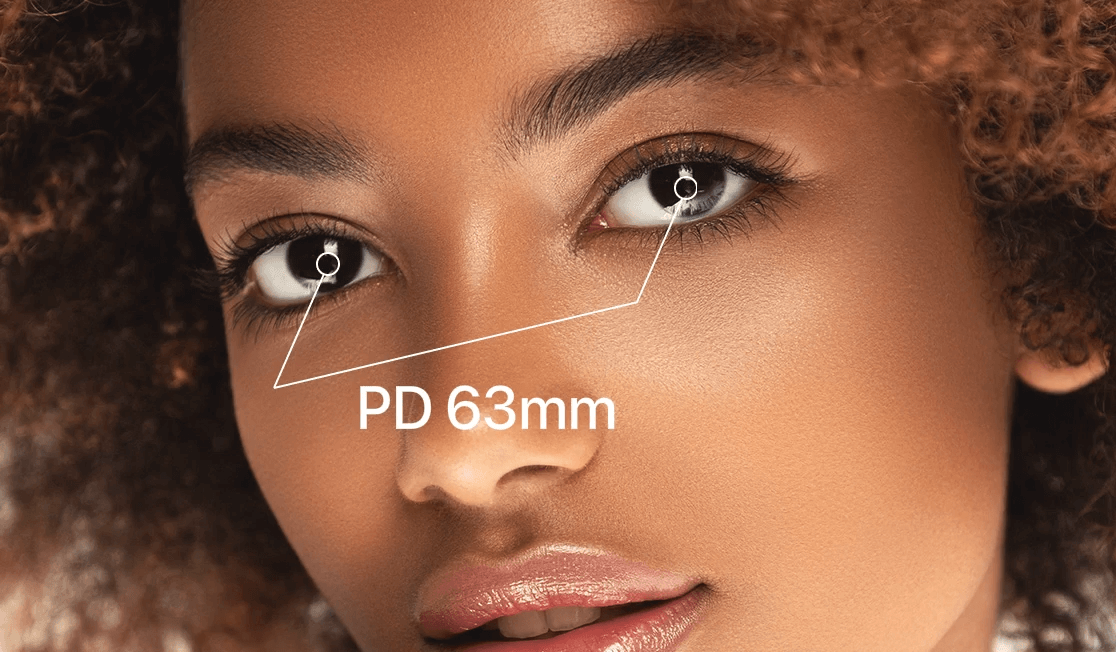
The size of your frames and the position of your eyes within the lenses are crucial for optimal vision.
- Eye Center: Your pupils should ideally be centered horizontally and vertically within the lenses. This ensures you're looking through the optical center of your prescription.
- Frame Width: The overall width of the frame should be slightly wider than your face, ensuring that the temples go straight back without pressing into your head. If the frame is too narrow, it will pinch and feel tight; if it’s too wide, it will look oversized and feel loose.
Understanding these elements helps clarify how are eyeglasses supposed to fit for both comfort and visual clarity.
Traditional Fitting vs. AI: The Evolution of Eyewear Comfort
For decades, finding the perfect pair of glasses relied heavily on trial and error, a friendly optician's eye, and a lot of patience. This traditional method, while often effective, comes with its limitations:
- Subjectivity: What feels 'comfortable' to one person might not be ideal for another. An optician's assessment, while skilled, is still a subjective interpretation.
- Limited Inventory: In-store selections, especially for unique face shapes or specific style preferences, can be limited, forcing compromises on fit or style.
- Time-Consuming: Trying on countless pairs, waiting for adjustments, and repeating the process can be a lengthy ordeal.
- Inconvenience: Physical visits to an optician aren't always feasible, especially for those with busy schedules or limited mobility.
Enter the age of artificial intelligence. With advancements in computer vision and augmented reality, the question of “how to wear spectacles” with perfect fit is being redefined. AI offers a data-driven, hyper-personalized, and incredibly convenient solution that complements, and in many ways surpasses, traditional methods.
How AI Glasses Unlocks Your Perfect Fit
Perfect Corp. is at the forefront of this revolution, leveraging sophisticated AI to ensure eyewear fits flawlessly every time. Our technology transforms the guesswork into an exact science.
Virtual Try-On (VTO): Experience Before You Buy
Virtual Try-On technology allows users to instantly visualize how different frames look and fit on their face in real-time. This goes far beyond a simple overlay:
- Hyper-Realistic Simulation: The AR engine renders glasses with incredible realism, accurately depicting reflections, shadows, and the way light interacts with the frame and lenses.
- Dynamic Fit Adjustment: Users can see how frames sit on their nose, if they're too wide or too narrow, and how the temples align with their face, all from the comfort of their home or in a digitally enhanced retail environment.
- Extensive Catalog: Brands can upload their entire eyewear collection, allowing consumers to try on thousands of styles virtually without physical inventory limitations.
This seamless integration of AI and AR ensures that when you ask, “how should glasses fit?”, the answer is no longer a guess, but a precise, personalized recommendation.

Pupillary Distance (PD) Auto Detection
AI glasses can automatically detects a user’s PD with high accuracy (often within 1–2 mm), ensuring lenses are correctly aligned to the eyes. This precision helps prevent common issues caused by misaligned lenses, such as eye strain, headaches, and blurred vision, so wearers look through the optimal optical center for clear, comfortable vision.
Unlocking the Full Potential of Eyewear VTO

At the heart of eyewear fitting solution is the powerful Face Shape Detector. This cutting-edge technology performs an intricate, non-invasive scan of an individual's face shape, identifying key facial landmarks and measurements with unparalleled accuracy:
- Precise Face Shape Detection: Identifies face shapes (round, square, oval, heart, etc.) to suggest frames that balance proportions and flatter the wearer.
- Better Sizing & Comfort Cues: Analyzes face width, temple distance, and nose bridge area to guide appropriate frame width, bridge fit, and overall scale.
- Personalized Recommendations: Based on these precise measurements, the AI helps user to find frames that are optimally sized for their unique facial structure.
Real-World Use Cases: AI Glasses in Action
The impact of AI-powered eyewear fitting extends across various sectors, transforming how businesses operate and how consumers shop.
Use Case 1: Enhancing Online Eyewear Retail
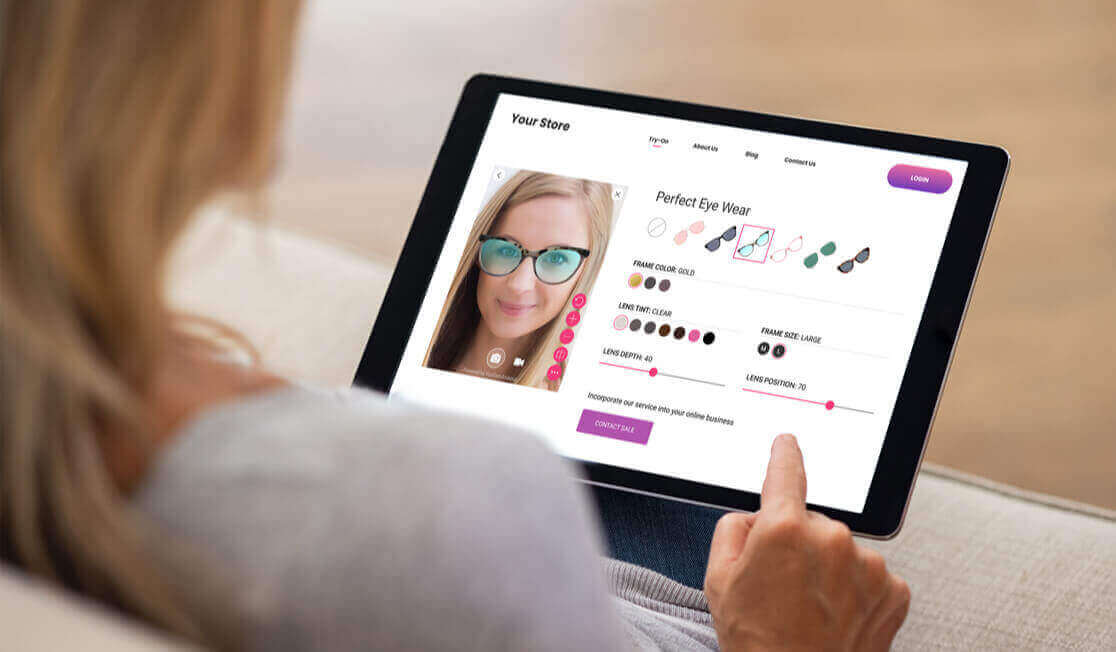
Online eyewear has boomed, but returns due to poor fit remain a significant challenge. A customer uploads a selfie or uses their webcam, and the AI instantly provides their facial measurements and recommends frames that guarantee a 'proper fit'. They can then virtually try on recommended styles, seeing exactly how they'll look and sit. This builds consumer confidence, minimizes uncertainty, and boosts conversion rates by providing a 'physical store' experience online.
Use Case 2: Revolutionizing In-Store Optical Consultations
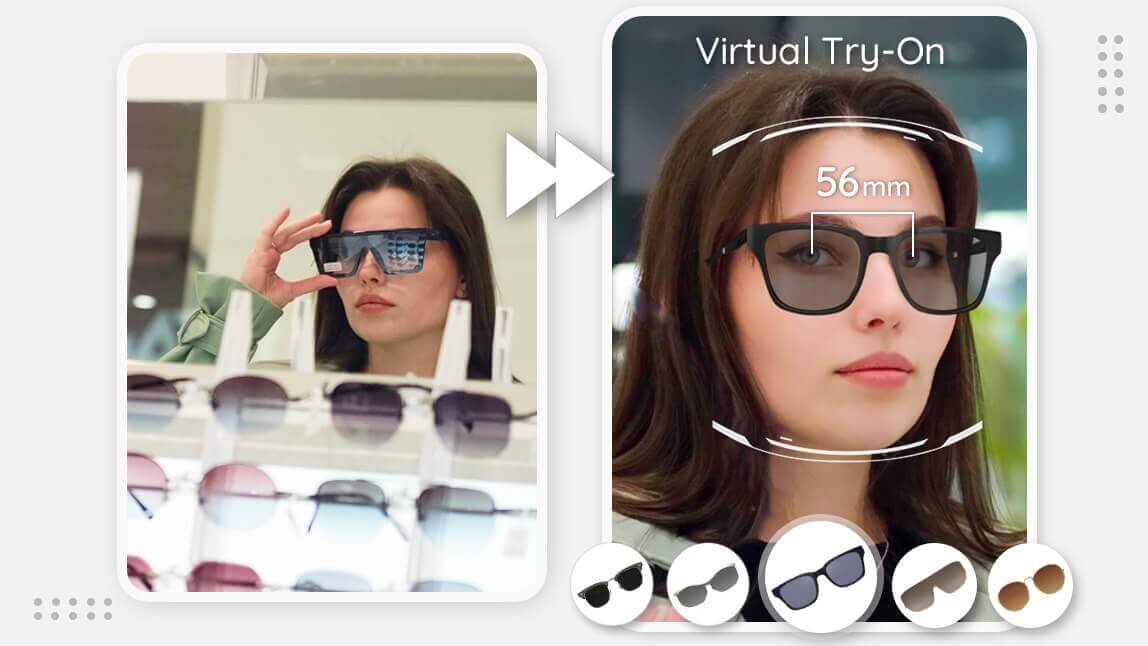
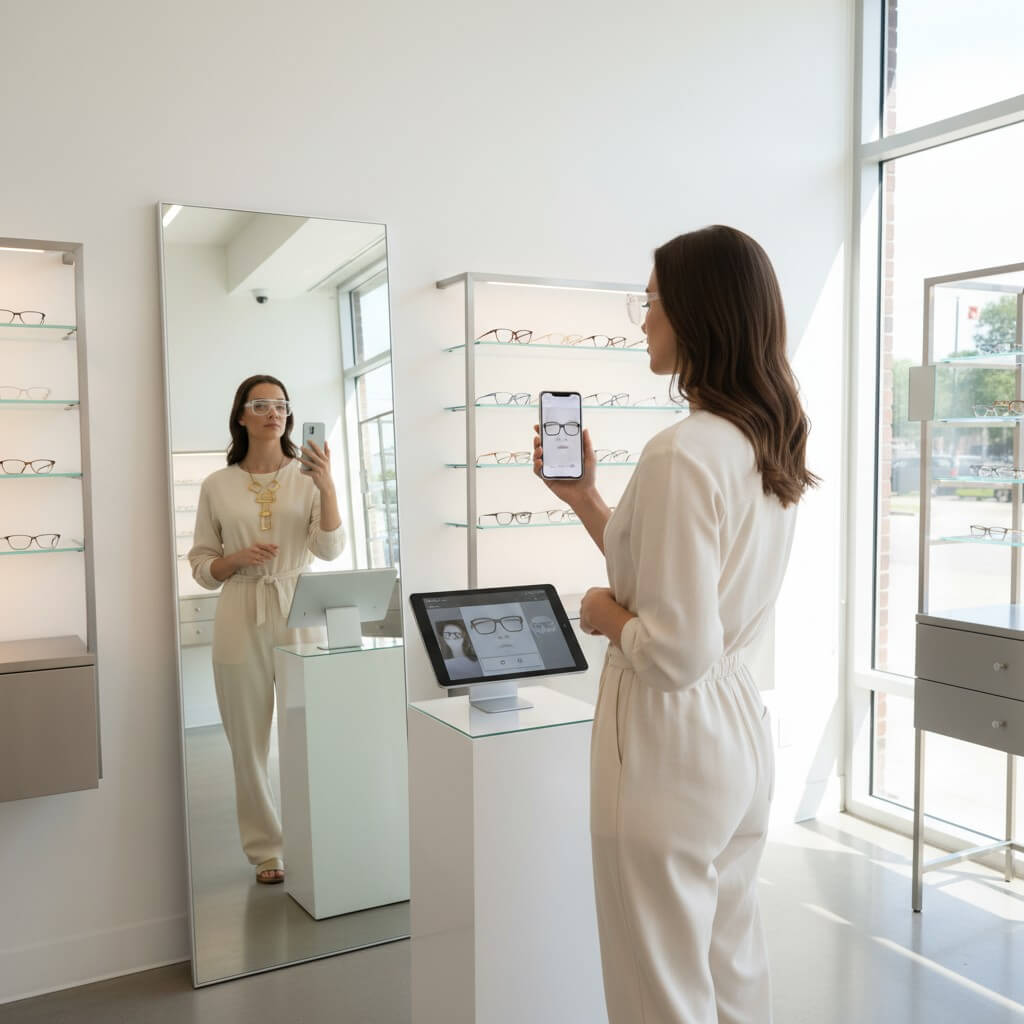
Even in traditional optical stores, AI elevates the customer experience by capturing precise facial measurements, and instantly filtering inventory for best-fit frames. This allows opticians to focus on prescriptions and styling rather than manual measurements.
Benefits Beyond Vision: Why AI Fit is a Game-Changer
The advantages of AI-powered eyewear fitting are far-reaching, impacting every stakeholder in the eyewear ecosystem.
For Brands & Retailers:
- Seamless Integration: AI Glasses Virtual Try-On is designed for brands and e-commerce. Works seamlessly across major browsers on macOS and Windows.
- Reduced Return Rates: The primary benefit. Accurate virtual fitting means customers receive frames that actually fit, significantly lowering costly returns and exchanges.
- Enhanced Customer Satisfaction: Happy customers with well-fitting glasses are more likely to become loyal patrons and advocates for your brand.
- Increased Conversion Rates: The confidence gained from a realistic virtual try-on and accurate fit recommendations translates directly into higher sales.
- Broader Reach & Accessibility: Online VTO allows brands to reach customers globally, providing an accessible and personalized shopping experience regardless of location.
- Operational Efficiency: Streamlined fitting processes reduce the time spent on manual adjustments and customer service inquiries related to fit issues.
- Data-Driven Insights: AI collects valuable data on customer preferences and facial metrics, allowing brands to refine product development and marketing strategies.

For Consumers:
- Unparalleled Comfort: Say goodbye to pinching, slipping, and headaches. AI ensures your glasses fit perfectly from day one.
- Confident Shopping: No more guessing games. See exactly how glasses will look and feel before you commit to a purchase.
- Personalized Style: Receive recommendations not just for fit, but also for styles that complement your unique face shape and features.
- Convenience & Accessibility: Try on thousands of frames from the comfort of your home, at any time, without geographical limitations.
- Time-Saving: Eliminate the need for multiple store visits and lengthy try-on sessions.
- Reduced Eye Strain: Correctly positioned lenses ensure you're looking through the optical center, reducing eye strain and maximizing prescription effectiveness.
The Future of Eyewear: Beyond the Perfect Fit
The journey towards perfect eyewear is constantly evolving, and AI is just getting started. Here’s a glimpse into what the future holds:
- Dynamic Fit Adjustments: Imagine smart glasses that can subtly adjust their fit throughout the day based on movement or changes in facial expression, ensuring continuous comfort.
- AI-Powered Prescriptive Styling: Beyond just fit, AI will offer hyper-personalized style recommendations based on personal fashion preferences, skin tone, hair color, and even outfit analysis.
- Virtual Reality (VR) Optical Experiences: Fully immersive VR environments where you can walk through a virtual store, interact with eyewear, and receive real-time fitting advice from an AI assistant.
- Integration with Health Tracking: Eyewear that doubles as a health monitor, subtly adjusting its fit to optimize comfort during different activities while tracking biometric data.
- Sustainable & On-Demand Manufacturing: AI-driven customization will lead to more efficient, on-demand manufacturing of frames that are perfectly suited to the individual, reducing waste and overproduction.
The future of eyewear isn't just about seeing better; it's about experiencing eyewear that's truly an extension of yourself, perfectly integrated into your life with unparalleled comfort and style.
Embrace the Future of Eyewear with Perfect Corp.
The days of guessing, discomfort, and endless adjustments are rapidly becoming a thing of the past. Understanding “how should glasses fit” is no longer a chore, but an exciting journey into personalized comfort and style, powered by the incredible capabilities of AI. Perfect Corp. is leading this charge, providing revolutionary AI Face Analyzer and Virtual Try-On solutions that empower both consumers and businesses.
By blending the timeless wisdom of a perfect fit with the cutting-edge precision of artificial intelligence, we're not just selling eyewear; we're delivering an experience. An experience where every pair of glasses feels tailor-made, where comfort is guaranteed, and where confidence shines through. Step into the future where your perfect pair isn't just a dream – it's a click away.
Ready to redefine the eyewear experience for your brand or yourself? Discover the power of Perfect Corp.'s AI Eyewear Virtual Try-On.

Glasses Fit & AI FAQ
Q1: What are the main signs my glasses don't fit properly?
A1: Common signs include constant slipping down your nose, pinching or red marks on your nose or behind your ears, headaches, the frames sitting too high or too low, or the temples pressing uncomfortably into the sides of your head. If you're constantly adjusting your glasses, they likely don't fit well.
Q2: Can AI really help me find a better fitting pair of glasses than an optician?
A2: AI offers unparalleled precision in measuring facial dimensions, often identifying nuances that might be missed by the human eye. While an optician provides valuable expertise, AI's data-driven approach ensures objective, highly accurate recommendations. It complements and enhances the optician's role, providing a more informed starting point for selection and fitting.
Q3: Where should glasses sit on my nose for the best fit?
A3: Your glasses should sit comfortably on the widest part of your nose, without pinching or leaving red marks. There should be no gap between the frame's bridge and your nose, nor should the glasses slide down when you move your head. The weight should be distributed evenly across the bridge.
Q4: How should the temples of my glasses fit behind my ears?
A4: The temples should extend straight back along your head, then gently curve downwards to hook behind your ears. The curve should begin just as the temple clears your earlobe, providing a secure but not tight grip. There should be no pressure on the top or back of your ears, and the glasses should feel stable.
Q5: Is virtual try-on accurate enough for me to trust the fit?
A5: High-quality virtual try-on, especially those powered by advanced AI like Perfect Corp.'s, are highly accurate. They use sophisticated facial mapping to simulate how frames sit on your unique face in 3D, accounting for dimensions, angles, and contours. This provides a very realistic representation of fit and appearance.
Q6: What if my face is unique or asymmetrical? Can AI still help?
A6: Absolutely! AI Face Analyzer technology excels at capturing unique facial characteristics, including slight asymmetries. Its ability to map hundreds of data points ensures that personalized recommendations are even more precise for non-standard face shapes, often outperforming generic fitting advice.
Q7: How can AI help reduce glasses returns for online retailers?
A7: By providing accurate virtual try-on and fit recommendations, AI significantly increases customer confidence in their purchase. Customers are more likely to select frames that truly fit and suit them, leading to fewer instances of receiving glasses that don't meet their expectations and thus reducing return rates.
Q8: Besides fit, what other benefits does AI offer for eyewear shopping?
A8: Beyond fit, AI offers personalized style recommendations based on face shape, skin tone, and even fashion preferences. It streamlines the browsing process, allowing users to efficiently filter through vast inventories and discover frames they might not have considered otherwise. It also enables 24/7 accessibility to a personalized fitting experience.
Q9: How often should I have my glasses adjusted or checked for fit?
A9: It's a good practice to have your glasses checked and adjusted by an optician periodically, especially if you notice discomfort, slippage, or changes in how they feel. Even with a perfect initial fit, daily wear can cause minor distortions. For new glasses, it's wise to get an initial adjustment after a week or two of wear.
Q10: Can I use AI to find glasses for specific activities, like sports or reading?
A10: Yes, AI can be integrated to recommend specific frame types or features suitable for different activities. For example, it could suggest lightweight, durable frames with secure fits for sports, or frames with larger lens areas for reading, based on your facial measurements and the activity's requirements.