 Author:



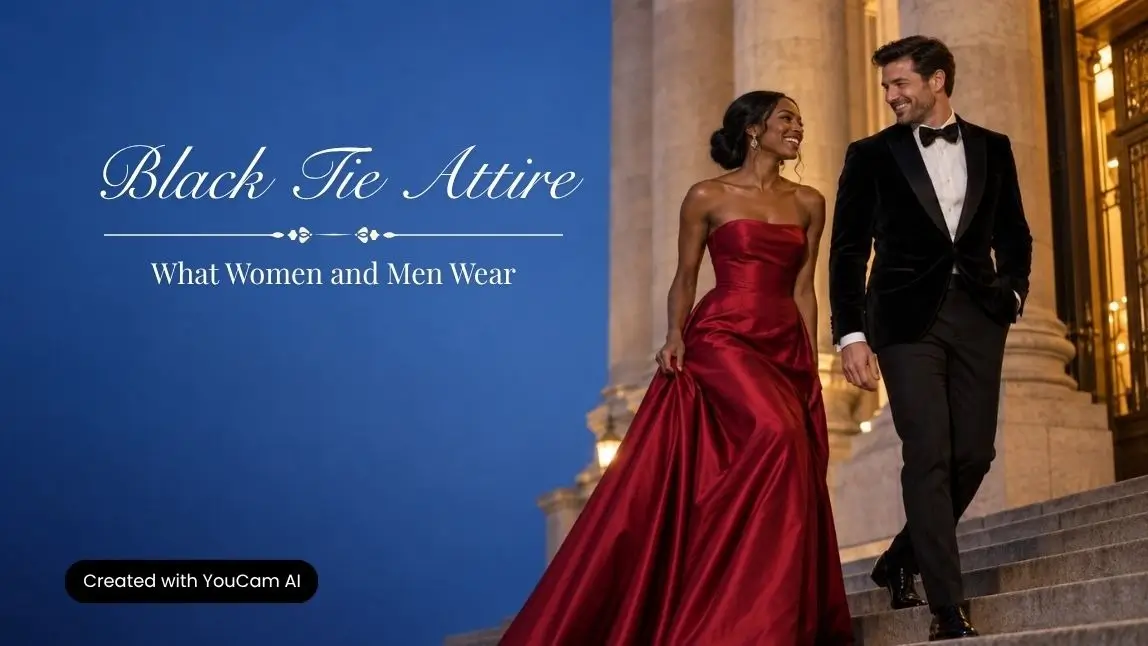
Black tie attire is a formal evening dress code. For women, it usually means a floor-length evening gown, or an equally formal jumpsuit or tuxedo suit. For men, it means a tuxedo: a dinner jacket with satin lapels, matching trousers, a white formal shirt and a black bow tie. On the formality scale, black tie sits just below white tie and above black tie optional, and it is most often requested for galas, charity balls, award dinners and evening weddings.
This guide covers what the black tie dress code asks of women and men, how to read the invitation, and how black tie optional, creative black tie and white tie differ. It also shows how fashion retailers use virtual try-on to help shoppers see a full gown or tuxedo on themselves before they buy.
Table of Contents
- What Is Black Tie Attire?
- The Black Tie Dress Code at a Glance
- Black Tie Attire for Women
- Black Tie Attire for Men
- What Is a Black Tie Event?
- Black Tie Optional and Creative Black Tie
- White Tie vs. Black Tie
- Shoes and Accessories for Black Tie
- How Eveningwear Brands Use Gown and Tuxedo Try-On
- Adding Gown and Tuxedo Try-On With the AI Clothes Changer API
- Black Tie Attire FAQ
- Conclusion
What Is Black Tie Attire?

Black tie means evening dress at its most common formal level. The name comes from the black bow tie worn with a tuxedo, but the dress code applies to everyone on the guest list, and it says nothing about the color you have to wear.
Three things define black tie attire:
- It is evening wear. Black tie is traditionally reserved for events that start after 6 p.m. Daytime events rarely use it.
- The men's uniform is fixed. A tuxedo with a bow tie is expected. A business suit does not meet the code unless the invitation adds "optional."
- Women's options are wider, but formal. A floor-length gown is the safest choice. A very dressy cocktail dress, a formal jumpsuit or a tuxedo-style suit is often accepted too, as long as the fabric and styling clearly read as evening wear.
Because a gown or tuxedo is a big purchase, often made for a single event, more fashion retailers now let shoppers see the complete look on their own photo before ordering, using virtual try-on technology such as Perfect Corp.'s AI Clothes Changer API. You will see actual try-on results in the women's and men's sections below.
The Black Tie Dress Code at a Glance
Black tie is one rung of a ladder of formal dress codes. Invitations often add a word to it, and each variation changes what is acceptable. The table below covers the formal end of the scale. For the codes below it, see our comparison of cocktail attire vs. semi-formal and black tie.
| Dress code | Formality | Women | Men |
|---|---|---|---|
| White tie | Highest | Formal floor-length evening gown, often with long gloves | Black tailcoat, white piqué wing-collar shirt, white waistcoat and white bow tie |
| Black tie | Very high | Floor-length evening gown; a very dressy cocktail dress, formal jumpsuit or tuxedo suit can also work | Tuxedo, formal white shirt, black bow tie, cummerbund or waistcoat, patent shoes |
| Black tie optional | High | Floor-length gown, dressy cocktail dress or elegant evening separates | Tuxedo, or a dark suit with a white shirt and a conservative tie |
| Creative black tie | High, with personality | Gown or dressy cocktail dress with bolder colors, textures or accessories | Tuxedo with a fashion twist: velvet jacket, black shirt or colored bow tie |
"Black tie preferred" and "black tie invited" sit close to black tie optional: the host hopes for tuxedos and gowns, but will not turn away a dark suit or cocktail dress.
Black Tie Attire for Women
Black tie attire for women is more flexible than for men, but the bar is high: the outfit should read as evening wear from across a ballroom. Start with length, then fabric, then color.
Gowns and length
A floor-length evening gown is the classic choice and never wrong. Column, A-line, mermaid and ballgown silhouettes all fit the code, so choose the shape you can move, sit and dance in all evening. A tea-length or midi dress can work when it is made in a formal fabric and styled with evening accessories, but at a gala or an evening wedding, a full-length gown is the safer reading of the invitation.
Fabrics and colors
Black tie fabrics have weight, sheen or texture: velvet, satin, silk, crepe, taffeta, chiffon, lace and sequins. Velvet and metallics are especially at home at winter events and holiday galas. You don't have to wear black. Deep jewel tones such as emerald, sapphire, ruby and burgundy, as well as gold, bronze, navy and classic black, all suit the evening setting. At a wedding, avoid white, ivory and cream.

This look is an actual result from Perfect Corp.'s AI clothes virtual try-on tool.

This look is an actual result from Perfect Corp.'s AI clothes virtual try-on tool.
Jumpsuits, tuxedo suits and separates
Women can wear pants to a black tie event when the outfit is as formal as a gown. A wide-leg jumpsuit in crepe or satin, a velvet or satin tuxedo suit, or palazzo trousers with a silk evening top all meet the code when they are paired with evening shoes and jewelry. Keep separates for black tie optional unless the pieces are clearly eveningwear.
What to avoid
- Short, casual or daytime dresses in cotton or jersey.
- Business suits and office separates.
- Large everyday bags, sneakers and casual sandals.
Black Tie Attire for Men
Black tie attire for men follows a fairly strict uniform. If you get these pieces right, there is little room for error.
- Tuxedo jacket: black or midnight blue, with satin or grosgrain facings on a peak or shawl lapel, single-breasted or double-breasted.
- Trousers: matching fabric, usually with a satin or braid stripe down the side seam, worn with braces rather than a belt.
- Shirt: a white formal shirt with a pleated or piqué front, studs and French cuffs with cufflinks.
- Bow tie: black silk or satin, ideally self-tied. A long necktie belongs to black tie optional and creative black tie.
- Waist covering: a black cummerbund or a low-cut evening waistcoat.
- Shoes and socks: black patent oxfords or highly polished plain-toe oxfords, with black dress socks.
For warm-weather and destination events, a white or ivory dinner jacket with black tuxedo trousers is the traditional alternative. A velvet dinner jacket in black, midnight blue or burgundy is also widely accepted at winter events.

This look is an actual result from Perfect Corp.'s AI clothes virtual try-on tool.
If you are deciding between a black and a midnight blue tuxedo, or whether to rent or buy, you can see tuxedo and suit styles on your own photo before committing.
Gowns, jumpsuits and tuxedos
Upload a full-body photo and compare formal looks before you buy.
What Is a Black Tie Event?
A black tie event is any evening occasion where the host asks guests to dress at this level. Typical black tie events include:
- Charity galas, fundraisers and balls
- Evening weddings at formal venues
- Award ceremonies and industry dinners
- Opera and theater openings
- Holiday galas and New Year's Eve parties
How to read the invitation
The wording matters. "Black tie" on its own means tuxedos and gowns are expected. "Black tie optional," "black tie preferred" or "black tie invited" means formal wear is welcome but not required. "Formal" is often used in the same way as black tie optional. When an invitation is vague, the start time and venue are the best clues: a 7 p.m. dinner in a hotel ballroom calls for more than a 5 p.m. reception in a gallery.
Black tie weddings
Weddings follow the same rules, with two additions: guests avoid white and ivory, and the couple's venue and season shape the fabric and color choices. Our guide to black tie wedding guest dresses covers 15 styles that suit the dress code. For December events, our New Year's Eve outfit ideas include what to wear to a black tie gala on the last night of the year.
Black Tie Optional and Creative Black Tie
Black tie optional
Black tie optional means the host would be happy to see tuxedos and gowns, but guests can choose a slightly less formal option. Men can wear a tuxedo or a dark suit in navy, charcoal or black with a white dress shirt and a conservative tie. Women can wear a floor-length gown, a dressy cocktail dress, a little black dress or elegant evening separates. Black tie optional is not a casual dress code: if you own a tuxedo or a gown, it is still the best choice. If the invitation feels closer to a dressy party than a gala, our guide to semi-formal attire explains the next level down.
Creative black tie
Creative black tie keeps the formality of black tie but invites personal style. For men, that can mean a velvet or colored dinner jacket, a black shirt, a patterned bow tie or statement shoes. For women, it can mean a gown in an unexpected color or print, dramatic sleeves, feathers, sequins or bold jewelry. The outfit should still look formal; only the rules on color and detail relax.
White Tie vs. Black Tie
White tie is the most formal dress code and is now rare, mostly limited to state dinners, royal events, some debutante balls and a few traditional galas. Black tie is far more common and slightly more relaxed. The main differences:
| Element | White tie | Black tie |
|---|---|---|
| Men's jacket | Black tailcoat, cut short in front | Tuxedo (dinner jacket) in black or midnight blue |
| Shirt | White piqué shirt with a stiff front and wing collar | White formal shirt with a pleated or piqué front |
| Neckwear and waist | White bow tie and white waistcoat | Black bow tie with a cummerbund or black waistcoat |
| Women | Formal floor-length gown only, often with long gloves | Floor-length gown, with room for formal jumpsuits and very dressy cocktail dresses |
| Typical events | State dinners, royal and diplomatic events, traditional balls | Galas, award dinners, evening weddings, opera openings |
Wearing black tie to a white tie event is a noticeable step down, so if the invitation says white tie, follow it exactly.
Shoes and Accessories for Black Tie
The finishing pieces keep a black tie outfit consistent from head to toe.
- Women's shoes: heeled sandals, pumps or embellished evening flats in satin, velvet or metallic leather. Make sure they are comfortable enough for a long evening.
- Men's shoes: black patent oxfords, or velvet slippers at creative or less traditional events.
- Bags: a small clutch or minaudière. Leave everyday totes at home.
- Jewelry and extras: one statement piece, such as drop earrings, a cuff or a brooch, plus an evening wrap or a dressy coat for winter events. Men can add cufflinks, studs and a white pocket square.
Retailers that sell evening shoes can show a pair on the shopper's own photo, too, with the AI Shoes Virtual Try-On API.
How Eveningwear Brands Use Gown and Tuxedo Try-On

The black tie season runs from holiday galas and New Year's Eve through award season and into spring weddings, and the products involved are some of the most expensive items a fashion retailer sells. They are also some of the hardest to judge from a standard product photo, which is where virtual try-on helps.
Evening gown collections
A floor-length gown changes a lot from one body to another: where a slit falls, how a column skirt drapes, how much a ballgown skirt takes up in the frame. A try-on option on gown pages lets shoppers upload a full-body photo and see the whole gown, from neckline to hem, on themselves in the same pose and lighting. It works best on collections organized by occasion, such as black tie, wedding guest and gala, where shoppers compare several gowns before choosing one.
Tuxedos and formalwear
A tuxedo is a complete outfit: jacket, shirt, bow tie and trousers. The AI Clothes Changer API can apply full outfits as well as single garments, so a formalwear brand can show the entire tuxedo look on a customer's photo, in black, midnight blue or velvet. This is useful for brands that sell both purchase and tuxedo and gown rental, where customers need to commit to a look before a fixed event date.
Gala-season imagery and product pages
The same technology can place a new gown on a brand's own model photos, so a holiday collection can go live with consistent imagery without a reshoot for every style. Our guide on how to turn product shots into on-model photos explains the workflow, and our product page checklist for fashion ecommerce shows where a try-on button fits next to images, size charts and reviews.
Try-on also addresses one reason formalwear comes back: the gown or tuxedo did not look the way the shopper expected. It shows style, color and silhouette, not size, so it works alongside clear measurements rather than replacing them. Our guide on reducing returns in fashion ecommerce covers how to match each return reason with the right fix.
Adding Gown and Tuxedo Try-On With the AI Clothes Changer API
Perfect Corp.'s AI Clothes Changer API takes two inputs: a person photo, which can be a full-body, half-body or selfie-style shopper photo or a brand's own model photo, and a garment image, which can be a product-only image or a photo of the garment worn by a model. It supports dresses, tops, bottoms, outerwear and full outfits, so long gowns and complete tuxedo looks are both covered. Uploads are standard JPG or PNG files up to 10MB, and no 3D garment models are needed.
The API returns a photorealistic try-on image URL and a result ID, with the garment placed on the person in the photo's existing pose and adjusted for body shape, proportions and lighting. It is a RESTful API with Bearer authentication and JSON responses, with code samples for JavaScript and Java, Flutter, Python, PHP, Node.js and cURL, and it can power websites, iOS and Android apps, in-store kiosks and backend systems. The technology comes from Perfect Corp., whose AI and AR solutions have been used by more than 800 global brands over 10+ years.
To evaluate it, upload a few gowns and tuxedos from your catalog in the Playground and run them on the sample model photos. When you are ready to build, get a key in the API Console, follow the AI Clothes API documentation for endpoints and parameters, and compare the pay-per-use plans on the API pricing page.
AI Clothes API Playground
Run your gowns and tuxedos on sample model photos, no code needed.
Black Tie Attire FAQ
What does black tie mean?
Black tie means formal evening attire: a tuxedo with a black bow tie for men, and a floor-length gown or an equally formal outfit for women. It is the second most formal dress code after white tie.
Does black tie mean you have to wear black?
No. The name refers to the men's bow tie, not the color of your outfit. Jewel tones, metallics, navy and black are all appropriate. At weddings, avoid white and ivory.
Can you wear a suit to a black tie event?
If the invitation says only "black tie," a tuxedo is expected. A dark suit with a conservative tie is acceptable when the invitation says black tie optional, black tie preferred or formal. If you don't own a tuxedo, renting one is a common solution.
Can women wear pants or a jumpsuit to a black tie event?
Yes, as long as the outfit is as formal as a gown. A wide-leg jumpsuit in satin or crepe, a velvet tuxedo suit or palazzo trousers with a silk evening top all work. White tie is the exception: it calls for a floor-length gown.
Can you wear a cocktail or midi dress to a black tie event?
A very dressy cocktail or midi dress in a formal fabric is often accepted at black tie events, but a floor-length gown is the safer choice, especially for galas and evening weddings. A cocktail or midi dress is fully appropriate for black tie optional.
What time do black tie events start?
Black tie is evening wear and is traditionally worn to events that start after 6 p.m. Daytime formal events usually use other dress codes.
What is the difference between black tie and formal?
"Formal" is broader and is often used like black tie optional: tuxedos and gowns are welcome, but a dark suit and tie or a dressy cocktail dress also fit. "Black tie" specifically expects a tuxedo for men.
Conclusion
Black tie attire is easy to get right once you know the rules: a tuxedo with a black bow tie for men, and a floor-length gown or an equally formal jumpsuit or tuxedo suit for women, in rich evening fabrics. Read the invitation for modifiers. "Optional" allows a dark suit or a cocktail dress, "creative" invites a personal twist, and "white tie" raises the bar to tailcoats and full gowns.
For fashion brands, black tie season is a chance to help shoppers commit to their most expensive outfits of the year. Showing a full gown or tuxedo on the shopper's own photo turns a hard decision into an easier one.
AI Clothes Changer API
Let shoppers see a full gown or tuxedo on their own photo.
This article was edited and reviewed by the Perfect Corp. editorial team. Welcome to contact us or give us more suggestions.