 Author: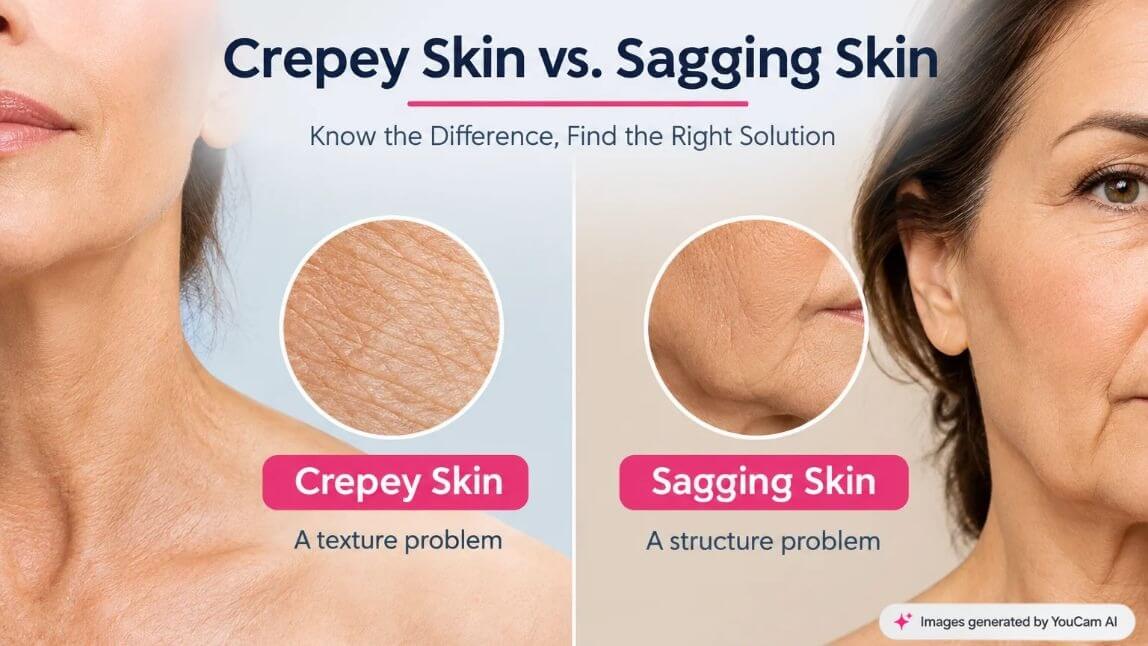
Imaged generated by AI
They arrive around the same decade, they share most of their causes, and they are treated as one concern by almost every product on the shelf. They are not one concern. Crepey skin is a surface problem and responds genuinely well to consistent skincare. Sagging is a structural problem involving fat pads, ligaments and bone, and topicals barely touch it. Knowing which one you are looking at decides whether your next purchase is a cream or a consultation, and a skin analysis API makes the same split in code, scoring surface texture and firmness as separate values rather than collapsing both into "aging".
What this guide covers
What Is the Difference Between Crepey Skin and Sagging Skin?
Crepey skin is a texture problem: skin that has thinned and lost moisture, so the surface crinkles into fine lines like tissue paper. Sagging is a structure problem: skin and the tissue beneath it have lost support, so it drapes and drops. Crepey skin looks wrinkled up close. Sagging changes the outline of your face from across the room.
Most people over 45 have both, which is why the distinction gets lost. It is still worth making, because one of them is addressable at home and the other is not.
What Is Crepey Skin?
Crepey skin is thin, dry, finely wrinkled skin with a crinkled surface that pulls back together slowly. It shows up first in the places where skin is thinnest and sun exposure has been heaviest.
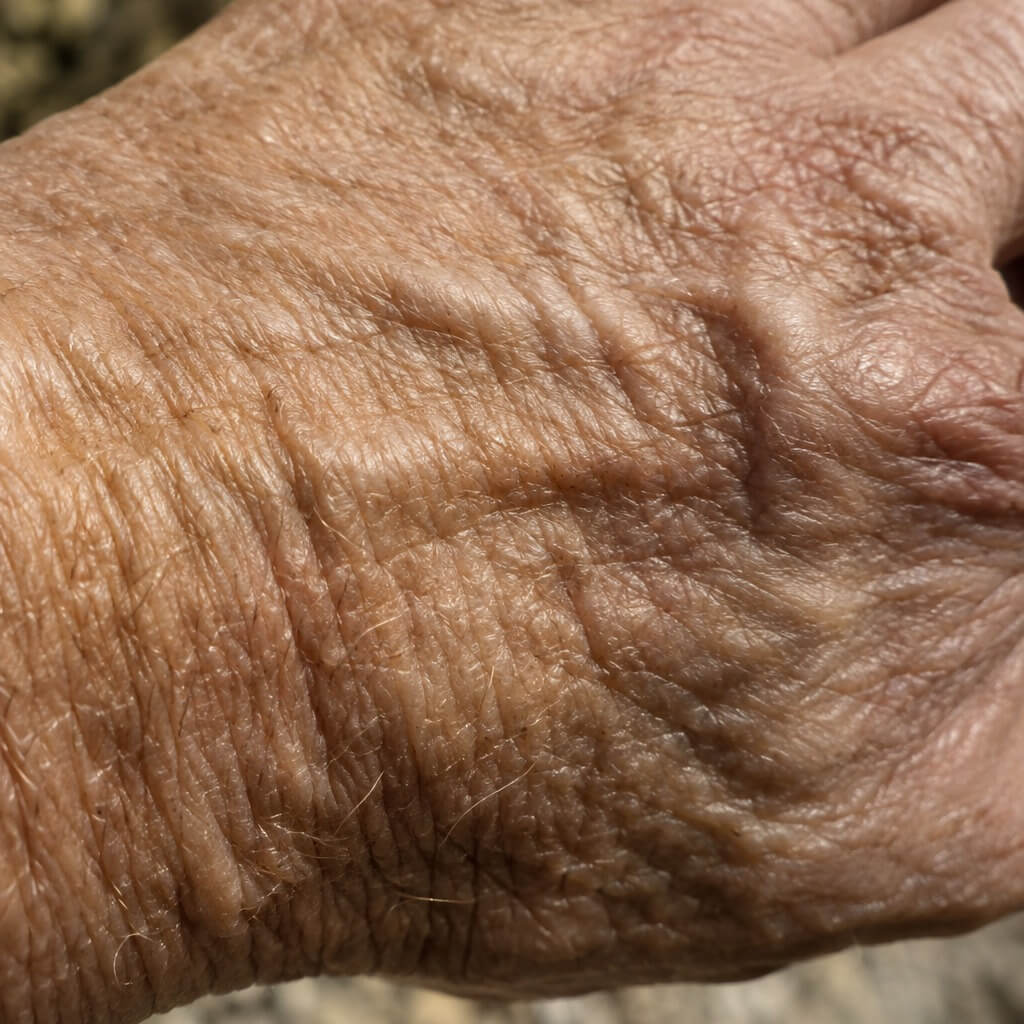
| Where it appears first | Why there |
| Neck and chest | Thin skin, heavy lifetime sun exposure, routinely missed by sunscreen |
| Upper arms | Thin skin, little oil production, cumulative UV on the outer surface |
| Backs of the hands | The most sun exposed skin on the body with the thinnest fat layer beneath |
| Under the eyes | The thinnest facial skin, in constant movement |
| Inner thighs and knees | Thin skin plus volume change |
The defining feature is that it is a surface quality change rather than a shape change. Pinch it and you see fine crinkling. Let go and the outline of the area is unchanged.
What Is Sagging Skin?
Sagging is loss of support. Collagen and elastin decline, the fat pads that give the face its shape shrink and shift downward, the ligaments holding them loosen, and underlying bone remodels. The skin itself may be in reasonable condition and still drape, because what changed is underneath it.
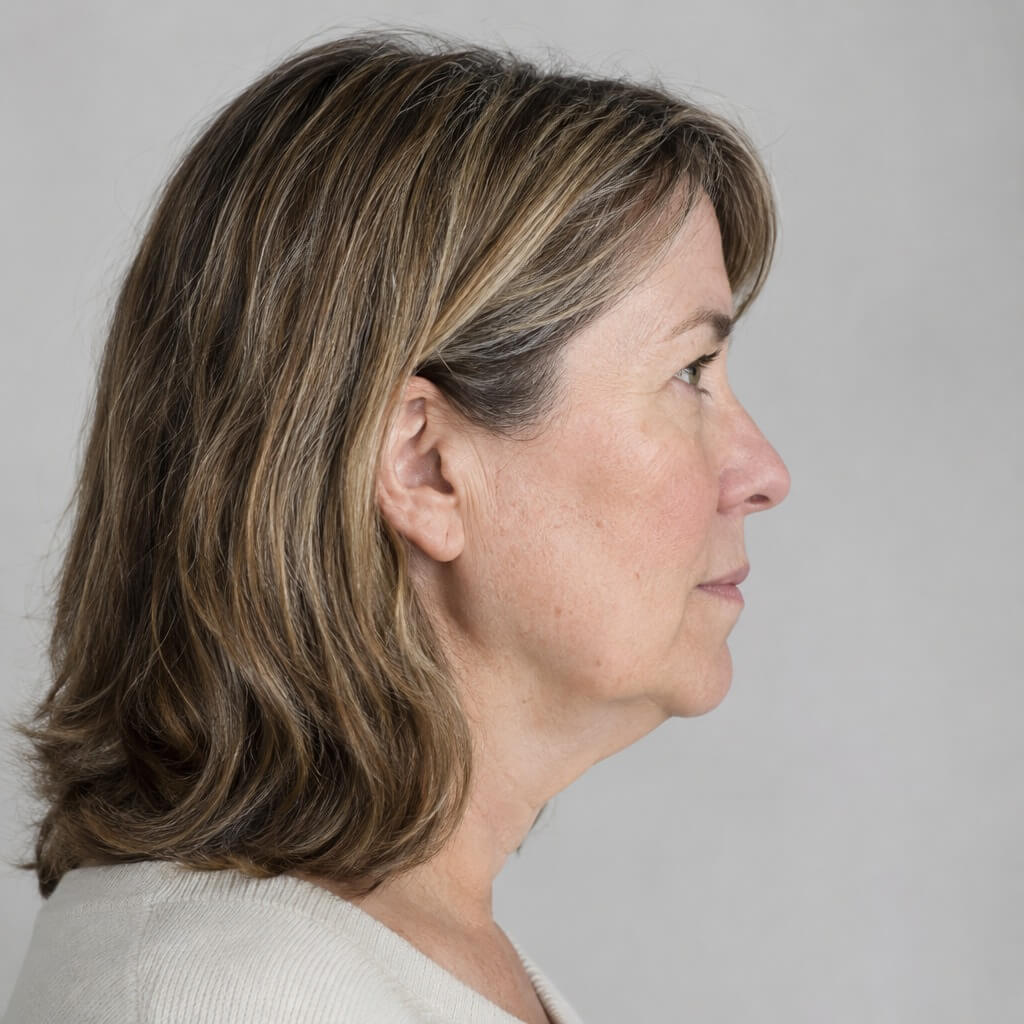
| Where it shows | What you notice |
| Jawline | Jowls, a softer and less defined jaw outline |
| Midface | Cheeks sitting lower, deepening folds from nose to mouth |
| Eyelids | Hooding over the upper lid, heaviness |
| Neck | Loose skin and vertical banding |
| Brow | Descent that makes the eyes look smaller or tired |
Our breakdown of why nasolabial folds deepen covers one specific consequence of this in more detail, including why retinoids disappoint on it.
How Do You Tell Them Apart?
The pinch and release test
Pinch a small fold of skin on the back of your hand, hold for three seconds, then let go and watch. If the surface shows fine crinkled lines while pinched, that is crepey texture. If the fold is slow to flatten back out, that is elasticity loss, which is the laxity side. Many people see both, and the relative strength of each tells you which dominates.
The distance test
Look in a mirror from arm's length, then from across the room. Crepey skin disappears at distance because it is a fine surface effect. Sagging is still there, because it changes the shape of the face rather than its surface.
| Check | Crepey skin | Sagging skin |
| What changed | Surface texture | Structure and support |
| Visible from across the room | No | Yes |
| Typical sites | Neck, chest, arms, hands, under eyes | Jawline, cheeks, eyelids, neck |
| Feels | Thin, dry, papery | Loose, heavy |
| Responds to skincare | Meaningfully | Marginally, and only early |
| Main clinic options | Resurfacing, microneedling, peels | Energy tightening, fillers, surgery |
What Does the Inner Arm Test Prove?
This is the part most articles leave out, and it settles the question of how much of this is age and how much is sun.
Compare the skin on the inner side of your upper arm with the skin on the outer side of the same arm. Both are exactly the same age. Both have the same genetics and the same hormonal history. The only meaningful difference is lifetime UV exposure, because the inner surface has spent its life shaded.
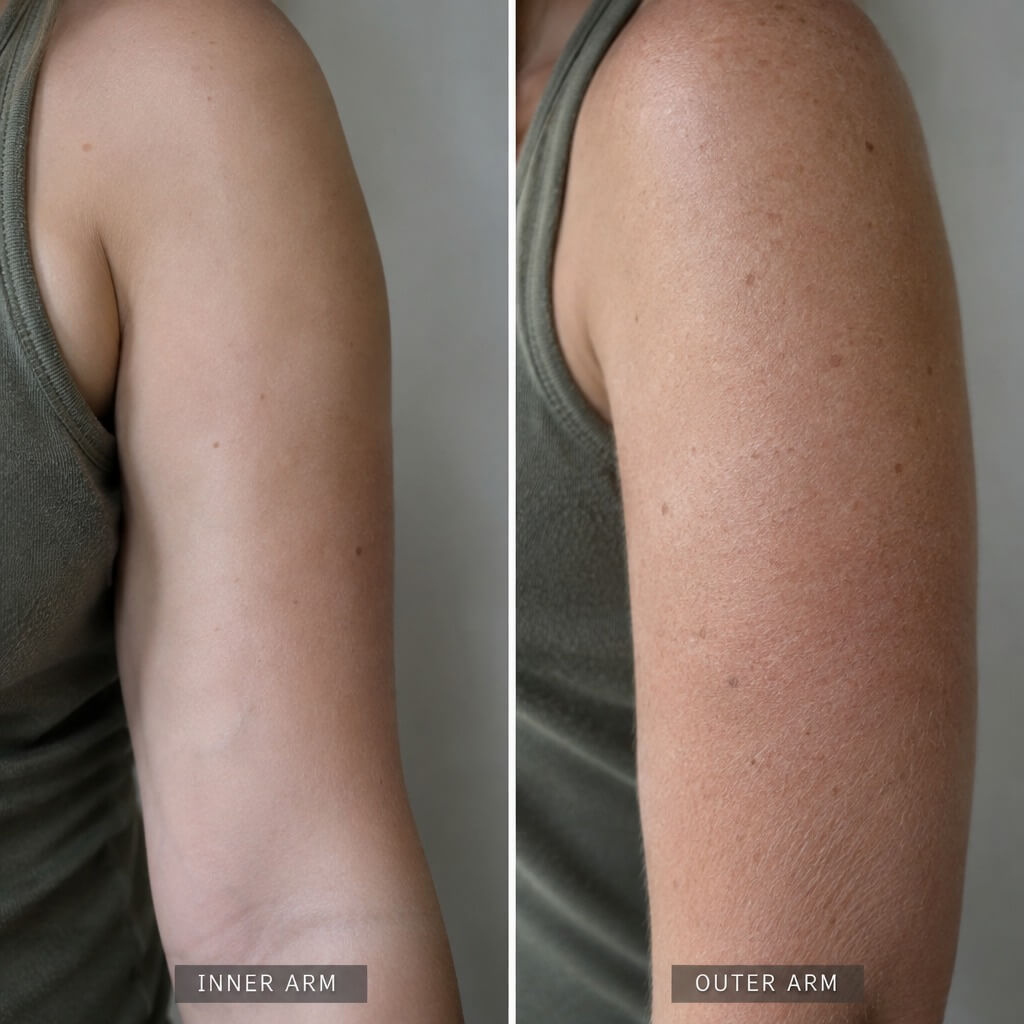
For most people over 40 the difference is obvious: the outer arm is thinner, more crinkled and less elastic, while the inner arm looks a decade younger. That gap is photoaging, and it is the single clearest argument for why sunscreen on the neck, chest, arms and hands is not optional if crepey skin is the thing you want to avoid.
What Causes Each One?
| Factor | Drives crepey skin | Drives sagging |
| Cumulative UV exposure | Strongly, it is the dominant cause | Strongly, by degrading collagen and elastin |
| Collagen and elastin decline with age | Yes | Yes |
| Falling oestrogen around menopause | Yes, often a noticeable acceleration | Yes |
| Chronic dryness and barrier loss | Yes, and this part is reversible | No |
| Fat pad shrinkage and descent | No | Yes, a primary driver |
| Ligament laxity and bone remodelling | No | Yes |
| Large or rapid weight loss | Sometimes | Yes, often substantially |
| Smoking | Yes | Yes |
Notice row four. Chronic dryness contributes to crepey appearance and nothing else on this table, and it is the one line you can fix in a fortnight. A meaningful share of what people call crepey skin is dehydrated skin sitting on top of mild texture change, and it improves faster than anyone expects.
How Does a Skin Analysis API Score Texture Against Firmness?
By keeping them as separate measurements, which is the whole point when two concerns look alike and need opposite advice.
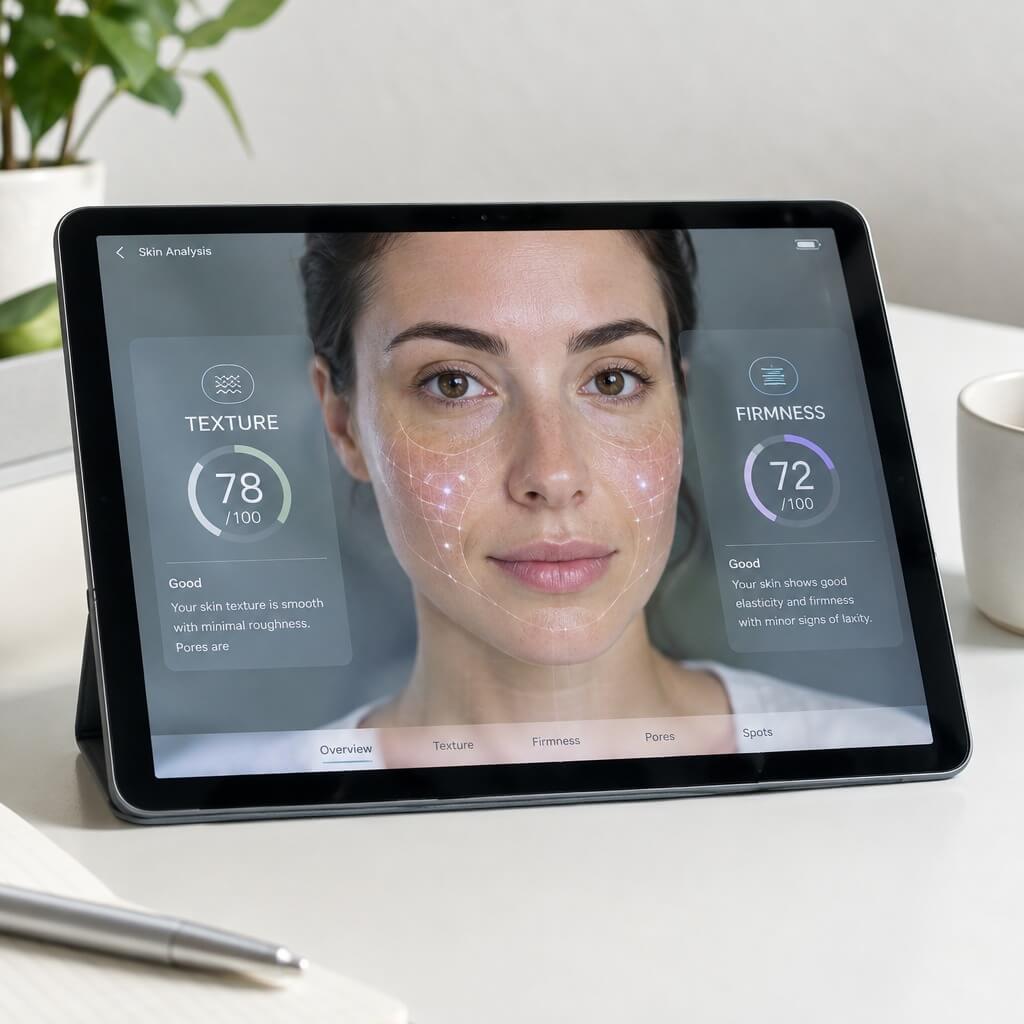
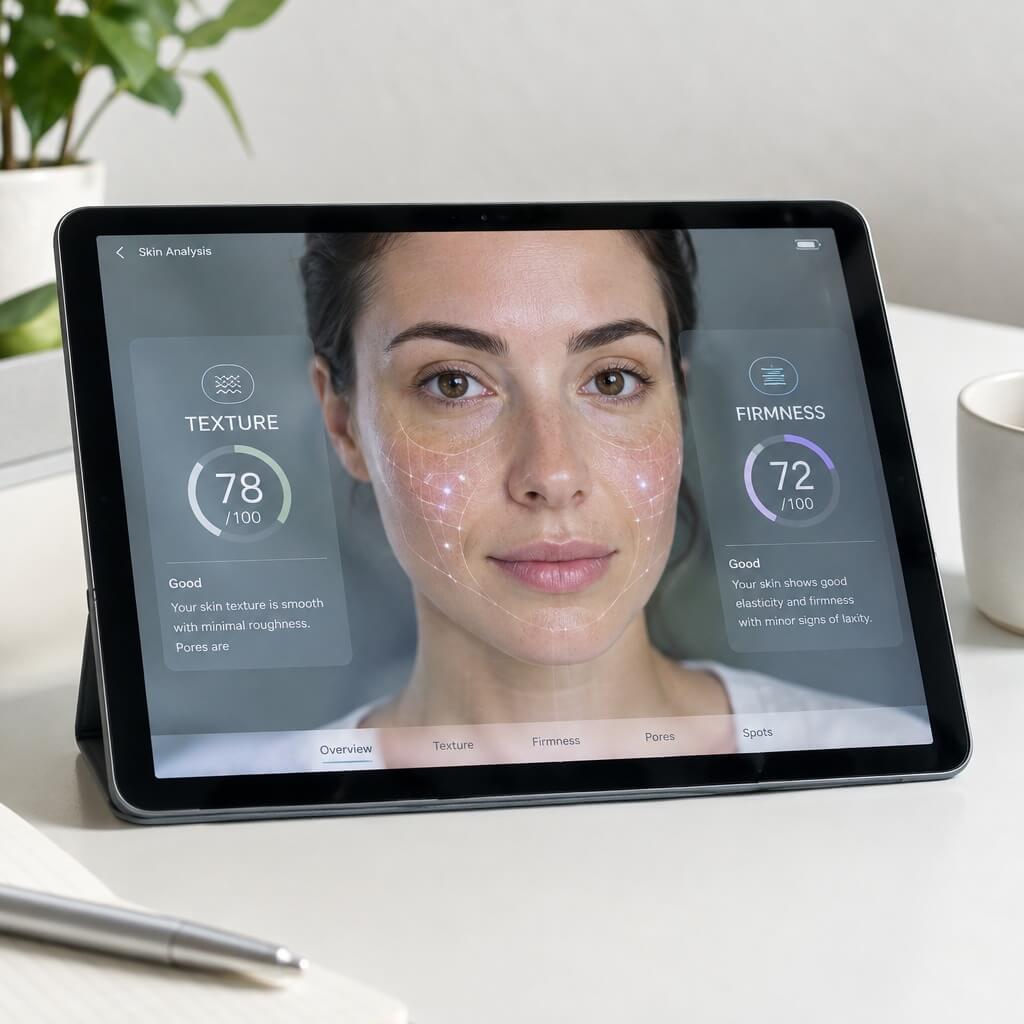
The YouCam AI Skin Analysis API runs 28 skin diagnostics across 16 skin concerns from a single selfie, dermatologist verified, returning each as its own scored value. Four of them matter here:
| Scored concern | What it captures | What it tells you |
| Texture | Surface roughness and fine crinkling | Elevated with normal firmness means crepey skin, and that is the addressable case |
| Firmness | Apparent tautness and recoil | Reduced means laxity. Topicals will not carry this |
| Wrinkles | Line depth by zone | Separates etched lines from surface crinkling |
| Moisture | Hydration, scored separately from oil | Low alongside elevated texture means part of the crepey look is dehydration and will improve quickly |
The combination is what makes this commercially honest. Texture high, firmness normal, moisture low is a customer who will see real improvement in weeks on a hydration and retinoid routine, and you should say so confidently. Firmness low with normal texture is a customer who will not, and telling them that up front is what stops the refund in eight weeks.
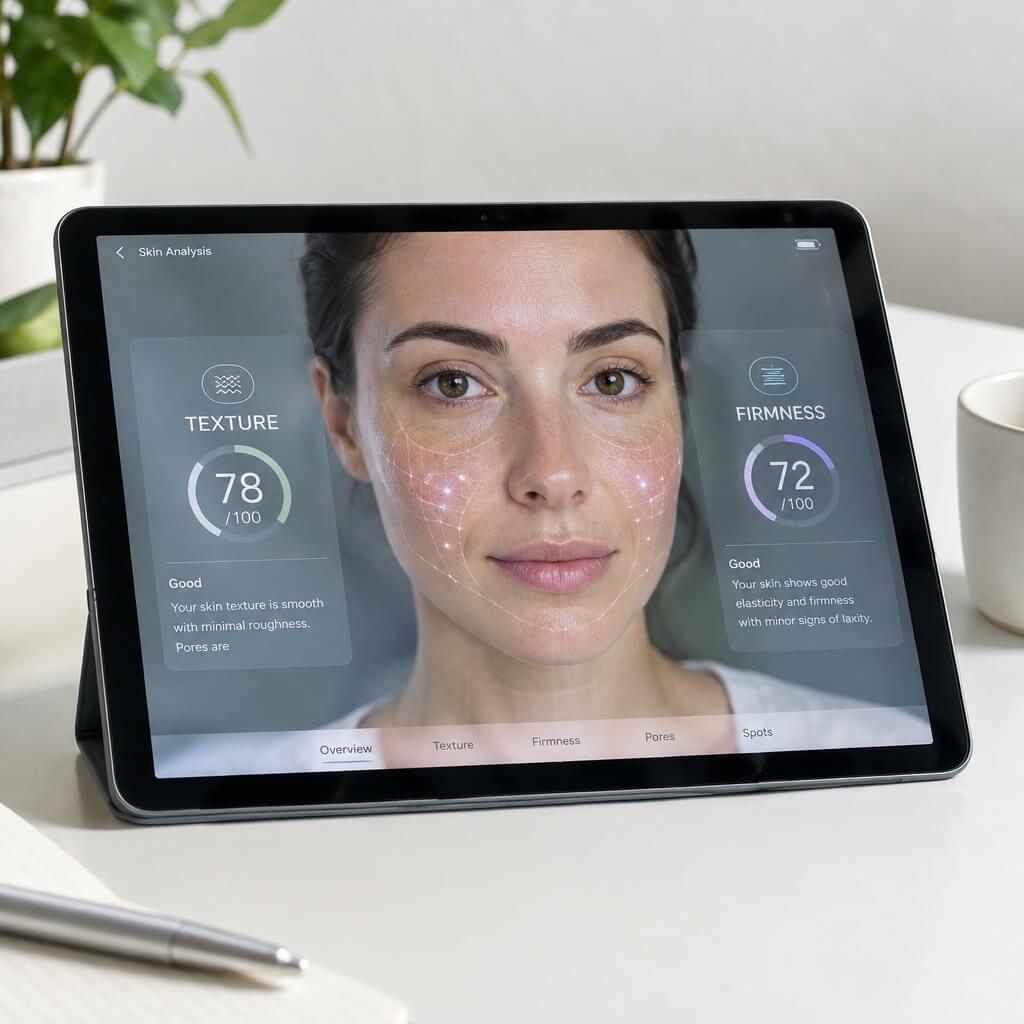
The usual caveat applies and matters here: these are estimates from visible signs, not measurements of the tissue underneath, and firmness especially is sensitive to head angle. Keep capture at eye level, same distance, same lighting, filters off, or the score moves on posture rather than skin.
What Helps Crepey Skin?
| Intervention | What it does | Timeline |
| Barrier repair and daily moisturising, including body | Removes the dehydration component, which is often a third of the appearance | 1 to 3 weeks |
| Retinoid, face and extended to neck and chest carefully | Improves surface quality and stimulates collagen | 8 to 12 weeks for a first sign |
| Daily broad spectrum SPF on neck, chest, arms, hands | Stops the main cause from continuing | Preventive, the largest long term lever |
| Gentle exfoliation, lactic acid | Smooths surface and supports hydration | 2 to 6 weeks |
| Microneedling or fractional laser | Rebuilds surface collagen | A series over 3 to 6 months |
| Peptides and niacinamide | Supporting roles | Gradual |
What Helps Sagging Skin?
| Intervention | Addresses | Honest expectation |
| Radiofrequency or ultrasound tightening | Mild to moderate laxity | Gradual firming over months, modest on advanced sagging |
| Radiofrequency microneedling | Laxity plus surface quality | Stronger, a series, some downtime |
| Dermal filler | Volume loss driving descent | Restores support, needs maintenance |
| Thread lift | Repositioning | Temporary, repositions rather than restores |
| Surgical lift | Structural descent | The definitive answer, with the recovery that implies |
| Retinoid and SPF | Slowing the next decade | Prevention, not correction |
How Long Does Each Take?
| What you are working on | First visible change | Full effect |
| Dehydration component of crepey skin | 1 to 2 weeks | 4 to 6 weeks |
| Crepey texture on a retinoid | 8 to 12 weeks | 6 to 12 months |
| Crepey texture after a resurfacing series | After session 2 or 3 | 3 to 6 months |
| Mild laxity on energy based treatment | 6 to 12 weeks | 3 to 6 months, with maintenance |
| Established sagging | Only after a procedure | Improvement, rarely reversal |
How Do Teams Build Firmness Tracking with an API?
Firmness is the concern where over-promising does the most reputational damage, because the customer can see for themselves in the mirror at week twelve that nothing lifted.
| Texture | Firmness | Moisture | Route the customer to |
| High | Normal | Low | Hydration and barrier first, then a retinoid. Promise weeks, deliver weeks |
| High | Normal | Normal | Retinoid and gentle exfoliation. Promise 8 to 12 weeks for a first sign |
| Normal | Low | Any | Laxity. Sell prevention honestly and offer a professional referral. Do not sell a firming cream as a lift |
| High | Low | Any | Both. Work the texture, which will move, and be explicit that the structural part will not |
| Improving across scans | Any | Rising | Show the trend, tell them to hold. Do not interrupt a working routine with a new product |
Two implementation notes. Capture at eye level with a neutral expression, since tilting the chin changes apparent firmness more than any product will. And re-scan quarterly: this is the slowest moving pair of concerns in the whole set, and monthly scanning mostly measures capture conditions.
You can test the scoring against real images in the YouCam AI API Playground before writing integration code, and our walkthrough of how to use an API for digital skin analysis covers the request and response shape. Perfect Corp works with 800+ brand partners on flows of this kind.
Crepey Skin vs Sagging Skin FAQ
What is the difference between crepey skin and sagging skin?
Crepey skin is a texture change: thin, dry skin that crinkles into fine lines. Sagging is a structure change: loss of support from collagen, fat pads, ligaments and bone, so skin drapes and drops. Crepey skin shows up close, sagging shows from across the room.
Can crepey skin be reversed?
Partly, and more than most people expect. The dehydration component improves within weeks, and the surface texture improves over six to twelve months on a retinoid with consistent sun protection. Thinning that has already happened does not fully reverse.
Can sagging skin be fixed with creams?
No. Firming creams improve surface quality and hydration, which makes skin look better, and they do not lift tissue. Anything claiming a lift from a bottle is describing a temporary tightening effect.
Why is my neck crepey when my face is fine?
Thinner skin, fewer oil glands, constant movement, and decades of sunscreen that stopped at the jaw. Extending every step of your routine down past the jawline is the single most effective change here.
Does crepey skin mean I have sun damage?
Usually yes. Compare the inner and outer surface of your upper arm: same age, same genetics, very different sun history. The gap between them is photoaging, and it is typically obvious after 40.
Does menopause cause crepey skin?
Falling oestrogen accelerates collagen loss and skin dryness, so many people notice a step change around that transition. It compounds the sun damage already present rather than causing the problem alone.
What is the best treatment for crepey skin on arms and legs?
Daily moisturising with a barrier supporting formula, a body retinoid or lactic acid for turnover, and sunscreen on exposed areas. In clinic, fractional resurfacing and microneedling are the main options.
Can weight loss cause sagging skin?
Large or rapid loss commonly does, because the skin that was stretched does not retract fully, especially after 40 when elasticity is already reduced. Gradual loss gives skin more chance to adapt.
Can a skin analysis API tell crepey skin from sagging?
It scores surface texture and firmness as separate values among 28 diagnostics across 16 concerns, which is the distinction involved. Treat the output as a pattern that routes product advice, not as a diagnosis, and keep capture angle consistent because firmness is sensitive to head position.
How often should I re-scan?
Quarterly. Texture and firmness move more slowly than almost any other concern, so frequent scans measure your lighting and posture rather than real change.
Close Up or Across the Room
That is the whole test. If the problem only exists at arm's length in a mirror, it is texture, and texture responds: hydrate it, protect it, give a retinoid six months and it genuinely improves. If the problem is visible from the doorway, it is structure, and structure needs a different conversation and probably a professional. Buying for the first while having the second is the most common way to spend a year and conclude that nothing works. For teams building the recommendation, the same split holds in code: score texture and firmness separately, branch on the pair, and say the honest thing when the answer is a referral.
Test the skin analysis API in the YouCam AI Playground, or contact Perfect Corp for a demo to see how per-concern scoring fits your customer flow.