 Author:


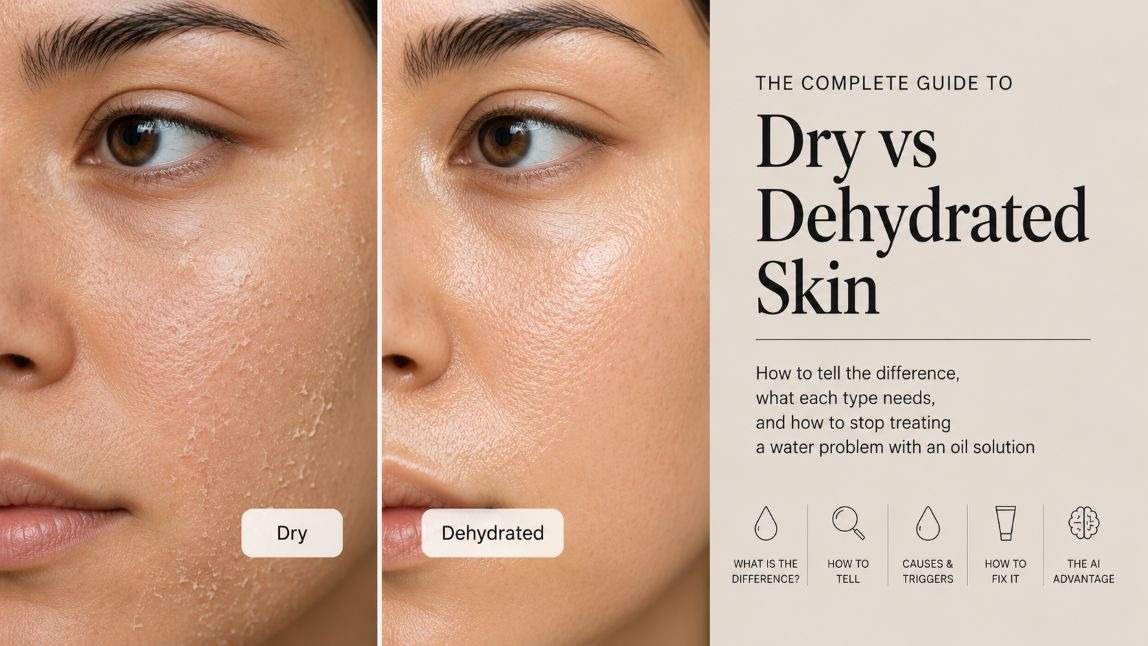
Your skin is oily by lunchtime and tight by evening. It feels rough, looks dull, and makeup sits badly on it, yet every mattifying product you buy makes things worse and every rich cream leaves you shiny and congested. This is the most common misdiagnosis in skincare, and it comes from a single confusion: dry and dehydrated are not the same thing. One is a skin type and it lacks oil. The other is a temporary condition and it lacks water. You can be oily and dehydrated simultaneously, which is exactly why the standard advice for oily skin fails so many people. This guide covers how to tell which you have, what each one needs, and how to stop treating a water problem with an oil solution.
Table of Contents
- What is the difference between dry and dehydrated skin?
- How do you tell which one you have?
- Can oily skin be dehydrated?
- What causes dehydrated skin?
- How do you fix each one?
- The mistakes that keep the cycle going
- How does AI skin analysis separate the two?
- Dry vs dehydrated skin FAQ
What is the difference between dry and dehydrated skin?
Dry skin lacks oil. It is a skin type, meaning it is largely determined by how much sebum your sebaceous glands produce, and it tends to be a permanent characteristic rather than a passing phase. Dry skin has fewer lipids at the surface, which means a weaker seal against water loss.
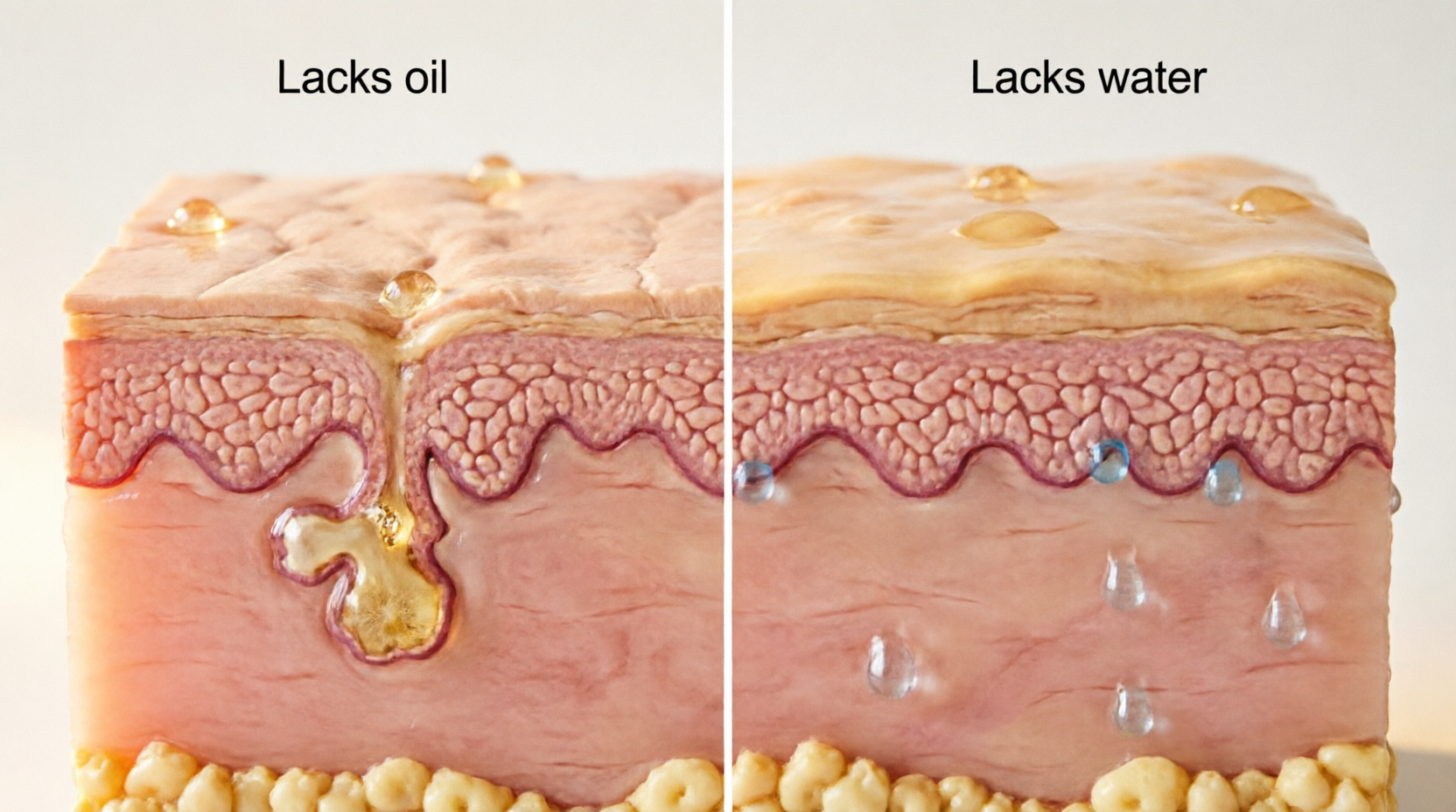
Dehydrated skin lacks water. It is a condition, not a type, which means it can arrive in a week and leave in a week. Anyone can be dehydrated, including someone whose skin produces plenty of oil. It is caused by water evaporating from the skin faster than it is replaced.
The relationship between them is worth understanding because it explains the confusion. Oil is what stops water escaping. So genuinely dry skin, lacking that seal, becomes dehydrated easily. But the reverse does not hold. Oily skin has plenty of seal and can still be short of water, particularly if the seal has been damaged by over-cleansing.
Two different deficits. Two different solutions. Occlusives and emollients for missing oil. Humectants and barrier support for missing water.
How do you tell which one you have?
| Signal | Dry skin | Dehydrated skin |
|---|---|---|
| Nature | Skin type, generally lifelong | Temporary condition, can change in days |
| Missing | Oil | Water |
| Appearance | Flaky, rough, sometimes scaly patches | Dull, tight, fine surface lines, can still be shiny |
| Pore size | Typically small and hard to see | Normal for your skin, sometimes more visible |
| Oil production | Low everywhere, including the T-zone | Can be low, normal, or high |
| Seasonality | Consistent, worse in winter | Comes and goes with travel, weather, routine changes |
| After cleansing | Tight and uncomfortable, needs cream quickly | Tight, then often oily again within hours |
The two quick tests
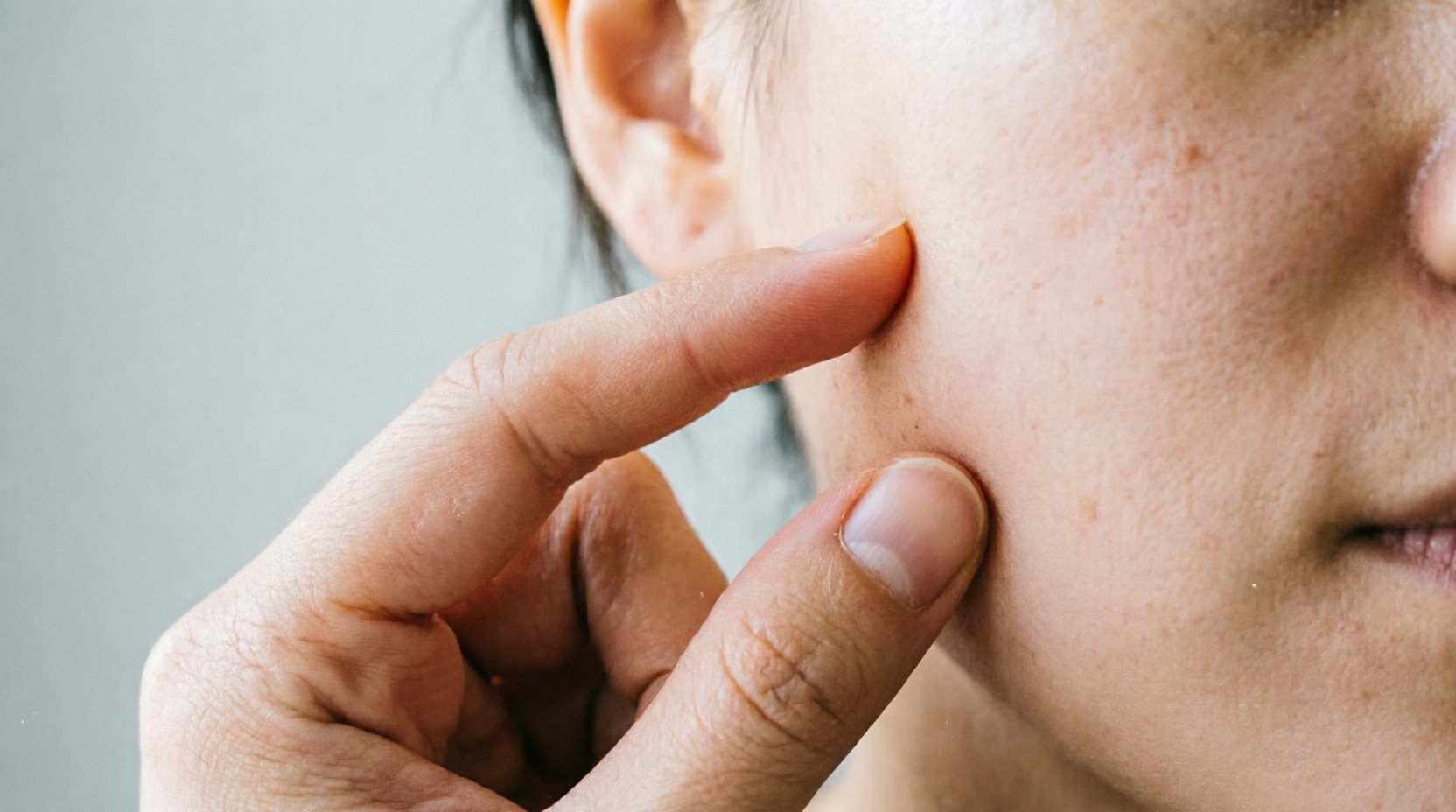
The pinch test. Gently pinch a small area of cheek skin and release. Well-hydrated skin springs back immediately. Dehydrated skin holds a crease for a moment before settling. It is crude, and it is affected by age and elasticity, but it takes two seconds.
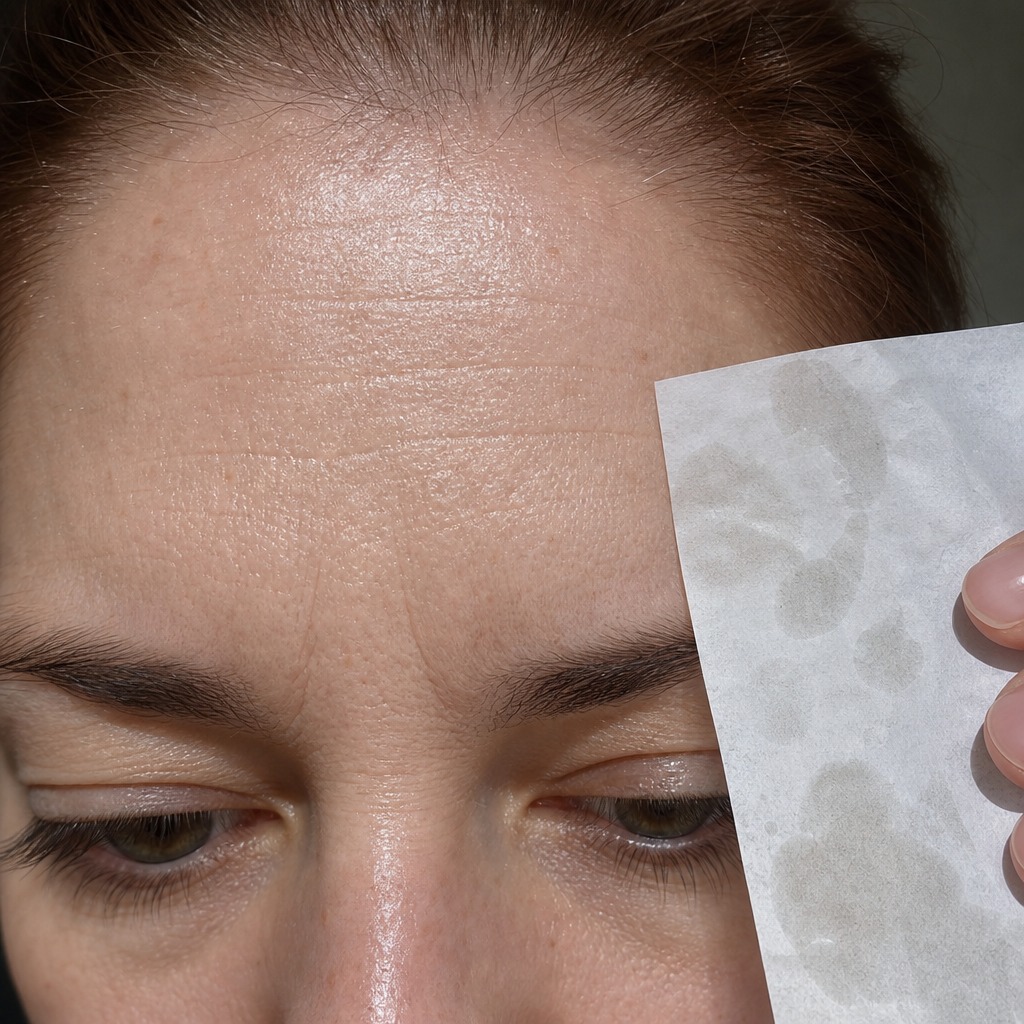
The blotting test. Cleanse, apply nothing at all, and wait an hour. Then press a blotting sheet across your forehead and cheeks. Visible oil means you are not dry, whatever the tightness suggested. Tightness with oil on the sheet is the signature of dehydrated oily skin, which is the combination that causes the most confusion.
Can oily skin be dehydrated?
Yes, and it is extremely common. It is also the state most likely to send someone down a spiral of wrong products.
The cycle works like this. Skin feels tight and looks dull, so it gets read as needing deep cleansing. A stronger foaming cleanser strips surface lipids. The compromised barrier loses water faster. The skin, sensing the loss, increases sebum output to compensate. Now it is both oilier and more dehydrated than it was. The person sees the extra oil, concludes the cleanser was not strong enough, and escalates.
Every step in that sequence is a reasonable inference from the visible evidence. The evidence is just misleading, because oil and water are being conflated.
The way out is counterintuitive: cleanse more gently, add water-binding ingredients, and let sebum production settle. Most people see the oiliness reduce within two to three weeks, which is a surprising outcome for anyone who has spent years fighting shine with detergents.
What causes dehydrated skin?
Dehydration is almost always environmental or behavioral, which is good news because both are adjustable.
- Over-cleansing. The leading cause. Harsh surfactants, cleansing twice when once would do, or water that is too hot.
- Over-exfoliation. Multiple actives at once, or daily use of something intended for twice weekly.
- Low humidity. Central heating, air conditioning, aircraft cabins, and winter air all accelerate water loss.
- Alcohol-heavy toners. Rapid evaporation takes water with it.
- A compromised barrier. Whatever the original cause, damaged barrier function means water leaves faster than it can be replaced.
- Not drinking enough water. Real but modest. Systemic hydration matters far less than topical barrier function, which is why drinking more water rarely fixes this on its own.

Notice how many of those are self-inflicted through routine. Dehydrated skin is usually treatable by subtraction before addition, which makes it one of the few skin concerns where doing less is the correct first move.
How do you fix each one?
| Need | Ingredient class | Examples | How it works |
|---|---|---|---|
| Dehydrated: add water | Humectants | Hyaluronic acid, glycerin, urea, panthenol | Draw and bind water in the upper layers |
| Dehydrated: keep it there | Light occlusives | Squalane, dimethicone | Seal without heaviness, suitable over oily skin |
| Dehydrated: repair | Barrier lipids | Ceramides, cholesterol, fatty acids | Rebuild the structure that was reducing water loss |
| Dry: add oil | Emollients | Plant oils, esters, shea | Soften and smooth, replace missing lipids |
| Dry: seal | Heavier occlusives | Petrolatum, rich balms | Strong barrier against evaporation |
| Both | Gentler cleansing | Cream, milk, or low-surfactant gel cleansers | Stops the ongoing damage first |
One application note that matters more than product selection: humectants pull water from wherever they can find it, including from deeper in your skin if the air is dry. Apply them to damp skin and seal with something on top. Hyaluronic acid used on dry skin in a dry room can leave you worse off, which is why plenty of people report it makes their skin tight.
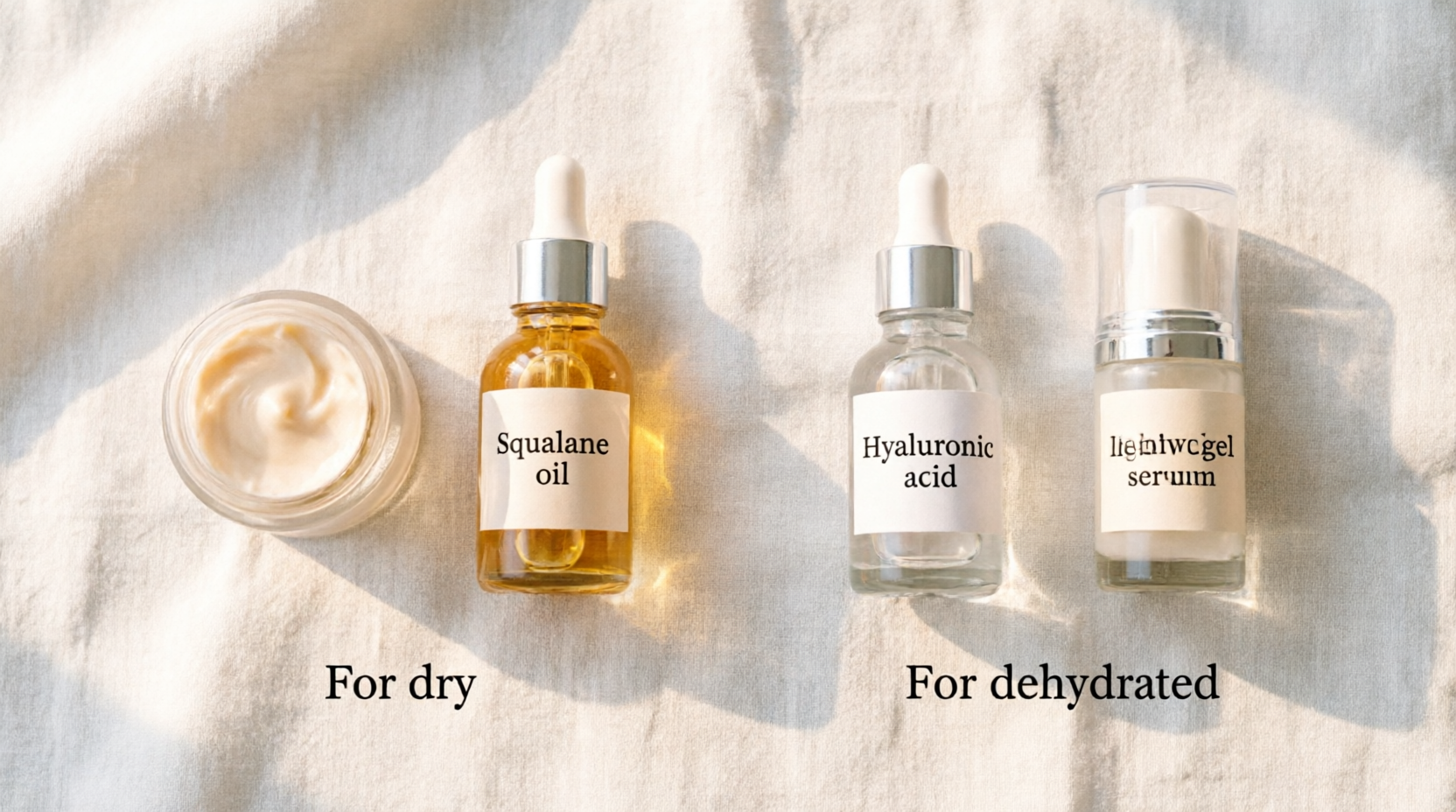
The order is simple. Damp skin, humectant, then a light occlusive if you are oily or a richer cream if you are genuinely dry.
The mistakes that keep the cycle going
- Treating dehydration with oil. A rich cream over dehydrated oily skin seals in the dryness and adds congestion. It feels better for an hour and looks worse by day ten.
- Treating oiliness with detergent. Strips the barrier and increases oil output. The most common single error in this whole category.
- Adding more actives when skin looks dull. Dullness from dehydration is a barrier problem. Another acid makes it worse.
- Hyaluronic acid on dry skin in dry air. Apply damp, seal on top, or skip it.
- Assuming your skin type is fixed. Dehydration is temporary and situational. The routine that suited you in August may be wrong in January.
If you are also seeing tightness alongside stinging or unusual sensitivity, the underlying issue may have progressed beyond dehydration into barrier damage, which follows a different repair timeline.
How does AI skin analysis separate the two?
The reason this diagnosis is hard is that both signals live in the same place and interfere with each other. Tightness is subjective. Shine varies by hour. And the decisive question, whether moisture and oil are moving independently, is genuinely difficult to judge from a mirror.

Perfect Corp's AI Skin Analysis scores moisture and oiliness as separate concerns within its 15-concern assessment, alongside texture. That separation is the useful part. Low moisture with high oiliness is the dehydrated oily profile that causes most of the confusion in this article, and it is immediately visible as two numbers rather than as a contradiction.
The system is built on more than 70,000 medical-grade images spanning a range of skin tones and ages, with a clinical study reporting 95% test-retest reliability. It also identifies skin type across eight categories, which resolves the type versus condition question directly.
What that enables:
- Two independent readings. Moisture and oiliness scored separately, so a high-oil low-water result is legible rather than confusing.
- Zone-level detail. A dehydrated T-zone alongside dry cheeks is common and calls for different products in different places.
- Change over time. Dehydration resolves in weeks when addressed. A moisture score that climbs while oiliness falls is confirmation that a gentler routine is working, several weeks before it becomes obvious in the mirror.
The skin type question specifically is handled by the AI Skin Type Test, and the full 15-concern report can be run through the free skin analysis demo.
What this means for brands
Skin type is the branching point for almost every product recommendation quiz on the internet, and it is the point most likely to be answered wrong. A customer who self-reports as oily, because they are shiny, and who is actually dehydrated will be routed to a mattifying regimen that worsens their skin. They will not blame their self-assessment. They will blame the brand.
Replacing the self-reported question with a measured one changes the accuracy of everything downstream. That is a large part of why more than 800 brand partners have moved to AI skin assessment at the top of the recommendation flow. Beekman 1802 reported a 50% engagement lift after adding an AI skin experience, and Kanebo's COFFRET D'OR saw a 2.48x increase in time on page. Teams integrating this into an existing quiz can test the scoring in the API Playground.
Dry vs dehydrated skin FAQ
Can you have oily and dehydrated skin at the same time?
Yes, and it is one of the most common presentations. Oil and water are separate. Over-cleansing strips the barrier, water escapes faster, and the skin compensates by producing more oil. The result is shiny and tight simultaneously.
How can I tell if my skin is dry or dehydrated?
Flaking and consistently low oil everywhere, including the T-zone, points to dry skin as a type. Tightness and dullness that come and go, especially alongside visible oil on a blotting sheet, points to dehydration as a condition.
Does drinking more water fix dehydrated skin?
It helps marginally and it is worth doing, but topical barrier function matters far more. Most dehydration is caused by water leaving the skin too quickly rather than by insufficient intake, so the fix is usually gentler cleansing plus humectants and barrier lipids.
How long does it take to rehydrate skin?
Surface comfort often improves within days. Genuine barrier recovery typically takes two to four weeks of consistent gentle care, longer if the damage came from prolonged over-exfoliation.
Is hyaluronic acid good for dehydrated skin?
Yes, with one condition. Apply it to damp skin and seal with a moisturizer. Used on dry skin in a dry environment it can draw water upward from deeper layers and leave the surface feeling tighter than before.
Why does my skin feel tight after washing?
That tightness is a signal that the cleanser removed more than it should have. It is the most reliable early indicator of an over-stripping routine, and the cleanser is the first thing to change.
Can dehydrated skin cause breakouts?
Indirectly. Compensatory oil production plus a compromised barrier that traps debris more easily creates favorable conditions for congestion. Plenty of people who treat their dehydration find their breakouts reduce without any acne-specific intervention.
Does dry skin become dehydrated more easily?
Yes. Oil is what limits water loss, so skin producing less of it has a weaker seal. That is why the two are so often confused, and why dry skin usually needs both an emollient and a humectant rather than one or the other.
The takeaway
Dry is a type and it lacks oil. Dehydrated is a condition and it lacks water. The combination that trips people up is oily and dehydrated at once, and the instinct it produces, cleanse harder, makes it worse every time. Measure the two separately, treat the water problem with humectants and a gentler cleanser, and give it three weeks. The shine usually settles on its own once the skin stops trying to compensate.