 Author: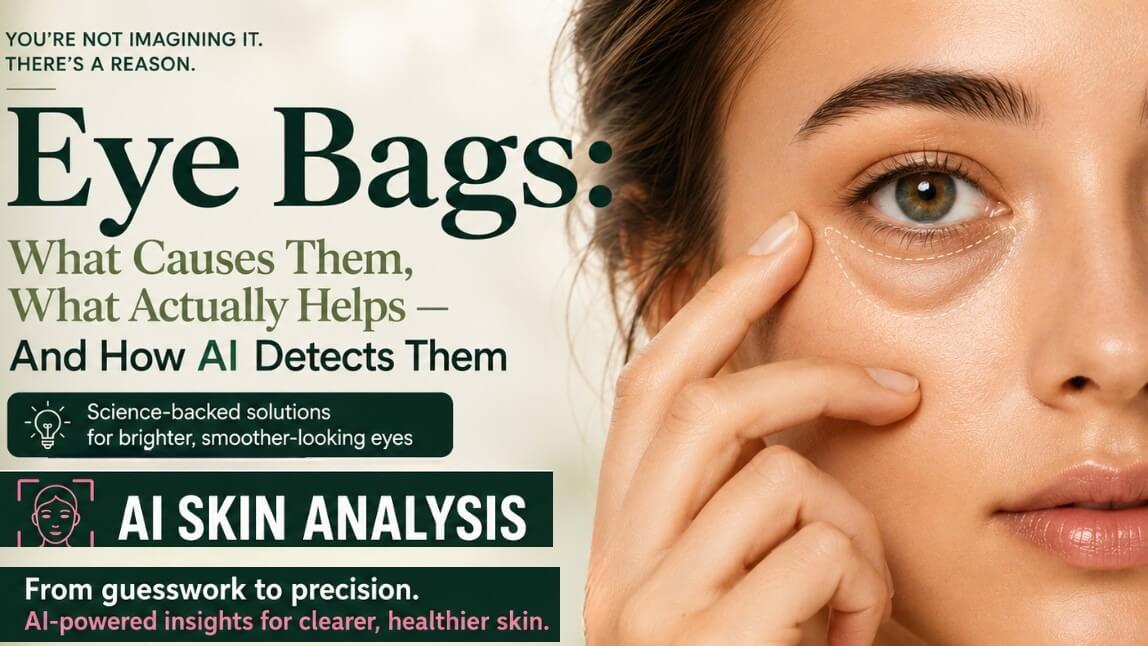
You slept eight hours. You drank the water. You used the eye cream. And you still woke up looking like you pulled an all-nighter. If under-eye bags are a recurring frustration, you're not alone — and you're probably not doing anything wrong. The problem is structural, not superficial, and it rarely has a single cause.
Eye bags are one of the most searched and most misunderstood skin concerns in beauty. Most people treat them as a temporary puffiness problem when the real issue is often a combination of fat migration, collagen loss, fluid retention, and vascular visibility — each requiring a different solution. This guide covers the science behind why eye bags form, which treatments match which cause, and how AI skin analysis is helping beauty brands and consumers identify and address them with a precision that no eye cream quiz ever could.
What Are Eye Bags — and Why Do They Form?
Eye bags refer to the visible puffiness, swelling, or bulging below the lower eyelid. Structurally, they result from a combination of factors: orbital fat (the cushioning fat inside the eye socket) pushing forward as the supporting muscle and ligament structures weaken; skin laxity from collagen and elastin loss; fluid pooling in the periorbital area; and vascular congestion that makes thinning skin more translucent.
The under-eye area is the thinnest skin on the face — typically around 0.5mm thick, compared to 2mm elsewhere. This makes it the first zone to show structural changes and the hardest zone to treat with topical products alone.
What Causes Eye Bags? A Complete Breakdown
1. Aging and Structural Tissue Loss
The most common cause of persistent eye bags, particularly after age 35. As collagen and elastin decline, the orbicularis oculi muscle weakens, the orbital septum loosens, and the fat that normally stays contained inside the eye socket migrates forward — creating the characteristic bulge. This is structural, not superficial, and cannot be fully addressed by topical products alone.
2. Genetics
Some people develop eye bags in their twenties, or even in childhood — entirely due to genetic predisposition to fat compartment anatomy, orbital bone structure, or thin periorbital skin. If parents or siblings have prominent under-eye bags, the likelihood of inheriting the same pattern is high. Genetic eye bags respond best to medical or procedural intervention rather than lifestyle changes.
3. Fluid Retention
Periorbital fluid accumulation is the main driver of the temporary morning puffiness that most people notice upon waking. When lying flat, fluid redistributes to the face. High-sodium diets, alcohol consumption, allergies, hormonal fluctuations, and sinus congestion all increase fluid retention in the under-eye area. Unlike structural eye bags, fluid-driven puffiness usually resolves within hours.
4. Sleep Deprivation
Poor or insufficient sleep elevates cortisol, which promotes fluid retention. It also increases vascular permeability around the eyes, causing blood vessels to dilate and become more visible through thin periorbital skin — contributing to both puffiness and dark shadow appearance.
5. Sun Damage
Chronic UV exposure accelerates collagen and elastin breakdown in the periorbital skin — the very structural proteins that keep fat compartments contained and skin taut. UV damage also drives vascular changes that increase dark discoloration beneath the eye. SPF is not optional under-eye care — it's foundational prevention.
6. Allergies and Inflammation
Seasonal allergies, contact dermatitis, and chronic eye rubbing all trigger periorbital inflammation that manifests as puffiness and discoloration. The histamine response from allergies dilates blood vessels and increases fluid leakage into tissues — a temporary but frequently recurring pattern in allergy sufferers.
7. Diet and Lifestyle
- High sodium intake: Drives water retention, particularly visible in the thin periorbital skin
- Alcohol: Causes dehydration and vasodilation — both of which worsen under-eye appearance
- Smoking: Degrades collagen and impairs circulation, accelerating structural bag formation
- Dehydration: Causes the body to retain water paradoxically, contributing to puffiness
8. Medical Conditions
Persistent or rapidly worsening eye bags — especially accompanied by other symptoms — can indicate thyroid disorders, kidney disease, heart conditions causing fluid overload, or autoimmune conditions such as dermatomyositis. Any sudden change in under-eye appearance should be evaluated by a physician to rule out systemic causes before pursuing cosmetic treatments.
Eye Bags vs. Dark Circles vs. Tear Trough: What's the Difference?
| Concern | What It Is | Primary Driver | Best Treatment |
| Eye Bags | Puffy, bulging tissue below the eye | Fat herniation, fluid, tissue laxity | Blepharoplasty, filler, RF |
| Dark Circles | Discoloration or shadow under the eye | Vascular, pigmentation, or shadow from bags | Filler, laser, topicals (retinol, vitamin C) |
| Tear Trough | Hollow groove between eye bag and cheek | Volume loss, fat pad descent | Hyaluronic acid filler |
These three concerns are often present simultaneously and are frequently confused — which is one of the main reasons under-eye treatments underperform. A patient with volume loss in the tear trough doesn't need de-puffing; they need volumization. A patient with fat herniation doesn't benefit from caffeine eye cream; they need a structural intervention.
Accurate differentiation between eye bags, dark circles, and tear trough hollowing is exactly the kind of diagnostic precision that AI skin analysis now delivers at scale.
What Skincare Ingredients Actually Help Eye Bags?
Topical ingredients can meaningfully improve the appearance of eye bags — particularly when driven by fluid retention, vascular congestion, or early skin laxity. For structural fat herniation, they offer support but not resolution.
| Ingredient | What It Does | Best For |
| Caffeine | Vasoconstrictor — constricts blood vessels, reduces fluid pooling | Morning puffiness, vascular dark circles |
| Retinoids (Retinol / Retinyl Propionate) | Stimulates collagen synthesis; thickens thinning periorbital skin | Early structural laxity, fine lines, skin thinning |
| Peptides | Signal fibroblasts to produce collagen and elastin; gentler than retinoids | Sensitive periorbital skin; collagen support |
| Niacinamide | Strengthens skin barrier; reduces vascular visibility; anti-inflammatory | Redness, discoloration, barrier compromise |
| Vitamin C (L-Ascorbic Acid) | Antioxidant; inhibits melanin; stimulates collagen | Pigmentation-driven dark circles; collagen support |
| Hyaluronic Acid | Hydrates and plumps the skin; reduces appearance of hollow tear trough | Dehydration-related puffiness; texture |
| Ceramides | Repair and reinforce the skin barrier in the delicate periorbital zone | Dry, reactive, or irritated under-eye skin |
A clinical note: A randomized controlled trial published in the International Journal of Women's Dermatology (2024) confirmed caffeine shows consistent promise for reducing periorbital puffiness. A separate study using 3D imaging demonstrated that retinyl propionate combined with niacinamide and peptides significantly improved periorbital smoothness and wrinkle depth in women aged 30–70 after four weeks of use.
Professional Treatments for Eye Bags
Non-Surgical Options
- Hyaluronic Acid Filler (Tear Trough): Fills the hollow groove between the eye bag and cheek, reducing shadow and the illusion of puffiness. Results are immediate, lasting 6–12 months. Most effective when the primary concern is volume loss rather than fat herniation.
- Radiofrequency (RF) Treatments: Tightens periorbital skin by heating collagen fibers and stimulating new collagen production. Effective for mild-to-moderate skin laxity contributing to bag appearance.
- Laser Resurfacing: Removes surface skin layers and stimulates new collagen growth in the periorbital area. Results can last years depending on skin type and ongoing sun protection.
- Microneedling with PRP: Combines controlled micro-injury collagen induction with platelet-rich plasma to thicken and firm periorbital skin.
- LED Light Therapy: Anti-inflammatory red light reduces periorbital puffiness and supports collagen production — a maintenance-level adjunct, not a standalone solution.
Surgical Options
- Lower Blepharoplasty: Surgical removal or repositioning of herniated orbital fat, tightening of the orbicularis muscle, and excision of excess skin. The gold standard for structural eye bags. Transconjunctival (internal) incision leaves no visible external scar. Results are permanent for the fat removal component.
- Fat Repositioning: Rather than removing herniated fat, the surgeon repositions it to fill the tear trough — a technique that addresses both bags and hollowing simultaneously.
Treatment Timeline
| Treatment | Results Timeline | Duration | Best For |
| Topical retinoids / caffeine | 4–12 weeks | Ongoing use required | Early laxity, puffiness, vascular darkening |
| HA filler (tear trough) | Immediate | 6–12 months | Volume loss, tear trough hollowing |
| RF / laser | 2–6 months | 1–2 years | Skin laxity, mild fat herniation |
| Lower blepharoplasty | 2–4 weeks (swelling resolves) | Permanent (fat component) | Structural fat herniation |
Daily Habits That Reduce Eye Bag Appearance
- Sleep on your back or elevate your head slightly — reduces overnight fluid pooling
- Apply a cold compress or chilled spoons in the morning — constricts blood vessels and reduces puffiness within minutes
- Reduce sodium intake — especially in the evening; salt drives overnight fluid retention
- Stay hydrated — dehydration paradoxically worsens water retention
- Wear SPF daily — UV is a primary accelerator of periorbital collagen loss
- Manage allergies — antihistamines can significantly reduce allergy-driven periorbital swelling
- Limit alcohol — vasodilatory effect directly worsens under-eye puffiness and darkness
How AI Skin Analysis Detects Eye Bags
The under-eye zone is one of the most diagnostically complex areas of the face. Eye bags, dark circles, and tear trough hollowing often coexist, and the correct treatment depends entirely on knowing which concern is dominant — something a self-assessment quiz or generic product recommendation engine cannot determine.
This is where AI-powered skin analysis changes the diagnostic game entirely.
Perfect Corp.'s AI Skin Analysis includes dedicated eye bag detection as one of its 15 core skin concerns — alongside dark circles and tear trough assessment. Using 180° full-face HD mapping, the system analyzes the periorbital zone across both sides of the face, measuring the degree of puffiness, shadow, and volume loss independently to deliver a comprehensive under-eye profile.
The output isn't a binary "has eye bags / doesn't have eye bags." It's a severity score that can be tracked over time, enabling brands to:
- Match customers to the right products for their specific under-eye concern (eye bags vs. dark circles vs. tear trough)
- Demonstrate ingredient efficacy with before-and-after scoring — not just photography
- Identify customers whose eye bags are structural vs. lifestyle-driven — and route them accordingly
- Build personalized under-eye routines that address the actual root cause, not a generic "eye area" category
Perfect Corp.'s AI Skin Analyzer detects 15+ skin concerns in a single scan, including eye bags, dark circles, and tear trough, using 180° full face mapping — with a medical study confirming a 95% test-retest reliability rate.
Want to offer your customers an accurate under-eye diagnosis in seconds?

Why Eye Bag Detection Matters for Beauty Brands
The global eye care skincare segment is one of the fastest-growing categories in beauty. Consumers are spending more on eye creams, serums, and treatments — and returning them at high rates because the products don't match their actual concern.
The problem isn't the products. It's the diagnosis. Someone with structural fat herniation buying a caffeine eye cream will see minimal results. Someone with tear trough hollowing using a firming eye cream will see minimal results. The product isn't wrong — the match is wrong.
The global AI skin analysis market is estimated to be valued at USD 2.13 billion in 2026 and is expected to reach USD 6.30 billion by 2033, at a CAGR of 16.8% — with periorbital concern detection among its highest-engagement use cases. Brands that accurately identify which under-eye concern a customer has — and recommend accordingly — capture the return-reduction and loyalty advantages that AI personalization delivers.
See how leading skincare brands use AI eye bag detection to reduce returns and drive loyalty.

Frequently Asked Questions
What is the fastest way to get rid of eye bags?
For temporary fluid-driven puffiness, a cold compress applied for 5–10 minutes is the fastest intervention — it constricts blood vessels and reduces swelling within minutes. For structural eye bags caused by fat herniation, no at-home remedy produces fast results; treatment requires professional intervention.
Can eye bags go away on their own?
Temporary puffiness from fluid retention, allergies, alcohol, or sleep deprivation typically resolves within hours to a day. Structural eye bags caused by fat herniation or skin laxity do not resolve on their own and tend to become more pronounced with age.
What is the difference between eye bags and dark circles?
Eye bags refer to puffiness or bulging beneath the eye, caused by fat herniation, fluid, or tissue laxity. Dark circles refer to discoloration — shadowing caused by vascular congestion, pigmentation, or the shadow cast by the eye bag itself. They are distinct concerns that often coexist, and they respond to different treatments.
At what age do eye bags typically appear?
Structural eye bags from fat herniation and collagen loss most commonly become visible in the mid-30s to 40s, though genetic predisposition can cause them to appear significantly earlier. Fluid-driven puffiness can occur at any age.
Can AI accurately detect eye bags?
Yes. Advanced AI skin analysis systems like Perfect Corp's use computer vision to analyze the periorbital zone in HD resolution across both sides of the face — measuring puffiness severity, shadow depth, and volume loss independently. The system distinguishes between eye bags, dark circles, and tear trough hollowing, and produces a trackable severity score with a clinically validated 95% test-retest reliability rate.
How do beauty brands use AI eye bag detection?
Brands use AI eye bag detection to match customers to the correct under-eye products, reduce returns on eye care purchases, demonstrate ingredient efficacy with quantitative before-and-after scoring, and build personalized routines that address the actual structural or lifestyle driver of each customer's under-eye concern.
The Bottom Line
Eye bags aren't one problem — they're a diagnostic category that includes fat herniation, fluid retention, skin laxity, vascular congestion, and volume loss, all presenting in the same 0.5mm of periorbital skin. Getting the treatment right depends entirely on identifying which factor — or combination of factors — is driving what you see in the mirror.
That's the gap AI skin analysis closes. Perfect Corp.'s AI Skin Analysis detects eye bags as one of 15 skin concerns, cross-referenced with dark circles and tear trough hollowing, to give brands and consumers the diagnostic specificity that turns an eye care category browse into a solution that actually works.
Ready to bring clinical-grade under-eye diagnostics to your platform?

Sources
- Healthline – How to Get Rid of Eye Bags (updated May 2026). healthline.com
- International Journal of Women's Dermatology – A review of the efficacy of popular eye cream ingredients (2024). doi:10.1097/JW9.0000000000000117
- Dermatology Circle NYC – Bye-Bye Eye Bags: Effective Strategies (2026). dermatology-nyc.com
- Coherent Market Insights – AI Skin Analysis Market Size, Trends & Forecast 2026–2033. coherentmarketinsights.com
- Cosmetics Business – Best AI Skin Analysis Tools in 2026 (May 2026). cosmeticsbusiness.com
- Perfect Corp. – AI Skin Analysis Solution for Beauty Brands & Clinics. perfectcorp.com