 Author:


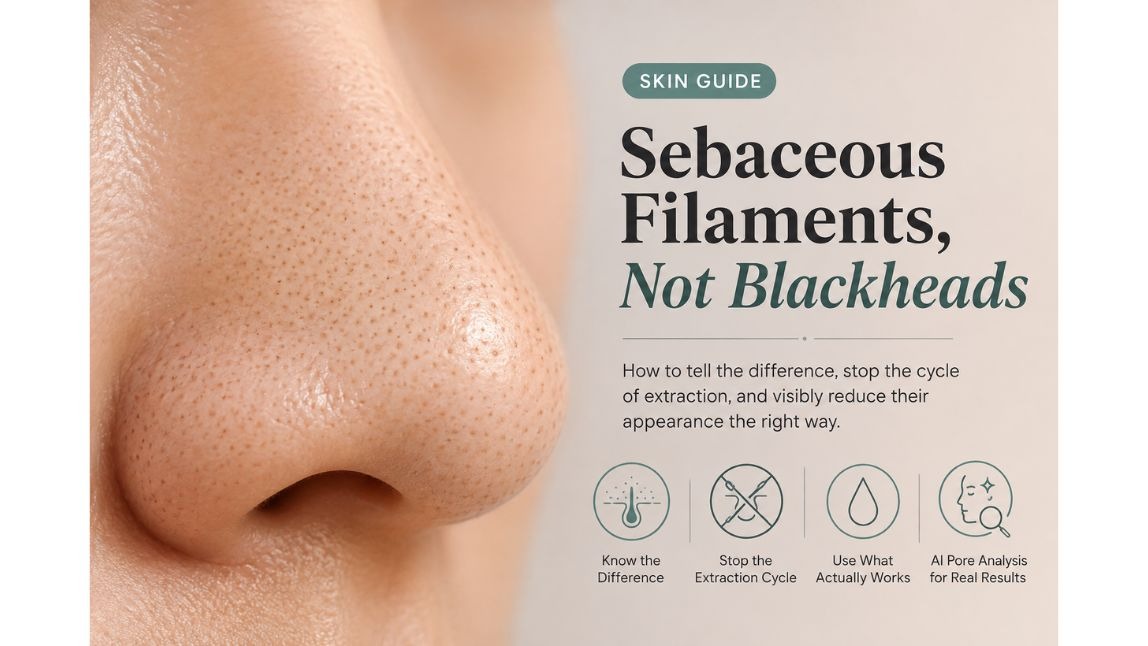
Look at your nose in a magnifying mirror and you will find dozens of small dark dots arranged in an almost regular grid. Most people call these blackheads, buy a pore strip, pull out a satisfying forest of little plugs, and watch them return within a week. That cycle repeats because the target was never blackheads. It was sebaceous filaments, which are normal anatomy rather than a skin problem, and which cannot be permanently removed no matter what you do to them. This guide covers how to tell the two apart, why extraction is a losing strategy for one of them, what genuinely reduces their appearance, and how AI pore analysis changes the conversation for brands and clinics.
Table of Contents
- What are sebaceous filaments?
- How do you tell them apart from blackheads?
- Can you get rid of sebaceous filaments?
- What actually reduces their appearance?
- Which treatments make them worse?
- How does AI pore analysis settle the question?
- Why this matters for skincare brands
- Sebaceous filaments FAQ
What are sebaceous filaments?
A sebaceous filament is a thin, hair-like structure of sebum and cells that lines the inside of a pore and channels oil to the skin's surface. It is functional plumbing. Every pore that produces oil has one, and everyone has them, which is why they show up most visibly in the oiliest zones: nose, inner cheeks, chin, and the center of the forehead.
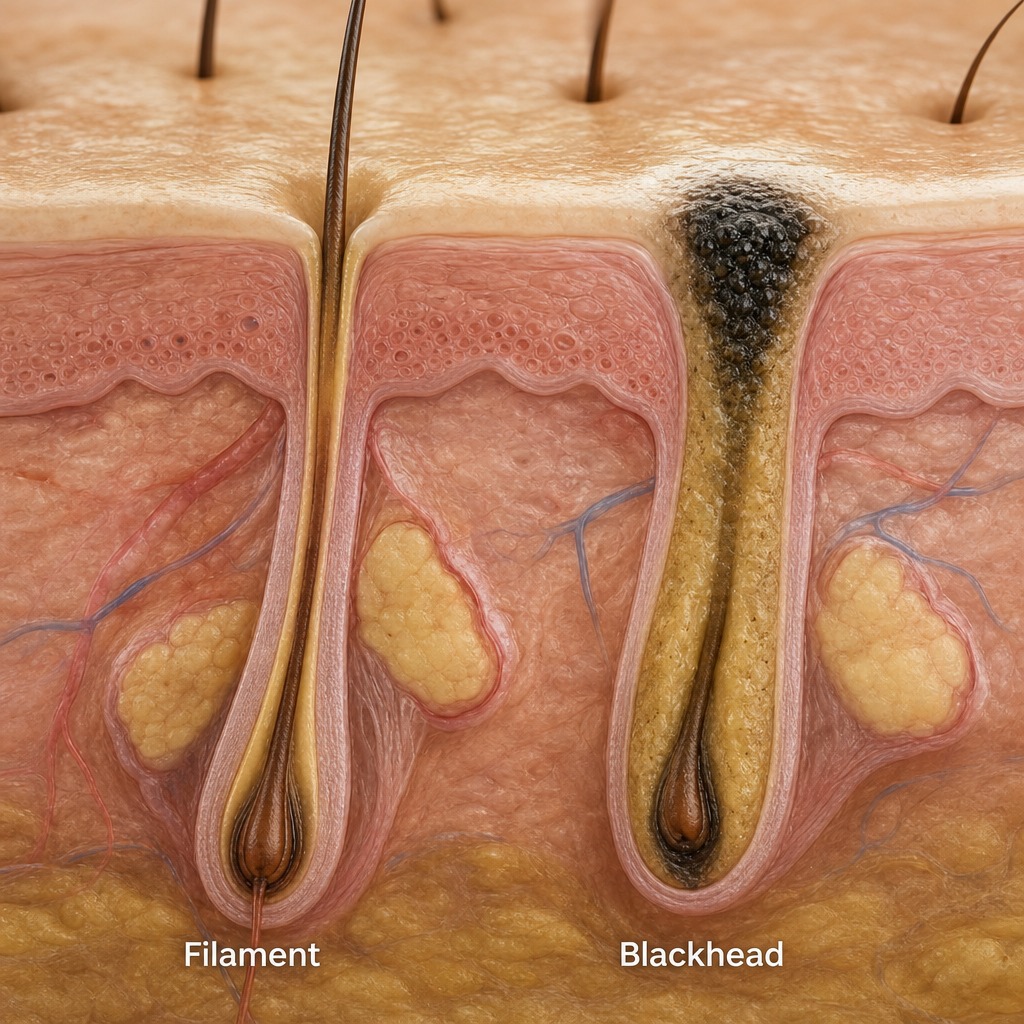
They are not clogs. Nothing is trapped. The pore is doing exactly what it evolved to do, and the visible dot is the top of a working oil channel rather than a blocked one. That is why the color is usually grey, tan, or a soft off-white rather than the true black of an oxidized plug.
The reason they get noticed at all is that they become more visible when the pore is larger, when sebum output is high, and when the surrounding skin has lost some firmness. All three are common in oily and mature skin, which is why filament visibility is one of the most searched skin complaints and simultaneously one of the least treatable.
How do you tell them apart from blackheads?
Five characteristics separate them, and no single one is definitive on its own. Take them together.
| Characteristic | Sebaceous filaments | Blackheads (open comedones) |
|---|---|---|
| Color | Grey, tan, or light yellow | Genuinely dark brown or black |
| Texture | Flat, level with the skin | Slightly raised, you can feel them |
| Pattern | Evenly distributed in a regular grid | Scattered and irregular |
| Size consistency | Uniform across the area | Varying sizes |
| When squeezed | A thin pale thread emerges, refills within days | A firm plug with a dark tip, does not refill as fast |
| Location | Nose, inner cheeks, chin, mid forehead | Anywhere, commonly nose and chin but also cheeks and back |
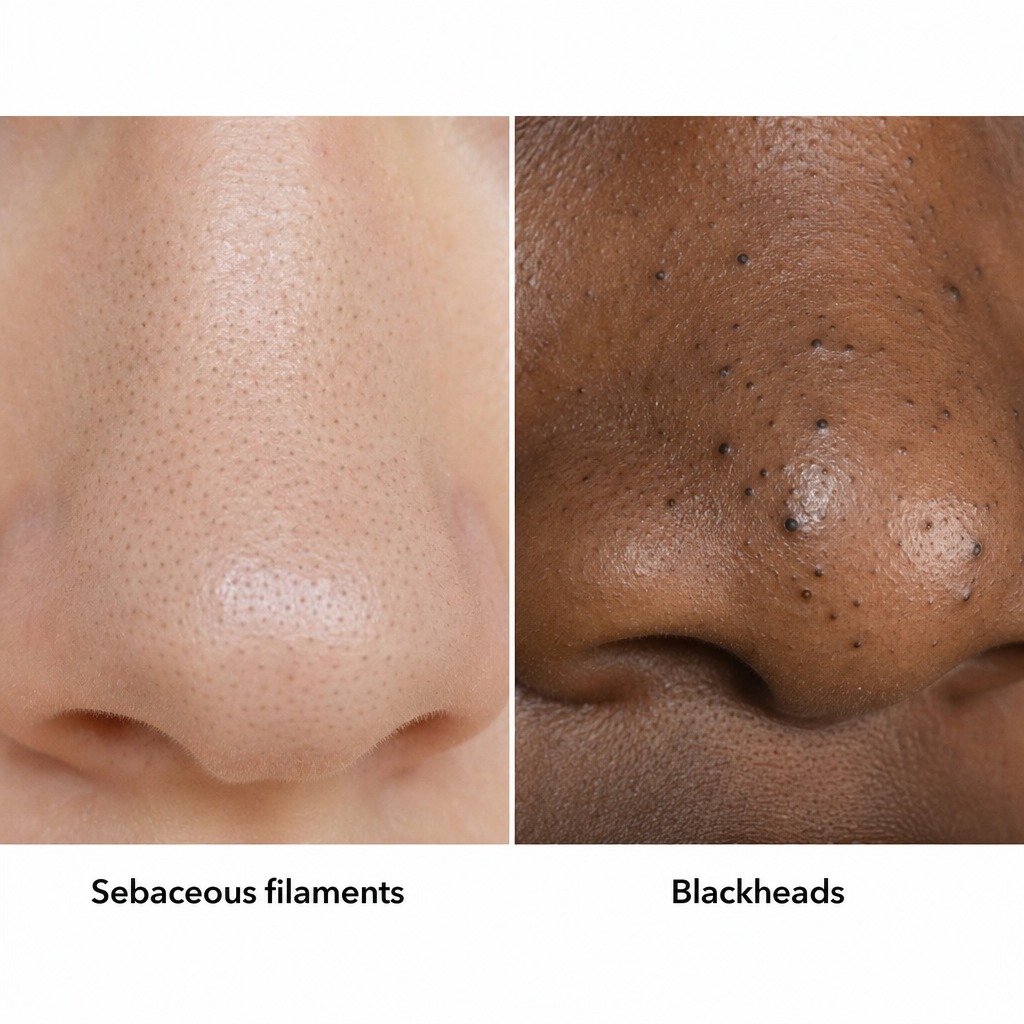
The fastest single check is texture. Run a clean fingertip lightly across the area with your eyes closed. Blackheads have a subtle grit to them. Sebaceous filaments are completely smooth, because there is nothing raised above the pore opening.
The refill test
The most conclusive check takes a week. Note the area, then look again seven days later. Sebaceous filaments reappear on essentially the same schedule regardless of what you did, because sebum production is continuous. Blackheads that were genuinely extracted take considerably longer to return, because a new plug has to form and then oxidize.
Anything that comes back within days was never removed in a meaningful sense. It was emptied, and it refilled.
Can you get rid of sebaceous filaments?
No, and this is the part people most resist. You cannot permanently remove a sebaceous filament any more than you can permanently remove a pore. It is a structural feature of functioning skin.
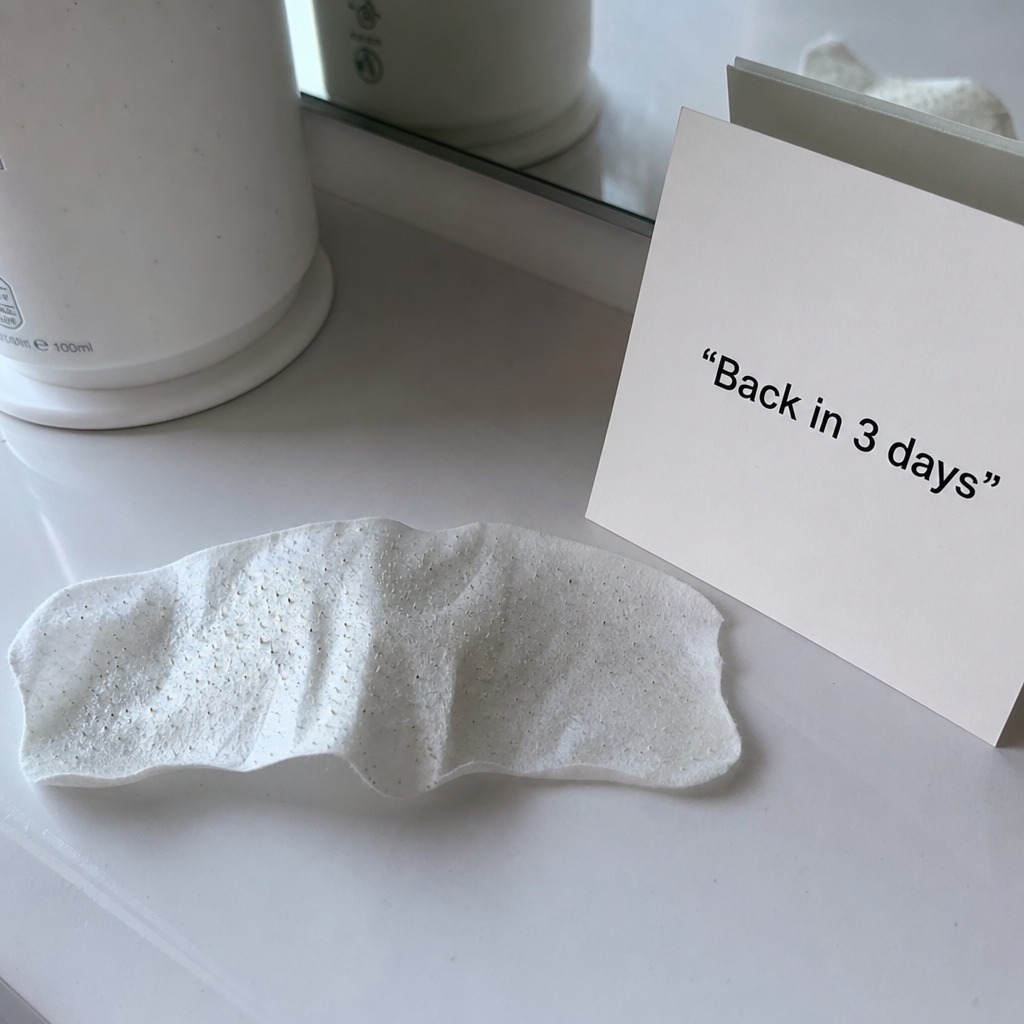
What you can do is reduce how visible they are. Those are different goals with different tools, and conflating them is why so much money gets spent on products that appear to fail. A pore strip does exactly what it claims. It removes the contents. The contents then rebuild, because that is the point of the structure.
Understanding this reframes the entire category. Nobody is going to sell you a permanent solution to a permanent feature. What is genuinely available is management: smaller apparent pore opening, less sebum sitting at the surface, better light diffusion across the area. Those changes are real and visible, and they hold as long as you keep doing them.
What actually reduces their appearance?
| Approach | What it does | Realistic effect | Timeframe |
|---|---|---|---|
| Salicylic acid | Oil-soluble, keeps the channel clear and softens the visible top | The most reliable single option. Noticeably less prominent | 2 to 4 weeks |
| Retinoids | Normalize turnover so debris does not accumulate at the opening | Gradual reduction in apparent pore size | 8 to 12 weeks |
| Niacinamide | Helps regulate sebum output over time | Modest, best as a supporting ingredient | 8 to 12 weeks |
| Clay masks | Absorb surface oil temporarily | Short-lived cosmetic improvement, useful before an event | Hours |
| Lighter moisturizer | Reduces the occlusion that makes filaments swell and darken | Often underrated. Can be the biggest single change | 2 to 3 weeks |
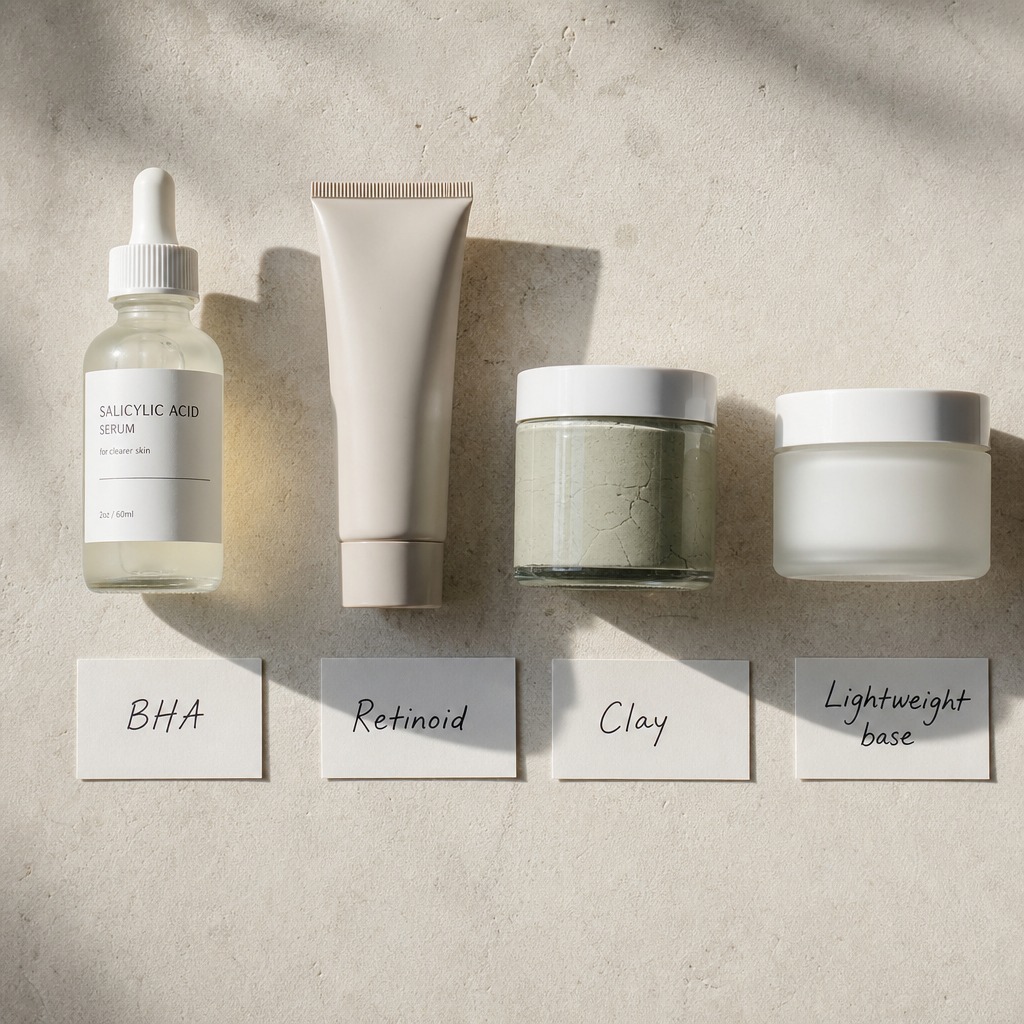
The realistic goal is a nose that reads as smooth at conversational distance. It is not a nose that reads as poreless under a ring light at ten centimeters, and any product promising the latter is selling an outcome that skin does not produce.
Which treatments make them worse?
Four common approaches actively worsen the appearance over time.
- Pore strips used regularly. They pull the top layer of skin along with the filament. Repeated use stretches the opening, and a wider opening makes the next filament more visible than the last.
- Physical scrubs. Abrasion irritates the follicle wall and triggers more oil production. You end up with more of what you were removing.
- Aggressive squeezing. Same mechanism as strips, concentrated in one spot, with a real risk of broken capillaries around the nose.
- Stripping the skin dry. Harsh foaming cleansers and alcohol toners provoke compensatory sebum production. Oily skin that feels tight after cleansing is usually oilier by mid afternoon than skin that was cleansed gently.
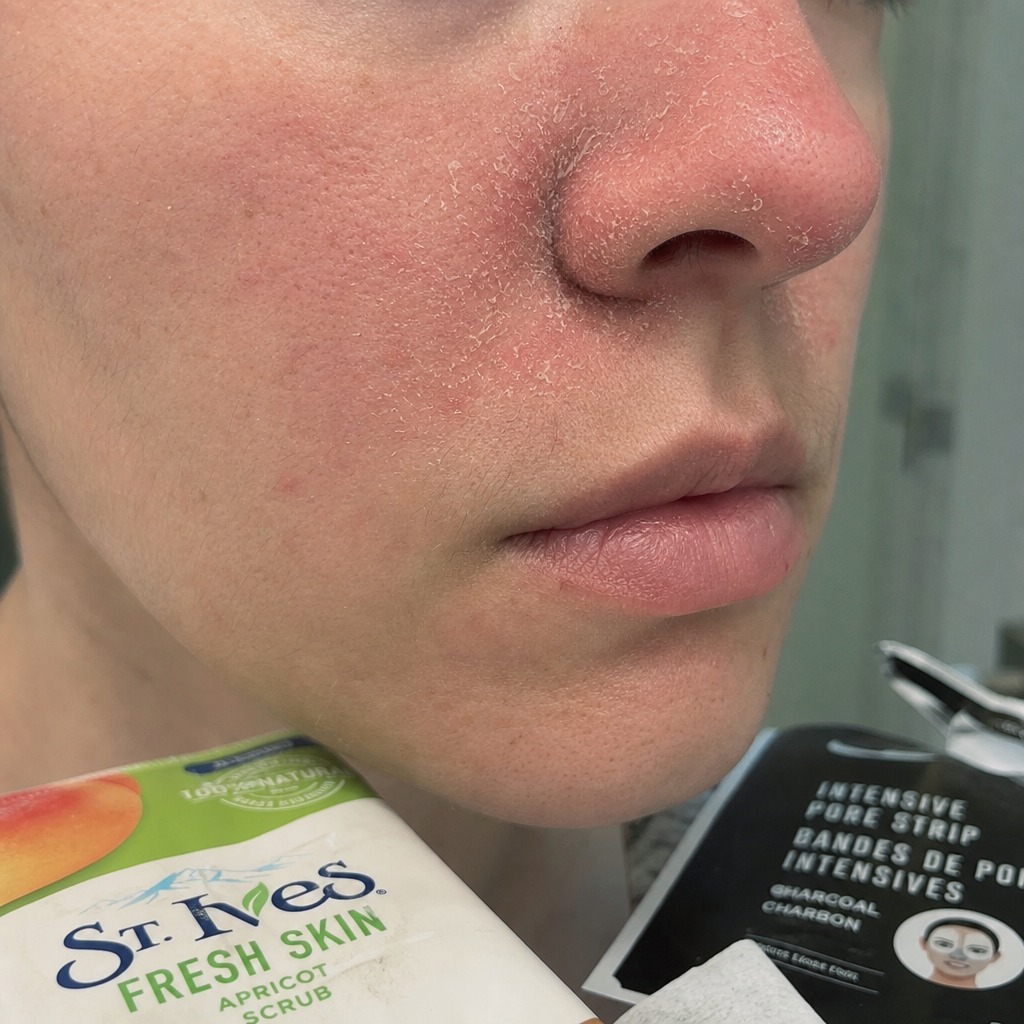
The pattern is consistent. Force produces a short-term visual improvement and a medium-term worsening. Consistency with a mild chemical exfoliant produces the reverse.
How does AI pore analysis settle the question?
Every judgment in this article is a visual one made under uncontrolled conditions. Bathroom lighting, camera angle, and how recently you cleansed all change what you see, which is why people reach opposite conclusions about the same nose on different days.
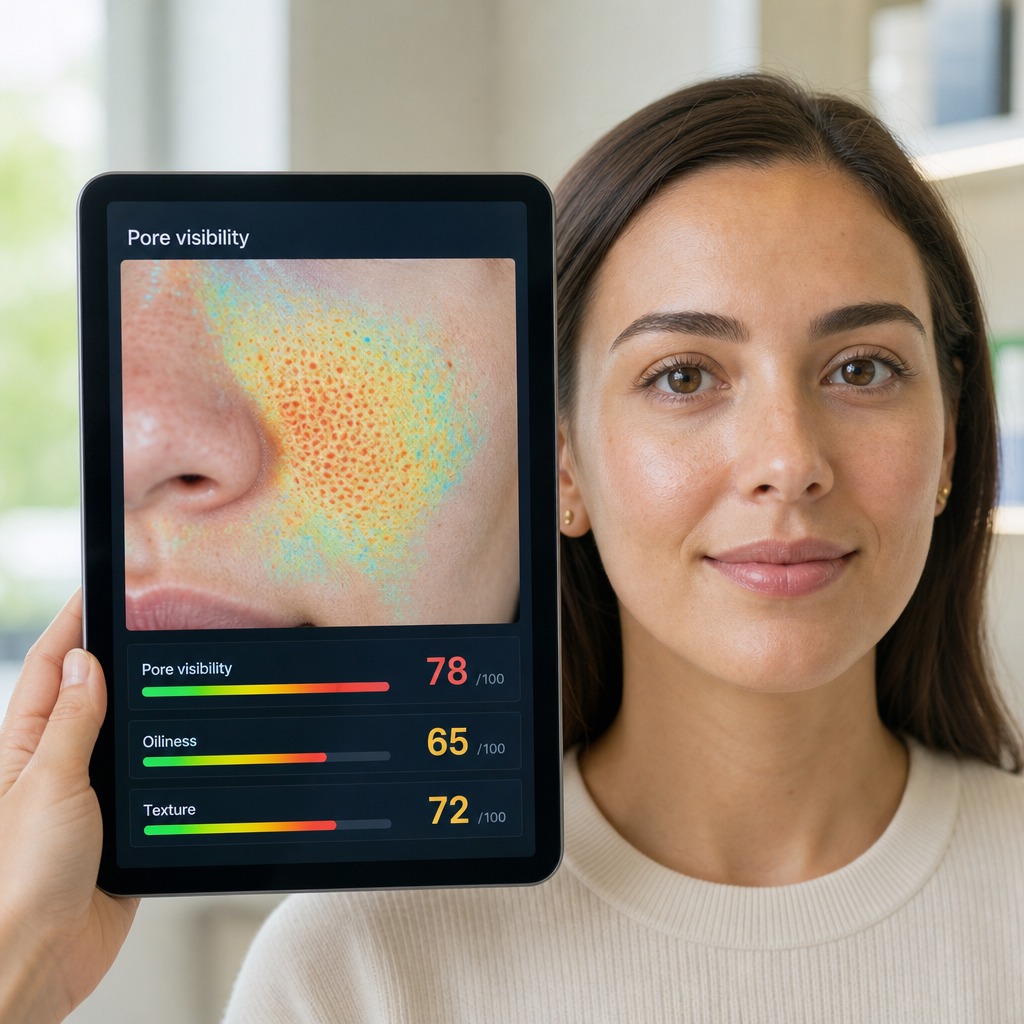
Perfect Corp's AI Skin Analysis scores pore visibility as one of 15 tracked concerns, alongside oiliness and texture, from a single photo. It is trained on more than 70,000 medical-grade images across a range of skin tones and ages, and a clinical study reported 95% test-retest reliability. For a concern this subtle, repeatability is the entire value. A tool that returns a different score for the same skin twice in a row cannot tell you whether four weeks of salicylic acid did anything.
What that enables in practice:
- A pore score rather than an impression. Week zero versus week six, measured the same way both times.
- Oiliness scored separately from pore visibility. Useful, because reducing surface oil often does more for appearance than anything aimed at the pore itself.
- Zone-level mapping. Filaments concentrate in specific areas. A scored map shows whether the nose is genuinely worse than the cheeks or whether it just gets looked at more.
The pore-specific version is available as the AI Pore Checker, and the related question of which products are contributing to congestion is covered by the Pore Clogger Checker.
Why this matters for skincare brands
Pore products carry an unusual burden. The customer's mental model is removal, the product delivers reduction, and the gap between those two shows up as a refund and a one-star review that says it did nothing.

Setting the expectation correctly at the point of recommendation changes that outcome, and it is far easier to do with a number than with copy. A customer who sees a pore visibility score drop from one reading to the next has evidence that the product worked, even when their subjective impression in the bathroom mirror says otherwise.
That is a large part of why more than 800 brand partners have integrated AI skin assessment into consultation and product recommendation. Beekman 1802 reported a 50% engagement lift after adding an AI skin experience, and Kanebo's COFFRET D'OR saw a 2.48x increase in time on page. For clinics, the same data reframes the consultation: a client who arrives convinced they need extractions often needs a routine change instead, and a scored map makes that conversation short rather than adversarial.
If you want to see the full report format before deciding, the free skin analysis demo runs the complete 15-concern scan in a browser.
Sebaceous filaments FAQ
Are sebaceous filaments normal?
Completely. Everyone has them on every oil-producing pore. They are the structure that moves sebum to the skin's surface, so their presence indicates functioning skin rather than a problem.
How do I know if it is a blackhead or a sebaceous filament?
Check color, texture, and pattern together. Filaments are grey or tan, completely flat, and evenly spaced. Blackheads are genuinely dark, slightly raised enough to feel, and scattered irregularly. If it refills within a few days of being cleared, it was a filament.
Do pore strips remove sebaceous filaments?
They remove the contents temporarily. The filament rebuilds within a few days because sebum production is continuous. Used often, strips can stretch the pore opening and make the area look worse over months.
Why do my sebaceous filaments come back so fast?
Because your skin is producing oil, which is what it is supposed to do. Refill time is a function of sebum output, not of how thoroughly you cleared the pore. Faster refill usually just means oilier skin.
Does salicylic acid help with sebaceous filaments?
It is the most reliable option available. Because salicylic acid is oil-soluble it can work inside the pore rather than only on the surface, which softens the visible top of the filament and keeps the channel clear. Expect a visible difference in two to four weeks with consistent use.
Can you shrink your pores?
Pore size is largely genetic and cannot be permanently changed. What can change is apparent size, by keeping the channel clear, reducing surface oil, and supporting the firmness of the surrounding skin. The visual improvement is real even though the underlying anatomy is not altered.
Are sebaceous filaments a sign of poor hygiene?
No. Over-cleansing makes them more visible rather than less, because stripping the skin prompts more oil production. Twice daily gentle cleansing is the ceiling for useful washing.
Should I extract sebaceous filaments at a facial?
Professional extraction is safer than doing it yourself and gives a genuine short-term improvement. It is a maintenance service rather than a cure, and the filaments will return on the same schedule as always. Pairing it with a daily oil-soluble exfoliant is what extends the result.
The takeaway
Sebaceous filaments are permanent, normal, and manageable. Blackheads are removable and treatable. Telling them apart takes about ten seconds with a fingertip and saves months of chasing an outcome that skin does not produce. Once you know which one you are looking at, the strategy is obvious: reduce the appearance of filaments with consistency, and treat blackheads with comedolytic ingredients. The failure mode is applying the second strategy to the first problem, indefinitely.