 Author:
| Table of Contents |
|---|
Walk into any skincare aisle, and you'll find products labeled for every skin concern imaginable — anti-aging, hydrating, pore-minimizing, oil-controlling. But most of these products are only effective when they match your skin type. If you're using the wrong formula, even a premium product can make things worse.
Knowing the customer's skin type isn't a beauty formality. It's the foundation of any skincare routine that actually works.
Why Knowing Customers' Skin Type Matters?
The link between skin type and product effectiveness
Skincare products are formulated with specific skin types in mind. A rich, occlusive moisturizer that works beautifully for dry skin can clog pores and trigger breakouts on oily skin. A lightweight gel cleanser designed for oily skin may strip dry skin of the moisture it needs to stay healthy. When your products match your skin type, they work the way they're supposed to — and your skin responds.
Common mistakes people make when they skip this step
The most common mistake is guessing. Many people assume they have oily skin because their face looks shiny by midday, when in reality they have combination or even dehydrated skin. Others assume sensitivity when they're actually reacting to a specific ingredient, not their skin type at all. These misidentifications lead to routines that address the wrong problem — and frustration when results don't come.
The 5 Basic Skin Types Explained
Normal
Balanced oil and moisture levels. Pores are small, the texture is even, and the skin rarely reacts to new products.
Oily
Excess sebum production across the face, especially the T-zone. Prone to enlarged pores, shine, and breakouts.
Dry
Insufficient sebum production. Skin feels tight, may flake or look dull, and is prone to fine lines appearing earlier.
Combination
Oily in the T-zone (forehead, nose, chin) and normal to dry on the cheeks. The most common skin type.
Sensitive / Redness-prone
Skin reacts easily to products, environmental triggers, or temperature changes. Often accompanied by redness, flushing, or irritation.
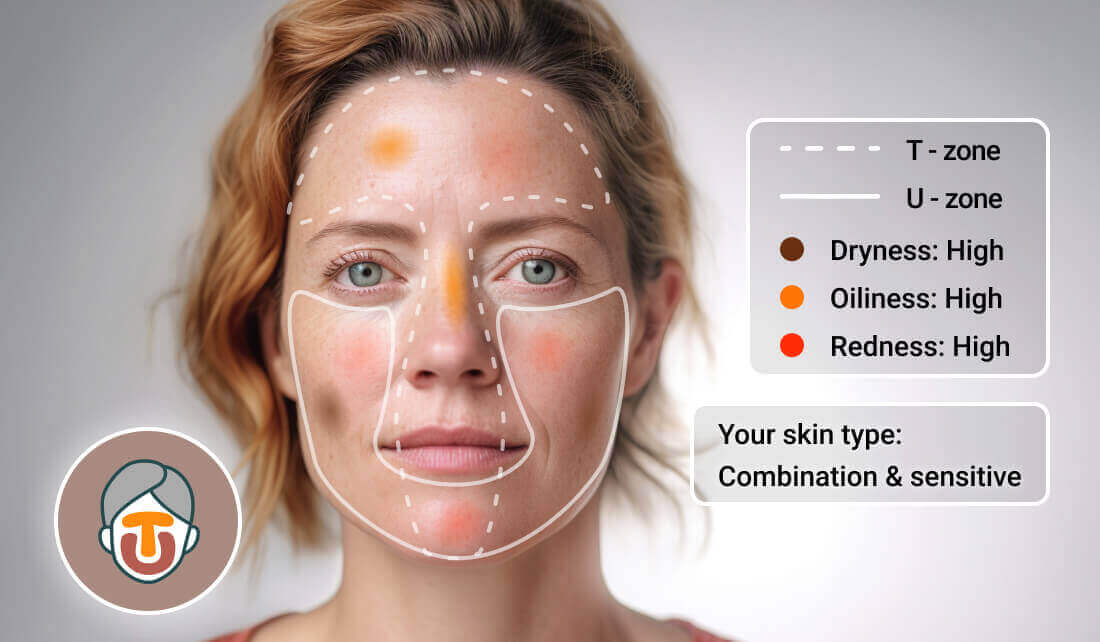
It's worth noting that skin type and skin condition are different things. Dehydration, acne, and hyperpigmentation are conditions that can affect any skin type and are influenced by environment, diet, and lifestyle. Your skin type is largely genetic and more stable over time, though it does shift with age, hormones, and seasons.
How to Identify Your Skin Type at Home
The Bare-Face Test (wash and wait method)
This is the most widely recommended DIY method. Wash your face with a gentle, fragrance-free cleanser, pat it dry, and don't apply anything afterward. Wait 30–60 minutes and observe
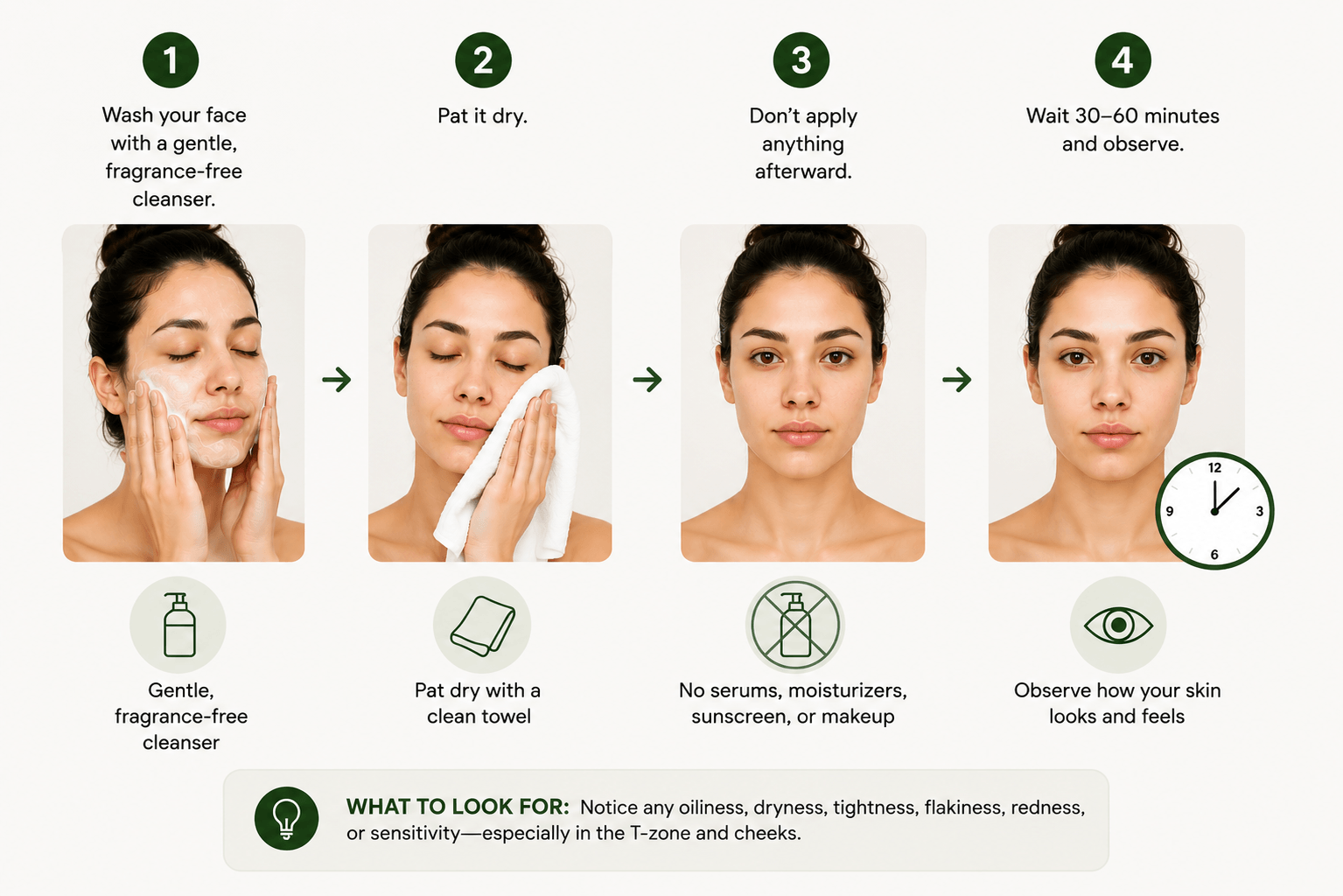
- Feels tight or looks flaky → likely dry
- Looks shiny all over → likely oily
- Shiny only on the forehead, nose, and chin → likely combination
- Looks comfortable, no shine or tightness → likely normal
- Looks red or feels irritated after washing → may be sensitive
The Blotting Sheet Method
Press a clean blotting sheet against different areas of your face in the early afternoon (a few hours after your morning routin). Hold the sheet up to the light and check how much oil it absorbed.
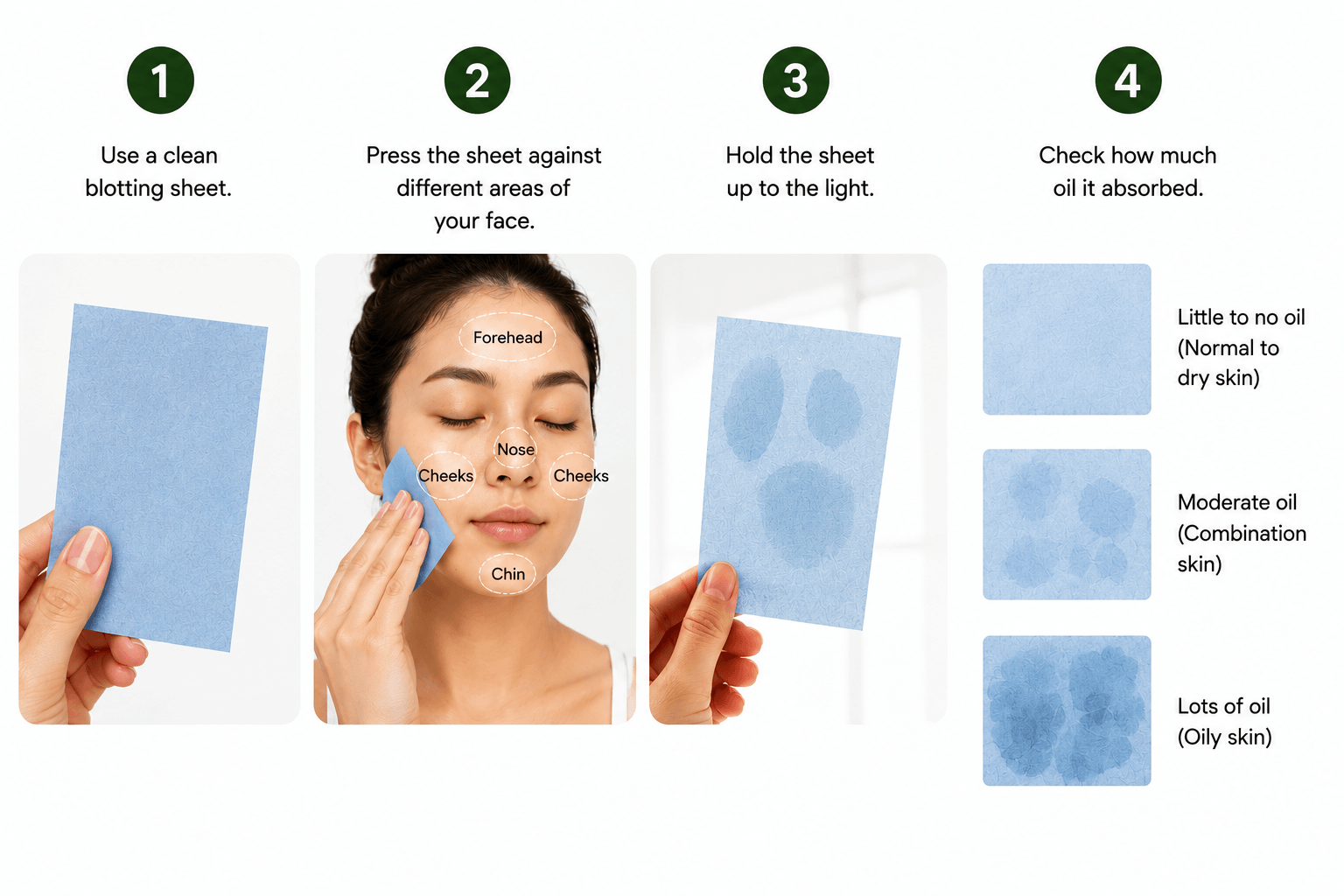
- Oil on all areas → oily
- Oil only on the T-zone sheet → combination
- Little to no oil anywhere → dry or normal
What to look for in the T-zone vs. U-zone
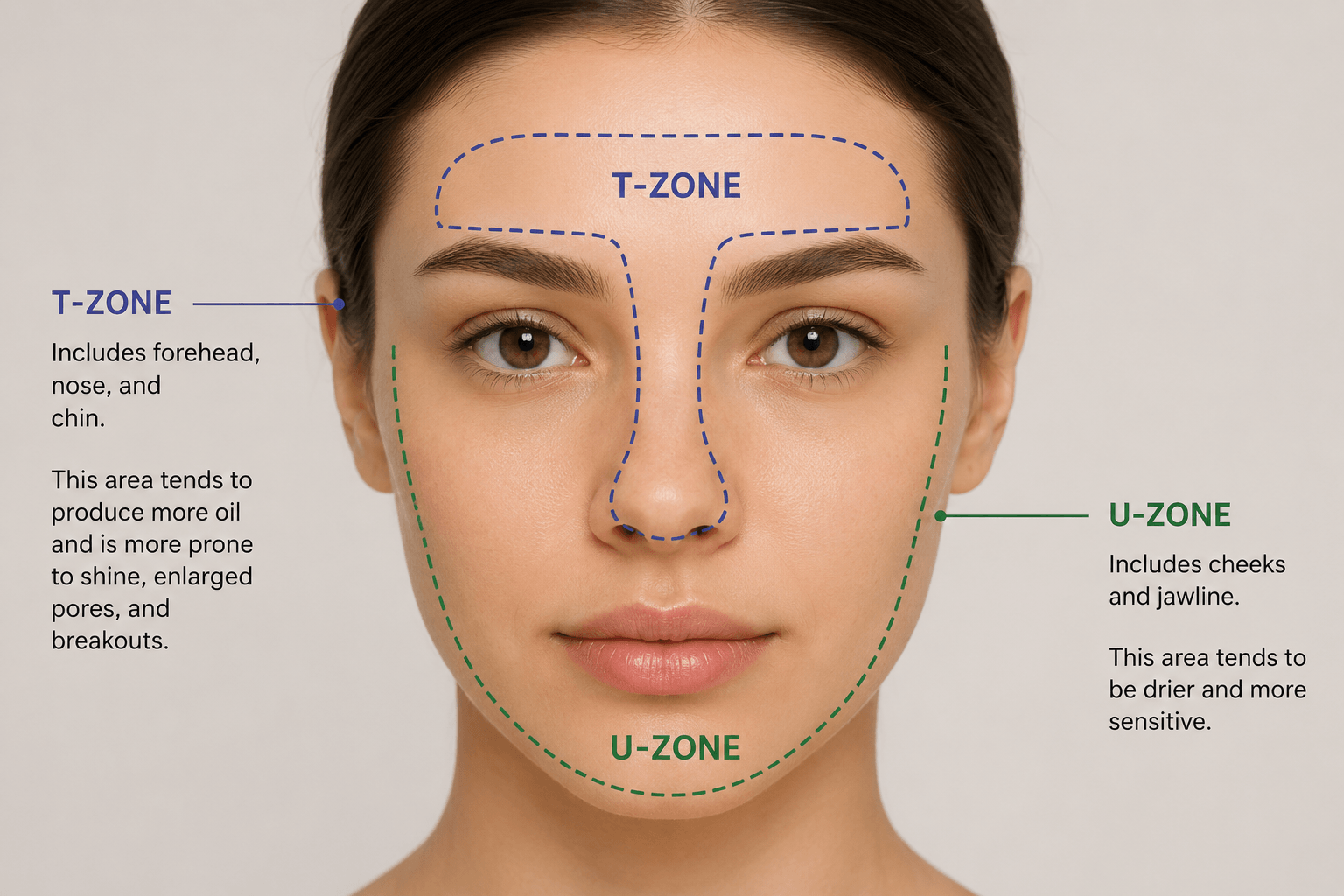
The T-zone (forehead, nose, chin) and U-zone (cheeks and jaw) behave differently and are key to distinguishing combination skin from oily or dry. If your T-zone is oily and your U-zone feels normal or slightly dry, that's the classic combination pattern. Pay attention to both zones separately rather than generalizing across your whole face.
Test your skin type with Perfect Corp's skin analysis for free→
Why Home Methods Have Limits
Skin changes with seasons, age, and hormones
Your skin in January may behave very differently from your skin in July. Cold, dry air pulls moisture from the skin, while heat and humidity increase sebum production. Hormonal fluctuations — from menstrual cycles, pregnancy, or menopause — also shift oil levels and sensitivity. A skin type assessment done once a year, or only in one season, may not reflect how your skin actually behaves year-round.
Combination and redness types are often misidentified
Combination skin is the most commonly misidentified type because people tend to treat it as oily (since the T-zone is the most visible). This leads to over-stripping the skin, which can trigger even more oil production as a compensatory response. Similarly, skin that shows redness is often labeled "sensitive" when the redness may actually indicate a subtype of oily or combination skin rather than a fragility issue.
These nuances are hard to catch with a blotting sheet or a mirror. They require a more systematic analysis of the entire face, including areas that are easy to overlook.
A More Accurate Way: AI Skin Analysis by Perfect Corp.
How AI skin analysis works
AI-based skin analysis tools use computer vision and machine learning to analyze facial images and detect skin characteristics that aren't visible to the naked eye. Instead of relying on how your face feels after washing it, the AI reads the actual condition of your skin — pore size, oiliness, texture, redness, hydration levels — and maps these across your entire face in seconds.
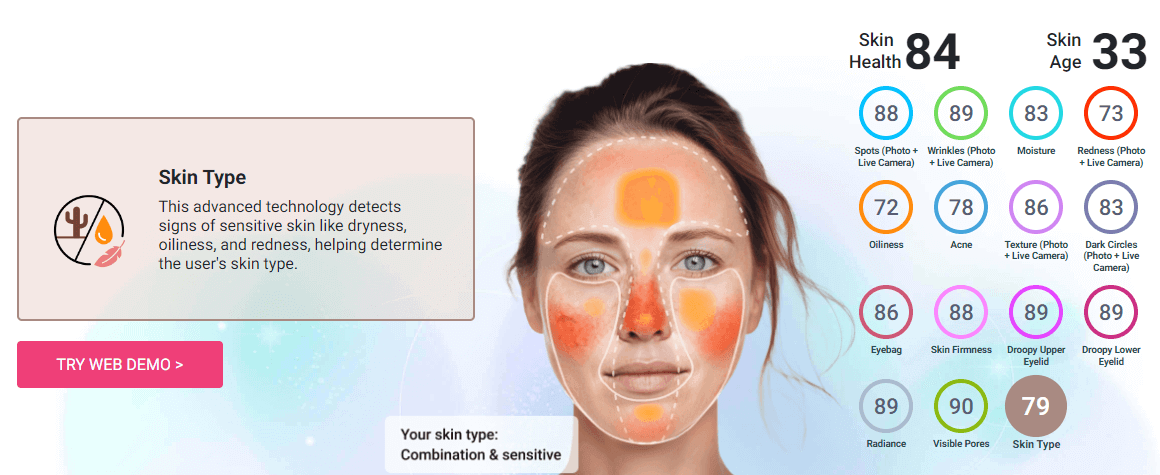
What Perfect Corp's AI Skin Analysis detects
Perfect Corp's AI Skin Analysis is one of the more comprehensive tools currently available. It uses a 180° three-image capture (front, left profile, right profile) to analyze areas that flat, single-image tools miss — like the chin, jawline, and the outer cheeks. The system detects 15+ skin concerns and identifies 8 distinct skin types:
- Normal
- Oily
- Dry
- Combination
- Redness
- Dry & Redness
- Oily & Redness
- Combination & Redness
The tool also breaks down the T-zone and U-zone separately, which is exactly what's needed to accurately identify combination and redness-prone types that home methods tend to miss.
The Brands Winning at Skincare Know Their Customers' Skin
Identifying your skin type is not a one-time task — it's something worth revisiting as your skin changes with the seasons, your age, and your health. The bare-face test and blotting sheet are useful starting points, but they only give you a rough read. For a more complete picture, particularly if you're investing in a skincare regimen or making product recommendations for others, AI-powered analysis provides a level of accuracy and detail that manual observation simply can't match.
If you're in the beauty or skincare industry — or you're simply serious about getting it right — Perfect Corp's AI Skin Analysis is worth exploring. The demo is available directly on their site.
Shared Materials by Strapi
*Adjust the size of images ONLY. Please go to Strapi to edit the materials info.