 Author:


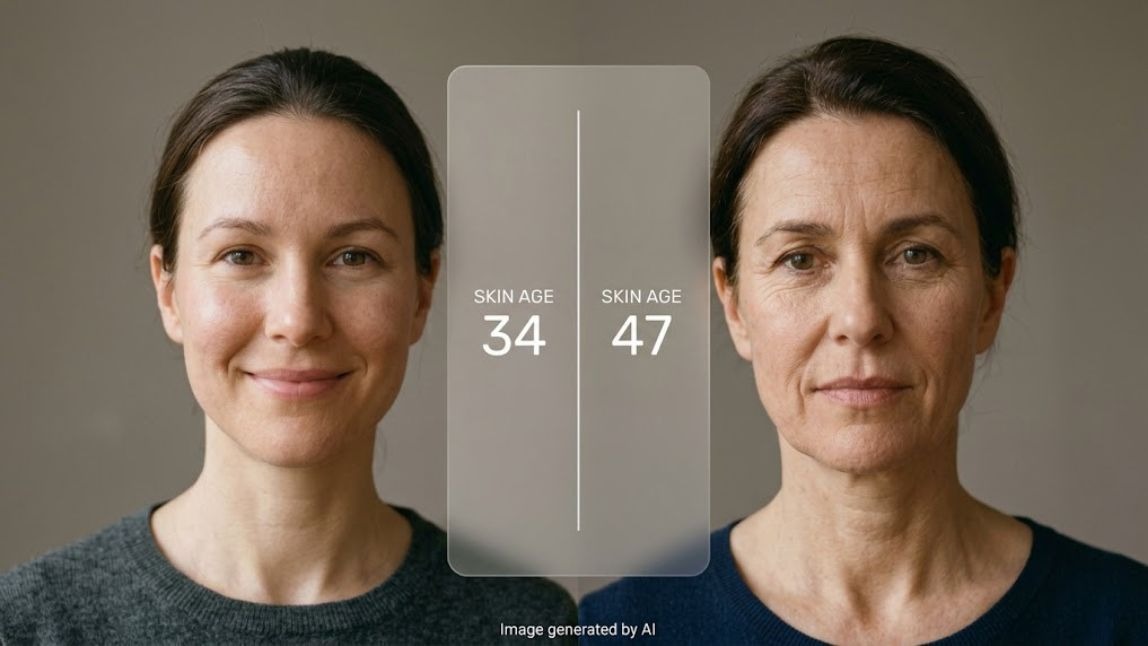
Images generated by YouCam AI
Someone guesses your age five years high and the rest of the day is ruined. It is one of the most asked, least well answered questions in skincare, partly because the honest answer is not a product recommendation. Research on clinical skin age shows that a small number of visible signs carry most of the age signal a stranger reads off your face, and they are not always the ones people spend money on. This guide covers what skin age actually is, which signs statistically matter most, how much of it you control, what reverses and how fast, and how AI skin analysis puts a number on something you cannot judge in your own mirror.
What this guide covers
Why Do I Look Older Than My Age?
Because perceived age is driven by a handful of visible signs, not by your birth year. Skin texture quality, loss of elasticity, cheek folds, crow's feet, upper lip lines, and surface shine carry most of the signal. Sun exposure, sleep, smoking, weight fluctuation, and genetics decide how early those signs arrive.
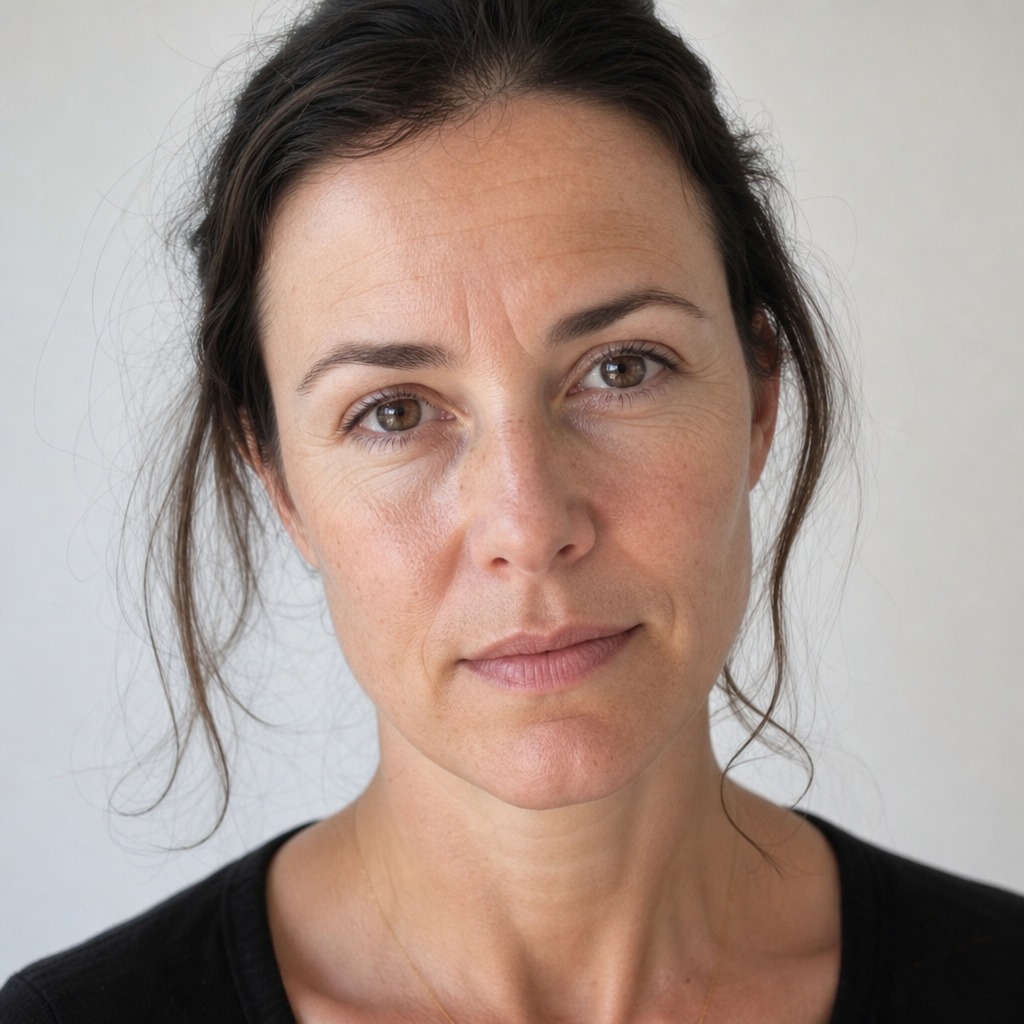
That is the short version, and it is worth sitting with the implication. If a limited set of signs does most of the work, then the effort you put into your appearance has a ranking. Most people are not working the ranking. They are working whatever came up in their feed.
What Is Skin Age, and How Is It Different From Your Birthday?
Three different ages get mixed together in this conversation, and separating them clears up most of the confusion.
| Type of age | What it means | Can it change? |
| Chronological age | Time since you were born | No |
| Clinical skin age | The age your skin appears to be when scored against known visible signs | Yes, in both directions |
| Biological skin age | The molecular state of the tissue, measured through markers rather than appearance | Yes, slowly |
Clinical skin age is the one that matters for the question people are actually asking, because it is the one other humans respond to. A 2024 study published in Scientific Reports assessed 351 healthy women between 36 and 75 across France and Romania, scoring 21 clinical facial signs each. Six of those signs together explained 59 percent of the variance in chronological age: elastosis, papyraceous texture on the cheeks, cheek folds, crow's feet, upper lip wrinkles, and shininess on the forehead.
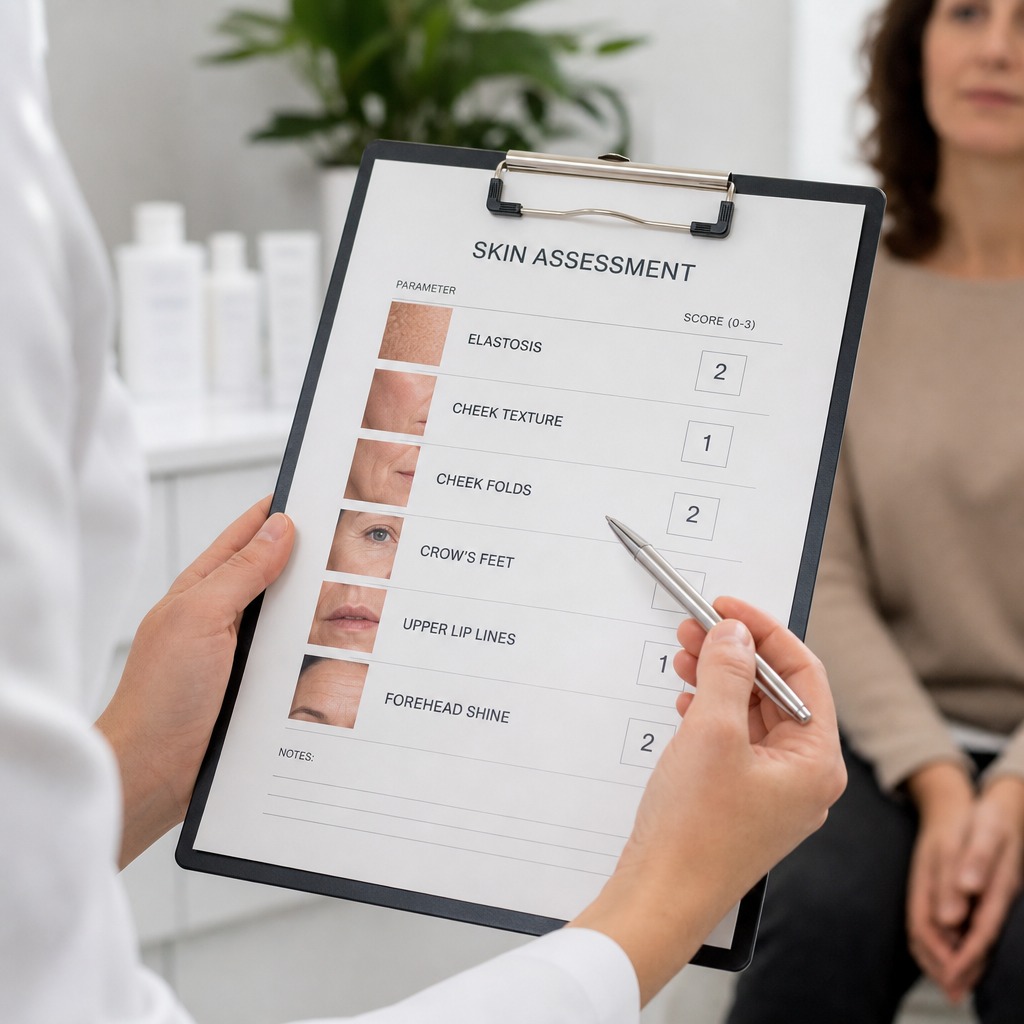
Read that number again, because it is the useful part. Six visible signs account for most of the age information in a face. Everything else you might worry about is dividing up the remaining share.
The same research formalized something everyone has noticed anecdotally. It defined age acceleration and deceleration as the gap between how old the skin looks clinically and how old the person actually is. Some people run ahead of their birthday. Some run behind. The gap is measurable, and it is not random.
Which Visible Signs Actually Drive Perceived Age?
Here is the ranking, translated out of research language into what you would see in a mirror if you knew where to look.
| Sign | What it looks like | Does it respond to topical care? |
| Elastosis (loss of elasticity) | Skin that does not snap back, a slightly slack quality along the jaw and cheek | Partly. Retinoids and sun protection slow it. Structural laxity needs procedures |
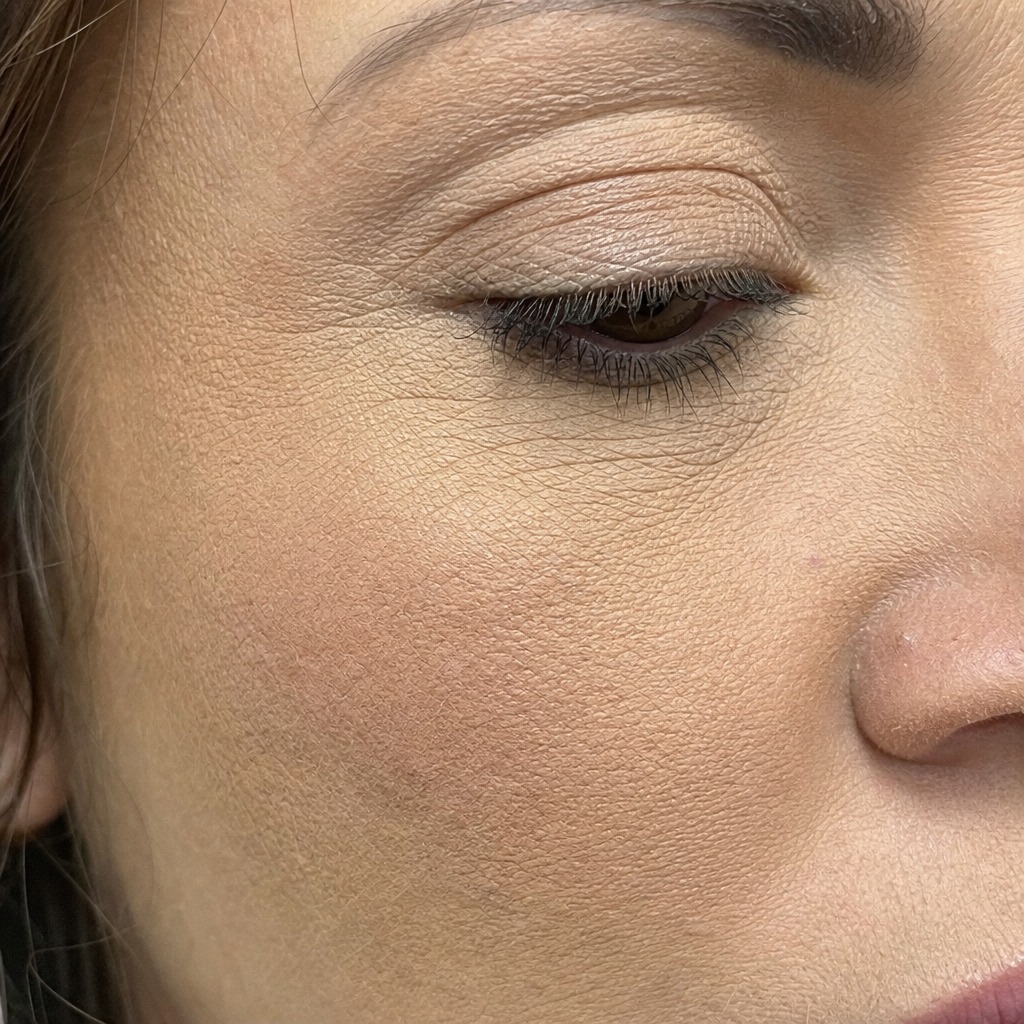
| Papyraceous cheek texture | A thin, papery, finely crumpled surface on the cheeks | Yes, meaningfully. This is the most improvable sign on the list |
| Cheek folds | Deepening lines running from the nose down past the mouth corner | Partly. Depth softens, the fold itself is structural |
| Crow's feet | Fine lines fanning from the outer eye, visible at rest | Yes for the fine surface component, less for etched lines |
| Upper lip wrinkles | Vertical lines above the lip border | Slowly. Responds to retinoids and to not smoking |
| Forehead shine | An oily specular sheen across the forehead | Yes, quickly. Often the fastest win on the whole list |
Two things jump out. First, the two signs that respond fastest to ordinary care, cheek surface texture and forehead shine, are also two of the six that carry the most age signal. That is an unusually good return on effort. Second, nothing in this list is a dark spot. Pigmentation matters for how healthy skin reads, but the age signal lives mostly in surface quality and in lines.
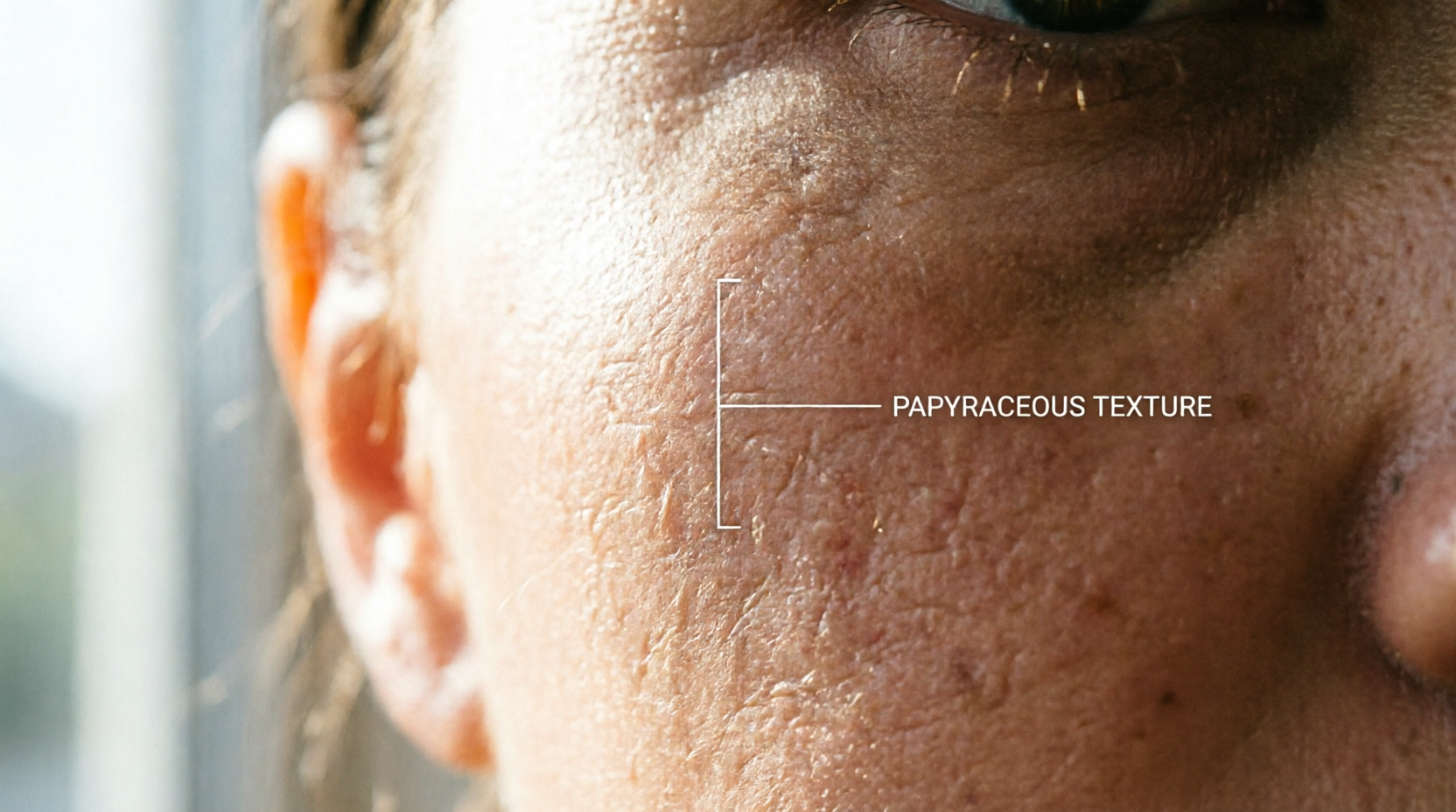
If your instinct was that fixing your dark spots would fix how old you look, this is the moment to redirect. Our guide to telling a mole from a dark spot covers pigment properly, but pigment is a different job from perceived age.
How Much of This Is in Your Control?
More than genetics fatalists think, less than the supplement industry implies. Aging splits into two processes that behave very differently.
Intrinsic aging
The clock you cannot argue with. Collagen production declines gradually from your twenties, fat pads redistribute, bone remodels, and the surface renews more slowly with each decade. This is the baseline everybody rides.
Extrinsic aging
Everything the environment and your habits add on top. This is where the gap between two people the same age gets built, and dermatology sources commonly attribute roughly 80 to 90 percent of visible skin aging to sun exposure alone. Not most of aging. Most of the visible part.
| Factor | What it does to perceived age | Leverage |
| Cumulative UV exposure | Drives elastosis, texture damage, pigment, and line etching | Very high. Daily SPF is the single highest return habit available |
| Smoking | Accelerates upper lip lines and dulls surface quality | Very high |
| Chronic poor sleep | Under eye shadowing, dullness, slower repair | High |
| Large weight fluctuation | Repeated stretch and slack in facial volume | Moderate |
| Chronic stress | Expression line etching, barrier disruption | Moderate |
| Alcohol | Dehydration, vascular redness, puffiness | Moderate |
| Hormonal transition | Accelerated collagen loss and dryness | Low to moderate, worth medical discussion |
| Genetics | Sets your starting curve and your tendencies | Low, but knowing your tendencies changes your plan |
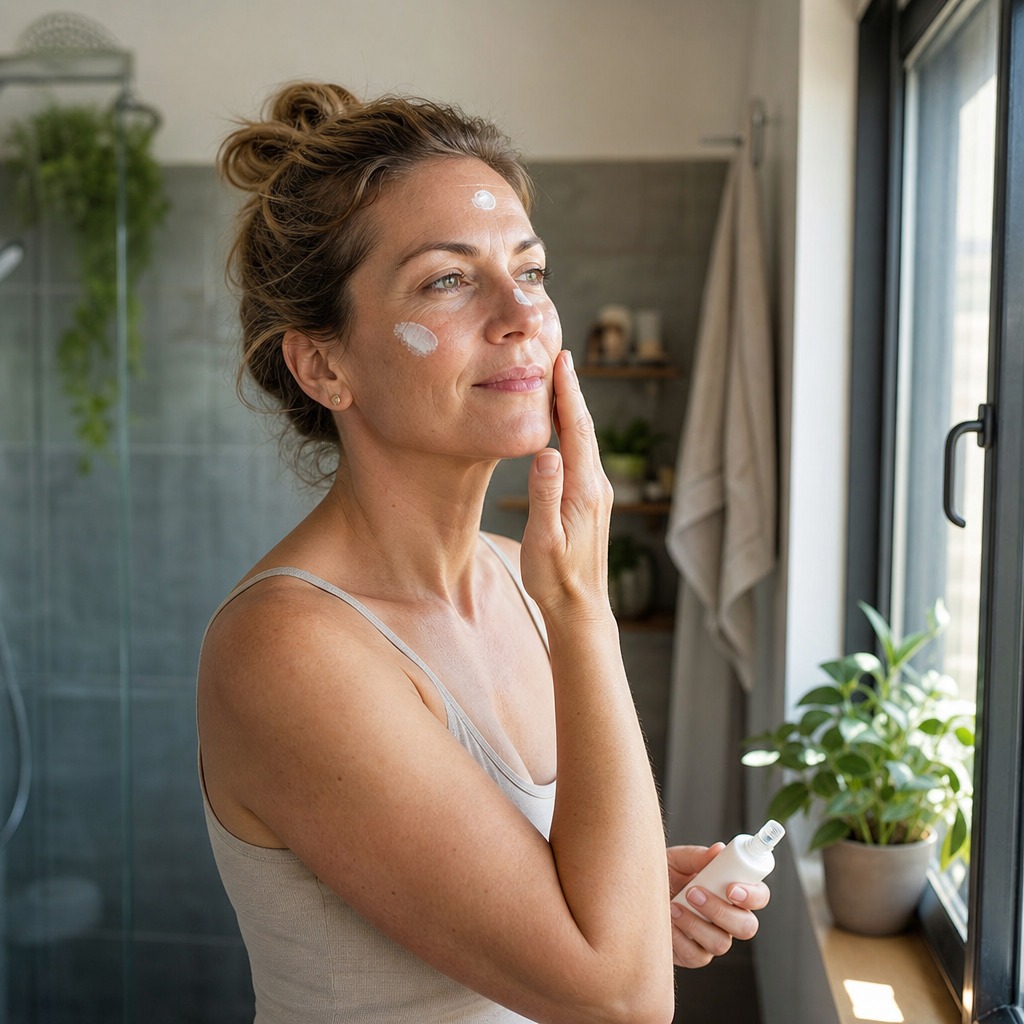
The honest summary: you inherited the curve, you are drawing the slope.
Why Do Two People the Same Age Look a Decade Apart?
Partly habits, and partly biology that is only now becoming measurable. The Scientific Reports work looked past appearance into the outer skin layer and found protein markers that tracked with the acceleration gap. Higher levels of insulin degrading enzyme showed a strong protective association, while lipocalin-1 tracked with accelerated aging. In other words, two faces with the same sun history can still be running different clocks underneath.
That is a genuinely useful reframe if you have ever felt like your routine was failing you compared to a friend who does nothing. You may not be doing less. You may be starting from a different position, which changes what a fair comparison looks like. The right comparison is not your friend's face. It is your own face, twelve weeks ago, measured the same way.
The one-sided evidence nobody can argue with
If you want proof that habits beat birthdays, look at people whose faces received uneven sun. Long haul drivers commonly show more surface damage and deeper lines on the window side, and the effect has been documented in dermatology case reports for decades. Same person, same genetics, same age, two different clocks running on two halves of one face.

It is the cleanest available demonstration that the visible part of aging is largely cumulative exposure, and it reframes sunscreen from a cosmetic step into the highest leverage item in this entire article.
Which brings up the awkward problem at the center of this whole topic.
How Can You Tell How Old Your Skin Looks?
Not by looking in the mirror. You are structurally unable to assess this. You see your own face daily, which means change arrives too gradually to register, and you look at it from an angle and distance nobody else ever uses. Add bathroom lighting, add the fact that you already know how old you are, and self-assessment is close to worthless.
You can get partway with a deliberate audit. Try this in daylight, no makeup, phone on a shelf rather than in your hand.
| Check | How to do it | What it tells you |
| Elasticity | Pinch the skin on the back of the hand and on the cheek, watch how fast it flattens | Elastosis, the top ranked sign |
| Cheek surface | Photograph the cheek with light coming from the side, not the front | Papery texture that flat lighting hides |
| Lines at rest | Relax your whole face for ten seconds, then photograph | Separates etched lines from expression lines |
| Forehead shine | Check three hours after cleansing, under a window | Oiliness that reads as age in photographs |
| Neck and hands | Compare them to your face in the same photo | Whether your protection has been face only |
| Old photographs | Same lighting, same angle, five years apart | The rate of change, which no single photo shows |
What an AI skin age reading adds
A scored analysis does the thing you cannot do for yourself: it evaluates the signs consistently and returns a number that can be compared over time. A system like AI skin analysis reads up to 15 concerns from one selfie, including the wrinkle, texture, firmness, and oiliness dimensions that make up the age signal, and expresses the combination as an estimated skin age.
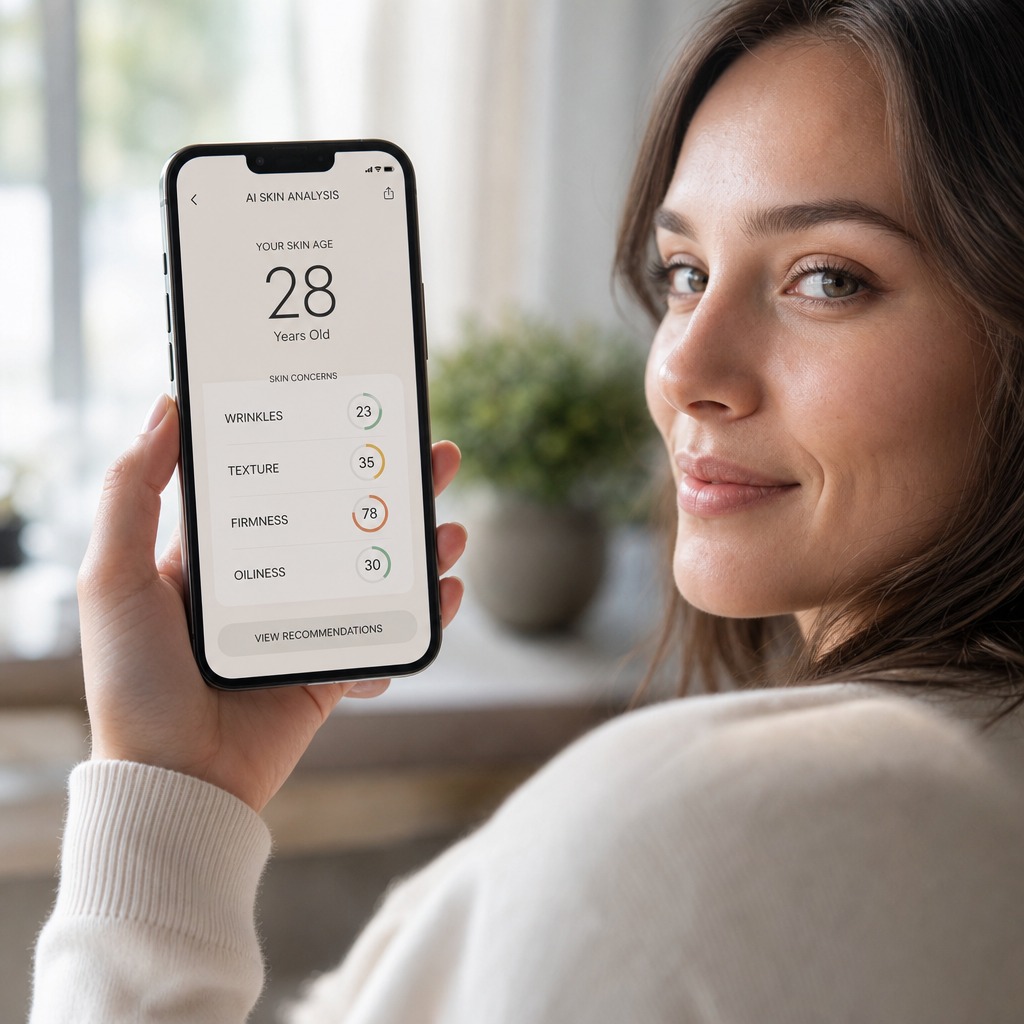
Two cautions worth stating plainly, because overselling this helps nobody. A skin age score is an estimate produced from visible signs, not a medical measurement of tissue. And it is only as good as its capture conditions: same light, same distance, filters off, or you are comparing two different photographs rather than two states of your skin.
Used properly, though, the number does something no amount of mirror time achieves. It converts a vague dread into six specific readings, three of which you can move this quarter. If you want the mechanics of how the estimate is produced, our explainer on the face age calculator goes into the modelling side.
Why Do You Look Older in Photos Than in the Mirror?
Because a mirror and a camera are not showing you the same face, and neither one is neutral. This single mismatch generates an enormous share of the distress behind this question, and almost none of it is about your skin.
- Focal length. Phone front cameras are wide angle. Held at arm's length they enlarge whatever is closest, usually the nose and forehead, and flatten the midface. Portrait lenses do the opposite, which is why professional photographs of you look like a different person.
- Camera angle. A phone or laptop below eye level, which is where a video call almost always sits, shortens the neck, emphasizes the jawline slack, and pushes shadow into the folds that carry age signal.
- Mirror reversal. You have spent your life memorizing a reversed face. Photographs show the unreversed version, and every natural asymmetry reads as unfamiliar and therefore as a flaw.
- Lighting direction. Bathroom lighting from above and behind carves shadow under the eyes. Window light from the front fills it. Same skin, several apparent years apart.
- Processing. Many phones apply smoothing by default and many video platforms apply their own. You may be comparing an edited image to an unedited one without knowing it.
- Motion. A still frame catches one expression and freezes it. In person, people read your face in motion, which averages out the unflattering frames.
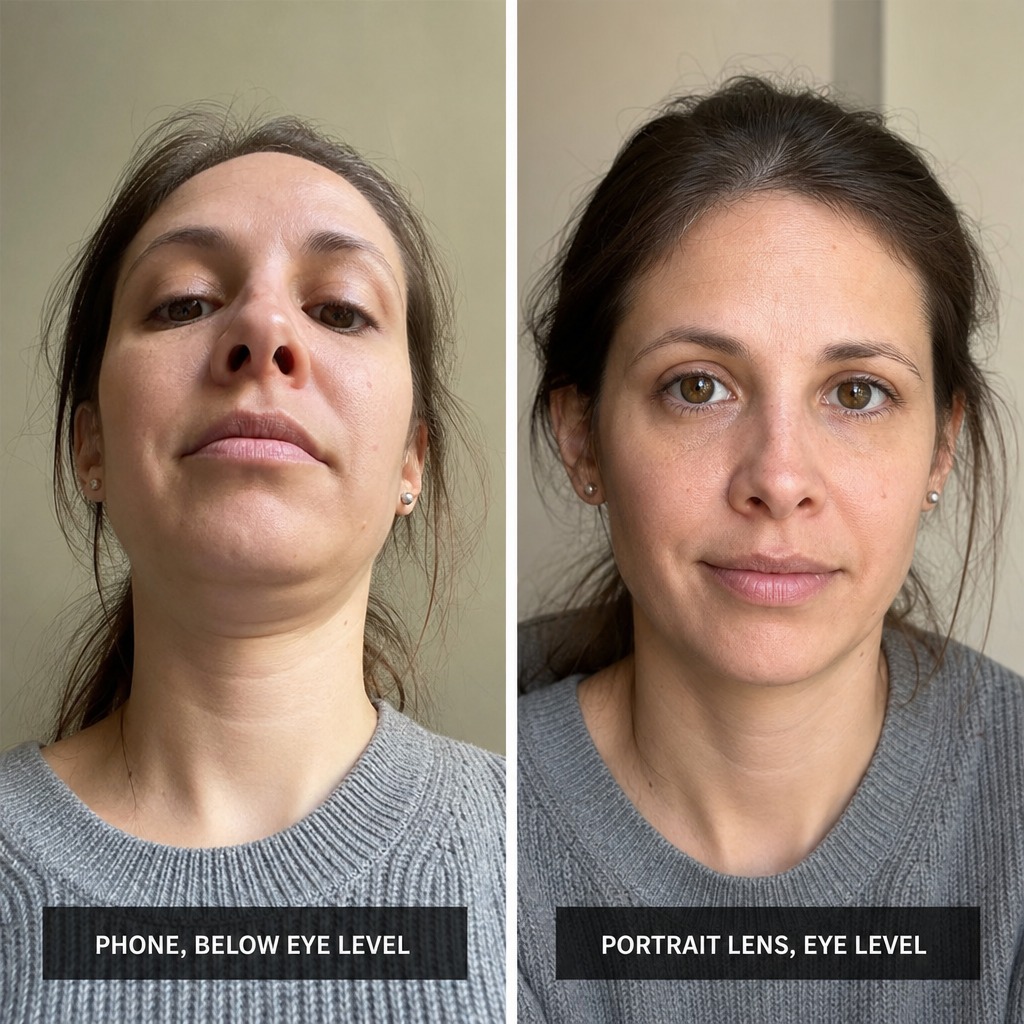
The practical takeaway is that you cannot assess your own aging from either surface. A mirror flatters through familiarity and a phone distorts through optics. What survives both problems is a measurement taken the same way each time, which is the argument for a scored reading rather than another anxious mirror session.
Does Your Neck Age at the Same Rate as Your Face?
No, and the difference is usually a protection story rather than a biology story. Neck, chest, and hand skin is thinner, has fewer oil glands, and moves constantly, so it shows laxity and crepey texture earlier. Then decades of face-only sunscreen widen the gap.
| Area | Why it ages differently | What to do about it |
| Neck | Thin skin, constant movement, frequently missed by sunscreen | Extend every step down past the jaw, including SPF and retinoid nights |
| Chest and upper decolletage | Heavy cumulative sun exposure, sparse oil glands | Daily SPF, hydration, resurfacing for existing damage |
| Hands | The most sun exposed skin on the body, thin fat layer | SPF on the backs of the hands, reapplied after washing |
| Eyelids | Thinnest facial skin, highest movement | Gentle products, sunglasses, realistic expectations |
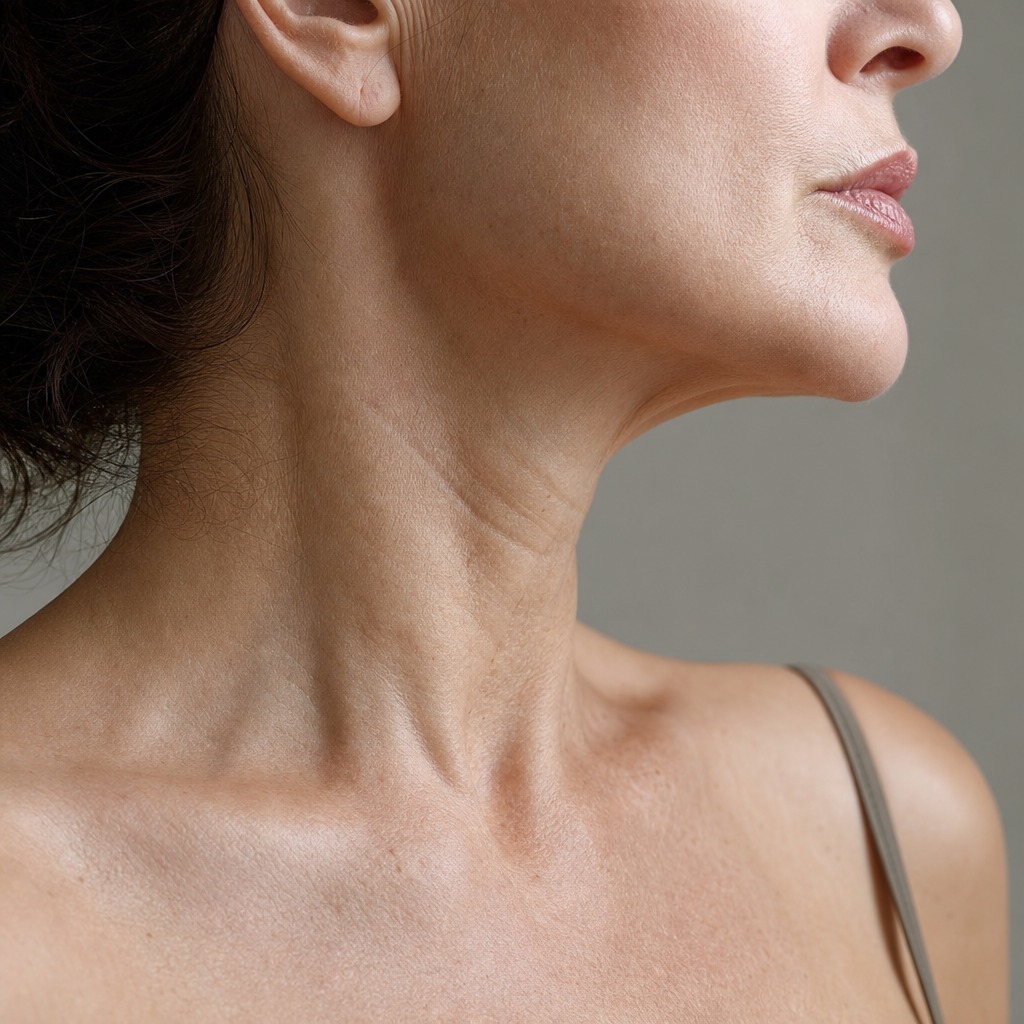
A face that reads as forty above a neck that reads as fifty five is one of the strongest age cues there is, precisely because observers process it without consciously noticing. It is also among the cheapest to prevent: the same products you already own, applied twenty centimetres lower.
What Makes People Look Older That Has Nothing to Do With Skin?
This section exists because skincare articles keep pretending the face is the only variable, and readers keep noticing that it is not. Perceived age is a whole-picture judgment made in under a second.
- Eyebrows. Brows thin and lighten with age, and over-plucked or over-darkened brows both age a face. This is among the fastest reversible signals on the list.
- Hair. Not grey, which reads as fine on plenty of people, but dryness, thinning at the part, and a cut held over from a previous decade.
- Teeth. Yellowing and wear register strongly, and they sit right next to the upper lip lines already carrying age signal.
- Posture. A forward head and rounded shoulders read as older instantly, and they also crease the neck.
- Glasses. Frame shape dates faster than almost anything else on a face. Trying alternatives with a face analyzer is a cheap experiment.
- Heavy matte makeup. Full coverage settles into every line it was applied to hide. This is the single most common self-inflicted aging effect.
- Expression habits. A permanently furrowed brow etches faster than a relaxed one, and the etching is what shows at rest.
- Neck, chest, and hands. Decades of face-only sunscreen produce a mismatch that people read subconsciously even when they cannot name it.

None of this replaces skin care. It simply means that if six visible skin signs carry 59 percent of the age variance, there is a meaningful remainder, and some of it costs nothing to fix.
Which Changes Actually Reverse Perceived Age, and How Fast?
Some of this moves in days. Some of it moves over years. Sorting them stops the disappointment.
| Change | First visible effect | Ceiling |
| Controlling forehead and midface shine | Same day | Removes one of the six age signs almost entirely |
| Grooming brows back to age-appropriate shape and density | Same day | Large effect for zero recurring cost |
| Switching to lighter coverage makeup | Same day | Stops lines being outlined |
| Consistent hydration and barrier repair | 3 to 14 days | Improves cheek surface quality, one of the top signs |
| Sleeping seven hours consistently | 1 to 2 weeks | Reduces under eye shadowing and dullness |
| Daily broad spectrum SPF | Nothing visible for months | The largest long term lever on this table |
| Retinoid, used consistently | 8 to 12 weeks | Surface texture and fine lines over 6 to 12 months |
| Quitting smoking | Weeks for tone, years for lines | Stops upper lip line acceleration |
| In-clinic resurfacing or energy based treatment | Weeks after a series | Reaches structural laxity and etched lines topicals cannot |
The pattern is hard to miss. The fastest wins are grooming and surface management, the biggest wins are slow and preventive, and the structural signs need professional help. A plan that only contains the middle row is why so much effort produces so little visible change.
Because the slow items show nothing for two to three months, this is exactly the category where measurement earns its place. A brand can make that arc visible before a customer gives up, using something like a skincare progress simulation to show the expected trajectory alongside the actual readings.
What Does a Realistic 12 Week Plan Look Like?
Ranking the signs is useless without a sequence. This is the order that respects both how fast each change appears and how much tolerance your skin has for being changed at once.
| Weeks | What you do | What you should see |
| Week 0 | Baseline. Photograph in daylight from the side and at eye level with processing off, or take a scored reading. Write down the six signs | Nothing yet. This week exists so week 12 means something |
| Weeks 1 to 2 | Barrier and habits only. Simple cleanser, hydrator, daily broad spectrum SPF, sleep target, shine management. Change nothing else | Surface roughness and dullness begin to lift. Shine controlled |
| Weeks 3 to 4 | Add grooming wins: brow shape and density, lighter coverage makeup, extend everything to neck and hands | The fastest perceived age change of the whole plan, visible immediately |
| Weeks 4 to 6 | Introduce a retinoid twice a week, then build. Expect an adjustment period | Possibly worse before better. This is where most people quit |
| Week 6 | Mid-point measurement under identical conditions | Evidence that the slow track is moving, which is what gets you to week 12 |
| Weeks 7 to 11 | Hold the routine. Add targeted exfoliation only if a moisture reading supports it | Cheek surface quality and fine lines start to shift |
| Week 12 | Final measurement. Compare all three readings, then decide whether anything structural warrants a professional consultation | A real answer on what topicals can and cannot reach for your face |
Notice that no step in the first month involves buying anything ambitious. The plan front loads the free wins, then spends the remaining ten weeks on the one ingredient class with the strongest evidence behind it. Anyone who wants the tracking side handled can pair this with repeat scans rather than memory.
What Are the Most Common Mistakes That Backfire?
Chasing volume before texture
Filler addresses folds and hollows. It does nothing for papery surface quality, which is one of the highest ranked age signs and among the most improvable. Faces treated for volume while the surface is neglected often read as older, not younger.
Over-exfoliating in pursuit of glow
A compromised barrier looks dull and rough, which reads as older. The instinct is to exfoliate harder. That deepens the problem, and the resulting redness adds another year or two to the read.
Treating the face and forgetting the neck and hands
A mismatch between a well cared for face and an untreated neck is one of the strongest age cues there is, precisely because most people never think to manage it.
Judging progress from memory
Nobody can hold a visual baseline for twelve weeks. Without a photograph or a score taken under the same conditions, you will conclude that nothing worked, at roughly week five, every time.
Believing the front camera
Default smoothing, flat frontal lighting, and heavy compression will each hide the surface signs you are trying to track. Assess in daylight with processing off, or assess nothing.
How Do Brands and Clinics Use Skin Age Scores?
For readers building the experience rather than following it, skin age is one of the highest engagement metrics in beauty tech, and one of the easiest to get wrong.
- Engagement. A single number about the reader's own face outperforms almost any other on-site interaction. It is specific, personal, and immediately shareable.
- Recommendation logic. The value is not the composite score, it is the breakdown behind it. A shopper whose gap is driven by shine and surface texture needs a different regimen from one whose gap is driven by laxity, even at an identical skin age.
- Retention. Rescanning at week four and week twelve gives a customer a reason to stay in a routine through the exact window where most people quit.
- Trust. Scores presented as estimates from visible signs, with the capture conditions explained, survive scrutiny. Scores presented as medical fact do not, and the backlash costs more than the conversion gained.
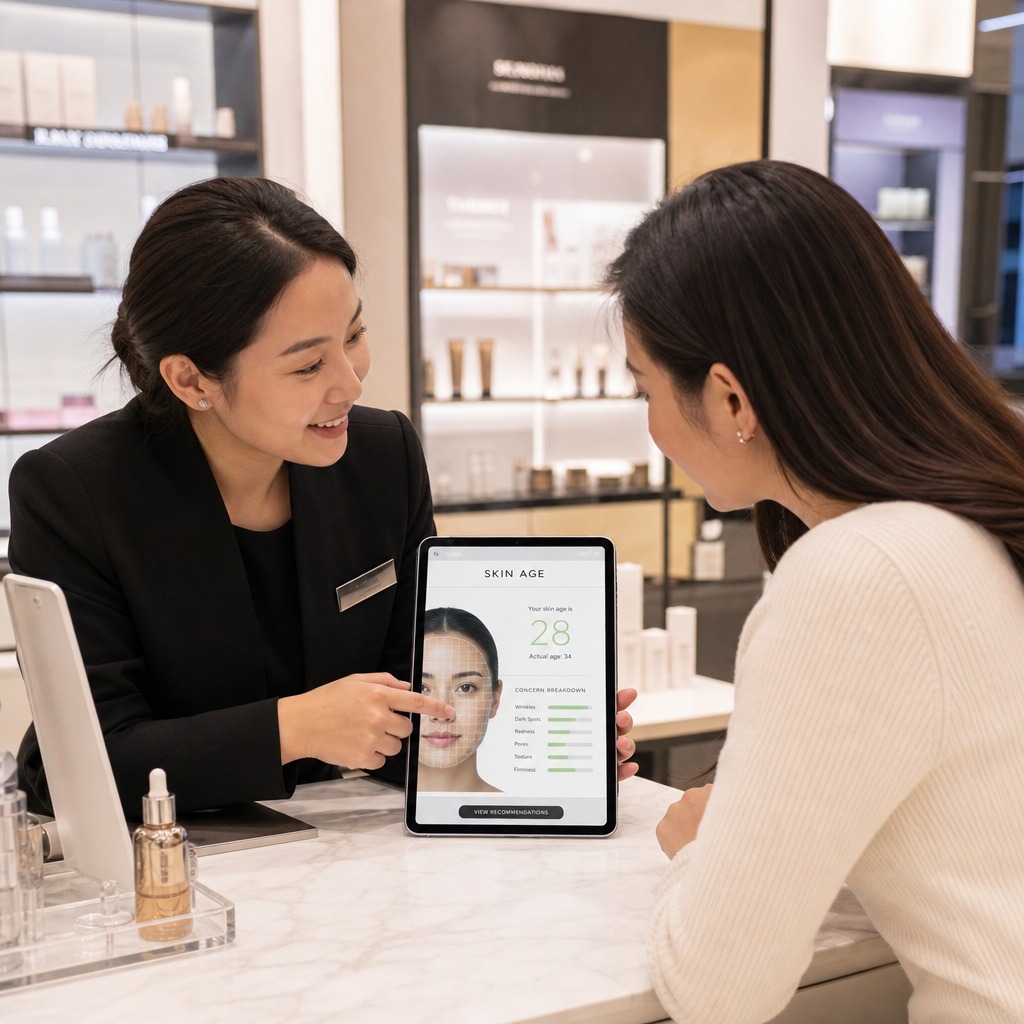
Perfect Corp works with 800+ brand partners on flows like these, and the scoring is available as an API, so your own product logic decides what happens with each concern value. You can call it directly in the YouCam AI Playground before committing to an integration.
Looking Older Than Your Age FAQ
Why do I look older than my age?
Because a small set of visible signs carries most of the age signal, and yours are further along than your birthday suggests. Research on 351 women found six signs, including loss of elasticity, papery cheek texture, cheek folds, crow's feet, upper lip lines, and forehead shine, explained 59 percent of the variance in chronological age.
At what age does your face change the most?
Change is continuous, but people typically report two noticeable inflections: the mid to late thirties, when surface quality and fine lines become visible at rest, and the perimenopausal transition, when collagen loss accelerates. Neither is a cliff, and both are more gradual than they feel.
Can looking older than your age be reversed?
Partly, and the split matters. Surface quality, shine, dullness, and grooming signals improve quickly. Fine lines improve over months. Structural laxity and deeply etched folds need professional treatment and improve rather than disappear.
Does lack of sleep make you look older?
Yes, through under eye shadowing, reduced surface quality, and impaired overnight repair. It is one of the faster reversible factors, with visible improvement usually inside two weeks of consistent sleep.
Is looking older than your age genetic?
Partly. Genetics set your starting curve and your tendencies, and molecular differences in the outer skin layer appear to track with how fast the visible signs arrive. Sun exposure and habits still account for the large majority of the visible difference between two people the same age.
Does sun exposure really cause most visible aging?
Dermatology sources commonly attribute roughly 80 to 90 percent of visible skin aging to sun exposure. That figure covers the visible part specifically, not the underlying biological process, and it is the reason daily broad spectrum SPF outperforms every other habit over a decade.
Why do some people look younger than their age?
They are running age deceleration: their visible signs sit behind their chronological age. It usually reflects a combination of lower cumulative sun exposure, non-smoking, stable weight, adequate sleep, and favorable genetics, with sun history typically doing the heaviest lifting.
Does weight loss make your face look older?
Rapid or large loss can, because facial fat contributes to the volume that supports the skin above it. Gradual loss and repeated fluctuation behave differently, and the outcome depends heavily on starting elasticity.
How can I tell how old my skin looks?
Not from your mirror. Use a deliberate audit in daylight, with photographs taken from the side and with your face fully relaxed, or use a scored analysis that evaluates the signs the same way each time so the readings can be compared.
Why do I look older in photos than in the mirror?
Optics and habit. Phone front cameras are wide angle and usually sit below eye level, which enlarges the nose, flattens the midface, and pushes shadow into folds. A mirror also shows you a reversed face you have memorized for decades, so the unreversed photo version reads as unfamiliar. Neither surface is a fair assessment.
Do face exercises make you look younger?
Evidence is limited and mixed. Some small studies suggest modest improvement in fullness with sustained programs, but repeated forceful expression can also etch lines. It is not among the higher leverage items on this list, and it is not a substitute for sun protection.
Can retinol reverse existing wrinkles?
It reliably improves fine surface lines and texture over a period of months. Deeply etched lines and structural folds soften rather than disappear, and reaching those generally requires in-clinic treatment. Consistency over six to twelve months matters far more than strength.
Does drinking more water make you look younger?
Adequate hydration supports normal skin function, but drinking extra water does not correct surface dehydration, which is a barrier issue. Sunscreen, sleep, and a barrier-supporting routine all outperform water intake for visible results.
Is an AI skin age score accurate?
It is an estimate produced from visible signs, and its usefulness depends on consistent capture conditions. Treat a single reading as a starting position rather than a verdict, and treat the trend across repeated readings as the real information.
Your Birthday Is Fixed. The Six Signs Are Not.
The question "why do I look older than my age" feels like a judgment. It is closer to a diagnostic prompt. A limited set of visible signs is doing most of the talking, roughly half of them respond to things you can start this week, the biggest lever is a habit that shows nothing for months, and none of it can be tracked honestly from a bathroom mirror.
Get a baseline, work the signs in order of leverage, and measure again in twelve weeks. Run a free AI skin analysis to see your own breakdown, or talk to Perfect Corp about a demo if you are building skin age into a customer experience.