 Author:


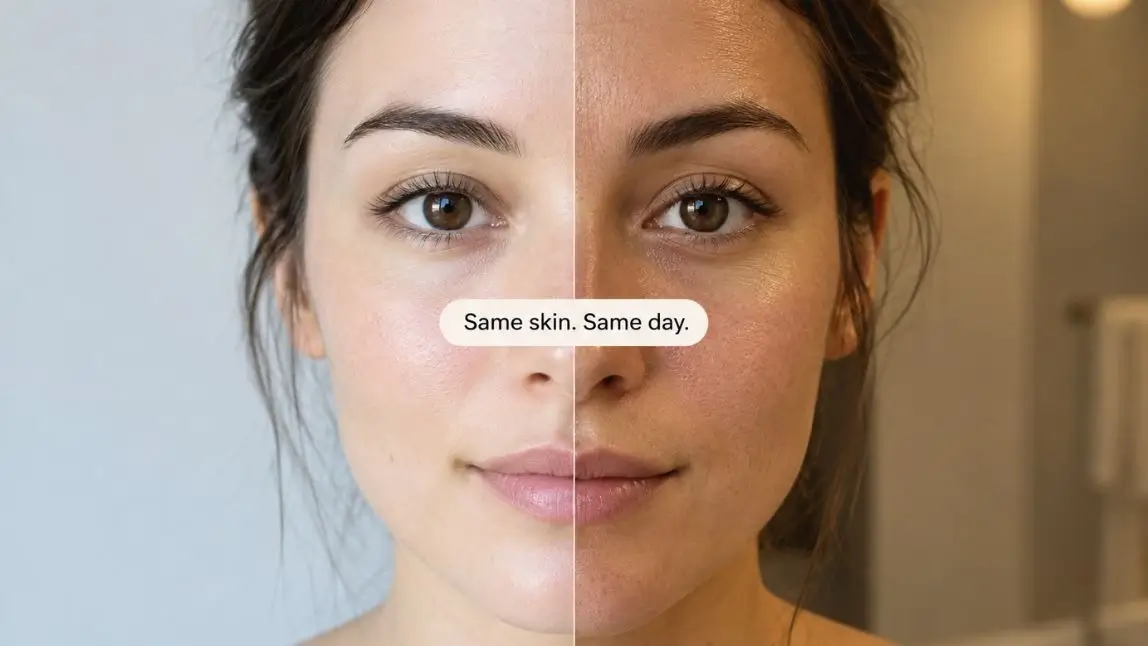
Every skincare guide on the internet gives the same advice: take progress photos in consistent lighting. It sounds reasonable. It is also close to impossible at home, and it quietly sets people up to misread their own skin for months. Move your face six inches toward a window, shoot at 7am instead of 9pm, or upgrade your phone, and the photo changes more than eight weeks of a serum ever will. This guide covers why the comparison keeps failing, what can actually be measured on skin, and how brands and skincare professionals use consistent capture and analysis to turn "I think it's working?" into something a person can genuinely see.
What You Will Find in This Guide
- Why Does Your Skin Look Better in One Photo and Worse in the Next?
- How Long Should a Skincare Routine Actually Take to Work?
- What Can You Actually Measure, and What Can You Only Feel?
- What Makes a Skin Measurement Trustworthy?
- How Do You Take Skin Photos That Are Worth Comparing?
- Can an App Tell You If Your Skincare Is Working?
- What If the Data Says Nothing Is Changing?
- FAQ
Why Does Your Skin Look Better in One Photo and Worse in the Next?
Because you are not photographing your skin. You are photographing your skin, plus the light hitting it, plus the angle, plus whatever your phone decided to do to the image afterward.
Four variables move far more than your skin does over eight weeks:
- Light direction. Overhead light casts shadows into every pore and fine line. Soft light from the front fills them in. The same face can look dramatically more or less textured depending on where the light sits, with zero change to the skin itself.
- Time of day. Skin holds more fluid in the morning, which softens the look of fine lines. Oil builds through the day. A 7am photo and a 10pm photo are not measuring the same conditions.
- Camera processing. Modern phones sharpen, denoise, adjust contrast, and increasingly smooth skin by default. Two phones photographing the same face at the same moment can produce visibly different skin.
- Distance and angle. Getting closer widens the nose and flattens the cheeks. A slight tilt changes which parts of the face catch the light.

Here is the trap. Those four variables produce swings that are often larger than the real change from a well chosen product. So when someone compares a week one photo to a week eight photo and concludes the routine failed, there is a good chance they are reading the lighting, not the skin. The reverse happens too, and it is more expensive: a flattering photo convinces someone a product is working, and they keep buying it.
Mirrors are worse. You look at your face every single day, which makes you the least qualified observer of your own slow change. Gradual shifts vanish into the baseline.
How Long Should a Skincare Routine Actually Take to Work?
Skin cell turnover runs roughly 28 days in younger adults and slows with age, so almost nothing meaningful shows up inside the first month. Rough expectations, and they are ranges rather than promises:
| What you are hoping to change | Realistic first signs | What to judge it on |
|---|---|---|
| Hydration and comfort | 1 to 2 weeks | How skin feels after cleansing, makeup sitting better |
| Texture and breakout frequency | 6 to 8 weeks | Count of active spots, smoothness under light |
| Pigmentation and dark spots | 10 to 12 weeks | Spot size and contrast against surrounding skin |
| Fine lines and firmness | 12 weeks or more | Depth and visibility under consistent lighting |
The practical consequence: your comparison window has to be long, which makes the capture problem worse, not better. Over twelve weeks you will change seasons, lighting, sleep patterns, and possibly phones. Every one of those adds noise to a comparison that was already fragile.

One thing worth saying plainly. If skin becomes painful, persistently irritated, or a reaction is getting worse rather than settling, that is a conversation for a dermatologist, not a tracking exercise. Measurement tells you whether something is changing. It does not tell you whether something is wrong.
What Can You Actually Measure, and What Can You Only Feel?
This distinction is where most tracking attempts go wrong. Some things about skin are visible surface features that a camera can quantify. Others are sensations that only you have access to. Treating the second group as if it were the first is how people end up frustrated.
| Measurable from an image | Only you can report |
|---|---|
| Visible spots and their contrast against surrounding skin | Tightness or stinging after cleansing |
| Surface texture and pore visibility | Itch, discomfort, sensitivity |
| Redness distribution across zones | How skin feels by mid afternoon |
| Fine line visibility under fixed lighting | Whether makeup feels comfortable |
| Evenness of tone | Confidence going bare faced |
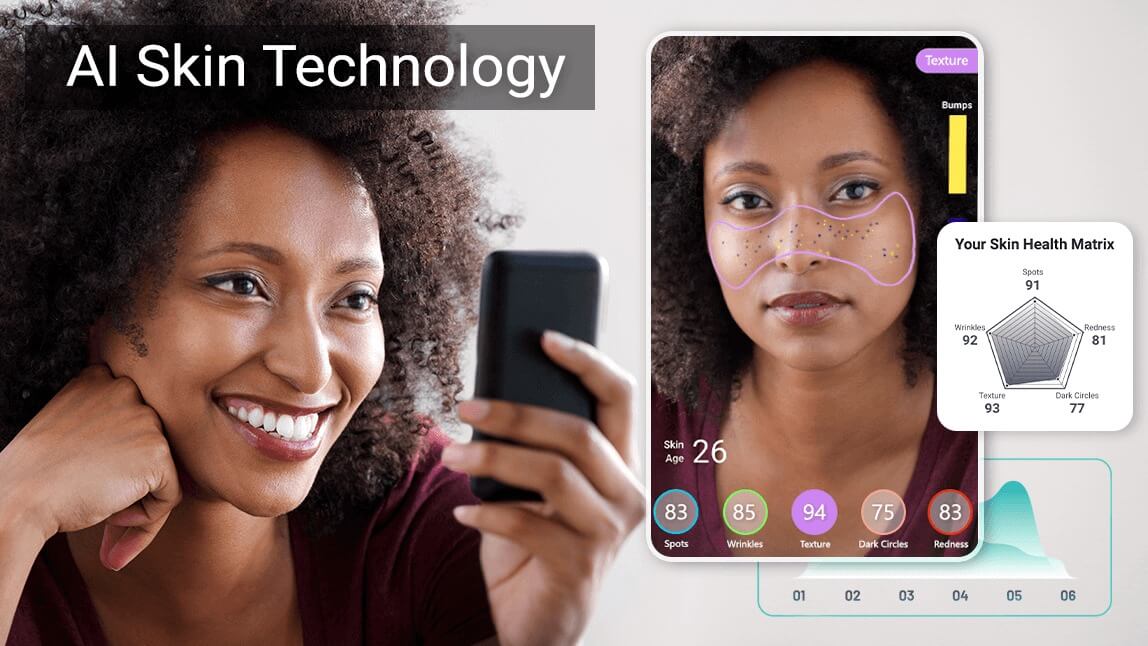
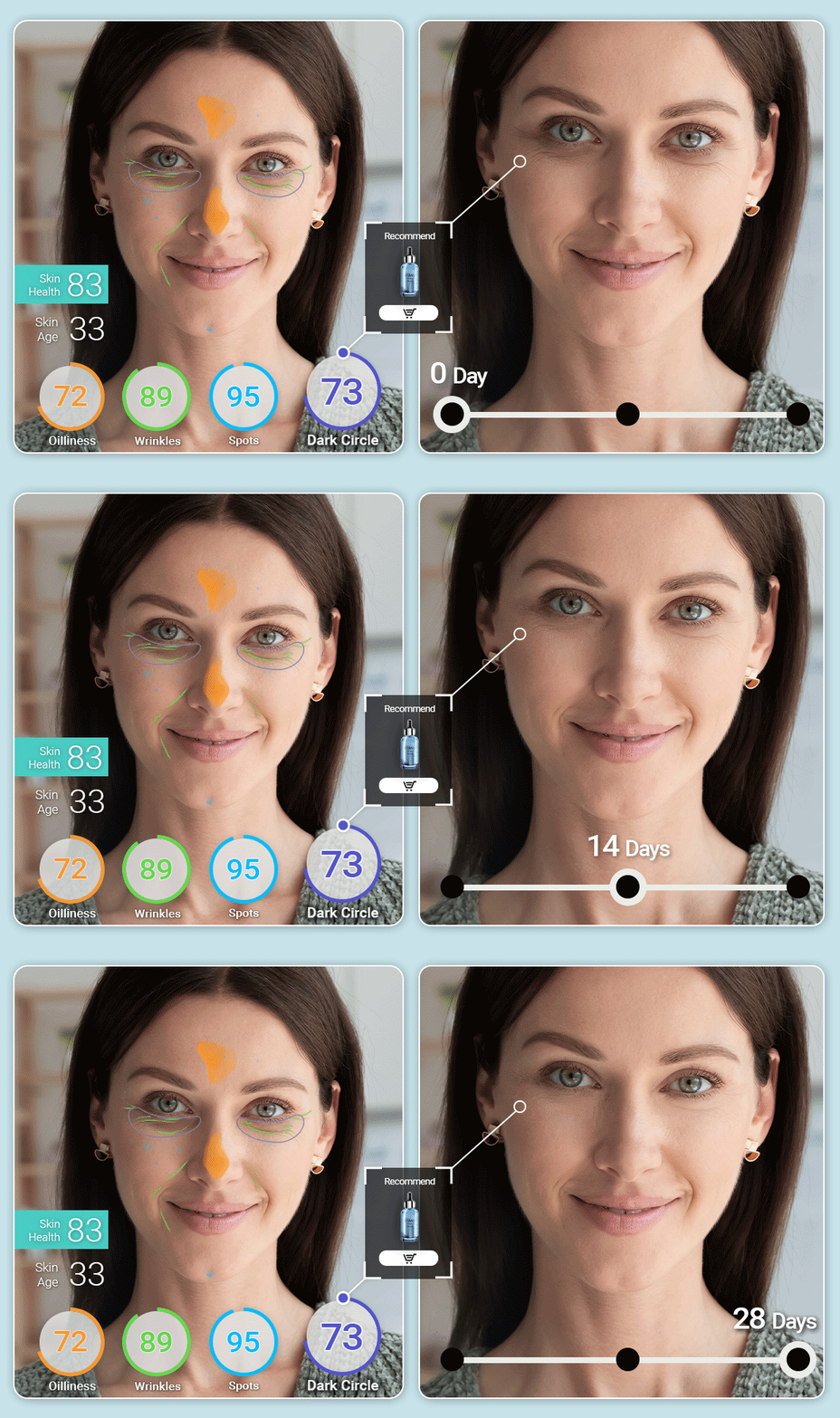
Perfect Corp.'s AI skin analysis reads up to 15 distinct concerns from a single capture, including wrinkles, spots, texture, redness, and pore visibility, and scores each one separately rather than producing a single verdict. That separation matters here. A routine can improve texture while pigmentation sits still, and a single overall score would hide exactly the progress you were looking for.

What no image based analysis does is diagnose. It quantifies what a photo shows. It does not see below the surface, and it is not a substitute for a clinician who can examine skin directly and take a history.
What Makes a Skin Measurement Trustworthy?
Here is the question almost nobody asks, and it is the one that decides whether tracking is worth doing at all: if you measured the same skin twice, minutes apart, would you get the same answer?
That property has a name. Test-retest reliability. It is the difference between a measurement and a guess, and it is the reason a consistent system beats an inconsistent one even when the inconsistent one occasionally looks more impressive. If a tool gives you 62 and then 78 for skin that did not change in between, every comparison you make with it afterward is meaningless.
Perfect Corp.'s skin analysis technology was built on a data model trained on over 70,000 high definition, medical grade images spanning diverse skin tones, types, and textures, and has been verified by dermatology professionals. A study conducted by Wake Forest School of Medicine found a 95% test-retest reliability rate for the technology. In plain terms, measure the same skin twice and you get essentially the same answer, which is precisely what a twelve week comparison depends on.
The training data breadth matters for a specific and often overlooked reason. Systems trained narrowly tend to perform unevenly across skin tones, which means the people most poorly served by a tool are frequently the ones least likely to be told so.
How Do You Take Skin Photos That Are Worth Comparing?
If you are tracking on your own, the goal is not a flattering photo. It is an identical one. Control what you can:
- Fix the light source and never change it. One window, one time of day, curtains in the same position. Overhead bathroom light is the worst option available to most people because it maximises shadow in texture.
- Fix the distance. Mark where you stand. Arm's length varies more than you think.
- Same time of day, always. Morning before products is the cleanest baseline.
- Bare skin, hair back, neutral expression. A smile relocates every line on your face.
- Turn off beauty filters and skin smoothing. Many phones apply these by default in the front camera. This single setting invalidates more tracking attempts than anything else on this list.
- Same phone for the whole comparison window. Upgrading mid tracking resets your baseline whether you like it or not.

Follow all six and you have reduced the noise substantially. You have not eliminated it, because you are still comparing two images with your eyes, and eyes are generous to whichever outcome you were hoping for. That is the ceiling on manual tracking, and it is why brands and skincare professionals move to a system that captures under controlled conditions and scores each concern the same way every time.
Can an App Tell You If Your Skincare Is Working?
A good one can tell you whether specific visible concerns changed, and by how much. That is a genuinely useful answer, and it is narrower than what most marketing implies.
What to look for, and it is worth being demanding here:
- Per concern scores, not one number. A single ""skin score"" cannot show you that texture improved while pigmentation held steady.
- Consistency you can verify. Scan twice in a row. If the results swing widely, the tool cannot support a twelve week comparison.
- Published validation. Dermatologist involvement, a stated training dataset, a reliability figure. Vague claims of accuracy are not evidence.
- Performance across skin tones. Ask what the model was trained on.
- A recommendation engine you can separate from the measurement. If the analysis exists mainly to route you to a catalogue, treat the numbers as marketing until proven otherwise.

That last point deserves the scepticism it gets. A measurement tool attached to a checkout button has an incentive problem, and consumers have noticed. The honest position is that the measurement and the recommendation are two separate things, and a credible system lets you look at the first without being pushed into the second. Perfect Corp. builds the analysis layer that skincare brands, clinics, and retailers deploy, and you can browse real brand deployments in our showcase to see how that plays out in practice.
For businesses, the tracking use case is often the one that changes the relationship with a customer. A client who can see that their pigmentation score moved over ten weeks has a reason to continue that no product description can manufacture. Progress transparency is a retention mechanism, and it happens to also be the honest one.
What If the Data Says Nothing Is Changing?
Then you have learned something valuable, and considerably faster than you would have by guessing.
Work through it in order:
- Check the window. Judging a pigmentation product at week four is judging it before it has had a chance. Refer back to the timeline table.
- Check consistency of use. Four applications a week is not the same trial as seven.
- Check whether you changed too many things at once. Three new products means you cannot attribute anything to any of them.
- Check the capture conditions. If the light moved, the comparison is compromised regardless of what the numbers say.
- Then, and only then, consider changing the product.
A flat line across twelve weeks of consistent, well captured measurement is a real result. It means the routine is holding steady rather than improving, and that is information worth having before you spend another three months and another few hundred dollars on the same approach.
If you want to see what per concern analysis looks like applied to real skin, our guide to skin analysis equipment walks through how the different capture systems compare.
Frequently Asked Questions
How long does it take to see results from a new skincare routine?
Hydration and comfort can shift within one to two weeks. Texture and breakout frequency usually need six to eight weeks. Pigmentation and fine lines commonly need ten to twelve weeks or longer. Judging a product before its window has passed is the most common tracking mistake there is.
How often should I take skin progress photos?
Weekly is plenty, and every two weeks is fine for slower concerns like pigmentation. Daily photos mostly capture daily noise, which makes the comparison harder to read rather than easier.
Why does my skin look so different in different lighting?
Light direction determines how much shadow falls into pores and fine lines. Overhead light exaggerates texture, soft frontal light minimises it. The skin is unchanged. Only the shadows moved. This is why fixing your light source matters more than any other tracking habit.
Is my phone camera making my skin look better than it is?
Quite possibly. Many phones apply sharpening, noise reduction, and skin smoothing by default, particularly on the front camera. If those settings are on, you are comparing processed images rather than skin. Turn them off before you start a tracking window.
How do I tell the difference between purging and a bad reaction?
Broadly, purging tends to appear where you usually break out and settles over a few weeks, while a bad reaction often shows up in new areas or brings persistent burning, swelling, or worsening irritation. That distinction has real consequences, so if skin is painful or getting worse rather than settling, see a dermatologist rather than trying to resolve it through tracking.
Can AI skin analysis diagnose skin conditions?
No. Image based analysis quantifies visible surface features such as spots, texture, redness, and fine line visibility. It does not diagnose disease and it cannot see beneath the surface. It is useful for tracking visible change over time, and a dermatologist is the right route for anything diagnostic.
Are AI skin analysis results consistent enough to compare over months?
That depends entirely on the system, which is why test-retest reliability is worth asking about. Perfect Corp.'s technology was found to have a 95% test-retest reliability rate in a study conducted by Wake Forest School of Medicine, meaning repeat measurements of unchanged skin return essentially the same result. Without that consistency, a long comparison window cannot mean anything.
Do I need to stop using makeup before a skin scan?
Yes. Makeup covers exactly the surface features being measured, and it will make results look better than the skin underneath. Capture on clean, bare skin for anything you intend to compare later.
Stop Guessing at Your Own Skin
The reason so many people cannot tell whether their skincare is working is not impatience. It is that the method everyone recommends, comparing two photos by eye, is far noisier than the change it is trying to detect. Fix the capture conditions and you remove much of that noise. Add analysis that scores each concern the same way every time, and the question stops being a matter of opinion.
Perfect Corp. works with over 800 brand partners to bring AI skin analysis into consumer and professional skincare experiences. See how brands are deploying it, or contact our team for a live demo built around your use case.