 Author: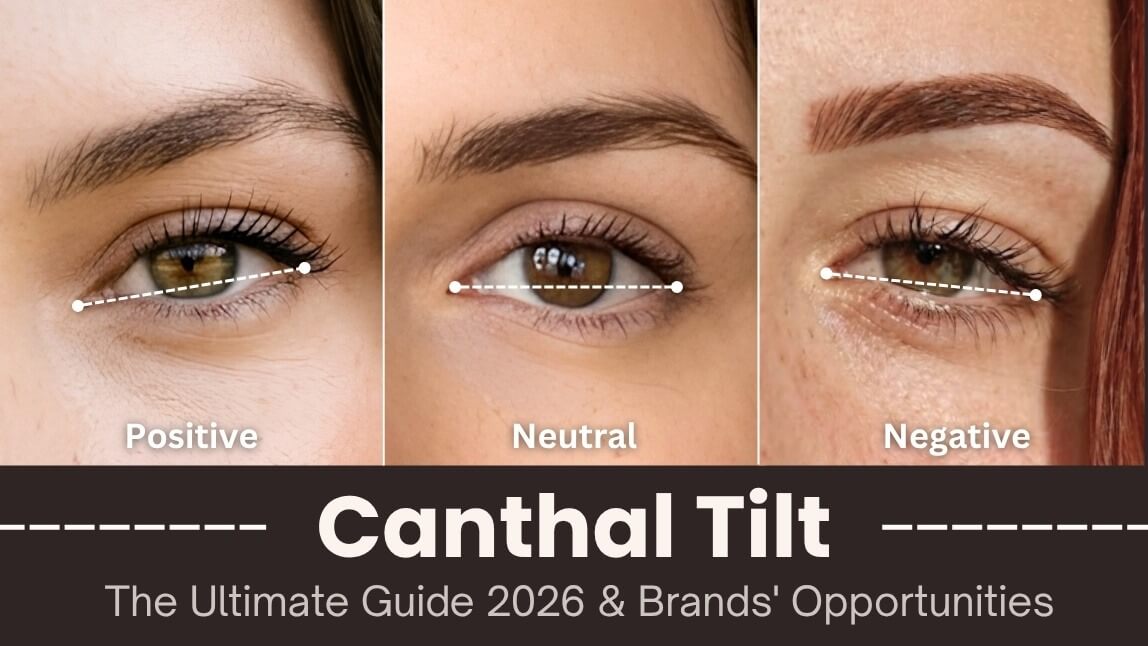
Canthal tilt has become one of the fastest-rising aesthetic search terms on Google, TikTok, and YouTube. What started as a niche term is now mainstream beauty vocabulary, fueling a wave of consultation requests for fox eye lifts, brow lifts, lateral canthopexy, and tear-trough fillers.
This guide breaks down what canthal tilt is, why search volume keeps climbing, and how aesthetic providers and beauty brands can convert that demand into revenue in 2026.
What Is Canthal Tilt?
Canthal tilt describes the angle of an imaginary line drawn between the inner corner (medial canthus) and the outer corner (lateral canthus) of the eye.
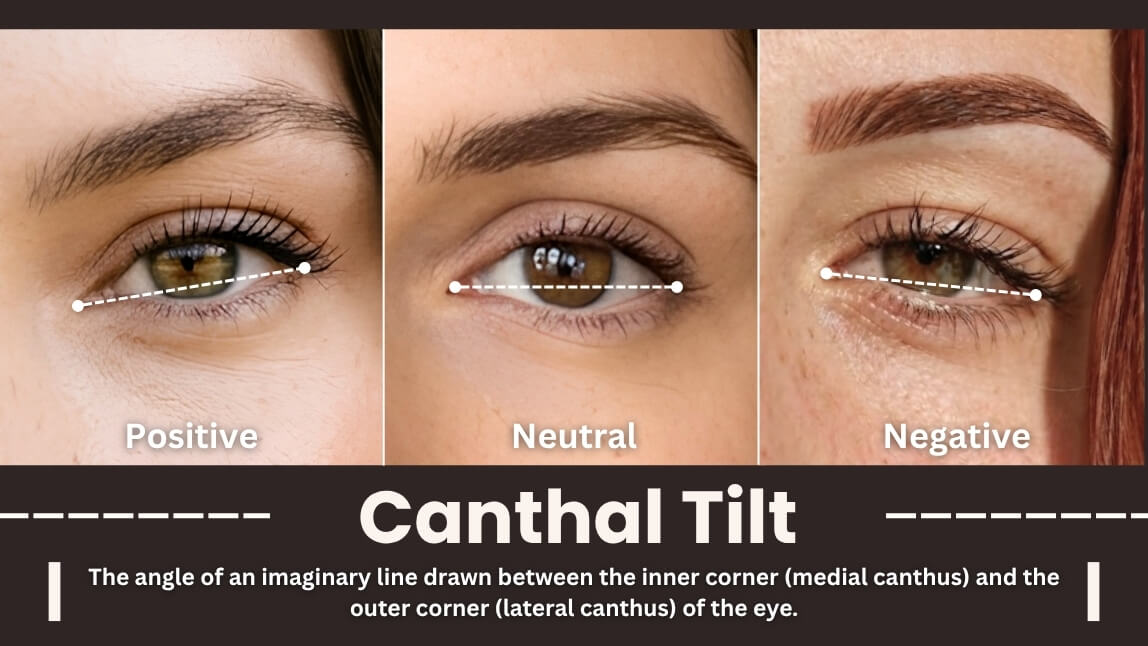
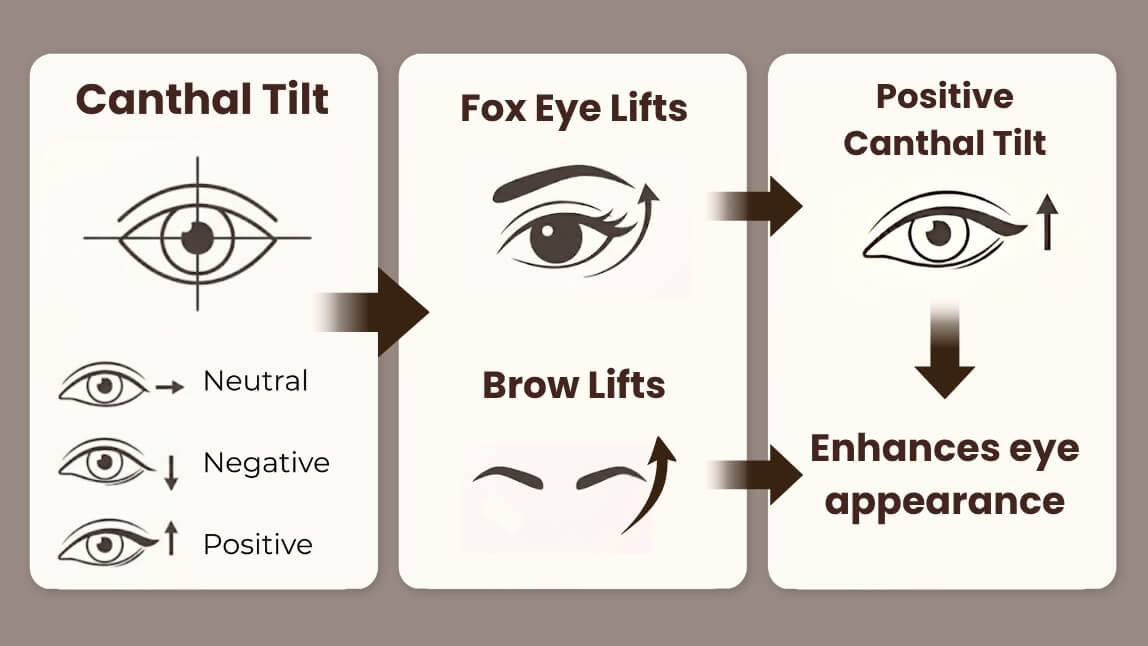
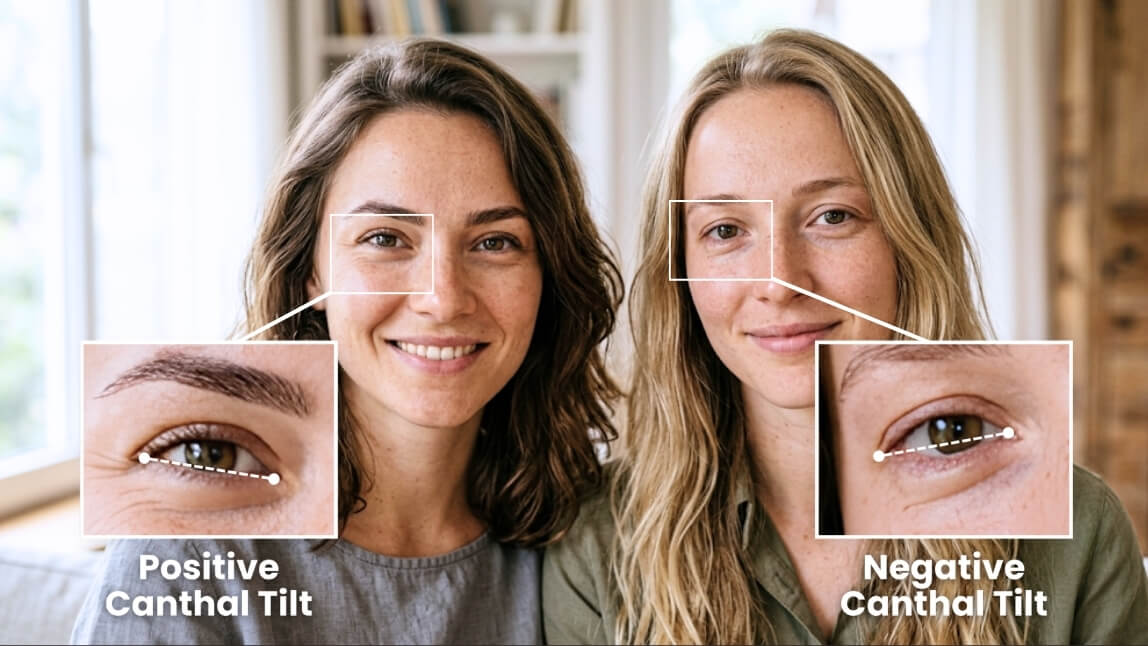
When the outer corner sits higher than the inner corner, the eye has a positive canthal tilt, a feature widely associated with the lifted, almond-shaped "fox eye" look popularized by celebrities and short-form video creators.
When the outer corner sits level with the inner corner, the tilt is neutral. When it sits lower, the eye reads as a negative canthal tilt, which is often described as a "tired" or "downturned" look.
In aesthetic medicine, providers manipulate perceived canthal tilt through a stack of treatments: brow tail lifts with botox or threads, temporal hollow fillers, lateral canthopexy, blepharoplasty, and fox-eye thread lifts.
Why Demand for Canthal Tilt Treatments Keeps Growing
Three forces are stacking on top of each other:
The looksmaxxing wave. Communities on TikTok and Reddit have turned facial proportions, canthal tilt, jaw angle, hunter eyes, and midface ratio, into shorthand for "attractive." Each viral explainer drives a new search cohort to Google looking for "how to fix my canthal tilt."
Short-form video aesthetics. Front-facing cameras reward lifted, almond-shaped eyes. Beauty creators demonstrate makeup, brow shaping, and "fox eye" tape hacks to fake a higher tilt.
Crossover with anti-aging. Mid-thirties and forties consumers searching for "tired eyes" or "hooded eyes" are landing on the same canthal-tilt content. The category is no longer just Gen Z, it is anyone who wants their eyes to look more rested and lifted.
For aesthetic clinics, this means inbound interest from a wider demographic spectrum. For beauty brands adjacent to the trend, eye makeup, brow products, eye-lifting skincare, EMS facial devices, lash systems, it means a top-of-funnel audience that is already shopping the outcome.
The Conversion Problem: "What Would It Actually Look Like on Me?"
Canthal tilt is fundamentally a visual concept. A client cannot accurately picture how a few degrees of lift will read on their own face. Generic before-and-afters of someone else's eyes do not answer the question; verbal explanations of "we will lift the lateral canthus by 2–3 mm" rarely move a hesitant client into a paid procedure.
This is where most aesthetic clinics and beauty brands lose the sale. The audience has the intent, the budget, and the social proof, but not the confidence to commit.
How AI Face Simulation Closes the Gap
AI face simulation, like the technology powering Perfect Corp.'s AI Eye Shape Simulator, lets a provider photograph a client's face and instantly render a realistic preview of the post-treatment canthal tilt. For this category specifically, that means:
- A personalized eye-lift preview rendered on the client's actual face, not a stock model
- Adjustable intensity sliders to compare subtle, moderate, and more dramatic tilt corrections side by side
- Combined-treatment views that pair canthal tilt adjustment with brow lift, midface volume, or under-eye correction
- Before-and-after captures the client can take home, share, or use to discuss the plan with a partner
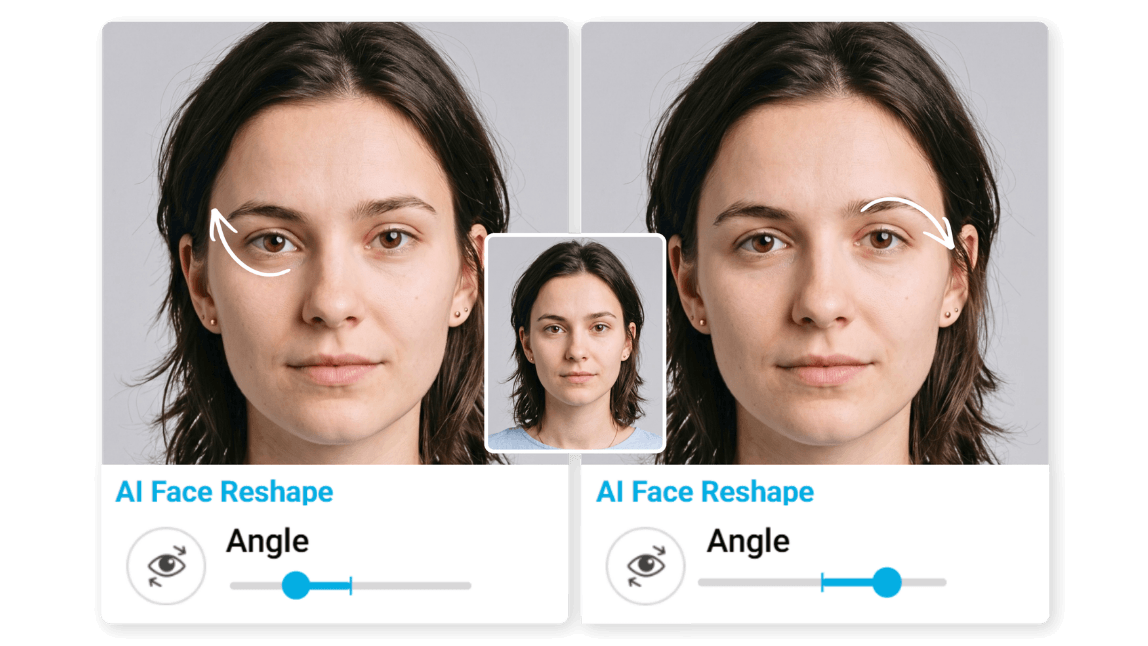
The result is a consultation experience that feels personalized rather than salesy, which is exactly what high-intent aesthetic clients want.
Three Ways Med Spas Use AI Face Simulation to Convert Canthal Tilt Inquiries

1. Pre-consultation lead capture. Embed an AI face simulation widget on the clinic website. A visitor uploads a selfie, sees a simulated positive canthal tilt preview, and is prompted to book a paid consultation to discuss real treatment options. The simulation does the heavy lifting before the client ever picks up the phone.
2. In-room conversion uplift. During the consultation, the practitioner pulls up the client's face on a tablet, applies the canthal tilt simulation, and walks through what's achievable with botox brow shaping versus threads versus surgical canthopexy. Clinics report meaningful lifts in same-day treatment bookings because the client can finally see the trade-offs rather than try to imagine them.
3. Multi-treatment treatment planning. Canthal tilt rarely lives alone in an eye-area treatment plan. A client interested in lifted eyes is often a candidate for brow lift, tear-trough filler, or temple volumization. AI simulation lets the clinic preview the full "lifted, awake eye" outcome in one visit, naturally expanding ticket size.
How Beauty Brands Can Ride the Canthal Tilt Wave
Beauty brands cannot perform canthopexy, but they can capture the much larger top-of-funnel audience that is searching for lifted-eye outcomes without medical intervention.
Eye makeup brands can deploy AR virtual try-on to demonstrate how strategic eyeliner, lash lift mascara, and shadow placement create the illusion of a positive canthal tilt.
Brow brands can use AI try-on to preview how brow shape and arch height change the surrounding eye line.
Skincare brands marketing eye creams or peptide serums can use AI skin simulation to show the cumulative effect of a multi-week regimen on perceived eye lift.
Beauty-tech device brands, microcurrent, EMS, red-light masks, can preview firmer, more lifted results before purchase, addressing the same "will this work on me?" hesitation that holds back the injectable category.
The mechanic is identical to what works in the clinic: replace generic claims with a personalized, photorealistic preview on the consumer's own face.
What to Look for in an AI Aesthetic Simulator
Not every face simulation tool is built for B2B aesthetic and beauty use cases. When evaluating a platform, prioritize:
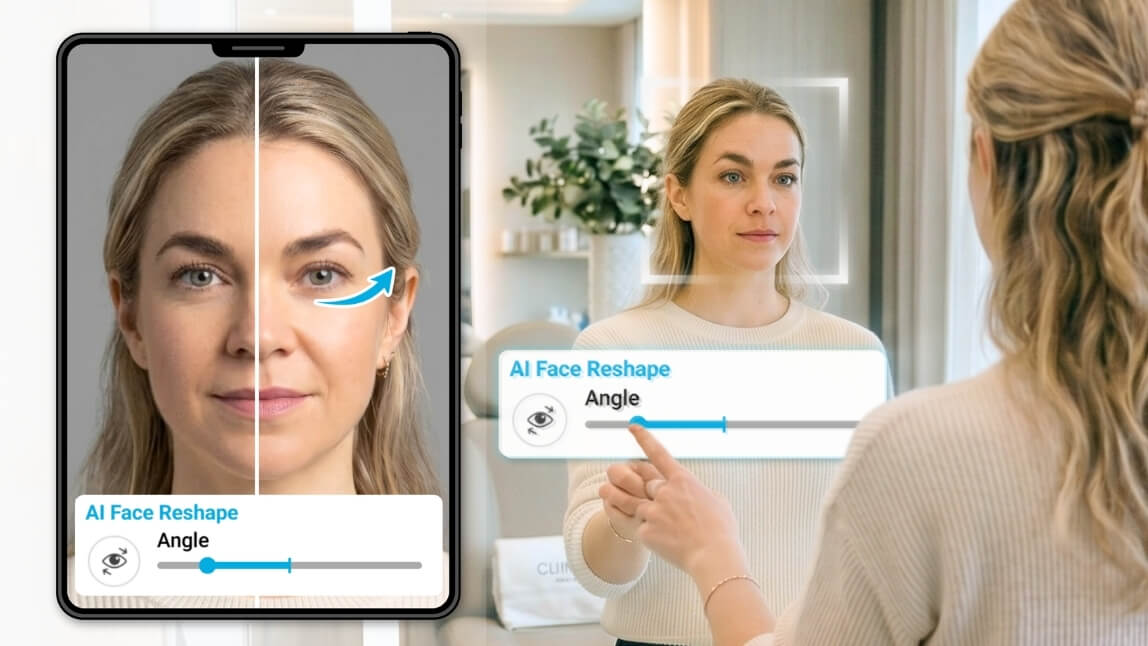
- Photorealism on the client's own image, including ethnicity-diverse training data so canthal tilt adjustments look natural on every eye shape
- Clinically informed presets for treatments like brow lift, fox eye thread lift, lateral canthopexy, and combined upper-eye protocols
- Web and mobile SDK options so the same engine powers the clinic website, the in-room tablet, and the brand's e-commerce app
- Compliance-ready data handling for facial images, including consent flows and regional privacy support
- API access to integrate simulation results into the clinic's CRM, EMR, or marketing automation stack
These criteria separate a marketing gimmick from infrastructure a business can be run on.
FAQ: Canthal Tilt for Providers and Brands
Is canthal tilt fixed at birth?
Largely yes, bone structure and the lateral canthal ligament determine baseline tilt. However, soft-tissue treatments, neuromodulators, threads, and surgical canthopexy can shift perceived tilt by several degrees, which is often enough to change the overall read of the eye.
Which treatments most reliably lift the canthal tilt?
Surgical lateral canthopexy creates the most durable structural change. Fox-eye thread lifts and brow-tail botox shift the perceived angle for several months. Fillers in the temple, brow, and tear-trough zones can support the lifted appearance.
How does AI simulation handle medical accuracy?
A B2B-grade simulator should make clear that the preview illustrates expected aesthetic change, not a medical guarantee. The strongest platforms support clinical protocols rather than replace them.
Can a beauty brand ethically market "lifted eye" outcomes without offering procedures?
Yes, by accurately positioning the product (makeup, brow tools, skincare, EMS devices) and using AI simulation to show realistic outcomes specific to that product. The line to avoid is implying surgical-grade results from a non-medical product.
The Takeaway
Canthal tilt is one of the highest-intent eye-aesthetic search terms heading into 2026, and the audience behind it is already pre-sold on the outcome. The clinics and brands that win this category will not be the ones with the loudest ads — they will be the ones that let the client see themselves in the result before they buy.
AI face simulation makes that possible at scale, across the clinic website, the consultation room, and the brand's digital storefront.
Ready to see how AI face simulation can transform your canthal tilt conversion rate? Request a demo of Perfect Corp.'s AI Aesthetic Simulator and explore the consultation experience your clients are already searching for.