Author: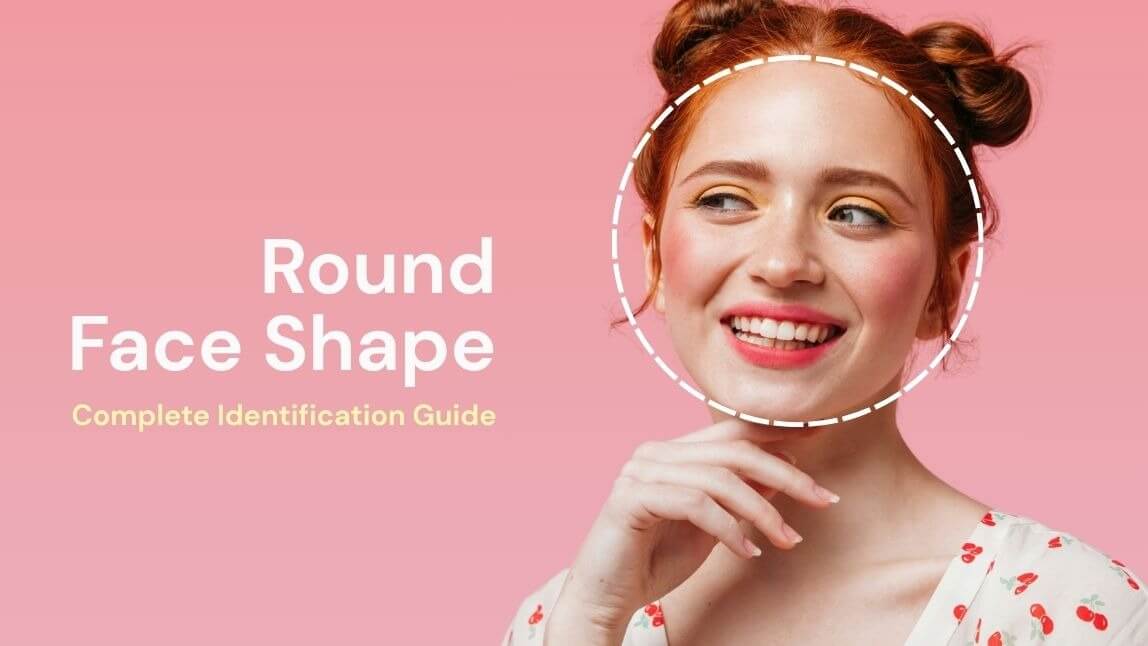
A round face has nearly equal width and length, full cheeks, and a soft jawline—but it's also the shape people misidentify most often. Here's how to tell.
What Makes a Face Shape Round?
A round face shape follows one core pattern: the face is about as wide as it is long, with softly curved outer lines, cheekbones as the widest point, and a gently rounded jawline and chin rather than sharp angles.
Look for the combination, not a single cue:
- Length-to-width ratio near 1:1 (hairline to chin roughly equals cheekbone width)
- Cheekbones slightly out-measure the forehead and jaw
- The jaw curves continuously below the ear instead of turning a corner
- The chin reads full and rounded, not pointed or flat
Not sure these traits describe your face? Compare round with the other common shapes in our guide to women’s face shapes.
Round vs. Oval, Square & Heart
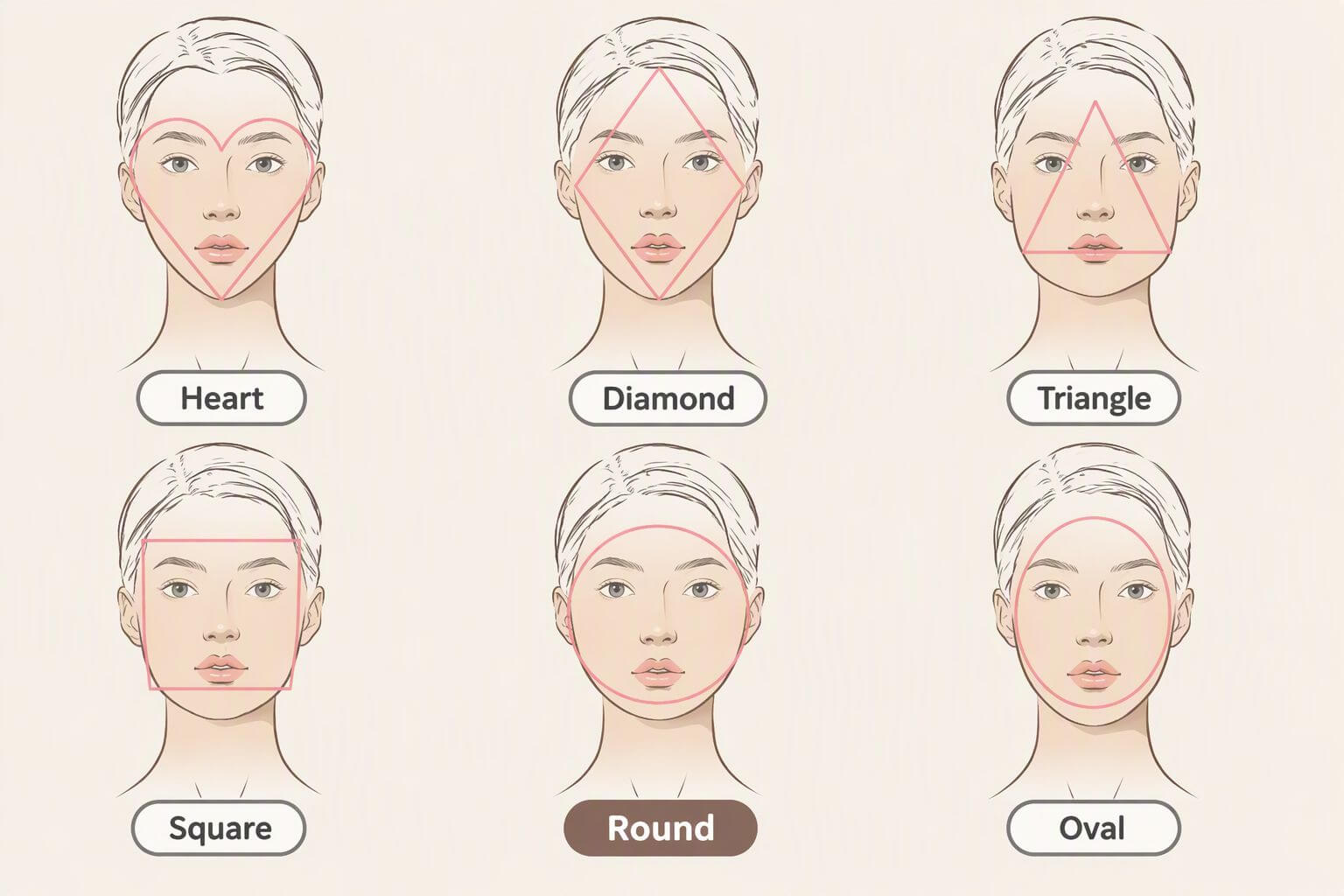
Most misidentification involves one of three neighbors. If you're undecided, the right-hand question is the tiebreaker:
| Compare | Key Difference | Deciding Question |
|---|---|---|
| Round vs. Oval | Same soft curves, but oval is visibly longer than wide | Is my face noticeably longer than wide, or roughly equal? |
| Round vs. Square | Same near-equal proportions, but square has an angled jaw corner | Does my jaw turn a corner, or curve? |
| Round vs. Heart | Heart shapes taper to a pointed chin from a wider forehead | Is my chin rounded and full, or tapered and narrow? |
Mixed traits are common—if answers split, note which cues dominate rather than forcing a single label.
How to Identify a Round Face
- Mirror trace. Pull hair fully back, face the mirror straight-on in even light, and trace your outline. A continuous curved arc with equal proportions suggests round. Keep a neutral, non-smiling expression—smiling lifts the cheeks and skews any face rounder.
- Measurement check. Measure forehead width, cheekbone width, jawline width, and face length. The round pattern: cheekbone width ≈ face length, with no single measurement dramatically larger.
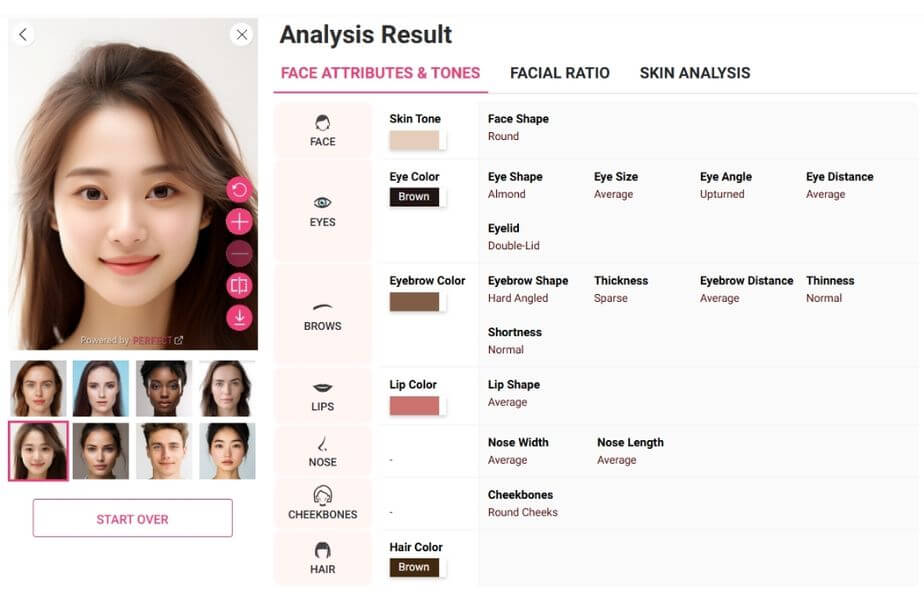
- Instant detection. For the clearest result, run a front-facing photo through a face-shape tool such as Perfect Corp.'s AI Face Analyzer demo, which classifies face shape alongside 70+ facial features in seconds.
Fuller Cheeks Are Not a Face Shape
The most frequent round-face misread is cheek fullness—which varies independently of shape and changes with weight and expression. A full-cheeked oval face is still oval; a full-cheeked firm-jaw face is still structurally square. Cover the cheeks mentally, and read the proportion pattern underneath.
The distinction matters practically: if frames sit on your cheeks when you smile, the variable is frame architecture (bridge height, lens depth, nose pads), not your face shape. Our guide on glasses fitting for round faces with fuller cheeks covers the smile test and clearance fixes.
Why Face-Shape Analysis Matters for Brands
Face shape isn't trivia—it's the starting signal behind some of the highest-intent purchase decisions customers make. Frame selection, earring choice, haircut consultation, contouring guidance: every one of these begins with the same identification step this article teaches manually.
Businesses that build face-shape detection into their customer journey unlock three practical benefits:
- Personalized recommendations at scale. Detect the customer's shape from one photo, then surface frames, earrings, or hairstyles matched to their proportions—instantly, across web, mobile, and in-store.
- More confident buying decisions. Customers who see a personalized fit logic are better positioned to commit—reduce the "will this actually suit me?" hesitation that stalls carts.
- Reusable customer data. One detection can power an entire session: try-on filters, product ranking, and follow-up recommendations all run off the same structured result.
Perfect Corp.'s AI Face Analyzer delivers this as an embeddable API—one photo in, structured shape and feature data out, ready to drive your next recommendation.
Conclusion
Round-face identification comes down to three checks: near-equal proportions, cheekbones as the widest point, and a gently curved jawline. Use those cues together rather than relying on cheek fullness alone.
Once you’ve identified your shape, explore our guide to glasses for round faces or earrings for round faces. Those guides cover styling choices; this one stays focused on identification.
Frequently Asked Questions
What is a round face shape?

A face where length and cheekbone width are nearly equal, cheekbones are the widest point, and the jawline and chin are softly rounded rather than angular.
How do I know if my face is round or oval?
Compare length to width: oval reads clearly longer than wide; round reads close to equal. Both share curved lines, so proportions are the deciding factor.
Does weight gain make my face "round"?
Weight alters cheek volume, not structural proportions like the forehead-to-jaw width relationship. Fuller cheeks can make any shape feel rounder without changing the shape itself—identify by proportions, not fullness.
How accurate is face-shape detection from a photo?
A detector applies the same ratio logic as a manual measurement—consistently and instantly. Best results come from a front-facing, well-lit photo with hair pulled back and a neutral expression.