 Author: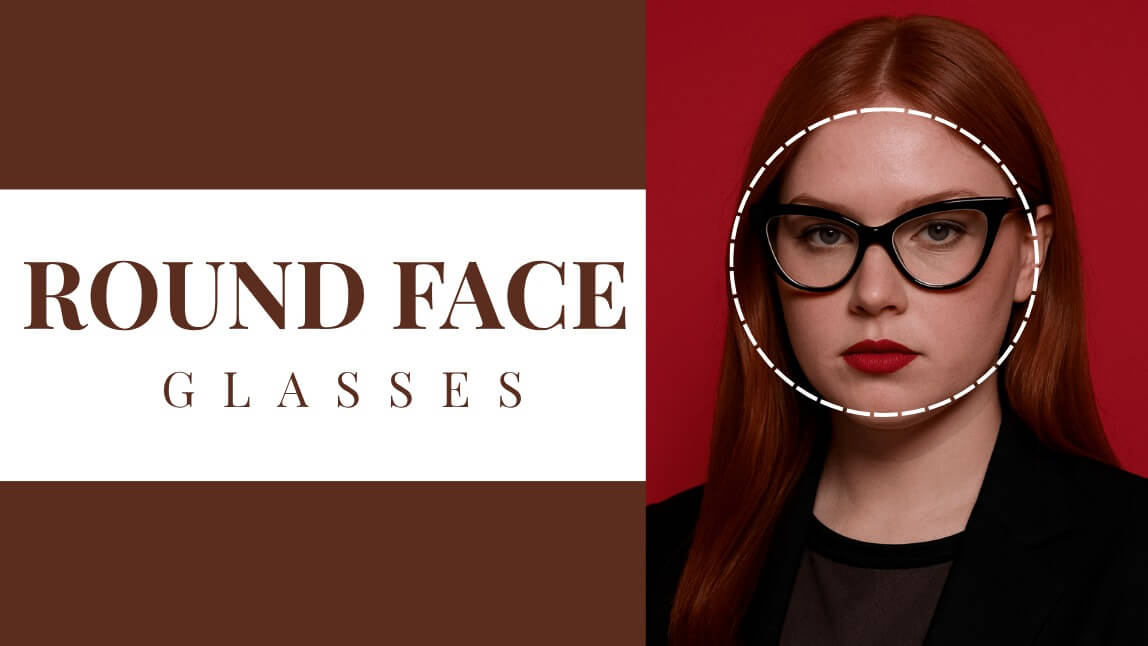
Two customers can both scan as "round face" and still need entirely different glasses. The variable the face-shape label misses is cheek fullness: the physical volume below the cheekbone that determines where frames actually sit, how quietly a smile moves them, and whether a lens edge keeps brushing cheek skin.
For customers searching "chubby cheeks glasses" or "why do my glasses touch my face when I smile," the answer usually isn't a different frame shape—it's a different frame architecture: bridge height, nose pads, lens depth, and top weighting. This guide covers exactly that. For overall frame shapes that suit round face geometry, see our general guide to glasses for round faces.
Why Cheek Fullness Changes Fit
Frames rest at three main contact points: the bridge of the nose and the two temples. Cheek volume becomes relevant at a fourth, unintended contact point—the lower rim of the lens. When cheeks fill more facial space, a standard lens depth or low bridge can leave the frame grazing or sitting on the cheeks throughout the day.
The consequences are practical, which is why this is a fit conversation rather than an aesthetics one:
- Slippage: Cheek contact can push frames up with every smile, forcing constant readjustment
- Skin marks: Lens edges pressing into skin can leave pressure lines and smudge cosmetics or skincare
- Fogging and smearing: Warmth and skin contact affect lenses more than most customers expect
- Fit misdiagnosis: Customers often assume their face size is the problem, when the real issue is lens depth or bridge geometry—so they buy wider, looser frames that then slip more
Cheek fullness varies independently of round face shape—it appears across oval, heart, and square face types as well—so it deserves a dedicated fit protocol rather than a one-line note inside a face-shape guide.
The Smile Test and Contact Checklist
The simplest diagnostic costs nothing and works in-store or on camera: ask the customer to smile fully while wearing the trial frame, and hold it for a few seconds.
- If the frame lifts or tilts when they smile, the lower rim is making cheek contact
- If lens edges touch skin at rest, lens depth is too great or the bridge sits too low for this face
- If red marks appear after a short wear, check nose-pad pressure, temple tension, and rim-to-cheek clearance together—any one of them can cause it
- Check bridge fit independently—a frame that clears the cheeks but slides down the nose will return to contact within minutes
Virtual try-on can screen for these issues digitally by rendering frame position against actual cheek geometry before a physical fitting—particularly valuable for online-first shoppers who never enter a store.
Frame Features That Work Over Fuller Cheeks
For glasses that sit comfortably above rather than on fuller cheeks, prioritize these structural feature tags over frame-shape categories:
High or keyhole bridge designs
A higher-set bridge positions the entire frame higher on the face, lifting the lower lens edge away from the cheekline. Keyhole bridges combine this lift with better weight distribution and tend to prevent the "sliding down" that returns a frame to cheek contact.
Adjustable nose pads
Metal frames with movable pads typically achieve the clearest cheek clearance, because the fitter can set exact frame height and forward tilt rather than accepting a molded acetate bridge. For fuller-cheeked customers, this adjustability is often the single largest fit variable available.
Moderate—not deep—lens height
Lens depth determines how far down the rim travels. Keep lens height proportionate to available space between brow and cheekline; this is the direct fix for smile-driven frame lift. It isn't about "hiding" cheeks—it's about keeping the optical hardware where the anatomy has room for it.
Strong upper rims with lighter lower rims
Color-blocked acetate with definition concentrated on top, or semi-rimless construction, keeps visual weight near the brow where it functions best and removes material from the cheek zone entirely. The customer gets the structural look of a statement frame without the lower bulk that creates contact and pressure.
High-set temples
Temple arms attached higher on the frame front reduce forward tilt at the cheeks. Details like wide temple widths or decorative hinges also let the frame carry visual interest at the sides, where fuller cheeks aren't affected by it.
Displaying this for merchandising
Catalogs rarely tag these features, so fuller-cheeked customers can't filter for them. Retailers that add bridge type, nose-pad adjustability, and frame height as searchable fields turn a frustrating search into a guided consultation—something neither generic face-shape quizzes nor "oversized" filters accomplish.
Common Fit Problems (and Fixes)
| Complaint During Consultation | Likely Cause | First Fix to Try |
|---|---|---|
| "Frames push up when I smile" | Lens depth exceeding cheek clearance | Reduce frame height or raise bridge position via adjustable nose pads |
| "Marks on my cheeks after wearing" | Rim-to-cheek skin contact | Confirm and resolve the smile-test contact before addressing pad pressure |
| "Glasses always slip" | Bridge geometry doesn't distribute weight; customer has compensated with loose frames | Investigate keyhole bridges and pad angle before sizing up |
| "Large frames make my face look larger" | Visual weight concentrated low and wide, with deep lens height | Redirect weight upward: strong top rim, shallower lens, high temples |
| "My lashes hit the lens" | Low bridge causing shallow vertex distance plus shallow pantoscopic tilt | Higher bridge set or pad adjustment; verify eyelash clearance after correction |
A Consultation Workflow for Fuller-Cheek Customers
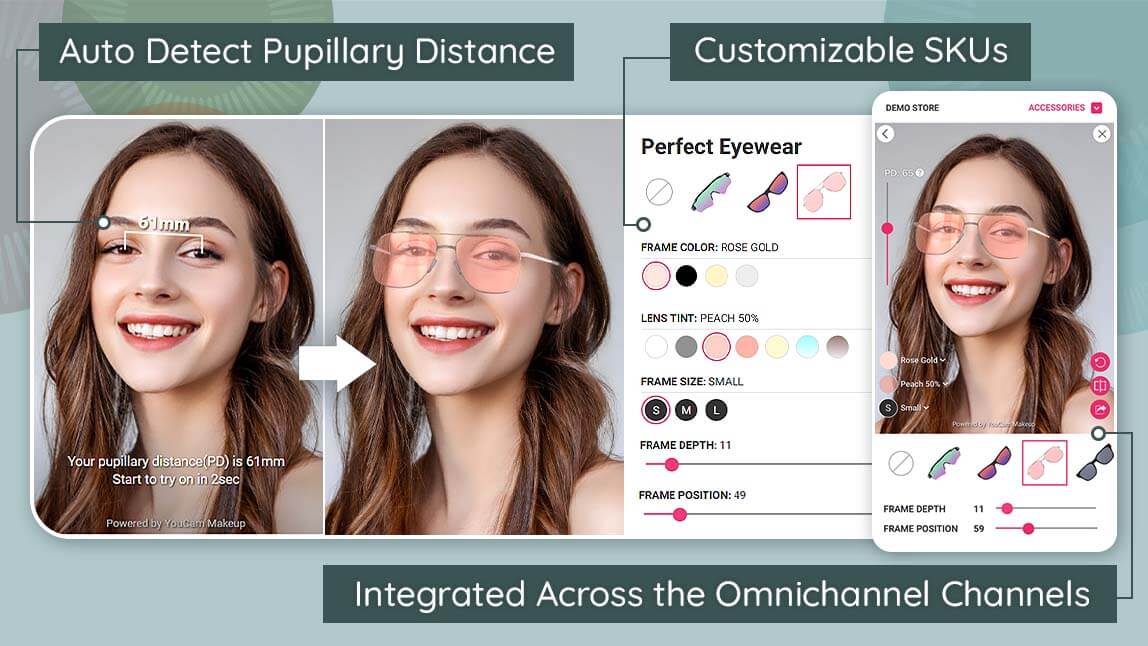
Eyewear teams handling "my glasses touch my cheeks" customers need a repeatable sequence that a face-shape-only quiz can't provide:
- Classify before recommending. Use the AI Face Analyzer to detect face shape and cheekbone structure together, so the workflow starts with both geometric and volumetric context rather than either alone.
- Screen physically or digitally. Apply the smile test in-store—or virtual try-on rendering to simulate frame position against cheek geometry when the customer shops online. The Glasses Virtual Try-On solution supports PD estimation and realistic placement for precisely this evaluation layer.
- Filter by architecture, not aesthetics first. Rank compatible SKUs using bridge type, nose-pad adjustability, frame height, and temple attachment; layer frame shape preferences on top of those constraints.
- Validate with the customer present—or let them repeat the digital test themselves. A video try-on session that survives a full, genuine smile is a stronger finish than a still-photo approximation.
Conclusion
"Glasses for chubby cheeks" is really a bridge-and-clearance problem wearing a face-shape costume. Place the frame architecture first—bridge height, nose pads, lens depth, and top weighting—and then layer frame shape from the round-face glasses guide. The customer who leaves with glasses that clear the smile test comes back; the one fighting daily contact issues doesn't.
For eyewear brands, that pairing turns one of optical retail's most frequently mistreated requests from a sizing argument into a consultation advantage—and it's exactly the kind of customer-specific guidance that digital tools can deliver at scale.
Bring Face Analysis & Virtual Try-On to Your Business
Want to give every customer—including fuller-cheeked shoppers who miss generic face-shape filters—the guided consultation this guide describes? Perfect Corp.'s AI Face Analyzer and Glasses Virtual Try-On solution let optical and beauty brands detect face shape and cheekbone structure, estimate PD, and render accurate frame placement online, on tablets, or in-store.
Your customers get a fitting experience as precise as an in-store consult, and your team gets implementation without a proprietary booth or hardware footprint.
Frequently Asked Questions
Why do my glasses touch my cheeks when I smile?

Usually because lens depth or bridge geometry positions the lower rim inside the cheek's available space. Fuller cheeks occupy more of that space, so frames with excessive lens height or a low-set bridge make contact that slimmer faces never experience. A high or keyhole bridge plus moderate lens depth is the typical resolution—confirm it with a smile test before purchase.
Are there glasses that sit above fuller cheeks?
Yes—frames with high or keyhole bridges, adjustable nose pads, moderate lens height, high temple attachment, or upper-weighted designs all create plus-size cheek clearance. Fitters and AR try-on tools can evaluate the fit quickly once you filter by these structural features rather than frame shape alone.
Do adjustable nose pads really matter for fuller cheeks?
For many customers, they're the fastest path to a correct fit—a fitter can raise frame height and tweak forward tilt, creating cheek clearance a molded bridge can't offer. They're usually the first variable to investigate when contact persists on an otherwise suitable frame.
Is cheek fullness related to face shape?
They're separate attributes. Cheek fullness varies across round, oval, heart, and square faces and changes independently of face-width classifications—which is whyRecommendation logic combining a face-shape tag with cheekbone structure is more accurate than either signal alone.
Can virtual try-on help without an in-store fitting?
AR try-on rendering frame placement against actual face geometry can screen for contact risk, approximate placement, and size before a fitting or purchase. It doesn't replace professional dispensing for prescription work, but it meaningfully narrows the options to those worth a pin-pointed evaluation.