 Author:


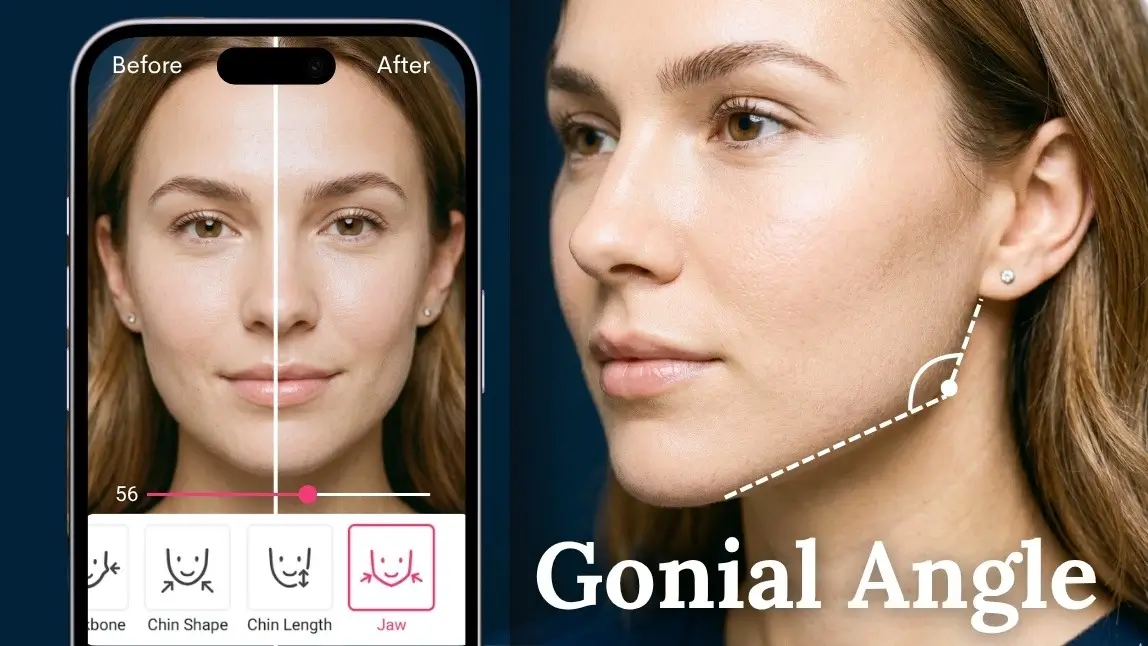
One angle. Fewer than ten degrees difference. Yet the gonial angle, the measurement at the corner where your jaw pivots, sits at the center of how AI analyzes facial attributes, drives aesthetic treatment planning, and now powers B2B beauty tech products serving millions of users worldwide.
This guide breaks it all down: what the gonial angle is, what AI can actually detect, and how forward-thinking beauty businesses are using it right now.
What Is the Gonial Angle?

The gonial angle (also called the angle of the mandible) is the angle formed at the junction of the horizontal ramus and the ascending ramus of the lower jawbone. In plain terms: it's the angle at the back corner of your jaw, the point roughly halfway between your earlobe and chin that defines how "sharp" or "soft" your jawline looks.
The word comes from the Greek gonia, meaning angle — the same root as polygon. Clinically, it's measured from the most posterior-inferior point of the mandibular angle using lateral cephalometric X-rays.
A smaller gonial angle produces a sharper, more angular jaw. A larger gonial angle produces a softer, more rounded jaw. The range in healthy adults typically falls between 110° and 145°, with significant variation by sex, age, and ethnicity.

What's the Ideal Gonial Angle for Men and Women?
The ideal gonial angle differs notably by gender — and those differences map directly to long-standing perceptions of masculine versus feminine facial aesthetics.
Research confirms that the perception of an "ideal" jaw angle varies not just by sex but also by the age and profession of the observer — orthodontists, oral surgeons, and laypeople weigh jaw aesthetics differently. This variability is one reason AI-based gonial angle analysis has become valuable: it delivers objective measurement regardless of observer bias.
| Gender | Ideal Gonial Angle Range | Common Descriptor |
|---|---|---|
| Male | 120°–130° | Masculine, dominant |
| Female | 125°–135° | Feminine, graceful |
| Both (general) | Under 130° optimal | Proportionate |
What drives these gender differences? Testosterone. During puberty, higher androgen levels in males cause the lower jaw to grow more robustly, reducing the gonial angle.
How Does the Gonial Angle Affect Facial Aesthetics?
The gonial angle is one of the most studied jaw metrics in facial aesthetics research, and the findings are consistent enough to matter commercially.
Studies show that facial observers across cultures rate defined jaw angles (lower gonial angles in men, moderately tapered angles in women) as more attractive and healthy-looking. In one survey-based study, both male and female participants preferred a "more acute" jaw angle in male faces, while preferring a slightly wider jaw angle in female faces, confirming the gender-differentiated ideal.
But attractiveness is only part of the story. The gonial angle also correlates with:
- Perceived age: Jaw angles tend to increase with age as bone resorption occurs, making the jawline softer. AI analysis can therefore infer aging patterns from gonial angle data.
- Perceived health: A well-defined jaw is associated with good skeletal development and lower body fat, both of which read as health signals cross-culturally.
- Aesthetic treatment demand: Jaw filler, Botox masseter treatments, and jawline contouring are among the fastest-growing aesthetic procedures globally in 2026, largely driven by consumers who understand their jawlines and seek to optimize it.

How Beauty Businesses Are Using Gonial Angle Analysis
The commercial applications of gonial angle data have expanded significantly in the past two years. Here's how smart beauty and aesthetic businesses are deploying it:
Aesthetic Clinic Consultation Tools
Medical aesthetic practices are integrating AI facial analysis into their consultation workflow to show patients their current jaw metrics and how proposed treatments (filler, Botox, surgical reduction) would shift those measurements.

Patients who see their data convert at significantly higher rates than those shown only verbal descriptions or generic before/after photos.
Virtual Try-On for Jawline Products
Beauty brands selling contouring makeup, jawline-sculpting tools, or skincare targeting facial definition are using AI to personalize product recommendations in real-time.
A consumer's gonial angle influences which contouring placement will be most effective, data that can be computed from a selfie and used to recommend specific SKUs.
Personalized Styling and Haircut Recommendations
Perfect Corp's AI Hairstyle Try-Ons uses AI technology to display users' look in different hair colors or hairstyles.
Facial Ratios Analysis Apps
The rise of facial aesthetics apps targeting beauty-conscious consumers has created a high-volume use case for gonial angle analysis. Apps measuring and displaying the gonial angle as part of their facial assessment generate millions of analyses monthly. B2B platforms that power these assessments via API have a significant commercial opportunity here.
What Affects Your Gonial Angle Over Time?
The gonial angle is not fixed. Several factors cause it to shift over a lifetime: bone resorption with age increases the gonial angle gradually from the late 30s onward; chronic teeth grinding (bruxism) hypertrophies the masseter muscle; weight changes affect how the jaw appears even without altering bone structure; orthodontic treatment or jaw surgery can explicitly modify the angle; and injectable treatments like masseter Botox or jaw filler visually adjust the perceived gonial angle without surgery.
AI-based longitudinal tracking, analyzing the same face at multiple time points, is an emerging application that lets clinics and wellness brands document these changes objectively for patients.
Ready to Add Gonial Angle Analysis to Your Product?

If you're building a beauty app, aesthetic consultation platform, or personalization engine that could benefit from jaw geometry analysis, you don't need to build the underlying model from scratch.
Perfect Corp's AI Face Analyzer delivers enterprise-grade multi-point facial landmark detection — including jawline and gonial angle metrics — via a simple API integration. It powers personalization at scale for leading beauty brands, aesthetic clinics, and technology platforms worldwide.
Frequently Asked Questions
What is the gonial angle in simple terms?
The gonial angle is the angle formed at the back corner of your jaw, the point where your jaw "turns" between the vertical and horizontal parts of the bone. A smaller angle means a sharper, more defined jaw; a larger angle means a softer, more rounded jaw.
What is the ideal gonial angle?
The ideal range varies by gender. For men, most aesthetic studies cite 120°–130° as associated with attractive, masculine jawlines. For women, 125°–135° tends to be perceived as most feminine and harmonious. However, attractiveness is multifactorial, the gonial angle is one input among many.
Can you change your gonial angle?
The underlying bone angle is largely fixed in adults, though jaw surgery (orthognathic surgery) can modify it. Masseter Botox can reduce jaw muscle mass to visually narrow the jaw. Filler at the mandibular angle can enhance definition. Weight loss also affects how the jaw appears without changing bone structure.
How is the gonial angle measured?
Clinically, it's measured from a lateral cephalometric X-ray. For aesthetic and consumer applications, AI-powered facial analysis tools can estimate the gonial angle from a standard front-facing photo using automated landmark detection — no clinical equipment required.
What's the difference between a small and large gonial angle?
A small gonial angle (under 120°) produces a very sharp, angular jaw — typically associated with extreme masculine facial features. A large gonial angle (above 140°) produces a very soft, sloped jaw. The aesthetic ideal for most people sits in the middle range, with the exact optimal point depending on gender, ethnicity, and overall facial balance.
Do beauty AI tools actually measure the gonial angle accurately?
Enterprise-grade AI platforms trained on clinically annotated facial data can deliver meaningful gonial angle estimates from photos — accurate enough for aesthetic consultation, personalization, and consumer-facing scoring. Consumer-grade general AI tools (like ChatGPT with a selfie) do not provide calibrated angle measurements. Purpose-built facial analysis APIs offer far higher clinical correlation.
Why is the gonial angle trending in beauty and aesthetics?
The combination of social media beauty culture, the rise of "looksmaxxing" communities, and the democratization of AI face analysis has made jaw metrics like the gonial angle a mainstream topic. As consumers become more knowledgeable about facial geometry, they're driving demand for treatments and products that address specific measurements — creating significant commercial opportunities for brands that can meet them with data-driven personalization.