 Author:


| Table of Contents |
|---|
What is Shoppable Content?
Shoppable content is the seamless integration of purchase opportunities directly into media formats, such as videos, livestreams, social posts, and blog articles.
It bridges the gap between "inspiration" and "acquisition," allowing a consumer to go from "I love that look" to "Order Confirmed" without ever leaving the content they are enjoying.
Why It Matters to Beauty Brands in 2026?
In 2026, friction is the enemy of conversion.

- The "Zero-Click" Expectation: Consumers accustomed to TikTok Shop and "Agentic AI" assistants no longer have the patience to memorize a product name in a video, open a new tab, search for it, and browse a catalog.
- Hyper-Personalization: As highlighted at CES, generic ads are dying. Shoppable content in 2026 isn't just about a "Buy Button"; it’s about smart content that adapts to the viewer, recommending specific shades or skincare routines based on real-time data.
- The Trust Economy: With the rise of AI-generated content, consumers demand proof. Shoppable content that allows for instant virtual testing builds the confidence necessary to purchase high-value beauty products online.
Without interactivity, beauty content is just entertainment. To turn it into a sales channel, you need to bridge the gap between the video player and the checkout cart.
Beauty brands running on self-hosted ecommerce platforms such as Magento often need infrastructure capable of supporting high-traffic campaigns and advanced integrations. Choosing a reliable Magento 2 hosting provider can help ensure that shoppable experiences, virtual try-ons, and personalized recommendations load quickly during peak shopping periods.
The "Platform Trap" of Social Commerce
Many beauty brands still treat content as a static experience, a photo, a video, or a post that looks good but does little else. In today’s market, that simply isn’t enough.
Modern consumers want more:
- To try makeup instantly while watching a video
- To analyze their skin in real time
- To ask questions and receive AI-powered advice without leaving the content.
Without interactivity, even the most beautiful content becomes a dead end, high engagement, low conversion.
Make Your Shoppable Content Stand Out with AR
Augmented Reality (AR) bridges this gap by transforming passive content into an active Smart Mirror.

By integrating AR directly into your shoppable blogs, videos, or product pages, you aren't just showing a product; you are proving it works for the customer. This shift from "viewing" to "wearing" has been proven to increase dwell time, boost confidence, and significantly drastically reduce return rates.
See how Meta integrates AR into shoppable content → Read the story
Top 3 Tools to Upgrade Your Content Experience
We reviewed three top resources to help you decide which tool fits your specific shoppable content strategy:
Hairstyle Virtual Try-On
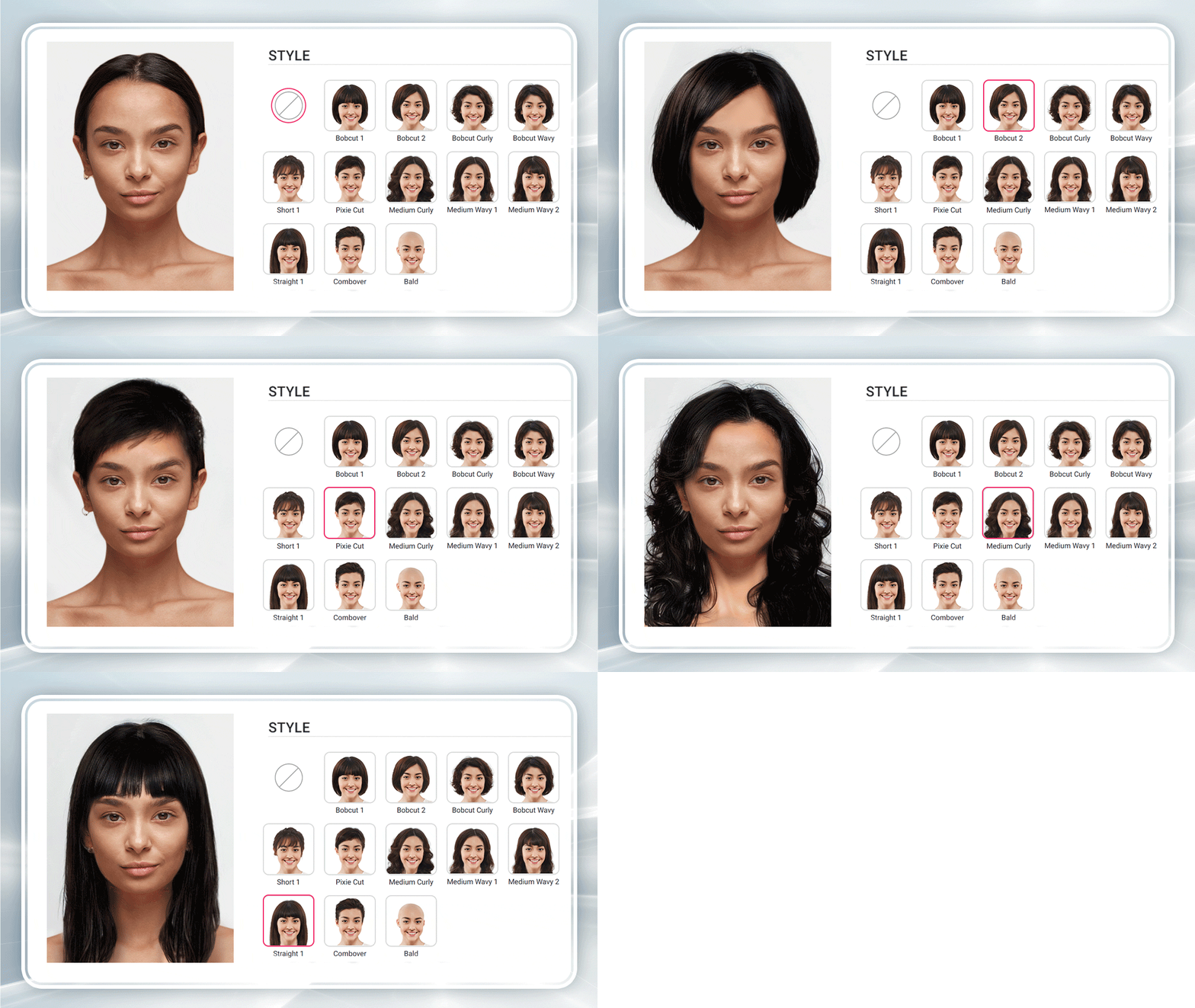
The Tool: An advanced AI engine designed to embed a "Virtual Salon" directly into your media, allowing users try on different hairstyles and colors.
The Benefit: It turns passive viewers into active users, allowing them to virtually try on hairstyles, hair colors, or hair length in real-time without ever leaving the stream.
Makeup Virtual Try-On

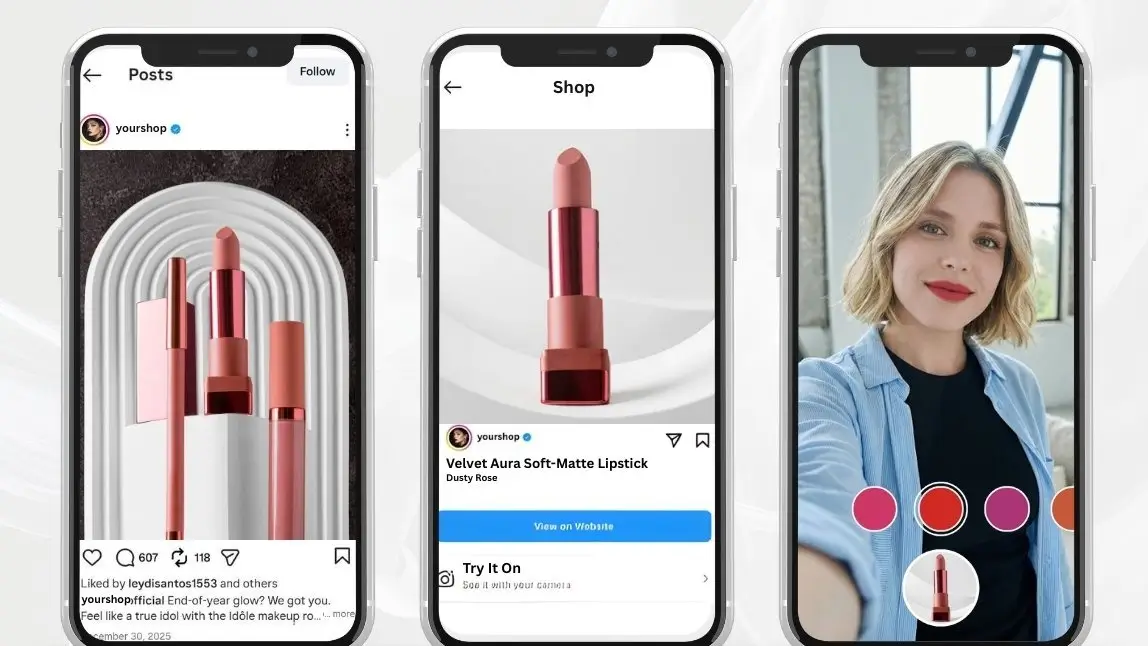
The Tool: The ultimate engine for "Watch-and-Wear" experiences. This AR solution integrates seamlessly into livestreams and video players..
The Benefit: With VTO-enabled shoppable content, the testing happens directly inside the content flow. This keeps the user engaged while significantly increasing the likelihood of impulse purchases for complete makeup looks.
Clothes & Accessories Virtual Try-On

The Tool: A Generative AI "Fitting Room" that brings the fashion lookbook to life.
The Benefit: By offering an instant try-on for the sunglasses or earrings they just saw in a video, you provide the validation needed to convert a "like" into a "sale" without forcing the user to navigate away to a separate product page.
Bringing the AR Experience Home with APIs
How do you build a website that feels as interactive as a social media app without hiring a team of 50 engineers? The answer is APIs.
What is an API?
Think of an API (Application Programming Interface) as a universal adapter.

Imagine you are at a restaurant. You (the customer) want a specific dish from the kitchen (the database/system), but you can't just walk into the kitchen and cook it yourself. You need a waiter to take your order, deliver it to the kitchen, and bring the food back to you. The API is the waiter.
In conclusion, APIs allow your website, app, or social channel to "order" advanced features from a provider like Perfect Corp without needing to build the technology yourself.
Why AR APIs Beat the "Social-Only" Strategy
Deploying these APIs allows you to own the experience rather than renting it from social platforms:
- Own the Data: Instead of giving user skin data to a social algorithm, you capture that data (e.g., "User has dry skin and prefers matte finish") to personalize future marketing.
- Speed to Market: Instead of spending years developing proprietary computer vision, you can plug in battle-tested technology and launch "Snapchat-like" features on your own site in weeks.
- Omnichannel Consistency: An API acts as a central building block. You can use the same API to power a feature on your mobile app, your website, and even an in-store smart mirror, ensuring a consistent brand experience.
From Being Seen to Being Experienced
The future of fashion and beauty is no longer about being seen—it’s about being experienced. The brands that win will be the ones that transform content into conversation, interaction, and conversion. With the modular power of APIs, you don't need to be a tech giant to build these experiences; you just need the right connections.
Ready to build the future of shoppable beauty? Explore the API capabilities and start your free trial here: 👉https://yce.perfectcorp.com/ai-api