 Author:
Images generated by YouCam AI
Your skin stings when you apply the serum you have used for a year. It looks flushed by mid afternoon. It is flaking in places and shiny in others, and every product you reach for seems to make it angrier. That combination has a name, and the internet reaches for it constantly without defining it. A damaged skin barrier is a real, recoverable state with recognizable signs, a short list of causes that are mostly self inflicted, and a recovery window measured in weeks rather than months. This guide covers the signs, how to tell barrier damage apart from dry or sensitive skin, a 14 day reset, and what a skin analysis reading shows while it heals.
What this guide covers
What Is the Skin Barrier?
The skin barrier is the outermost layer of your skin, made of flattened cells held together by a lipid matrix of ceramides, cholesterol and fatty acids. Its job is two directional: keep water in, and keep irritants, allergens and microbes out. When it is intact you barely notice it. When it is compromised, both jobs fail at once.
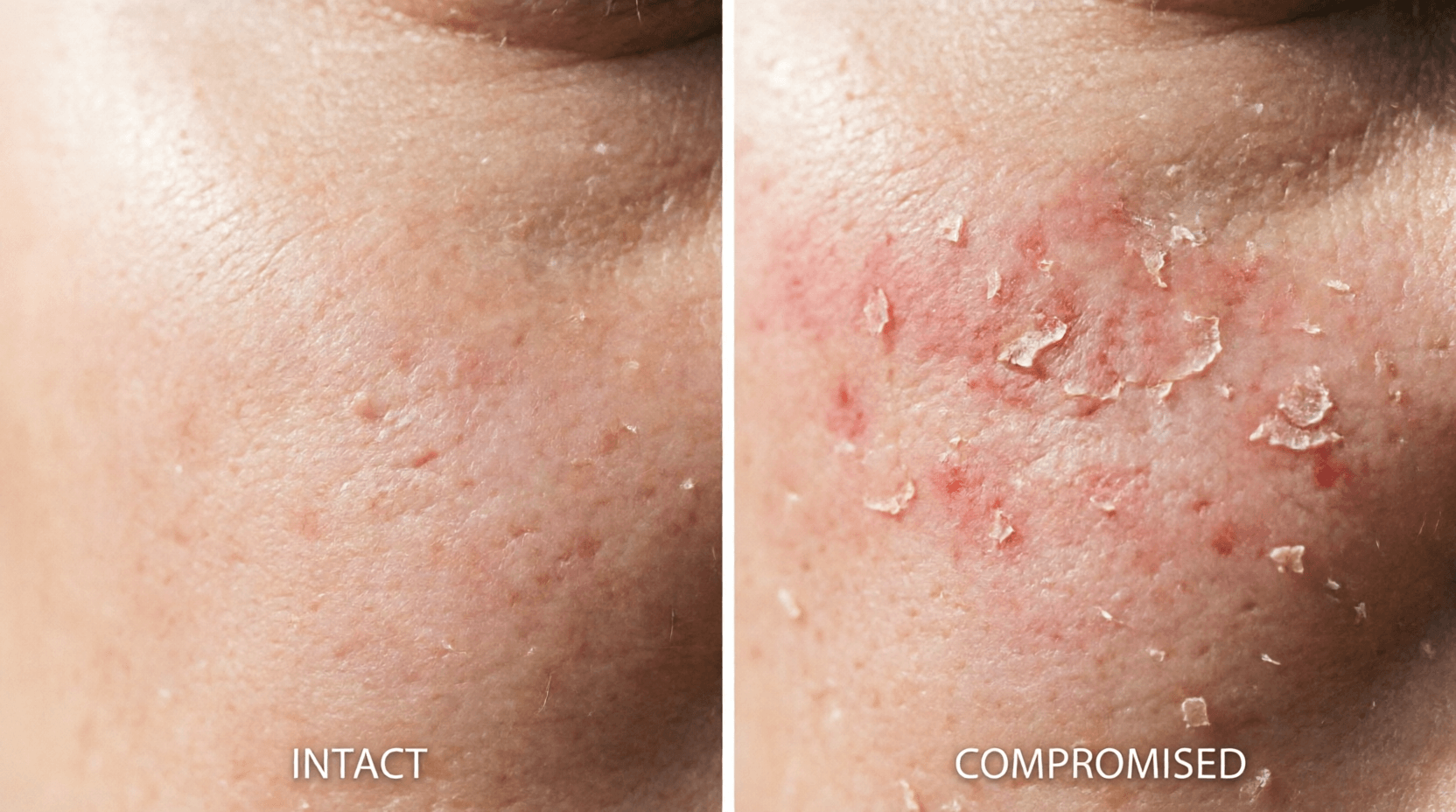
The usual description is a brick wall, cells as bricks and lipids as mortar, and it is useful right up to the point where people picture the bricks falling out. Barrier damage is almost always a mortar problem. The lipids get stripped or disrupted, water escapes faster than it should, and ingredients that used to pass harmlessly over the surface now reach nerve endings that were never supposed to meet them. That is why the first symptom is usually not dryness. It is stinging.
How Do You Know If Your Skin Barrier Is Damaged?
A damaged skin barrier usually announces itself through a cluster of signs rather than one. The most reliable tell is new reactivity: products you tolerated for months suddenly sting or burn on application. Add persistent redness, tightness that moisturizer does not resolve, rough patches, and skin that looks dull and feels hot, and you have the full picture.
| Sign | What you notice | Why it happens |
| Stinging on application | Familiar products suddenly burn, especially around the nose and eyes | Compromised surface lets actives reach nerve endings |
| Persistent redness | Diffuse flush that does not settle within an hour | Inflammation from unchecked irritant contact |
| Tightness that moisturizer does not fix | Skin feels drum tight within minutes of cleansing | Water escaping faster than product can replace it |
| Flaking and rough patches | Peeling at the nose, brows or jaw, rough texture elsewhere | Disrupted surface renewal |
| Dullness | Skin looks flat and grey in photographs | An uneven surface scatters light instead of reflecting it |
| New breakouts in unusual places | Small bumps where you do not normally break out | Reduced defense against surface microbes |
| Heat | Skin feels warm to the back of your hand | Active inflammation |
| Exaggerated fine lines | Lines look deeper than they did two weeks ago | Water loss, and the effect reverses as the barrier recovers |
One of these on its own means very little. Four or more, arriving together, and especially arriving shortly after you changed something in your routine, is the pattern.
Is It Barrier Damage, Dry Skin, or Sensitive Skin?
This is the section most guides skip, and it is where the wrong conclusion costs the most time. Three different states produce overlapping symptoms and need different responses.
| Barrier damage | Dry skin | Sensitive skin type | Contact reaction | |
| How long you have had it | Recent, traceable to a change | Lifelong tendency | Lifelong trait | Sudden, follows one product |
| Stinging | New, on products you used to tolerate | Rare | Long standing, predictable triggers | Immediate and severe |
| Redness | Diffuse, comes and goes through the day | Usually none | Flushes with known triggers | Often sharply bordered, sometimes itchy |
| Responds to a gentle reset | Yes, within days to weeks | Improves but does not resolve | Manages, does not resolve | Resolves once the product stops |
| What it needs | Stop the aggressor, rebuild lipids | Ongoing lipid support | Ongoing minimal routine | Identify and eliminate the trigger, see a professional if severe |
The single most useful question is the first row. Barrier damage has a start date. If you can point to the week you added the second acid, or the month you started double cleansing with a foaming wash, you are almost certainly looking at barrier damage rather than a skin type you were born with. Dryness that has been there since childhood is a type, and our breakdown of dry versus dehydrated skin separates those two properly.
What Damages the Skin Barrier?
Mostly us. Environment and age contribute, but the fast, dramatic barrier failures that send people searching at 1am are usually routine driven.
| Cause | How it does the damage | How common |
| Over-exfoliating | Acids or scrubs used daily strip lipids faster than they rebuild | The single most frequent cause |
| Stacking actives | Retinoid plus acid plus vitamin C in one routine, often started in the same week | Very common |
| Harsh cleansing | High foaming or high pH washes, or double cleansing when you did not need to | Common |
| Hot water | Long hot showers dissolve surface lipids | Common and underrated |
| Cold, dry air and indoor heating | Low humidity pulls water out faster than the barrier can hold it | Seasonal, affects almost everyone |
| Sun exposure | UV degrades the structures that hold the surface together | Cumulative |
| Fragrance and essential oils | Repeated low grade irritation in an already compromised surface | Common |
| Aggressive procedures | Peels or resurfacing without adequate recovery time between sessions | Occasional, usually severe |
The quick audit
Count how many of these are true right now: you exfoliate more than three times a week, you use two or more actives nightly, your cleanser foams heavily, your shower is hot, you started a new product in the last month, your routine has more than six steps. Three or more, and you have your answer before you read another line.
What Does Barrier Damage Look Like in a Skin Reading?
Here is the part no other barrier guide covers, and it is what turns an argument with the mirror into something you can track.
Barrier trouble is not a single measurement, it is a pattern across three channels that a skin analysis engine already scores separately. A system such as YouCam AI skin analysis reads up to 15 concerns from one selfie, and during barrier damage these three move together.
| Channel | What happens during damage | What recovery looks like |
| Redness | Rises, often the first and most visible shift | First to fall, usually within the first week or two |
| Moisture | Drops, sometimes sharply, even on oily skin | Climbs steadily through weeks one and two |
| Texture | Worsens as flaking and rough patches appear | Last to normalize, follows the surface renewal cycle |
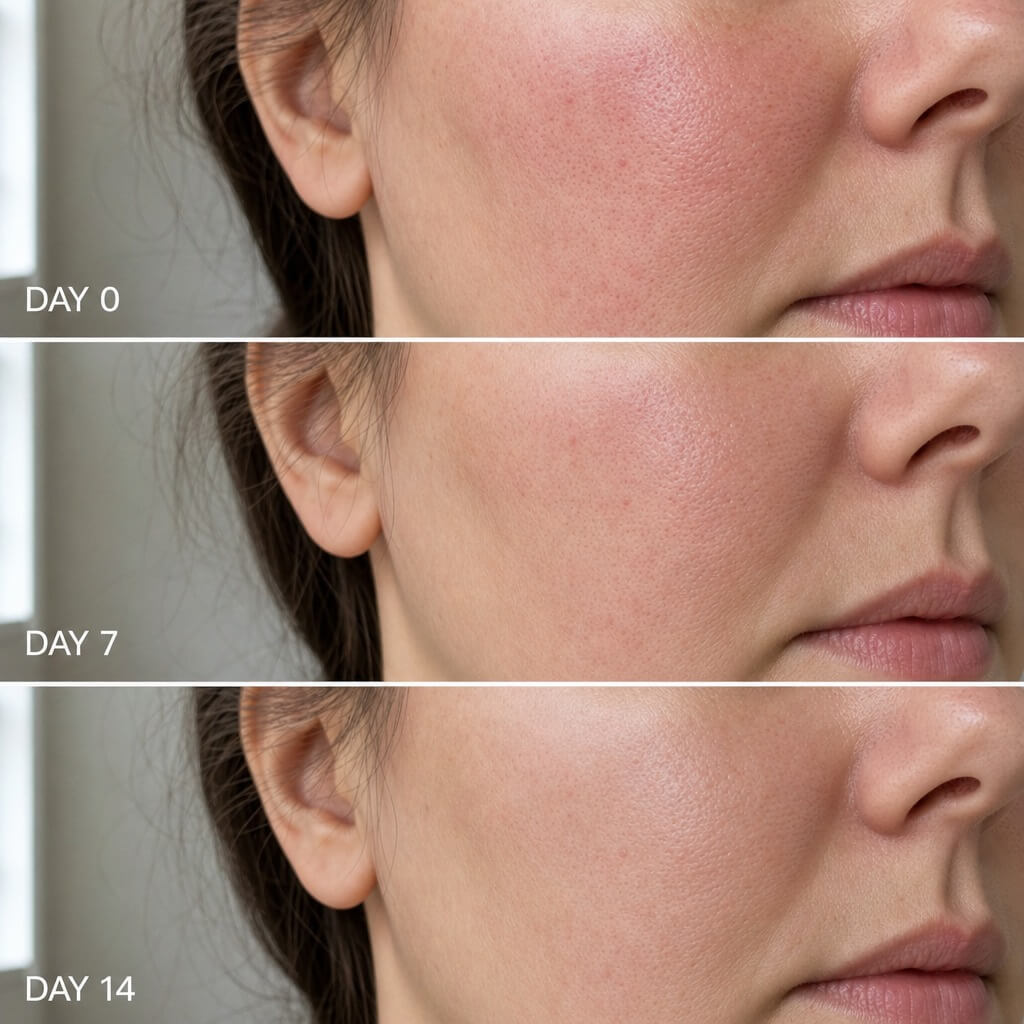
That ordering is the practical value. Redness improving while texture is still poor is not a stalled recovery, it is the normal sequence, and knowing that is what stops people abandoning a reset at day ten and reaching for an exfoliant that puts them back at day zero.
Two caveats worth stating. A photo based reading is an estimate from visible signs rather than a clinical barrier measurement, and it is only comparable when capture conditions repeat: same room, same time of day, same distance, filters off. Take the baseline on the day you start the reset, not three days in.
How Do You Repair a Damaged Skin Barrier?
By removing the aggressor and giving the lipids the materials to rebuild. Almost every failed recovery fails on the first half, because stopping feels like doing nothing. Here is a 14 day reset that is specific enough to follow.
| Days | What you do | What you should notice |
| Day 0 | Baseline photograph in daylight, filters off. Remove every active from the routine. Keep only a gentle cleanser, a barrier moisturizer and morning SPF | Nothing yet, and that is fine |
| Days 1 to 3 | Cleanse once daily, in the evening, with lukewarm water. Moisturize twice. Nothing else touches your face | Stinging stops. This is the earliest and most reassuring sign |
| Days 4 to 7 | Same routine held exactly. Add an occlusive at night if you are still tight by morning | Redness visibly settling, tightness easing |
| Day 7 | Second photograph, same conditions | A real comparison rather than a memory |
| Days 8 to 14 | Continue. Resist the urge to exfoliate the flaking, which is healing surface rather than build up | Flaking resolving, texture beginning to smooth |
| Day 14 | Third photograph. If stinging is gone and redness is close to normal, begin reintroduction | Permission to move forward, on evidence |
Three rules hold the whole thing together. Do not add anything new during the reset, including a barrier product someone recommended, because a new ingredient in a reactive state tells you nothing. Do not exfoliate flaking skin. And do not judge by feel alone at day five, when everyone concludes it is not working.
What Should You Stop Using, and When Can You Restart?
Pausing is easy to say and hard to do, so here is the order, with the reintroduction schedule that keeps you from repeating the whole cycle.
| Product | During the reset | When to bring it back |
| Physical scrubs | Stop | Consider not bringing them back at all |
| AHA and BHA exfoliants | Stop completely | Week 4 onward, once weekly, only if texture demands it |
| Retinoids | Stop | Week 3 to 4, twice weekly, buffered over moisturizer |
| Vitamin C, high strength | Stop | Week 3, alternate mornings |
| Fragranced products and essential oils | Stop | Optional. Many people do not miss them |
| Foaming or high pH cleansers | Swap for a gentle cream or gel wash | Reassess whether you needed one at all |
| Sunscreen | Keep, every morning | Never pause this one |
| Barrier moisturizer | Keep, twice daily | Permanent fixture |
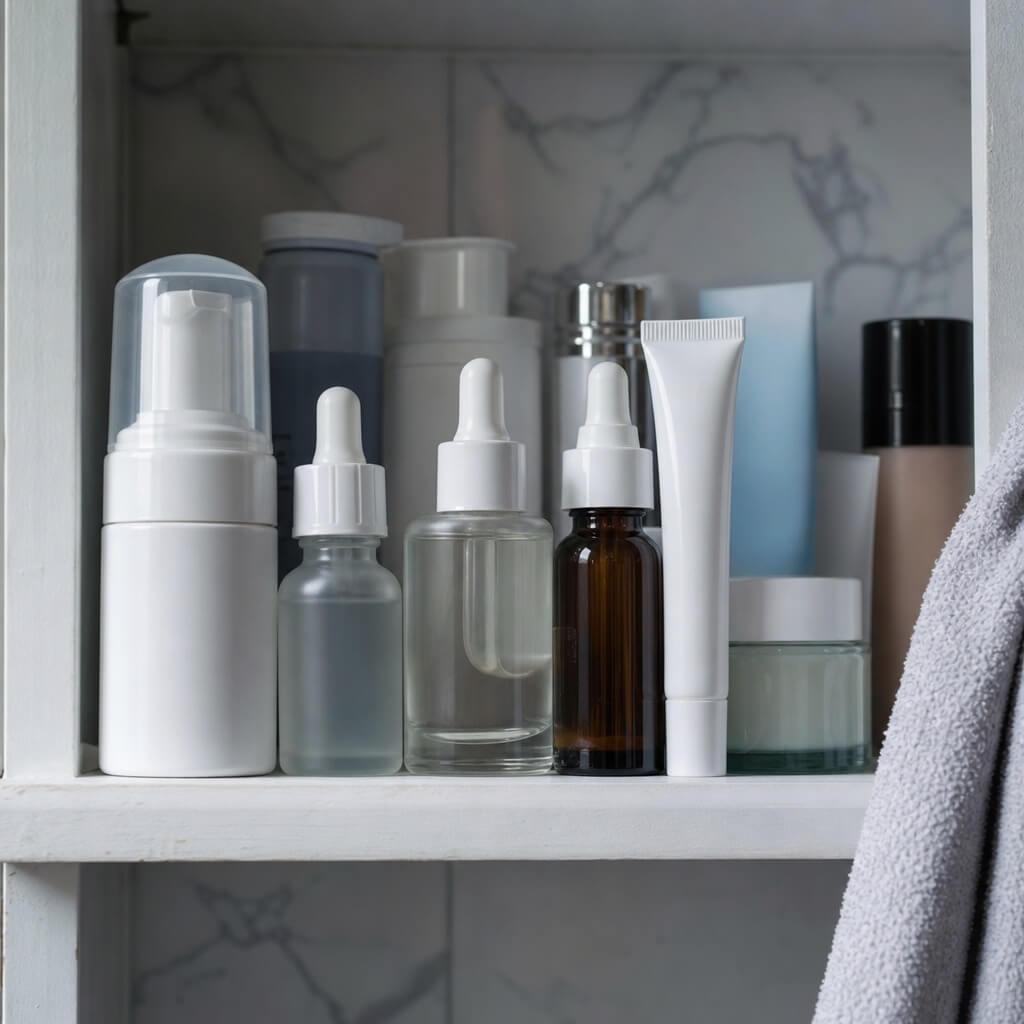
One active at a time, at least a week apart. Reintroducing two in the same week is how a successful reset becomes a repeat performance six weeks later.
How Long Does It Take to Repair a Skin Barrier?
Faster than the panic suggests. Most people see meaningful improvement inside two weeks, with full recovery over four to six. Surface renewal in adults runs roughly 40 to 60 days, which sets the outer bound for anything structural.
| Timeframe | What typically resolves |
| 2 to 3 days | Stinging on application stops |
| 1 week | Redness noticeably calmer, tightness easing |
| 2 weeks | Flaking resolved, most people call it recovered |
| 4 weeks | Texture normalized, tolerance to actives returning |
| 6 to 8 weeks | Full function restored after severe damage or post-procedure recovery |
Severity moves these numbers. A mild over-exfoliation resolves at the fast end, while damage that took nine months to accumulate takes longer than a fortnight to undo.
What Ingredients Actually Repair the Barrier?
Short list, and the short list is the point. A reset is not the moment for a ten step routine.
| Ingredient | What it does | Use |
| Ceramides | Replace the lipids that make up the barrier's mortar | Twice daily, the core of the reset |
| Cholesterol and fatty acids | The other two components of the lipid matrix | Often formulated alongside ceramides |
| Glycerin | Draws and holds water in the surface layers | Twice daily |
| Hyaluronic acid | Surface hydration, best applied to damp skin under an occlusive | Twice daily |
| Niacinamide, low percentage | Supports barrier function and calms redness | Daily, but pause if it stings during the acute phase |
| Panthenol | Soothing and hydrating | Daily |
| Squalane | Lightweight lipid replacement | Daily |
| Petrolatum or an occlusive balm | Physically seals water in overnight | Nights, during the acute phase |
| Broad spectrum SPF | Prevents further degradation while the surface is vulnerable | Every morning, no exceptions |
How Do Brands Use Barrier Signals?
For anyone building the customer experience rather than following it, barrier damage is a high value state to detect, and an expensive one to miss.
- Stop selling the wrong thing. A customer with a compromised barrier who is shown an exfoliating treatment will have a bad outcome and blame the brand. A redness plus low moisture reading is the signal to route them to recovery products instead.
- Turn a return into a rebuy. Most people in this state believe the last product they bought is at fault. An explanation with a reading attached converts that moment into trust rather than a refund.
- Retention through the reset. The 14 day window is exactly the period where a customer wants evidence. Rescanning at day 7 and day 14 gives them a reason to stay in the routine and in your app.
- Honest sequencing. Telling someone up front that redness improves before texture prevents the day ten abandonment that undoes the whole recovery.
Perfect Corp works with 800+ brand partners on flows like these, and the per-concern scoring is available as an API, so your own logic decides what a redness and moisture combination triggers. You can test it against real images in the YouCam AI API Playground before writing integration code.
Damaged Skin Barrier FAQ
How do I know if my skin barrier is damaged?
Look for a cluster rather than a single symptom: new stinging on products you used to tolerate, persistent diffuse redness, tightness that moisturizer does not resolve, flaking, dullness, and skin that feels warm. Four or more arriving after a routine change is the pattern.
How long does it take to repair a damaged skin barrier?
Stinging usually stops within two to three days of a proper reset, redness calms within a week, flaking resolves around two weeks, and texture normalizes by about four. Severe or long accumulated damage can take six to eight weeks.
Can a damaged skin barrier heal on its own?
Yes, provided the cause stops. The barrier rebuilds continuously, so removing the aggressor is most of the treatment. Ceramides, humectants and an occlusive speed it up. Continuing to exfoliate prevents it entirely.
What does a damaged skin barrier look like?
Typically diffuse redness with rough or flaking patches, a dull flat appearance in photographs, and fine lines looking deeper than usual. It often looks oily and flaking at the same time, which is one of the reasons it gets misread as combination skin.
Is my skin barrier damaged or is my skin just dry?
Ask when it started. Barrier damage has a start date and usually follows a routine change, and it responds to a gentle reset within days. Dry skin is a lifelong tendency that improves with lipids but never fully resolves.
Should I stop using all my products?
Stop all actives, exfoliants and fragranced products. Keep a gentle cleanser, a barrier moisturizer and morning sunscreen. Stopping everything including sunscreen is a common and counterproductive overcorrection.
Does moisturizer alone repair the skin barrier?
A ceramide-containing moisturizer does a large share of the work, but only once the cause has stopped. Moisturizing while continuing to exfoliate daily is the most common reason a reset appears to fail.
Can you have a damaged skin barrier with oily skin?
Absolutely, and it is frequently missed. Oil output and water retention are independent, so skin can be shiny by lunchtime and losing water at the same time. Products aimed at oil control usually make the tightness worse.
What ingredients should I avoid with a damaged skin barrier?
All exfoliating acids, physical scrubs, retinoids during the acute phase, high strength vitamin C, fragrance, essential oils, denatured alcohol high in the ingredient list, and anything foaming aggressively.
How can I track whether my barrier is recovering?
Photograph in daylight with filters off on day 0, day 7 and day 14 under identical conditions, or take a scored reading and watch redness, moisture and texture separately. Redness falls first, texture last, and knowing that order prevents quitting early.
Stop the Aggressor, Then Watch Three Numbers
Barrier damage is one of the few skin problems with a genuinely reliable answer: identify what you were doing to cause it, stop, simplify to three products, and give it two weeks. The trap is not that the recovery is hard, it is that doing less feels like doing nothing, so most people intervene again at day five and restart the clock. A baseline you can compare against is the cheapest way to hold your nerve.
Run a free AI skin analysis for a day 0 baseline on redness, moisture and texture, or contact Perfect Corp for a demo if you are building barrier detection into your own customer experience.