 Author:
Dark circles are the shadowed or discolored skin under the eyes, caused by thinning skin, visible blood vessels, pigment buildup, fluid retention, or genetics. There's no single dark circle solution that works for everyone — the right fix depends on which of these causes is actually driving the discoloration, which is why an accurate diagnosis matters more than the product itself.
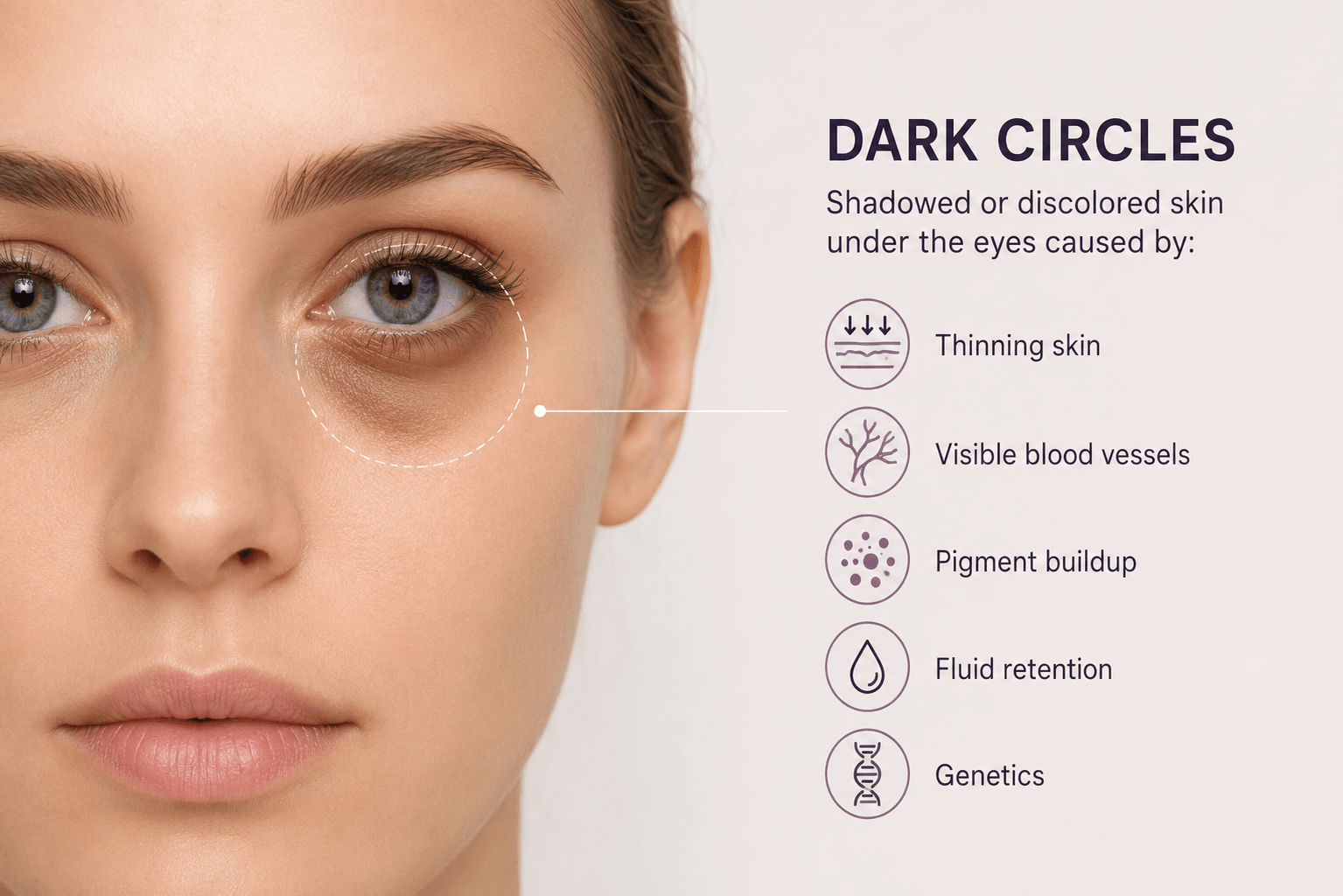
That diagnosis problem is exactly where most dark circle advice falls short. A cream marketed for "pigmentation" won't do much if your circles are actually caused by hollowing and lost volume, and a filler won't help if the real issue is thin, translucent skin. Below, we break down the causes, the solutions dermatologists actually recommend, and how AI-powered skin analysis is helping beauty brands match customers to the right fix instead of a generic one. Perfect Corp.'s AI Skin Analyzer is one tool leading this shift, reading dark circles as one of 15 distinct skin concerns from a single photo.
What Causes Dark Circles Under the Eyes?
Dermatologists generally group the causes into four buckets. Most people have some combination of two or three at once, which is why a single-ingredient approach so often disappoints.
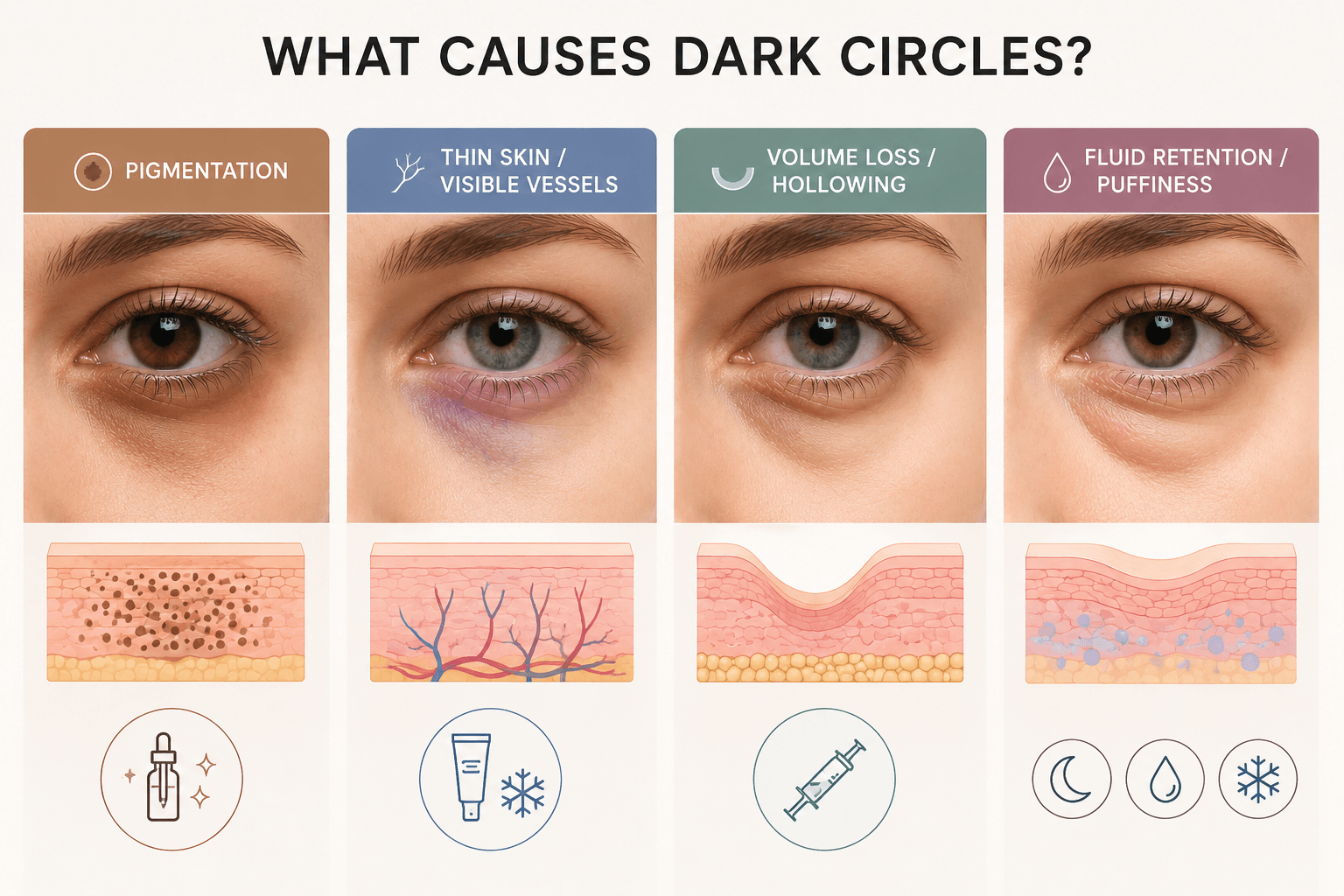
| Cause | What's Happening | Best-Matched Solution Type |
|---|---|---|
| Pigmentation (hyperpigmentation) | Excess melanin builds up in the thin under-eye skin, often worsened by sun exposure or rubbing | Brightening topicals (vitamin C, kojic acid, azelaic acid), chemical peels, laser |
| Vascular/thin skin | Blood vessels show through skin that thins naturally with age or genetics | Retinol to thicken skin, cold compress, filler for volume |
| Volume loss/hollowing | Fat pads shift or shrink, creating a shadowed "tear trough" | Hyaluronic acid filler, in-office volumizing treatments |
| Fluid retention/puffiness | Poor sleep, allergies, alcohol, or high sodium intake cause swelling that casts a shadow | Sleep, hydration, antihistamines, cold compress, caffeine eye cream |
How AI Skin Analysis Helps Brands Match People to the Right Solution
The gap between "dark circles" as a symptom and dark circles as one of several distinct underlying causes is exactly why so many products underperform — a person buys a brightening serum when their real issue is volume loss, gets no visible change in six weeks, and assumes skincare "doesn't work" for them.
This is where AI skin diagnostics are changing how beauty and med spa brands approach the conversation. Perfect Corp.'s AI Skin Analyzer reads dark circles as one of 15 distinct skin concerns from a single selfie — alongside eyebags, tear trough, redness, and firmness — so a brand can point a shopper toward a brightening serum, a caffeine eye cream, or a filler consultation based on what's actually detected, not a guess. The technology has shown a 95% test-retest reliability rate in clinical validation, which means the same face scanned twice returns a consistent read — a baseline requirement if a brand is going to recommend real treatment paths off the result.

For med spas specifically, Perfect Corp.'s Skincare Pro Aesthetic Simulator takes this a step further, letting clients preview how a filler or Botox treatment for dark circles or tear trough hollowing might look on their own photo before booking — reducing the guesswork (and the follow-up appointments) that come with "will this actually work for me" hesitation.
Brands working with Perfect Corp.'s AI skin technology are part of a network of 800+ partners, including Cetaphil and Decorté, using the same underlying diagnostic engine to personalize skincare and treatment recommendations at scale.
Try Perfect Corp's AI Face Analyzer Free →
Dark Circle Solutions That Actually Work
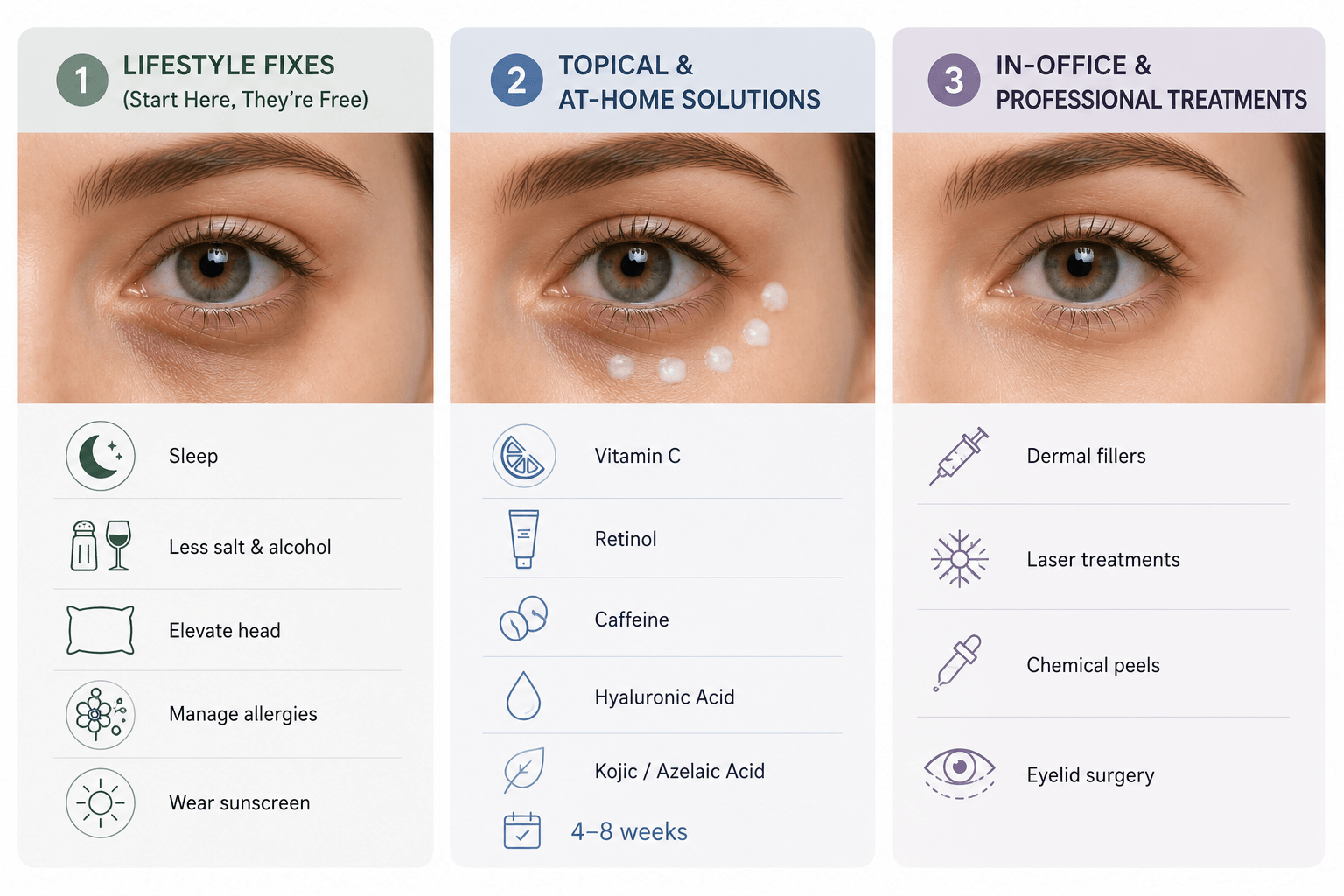
1. Lifestyle Fixes (Start Here, They're Free)
- Sleep 7-8 hours consistently. Fluid buildup from poor sleep is one of the most common and most reversible causes.
- Cut back on sodium and alcohol, especially in the evening, to reduce overnight puffiness.
- Elevate your head with an extra pillow to stop fluid from pooling under the eyes overnight.
- Manage allergies with an antihistamine or saline rinse — "allergic shiners" are a real and common cause of dark circles.
- Wear sunscreen daily around the eye area to prevent pigmentation from worsening.
2. Topical & At-Home Solutions
Look for these ingredients depending on your cause:
- Vitamin C — brightens pigmentation and supports collagen production
- Retinol — thickens skin over time, making underlying blood vessels less visible
- Caffeine — temporarily constricts blood vessels and reduces puffiness
- Hyaluronic acid — hydrates and plumps thin under-eye skin
- Kojic or azelaic acid — targets hyperpigmentation specifically
These take 4-8 weeks of consistent use to show results, and they work best on pigmentation and mild vascular causes — not on volume loss.
3. In-Office & Professional Treatments
- Dermal fillers (hyaluronic acid) for hollowing and volume loss under the eyes
- Laser treatments (Fraxel, CO2, Clear + Brilliant) for stubborn pigmentation
- Chemical peels to lighten hyperpigmentation over a series of sessions
- Blepharoplasty (eyelid surgery) for circles caused by fat pads or excess skin — the only truly permanent fix for that specific cause
These deliver bigger, faster results than topicals, but they cost more and carry real recovery time and risk, so matching the treatment to the actual cause matters even more here.
Try Perfect Corp's AI Face Analyzer Free →Frequently Asked Questions
What causes dark circles under the eyes?
Dark circles are usually caused by one or more of four things: pigmentation buildup, visible blood vessels through thinning skin, volume loss under the eyes, or fluid retention from poor sleep, allergies, or diet. Genetics plays a role in how prone someone is to each of these.
How do you get rid of dark circles fast?
For a same-day reduction in puffiness and shadowing, a cold compress or chilled under-eye product constricts blood vessels temporarily. For longer-lasting change, sleep, hydration, and consistent use of a caffeine or vitamin C eye product over several weeks produce more durable results.
Can dark circles be permanently removed?
Circles caused by fat pads or excess skin can be permanently addressed with blepharoplasty. Circles from pigmentation or thin skin can be significantly and durably improved with laser treatment, peels, or retinol, but they can recur without ongoing maintenance since the underlying skin structure and genetics don't change.
Do eye creams actually work for dark circles?
Yes, for pigmentation- and vascular-related circles specifically. Eye creams with vitamin C, retinol, or caffeine can measurably lighten and reduce the appearance of circles over 4-8 weeks of consistent use. They have little effect on circles caused by volume loss or fat pad hollowing, which is why matching the product to the cause matters.
When should I see a doctor about dark circles?
See a dermatologist if dark circles appear suddenly, are accompanied by swelling or pain, or don't improve with consistent lifestyle and skincare changes over 2-3 months — this can occasionally signal an allergy, thyroid issue, or other underlying condition worth ruling out.
Whether the fix is a change in sleep habits, a new eye cream, or an in-office treatment, the first step is understanding which of the four underlying causes is actually behind your dark circles. Explore Perfect Corp.'s AI Skin Analyzer to see how brands are helping customers get that answer before they buy.