 Author:



*Images designed by YouCam AI
Summary
The jeans fit again. The face, though? That's where things get complicated. As GLP-1 medications like Ozempic, Wegovy and Zepbound go mainstream, millions of people are noticing a side effect nobody put on the vision board: hollower cheeks, softer jawlines and skin that suddenly looks a few birthdays older. The internet named it "Ozempic face." The beauty industry named it an opportunity.
Here's the catch: you can't sell, treat or reassure what you can't measure. That's where Ozempic face skin analysis comes in. AI skin analysis turns vague "my face looks tired" complaints into trackable scores for firmness, wrinkles, tear troughs and more, so clinics and skincare brands can build programs that actually prove progress.
What Is Ozempic Face, Really?
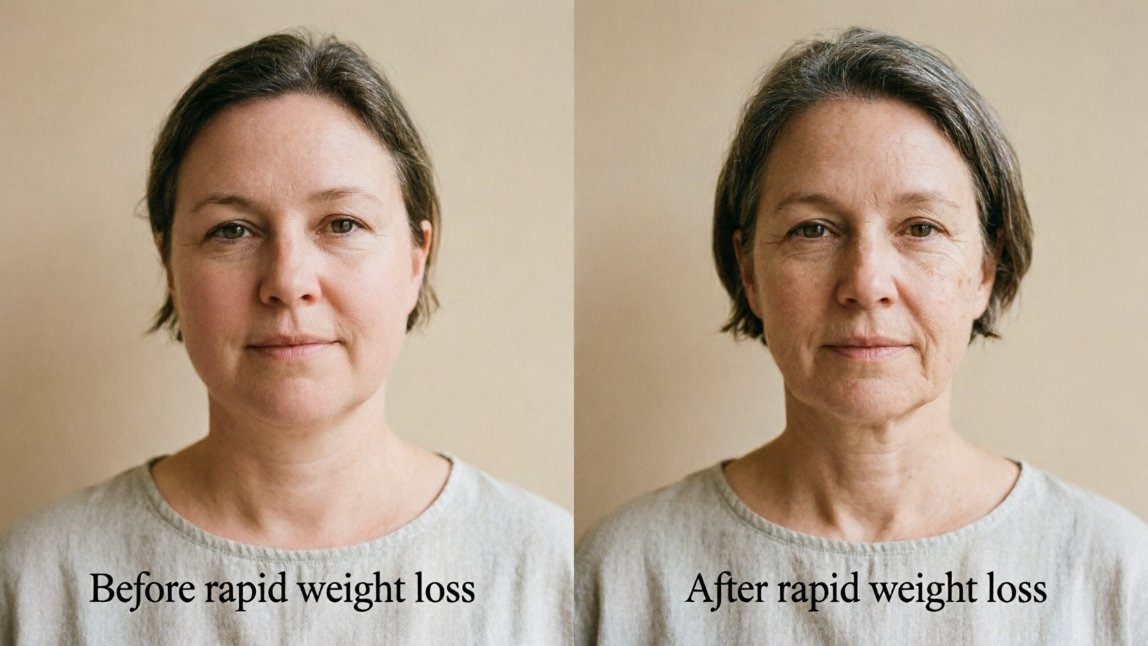
"Ozempic face" isn't a medical diagnosis. It's a pop-culture label for the facial changes some people notice after losing a lot of weight quickly, often on GLP-1 drugs such as semaglutide (Ozempic, Wegovy) or tirzepatide (Mounjaro, Zepbound).
The usual potential look like this:
- Volume loss in the cheeks and temples, creating a hollowed look
- Looser, less firm skin around the lower face and jawline
- More visible wrinkles and folds, especially nasolabial lines
- Deeper tear troughs and under-eye shadows
- Dullness that makes the whole face look tired
Dermatologists are quick to point out that the name is a little unfair. The drug isn't "attacking" the face; the face is simply following the scale. Lose weight fast enough, from anywhere, and facial fat goes with it.
Why Does Rapid GLP-1 Weight Loss Change the Face?
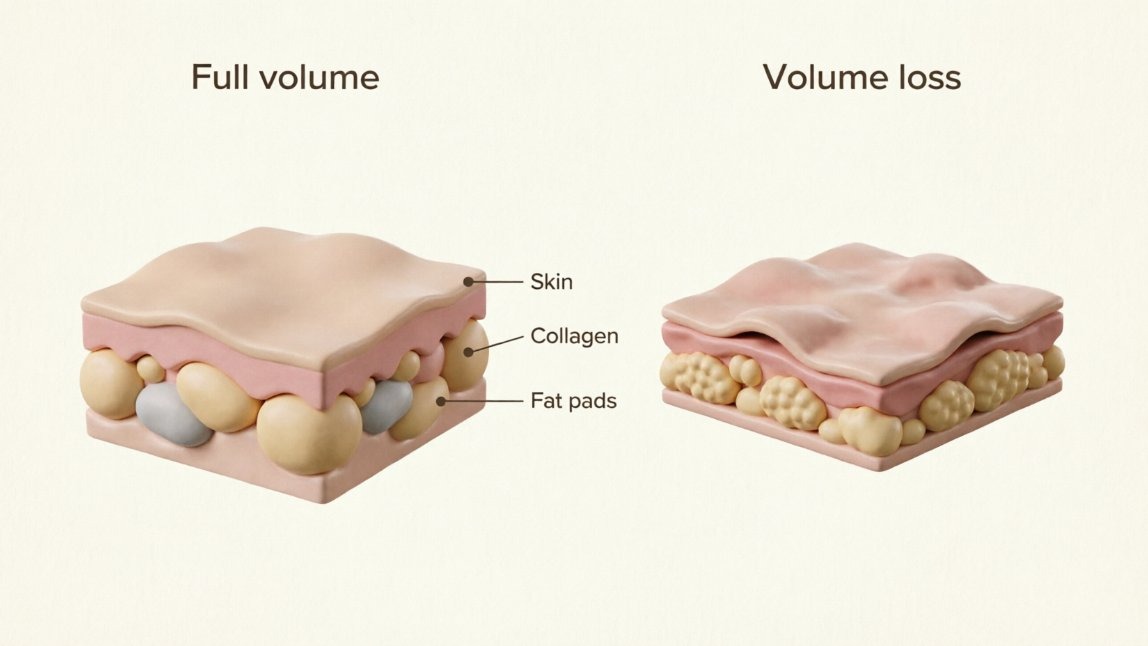
Think of your face as a tent. Fat pads are the poles. Collagen and elastin are the fabric. Pull out the poles too quickly, and even good fabric starts to sag.
Facial fat pads shrink faster than skin can adapt
Facial fat cushions and supports the skin. When weight drops rapidly, those pads shrink before the skin has time to "shrink-wrap" around the new shape. The result: folds, hollows and laxity.
Age turns up the volume on the problem

According to KFF analysts, GLP-1 use is highest among adults aged 50 to 64, a group already dealing with natural collagen decline (and, for many women, menopausal estrogen changes). So the people most likely to be on GLP-1s are also the people whose skin bounces back the slowest. (Source)
Why Are Beauty Giants Suddenly Chasing Ozempic Face?
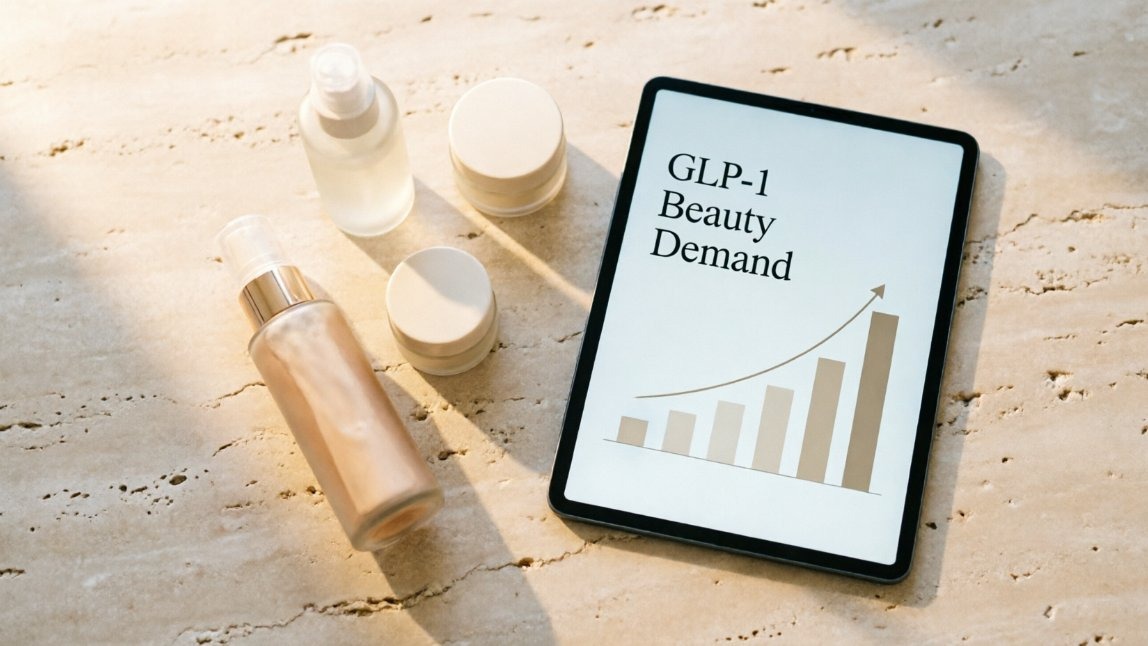
Follow the money and the answer becomes obvious. Here's what the numbers look like:
| Signal | Data point | Why it matters |
|---|---|---|
| Obesity drug market | Pfizer estimates up to $150B in annual sales by 2030 | A massive, fast-growing user base |
| Aesthetic treatment revenue | BCG projects growth from ~$700M to ~$2B over five years | Clinics see GLP-1 patients as a new segment |
| Clinic expectations | 53% of US aesthetics clinics expect new patients from weight-loss drugs; 43% expect more demand for treating drug-related facial changes (Medical Insight, 2024) | Demand is already arriving at the front desk |
| US adoption | Nearly 1 in 5 US adults has taken a GLP-1 drug at some point | This is mainstream, not niche |
And the big players are moving. Reuters reported in October 2026 that L'Oréal is testing products on GLP-1 users, Galderma has studied how its existing injectables perform on GLP-1-related skin changes, and Natura is developing a new generation of treatments, potentially including ingestibles. (Source)
Translation: "GLP-1 skincare" is about to get crowded. The brands and clinics that win will be the ones that can show results, not just promise them.
What Can an Ozempic Face Skin Analysis Actually Measure?
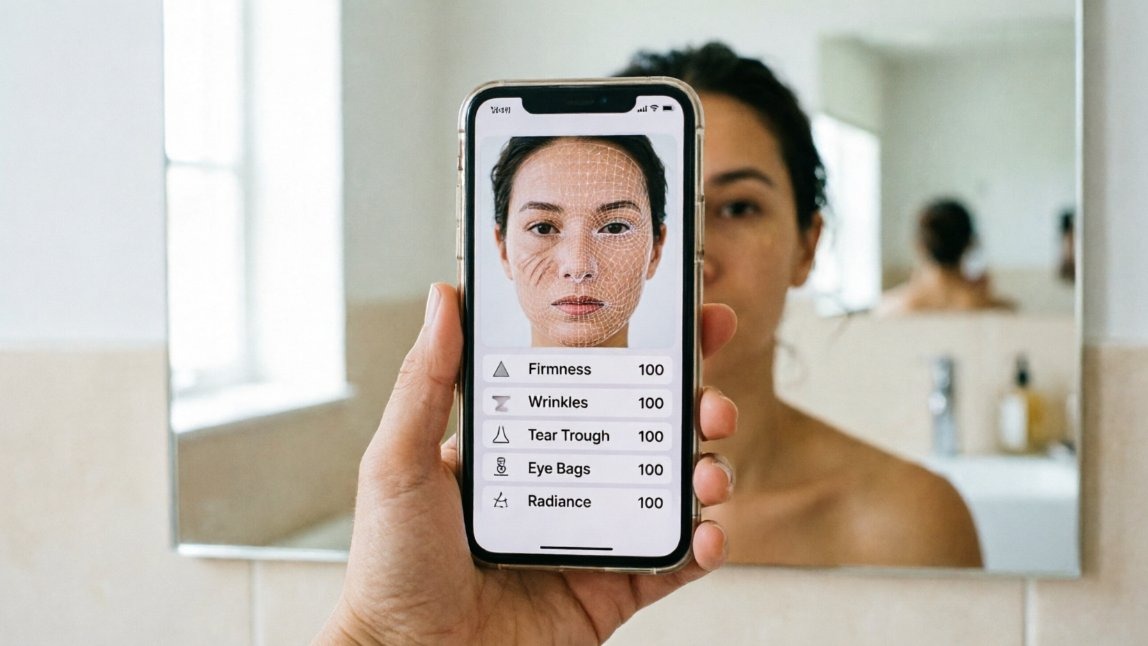
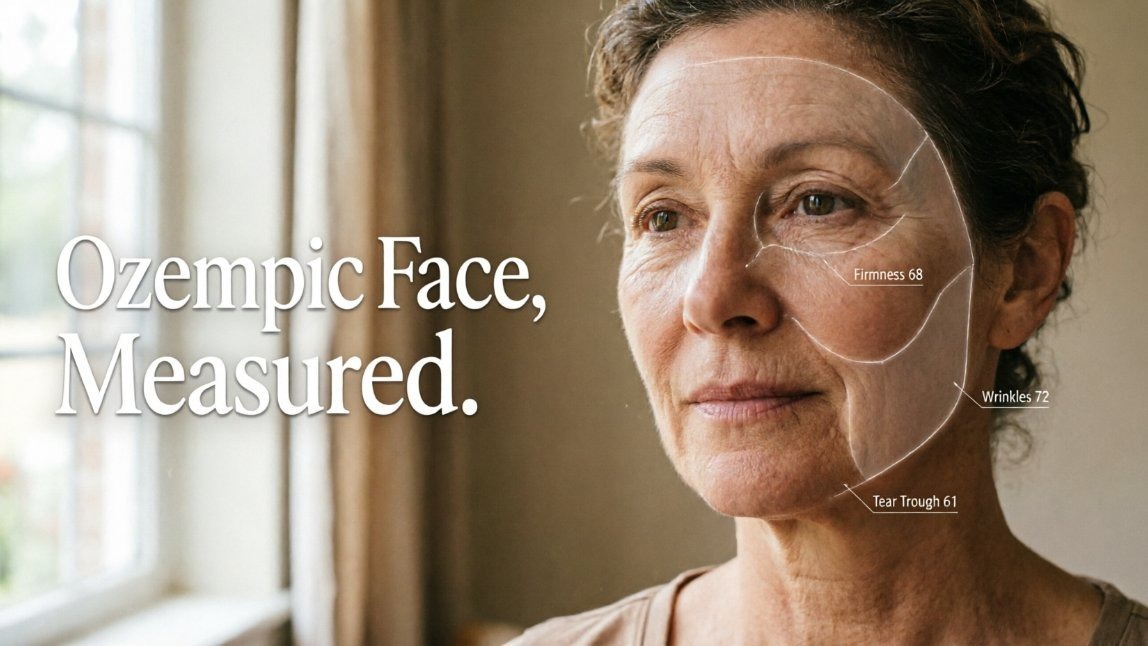
An Ozempic face skin analysis uses computer vision to read a selfie and score the visible skin concerns most often linked to rapid weight loss. No guesswork, no "I think it looks better," just numbers you can compare week over week.
Perfect Corp.'s AI Skin Analysis analyzes 16+ skin metrics on a 0–100 scale in seconds. For GLP-1 users, these are the ones that matter most:
| Ozempic face concern | AI metric to track | What it tells you |
|---|---|---|
| Loose, less springy skin | Firmness & elasticity | Whether skin is holding its shape over time |
| Deeper lines and folds | Wrinkles & fine lines | Changes in visible line depth and density |
| Hollow under-eyes | Tear trough, dark circles | How under-eye volume and shadowing evolve |
| Heavier-looking eye area | Eye bags, droopy eyelids | Upper and lower eye area changes |
| Tired, dull complexion | Radiance, hydration, texture | Surface quality you can improve with skincare |
| "I look older" | Visible skin ageing score | A single, easy-to-communicate summary |
Why consistency beats a mirror
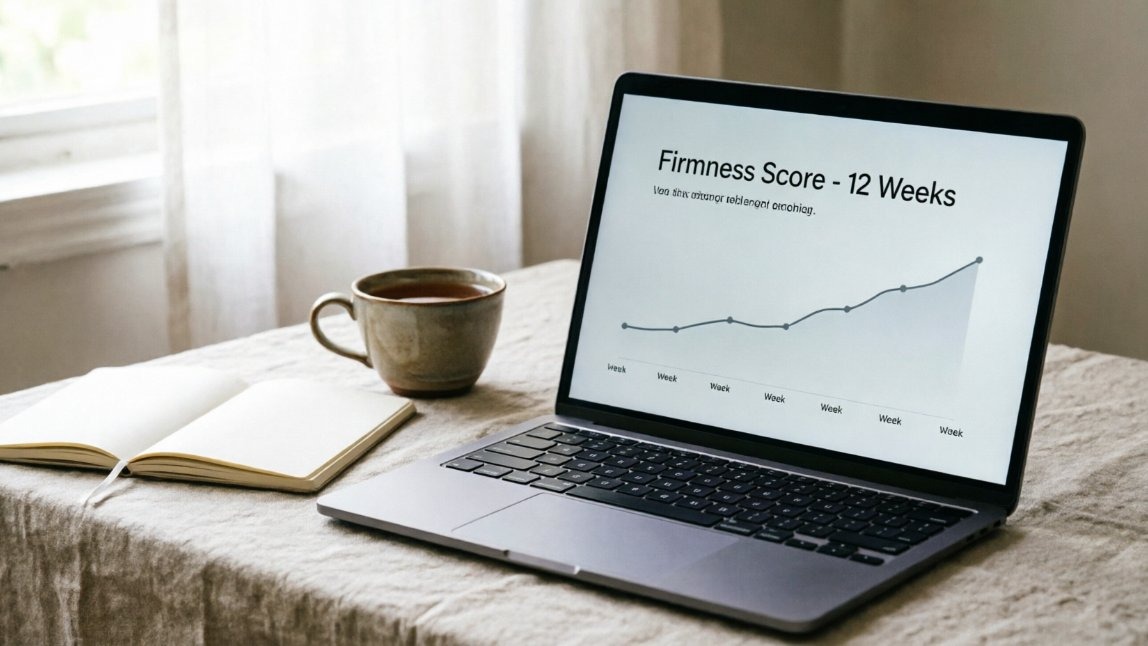
Mirrors lie. Lighting changes, moods change, and memory is terrible at comparing "now" with "three months ago." AI analysis with real-time face alignment captures images under consistent guidance, so progress tracking becomes repeatable. Perfect Corp. reports a 95% test-retest reliability rate for its skin analysis, which is exactly what you need when the whole point is spotting gradual change.
👉 Try a free AI skin analysis from a selfie
How Can Aesthetic Clinics Use AI Skin Analysis for GLP-1 Patients?

GLP-1 patients often walk in with a vague worry and a camera roll full of unflattering selfies. AI turns that anxiety into a structured conversation.
1. Baseline at the start of the weight-loss journey
Invite patients to scan before or early in their GLP-1 program. A baseline makes every future consultation evidence-based, and it gives clinics a reason to stay in touch long before treatment is needed.
2. Track change at every milestone
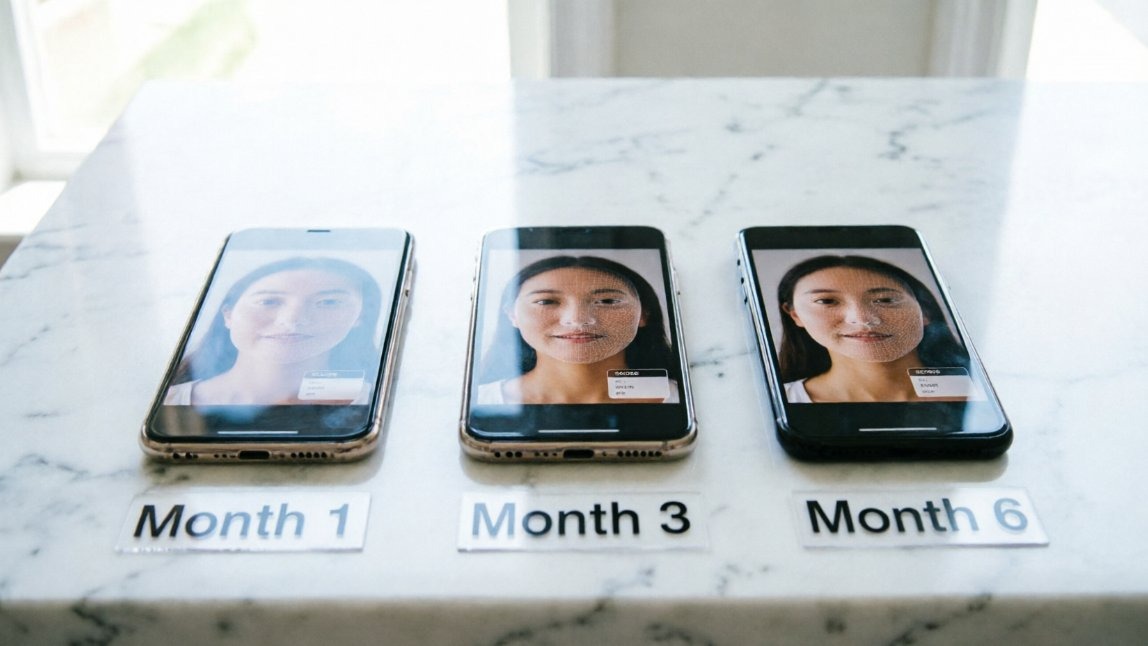
Rescan every 4–8 weeks. Firmness, wrinkle and tear-trough scores show where change is concentrated, helping practitioners prioritize conversations around skin quality, volume or both.
3. Visualize options before committing
Patients are far more confident when they can see possible outcomes. Tools like AI Aesthetic Simulation and the AI Skin Simulation let clinics preview illustrative results during consultation, setting realistic expectations without overpromising.
4. Pair with in-clinic treatments you already offer
AI analysis doesn't replace treatment. It frames it. We've covered how this works with energy-based devices in our guide to InMode Lifting and AI skin analysis; the same data-first approach applies to GLP-1 patients.
👉 Explore AI Skin Diagnostic Solutions for clinics
How Can Skincare Brands Build GLP-1 Programs With AI?
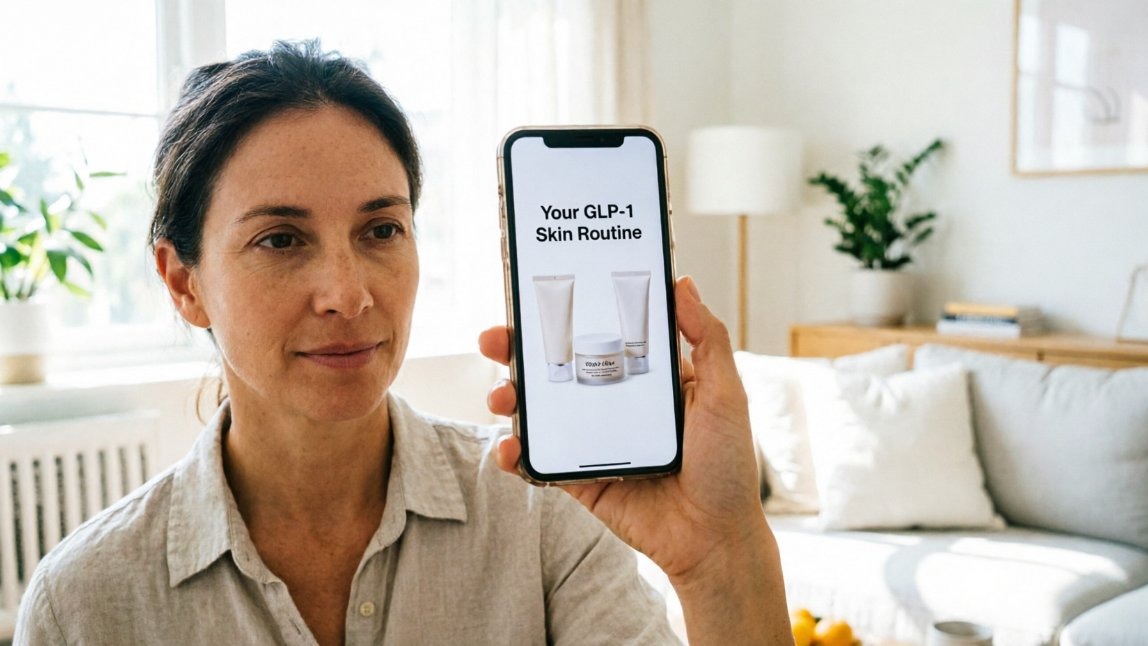
Brands are launching "GLP-1 friendly" serums faster than you can say semaglutide. The differentiator won't be the label. It'll be the experience.
Personalized routines, not generic promises
Embed skin analysis on your site or app so shoppers get a routine based on their actual scores for firmness, hydration and radiance. That's more credible, and more convertible, than a one-size-fits-all "anti-sagging" claim.
Prove value with before-and-after data
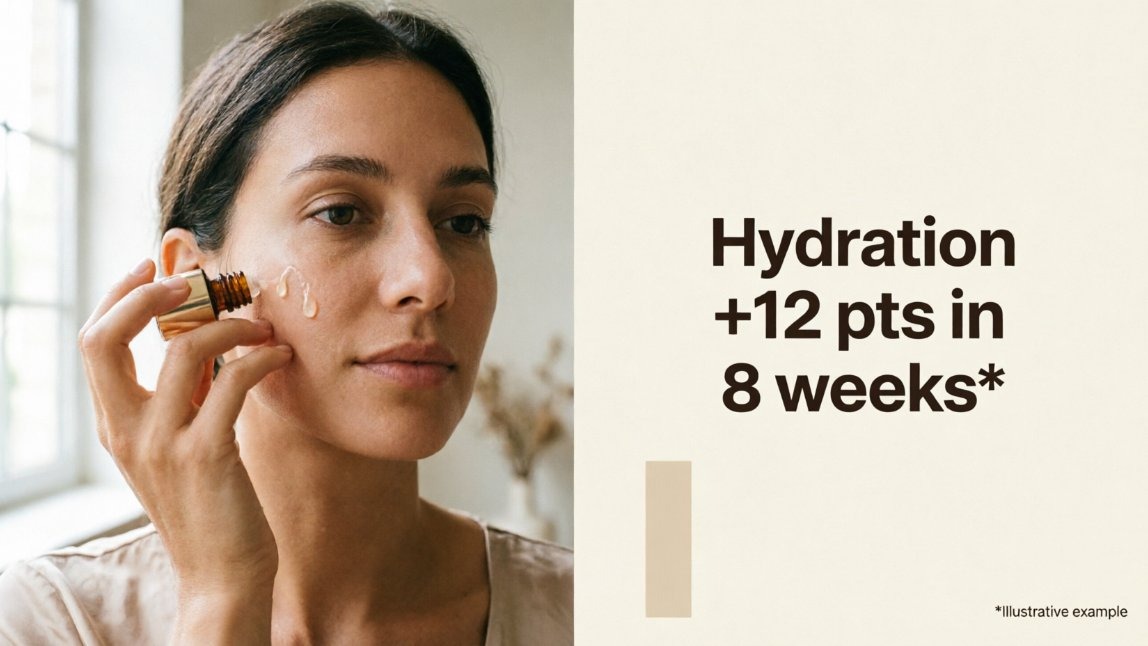
Invite customers to rescan after a few weeks of use. Surface-level improvements in hydration, texture and radiance can be tracked and shared, giving R&D teams real-world signal and marketing teams compliant, data-backed storytelling.
Build it into your stack with an API
Developers can plug skin analysis directly into existing apps and kiosks. Test it first in the YouCam AI API playground, then layer in complementary tools like the AI Face Analyzer for facial structure and proportions.
What Can't AI Skin Analysis Do?

Let's keep it real, because your customers will appreciate it:
- It isn't a medical diagnosis. AI skin analysis scores visible surface characteristics. Medical questions about GLP-1 medications belong with a doctor.
- It doesn't measure deep fat directly. It reads what the camera sees: lines, firmness cues, shadows and texture.
- It doesn't make products work better. It shows what's changing, so people can make smarter decisions.
Positioned honestly, that's exactly its superpower: turning a confusing, emotional experience into clear, trackable information.
👉 Explore AI Skin Diagnostic Solutions
FAQ
What does Ozempic face look like?
Typically: hollower cheeks and temples, looser skin around the jaw, deeper folds and under-eye hollows, and an overall more tired look. It varies a lot by age, starting weight and how fast the weight came off.
Is Ozempic face reversible?
Not always on its own. Regaining weight can restore some fullness, but if weight stays off, volume-related changes tend to remain. Many people discuss options with a dermatologist or aesthetic professional, and tracking skin changes with AI makes those conversations more specific.
Can men get Ozempic face?
Yes. Facial volume loss after rapid weight loss can happen to anyone, regardless of gender.
Can skincare fix Ozempic face?
Skincare can support surface qualities such as hydration, texture and radiance, but experts note topicals haven't been shown to restore lost fat volume. Set expectations accordingly.
How does AI skin analysis help with Ozempic face?
It scores visible concerns like firmness, wrinkles, tear troughs and radiance from a selfie, so changes can be tracked consistently over time instead of judged by eye.
How often should GLP-1 users scan their skin?
A baseline at the start, then every 4–8 weeks works well for spotting gradual trends without overreacting to day-to-day lighting or hydration swings.
Can I add Ozempic face skin analysis to my app or website?
Yes. Perfect Corp.'s skin analysis is available as web solutions and as an API/SDK, so clinics and brands can embed it into existing digital journeys.
Ready to turn GLP-1 skin worries into measurable progress? Explore AI Skin Diagnostic Solutions and give your clients the clarity they're looking for.