 Author: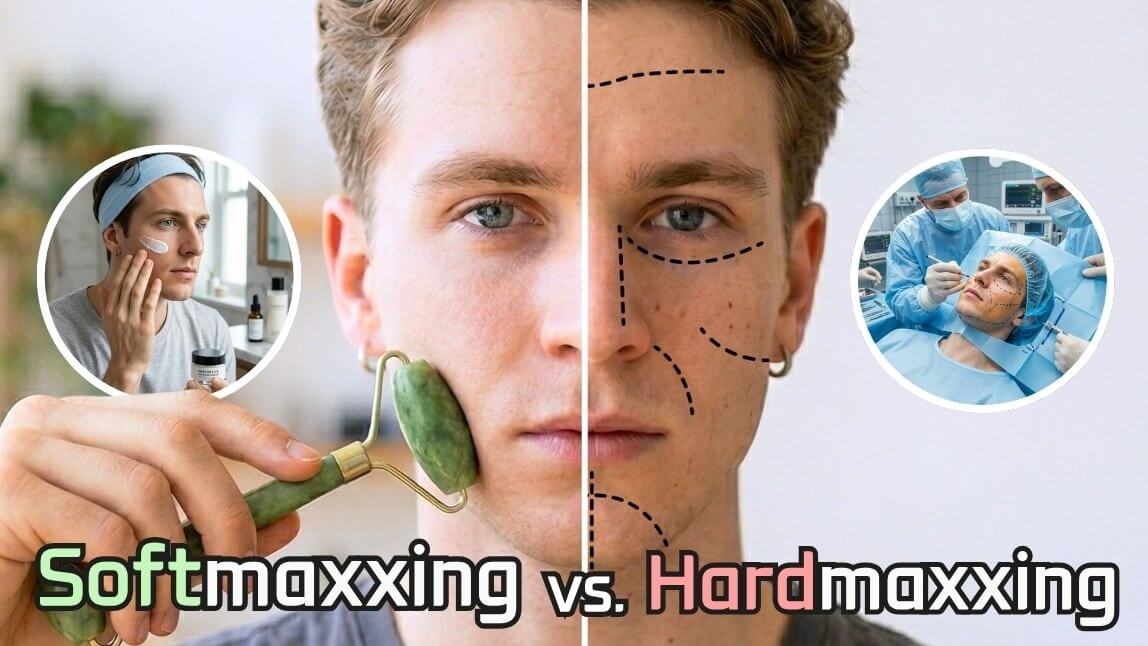
Is Softmaxxing vs. Hardmaxxing Finally Shifting The Looksmaxxing Conversation In 2026?
Scroll through TikTok, Reddit, or Twitter/X for a few minutes and you will probably see people debating Softmaxxing vs. Hardmaxxing. The language of “maxxing” has moved from niche forums into mainstream feeds, and 2026 is the year many people are asking a simple question: is going all in on extreme looksmaxxing actually worth the cost?
At a high level, here is the short version:
- Hardmaxxing is the extreme, all‑or‑nothing approach
- Softmaxxing is the sustainable, multi‑area upgrade approach
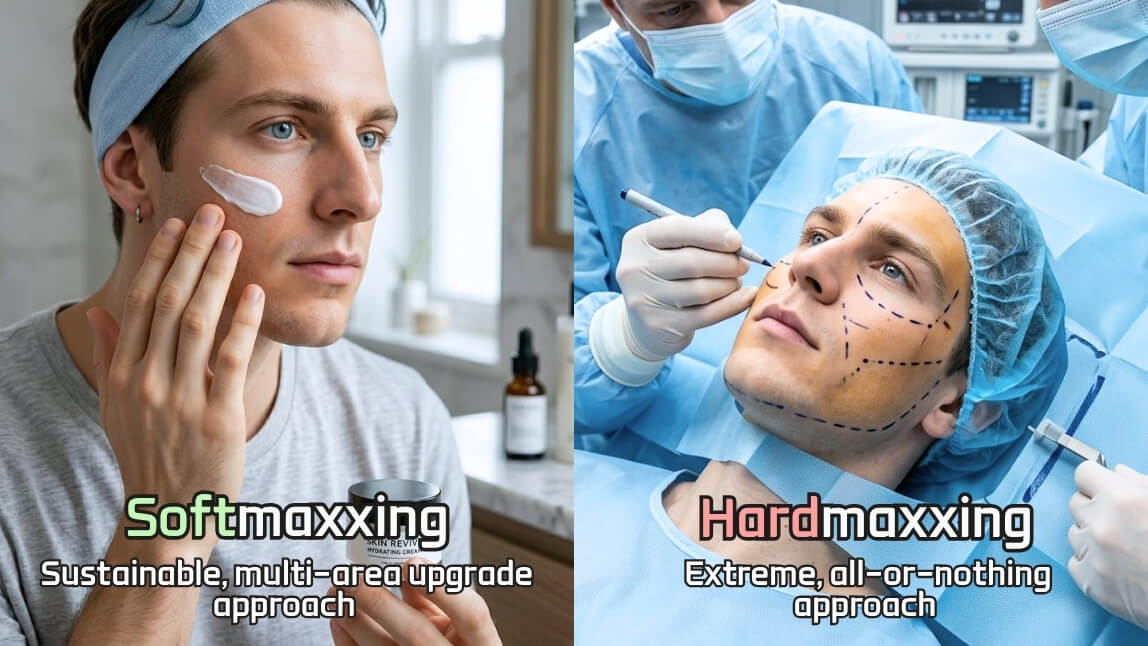
Both sit inside the same culture of “maximizing” looks, status, and outcomes, but they push you down very different paths.
What People Really Want to Know about This Trend
Most readers looking up Softmaxxing vs. Hardmaxxing in 2026 are actually asking things like:
- “Do I really need extreme surgery or insane gym routines to be attractive?”
- “Can I improve my dating or social life without wrecking my mental health?”
- “How do I know when I am crossing the line from healthy improvement into obsession?”
Those questions are valid, especially when social media often rewards the most dramatic before/after transformations.
Adjacent research helps frame what is going on:
- A 2023 APA survey reported that about 45% of teens and young adults (aged 15-26) said social media makes them feel worse about their own bodies (Source)
- Reviews in the journal Body Image have found that seeing idealized images online is linked with more body dissatisfaction and comparison.
Put simply, the environment is pushing people toward Hardmaxxing content, while the science quietly supports something that looks much closer to Softmaxxing.
What is Hardmaxxing Really Aiming At?
Hardmaxxing focuses on maximum change in one domain, usually physical appearance:
- Aggressive gym regimens, extreme bulking and cutting
- Stacks of cosmetic procedures, sometimes in a short timeframe
- Strict diets, strict schedules, strict tracking
The mentality is “do everything possible” to reach a specific outcome. Progress is often measured in:
- Facial attractiveness ratings
- Body fat percentage and muscle size
- Follower counts or explicit dating results
For some people, this can deliver fast, visible results and a strong sense of control. Especially in 2026, with ever‑expanding cosmetic options and enhancement content going viral, Hardmaxxing can look like the “serious” choice.
But it comes with trade‑offs:
- Extreme routines take large amounts of time, money, and mental energy. Time‑use data suggests adults only have about 3–5 hours of leisure per day, so a full Hardmaxxing regimen can quickly crowd out relationships, rest, and other goals.
What Does Softmaxxing Actually Look Like?
Softmaxxing, in contrast, spreads your effort:
- You improve grooming, style, fitness, sleep, social skills, and career a bit at the same time.
- You aim for “better than before”, not “perfect at any cost”.
- You use a probabilistic mindset: you stack small advantages that collectively raise your odds of positive outcomes.
Common Softmaxxing moves include:

(Source: Instagram@glitchtoglow)
- Upgrading basic grooming and skincare
- Choosing clothes that fit well and suit your frame
- Following moderate exercise and realistic nutrition
- Improving sleep habits and stress management
- Practicing conversation, emotional intelligence, and confidence
- Building career skills and a stable life foundation
Instead of asking “How do I become a perfect 10?” the question becomes “How do I make it more likely that my everyday interactions go well in many areas of life?”
Which Approach “Wins” in 2026?
Neither Softmaxxing nor Hardmaxxing is inherently “good” or “evil.” They are tools and cultural patterns. The key differences:
Speed vs. sustainability
- Hardmaxxing can be fast but is hard to keep up.
- Softmaxxing is slower but usually easier to sustain.
Narrow vs. diversified life
- Hardmaxxing concentrates everything into one metric (looks, followers, a specific body type).
- Softmaxxing treats your life more like a diversified portfolio.
Fragility vs. resilience
- With Softmaxxing, a setback in one domain hurts less because you have other strengths.
Given how much evidence points toward moderate, flexible behavior being easier to maintain, Softmaxxing aligns more closely with what long‑term data supports. Many creators and therapists are already pushing people toward softer, holistic “glow‑up” stories rather than brutal transformations.
How Did Softmaxxing vs. Hardmaxxing Become A Thing?
If Softmaxxing vs. Hardmaxxing sounds suspiciously like a math class, you are not wrong. These ideas are borrowed from machine learning, where:
- A hardmax/argmax picks the single best option and discards the rest
- A softmax spreads weight across several options based on probability
Online, people adopted that logic and applied it to self‑improvement and looksmaxxing.
From niche forums to TikTok soundbites
The language originally circulated in smaller Reddit and looksmaxxing communities. From there, it moved outward as:
- TikTok clips broke down “Softmaxxing routines” versus “Hardmaxxing transformations”
- Twitter/X threads explained the difference in quick, shareable text
- YouTube and Shorts creators used the terms to structure self‑improvement content
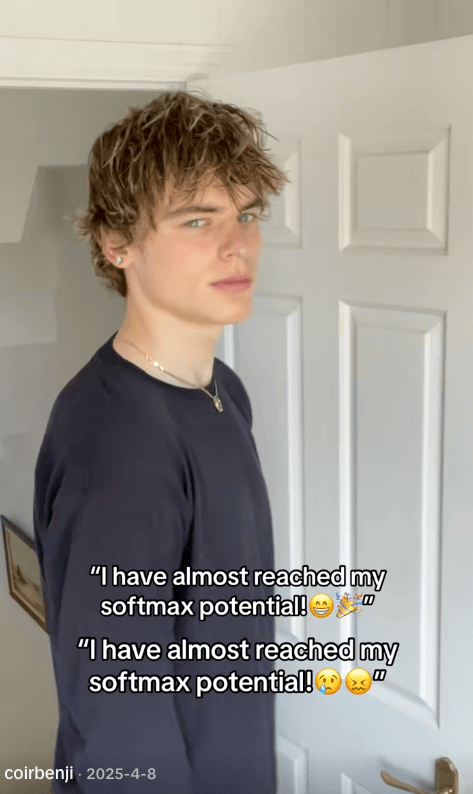 (Image Source: TikTok @coirbenji) |  (Image Source: TikTok @jackneelpodcastlive) |
The appeal is obvious: a simple two‑word contrast that captures an entire mindset. In 2026, this kind of binary framing fits the way social media works: easy to put in a caption, easy to argue about in comments.
How Hardmaxxing Spreads on Social Platforms
Hardmaxxing content tends to feel more dramatic:
- Surgical transformation journeys
- Ultra‑lean body reveals
- “Insane grind” lifestyle vlogs
Algorithms tend to reward:
- Shock value
- Intense before/after contrast
- Clear hero arc: “I was a 3, now I am a 9”
That is why Hardmaxxing often looks more visible, even if fewer people actually live at those extremes.
Behind the scenes, though, risks are real:
- Health risks from overtraining, drugs, or procedures
- Psychological strain when identity is tied to a fragile, appearance‑based target
- Opportunity costs, where years of focus on one metric come at the expense of social and professional growth
Why Softmaxxing resonates with a broader audience
Softmaxxing content does not always go as viral, because it is less extreme. But it lands more strongly with people who want:
- Better confidence without giving up their entire personality to the gym
- Smarter, evidence-aligned routines they can maintain
- Improvements in dating, work, and self‑image that do not require a full identity shift
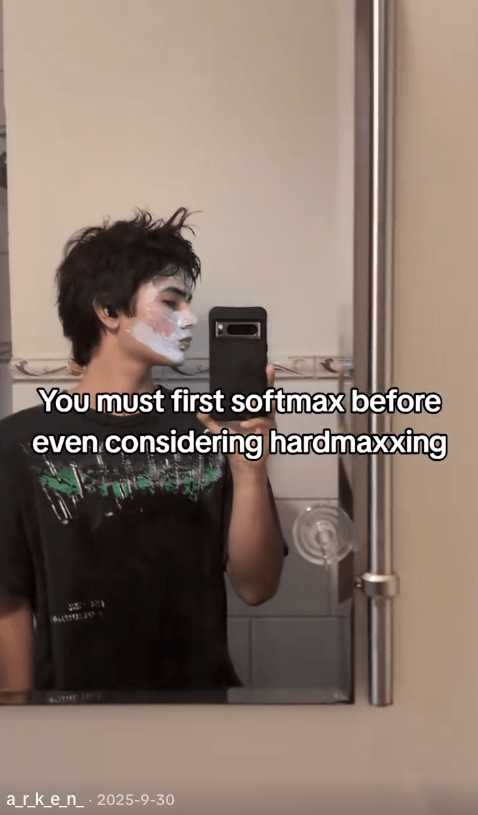 (Image Source: TikTok @a_r_k_e_n) |  (Image Source: Instagram @glowup_today_01) |
Softmaxxing usually includes:
- Appearance basics (grooming, clothing that suits your body and face, posture)
- Health basics (moderate exercise, reasonable nutrition, regular sleep)
- Social basics (learning to listen, express, and connect)
- Digital basics (a more thoughtful online presence and photos)
It is also closer to what many therapists and coaches recommend: holistic development across multiple life domains.
The mental health angle
Two psychological patterns often sit behind these approaches:
Hardmaxxing tendencies often align with:
- Perfectionism
- All‑or‑nothing thinking
- Self‑worth tied tightly to external metrics
Softmaxxing tendencies often align with:
- Growth mindset (skills and looks can be improved)
- Self‑compassion (you are more than your face or body fat percentage)
- Probabilistic thinking (you increase odds rather than chasing guarantees)
Given the rising concerns about body image and mental health, especially among younger social media users, the framing of Softmaxxing vs. Hardmaxxing matters. The same maxxing culture that encourages improvement can also trigger body dysmorphic tendencies or long‑term dissatisfaction when taken to extremes.
Where this trend might go next
Looking ahead through 2026, several dynamics are visible:
Normalization of maxxing language
Terms like looksmaxxing, gymmaxxing, and now Softmaxxing vs. Hardmaxxing are likely to keep spreading beyond niche spaces.More cosmetic options
Non‑surgical treatments and aesthetic tech expand the menu for Hardmaxxing. That can make extreme change feel both more tempting and more “normal.”Counter‑movement toward balanced optimization
At the same time, pushback is growing. Many creators, therapists, and coaches are focusing on “balanced glow‑ups” and sustainable routines that reflect Softmaxxing.Platform differences
- Short‑form video platforms are likely to keep amplifying dramatic Hardmaxxing content.
- Longer‑form spaces such as podcasts or newsletters may favor more nuanced Softmaxxing conversations.
Softmaxxing vs. Hardmaxxing will probably not disappear. Instead, the conversation will keep evolving into a deeper question: How do you use self‑optimization tools without losing your health, identity, or relationships in the process?
This is exactly where smart, data‑driven tools can help you stay grounded instead of guessing.
How AI Facial Thirds Calculator Fits Into Softmaxxing vs. Hardmaxxing
When people think about Softmaxxing vs. Hardmaxxing, they often focus on routines: gym plans, diet strategies, or surgery roadmaps. But a key practical question sits underneath all of that:
“What does my face actually look like structurally, and how can I work with it realistically?”
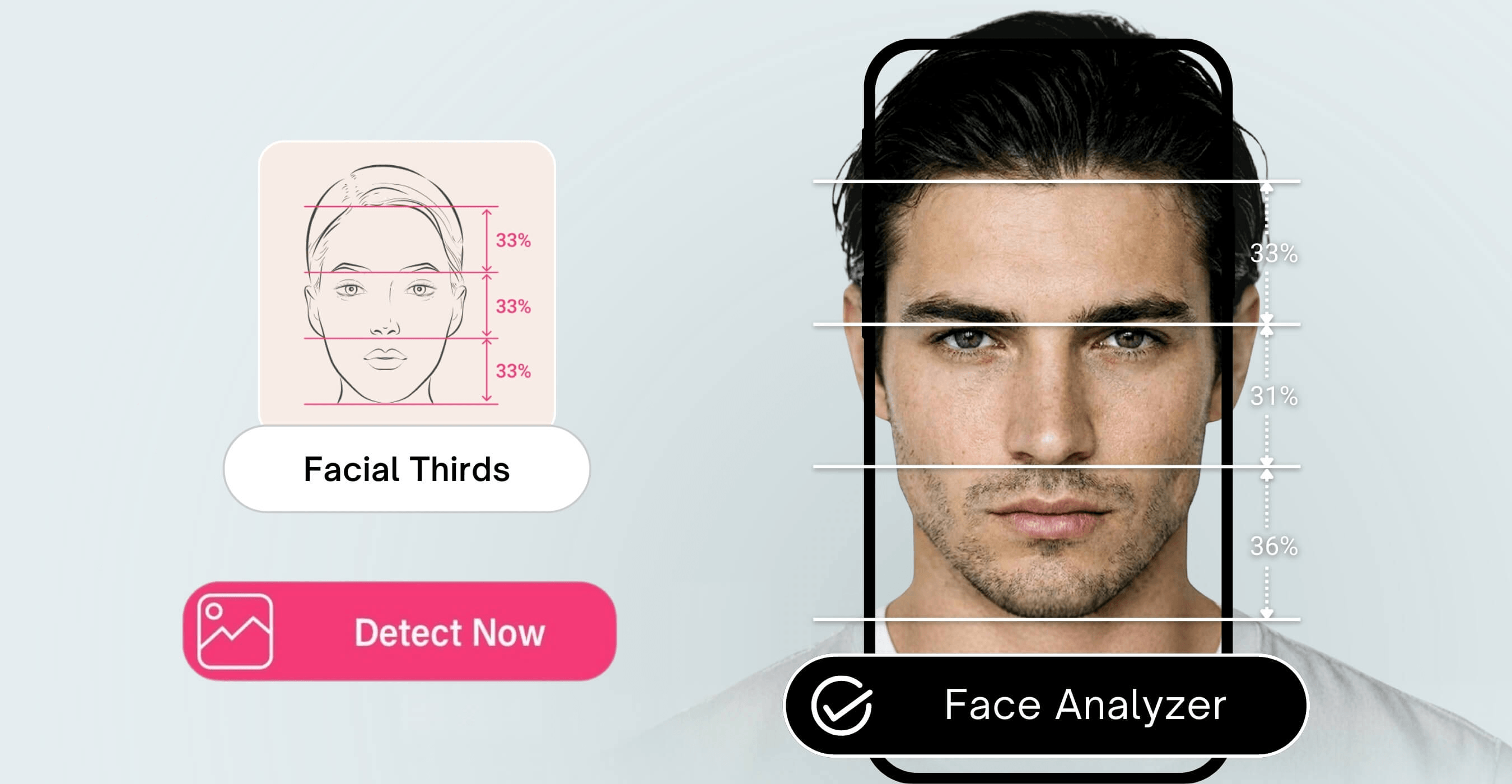
The AI Facial Thirds Calculator (Face Ratio Analyzer) directly addresses that question in a focused, data‑based way.
The pain points behind looksmaxxing decisions
Creators and everyday users dealing with this trend often face the same problems:
- They are unsure whether their perceived “flaws” are real structural issues or simply angles, styling, and lighting.
- They have no objective way to see how their upper, middle, and lower facial thirds compare to classic proportions.
- They jump toward Hardmaxxing solutions (procedures, extreme regimens) without a clear understanding of their actual facial balance.
This is where an analytical tool becomes useful, especially for Softmaxxing‑minded people who want clarity before commitment.
What the AI Facial Thirds Calculator actually does
According to the product description, the AI Facial Thirds Calculator:
- Uses AI‑powered facial thirds detection to find key facial landmarks
- Divides your face into upper, middle, and lower thirds
- Compares your facial proportions to golden ratio references
- Provides detailed facial ratio results that factor in eyes, nose, lips, and overall thirds
- Is camera‑based, so you can take a photo directly on the webpage
- Emphasizes privacy, stating that all images are permanently deleted after analysis
The results give you a more objective look at your facial structure, not just a mood or a filter.
Why this matters for Softmaxxing vs. Hardmaxxing choices
For Hardmaxxing‑inclined users, the tool can:
- Clarify whether a perceived imbalance is structural or mostly styling and angles
- Provide concrete facial thirds data that a clinic or professional can reference in consultations
- Integrate into aesthetic and medical clinic workflows where facial balance and treatment planning are discussed
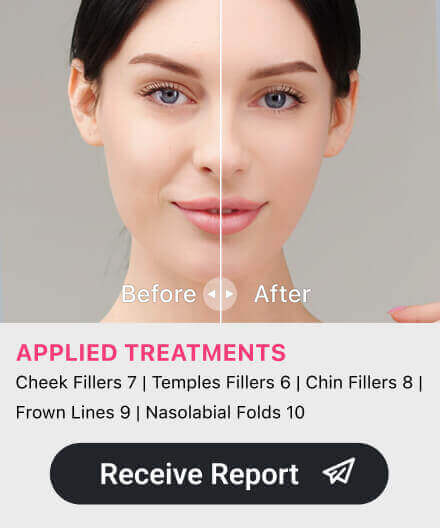
For Softmaxxing‑oriented users, it supports a more measured approach:
- You see how your facial thirds align with golden ratio concepts without needing to commit to procedures.
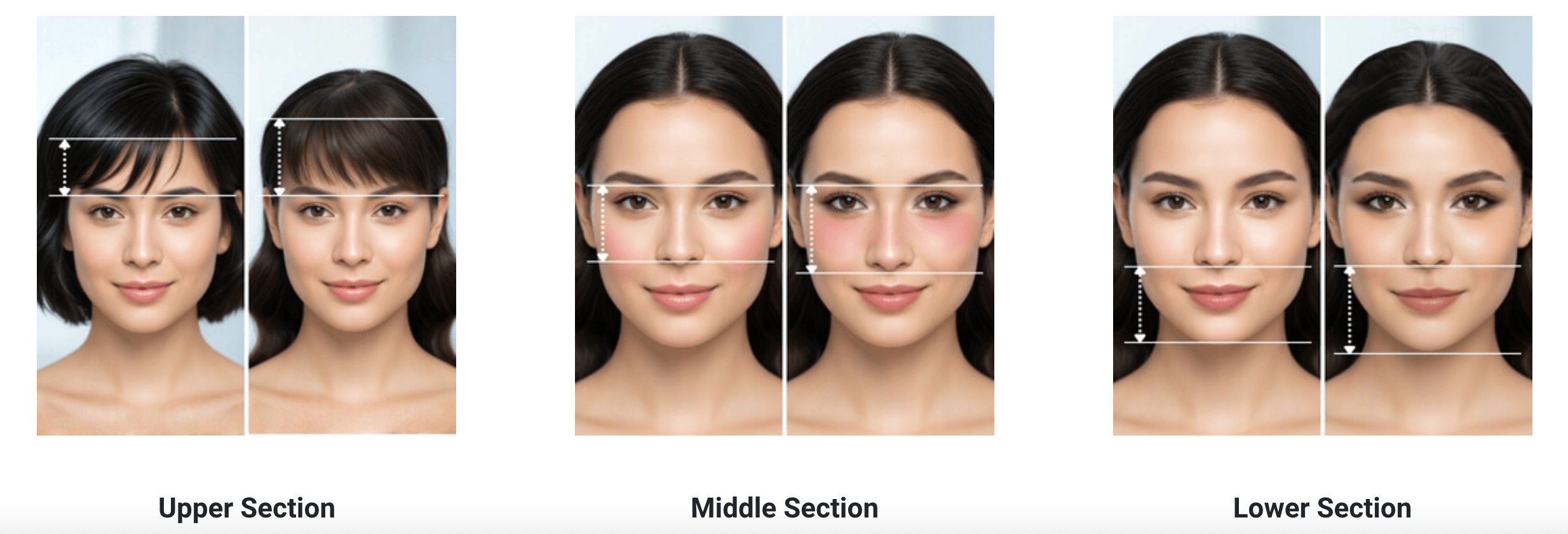
- You can apply the integrated beauty and styling guidance provided:
- Hair, bangs, and volume suggestions for the upper third
- Makeup strategies like blush, eyeliner, and lashes for the middle third
- Lip shading and highlighting tips for the lower third
This helps you visually balance your face using reversible interventions such as makeup, hairstyle, glasses, and eyebrow shaping.
Who Benefits Most from This Tool in the 2026 Trend Context?
The AI Facial Thirds Calculator is positioned for:
- Beauty & fashion consumers interested in looksmaxxing and facial balance
- Beauty professionals & consultants who need visual, data‑backed explanations for clients
- Aesthetic & medical clinics that want AI‑powered face analysis (e.g., AI Face Symmetry, Face Ratio Analyzer) for consultations
For everyone trying to navigate Softmaxxing vs. Hardmaxxing in 2026, the main advantage is this:
It replaces pure guesswork and self‑criticism with structured, ratio‑based insight and concrete styling options.
That sets up a more grounded next step: actually using the tool in a Softmaxxing‑friendly way.
Step‑By‑Step: Using AI Facial Thirds Calculator For Smarter Softmaxxing
Knowing that a tool exists is one thing. Using it effectively in your day‑to‑day Softmaxxing vs. Hardmaxxing decisions is another. Let’s walk through a practical, beginner‑friendly workflow.
1. Preparation: Set Yourself Up for a Clean Scan
Before you open the AI Facial Thirds Calculator:
Choose neutral lighting
Aim for soft, even lighting from the front. Avoid harsh shadows and heavy filters.Keep your face visible
Pull hair away from your face if it covers your forehead or jawline. Remove thick glasses if they block your eyebrows or eyes.Use minimal makeup for the scan
Light makeup is fine, but avoid anything that drastically reshapes your features.
Once you are ready, go to the webpage and prepare to use the camera‑based face scan.
2. Capture Your Image and Run the Analysis
Follow this simple sequence:
Open the tool in your browser
No app download is required.Turn on the camera using the built‑in option on the page.
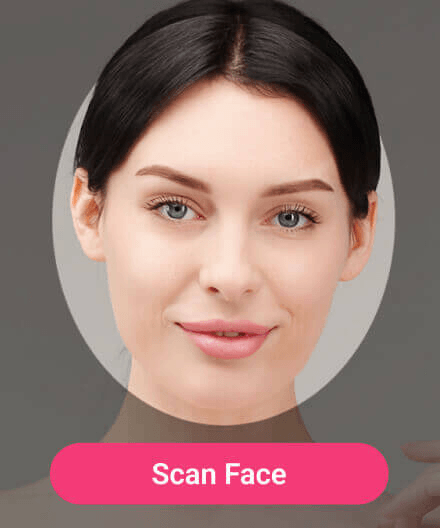
Position your face:
- Look straight at the camera
- Keep your face relaxed
- Ensure your full face is inside the frame, including your hairline and chin
Take the photo directly on the webpage.
Start the analysis
The AI will automatically detect facial landmarks and divide your face into:- Upper third (hairline to eyebrows)
- Middle third (eyebrows to base of nose)
- Lower third (base of nose to chin)
Wait for the results
The tool calculates your facial thirds and compares them against golden ratio references.
The system states that all images are permanently deleted after analysis, which supports privacy concerns around AI face tools.
3. Apply the Actionable Beauty Tips to Each Facial Third
Here is how to integrate those into your routine.
Upper third (hairline to eyebrows)
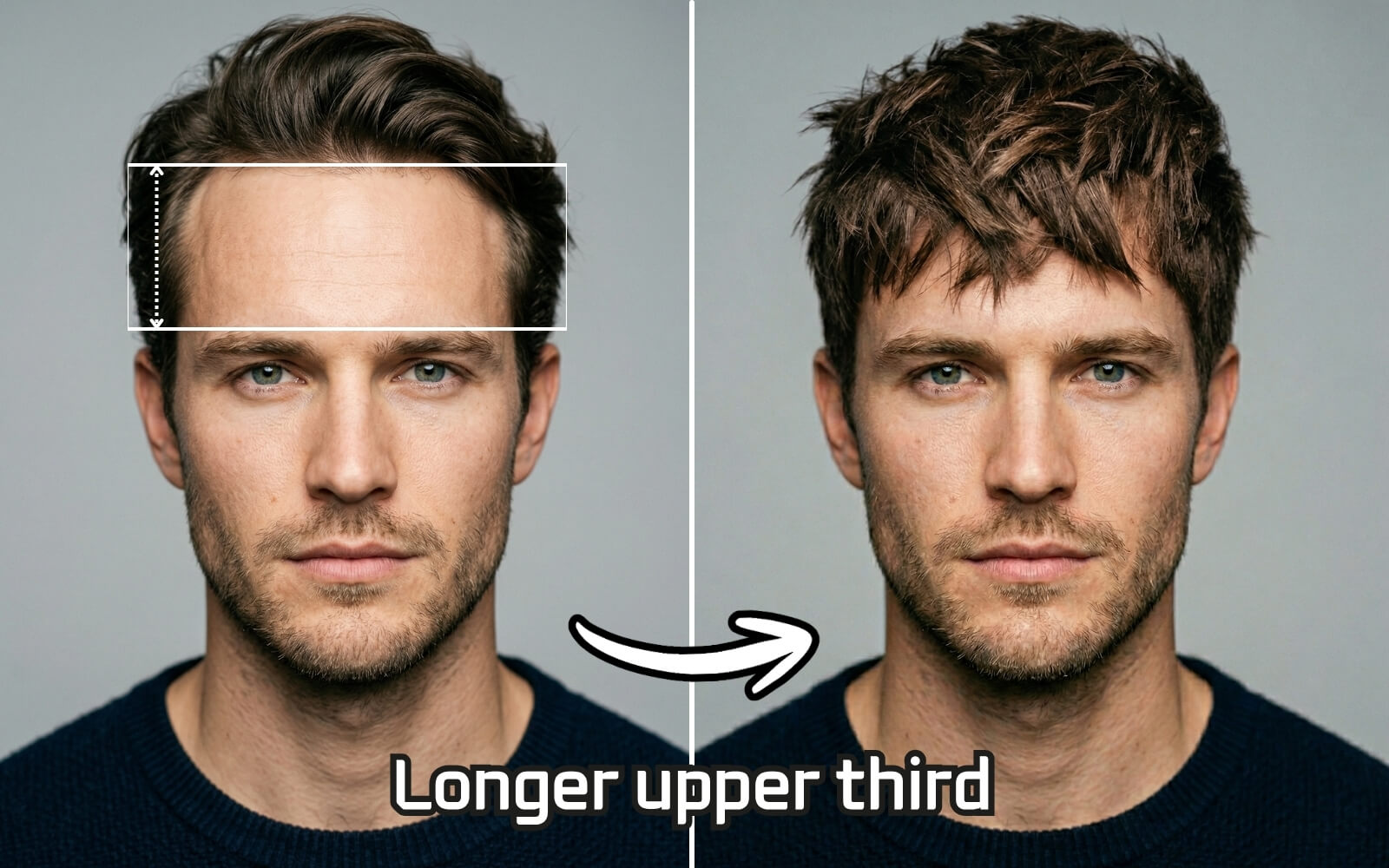
If your upper third appears proportionally longer or shorter:
- Use the provided suggestions such as:
- Bangs or fringe to visually shorten a tall forehead
- Adjusting hair volume and parting to balance perceived height
- Contouring and highlighting near the hairline to subtly reshape how the upper third reads on camera
These changes fit Softmaxxing because they are:
- Fully reversible
- Styling‑based, not surgical
- Easy to adapt across different occasions
Middle third (eyebrows to base of nose)
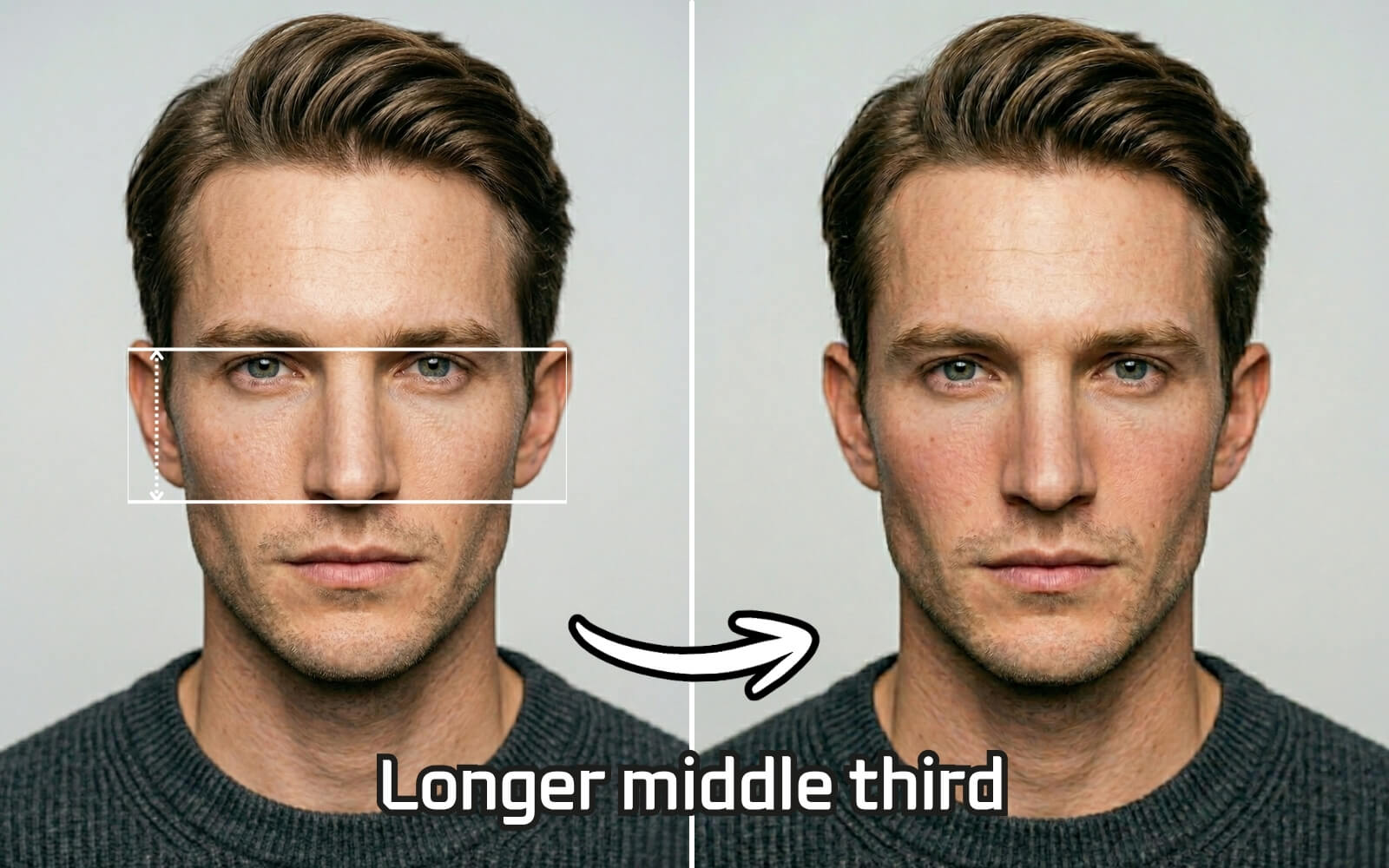
If your middle third stands out in the analysis:
- Lean into the tool’s tips around:
- Blush placement to change how long or short the middle of your face looks
- Eyeliner emphasis to draw attention upward toward the eyes
- Lash focus to add vertical balance and soften the perception of length
These adjustments let you play with how your facial thirds are perceived without changing the underlying structure.
Lower third (base of nose to chin)
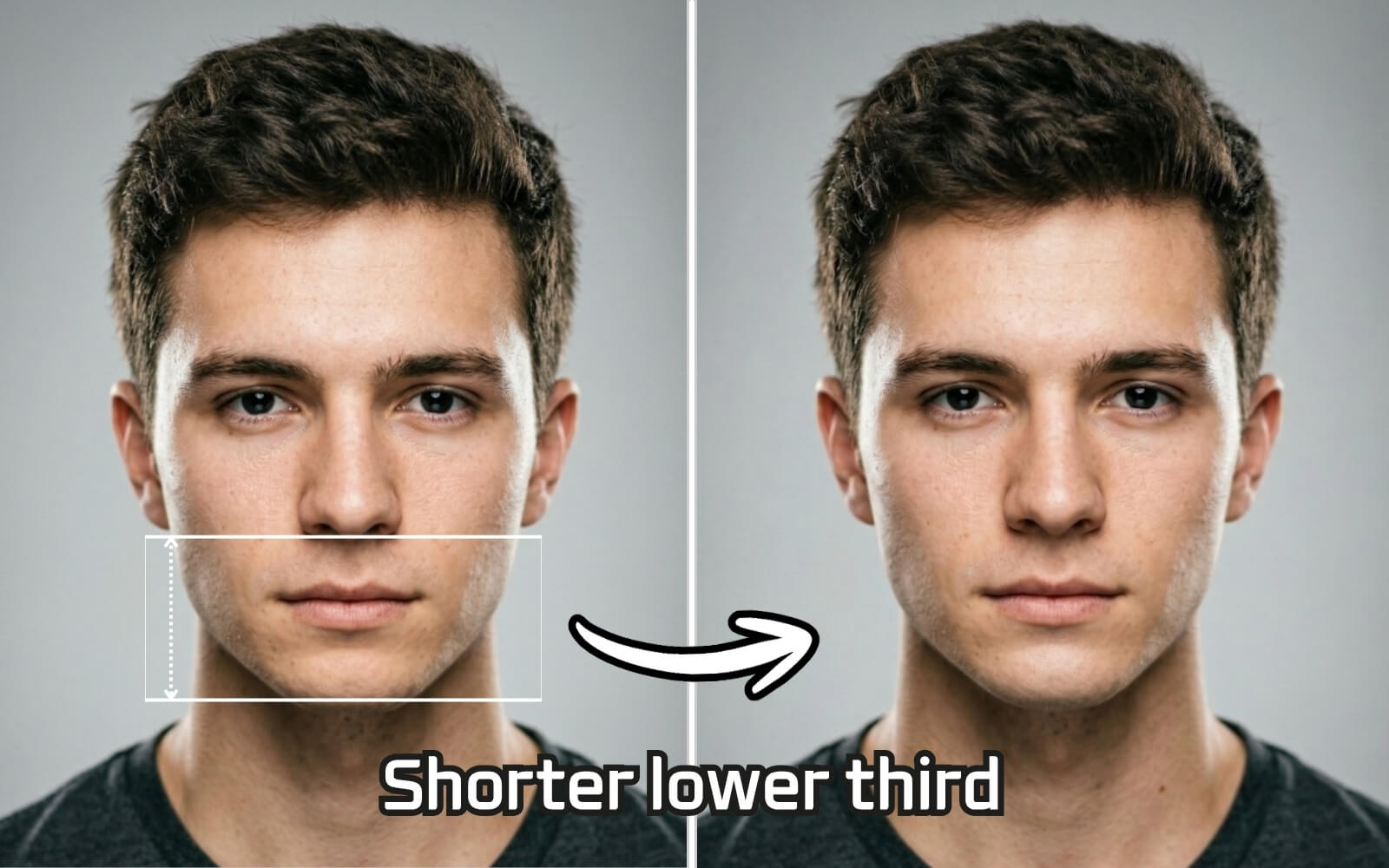
If your lower third is highlighted in the results:
- Use the suggested techniques like:
- Lip shading to visually lengthen or shorten the lower third
- Lipstick techniques that change vertical emphasis
- Vertical highlighting on the chin area to adjust how prominent that region appears
Again, this fits Softmaxxing: incremental, low‑risk, style‑based optimization.
Quick Answers To Common Questions About This Trend And Tool
About the Softmaxxing vs. Hardmaxxing trend
Q: Is Softmaxxing or Hardmaxxing better for long‑term results?
A: Evidence from behavior change research suggests that gradual, flexible approaches are more sustainable over time than extreme, rigid ones. Softmaxxing is closer to that model, while Hardmaxxing often relies on intense, all‑in strategies that can be difficult to maintain.
Q: Can Hardmaxxing ever make sense?
A: Yes, in specific goal‑driven contexts, such as competitive bodybuilding or professional modeling, extreme optimization for a limited period can be a strategic choice. Even in those cases, it is typically more effective when combined with medical supervision, clear time limits, and attention to mental health.
Q: Is Softmaxxing just “not trying hard”?
A: No. Softmaxxing usually involves consistent effort across grooming, health, social skills, and life structure. The difference is that it values sustainability and overall life quality rather than pushing a single variable to its absolute extreme.
Q: How do I know if I am sliding from Softmaxxing into unhealthy Hardmaxxing?
A: Warning signs include:
- Obsessive tracking and anxiety around small appearance changes
- Neglecting relationships, work, or sleep for the sake of your regimen
- Viewing yourself primarily as a project to be fixed rather than a person with multiple dimensions
If those patterns feel familiar, it can help to step back and reframe your goals more holistically.
About the AI Facial Thirds Calculator
Q: What exactly does the AI Facial Thirds Calculator measure?
A: It uses AI‑powered facial thirds detection to identify facial landmarks, divide your face into upper, middle, and lower thirds, and compare their proportions against golden ratio references. It also provides detailed data related to features like eyes, nose, and lips in the context of those thirds.
Q: How do I use the tool if I am not a professional?
A: As a regular user, you can:
- Turn on the camera on the webpage and take a selfie
- Let the AI analyze your facial thirds
- Use the built‑in tips about hair, makeup, and styling for each facial third to guide your everyday Softmaxxing routine
Q: Is my photo stored when I use the tool?
A: The product description states that all images are permanently deleted after analysis, and the tool emphasizes secure handling of user data.
Q: Can beauty professionals integrate this into their workflow?
A: Yes. The tool is positioned as useful for:
- Beauty professionals and consultants who want visual, data‑based explanations for clients
- Aesthetic and medical clinics that use AI Face Symmetry and Face Ratio Analyzer solutions during consultations and treatment discussions
Other practical questions
Q: How often should I re‑scan my face?
A: A specific frequency is not provided. In practice, you might use it when:
- You change hairstyles or makeup approaches significantly
- You are preparing for new professional or dating photos
- You are planning a beauty or clinic consultation and want updated ratio data
Q: Can this replace professional medical advice?
A: No. The AI Facial Thirds Calculator is designed to support beauty consultations and styling and to provide data and insight. Any decisions involving medical or surgical procedures should be made with qualified professionals who can interpret results and discuss options safely.