 Author:
Few facial features have captured the internet's attention quite like hunter eyes. With tens of millions of TikTok views, dozens of dedicated AI tools, and an entire online community debating canthal tilt angles down to the degree, hunter eyes have become the defining eye aesthetic of the 2020s.
But what actually makes an eye shape "hunter"? How does AI measure it? This guide covers the science, the metrics, and the real-world applications, without the community hyperbole.
What Are Hunter Eyes?
Hunter eyes are a specific eye-area structure defined by a cluster of anatomical characteristics that combine to create what's perceived as an intense, focused, and dominant gaze. The term originated in online aesthetics communities but has crossed into mainstream beauty, plastic surgery, and now AI facial analysis.

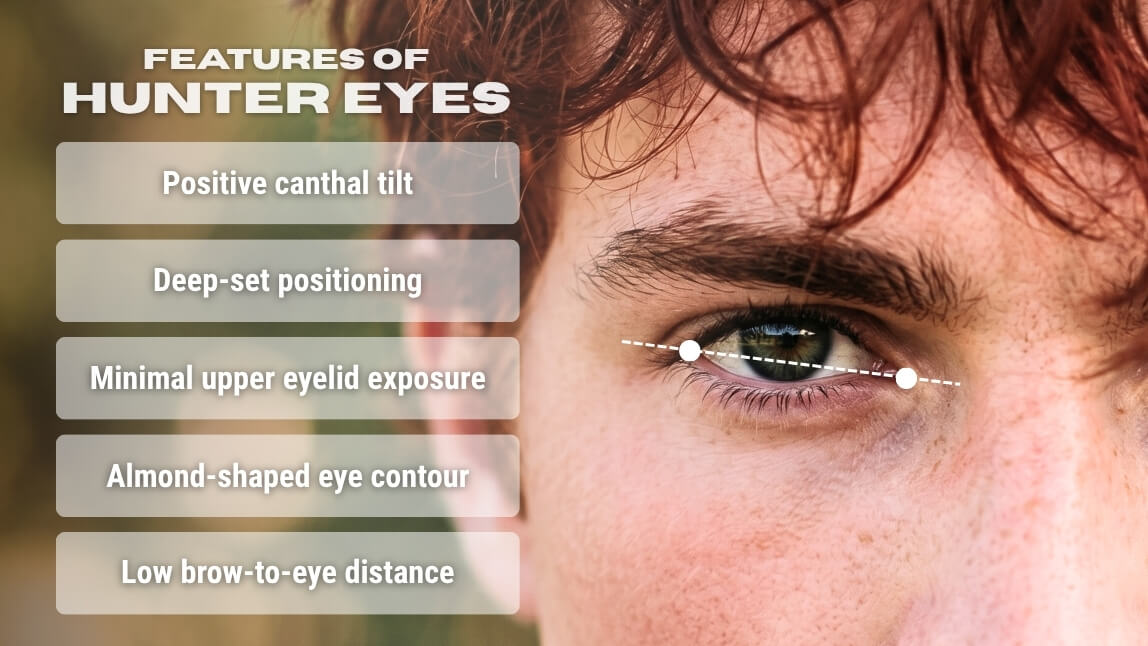
The defining features of hunter eyes include:
- Positive canthal tilt: The outer corner of the eye (lateral canthus) sits higher than the inner corner (medial canthus). This upward angle gives the gaze its characteristic sharpness.
- Deep-set positioning: The eyes appear recessed into the skull, often with a prominent brow ridge casting a subtle shadow. This depth amplifies the sense of intensity.
- Minimal upper eyelid exposure: Also called "heavy hooding," this means less visible upper lid, which creates a focused, narrowed look rather than a wide-eyed one.
- Almond-shaped eye contour: A horizontally elongated shape that reads as sleek and composed rather than round or open.
- Low brow-to-eye distance: The eyebrow sits close to the upper orbital rim, reinforcing the concentrated, focused appearance.
Hunter Eyes vs. Prey Eyes: What's the Real Difference?
The hunter/prey eye framework is a simplified model for describing two ends of a spectrum in eye-area aesthetics. It's not a binary — most people fall somewhere between the two poles — but the contrast helps clarify what the structural features actually mean.
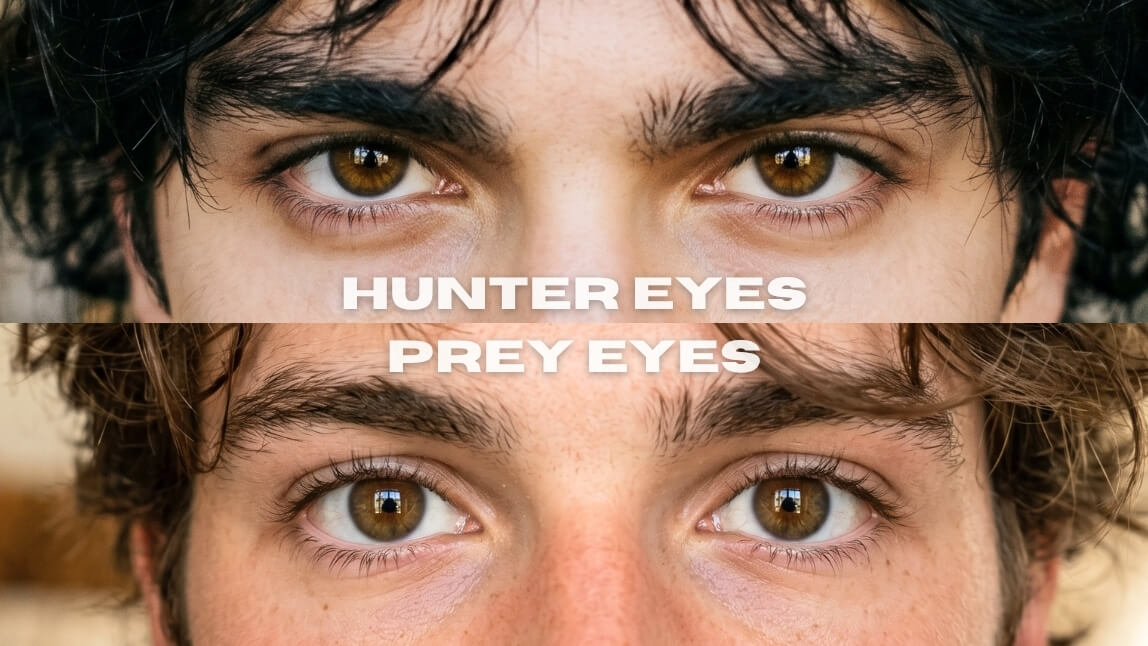
| Feature | Hunter Eyes | Prey Eyes |
|---|---|---|
| Shape & Aperture | Almond-shaped, narrow, and horizontally elongated. | Rounder, wider, and more vertically open. |
| Sclera Show (White of Eye) | Minimal to no sclera visible below the iris. | Visible sclera below or above the iris (upper/lower sclera show). |
| Brow Ridge & Support | Prominent, forward-thrusting brow ridge with deep-set eyes. | Flat or recessed brow ridge, eyes appear more prominent or bulging. |
| Canthal Tilt | Positive (outer corners tilt upward) or neutral. | Negative (outer corners tilt downward). |
| Visual Impression | Intense, sharp, focused, and mysterious. | Open, welcoming, surprised, or approachable. |
Neither configuration is objectively "better", perceived attractiveness is context-dependent, culturally variable, and influenced heavily by the surrounding facial structure. The framework is useful for understanding structure; it breaks down when treated as a universal ranking system.
Why Are Hunter Eyes Considered Attractive? What Does the Science Say?
The appeal of hunter eyes isn't arbitrary. Several lines of evidence suggest why this eye-area configuration registers as attractive across many — though not all — cultural contexts.
Perceptual intensity
Eye contact is one of the most powerful social signals humans exchange. A positive canthal tilt combined with minimal upper lid exposure concentrates the apparent focus of the gaze, the eye appears to be directing attention rather than passively receiving it. This creates the perception of confidence and intentionality, which are consistently rated as attractive qualities across gender and culture.
The shadow effect
Deep-set positioning creates a natural shadow under the brow ridge that visually elongates the orbital area and adds definition. This is the same effect that eye makeup techniques like cut crease and subtle liner are designed to replicate, smoky definition that reads as depth and intensity even without structural depth present.
How AI Face Analysis Measures Hunter Eyes
Canthal tilt and eye-area structure are among the more measurable aspects of facial aesthetics — which makes them a natural application for AI facial analysis systems. Several platforms now offer automated hunter eyes assessments, but the methodologies vary significantly.
What AI measures
Precision facial analysis APIs detect and measure eye-area characteristics by identifying anatomical landmarks — the medial and lateral canthi, the upper and lower orbital rims, the brow position — and computing geometric relationships between them.
Key measurements include:
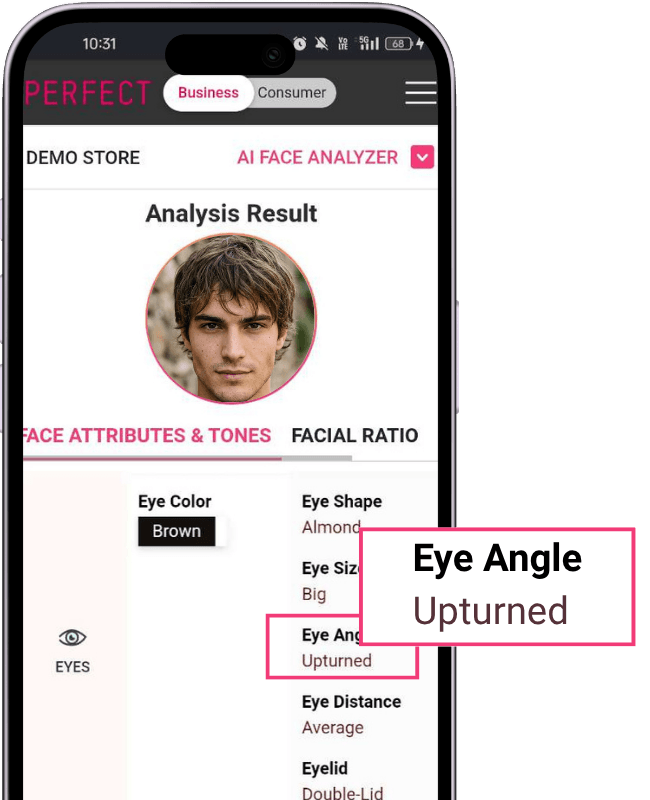
- Canthal tilt angle: The degree of elevation of the lateral canthus relative to the medial canthus, measured in degrees
- Almond ratio: Horizontal eye width relative to vertical eye height
- Brow-to-eye distance: The gap between the brow edge and the upper orbital rim
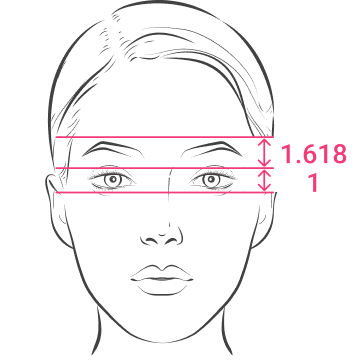
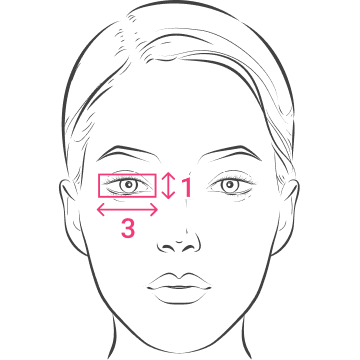
(Left: Brow-to-eye distance v.s. Right: Almond ratio)
Why precision matters
Consumer AI apps that offer "hunter eyes scores" vary widely in measurement precision. Purpose-built facial analysis APIs, like Perfect Corp's AI Face Analyzer, Using tens of thousands of images to train the AI model will significantly enhance its detection accuracy, allowing it to achieve highly precise results.
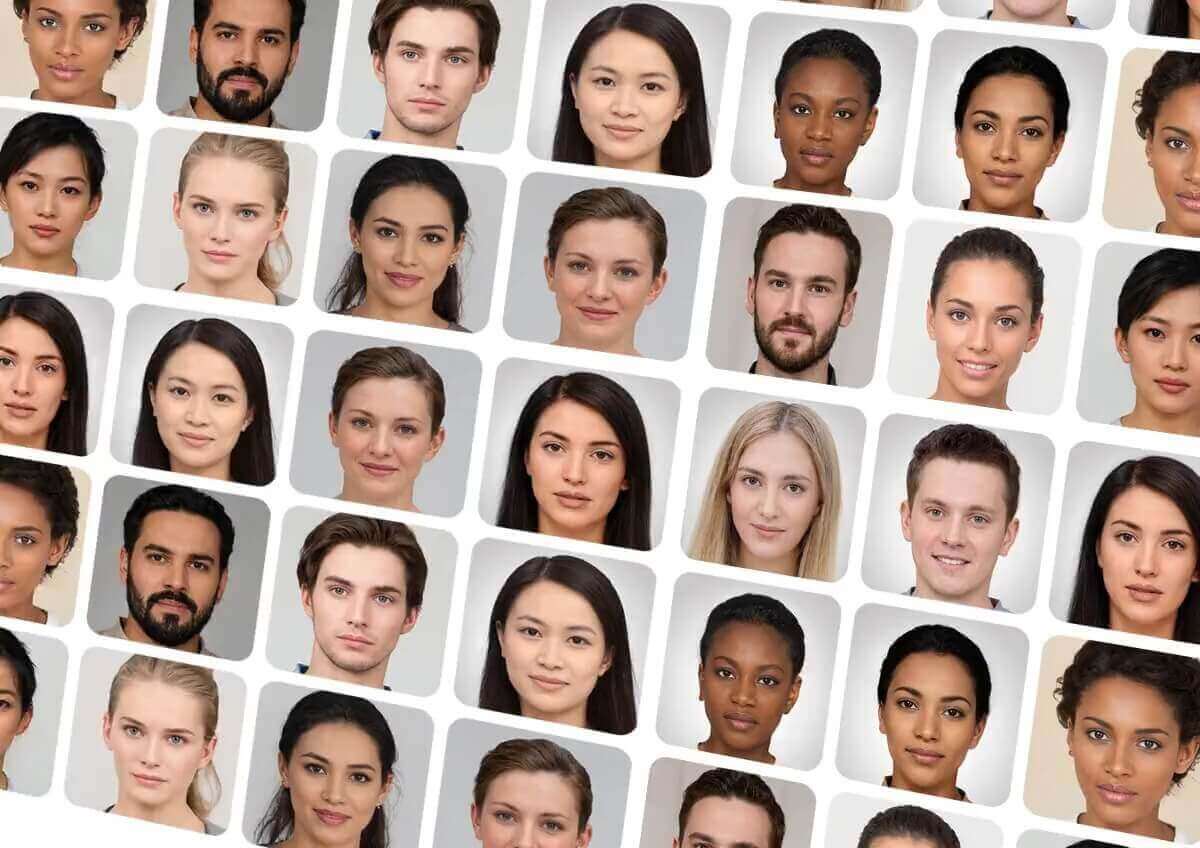
Explore the technology hands-on at Perfect Corp's AI API Playground.
The Beauty Brand Opportunity: From Eye Shape Insight to Personalized Experience
The mass interest in hunter eyes is more than a social media trend, it reflects a deep consumer interest in understanding their facial structure and what it means for how they present themselves. For beauty brands, that interest is a conversion opportunity.
Makeup personalization at the eye level
Eye shape analysis is one of the most powerful drivers of makeup personalization. The same liner technique, shadow placement, and brow shaping that creates definition on a round, high-lid eye will flatten a deep-set almond eye.
Brands that can detect eye shape accurately, including canthal tilt, lid exposure, and brow distance, can deliver genuinely different recommendations to genuinely different users.
This matters commercially. Personalized product recommendations built around eye shape drive higher first-purchase confidence, fewer returns, and stronger repurchase rates, because the recommendation actually fits the person who received it.
Eyewear and glasses recommendation
Frame selection is heavily influenced by the interplay between brow position, eye set, and facial width. Deep-set eyes with low brow distance respond differently to heavy vs. lightweight frames than wide-set, protruding eyes do. AI eye shape analysis creates the input data for recommendation engines that can match frame styles to actual eye-area geometry — not just face shape alone.
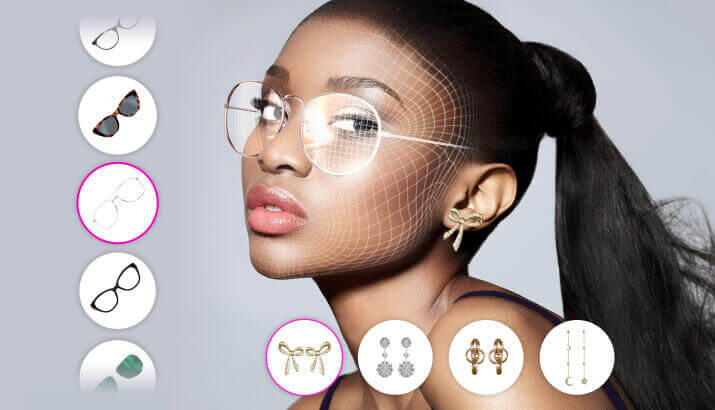
Virtual try-on accuracy
For any virtual try-on experience, makeup, eyewear, or lash styles, accurate eye landmark detection is foundational. If the AI doesn't know exactly where the eye is, the liner doesn't land correctly.
Precision eye-area analysis is what separates convincing virtual try-on from uncanny-valley product placements that drive users away.
Try the precise AI Eye Makeup Try On yourself >
Can You Improve the Appearance of Hunter Eyes?
This is where the conversation moves from aesthetics into practical guidance, and where beauty brands have a role to play.
Makeup techniques that approximate hunter eye structure
The structural features associated with hunter eyes, canthal lift, shadow depth, defined contour, can all be approximated with technique. Specific approaches include:
- Outer corner extension: Extending liner and shadow slightly upward at the outer corner creates the visual impression of positive canthal tilt
- Tightlining and waterline work: Darkening the waterline reduces visible lid exposure, creating a more hooded appearance
- Brow sculpting close to the orbital rim: Keeping the brow lower and fuller fills in brow-eye distance and adds the shadow effect of deep-set positioning
- Cut crease techniques: Creating a defined crease shadow adds the appearance of socket depth that characterizes genuinely deep-set eyes
Non-surgical interventions
For those seeking more permanent changes, facial plastic surgery offers procedures like canthoplasty (canthal angle adjustment) and brow-bone enhancement.
These require consultation with a qualified facial plastic surgeon. AI aesthetic simulation is increasingly being used in pre-consultation contexts: letting prospective patients visualize likely outcomes before any procedure is scheduled.
Frequently Asked Questions About Hunter Eyes
What are hunter eyes?
Hunter eyes is a term from facial aesthetics describing a specific eye-area structure: a positive canthal tilt (outer corner higher than inner), deep-set positioning in the orbital socket, minimal upper eyelid exposure (hooding), an almond-shaped eye contour, and a short distance between the brow and the upper eyelid. Together these features create an intense, focused gaze commonly associated with confidence and facial strength.
Are hunter eyes attractive?
Hunter eyes are widely perceived as attractive, particularly in masculine faces, due to associations with bone structure, hormonal development, and the perceptual intensity of the gaze. However, attractiveness is multifactorial and culturally variable, there is no universal "best" eye shape.
What is canthal tilt and how is it measured?
Canthal tilt is the angle formed between the inner corner (medial canthus) and the outer corner (lateral canthus) of the eye. A positive canthal tilt means the outer corner sits higher than the inner. AI face analysis tools can compute this angle precisely from a standard-quality photo using facial landmark detection, though precision varies significantly between consumer apps and purpose-built analytical APIs.
Can makeup create the appearance of hunter eyes?
Yes. Specific makeup techniques. outer corner liner extension upward, tightlining to reduce lid exposure, cut crease shadow for depth, and strategic brow shaping, can approximate the key visual elements of hunter eye structure. The accuracy of personalized recommendations depends on how well the underlying AI analysis understands your actual eye geometry.
Do I have hunter eyes or prey eyes?
Most people fall somewhere between the two poles rather than at either extreme. A purpose-built AI face analysis tool that measures canthal tilt angle, lid exposure ratio, and eye socket depth can give you a precise read on where your eye-area structure sits quantitatively. rather than through general visual pattern matching.
How do beauty brands use eye shape analysis?
Beauty brands use AI eye shape analysis. including canthal tilt, lid exposure, and brow-eye distance — to power personalized makeup recommendations, virtual try-on alignment for liner and eyeshadow, eyewear frame matching, and aesthetic consultation tools. Accurate eye landmark detection is foundational to any AI beauty experience that involves the eye area.