 Author:
Loose skin has jumped from a quiet worry to one of the most searched beauty topics in the US. RealSelf reported that traffic to GLP-1–related content jumped 2,080% year over year, and loose skin is the headline side effect (Source).
The good news: skin is smarter than you think, and the toolkit has never been bigger. From collagen-friendly habits to radiofrequency microneedling, surgery, and AI skin analysis that measures firmness from a selfie, this guide covers it all.
*Images are designed by YouCam AI
Table of Contents
- What is loose skin, exactly?
- What causes skin to get loose?
- Why is everyone talking about "Ozempic skin" in 2026?
- Where does loose skin show up most?
- Can loose skin tighten back up on its own?
- What are the best treatments for loose skin in 2026?
- How can you prevent loose skin while losing weight?
- How is AI changing the way we measure skin firmness?
- FAQ
What Is Loose Skin, Exactly?
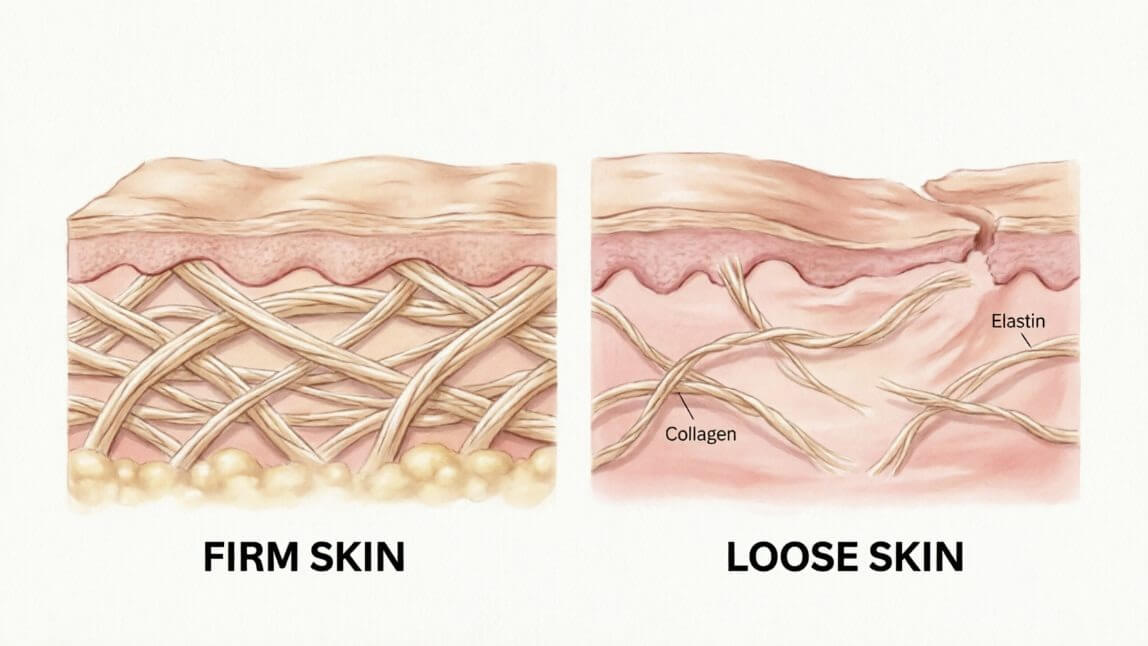
Loose skin (doctors call it skin laxity) is skin that has lost its ability to snap back. Think of a hair tie: stretch it once and it rebounds; stretch it every day for five years and it hangs around your wrist like a sad bracelet.
Two proteins do the heavy lifting in your dermis:
- Collagen — the scaffolding. It gives skin strength and thickness.
- Elastin — the spring. It lets skin stretch and recoil.
When either gets damaged, depleted, or overstretched, skin sags, crinkles, or folds. It's not just a cosmetic thing either — large folds can trap moisture and cause chafing, rashes, and infections.
Is loose skin the same as crepey skin or sagging skin?
Close cousins, not twins. Here's the quick breakdown:
| Type | What it looks like | Common cause | Typical areas |
|---|---|---|---|
| Loose skin | Excess skin that hangs or folds | Major weight loss, pregnancy | Belly, arms, thighs |
| Sagging skin | Skin drooping downward due to gravity | Aging, volume loss | Jowls, neck, eyelids |
| Crepey skin | Thin, finely wrinkled, like crepe paper | Sun damage, dehydration, aging | Arms, chest, under-eyes |
| Cutis laxa | Very loose, inelastic skin all over | Rare genetic or acquired disorder | Whole body |
What Causes Skin to Get Loose?
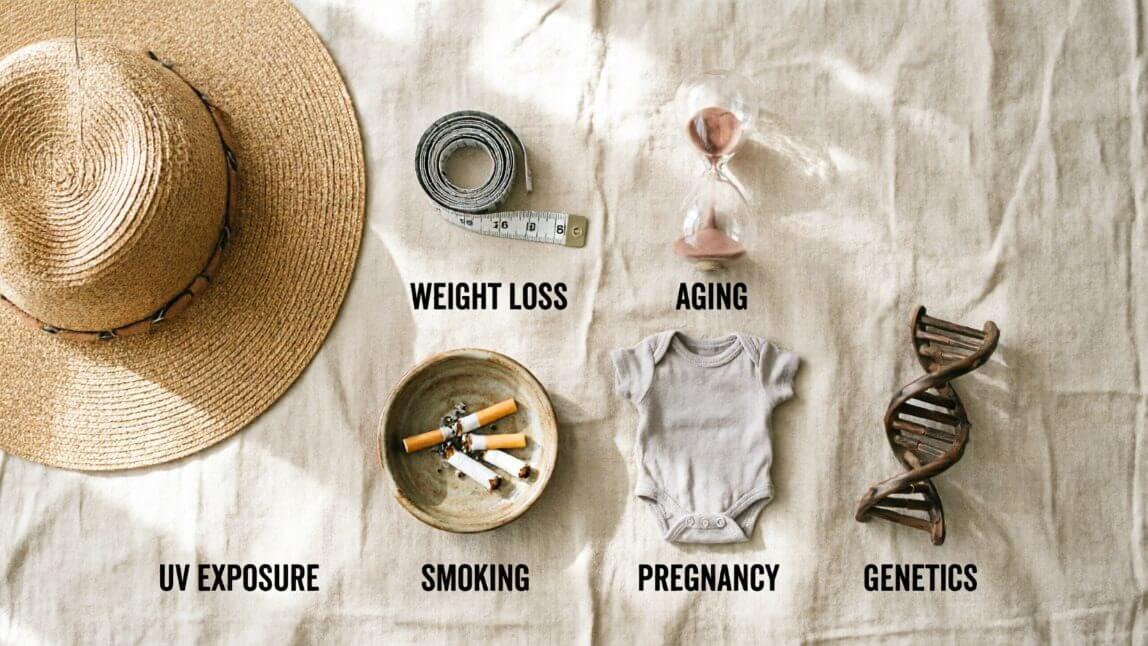
Loose skin rarely has a single villain. It's usually a team effort:
1. Aging and collagen decline
Starting in your mid-20s, your body produces roughly 1% less collagen each year. Menopause hits the gas pedal — estrogen drop means collagen drops faster. Meanwhile, elastin is mostly made before adulthood and barely regenerates.
2. Rapid or major weight loss
When skin stays stretched for years, collagen and elastin fibers get damaged. Lose the weight fast and the skin doesn't have time to remodel. The bigger the loss (usually 50+ lbs) and the longer you carried it, the more likely loose skin sticks around.
3. Sun exposure (photoaging)
UV rays break down collagen and elastin directly. Dermatologists estimate sun damage is responsible for the majority of visible skin aging — which is why your forearms and the backs of your hands age faster than your inner arms.
4. Pregnancy
Abdominal skin stretches dramatically in nine months. Many people bounce back; others keep loose belly skin, especially after multiple pregnancies or twins.
5. Lifestyle and genetics
Smoking, poor sleep, low protein intake, chronic dehydration, and genes all influence how resilient your skin is. Some people simply win the elasticity lottery.
Why Is Everyone Talking About "Ozempic Skin" in 2026?
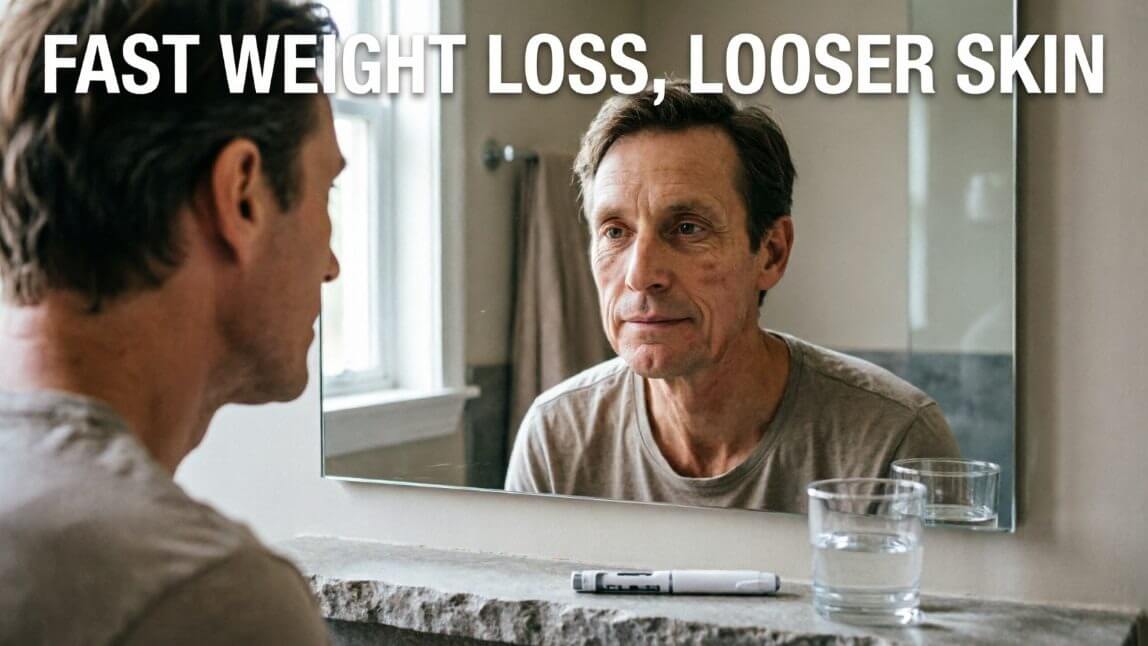
"Ozempic face" — hollow cheeks, deeper folds, a looser jawline — and its full-body sibling, "Ozempic skin," are now everyday vocabulary.
It's not that the medication damages skin directly. It's the speed and the loss of facial fat volume. Fat pads in the face act like natural fillers; when they shrink quickly, the skin above them deflates like a balloon a day after the party.
Plastic surgeons are seeing the ripple effect: more requests for facial skin tightening, volume restoration, arm lifts, tummy tucks, and full body lifts. A whole category of "post-GLP-1 body contouring" packages has popped up across US clinics in 2026 (Source).
| Area | Typical GLP-1 change | Popular fix |
|---|---|---|
| Face | Hollow cheeks, jowls, deeper nasolabial folds | Fillers, biostimulators, RF, facelift |
| Neck | Crepey, banded skin | RF microneedling, neck lift |
| Arms | "Bat wings" | Brachioplasty, RF tightening |
| Abdomen | Overhanging apron of skin | Tummy tuck, panniculectomy |
| Thighs & buttocks | Loose, folded skin | Thigh lift, lower body lift |
Where Does Loose Skin Show Up Most?
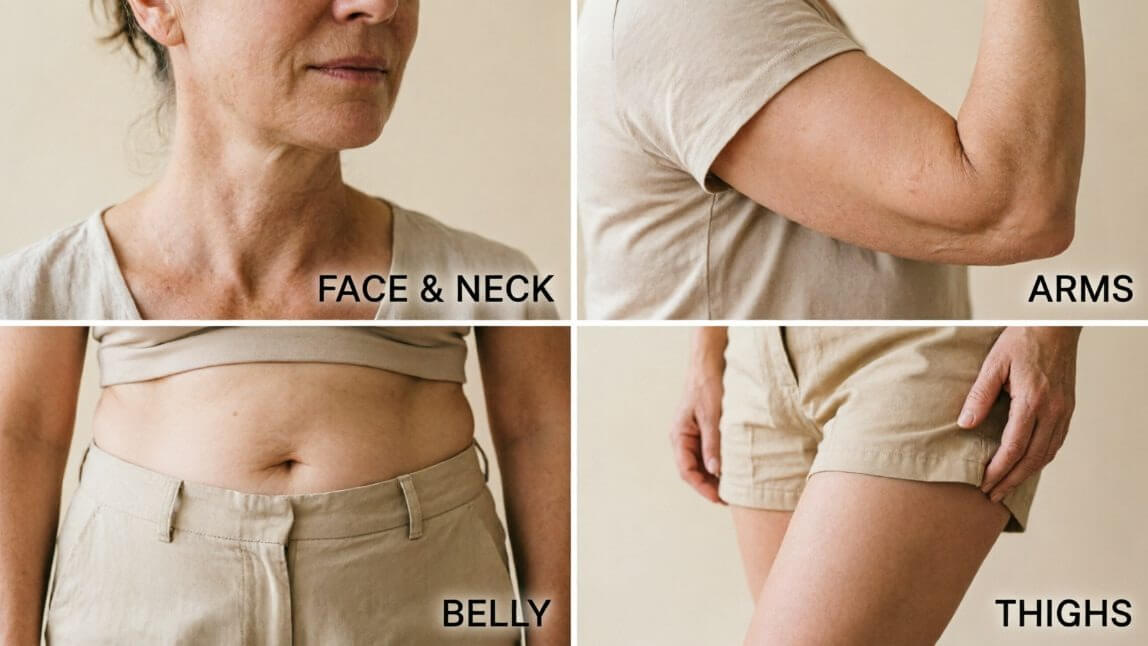
Face and neck
Jowls, a softer jawline, and "turkey neck" are the classic signs. Facial skin is thin and highly visible, so even small changes get noticed. Curious how your jawline and face proportions shift over time? The AI Face Analyzer maps facial ratios and contours from a single photo.
Arms
Upper-arm skin is thin with little underlying muscle support, so "bat wings" are one of the first areas to show after weight loss.
Belly
The abdomen stretches the most during weight gain and pregnancy, making it the No. 1 spot for excess skin — sometimes a full "apron" (pannus) that hangs over the waistline.
Thighs and buttocks
Inner thighs are prone to folds that rub and chafe. The buttocks may look flatter and lower after significant fat loss.
Can Loose Skin Tighten Back Up on Its Own?
Short answer: some of it, sometimes. Skin keeps remodeling for 12–24 months after weight loss. Mild to moderate laxity — especially in younger people who lost weight gradually — can improve noticeably. Large folds after massive weight loss? Those usually need a procedure.
What genuinely helps:
- Strength training — building muscle fills out the space under loose skin and improves contour. It won't shrink skin, but it changes how it drapes.
- Enough protein — collagen needs amino acids like glycine and proline. Aim for protein at every meal, especially on GLP-1s when appetite drops.
- Collagen peptides — several randomized trials show modest improvements in elasticity and hydration. Not magic, but not nothing.
- Daily sunscreen — the cheapest anti-laxity product on Earth.
- Topical retinoids — prescription tretinoin and over-the-counter retinol stimulate collagen over months, best for crepey texture.
- Hydration and sleep — they won't remove excess skin, but they keep what you have looking plumper.
- Quit smoking — nicotine constricts blood vessels and accelerates collagen breakdown.
What doesn't help much: "firming" body lotions that promise a tummy tuck in a bottle. They can temporarily smooth texture, but they can't remove inches of skin.
Track the change, not just the feeling. Brands and clinics use the AI Skin Diagnostic to score firmness, wrinkles, and texture from a selfie — so progress is measured, not guessed.
What Are the Best Treatments for Loose Skin in 2026?
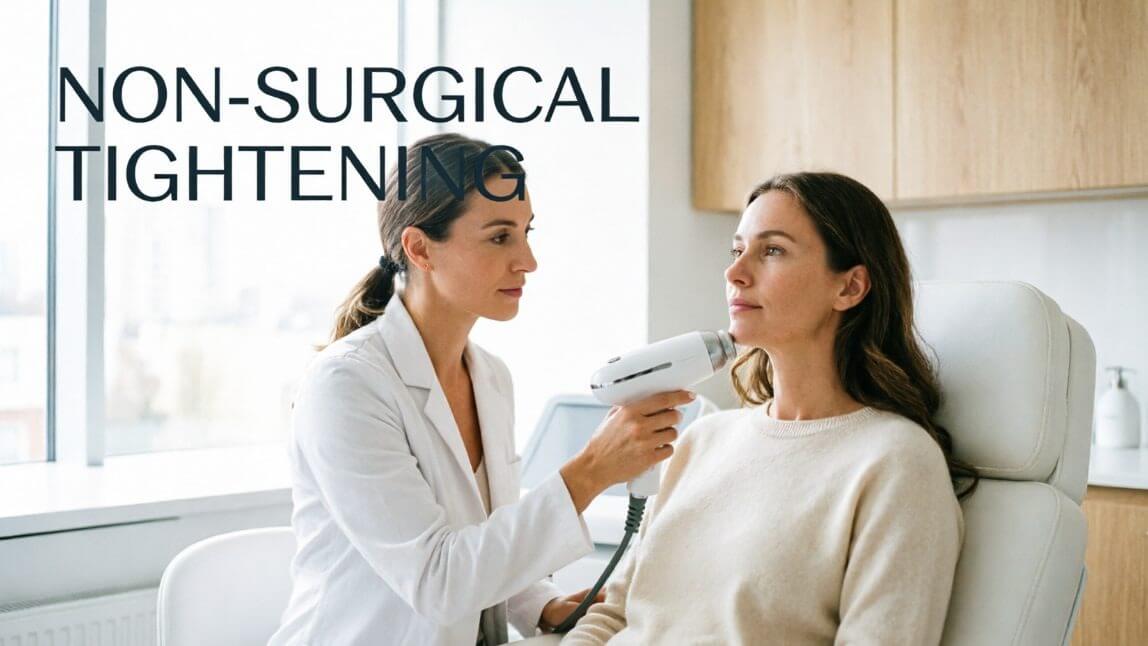
The right treatment depends on how much skin you have — not how much you wish you didn't. Here's the 2026 menu, from lightest to heaviest:
Non-surgical skin tightening
These devices heat the deeper layers of skin to trigger fresh collagen production. Results build over 2–6 months and work best for mild to moderate laxity.
| Treatment | How it works | Best for | Downtime |
|---|---|---|---|
| Radiofrequency (RF) | Heats dermis to stimulate collagen | Face, neck, belly | None–minimal |
| RF microneedling | Tiny needles deliver RF energy deeper | Face, neck, crepey arms | 2–4 days |
| Focused ultrasound (HIFU) | Targets the deep SMAS layer | Jawline, brows, neck | None–minimal |
| Laser resurfacing | Removes damaged surface, tightens | Crepey and sun-damaged skin | 5–14 days |
| Biostimulatory injectables | Poly-L-lactic acid or CaHA trigger collagen | Face, neck, arms, buttocks | Minimal |
| Dermal fillers | Restore lost volume (great for "Ozempic face") | Cheeks, temples, jaw | Minimal |
Before booking anything, many clinics now run a skin consultation powered by AI and AR. Clients can preview tighter, lifted results with AI aesthetic simulation — which makes the "what will I actually look like?" conversation a lot easier.
How Can You Prevent Loose Skin While Losing Weight?
You can't fully control genetics or age, but you can stack the odds:
- Go steady — 1–2 lbs per week gives skin time to adapt. On GLP-1s, talk to your doctor about pacing.
- Lift while you lose — 2–3 resistance sessions a week preserve muscle so you don't lose the "filler" under your skin.
- Hit your protein target — roughly 1.2–1.6 g per kg of body weight is a common recommendation during weight loss; ask your clinician what's right for you.
- Protect from UV daily — SPF 30+, every single day.
- Start retinoids early — the collagen boost takes months, so begin before the weight comes off.
- Measure baseline firmness — snap a standardized photo or run an AI skin scan now so you can track changes objectively later.
How Is AI Changing the Way We Measure Skin Firmness?
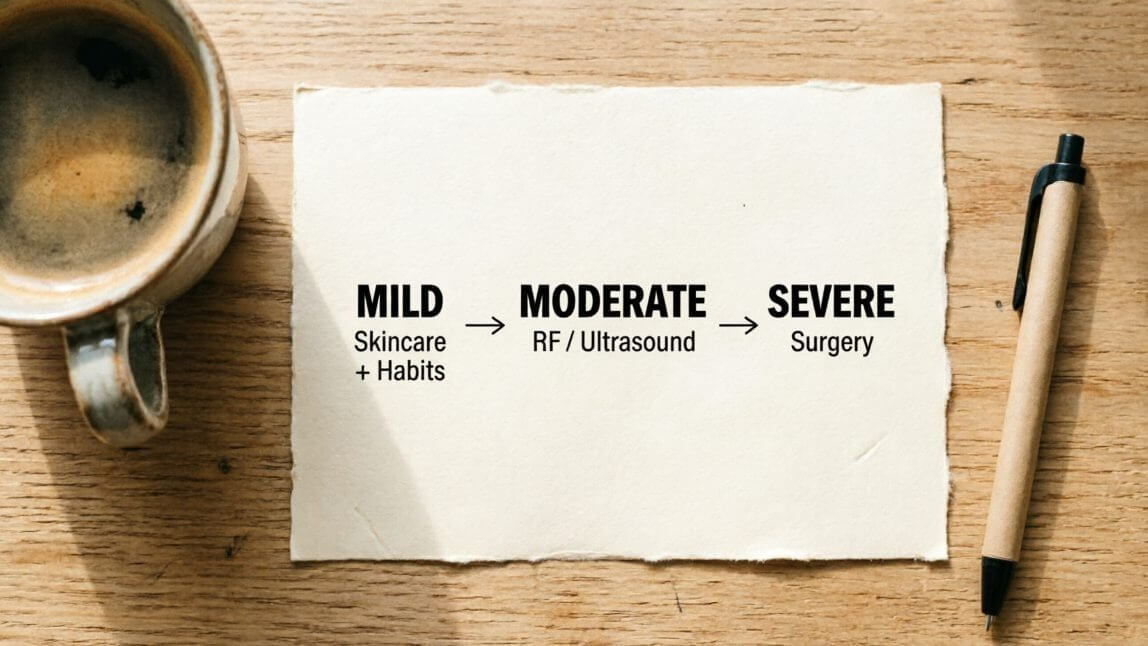
For decades, "Is my skin getting firmer?" was answered by squinting into a mirror. In 2026, it's a data question.
AI skin analysis uses computer vision to detect and score signs of laxity — sagging, wrinkles, fine lines, texture, and more — from a regular smartphone photo. Here's why that matters:
- Objective tracking — compare firmness scores month over month, before and after treatments, instead of relying on memory.
- Smarter recommendations — skincare brands match products (retinol, peptides, firming serums) to the user's actual concerns.
- Better clinic consults — medspas show patients where laxity is concentrated and simulate likely outcomes.
- Scale — via API, the same analysis can run inside an app, a website, or an in-store kiosk.
What can brands and clinics build with it?

Perfect Corp.'s skin analysis tech detects 16+ skin concerns, including sagging, wrinkles, firmness-related signs, and texture, with dermatologist-validated accuracy. Common use cases:
| Who | Use case | Perfect Corp. tool |
|---|---|---|
| Skincare brands | Recommend firming routines after an online skin scan | AI Skin Diagnostic |
| Medspas & clinics | Show laxity maps and preview tightening results | AI Aesthetic Simulation |
| Wellness & GLP-1 apps | Track facial changes during weight loss | AI Face Analyzer API |
| Developers | Plug skin analysis into any app or site | YouCam API |
Want to see it on your own face? Try the skin analysis API in our AI Playground, or browse more skin science on the best AI skin analyzers roundup.
Turn "my skin feels loose" into a measurable score. Integrate AI skin analysis into your app, website, or clinic in days, not months. Book a demo with Perfect Corp.
FAQ: Loose Skin
Can you really tighten loose skin?
Yes, to a point. Mild to moderate laxity responds to retinoids, strength training, protein, and in-office treatments like radiofrequency or ultrasound. Large hanging folds after major weight loss usually require surgery to remove.
What causes skin to get loose?
Loss of collagen and elastin. The main drivers are aging, rapid or major weight loss, sun damage, pregnancy, smoking, and genetics.
Can loose skin ever tighten back up?
Partially. Skin keeps remodeling for one to two years after weight loss, and younger skin rebounds better. Expect improvement in mild cases, not a full reset in severe ones.
Does loose skin ever go away after losing weight?
Small amounts often improve over time. If you lost 50+ pounds, carried the weight for many years, or are over 40, some loose skin is likely to stay without treatment.
How long does it take for loose skin to tighten?
Natural remodeling: 12–24 months. Non-surgical treatments: 2–6 months for full results. Surgery: immediate removal, with final results visible after 6–12 months of healing.
Does Ozempic cause loose skin?
Not directly. The rapid fat loss it can cause — especially in the face — leaves skin with less time and less support to adapt, which leads to sagging.
Do skin tightening creams work?
Retinoids can improve crepey texture over months. Most "firming" creams only provide temporary smoothing. No cream can remove excess skin.
Is loose skin surgery covered by insurance?
Sometimes. A panniculectomy may be covered when hanging skin causes documented rashes, infections, or functional problems. Cosmetic procedures like tummy tucks usually aren't.
Can AI measure skin firmness?
Yes. AI skin analysis can detect and score signs related to firmness — sagging, wrinkles, and texture — from a selfie, making it easy to track changes over time.
This article is for educational purposes and isn't medical advice. Talk to a board-certified dermatologist or plastic surgeon about your specific situation.