Author:



Disclaimer: Some images in this article may have been created or modified by AI
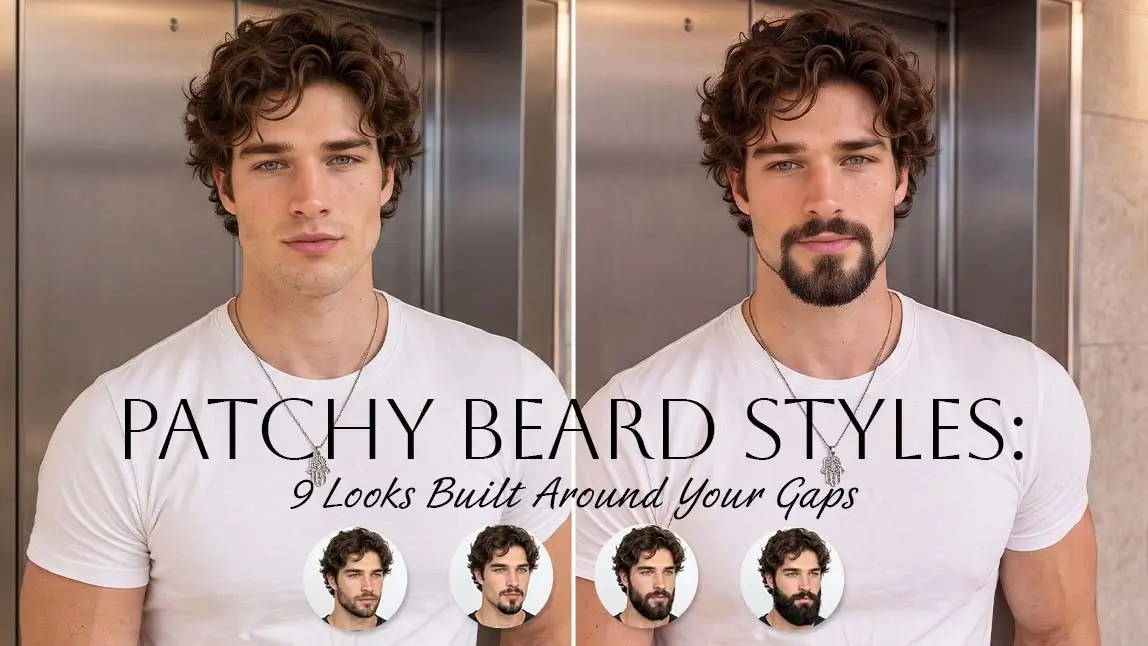
A patchy beard is not a failed beard. It is a beard that needs a different plan. Plenty of men have thick growth on the chin and mustache but bare spots on the cheeks. Others have full cheeks and a gap where the mustache should meet the chin. The mistake is choosing a style from a photo of someone with completely different gaps.
This guide flips the usual approach. Instead of a random list of beard styles, we start with where your beard is patchy and match each gap pattern to the styles that hide it. You will find nine looks that work for patchy growth, the styles to skip, a growth timeline so you know when to judge, grooming tricks that make thin areas look fuller, and a way to try each style on your face before you spend eight weeks growing it.

In this guide:
- What are the best patchy beard styles?
- Where is your beard patchy?
- What are the 9 best patchy beard styles?
- Which patchy beard style suits your face shape?
- How long should you wait before judging?
- How do you make a patchy beard look fuller?
- Why is my beard patchy?
- How can you try a beard style before growing it?
- How do grooming brands use beard try-on?
- FAQ
What Are the Best Patchy Beard Styles?
The best patchy beard styles concentrate hair where it grows thickest and remove it where it does not. Heavy stubble, the short boxed beard, the goatee, the extended goatee, the Van Dyke, the Balbo, the circle beard, the chinstrap, and a longer grown-out beard all work for patchy growth. Which one suits you depends on where your gaps are.
The golden rule: do not shape your beard around the hair you wish you had. Shape it around the hair you actually have.
Where Is Your Beard Patchy?
Grow your beard for at least four weeks, then look in a mirror under bright, even light. Most patchy beards fall into one of five patterns. Find yours in the table below and you will instantly know which styles to try first.

Try styles for your gap pattern in the beard style demo
| Where the gaps are | Best styles | Styles to skip |
|---|---|---|
| Upper cheeks | Short boxed beard with a lowered cheek line, extended goatee, Balbo | Full beard with a high, natural cheek line |
| Whole cheek area | Goatee, Van Dyke, circle beard | Boxed beard, chinstrap with full sides |
| Connectors (mustache does not meet the chin) | Van Dyke, Balbo, heavy stubble | Circle beard, full goatee |
| Chin | Chinstrap, heavy stubble, mustache with sideburns | Goatee, Van Dyke |
| Thin all over | Heavy stubble, grown-out beard (length covers gaps) | Sharp, sculpted shapes that expose thin areas |
Have more than one problem area? Prioritize the most visible one. Cheek gaps are usually the first thing people notice, followed by connectors.
What Are the 9 Best Patchy Beard Styles?
1. Heavy Stubble
Best for: thin all over, patchy connectors, patchy chin.

At three to five millimeters, short gaps blur into shadow and your beard reads as even. Heavy stubble is the most forgiving style on this list and the easiest to maintain. Keep the neckline and cheek line clean so it looks deliberate rather than lazy. Trim every two to three days.
2. Short Boxed Beard
Best for: patchy upper cheeks with solid jaw and chin growth.

See every beard style our AI can simulate
A short boxed beard keeps everything tidy and uniform. The trick is to drop the cheek line below the patchy zone, so the beard starts where the growth gets dense. Keep length at about six to twelve millimeters. Longer than that and gaps on the sides become obvious.
3. Goatee
Best for: bare or very thin cheeks with good chin growth.

The classic patchy cheek solution. Shave the cheeks completely and keep hair on the chin only. A goatee also adds length to round faces. Keep the edges sharp, because a fuzzy goatee looks accidental.
4. Extended Goatee
Best for: patchy upper cheeks with decent growth along the jaw.
Think goatee plus mustache, extended a little along the jawline. It gives the impression of a fuller beard while dodging the upper cheeks entirely. A great middle ground if a classic goatee feels too minimal.
5. Van Dyke
Best for: patchy cheeks and patchy connectors.
A pointed chin beard paired with a separate, floating mustache. Because the two pieces are meant to be disconnected, a gap between them looks like a style choice, not a growth problem. It has a bold, slightly artistic look.
6. Balbo
Best for: patchy cheeks and patchy connectors, with good chin and jaw growth.
A floating mustache, a soul patch, and a chin beard that extends along the jaw, with no sideburns. The Balbo removes the two most common gap zones (cheeks and connectors) and keeps the strongest areas. It also sharpens a soft jawline.
7. Circle Beard
Best for: bare cheeks with strong mustache and chin growth that connect.
A rounded goatee that joins with the mustache to form a circle around the mouth. Clean and corporate friendly. It only works if your connectors fill in, so check the patch map first.
8. Chinstrap
Best for: patchy chin or thin cheeks with solid growth along the jawline.
A thin strip of beard following the jaw from ear to ear. It frames the face without relying on the cheeks or the center of the chin. Keep it at about one centimeter wide and very sharp. Pair it with or without a mustache depending on how your upper lip grows.
9. Grown-Out Beard
Best for: scattered small gaps and anyone with patience.

Browse all Perfect Corp virtual try-on demos
Sometimes the fix is length. Once your beard passes about two to three centimeters, longer hairs from surrounding areas can lie over small gaps and cover them. Brush the hair in the direction of the gap and use a little beard balm to hold it. This takes two to three months, so commit before you judge.
Not sure which of these nine you could actually pull off? Try them on your face in the beard style try-on demo. It takes seconds, while growing each style takes weeks.
Which Patchy Beard Style Suits Your Face Shape?
Once you know which styles your growth allows, face shape helps you pick the winner. The goal is balance: add length to round faces, soften strong jaws, and avoid adding length to faces that are already long.

| Face shape | Best patchy-friendly styles | Why |
|---|---|---|
| Round | Goatee, extended goatee, Van Dyke | Vertical shapes add length and define the chin |
| Square | Circle beard, heavy stubble, short boxed beard | Softer, rounded edges balance a strong jaw |
| Oval | Almost any style on this list | Balanced proportions handle most shapes |
| Oblong | Heavy stubble, short boxed beard, chinstrap | Keep length short at the chin to avoid elongating |
| Heart | Short boxed beard, Balbo, chinstrap | Adds width and weight to a narrow chin |
| Diamond | Chinstrap, extended goatee | Fills out a narrow chin and jaw |
For a deeper breakdown of beard geometry by face shape, read our guide to the best shape for your beard. Not sure of your face shape? Start with our men's face shapes guide.
How Long Should You Wait Before Judging a Patchy Beard?
Most men decide their beard is patchy around week two, which is far too early. Different areas of the face grow at different speeds, and slower zones often catch up. Here is a realistic timeline.
| Time | What you will see | What to do |
|---|---|---|
| Weeks 1 to 2 | Uneven stubble, itchiness, obvious gaps | Do not trim the shape yet. Moisturize the skin underneath. |
| Weeks 3 to 4 | Strong zones pull ahead, slower zones start filling | Clean up the neckline only. Map your gaps. |
| Weeks 6 to 8 | Most of your growth pattern is visible | Pick a style from the patch map and do a first shaping trim. |
| Around 3 months | Your realistic full potential for now | Decide: keep growing, refine a style, or go back to stubble. |
Age matters too. Facial hair often keeps filling in through the late teens and twenties, so a beard that is patchy at 20 may look very different at 27.
How Do You Make a Patchy Beard Look Fuller?
Style choice does most of the work, but grooming finishes the job. These habits make thin areas look denser.

- Trim to your weakest area, not your strongest. If your cheeks max out at five millimeters, keeping your chin at fifteen highlights the difference. A more uniform length looks fuller overall.
- Lower the cheek line. Shave away the sparse fuzz on the upper cheeks. A clean, lower line looks denser than a high, wispy one.
- Brush toward the gaps. A boar bristle brush trains longer hairs to lie over thin areas.
- Use beard oil and balm. Oil softens the hair and the skin underneath. Balm adds hold and a little bulk so hair sits where you want it.
- Reduce skin contrast with color. Light or gray beard hair lets the skin show through and makes gaps look bigger. A shade slightly darker than your natural beard can make it read as denser. You can preview the effect with the beard dye try-on before buying any product.
- Try a beard filler pencil carefully. Light, hair-like strokes in a matching shade can soften small gaps for photos and events. Less is more.
- Keep the neckline sharp. A crisp neckline about two fingers above the Adam's apple instantly makes any beard look more intentional.

Preview darker beard shades in the beard dye demo
Why Is My Beard Patchy?
For most men, patchiness is simply genetics. The number and sensitivity of hair follicles on your face are largely inherited, which is why you may grow a beard just like your father's or grandfather's. Other common factors include:
- Age: beards often continue to fill in until the mid to late twenties.
- Hormones: testosterone and DHT influence facial hair growth, though normal levels can still produce a patchy beard.
- Lifestyle: stress, poor sleep, and an unbalanced diet can affect hair growth overall.
- Alopecia areata: smooth, coin-sized bald patches that appear suddenly are different from a naturally patchy beard.
If you notice sudden hair loss, round bald spots, or itching and irritation in the beard area, check in with a doctor or dermatologist. For a beard that has simply always been a little uneven, style and grooming are the tools to reach for.
How Can You Try a Beard Style Before Growing It?
Here is the frustrating part about beards: you cannot undo a shave, and you cannot fast-forward eight weeks of growth. That makes beard styles one of the best use cases for virtual try-on.
Test the beard models in the YouCam API Playground
- Take a clean, front-facing photo in even light.
- Try three styles from your row in the patch map table.
- Compare jawline and chin shape, not just the beard. The right style makes your face look more balanced.
Perfect Corp's AI beard style and beard dye try-on simulates styles such as stubble, full beard, circle beard, goatee, and mustache directly on your face. It can even simulate a clean-shaven look by reconstructing the cheeks and jawline under your current beard, which is handy if you are wondering whether to shave it all off.
How Do Grooming Brands Use Beard Try-On?
Men's grooming shoppers have the same problem described above: they cannot see the result before they commit. That hesitation slows sales of trimmers, beard dye, oils, and barbershop services. Beard try-on gives shoppers a preview and gives brands a reason to engage.

Talk to Perfect Corp about beard try-on for your brand
- Trimmer and razor brands can show which styles a product creates, turning a spec sheet into a style recommendation.
- Beard dye brands can let shoppers test shades on their own face, including darker shades that make thin beards look denser.
- Barbershops can use before and after previews in consultations so clients agree on a shape before the clippers come out.
- Apps and e-commerce sites can integrate through a web module, mobile SDK, or API.
Developers can test Perfect Corp's beard models in the YouCam API Playground, and brands can contact Perfect Corp for a demo.
FAQ
Can a patchy beard fill in over time?
Often, yes. Many men see their beard fill in through their twenties. Give any new beard at least eight to twelve weeks before judging, since slower areas frequently catch up.
What is the best beard style for patchy cheeks?
The goatee, extended goatee, Van Dyke, Balbo, and circle beard all avoid the cheeks. If your cheeks are only thin at the top, a short boxed beard with a lowered cheek line also works.
What is the best beard style for a patchy chin?
The chinstrap, heavy stubble, or a mustache with sideburns. These styles rely on the jawline or upper lip rather than the center of the chin.
Is stubble good for a patchy beard?
Yes. Heavy stubble at three to five millimeters is one of the best options because short hairs blur gaps into an even shadow. Keep the lines clean so it looks intentional.
Does shaving make a beard grow thicker?
No. Shaving cuts hair at the surface and does not change the follicle, so it does not increase thickness or density. Freshly shaved hair can feel coarser as it grows back because of its blunt tip, which is where the myth comes from.
Does beard oil help a patchy beard?
Beard oil will not create new hair, but it softens existing hair and conditions the skin, which helps hair lie flatter and look fuller. Combined with a beard brush and balm, it makes a noticeable difference to how a patchy beard looks.
Should I shave a patchy beard?
Not before trying a style that works with your growth pattern. If none of the options on the patch map appeal to you after a few months, clean-shaven or heavy stubble is a perfectly good choice. Try the clean-shaven look virtually before you commit.
Can beard dye make a patchy beard look fuller?
It can help. Light, red, or gray beard hair shows more skin, which exaggerates gaps. A dye one shade darker than your natural beard reduces that contrast and makes the beard read as denser.
Work With Your Growth, Not Against It
Patchy beards look great when the style is built around real growth. Map your gaps, choose from the styles that fit them, give it eight to twelve weeks, and groom to your weakest area. Then take the guesswork out of it entirely by trying the style on your own face first.