Author:



Disclaimer: Some images in this article may have been created or modified by AI
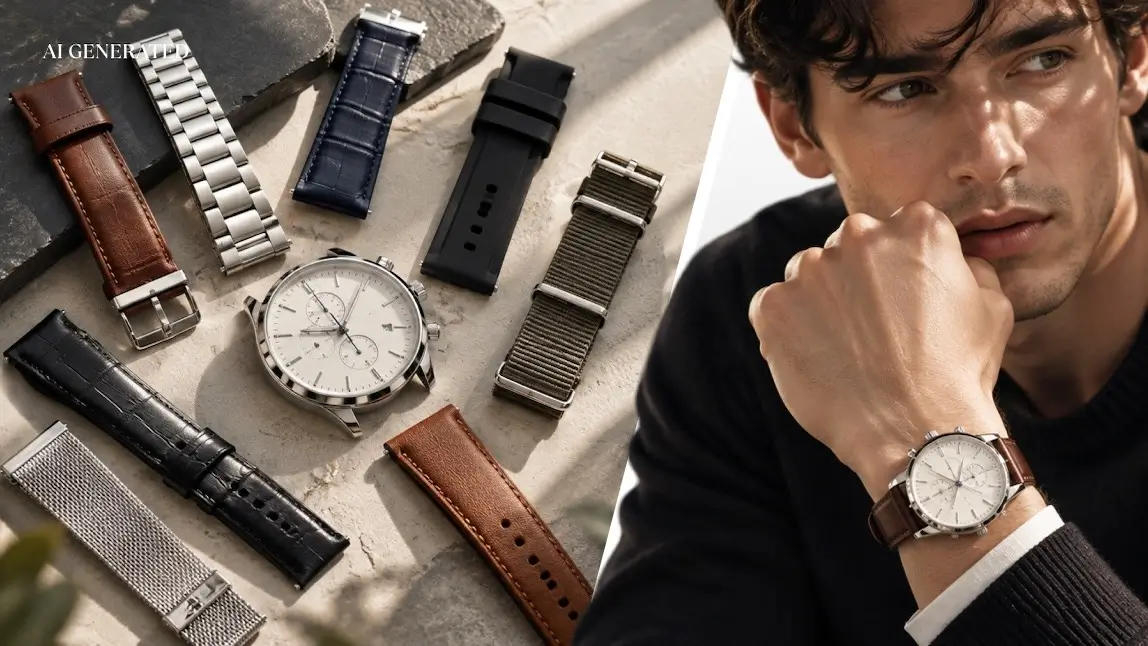
Change the strap and you change the watch. The same steel diver can look rugged on a NATO, sporty on rubber, and surprisingly dressy on brown leather. That is why watch straps are one of the cheapest, fastest ways to refresh a collection, and one of the easiest places to get things wrong.
This guide covers the 12 main types of watch straps and bracelets, how each material compares, how to measure lug width and strap length so it actually fits, and which strap suits which watch and occasion. You will also see how to preview a strap on your own wrist before buying, and how watch retailers use virtual try-on to sell more strap combinations.

In this guide:
- What is the best type of watch strap?
- What is the difference between a strap, a band, and a bracelet?
- What are the 12 main types of watch straps?
- How do strap materials compare?
- How do you measure lug width and strap length?
- Which strap goes with which watch?
- How do you change a watch strap?
- How can you preview a strap on your wrist?
- How do retailers use strap try-on?
- FAQ
What Is the Best Type of Watch Strap?
There is no single best watch strap. Leather is best for dress and office wear, rubber or silicone is best for swimming and sport, a NATO or nylon strap is best for casual and outdoor use, and a steel bracelet is the most versatile all-rounder. The right choice depends on the watch style, your wrist size, and where you will wear it.
What Is the Difference Between a Strap, a Band, and a Bracelet?
- Strap: a flexible band made from leather, fabric, rubber, or silicone.
- Bracelet: a band made from linked pieces of metal, such as steel, titanium, or gold.
- Band: the general umbrella term for anything that holds the watch on your wrist.
In everyday use, people mix these terms freely. In watch shopping, "strap" usually means non-metal and "bracelet" means metal.
What Are the 12 Main Types of Watch Straps?
1. Classic Leather Strap
The default for dress and office watches. Smooth calfskin in black or brown pairs with almost any formal outfit. Padded versions add a little visual weight for sportier watches.

See how AR watch virtual try-on renders leather and metal
2. Rally Strap
Leather with large perforations, inspired by vintage racing driving gloves. A natural match for chronographs and racing watches.
3. Bund Strap
A two-piece leather strap with a wide leather pad behind the watch case. Originally designed for military pilots to protect the wrist from a cold metal caseback. Bold and vintage.
4. NATO Strap
A single piece of woven nylon that threads under the watch case. If one spring bar fails, the watch stays attached to the strap. Cheap, colorful, and easy to swap.

Try a field watch on a NATO strap with AR watch try-on
5. Zulu Strap
Similar to a NATO but made from thicker nylon with heavier, rounded hardware. More rugged and better suited to large dive and field watches.
6. Perlon Strap
Woven synthetic fiber with no holes; the buckle prong can go anywhere in the weave, so the fit is fully adjustable. Lightweight and breathable for summer.
7. Canvas or Sailcloth Strap
Durable woven fabric, often with a leather or rubber lining. Casual, textured, and a great match for field and pilot watches.
8. Rubber Strap
Waterproof, comfortable, and easy to clean. Tropic and waffle patterns are classic choices for dive watches. Natural or vulcanized rubber holds up well in salt water and sun.

9. Silicone or FKM Strap
Soft, flexible, and the standard for smartwatches and sports watches. FKM (fluoro rubber) is a premium option that resists dust and lint better than basic silicone.
10. Oyster-Style Bracelet
A three-link metal bracelet with flat, wide links. Sporty and robust, it is the most common bracelet on dive and sports watches.
11. Jubilee-Style Bracelet
A five-link bracelet with smaller center links that catch the light. Dressier than an oyster-style bracelet and very comfortable.
12. Milanese Mesh Bracelet
Finely woven metal mesh with a sliding clasp for precise adjustment. Sleek, slim, and a natural fit for minimalist and dress watches.

Build watch and strap try-on into your app with the YouCam API
Curious how leather compares with steel on your own wrist? Try a few combinations in the watch virtual try-on demo.
How Do Strap Materials Compare?

| Material | Water | Durability | Comfort | Formality | Care |
|---|---|---|---|---|---|
| Leather | Avoid | Medium; wears with age | Softens over time | High | Keep dry, condition occasionally |
| Nylon (NATO, Zulu) | Good | High | Light and breathable | Low | Machine or hand washable |
| Perlon and canvas | Good | Medium to high | Very breathable | Low | Rinse and air dry |
| Rubber and FKM | Excellent | High | Comfortable, can feel warm | Low to medium | Rinse with fresh water |
| Silicone | Excellent | Medium | Soft and light | Low | Wipe clean; attracts lint |
| Steel bracelet | Excellent | Very high | Heavier; may need link sizing | Medium to high | Clean links with a soft brush |
| Milanese mesh | Good | High | Smooth and adjustable | High | Rinse and dry |
How Do You Measure Lug Width and Strap Length?
Lug width is the distance between the two lugs where the strap attaches. It is the single most important number when buying a strap, because a strap that is even 1 mm off will either not fit or leave an ugly gap.

Measure your wrist with the AI wrist sizer
- Remove the current strap or measure between the inside edges of the lugs with a ruler or caliper.
- Read the measurement in millimeters. The most common widths are 18 mm, 20 mm, and 22 mm, with 16 mm common on smaller watches and 24 mm on larger ones.
- Check the caseback or manual. Many brands list lug width in product specifications.
Strap length is the second number. Most straps come in short, regular, and long sizes based on wrist circumference.
| Wrist circumference | Strap size | Typical total length |
|---|---|---|
| Under 16 cm | Short | About 105 mm plus 65 mm |
| 16 to 19 cm | Regular | About 120 mm plus 75 mm |
| Over 19 cm | Long | About 130 mm plus 85 mm |

Exact lengths vary by brand, so always check the long and short piece measurements. Not sure of your wrist size? Our wrist size chart shows how to measure, and the watch size guide explains how case size and strap work together.
Which Strap Goes With Which Watch?
| Watch type | Classic pairing | Fun alternative |
|---|---|---|
| Dress watch | Black or brown smooth leather | Milanese mesh |
| Dive watch | Steel bracelet or tropic rubber | Colored NATO or Zulu |
| Pilot watch | Riveted brown leather | Bund strap |
| Field watch | Canvas or NATO | Distressed leather |
| Chronograph or racing | Rally leather or steel bracelet | Perforated rubber |
| Smartwatch | Silicone or FKM sport band | Leather or Milanese for the office |
A simple rule: match the strap's formality to the watch, then match the strap's color to your shoes or belt when you dress up.
How Do You Change a Watch Strap?

Talk to Perfect Corp about AR watch try-on for your store
- Check for quick-release pins. Many modern straps have a small lever on the back of each end. Slide it and the strap pops out without tools.
- Use a spring bar tool if there is no quick release. Insert the forked end between the strap and the lug, compress the spring bar, and ease the strap out.
- Fit the new strap by placing one end of the spring bar in its lug hole, compressing the other end, and sliding it into place until it clicks.
- Tug gently on both sides to confirm the spring bars are seated before wearing.
How Can You Preview a Strap on Your Wrist?
Strap color and material look very different in a product photo than they do against your skin tone and with your outfit. Virtual try-on lets you compare options before buying.
Perfect Corp's AR watch virtual try-on uses physically based rendering so leather, metal, and sapphire react to real-time lighting as you move your wrist. Wrist tracking keeps the watch locked in place, and a built-in wrist sizer gives true-to-scale measurements. You can also stack the watch with bracelets and rings to see the full wrist look.
How Do Retailers Use Strap Try-On?
Straps are a high margin, high frequency add-on, and shoppers who can see a combination are more likely to buy it. Virtual try-on helps retailers turn one watch into many looks.
- Configure and compare. Shoppers can switch between a bracelet, leather, and rubber on the same watch head.
- Raise basket size. Showing a second strap in context makes it an easy add-on purchase.
- Cut sizing returns. True-to-scale previews and the wrist sizer help shoppers pick the right case and strap length. We cover this in how virtual watch try-on reduces returns.
- Launch fast. The 2D-to-3D workflow creates a try-on from a single product image, and the experience runs on web, iOS, and Android through a web module, mobile SDK, or API.
Developers can test the API in the YouCam API Playground, and retailers can contact Perfect Corp for a demo.
FAQ
What is lug width on a watch?
Lug width is the distance in millimeters between the two lugs where the strap attaches. Common sizes are 18, 20, and 22 mm. Your strap must match this width exactly.
What is the difference between a NATO and a Zulu strap?
Both are one-piece nylon straps that thread under the watch. A Zulu uses thicker nylon and heavier, rounded hardware, so it is more rugged and suits bigger watches.
Can I wear a leather watch strap in water?
It is best to avoid it. Water can stain, stiffen, and crack leather. Choose rubber, silicone, nylon, or a metal bracelet for swimming.
How often should I replace a leather watch strap?
With daily wear, a leather strap typically lasts about one to two years. Rotating straps and keeping leather dry extends its life.
What watch strap is best for small wrists?
Thin, tapered leather straps, perlon, and Milanese mesh suit small wrists. Look for a short size and a narrower lug width such as 18 mm.
Can I put any strap on any watch?
Any strap with the correct lug width will fit most watches. Some watches use integrated or proprietary bracelets, and smartwatches often use brand-specific connectors.
Are metal bracelets better than straps?
Bracelets are more durable and water resistant, while straps are lighter and easier to swap. Many people own both for one watch.
One Watch, Many Looks
The right strap makes a watch fit your wrist and your life. Measure your lug width, pick a material that suits where you will wear it, match its formality to the watch, and preview the combination before you buy. Then enjoy the easiest style upgrade in watches.