Author: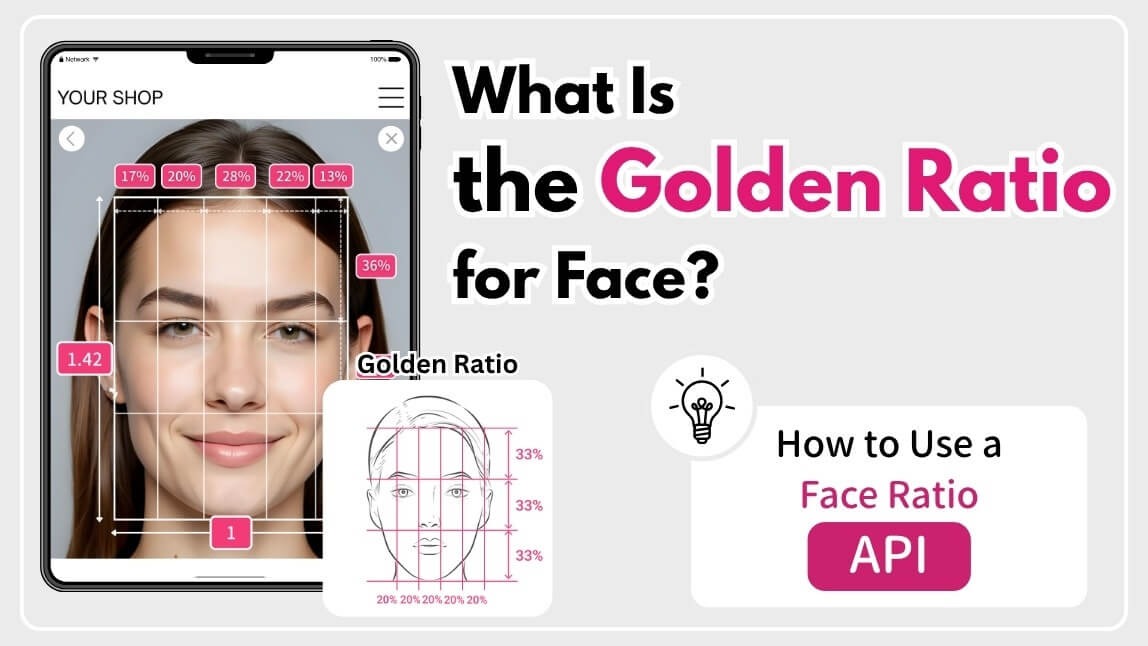
A Face Ratio API helps brands add photo-based facial-proportion insights to their own web, mobile, in-store, or consultation experiences. Rather than building image analysis and measurement logic from scratch, teams can connect structured outputs to their product discovery, virtual try-on, and advisor workflows.
The API can support optional exploration of visible facial proportions, including face length-to-width, facial thirds, eye spacing, lower-face relationships, and side-to-side symmetry. The goal is to provide useful visual context—not an attractiveness score, identity assessment, medical diagnosis, or treatment recommendation.
Some images in this article may be AI-modified and are used for illustrative purposes only.
What a Face Ratio API Returns
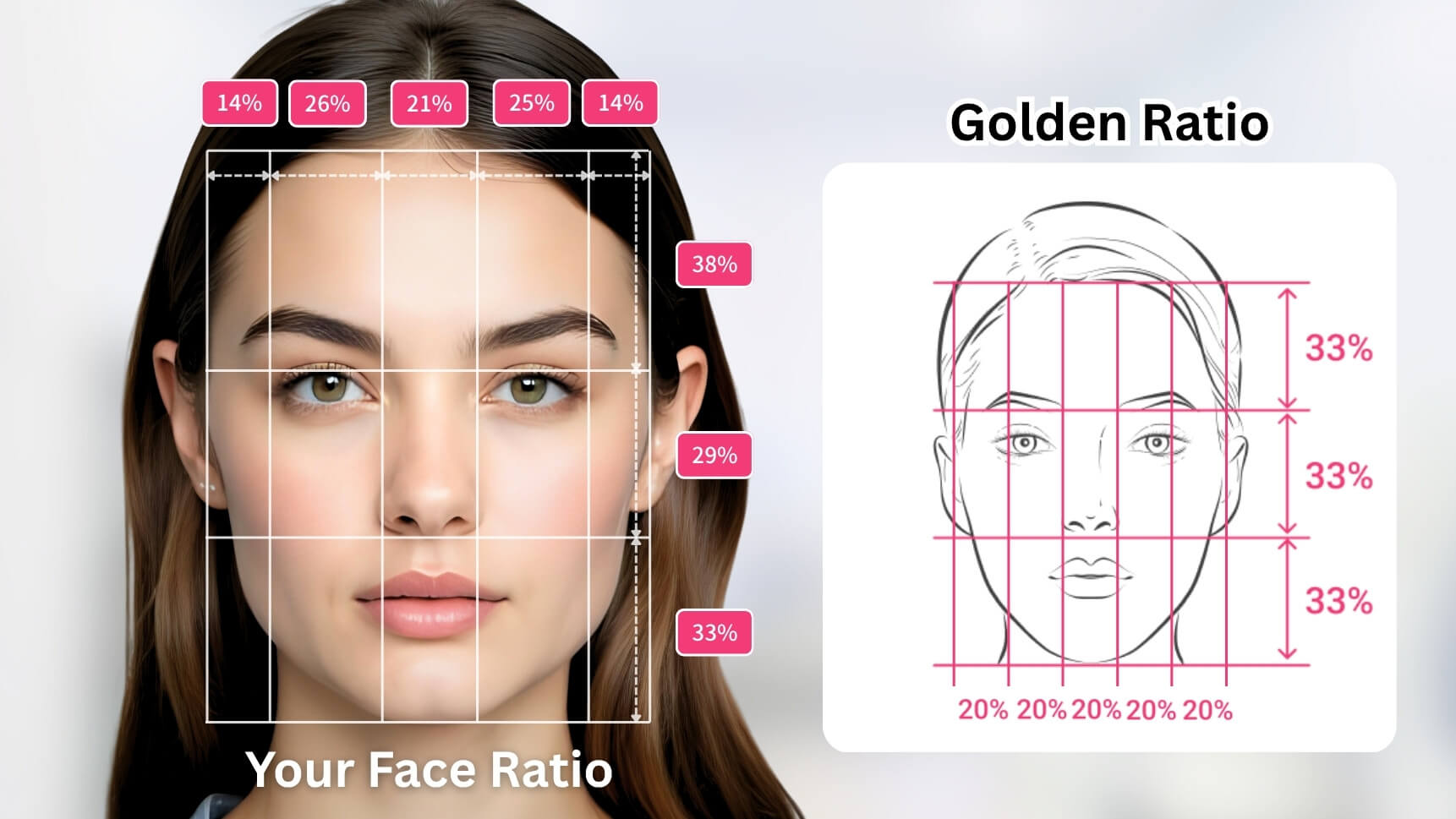
The exact output depends on the implementation, but a face ratio experience may assess several visible proportion relationships from a customer-provided image:
- Face length-to-width: The relationship between overall face height and width.
- Facial thirds: The visible upper, middle, and lower vertical sections of the face.
- Eye spacing: The relationship between eye width, eye distance, and surrounding features.
- Lower-face proportions: Relationships involving the nose, lips, chin, and jaw area.
- Side-to-side symmetry: A visual comparison of the left and right sides of the face.
These are descriptive measurements, not universal beauty standards. They should be presented as optional information that supports exploration, alongside a customer’s own preferences and goals.
How It Fits Into a Customer Journey
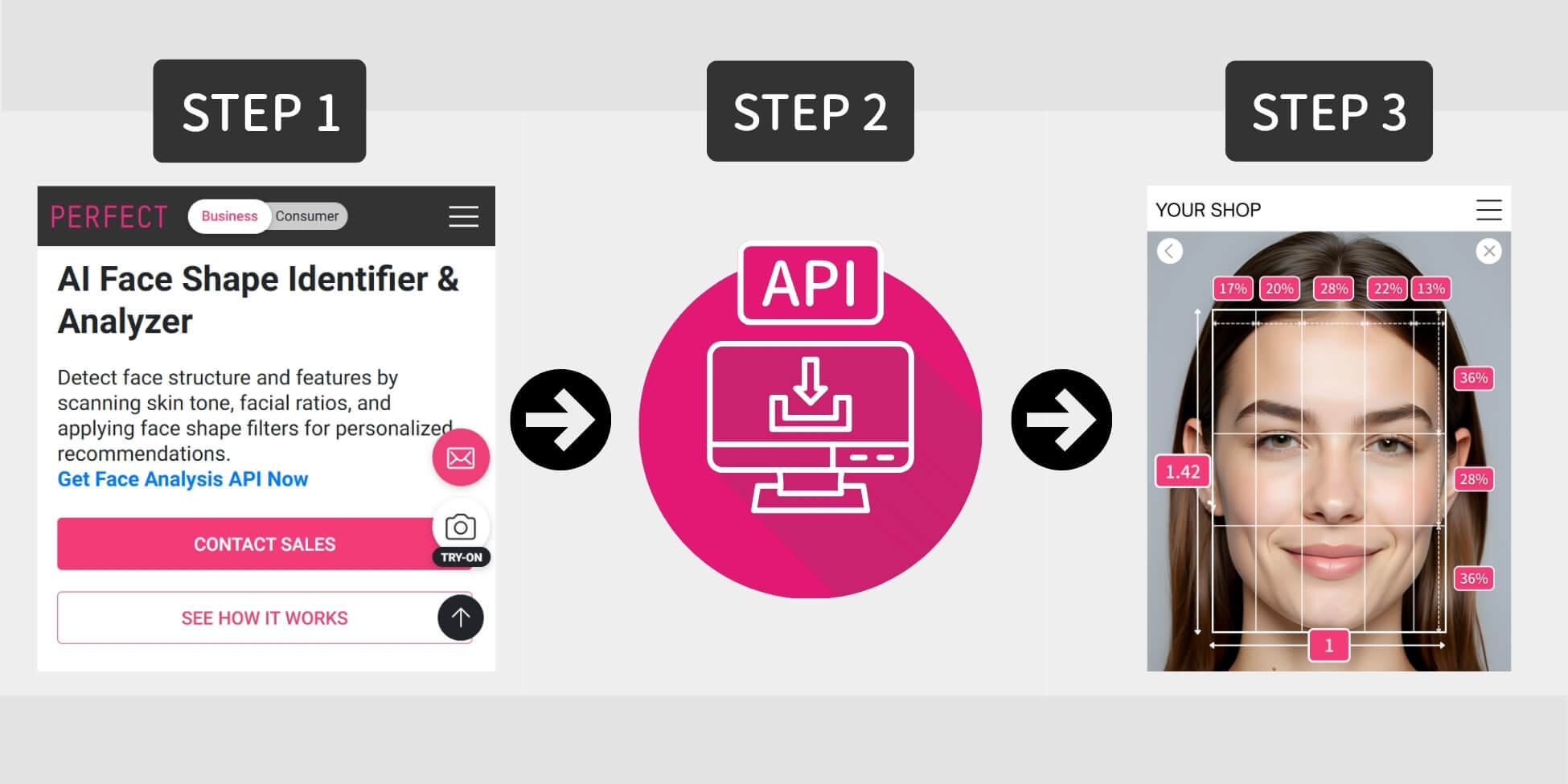
A face ratio API is most useful when it connects analysis with a clear next step. For example, a customer may choose to upload a photo, receive a concise set of visible-proportion insights, and then explore relevant products, virtual try-on options, or a consultation flow.
- Request consent: Explain why a photo is requested and what the customer can expect from the experience.
- Assess visible proportions: Process a clear customer-provided image to generate structured outputs.
- Connect insights to discovery: Use brand-defined logic to introduce relevant makeup looks, hairstyle previews, eyewear, accessories, or educational content.
- Let the customer choose: Offer optional virtual try-on, product exploration, or advisor-supported discussion rather than a prescribed result.
This approach can work across beauty e-commerce, hair and styling platforms, eyewear retail, accessory discovery, and professional beauty consultations.
Golden Ratio Analysis as One Reference
The golden ratio, approximately 1:1.618, is one mathematical reference that may be included in facial-proportion analysis. It should be treated as a way to explore selected relationships—not as a formula for beauty or an outcome customers should be expected to achieve.
For the broader context on golden-ratio facial proportions, facial symmetry, AI analysis, and responsible use, read our Golden Ratio Face guide .
Responsible Implementation Considerations
Facial-proportion experiences involve customer photos, so implementation should be deliberate. The most useful experiences are transparent, consent-led, and designed to give customers control over how they participate.
- Explain the value exchange: State what the experience assesses and how the result will be used.
- Use non-judgmental language: Describe visible proportions and style exploration, not “flaws,” scores, or ideals.
- Set clear photo guidance: Recommend a front-facing image, even lighting, and minimal obstruction around the face.
- Design for diverse customers: Evaluate the experience across different skin tones, ages, facial features, and real-world photo conditions.
- Provide meaningful choice: Let customers explore recommendations, try-on options, or a consultation without treating analysis as mandatory.
Image-based outputs can vary with lighting, angle, expression, hair, and image quality. They should be treated as visual context rather than a fixed conclusion.
Explore Perfect Corp.’s facial-proportion analysis solution or contact Perfect Corp.’s team to discuss a branded face-ratio experience.
Face Ratio API FAQs
What Is a Face Ratio API?
A Face Ratio API enables a brand to add photo-based facial-proportion analysis to its own digital or in-person experience. It can return structured insights about visible facial relationships that the brand connects to its own user interface and recommendation flow.
What Can a Face Ratio API Measure?
Depending on the implementation, it may assess visible relationships such as face length-to-width, facial thirds, eye spacing, lower-face proportions, and side-to-side symmetry.
Can a Face Ratio API Recommend Cosmetic Procedures?
Facial-proportion analysis should not be used as a diagnosis, a treatment plan, or a substitute for qualified professional judgment. In a consultation setting, it can provide visual context for a broader conversation led by an appropriately qualified professional.
How Can Beauty Brands Use a Face Ratio API?
Brands can connect optional face-ratio insights to product discovery, virtual try-on, educational content, and advisor-supported consultation flows across web, mobile, and in-store channels.
How Should Brands Handle Customer Photos?
Brands should clearly explain why a photo is requested, how the image will be processed, what choices customers have, and where to find the applicable privacy information. Confirm implementation details with the technology provider and your own legal and privacy teams.