Author:


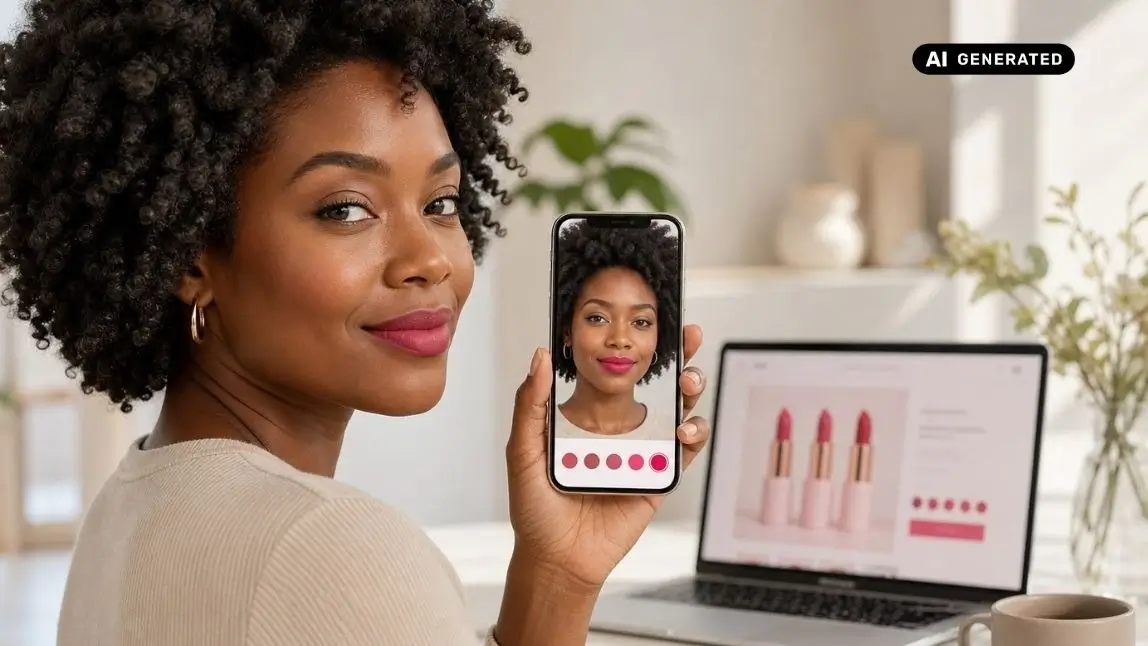
A makeup simulator is software that uses AI face detection and augmented reality (AR) to apply digital versions of real cosmetics, such as lipstick, foundation or eyeshadow, to a shopper's face through a live camera or uploaded photo. It lets online shoppers preview shades and finishes before buying, without a physical tester.
For beauty retailers, that matters because color is the hardest thing to judge on a product page. This guide explains how the technology works, how it compares with other ways of sampling, what results brands report, and which e-commerce platforms it can plug into, including Shopify and custom stores.
At a Glance
- A makeup simulator maps a shopper's face and renders product color and texture in real time.
- Independent research suggests AR has the most impact when shoppers are uncertain about a product.
- Ready-made plugins exist for Shopify and WooCommerce; custom stores can use a widget, SDK or API.
- Results vary by traffic, category and implementation, so measure against your own baseline.
How Does a Makeup Simulator Work?

Most makeup simulators follow the same four-stage process:
- Face detection: the camera feed or photo is scanned to locate the face.
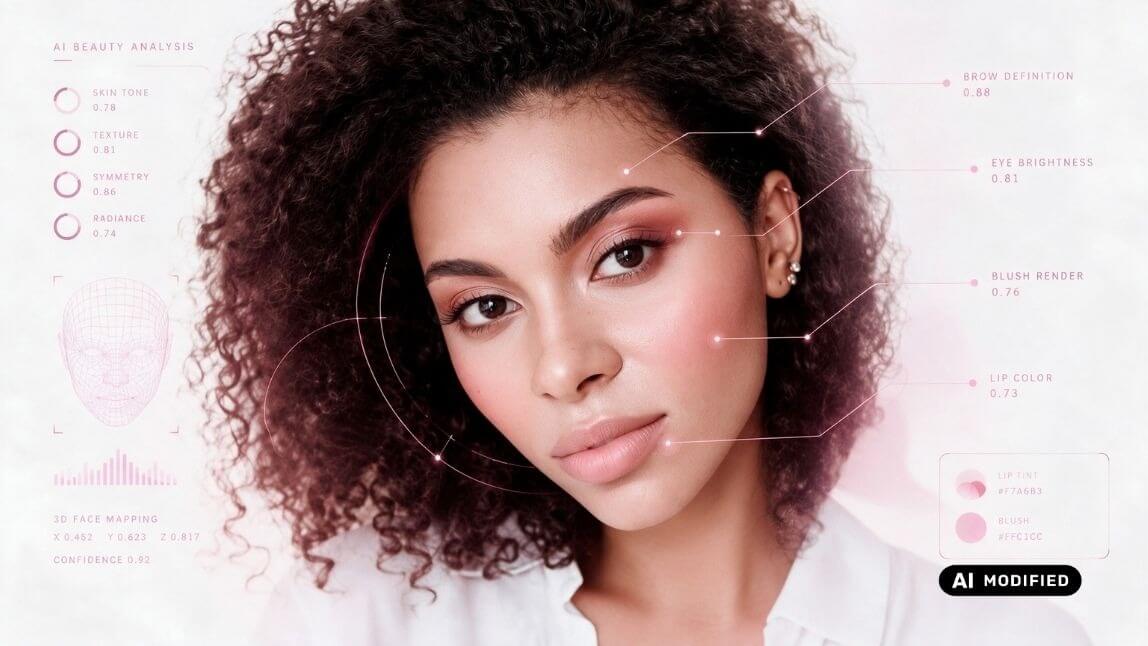
- Landmark mapping: the software identifies key facial points, such as lip contours, eye shapes and brow lines, so each product lands in the right zone.
- Color and texture rendering: a digital version of the product (shade, finish and intensity) is layered onto the mapped areas, adjusted for the lighting in the scene.
- Real-time tracking: in live mode, the effect follows head movement and angle changes, so the shopper can turn and check the look from different sides.
Rendering quality depends on the details: how accurately lip edges are traced, whether finishes like matte, satin or shimmer look different from one another, and how the effect holds up in mixed lighting. These are the areas to test when evaluating any vendor.
Makeup Simulator vs. Virtual Try-On vs. Physical Sampling
The terms "makeup simulator" and "virtual try-on" are often used interchangeably. In practice, retailers usually choose between a photo-based experience, a live AR experience, or both, alongside traditional testers.
| Dimension | Photo-based makeup simulator | Live AR virtual try-on | Physical sampling |
|---|---|---|---|
| Where it works | Online, any device with an uploaded selfie | Online or in-store, with a device camera | In-store or by mailed samples |
| Interaction | Static image, easy to compare and share | Moves with the face in real time | Real product on skin |
| Shades tried per visit | Many, switched in seconds | Many, switched in seconds | A few, limited by removal and hygiene |
| Cost per trial | Software subscription, no product used | Software subscription, no product used | Product, packaging and staff time |
| Main limitation | Depends on photo quality and lighting | Requires camera permission | Not available to online-only shoppers |
Why Makeup Simulators Matter for Online Beauty Sales
Peer-reviewed research supports the logic. A study in the Journal of Marketing found that AR availability and use had a positive effect on online sales, with stronger effects for less popular brands, higher-priced items and shoppers new to a category, and concluded that AR is most effective when product uncertainty is high (American Marketing Association). Shade-dependent products like foundation and lipstick fit that description.
Vendor-reported results point the same way. Perfect Corp's makeup simulator solutions page reports an average 2.5x increase in conversion rate, a 40% larger basket size and an 8% decrease in return rate, noting that results vary by site traffic, product category, implementation, market and campaign configuration.
Which E-Commerce Platforms Can a Makeup Simulator Plug Into?
For most retailers, integration is the deciding question. Options typically fall into three tiers:
Plugin-Ready Platforms: Shopify and WooCommerce
Perfect Corp offers a YouCam Virtual Try-On app on the Shopify App Store with live camera and photo modes, plus a WooCommerce plugin. Both are designed to need little coding: merchants set up SKUs and add generated code to product pages.
Wix, Squarespace and Custom Stores
For Wix and Squarespace, Perfect Corp provides installation guides, and custom beauty websites can add a ready-to-use web widget, according to its online makeup try-on service page.
Enterprise Builds: SDK and API
Brands with their own apps or headless storefronts can use a Web SDK, Mobile SDK or Makeup Try-On API, and extend the same experience to in-store smart mirrors, as described on the Virtual Makeup Try-On product page.
What to Check Before You Launch
- Catalog accuracy: compare digital shades with physical swatches across light, medium and deep skin tones.
- Privacy: explain clearly how camera images are used and stored, and review consent requirements with your legal team for each market you sell in.
- Placement: put the try-on button next to the shade selector, where hesitation happens.
- Measurement: track engagement, add-to-cart, conversion and returns for users vs. non-users over the same period.
How Perfect Corp Supports Online Makeup Try-On
Perfect Corp's AI Makeup technology can help retailers offer try-on across seven self-service categories (lip color, blush, eyelashes, eyeliner, eyeshadow, foundation and mascara), with adjustable textures such as matte, satin, sheer and shimmer. Its makeup AR technology is built for real-time tracking and lighting-aware rendering, and brands create and publish SKUs from a self-service console. You can see a makeup simulator live in the web demo store.
Bring Shade Confidence to Your Online Store
A makeup simulator can help your shoppers explore more shades with less guesswork, whether you run on Shopify, WooCommerce or a custom stack. Perfect Corp's team can help you choose the right integration path and set up your catalog for a free trial.