 Author:



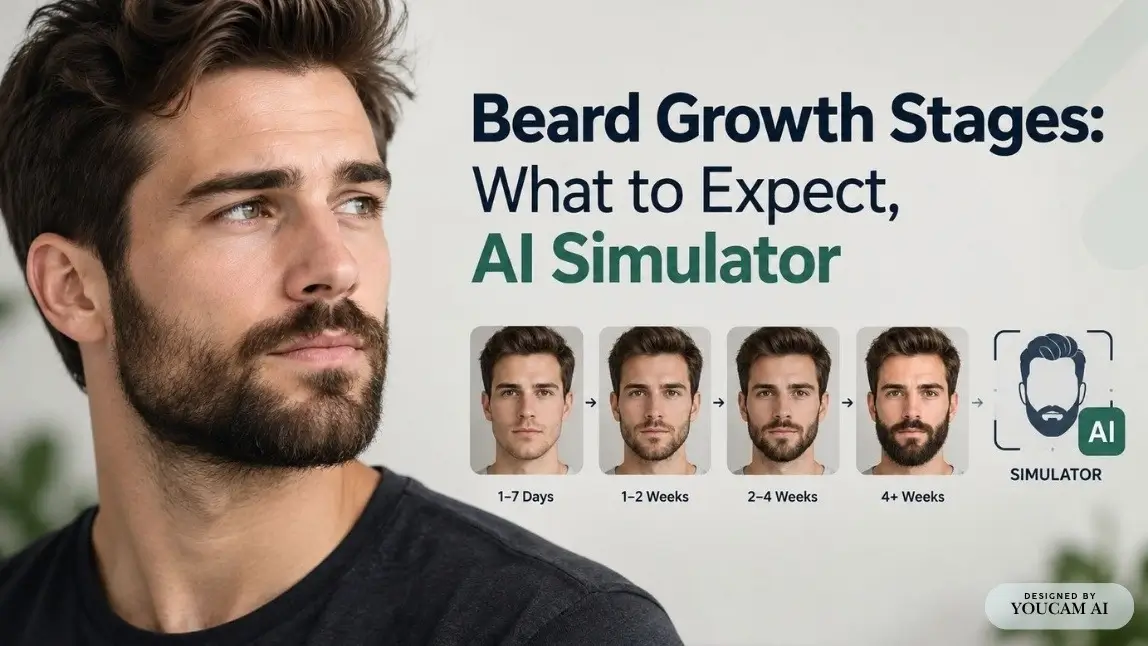
Beard growth isn't random: it follows a predictable biological timeline driven by your hair growth cycle, genetics, and DHT sensitivity, and each stage has its own personality, problems, and fixes. Below is the full stage-by-stage map. Before you commit to months of itch and patience, you can also preview how a fuller, trimmed, or styled beard would look on your own face in second, more on that a bit further down.
What You'll Learn
- What Are the Main Stages of Beard Growth?
- Why Does Beard Growth Look Patchy at First. and Does It Fix Itself?
- How Long Does It Actually Take to Grow a Full Beard?
- What Determines How Fast and How Full Your Beard Grows?
- How Can You See Each Stage Before You Commit to It?
- What Should You Do at Each Stage to Survive the Awkward Phases?
- Frequently Asked Questions
What Are the Main Stages of Beard Growth?
Facial hair doesn't grow in one smooth line from bare skin to lumberjack, it moves through five fairly distinct stages, and each one comes with its own texture, itch level, and drama. Here's the full timeline at a glance before we break down each phase.

| Stage | Timeframe | What's Happening | How It Feels |
|---|---|---|---|
| 1. Stubble | Weeks 1–2 | Short, sharp hairs emerge unevenly across the jaw and chin | Itchy, prickly, visually inconsistent |
| 2. Patch Map | Weeks 3–4 | Growth becomes visible but patchiness is most obvious here | Self-conscious, "is this working?" phase |
| 3. The Awkward Phase | Weeks 5–8 | Hair is long enough to be noticed but too short to lie flat or hold shape | The classic "why did I do this" stretch |
| 4. Settling | Weeks 9–12 | Texture softens, direction of growth becomes consistent, patches start filling | Manageable, first styling opportunities |
| 5. Maturity | Months 4–6+ | Full density reached, beard looks visually intentional rather than accidental | Confident, ready to style or shape |
Stage 1 — Weeks 1–2: The Itchy Stubble Phase
This is where every beard begins, and it's the most physically annoying stage of the whole process. As each hair pushes through the follicle, the sharp cut edge left over from your last shave can catch on the surrounding skin, that's your itch. It has nothing to do with your beard "deciding" whether to grow; it's a mechanical, temporary irritation that fades once the hair tip softens, usually within 10–14 days.
Stage 2 — Weeks 3–4: The Patch Map Phase
By week three, growth accelerates enough that you can actually see your beard's "map" — the thick zones, the thin zones, and the spot on your cheek that seems to have given up entirely. This is the single most common point where people panic and shave it off. Don't. Follicle density varies naturally across the face, and cheeks are almost always the last area to catch up.
Stage 3 — Weeks 5–8: The Awkward In-Between
This is the stretch nobody warns you about loudly enough. Hair is long enough to draw attention in a meeting or on a video call, but not long enough to sit flat, hold a shape, or look deliberate. Expect flyaways, an uneven silhouette, and at least one person asking if you're "growing something out." You are. Keep going.
Stage 4 — Weeks 9–12: The Settling Phase
Around the two-to-three-month mark, hair texture softens, growth direction becomes consistent, and those patchy cheek zones from Stage 2 typically fill in. This is also the first stage where trimming and shaping actually make sense — before this, there usually isn't enough length or consistency to work with.
Stage 5 — Months 4–6+: Full Maturity
By month four to six, most beards reach their natural density ceiling — the point where growth continues but visible fullness plateaus. This is the stage where a beard starts to look like a deliberate style choice instead of an accident in progress, and where most styling, shaping, and length decisions genuinely start to pay off.
Why Does Beard Growth Look Patchy at First — and Does It Fix Itself?
Patchiness feels like a personal failure, but it's mostly just biology. Every follicle on your face runs on its own independent clock inside the hair growth cycle — the active growing phase (anagen), a short transition (catagen), and a resting/shedding phase (telogen).
Because thousands of individual follicles aren't synchronized, some patches will visibly lag weeks behind others, especially on the cheeks, which is one of the last areas most men fill in.
For most people, patchiness genuinely does even out significantly between weeks 8 and 12 — but the ceiling on how full it ultimately gets is set largely by genetics and androgen (DHT) sensitivity in each follicle, not by how long you wait.
How Long Does It Actually Take to Grow a Full Beard?

Facial hair grows at roughly half an inch (about 1.25 cm) per month on average, though this varies by individual, region of the face, and hormone levels. Here's a realistic length-based timeline for common beard goals.
| Goal Style | Typical Time Needed | Notes |
|---|---|---|
| Heavy stubble | 2–3 weeks | Minimal shaping needed |
| Short boxed beard | 4–6 weeks | First trim-worthy stage |
| Medium beard | 2–3 months | Patches should be settling by now |
| Full/long beard | 4–6+ months | Requires consistent care to avoid split ends |
What Determines How Fast and How Full Your Beard Grows?
Speed and fullness come down to a handful of factors working together — and only some of them are in your control.
- Genetics: Follicle count and pattern are inherited, and this sets your realistic ceiling more than anything else on this list.
- DHT sensitivity: Facial follicles respond strongly to dihydrotestosterone; higher local sensitivity generally means thicker, faster growth.
- Age: Beard density typically increases through the 20s and often peaks in the late 20s to mid-30s.
- Diet and sleep: Protein, iron, zinc, and quality sleep support healthy hair growth cycles, though they won't override genetics.
- Stress and health: Chronic stress can push more follicles into the resting (telogen) phase, temporarily slowing visible growth.
How Can You See Each Stage Before You Commit to It?
Perfect Corp's AI Beard Style Generator lets you upload a selfie and instantly preview more than 100 beard styles and fullness levels on your own face — full beard, short boxed, goatee, heavy stubble — before you commit to two months of itching to find out if it suits you.

It's the same AI face-detecting technology brands use for virtual try-on, applied to the one grooming decision most men make by guesswork. If you're deciding between "grow it out" and "just keep shaving," this is the fastest way to settle the argument with your mirror.
Not sure which shape flatters your face first? This beard shape guide pairs well with the simulator before you start growing.
What Should You Do at Each Stage to Survive the Awkward Phases?
Every stage has one main problem and one main fix. Here's the cheat sheet.
| Stage | Main Problem | What Actually Helps |
|---|---|---|
| Weeks 1–2 | Itch from sharp regrowth | Beard oil daily, avoid picking or scratching, resist the urge to shave it off |
| Weeks 3–4 | Visible patchiness | Don't trim yet — let every patch have its full chance to fill in first |
| Weeks 5–8 | Shapeless, unruly growth | Clean up the neckline and cheek lines only; leave length alone |
| Weeks 9–12 | Dryness, flyaways | Beard balm for hold, boar-bristle brush to train direction |
| Months 4–6+ | Split ends, shape decisions | Regular trims, defined styling, and shaping to face shape |
Want a second opinion before you pick a final shape? Explore the full range of options through Perfect Corp's AI beard styling and color tools.
Frequently Asked Questions
What are the 5 stages of beard growth?
Most beards move through five stages: stubble (weeks 1–2), the visible patch map (weeks 3–4), the awkward in-between (weeks 5–8), settling (weeks 9–12), and maturity (months 4–6 and beyond), where density plateaus and styling becomes easier.
How long does it take to grow a full beard?
Most men reach a reasonably full, mature-looking beard somewhere between three and six months, since facial hair grows at roughly half an inch per month on average. Genetics play the biggest role in how "full" that end result ultimately looks.
Why is my beard patchy, and will it fill in?
Patchiness happens because individual follicles run on independent growth cycles, so some areas — especially the cheeks — visibly lag behind others early on. For most people it noticeably improves between weeks 8 and 12, though the final density ceiling is set by genetics and hormone sensitivity.
Does shaving make your beard grow back thicker or faster?
No — this is one of the most persistent grooming myths. Shaving cuts hair at the surface and doesn't affect the follicle, growth rate, or thickness. Regrowth can feel coarser only because the blunt-cut tip hasn't tapered yet.
At what age does beard growth peak?
Facial hair density generally increases through your 20s and commonly peaks in the late 20s to mid-30s, as testosterone and DHT sensitivity in facial follicles reach their strongest, most consistent levels for most men.
How can I make my beard grow faster or fuller?
You can support the process — enough sleep, a protein- and zinc-rich diet, lower stress, and consistent beard oil to keep follicles healthy — but none of it can override your genetic follicle count. Patience through the patchy stages does more than any product.
Is beard itch normal, and how long does it last?
Yes, itch in the first one to two weeks is completely normal and comes from sharp, freshly cut hair tips catching on skin as they regrow. It typically fades on its own within about ten to fourteen days as the hair softens.
Still deciding which stage — or which final style — is worth the wait? Preview it on your own face first with Perfect Corp's AI Beard Style Generator before you commit to a single day of itching.