


 Face

 Eyes
 Brows
 Lips
 Nose
 cheekbones
 Hair


Botox Before and After: AI Wrinkle Simulator
Stop squinting at strangers' gallery photos. Upload one selfie and see your own Botox before and after in seconds, with forehead lines, frown lines, and crow's feet softened on your face, not a model's. Powered by Perfect Corp's AI Skin Simulation, trusted by 800+ global brands.
*Images designed by YouCam AI
What Does Botox Before and After Really Look Like?
Botox (botulinum toxin type A) relaxes the small muscles that fold your skin into dynamic wrinkles, the lines that show up when you frown, squint, or raise your brows. A typical Botox before and after shows three changes: smoother horizontal forehead lines, softer vertical 11s between the brows, and calmer crow's feet at the outer eyes. Results usually start to appear within 3 to 5 days, peak around day 14, and fade gradually over about 3 to 4 months.
Static lines etched into the skin at rest often soften less, which is exactly why a personalized preview beats a generic gallery.
How to Use the AI Botox Before and After Simulator? Two Simple Steps!
Upload a Selfie or Go Live
Snap a front-facing photo in even lighting, upload one you already have, or turn on your camera for a live preview.
No selfie handy? Pick a sample model and explore first.
The AI maps your skin in seconds and spots the wrinkles worth simulating.

Slide to See Your Botox After
Choose Wrinkles and drag the intensity slider to preview a subtle refresh or a smoother result.
Toggle between before and after side by side to see which lines soften and by how much.
Save the comparison and bring it to your consultation, so you and your injector start from the same picture.
Where Can a Botox Before and After Preview Change the Conversation?
From the first Instagram click to the follow-up visit, AI turns "What will I look like?" into a picture your client can actually see.
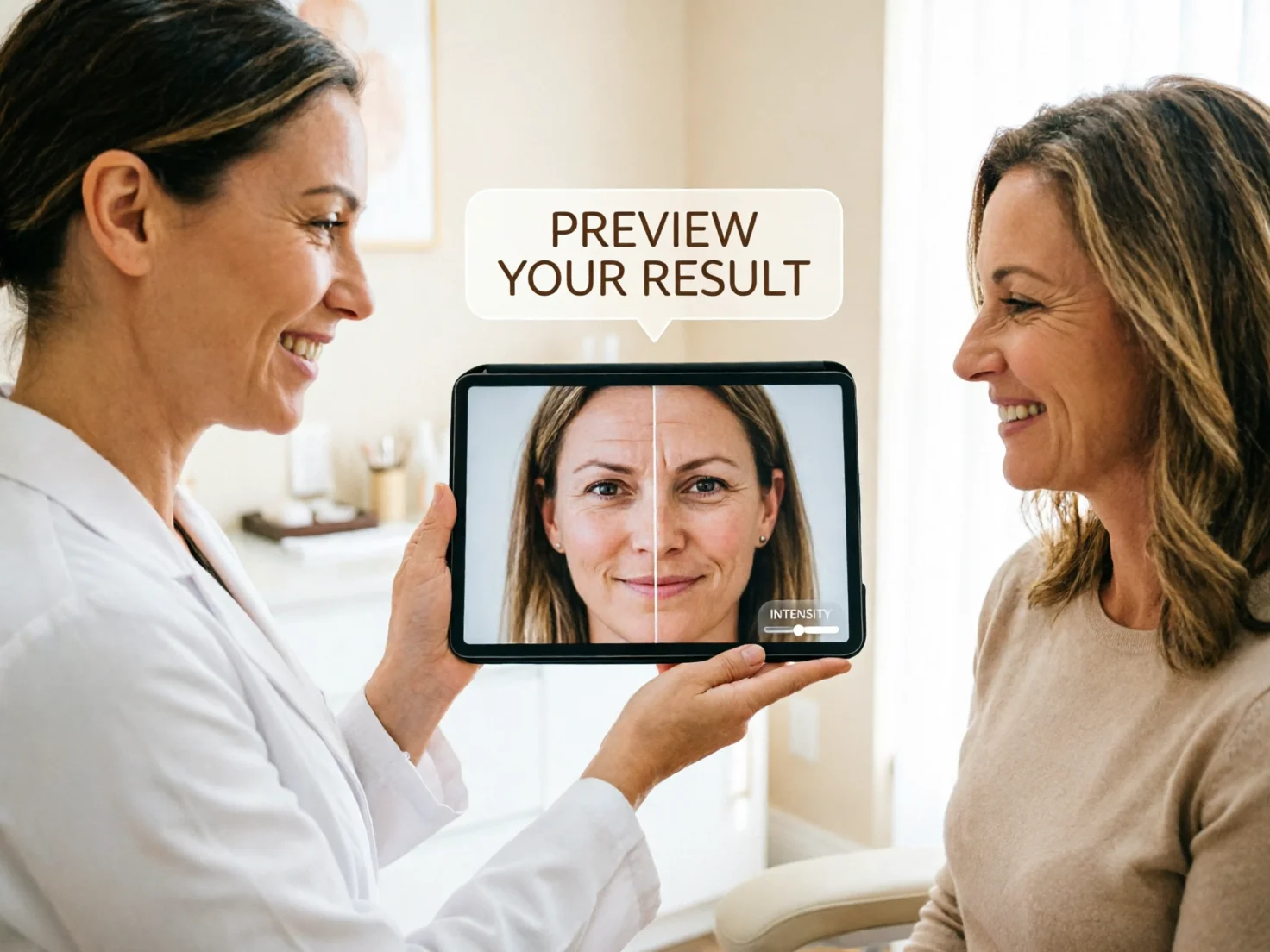
Med Spa and Dermatology Consultations
First-time clients often freeze at the word "needle." Show them their own Botox before and after on an iPad during the consult, adjust the intensity together, and agree on a natural-looking goal before anyone picks up a syringe.
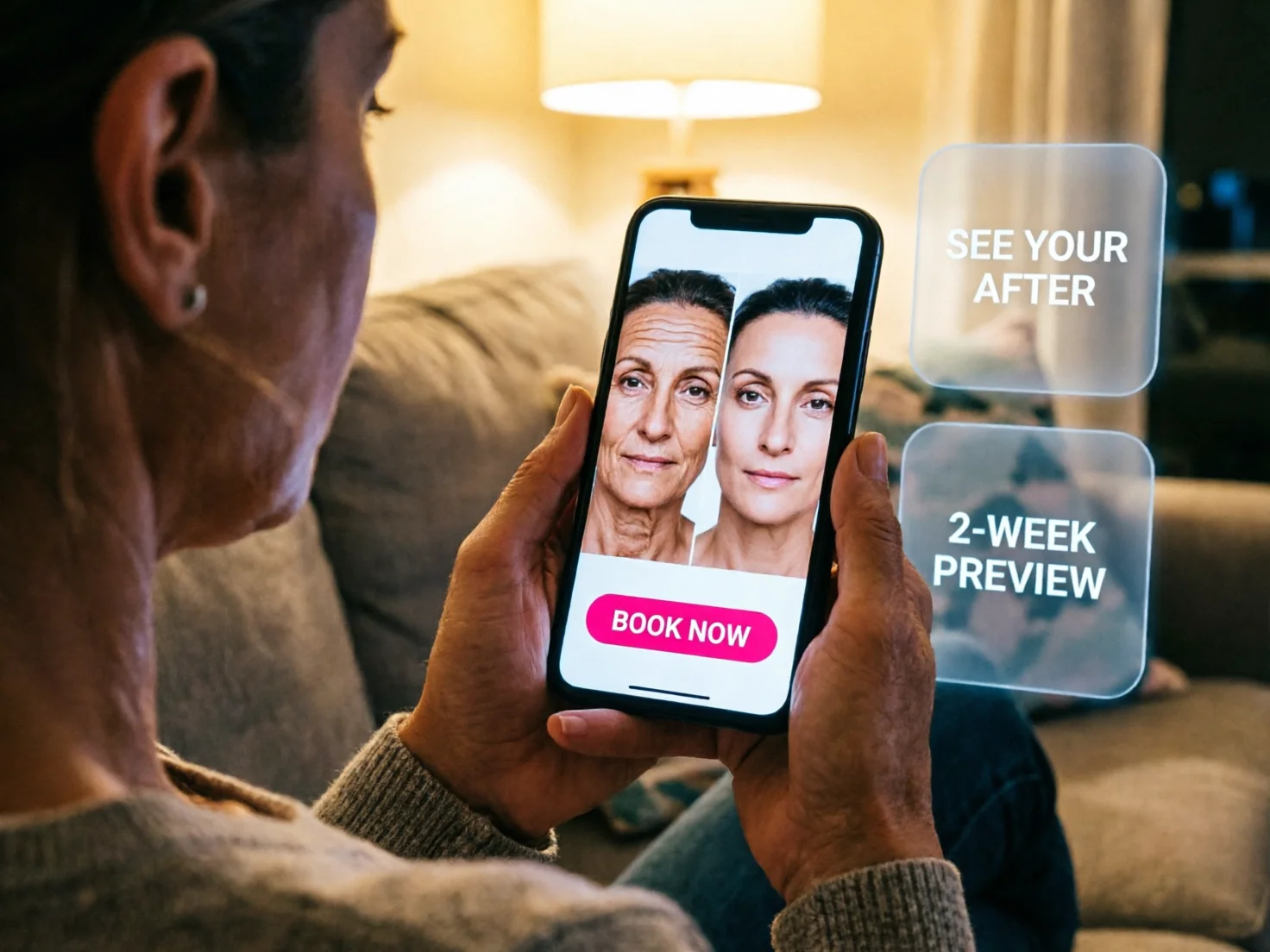
Online Booking and Social Campaigns
Put the simulator on your website or a campaign landing page and let browsers preview results at 11 p.m., right when they are deciding.
A personal preview converts curiosity into a booked appointment far better than another stock gallery, and every simulation can be paired with a Book Now button.
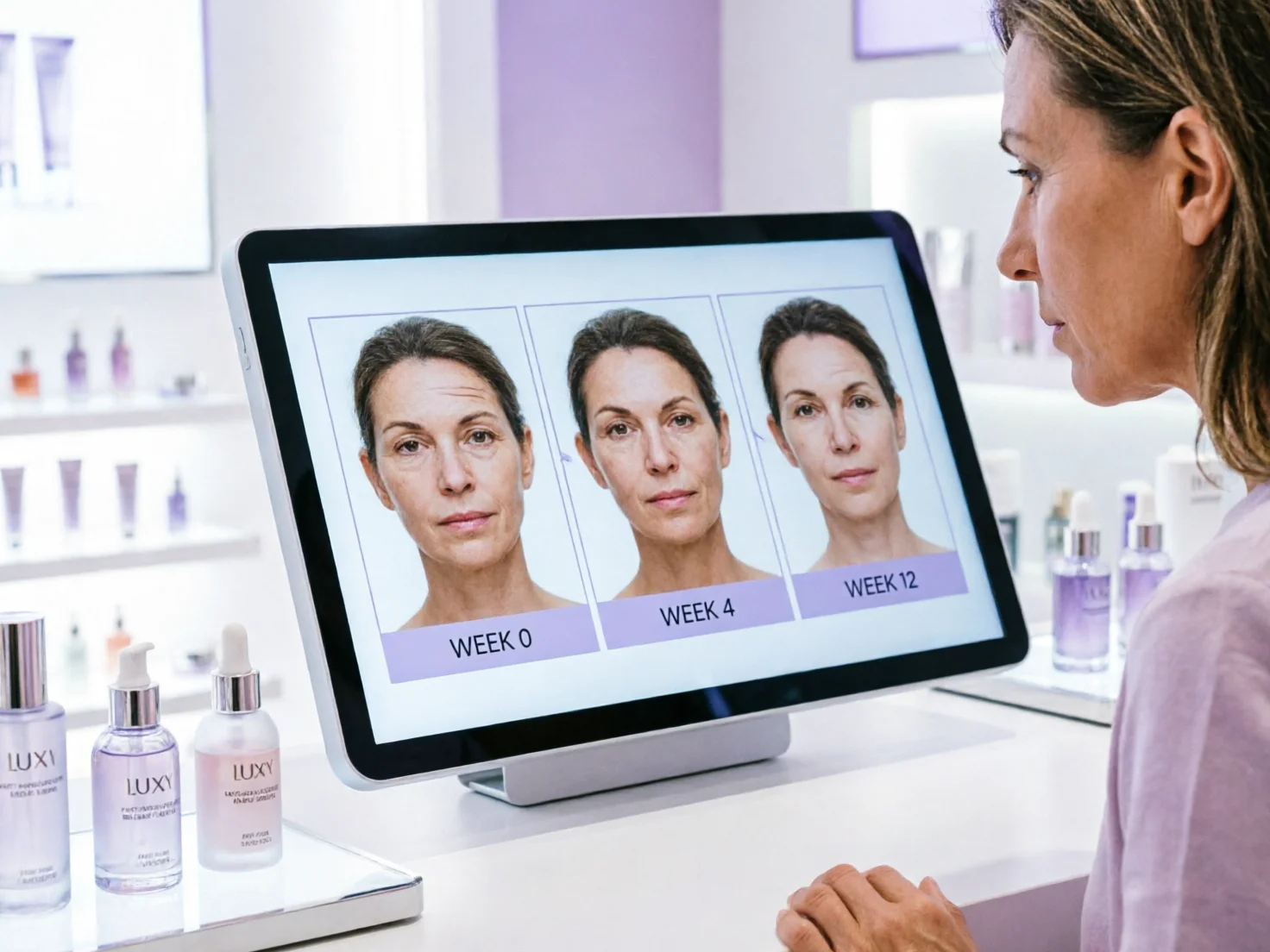
Skincare Brands and Anti-Aging Retail
Not a clinic? Skincare and device brands use the same AI Skin Simulation to show how wrinkle-focused routines may smooth lines over time.
Pair the preview with AI Skin Analysis to recommend the right serum, peptide, or retinol, and turn a beauty counter into a personalized anti-aging consultation.
HOW IT WORKSHow the AI Wrinkle Simulator Builds Your Botox After
How the AI Wrinkle Simulator Builds Your Botox After
Perfect Corp's AI Skin Simulation first detects and maps the wrinkles on your face, including forehead lines, glabellar 11s, and crow's feet. It then reduces their depth and visibility step by step as you raise the intensity, while keeping your skin texture, tone, and expression intact. That is the difference between a realistic preview and a blur filter.
Clinics that need more control can move up to the AI Aesthetic Simulation solution, which adds treatment-area selection and CRM records for every client's before and after.
READ RESULTS LIKE A PROReal Botox Before and After Photos vs. AI Previews: What to Look For
Real Botox Before and After Photos vs. AI Previews: What to Look For
Clinic galleries are useful, but they show someone else's face, and lighting, camera angle, and expression can quietly change the story. When you compare real photos, check that both shots use the same light, the same angle, and the same expression (a frown in one and a relaxed face in the other is a red flag). Look for photos taken about two weeks after treatment, when results peak.
An AI preview solves the biggest gap: it shows the change on your own features. Want the business side? Read our guide on how Botox simulators boost clinic bookings.
Botox Before and After FAQ
How long does it take to see Botox before and after results?

Most people notice the first softening within 3 to 5 days. The full Botox after typically shows at about 2 weeks, which is why clinics take follow-up photos around day 14. Results then fade gradually, and most patients return every 3 to 4 months to maintain them.
Can I see what I would look like with Botox before treatment?
Yes. An AI wrinkle simulator like Perfect Corp's AI Skin Simulation lets you upload a selfie and preview smoother forehead lines, frown lines, and crow's feet on your own face. It is a visualization tool, not a medical guarantee, so use it to set expectations and talk through goals with a licensed injector.
What's the downside of getting Botox?
Common side effects are mild and short-lived: redness, small bruises, or a headache near the injection sites. Less often, a brow or eyelid can droop temporarily if the product spreads to a nearby muscle. Results are also temporary, so maintaining them means repeat visits. Choosing a qualified, licensed provider lowers the risk.
What does 10 years of Botox look like?
With consistent treatment from a skilled injector, long-term patients often show fewer deep static lines than they would have developed otherwise, because the treated muscles fold the skin less often. Some find they need treatment less often over time. Overdone or poorly placed injections, not the years themselves, are what usually create a frozen look.
What do people wish they knew before getting Botox?
Three things come up again and again: results are not instant, so plan around the 2 week peak; less is often more for a natural look; and your Botox before and after depends on your own anatomy, not a celebrity photo. Previewing your face with an AI simulator first makes that consultation conversation much clearer.


