


 Face
Face
 Eyes
Eyes Brows
Brows Lips
Lips Nose
Nose cheekbones
 Hair
Hair


Midface Ratio Detector: Measure Your Facial Proportions with AI
Upload one selfie and get your midface ratio in seconds. Perfect Corp's AI reads 11 facial ratios in a single pass, powered by the same facial analysis engine trusted by 800+ global beauty and fashion brands.
What Is the Midface Ratio?
The midface is the stretch of face between your pupil line and the top of your upper lip. Divide the distance between your two pupils by that midface length and you get the midface ratio, one number that tells you whether your middle third reads compact or elongated.
Most published references place the balanced zone at roughly 0.95 to 1.05, and anything meaningfully under 0.9 starts to read as a long midface. Some guides flip the formula and divide midface length by pupil distance instead, so always check which direction a calculator uses before comparing numbers.
How to Use the Midface Ratio Detector? Two Simple Steps!
Upload a Front Facing Selfie
Drop in a straight on photo with even lighting, hair off the forehead, and a neutral expression. The detector screens head angle first, so a tilted or turned shot gets flagged instead of quietly returning a number you cannot trust.

Read Your Ratio Report
Within seconds your midface ratio appears plotted against the balanced range, next to 10 more proportions covering facial thirds, vertical fifths, brow position, nose width, and lip balance.
Each result ships with a visual overlay so you can see exactly what was measured.
Who Actually Needs a Midface Ratio Number?
Measuring by hand with a screenshot and a ruler is slow and almost never repeatable twice. AI facial analysis returns the same value every run, which is what turns an internet curiosity into something a business can build on.
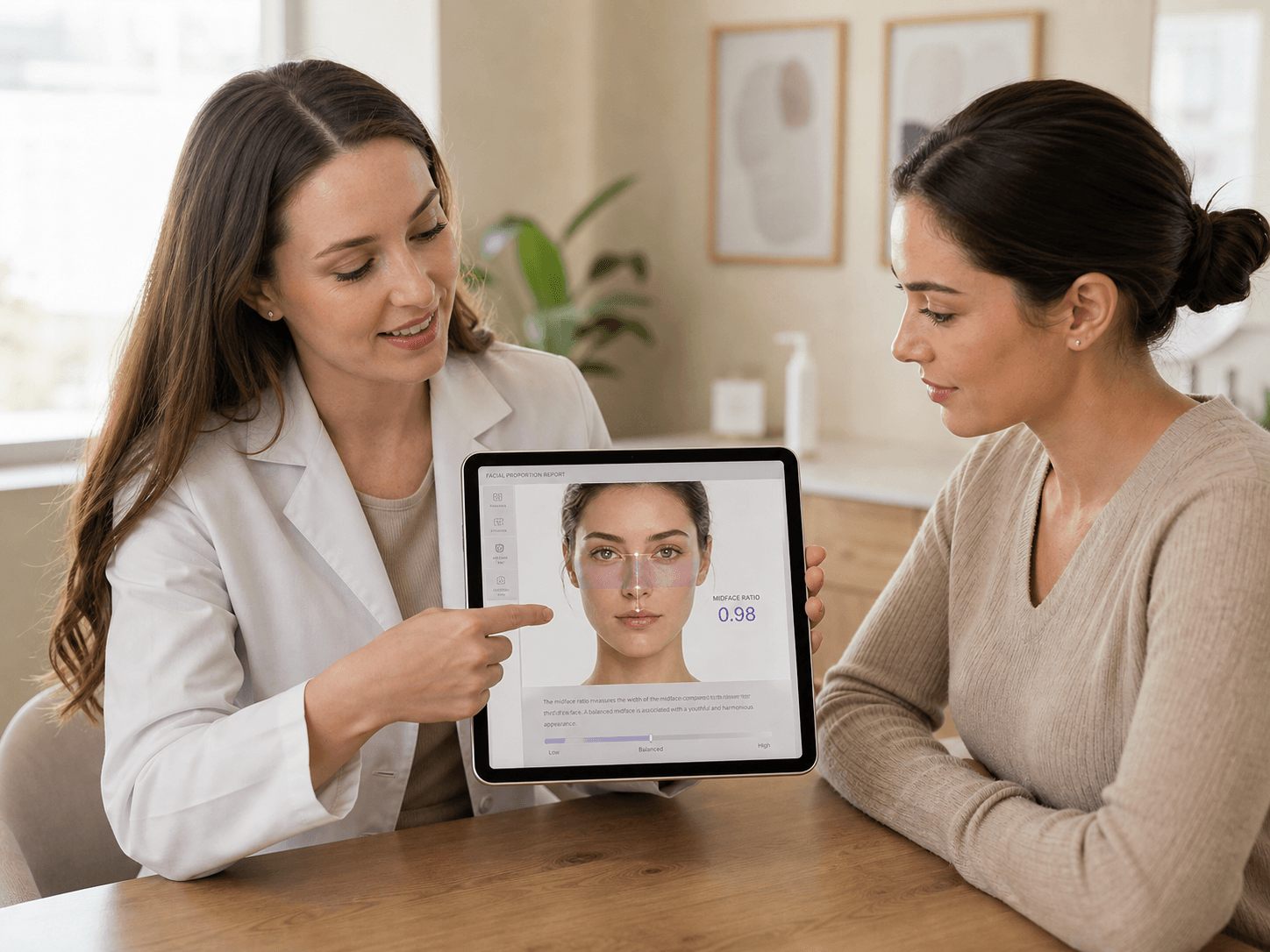
Aesthetic Clinics and Consultations
Practitioners use objective proportion data to ground a consultation in numbers instead of adjectives.
A documented midface ratio at intake also gives clinics a consistent baseline to revisit at follow up appointments.
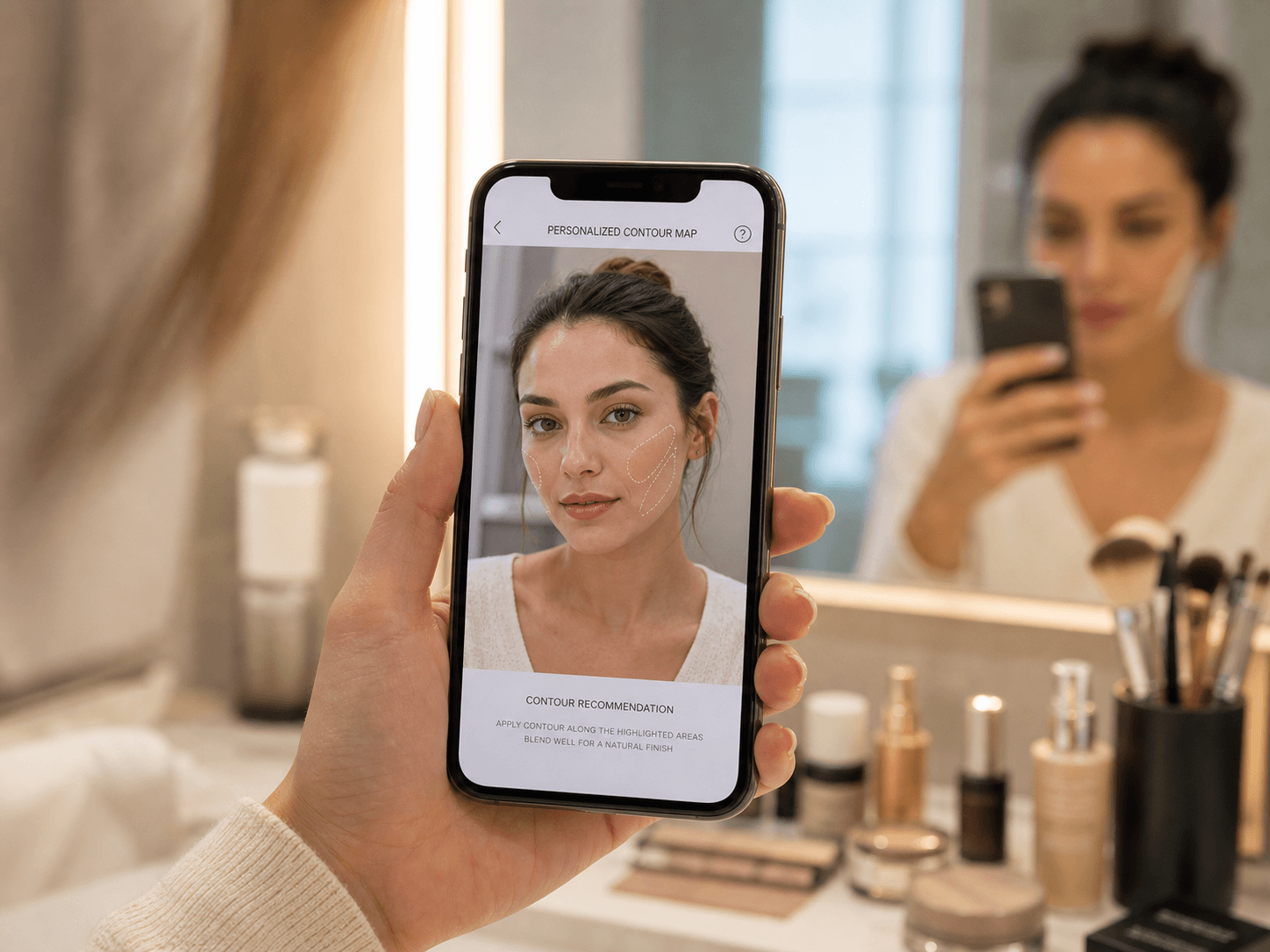
Beauty Brands and Makeup Personalization
Midface proportion drives where contour, highlight, and blush actually land on a face. Brands feed the ratio into recommendation engines so a shopper sees the shades and placement built for her proportions.
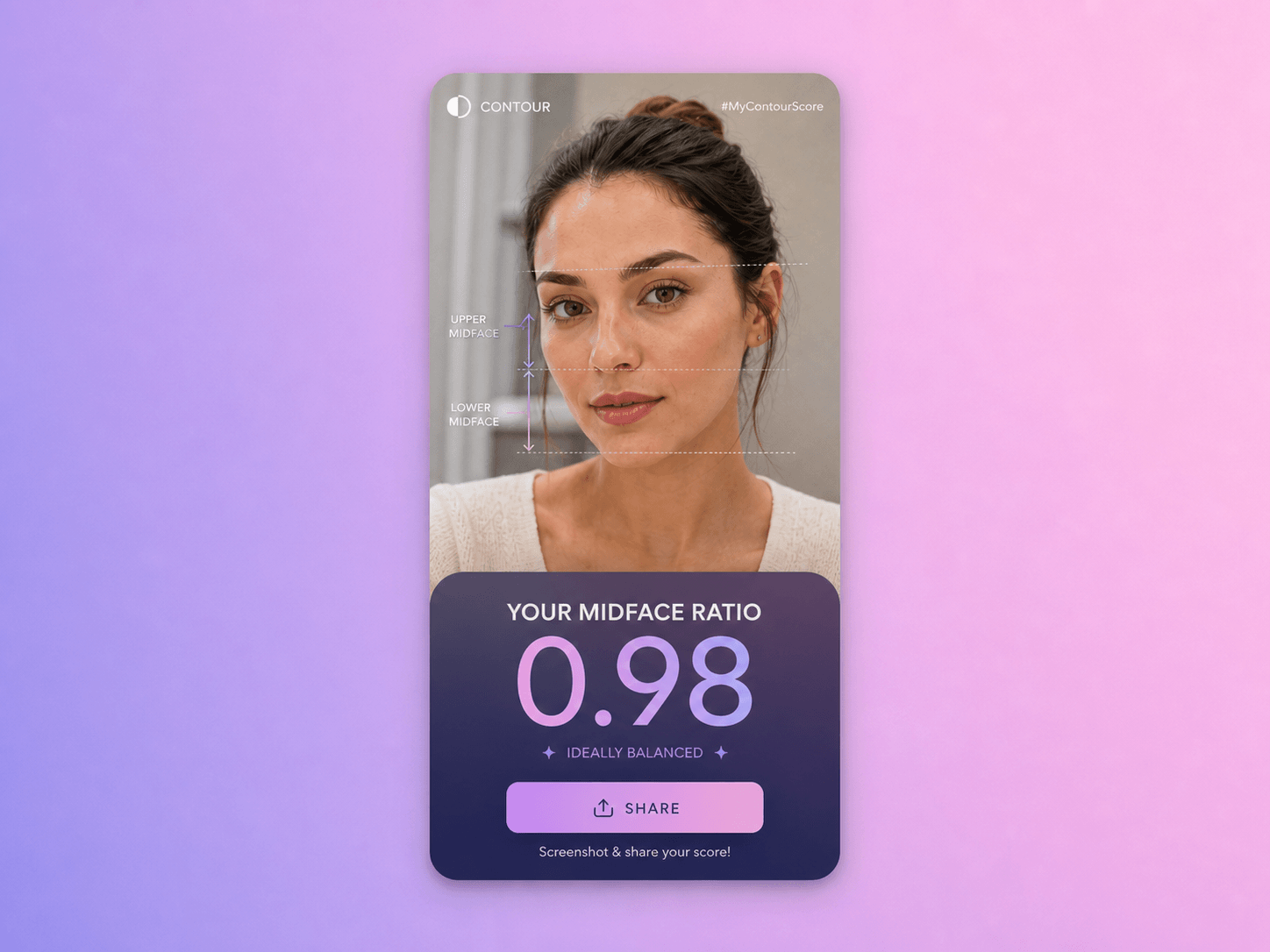
Creators, Apps, and Social Tools
Face ratio tests are one of the stickiest formats in social beauty content.
Plugging a real analysis engine into an app or campaign turns a viral trend into repeat sessions, shareable result cards, and first party data you own.
HOW IT WORKSInside the AI That Measures Your Midface
Inside the AI That Measures Your Midface
The detector starts with facial detection from a single 2D image. It then normalizes for head pose, because a few degrees of tilt is enough to distort a ratio by a visible margin. From there it calculates the midface ratio alongside horizontal thirds, vertical fifths, face aspect ratio, and seven more proportions in the same pass.
BUILT FOR BRANDSTurn One Selfie Into a Full Proportion Profile
Turn One Selfie Into a Full Proportion Profile
Midface ratio rarely travels alone. The same API call that returns it also returns face shape, eye shape and spacing, brow position and arch, lip shape, nose width and length, cheekbone read, and skin tone, which is the raw material behind personalized product recommendations.
Perfect Corp has spent over a decade training this technology on beauty specific data, and it now runs inside experiences for 800+ global brand partners. Integration takes a REST call, not a research project.
Midface Ratio Detector FAQ
What is a good midface ratio?

Most references put the balanced range at about 0.95 to 1.05 when you divide interpupillary distance by midface length. However, the published ideals vary by source, ethnicity, and study population.
How do I measure my midface ratio?
Manually you would take a front facing photo, measure the distance between your pupil centers, measure from the pupil line down to the top of your upper lip, then divide the first by the second. The catch is that a small head tilt or a wide angle phone lens can shift the result noticeably. An AI detector normalizes for head pose and returns the same value.
Can you change your midface ratio?
The underlying bone proportions are set once facial growth completes, so the structural ratio itself does not meaningfully change on its own. What can change is how it reads. Hairstyle, brow shaping, contour placement, and lip balance all shift perceived midface length. Surgical and injectable options exist as well and should be discussed with a qualified practitioner.
Why does a longer midface look less attractive?
It is less about length itself and more about balance. A longer midface pushes the face away from the roughly equal thirds that most beauty conventions treat as harmonious, and it can also read as slightly older because the midface tends to lengthen with age. Plenty of widely admired faces sit outside the so called ideal band, so a single number is not a verdict.
How accurate are AI facial ratio measurements?
AI facial analysis is highly consistent, which matters more than raw precision for most use cases. Because it applies the same measurement logic every time and corrects for head angle, it removes the variance that makes manual measuring unreliable. It still produces a 2D estimate from a photograph, so it is a styling and consultation aid rather than a clinical measurement.


