 Author:



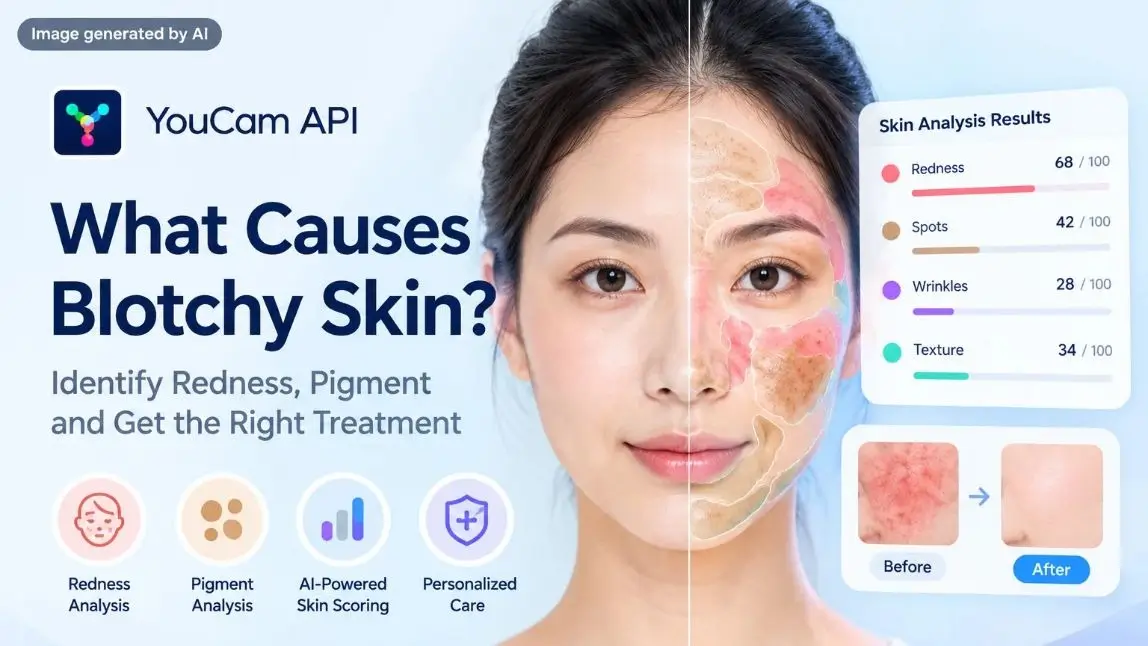
Blotchy is a description, not a diagnosis. It covers red patches that flare after a hot shower, brown patches that have sat on the same cheekbone for three years, and the common case where both are happening on the same face at once. That matters because the two have opposite treatments, and the product aisle sells them as if they were one problem. The useful first step is separating them, which is also what a skin analysis API does well, because redness and pigment are scored as independent values rather than blended into one evenness number.
You can see what that separation looks like on a real face in the skin analysis demo, which returns redness and spots as their own readings alongside the rest.
What this guide covers
What Is Blotchy Skin?
Blotchy skin is uneven colour across the face in patches rather than in a uniform shift. The patches can be red, pink, brown, grey or pale, they can be sharply edged or diffuse, and they can sit anywhere, though the cheeks, nose, jawline and upper lip collect them most often.
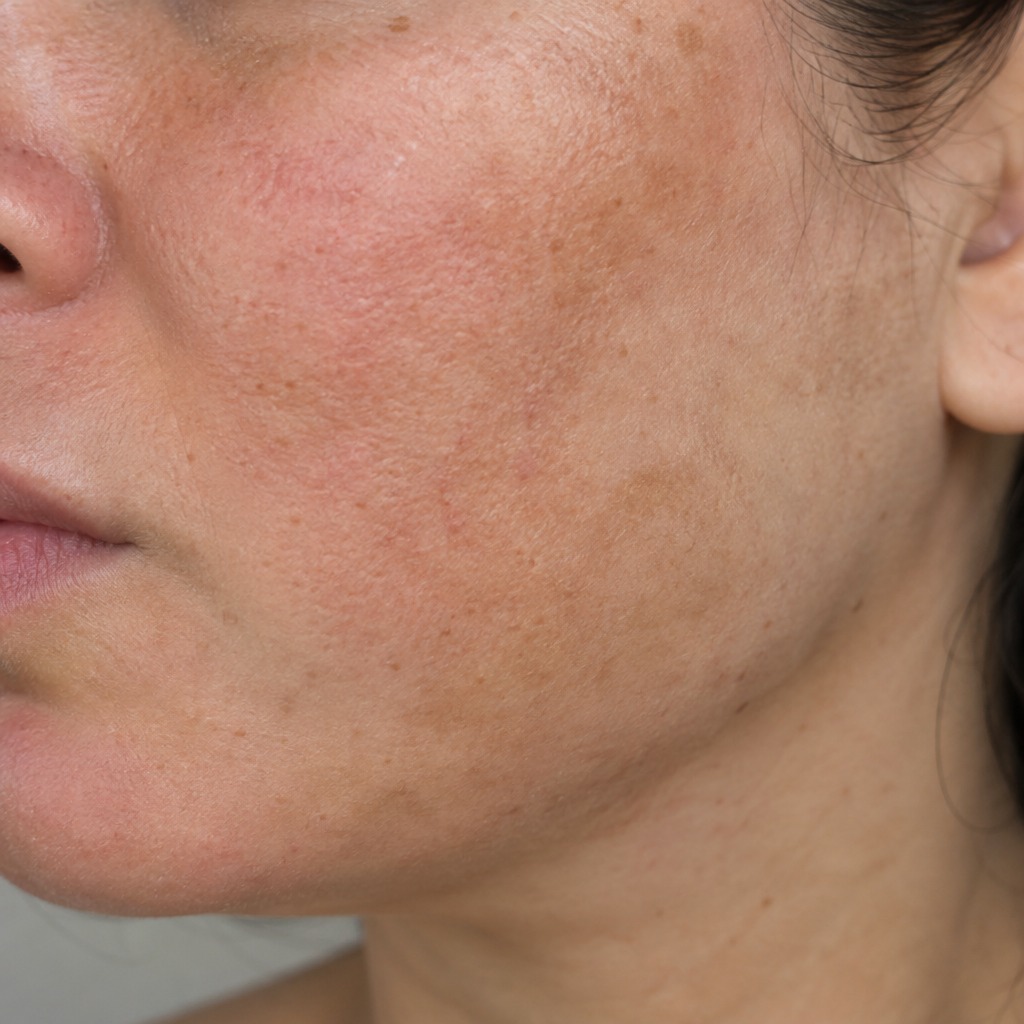
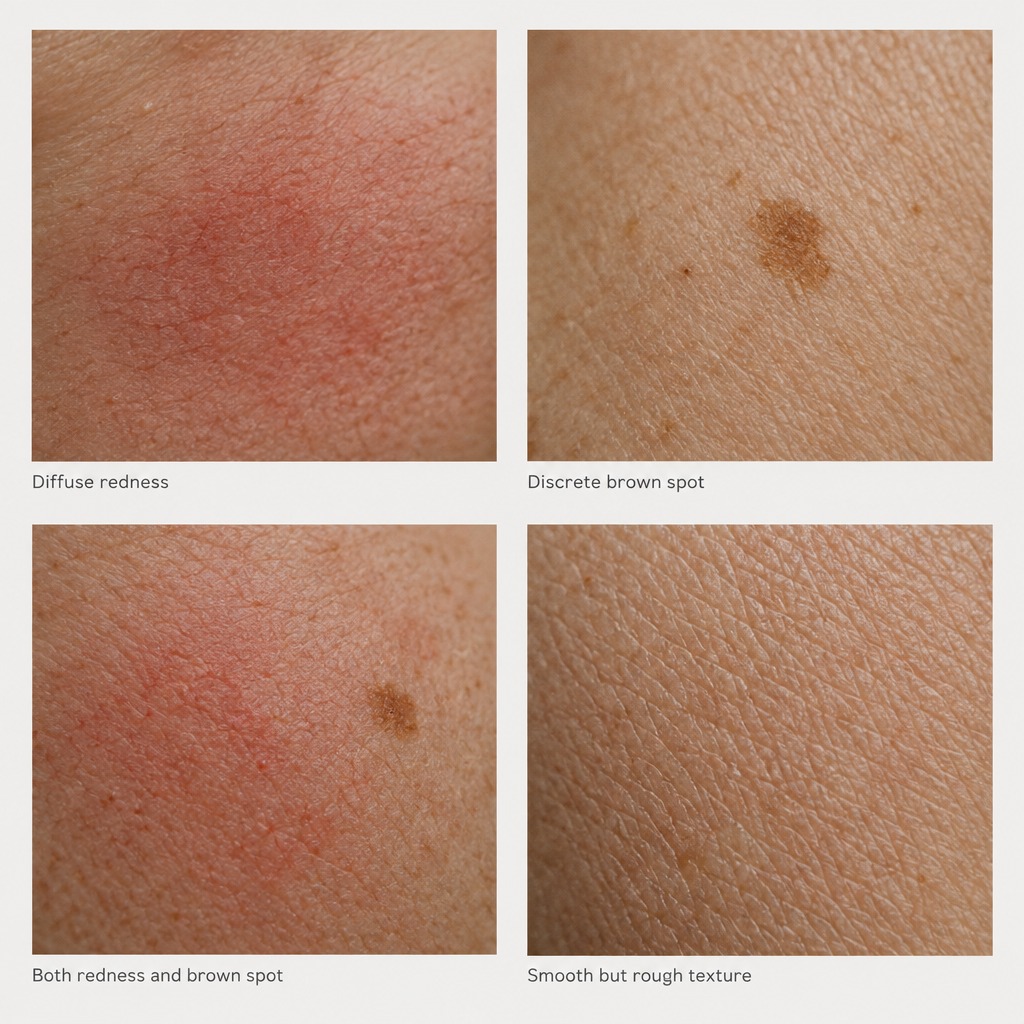
Underneath that one word are two entirely different mechanisms. Vascular blotchiness is blood vessels, either dilated or inflamed, showing through the skin. Pigment blotchiness is melanin that has been deposited unevenly. Vascular patches change through the day. Pigment patches do not. Almost everything that follows comes from that distinction.
What Is the One Question That Sorts Blotchy Skin?
Does the patch change?
| Type | What it looks like | How it behaves | What it is |
|---|---|---|---|
| Vascular blotchiness | Red or pink patches, often diffuse edged, warm to the touch | Changes within hours. Worse with heat, alcohol, exercise, stress, cold wind | Blood vessels, dilated or inflamed |
| Pigment blotchiness | Brown, tan or grey patches with clearer edges | Stable across days and weeks. Worse after sun, slowly | Uneven melanin deposition |
| Mixed | Red patches in some places, brown in others, sometimes overlapping | Part of the face moves, part does not | Both, which is the most common presentation in adults |
| Textural illusion | Looks patchy but the colour is even on close inspection | Changes with hydration, not with heat or sun | Rough or dehydrated surface scattering light unevenly |
That fourth row catches people out. If your skin looks blotchy in photographs but a bare eye at conversational distance sees even colour, the problem may be surface rather than tone, which our guide to what radiance actually measures explains in full.
What Causes Blotchy Red Patches?
| Cause | What it looks like | Telling detail |
|---|---|---|
| Reactive flushing | Diffuse red across cheeks, nose and sometimes chest | Arrives in minutes with heat, alcohol, spice or emotion, and fades |
| Rosacea | Persistent central face redness, sometimes with visible vessels or bumps | The flush stops going away completely between triggers |
| Damaged skin barrier | Patchy redness with tightness, stinging and flaking | Products that never bothered you now sting |
| Irritant or allergic reaction | Red patches with a shape, sometimes following where a product went | Edges that match application rather than anatomy |
| Post inflammatory erythema | Flat pink or red marks where spots used to be | Blanches when pressed. Fades over months |
| Seborrhoeic dermatitis | Red patches with fine greasy scale around the nose, brows and hairline | Flakes rather than smooth redness |
| Cold or wind exposure | Mottled red and white pattern | Resolves as the skin warms |
Two of those are often confused with each other and with acne. If your red patches come with bumps, our comparison of rosacea and acne covers how to tell them apart, and the distinction matters because treatments for one worsen the other.
What Causes Blotchy Brown Patches?
| Cause | Pattern | Telling detail |
|---|---|---|
| Sun damage | Scattered brown spots on cheeks, temples, forehead, backs of hands | Accumulates over years, worse on the side you drive on |
| Melasma | Larger symmetrical patches across cheeks, forehead and upper lip | Symmetry is the giveaway. Punishes aggressive treatment |
| Post inflammatory hyperpigmentation | Brown marks exactly where spots or injuries were | Traces your breakout history |
| Hormonal change | Patches appearing or darkening with pregnancy or contraception | Timing lines up with the change |
| Friction or heat | Darkening where something rubs or presses repeatedly | Follows the object, not the anatomy |
| Age related pigment change | A general increase in unevenness plus discrete spots | Gradual, and largely sun driven underneath |
Melasma deserves singling out because it is the one pattern where doing more makes things worse. Our guide to telling melasma from other hyperpigmentation covers why, and if your brown marks sit exactly where old spots were, the difference between red and brown post acne marks is the more relevant read.
How Do You Tell Which One You Have at Home?
The press test
Press a clean finger firmly on the patch for a few seconds, then lift and watch. If the colour disappears under pressure and refills, it is vascular. If the colour stays put while the surrounding skin blanches, it is pigment. This single test sorts most blotchiness correctly in under a minute.
The timing test
Photograph the same area first thing in the morning, after a hot shower, and in the evening, under the same light each time. Vascular patches will move noticeably across those three. Pigment patches will look identical.
The light test
Take one photo by a window with light from one side and one under overhead light. Pigment unevenness reads more strongly in flat even light. Vascular redness shows in both but intensifies after anything that warms you.
Keep the photos. Blotchiness changes slowly enough that memory is unreliable, and a dated set from the same spot in the same light is worth more than any impression you have of whether something is improving.
How Does a Skin Analysis API Score Blotchiness?
By refusing to score it as one thing. There is no single blotchiness measurement that would be honest, because the word covers two mechanisms, so the useful approach is to score the components and let the combination describe the face.
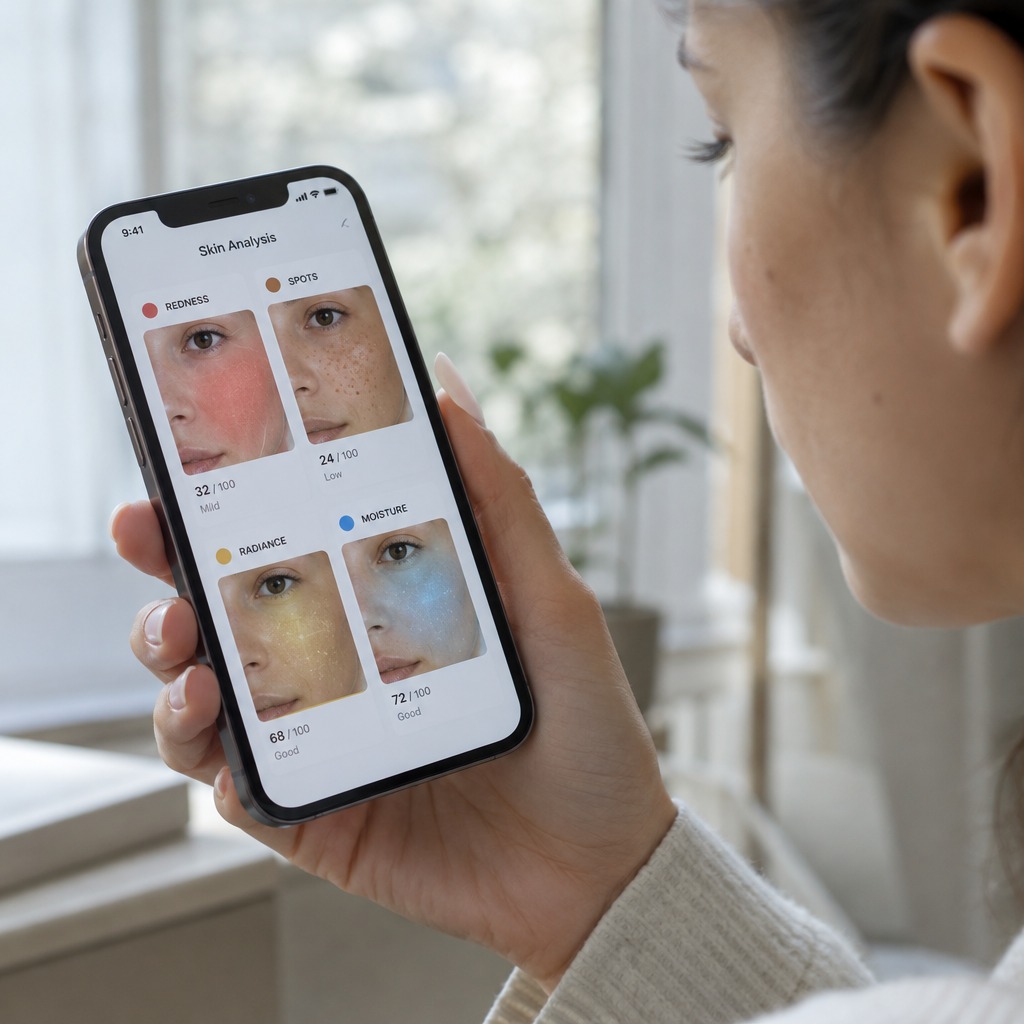
The AI Skin Analysis returns 28 skin diagnostics across 16 skin concerns from a single photo, dermatologist verified, and four of those carry the blotchiness picture.
| Scored concern | What it captures | Which kind of blotchiness |
|---|---|---|
| Redness | Vascular appearance and inflammation | Vascular. The score that moves between scans |
| Spots | Discrete pigment deposits and their distribution | Pigment. The score that barely moves week to week |
| Radiance | Overall tone evenness and surface quality | Catches the textural illusion case |
| Moisture | Surface hydration, scored separately from oil | Low moisture exaggerates both kinds visually |
Reading them together is what makes the result actionable. High redness with normal spots is a vascular and barrier conversation with a fast timeline. Normal redness with high spots is a pigment and sunscreen conversation measured in months. Both elevated means sequencing matters, and the vascular side almost always goes first because it responds quicker and because calming inflammation reduces the pigment that inflammation keeps generating.
You can run this on a real face in the skin analysis demo, which shows redness and spots as separate readings in the tone and pigmentation group, alongside an estimated skin age and a skin type classification. The engine behind it reports 95 percent test to retest reliability and around 80 percent correlation with professional physician assessment, trained on over 70,000 clinical images.
Two limits worth stating plainly. These are estimates from visible signs rather than measurements of the tissue, and tone scoring is sensitive to capture conditions, so comparing a scan taken under a ring light with one taken by a window tells you about the lighting rather than the skin.
How Do You Treat Blotchy Red Skin?
Calm first, treat second. Almost every mistake in this category is an active applied to skin that was not ready for it.
| Step | What it does | Timeline |
|---|---|---|
| Strip the routine back | Cleanser, moisturiser, sunscreen only. Removes the cause in many cases | 1 to 2 weeks |
| Repair the barrier | Ceramides and a bland occlusive. Redness often is barrier damage | 2 to 4 weeks |
| Identify and remove triggers | Heat, alcohol, spice, harsh cleansers, over exfoliation | Immediate, if you find the right one |
| Azelaic acid | Works on redness and pigment at once, unusually well tolerated | 8 to 12 weeks |
| Niacinamide | Supports the barrier and reduces reactivity | 4 to 8 weeks |
| Daily broad spectrum sunscreen | UV drives vascular change as well as pigment | Preventive |
| Prescription or in clinic treatment | For established rosacea or visible vessels | Discuss with a clinician |
If your skin stings on application, stop all actives before doing anything else. Our guide to a damaged skin barrier covers the repair sequence, and redness treated on top of a broken barrier does not improve.
How Do You Treat Blotchy Pigmented Skin?
| Ingredient or step | What it addresses | Timeline |
|---|---|---|
| Daily broad spectrum SPF | Stops the cause. Nothing else holds without it | Preventive, and non negotiable |
| Vitamin C | Antioxidant support and tone evenness | 8 to 12 weeks |
| Niacinamide | Reduces pigment transfer and supports the barrier | 4 to 8 weeks |
| Azelaic acid | Pigment and redness together, safe in pregnancy | 8 to 12 weeks |
| Retinoid | Turnover, which clears pigmented cells faster | 12 weeks and beyond |
| Gentle exfoliation | Helps surface pigment only, and only if the barrier is intact | 4 to 8 weeks |
| In clinic treatment | Lasers and peels, with caution on melasma and deeper skin tones | Varies. Get an assessment first |
The hard truth in this table is the timeline column. Pigment is a months long project, and the two most common failures are quitting at week six and escalating strength because nothing has visibly happened yet. Escalating is the worse of the two, because irritation generates new pigment and sets you back further than patience would have.
What Makes Blotchy Skin Worse?
| Trigger | Affects | What to do |
|---|---|---|
| Sun exposure | Both, and it is the biggest single factor for pigment | Daily SPF, reapplied. The one habit that changes everything |
| Heat, including hot showers and saunas | Vascular | Lukewarm water. The effect is immediate and visible |
| Alcohol | Vascular | Shows in the face the same evening and the next morning |
| Over exfoliation | Both. Damages the barrier and generates new pigment | Cut frequency. If products sting, stop entirely |
| Harsh or foaming cleansers | Both, through barrier loss | Switch to something gentle and non stripping |
| Picking at spots | Pigment, reliably | Every squeezed spot is a mark that lasts months |
| Cold wind | Vascular | A barrier cream before exposure rather than after |
| Stress and poor sleep | Vascular, and slows repair of both | Shows up faster in the face than people expect |
How Long Does It Take to Even Out?
| What you are fixing | First visible change | Realistic full result |
|---|---|---|
| Irritation from a product | 3 to 7 days after stopping | 2 weeks |
| Damaged barrier redness | 1 to 2 weeks | 4 to 6 weeks |
| Reactive flushing | Immediate, once the trigger is removed | Ongoing management |
| Post inflammatory redness | 4 to 8 weeks | 3 to 6 months |
| Post inflammatory brown marks | 8 to 12 weeks | 6 to 12 months |
| Sun damage pigment | 12 weeks | 6 months and beyond, partially |
| Melasma | 8 to 12 weeks | Managed rather than cured |
The spread across that table is why blotchy skin feels unsolvable. Two rows resolve within a fortnight and two take most of a year, and people routinely judge a pigment routine on a vascular timeline, conclude it failed, and change everything at week six.
When Should You See a Dermatologist?
- Redness that has stopped fully resolving between triggers, which may be rosacea and is more treatable early.
- Patches that are changing in size, shape, colour or border, or a single spot that looks different from the rest.
- Blotchiness with other symptoms such as joint pain, fatigue or a rash elsewhere on the body.
- Symmetrical facial patches that darken with sun despite diligent protection.
- Anything that has not improved after three to four months of consistent, gentle treatment.
- Blotchiness that appeared suddenly rather than developing gradually.
The second and third points are the ones to act on quickly. Most blotchiness is cosmetic, and the small share that is not tends to announce itself by changing or by bringing company.
How Do Teams Build Tone Evenness Scoring with an API?
Blotchiness is a high intent concern and a poor single metric, so the implementation question is how to turn an ambiguous complaint into a specific route.
| Redness | Spots | Moisture | Route the customer to |
|---|---|---|---|
| High | Normal | Low | Barrier repair first. Promise 2 to 4 weeks, which you can keep |
| High | Normal | Normal | Trigger identification and soothing actives. Azelaic acid converts well here |
| Normal | High | Normal | Pigment path. Vitamin C, niacinamide, SPF. Say 8 to 12 weeks out loud |
| High | High | Any | Sequence it. Vascular first, pigment second, and explain why |
| Normal | Normal | Low, radiance low | Texture and hydration, not tone. The fastest win on this list |
| High | High | Low, persistent | Suggest professional assessment. Credibility is worth more than the sale |
Three implementation notes. Never return a single evenness score with no breakdown, because blotchiness is two mechanisms and a blended number cannot route anyone. Lead with the component that pays out fastest so the customer has evidence before the slow work starts. And lock capture conditions, since a tone comparison between two differently lit photos is noise presented as progress.
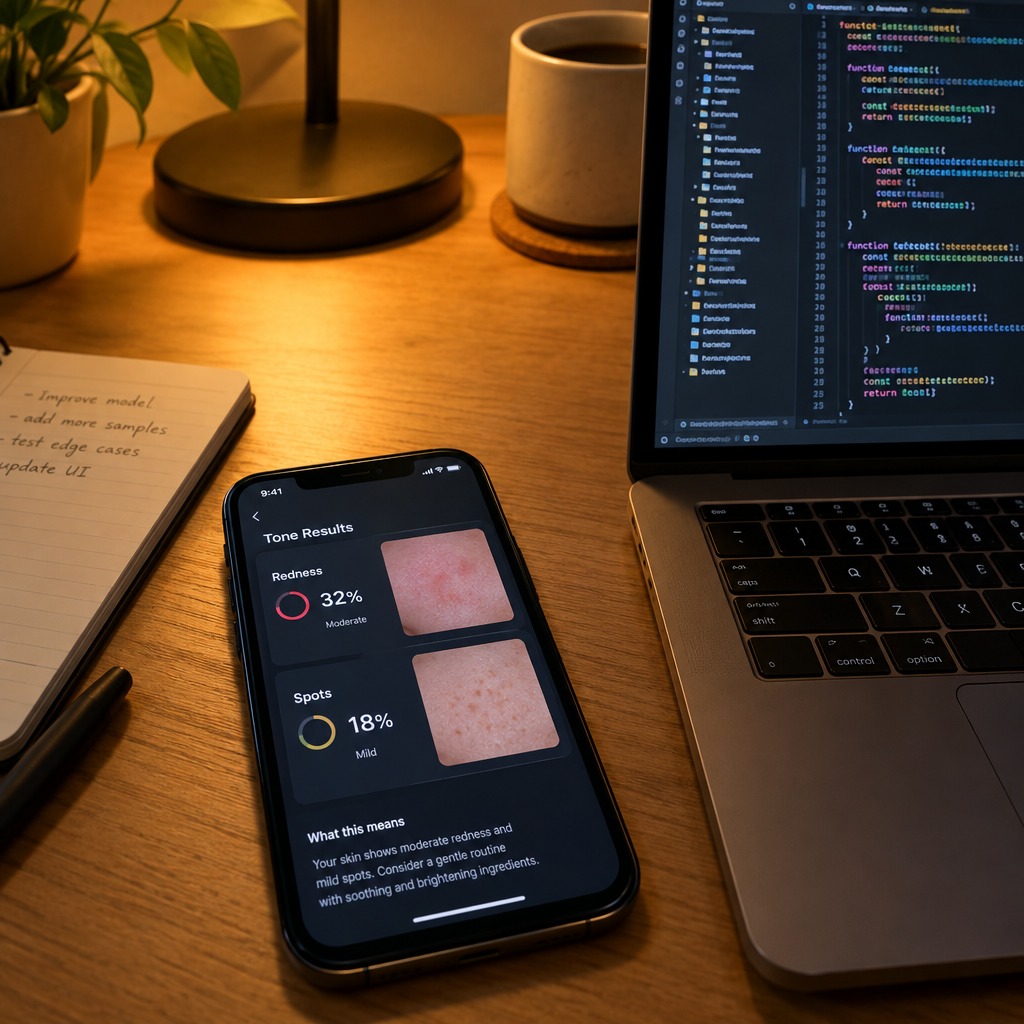
You can test the per concern scoring against real images in the YouCam API Playground, or see the full consumer flow in the skin analysis demo. Perfect Corp works with 800+ brand partners on experiences of this kind.
Blotchy Skin FAQ
What causes blotchy skin on the face?
Two different things wearing one name. Vascular causes such as flushing, rosacea, a damaged barrier or irritation produce red patches that change through the day. Pigment causes such as sun damage, melasma and post acne marks produce brown patches that stay put.
How do I know if my blotchy skin is redness or pigmentation?
Press firmly on the patch and lift. If the colour disappears and refills, it is vascular. If it stays while the skin around it blanches, it is pigment. Vascular patches also change with heat and through the day, and pigment patches do not.
How do I get rid of blotchy skin?
Treat the right mechanism. Red blotchiness responds to stripping the routine back, repairing the barrier, removing triggers and using azelaic acid or niacinamide. Brown blotchiness responds to daily sunscreen plus vitamin C, niacinamide or a retinoid, over months rather than weeks.
Why is my skin blotchy and red after a shower?
Heat dilates blood vessels, which is a normal vascular response and usually settles within an hour. If it is not settling, or redness is becoming your baseline rather than your reaction, that is worth getting assessed.
Can a damaged skin barrier cause blotchy skin?
Yes, and it is one of the most common causes in people who use a lot of products. The signature is patchy redness with tightness, stinging and flaking, and products you used to tolerate suddenly bothering you.
Does blotchy skin go away on its own?
Irritation and barrier related redness usually does once the cause is removed, within a few weeks. Pigment does not reliably resolve without sun protection and active treatment, and sun damage largely accumulates rather than fading.
Why does my skin look blotchy in photos but not in the mirror?
Flat frontal lighting removes the directional highlight your eye uses and flattens the face, which makes tone unevenness much more visible. It may also mean your blotchiness is a texture effect rather than a colour one.
Does sunscreen help blotchy skin?
It is the single most effective thing on the list for pigment, and it helps vascular blotchiness too since UV drives vessel change as well as melanin. Without it, every other treatment is working against a cause you are still supplying.
Can a skin analysis API detect blotchy skin?
It scores the components that produce it, redness and spots as separate values, with radiance and moisture alongside, among 28 diagnostics across 16 concerns. That separation is more useful than a single evenness score because the two causes need opposite treatments.
How often should I re-check my skin tone?
Every four weeks, under identical lighting. Redness can move meaningfully in that window and pigment usually will not, so a four week comparison tells you which mechanism your routine is actually reaching.
Sort It Before You Treat It
The reason blotchy skin resists treatment is almost never that the products are weak. It is that one word is being used for two mechanisms with opposite timelines and opposite rules, so half of what people try is aimed at the wrong target. Press the patch. If it blanches, calm the skin and look for triggers, and expect progress in weeks. If it does not, protect it from the sun and commit to months. If your face is doing both, do the vascular work first, because it pays out faster and because calming inflammation stops feeding the pigment.
For teams building this into a product, score redness and pigment separately and route on the combination. Try the skin analysis demo, test the API in the YouCam AI Playground, or contact Perfect Corp for a demo to see how per concern scoring fits your customer flow.