 Author:



Summary
K-beauty already won the internet. Now it has to win the American bathroom shelf, one very specific skin type at a time.
The U.S. officially overtook China as Korea's biggest cosmetics export market in 2025, and every Korean brand with a glass-skin serum is lining up for a slice. The problem? A 10-step routine designed for one consumer profile does not automatically fit a shopper in Phoenix with oily, sun-exposed skin or a shopper in Seattle fighting winter dryness.
That gap is exactly where k-beauty personalization technology earns its keep. Trend-analytics AI tells brands what to launch. AI skin analysis tells each shopper which product is right for her, in seconds, on the product page. Together, they turn curiosity into conversion.
What Is K-Beauty Personalization Technology?
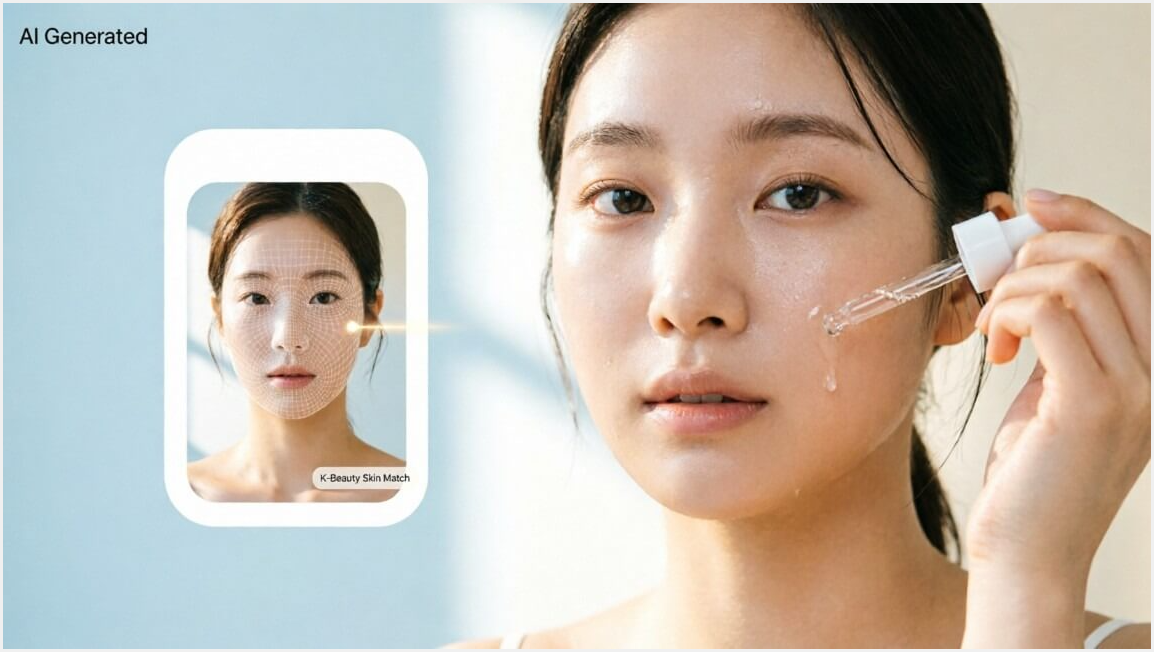
K-beauty personalization technology is the set of AI and AR tools Korean beauty brands use to tailor products, routines, and shopping journeys to an individual consumer instead of a generic "average customer."
In Korea, personalization started offline. Personal color consultations became a social-media obsession, and flagship services that blend custom foundation shades on the spot are booked out in advance. Charming? Absolutely. Scalable to 50 U.S. states? Not really.
Industry analysts have pointed out that in-store personalization demands a physical store, trained staff, booking systems, and serious marketing budget, which is why smaller K-beauty brands are shifting toward AI-driven online skin analysis and product recommendations instead. Same personal touch. No appointment needed.
Today, the toolkit typically covers four layers:
- Market intelligence AI: trend, keyword, and social-listening analysis to decide what to sell where.
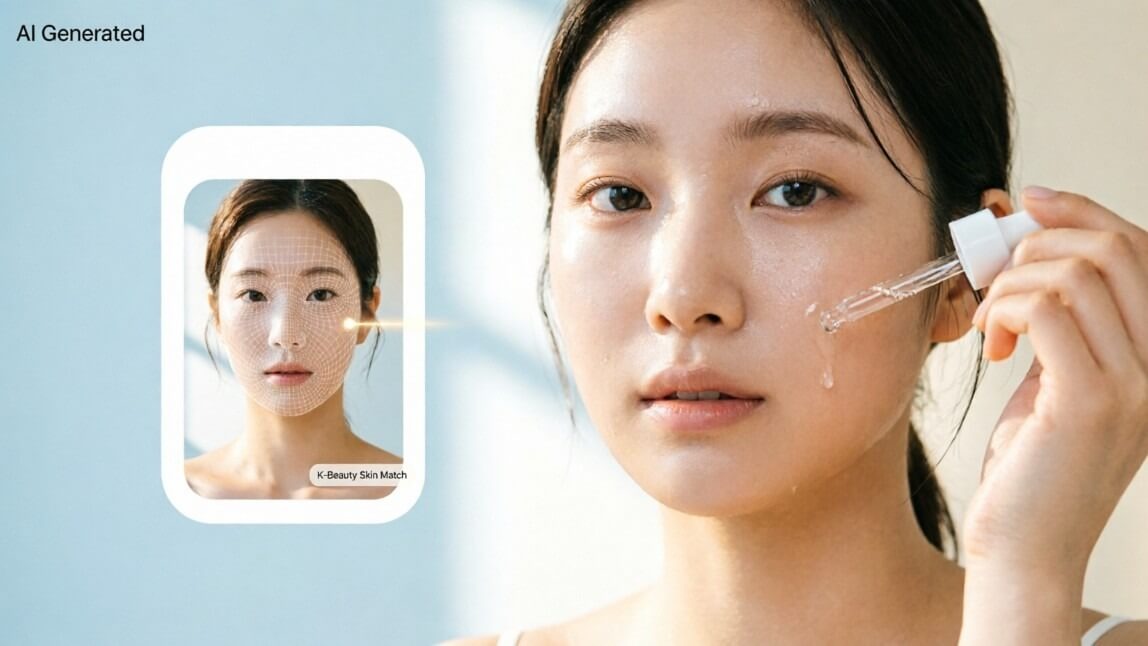
- AI skin analysis: a selfie-based scan that reads visible skin concerns like hydration, pores, redness, and texture.
- Virtual try-on: AR makeup and shade matching for cushions, tints, and lip products.
- Recommendation and CRM logic: turning scan results into product matches, routines, and repurchase reminders.
Want the big-picture version? Our deep dive on personalized beauty experiences breaks down why personalization has become the default expectation, not a bonus feature.
Why Is the U.S. Now K-Beauty's Biggest Battleground?

Short answer: because that's where the growth is.
According to Korea Customs Service data reported by Personal Care Insights, Korean cosmetics exports reached a record US$8.52 billion in the first nine months of 2025, up 15.4% year over year. The headline twist: the United States became the No. 1 destination.
| Market (Jan–Sep 2025) | K-beauty exports | YoY change |
|---|---|---|
| United States | US$1.67B (19.6% share) | +18.1% |
| China | US$1.58B (18.6% share) | −11.7% |
| Japan | US$0.82B | +10.4% |
Skin care drove the lion's share, at US$6.32 billion. Sunscreens and other personal care items grew even faster, up 25.4%.
But here's the catch nobody puts in the press release. More brands entering the U.S. means more look-alike serums on Amazon, TikTok Shop, Sephora, and Ulta. When every bottle promises "glass skin," the brand that can prove "this one is right for you" wins the click, and the cart.
What Do Trend-Analytics AI Platforms Solve, and What Do They Miss?

The newest wave of K-beauty tech is all about market intelligence. Korean AI company Newen AI, for example, introduced its Vussens beauty analytics platform at Cosmoprof North America 2026, analyzing social and e-commerce data across trends, ingredients, and consumer personas to help brands plan North American entry.
That's genuinely useful. Trend AI answers the boardroom questions:
- Which ingredients are rising in U.S. search and social?
- Which personas are talking about which skin concerns?
- Which category is crowded, and which is wide open?
What it can't do is stand next to a shopper at 11 p.m. while she scrolls a product page wondering, "Is this cica serum for my skin?" Trend data describes the crowd. Conversion happens one face at a time.
| Trend-analytics AI | AI skin analysis | |
|---|---|---|
| Core question | What should we sell, and where? | What does this shopper need right now? |
| Data source | Social, search, marketplace data | The shopper's own selfie |
| Main user | Strategy, product, marketing teams | End consumers on web, app, or in store |
| Business impact | Smarter launches and positioning | Higher conversion, bigger baskets, repeat orders |
The smartest brands use both: trend AI to pick the battlefield, skin AI to win each shopper on it.
How Does AI Skin Analysis Turn Trends Into Personalized Recommendations?

Think of it as a beauty advisor who never sleeps, never upsells the wrong product, and speaks fluent "skin."
Perfect Corp.'s AI Skin Diagnostic reads 15 visible skin concerns in a single scan in under 2 seconds, including spots, wrinkles, pores, hydration, redness, oiliness, acne, texture, dark circles, and radiance. The AI is trained on more than 70,000 medical-grade images, with dermatologist-verified reproducibility above 95%.
Step 1: Scan
The shopper takes a selfie or uses live camera mode on your website, app, or an in-store mirror. No appointment. No sign-up wall if you don't want one.
Step 2: Analyze
The AI scores each concern and visualizes it on the face, so results feel concrete rather than vague. HD mode delivers extra precision; SD mode keeps things fast for high-traffic campaigns.
Step 3: Match
Results map directly to your catalog. Low hydration score? Your hyaluronic essence and barrier cream show up first. Visible pores and oiliness? Your BHA toner and lightweight gel take the lead. Perfect Corp.'s AI skincare product recommendation engine handles this matching logic so the "for you" shelf actually is for her.
This is where trend insights finally touch revenue. If trend AI says "Americans are searching for barrier repair," skin AI makes sure the barrier cream reaches exactly the shoppers whose scans show dryness and redness, instead of everyone.
Note: AI skin analysis evaluates visible skin attributes for cosmetic recommendations. It is not a medical diagnosis.
👉 Ready to see your catalog matched to real skin data? Schedule a Demo for Global Beauty Solutions.
What Does a K-Beauty Personalization Tech Stack Look Like for North America?

K-beauty brands entering the U.S. rarely sell through one channel. You might have a DTC Shopify site, an Amazon storefront, a retail partnership, and a pop-up in Los Angeles, all at once. Your personalization should follow the shopper across all of them.
| Layer | What it does | Perfect Corp. option |
|---|---|---|
| Skin intelligence | Reads visible skin concerns from a selfie | AI Skin Diagnostic (web, app, kiosk) |
| Shade and color | Matches cushion, tint, and lip shades | AI Makeup Virtual Try-On, Personal Color Analysis |
| Integration | Plugs into e-commerce and CRM | RESTful API, white-label SDK |
| AI agents and automation | Lets teams call beauty AI from AI assistants and workflows | YouCam MCP Servers and Agent Skills |
| Retention | Triggers routine refills and seasonal reminders | Scan data fed into your CRM |
Building in-house? The YouCam MCP and Agent Skills let developers and marketers call skin analysis and virtual try-on directly from AI assistants and automation tools with one API key. It's a fast way to prototype a "find your K-beauty routine" quiz before committing to a full build.
If you're weighing vendors, our guide to skincare AI tools for business covers the evaluation checklist.
How Can K-Beauty Brands Localize for Diverse U.S. Skin Types?

The U.S. isn't one skin market. It's dozens of them sharing a zip code system.
A brand that built its hero product for humid Seoul summers now meets desert climates, harsh winters, hard water, and the widest range of skin tones on the planet. Personalization tech turns that complexity into an advantage:
- Shade range reality check: Cushion compacts are a K-beauty icon, but shade gaps get called out fast on U.S. social media. Virtual try-on and personal color analysis show which shades work, and reveal which ones you're missing.
- Climate-aware routines: Pair scan results with location and season to recommend lighter layers in Miami and richer creams in Minneapolis.
- Simplified routines: Many U.S. shoppers want three steps, not ten. Let the scan decide which three.
- Inclusive data: Choose AI trained on diverse faces so results are reliable across skin tones, not just the ones your brand launched with.
Here's the quiet superpower: every scan is a zero-party data point. Aggregate them and you learn what your U.S. customers actually need, which feeds back into the next product launch. Your trend AI gets better because your skin AI is listening.
Which Metrics Prove Personalization ROI?

Personalization that can't prove ROI becomes a "nice-to-have" in the next budget cycle. Track these from day one:
| KPI | Why it matters | Real-world benchmark (Perfect Corp. clients) |
|---|---|---|
| Conversion rate | Do scanned shoppers buy more often? | Benefit Cosmetics saw sales grow up to 14x after AI pore analysis |
| Basket size | Do routines drive multi-product carts? | The Body Shop UAE reported a 50% larger cart size |
| Engagement time | Are shoppers exploring, not bouncing? | Decorte recorded a 32% lift in dwell time |
| Recommended-product sales | Are the AI picks actually selling? | Starboard saw a 35% increase in sales of AI-recommended products |
| Repeat purchase rate | Do refill reminders bring shoppers back? | Track via CRM campaigns triggered by scan results |
Pro tip: A/B test the scan entry point. A "Find your routine in 2 seconds" button on the PDP often outperforms a buried quiz link in the menu.
For more brand examples, see how companies are building personalized brand experiences with AI beauty technology, or browse the Konjac success story.
How Can a K-Beauty Brand Launch Personalization in 90 Days?

You don't need a two-year transformation program. You need a focused pilot.
- Days 1–30: Pilot. Add AI skin analysis to your top 3 U.S. product pages. Map each skin concern to 1–3 SKUs. Set your baseline conversion rate.
- Days 31–60: Localize. Layer in trend insights. Which concerns spike in your top U.S. regions? Adjust recommendations and copy to match American search language, such as "barrier repair" and "hydration."
- Days 61–90: Scale. Roll the scan out to Amazon A+ content links, retail kiosks, and pop-ups. Connect scan data to your CRM for refill and seasonal campaigns.
By day 90, you'll know exactly which concerns your U.S. shoppers have, which products they convert on, and where your next launch should aim.
👉 Taking K-beauty global? Schedule a Demo for Global Beauty Solutions and see AI Skin Diagnostic running on your own catalog.
FAQ
What is k-beauty personalization technology?
It's the AI and AR tools Korean beauty brands use to tailor products and shopping experiences to each consumer, including AI skin analysis, virtual try-on, personal color analysis, and recommendation engines.
Why are K-beauty brands expanding into the U.S.?
The U.S. became Korea's largest cosmetics export market in 2025, with exports up 18.1% year over year while shipments to China declined. Demand for Korean skincare keeps climbing among American consumers.
How does AI skin analysis personalize skincare recommendations?
The shopper takes a selfie, the AI scores visible concerns like hydration, pores, and redness, and the results are mapped to matching products and routines from the brand's catalog.
Is AI skin analysis accurate?
Leading solutions are trained on large image datasets and validated against expert assessments. Perfect Corp.'s AI Skin Diagnostic reports dermatologist-verified reproducibility above 95%. It's designed for cosmetic guidance, not medical diagnosis.
Can small or indie K-beauty brands afford personalization?
Yes. Online AI skin analysis avoids the costs of in-store consultations, trained staff, and booking systems. API and plug-in options let smaller brands start with a few product pages and scale up.
How do K-beauty brands adapt products for American consumers?
They widen shade ranges, simplify routines, adjust textures for different climates, and use scan data to understand which skin concerns matter most to U.S. shoppers.
What's the difference between trend analytics AI and AI skin analysis?
Trend analytics AI studies market and social data to guide what brands launch. AI skin analysis studies an individual shopper's skin to guide what she buys. One shapes strategy; the other drives conversion.