 Author: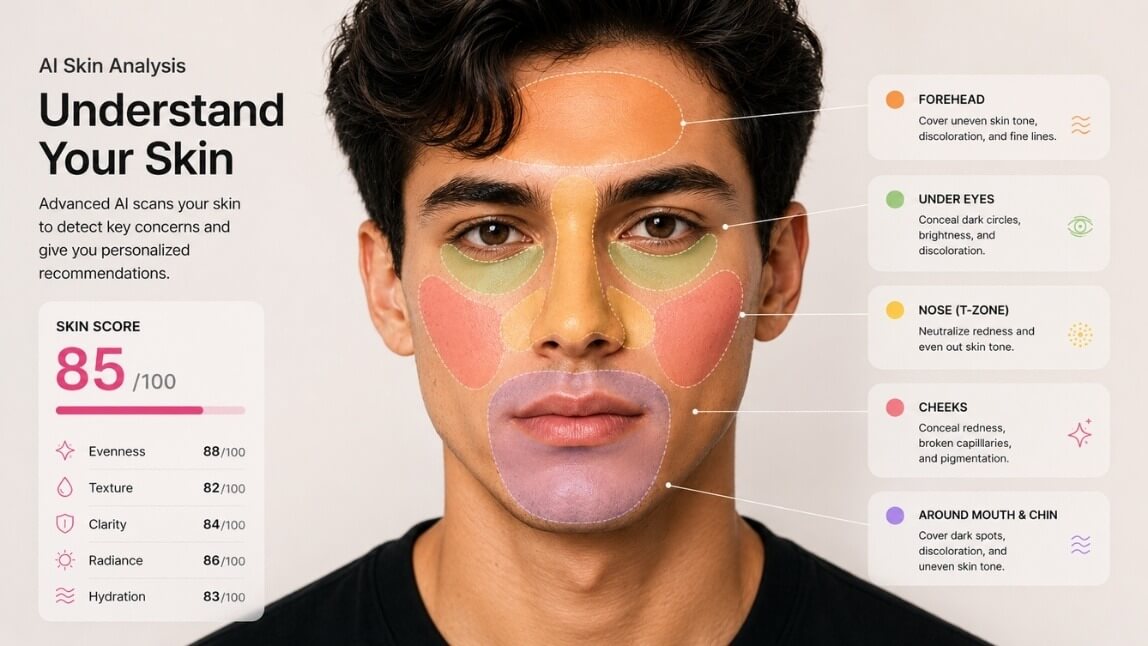
What Is Skin Labeling — and Why Does It Matter for Your Brand?
Skin labeling is the process of identifying and tagging specific conditions on the skin — things like wrinkles, dark spots, pores, and redness — so an AI can act on them. It sounds simple. But it's the most important step in any AI skincare system.
Think of it this way: everyone wants to know the state of their skin. But if the skin labeling is off, it's like a doctor who can't see the patient clearly — no matter how sophisticated the diagnosis, it's built on a flawed foundation. Bad labels lead to bad recommendations, no matter how good the rest of your AI is.
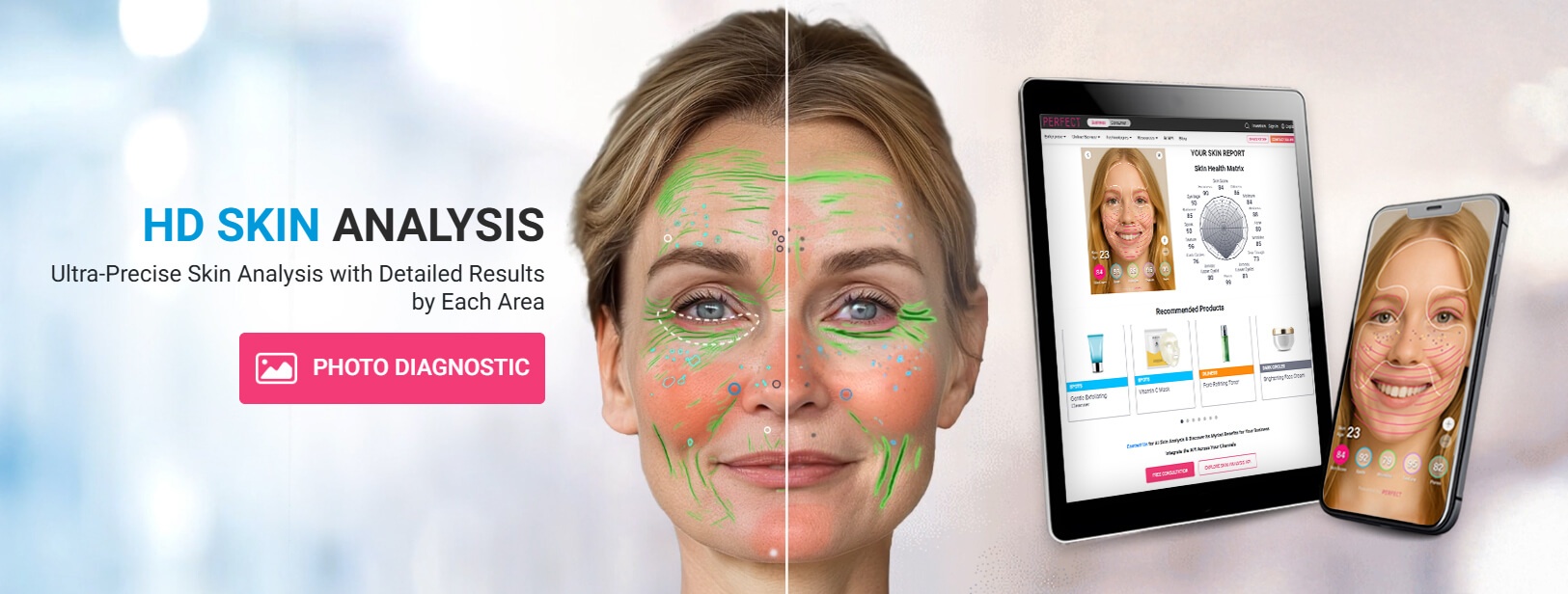
Today, tools like Perfect Corp's AI Skin Analysis can accurately label 20+ skin parameters from a single selfie — no hardware, no dermatologist required. So what makes skin labeling accurate? Let's break it down.
The Science Behind It: How Is Skin Structured?
Before we talk about AI, let's make sure we're speaking the same language as your dermatology textbooks. Human skin has three primary layers, and each plays a role in what your clients see, feel, and complain about at consultations:
| Layer | Also Known As | Key Structures | Common Concerns |
|---|---|---|---|
| Epidermis | Outer layer | Keratinocytes, melanocytes, Langerhans cells | Hyperpigmentation, texture, acne, redness |
| Dermis | Middle layer | Collagen, elastin, sebaceous glands, sweat glands, hair follicles | Wrinkles, sagging, pores, oiliness |
| Hypodermis | Subcutaneous layer | Fat cells, connective tissue, major blood vessels | Volume loss, dark circles, facial contour changes |
When AI does skin labeling, it's trained to recognize the surface manifestations of problems that originate at these different depths. A dark spot is an epidermal issue. A deep wrinkle involves dermal collagen breakdown. Puffiness under the eyes? That's often hypodermis-level.
How AI Skin Labeling Actually Works
Traditional skin analysis required expensive hardware — VISIA machines, UV lamps, and trained technicians who'd spend 20 minutes scanning a client's face. AI changes this equation completely.
Modern AI skin analysis systems use deep learning models trained on massive, diverse datasets to detect and label specific skin characteristics directly from a photo or live video feed. Here's what happens under the hood:
Step 1: Image Capture and Preprocessing
The system captures a standardized image, controlling for lighting conditions as much as possible. Advanced models can compensate for variable ambient light using algorithms rather than requiring a controlled environment.
Step 2: Facial Region Segmentation
Before analyzing skin, the AI segments the face into distinct zones — forehead, cheeks, T-zone, periorbital area, and so on. Skin concerns don't distribute evenly across the face, and a good system knows that oiliness lives in the T-zone while crow's feet cluster around the eyes.
Step 3: Multi-Parameter Skin Labeling
This is the core of the process. The AI analyzes each zone for dozens of parameters simultaneously, labeling conditions such as:
- Wrinkles and fine lines — depth, length, and distribution
- Dark spots and hyperpigmentation — intensity and surface area
- Pore size — visibility and density
- Skin texture — smoothness vs. roughness
- Radiance and dullness — luminosity scoring
- Moisture levels — estimated from surface appearance
- Redness and sensitivity — including rosacea patterns
- Acne and breakouts — type, severity, and location
- Dark circles and eye bags — under-eye area analysis
- Skin age — estimated biological age vs. chronological age
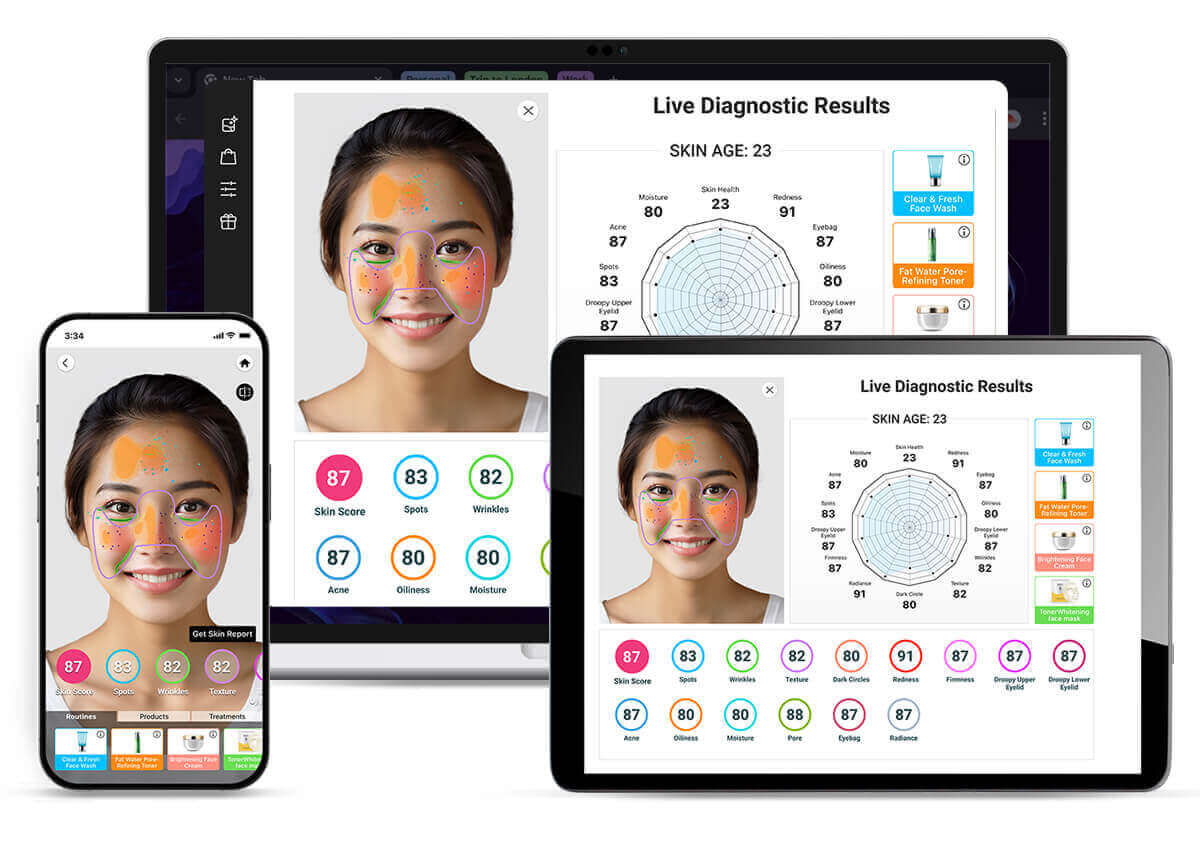
Perfect Corp's AI Skin Analysis detects all of the above — and more, delivering labeled results in under a second directly from a standard smartphone camera. No specialized hardware required.
Step 4: Scoring and Visualization
The labeled data is then translated into scores, heatmaps, or visual overlays that make sense to both clients and professionals. This is what transforms raw AI output into actionable insights — and a compelling client experience.
Why Skin Labeling Is a Game-Changer for Beauty Businesses
Here's the business case that no skincare brand should ignore: personalization is no longer a differentiator. It's the baseline expectation.
Consumers today are sophisticated. They've watched hundreds of skincare videos, read ingredient labels, and experienced the frustration of one-size-fits-all product recommendations. When they walk into your clinic or land on your website, they want to feel seen — literally.
AI-powered skin labeling enables:
Hyper-Personalized Product Recommendations
Instead of asking customers to fill out a 20-question quiz (and hoping they answer honestly), your platform can analyze their actual skin and recommend products based on what it genuinely detects. A client with labeled dehydration scores and mild hyperpigmentation gets a completely different regimen than one with labeled sebum overproduction and early fine lines.
Before-and-After Progress Tracking
Skin labeling at multiple timepoints creates objective, quantified evidence of treatment efficacy. For MedSpas and dermatology practices, this is gold — it validates your services and creates compelling case studies. For skincare brands, it proves that your product actually works, building trust and reducing returns.
Scalable Virtual Consultations
Traditional consultations don't scale. One aesthetician can only see so many clients per day. AI skin labeling powers virtual consultations that can run 24/7, serve unlimited users simultaneously, and deliver consistent quality regardless of staff experience level.
Regulatory-Compliant Client Education
In regulated markets, brands can't make specific medical claims about skin conditions. But they can educate clients about what the AI has identified and explain which product properties address those characteristics. This is the compliant, powerful middle ground that smart brands are already occupying.
The Real Difference: Consumer-Grade vs. Professional AI Skin Labeling
Not all skin analysis AI is created equal. Here's how to evaluate what you're actually getting when a vendor promises AI skin analysis
| Feature | Basic / Consumer Apps | Professional-Grade API |
|---|---|---|
| Number of parameters labeled | 5–10 | 20+ |
| Skin tone inclusivity | Often biased toward lighter tones | Trained across Fitzpatrick Types I–VI |
| Accuracy under variable lighting | Low | High (compensation algorithms) |
| Integration options | Standalone app only | SDK, API, web embed |
| Progress tracking | Limited or none | Full longitudinal tracking |
| White-label capability | No | Yes, fully brandable |
| Data privacy | Often ambiguous | GDPR/CCPA-compliant,on-device processing |
The difference matters because your clients' trust — and your brand's reputation — depend on accurate, inclusive, and private skin analysis. A system that performs poorly on darker skin tones, or one that can't distinguish between a shadow and a dark spot, doesn't just give bad recommendations. It erodes trust.
Perfect Corp's AI Skin Analysis checks every professional-grade box above: 20+ parameters, Fitzpatrick Type I–VI inclusivity, on-device processing, and full white-label capability.
Who's Using AI Skin Labeling Right Now?
The brands and businesses winning in personalized skincare are already integrating AI skin analysis into their customer journeys. The applications span the full spectrum of the beauty and wellness industry:
Skincare eCommerce
Online-first skincare brands embed AI skin analysis directly into their product recommendation flow. Instead of a quiz, shoppers get an instant skin assessment — and a personalized routine generated from their labeled results. Conversion rates improve because the recommendation feels tailored, not templated.
MedSpas and Aesthetic Clinics
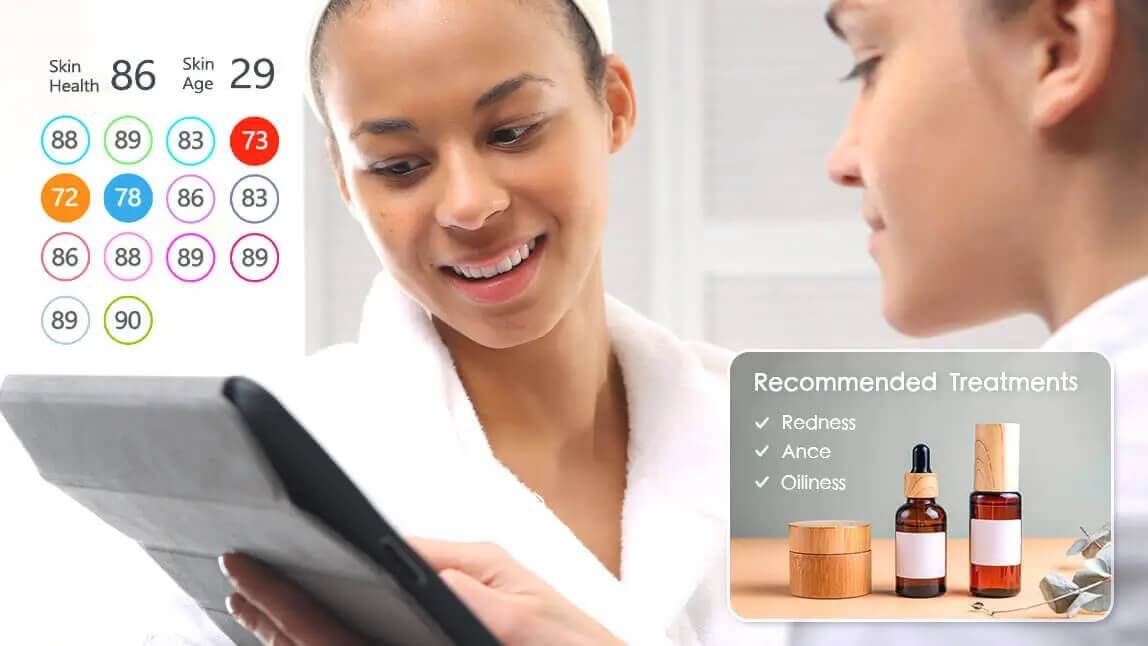
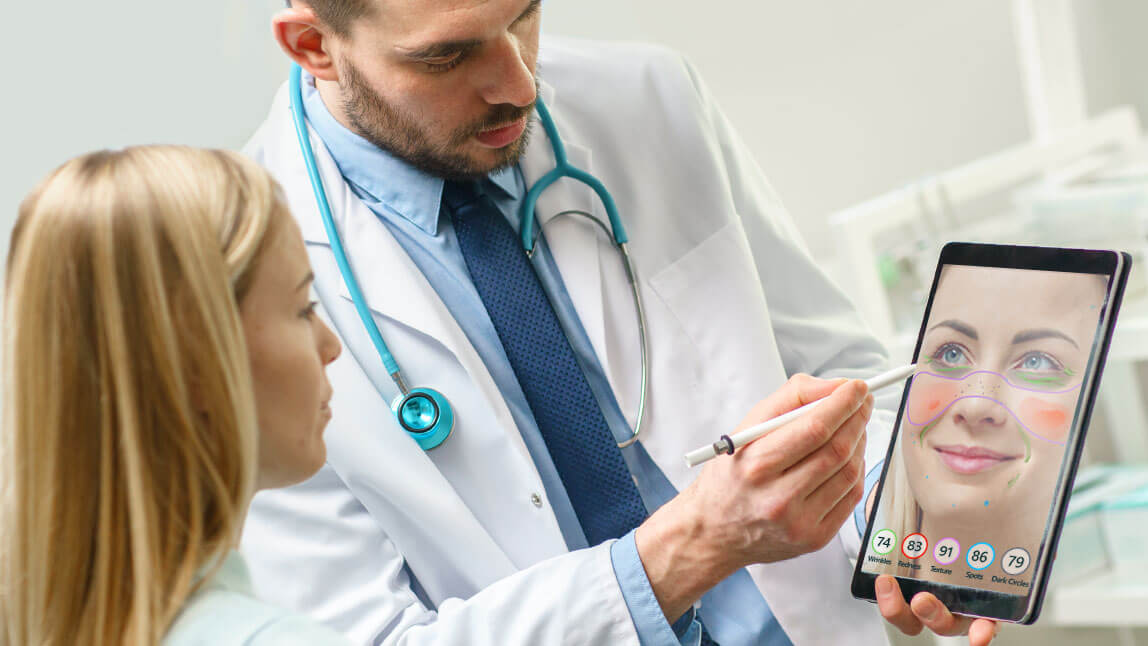
AI skin labeling transforms the consultation experience. Clients receive a detailed, visual breakdown of their skin health before they sit down with a provider. The conversation shifts from explaining problems to discussing solutions — a much more valuable use of everyone's time.
Learn how AI-powered skincare tools are transforming clinic consultations.
Cosmetic Retail
Brick-and-mortar beauty retailers are deploying AI skin analysis at smart mirrors and kiosks. The same skin labeling technology that drives a website consultation works seamlessly in-store,creating a consistent omnichannel personalization experience.
Dermatology Education and Training
Interestingly, professional training programs are beginning to use AI skin labeling as an educational tool — helping students learn to identify skin conditions by cross-referencing their clinical observations with AI-generated labels. This full-circle application shows just how foundational this technology has become.
How to Integrate AI Skin Labeling Into Your Business: A Practical Framework
Thinking about adding this capability to your brand or platform? Here's how to approach it strategically:
Define Your Use Case First
Are you trying to reduce product returns through better recommendations? Increase consultation bookings? Create client retention through progress tracking? Your use case determines which parameters matter most and how you should present results to users.
Choose the Right Integration Model
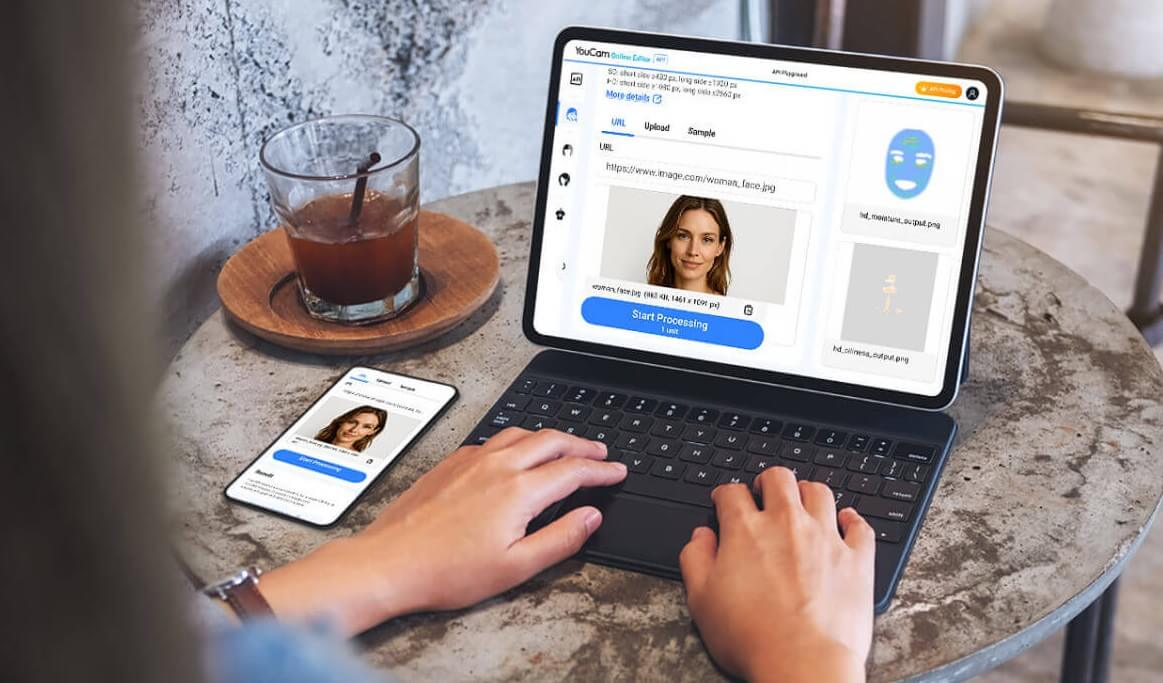
API integrations offer the most flexibility — you can embed skin analysis directly into your existing app, website, or in-store system without rebuilding your tech stack. Look for vendors who offer white-label options so the experience feels native to your brand.
Perfect Corp's AI Skin Analysis is built exactly for this — embed skin analysis into your existing app, website, or in-store system without rebuilding your tech stack, with full white-label support out of the box.
Prioritize Inclusivity in Your Vendor Selection
Ask hard questions about training data diversity. A model that performs inconsistently across skin tones is a liability, not an asset. Request demo results across a range of Fitzpatrick types before you commit.
Think About the End-to-End Journey
Skin labeling is most powerful when it connects to action. A beautiful analysis report that doesn't link to specific products, treatment recommendations, or booking options is a missed opportunity. Map out the complete user journey from scan to conversion before you go live.
Frequently Asked Questions About Skin Labeling
Is AI skin labeling as accurate as a dermatologist?
AI skin analysis is highly accurate for identifying visible surface concerns — texture, tone, pigmentation, and hydration markers. It is not a substitute for clinical diagnosis of medical conditions, which require in-person evaluation and sometimes biopsy. For cosmetic applications and personalized product recommendations,AI skin labeling performs at a level comparable to trained aestheticians.
Can AI skin labeling work on all skin tones?
High-quality,enterprise-grade AI skin analysis systems are trained on diverse datasets that include all Fitzpatrick skin types. However, not all consumer apps meet this standard. When evaluating a solution, always request performance data across the full spectrum of skin tones before deployment.
Does skin labeling require special hardware?
No. Modern AI skin analysis tools are designed to work with standard smartphone cameras and webcams. Some enterprise deployments use standardized lighting environments to improve consistency, but many consumer-facing applications deliver strong results under typical ambient light conditions.
How many skin conditions can AI label at once?
Advanced systems like the AI Skin Analysis API can analyze and label 20 or more skin parameters in a single session — simultaneously evaluating wrinkles, pores, dark spots, redness, radiance, moisture, and more. Results are typically delivered in under a second.
Is the client's skin data private?
Data privacy varies significantly between providers. Look for vendors who offer on-device processing (no images stored on external servers), comply with GDPR and CCPA regulations, and provide clear data use policies. This is especially important for clinic and medical spa deployments where patient privacy expectations are higher.
What's the ROI of adding AI skin labeling to my business?
Brands that have deployed AI skin analysis report meaningful improvements in conversion rates for personalized product recommendations, increases in average order value, and a reduction in returns. For service businesses, AI-enhanced consultations typically drive higher treatment acceptance rates and improved client retention.
The Bottom Line: Skin Labeling Is the Infrastructure of Personalized Beauty
Whether you're a student learning anatomy or a brand leader building the next generation of skincare experiences, understanding skin labeling starts with the same foundation: knowing what you're looking at.
For beauty businesses, the opportunity is clear. AI-powered skin labeling converts guesswork into data, generic experiences into personalized journeys, and one-time purchasers into loyal clients who can see their skin improving over time.
The brands that build this capability now will have a significant advantage as consumer expectations continue to rise. The question isn't whether to add AI skin analysis to your stack — it's how quickly you can make it happen.
Ready to get started? Explore Perfect Corp's AI Skin Analysis →