 Author:



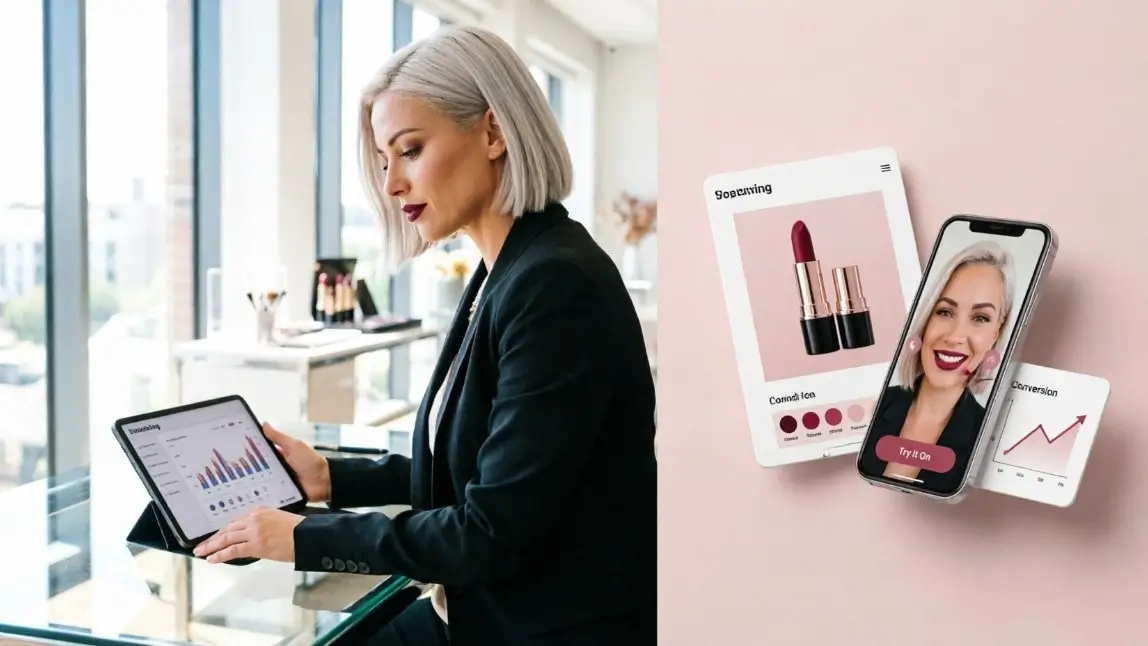
*Images designed by YouCam AI
When a pop icon trades the stage for the CEO chair, the beauty industry pays attention. In late October 2026, Lady Gaga took over as CEO of her own brand, Haus Labs, succeeding co-founder Ben Jones (Cosmetics Business). Celebrity sells the first bottle. Strategy sells the hundredth.
So what does a winning beauty brand e-commerce strategy look like right now? It's less about louder ads and more about removing doubt: Will this shade suit me? Is this serum right for my skin? AI and AR answer those questions at the exact moment a shopper is about to bounce. Below is the playbook—built for founders, e-commerce leads, and analysts who want online beauty sales that stick.
Table of Contents
- What is a beauty brand e-commerce strategy?
- What can beauty brands learn from Haus Labs' CEO shake-up?
- What are the 9 e-commerce moves that win in 2027?
- Which tech stack does a modern beauty e-commerce brand need?
- How do you measure if your strategy is working?
- FAQs
What Is a Beauty Brand E-Commerce Strategy?

It's the plan for how shoppers discover, evaluate, and buy your products online, across your DTC site, marketplaces, social commerce, and retail partners' digital shelves. Simple on paper. Brutal in practice.
Beauty is uniquely hard to sell through a screen because the product is personal. Foundation shade, undertone, skin type, hair texture—shoppers can't swatch a JPEG. That "touch-and-try gap" is why the best strategies in the US SERP right now (Salesforce, Pattern, HawkSEM and others) all converge on the same themes: personalization, content, marketplaces, and data. The missing piece most guides skip? Giving shoppers the in-store try-on online.
What Can Beauty Brands Learn From Haus Labs' CEO Shake-Up?

Haus Labs debuted in 2019, rebranded in 2022 around clean, ingredient-driven formulas, and made headlines as an early beauty brand to bet on Amazon. Now the founder herself holds the commercial reins. Three takeaways for every beauty brand—celebrity or not:
- Founder story is a conversion asset. Put the "why" on product pages, not just the About page.
- Channel mix matters. DTC builds data; marketplaces and retailers build reach. You need both, and a consistent experience across them.
- Shade trust is make-or-break. Complexion launches live or die by whether shoppers believe the shade range fits them. Tools that let them check before buying protect both sales and reputation.
What Are the 9 E-Commerce Moves That Win in 2027?

1. How does virtual try-on lift beauty conversions?

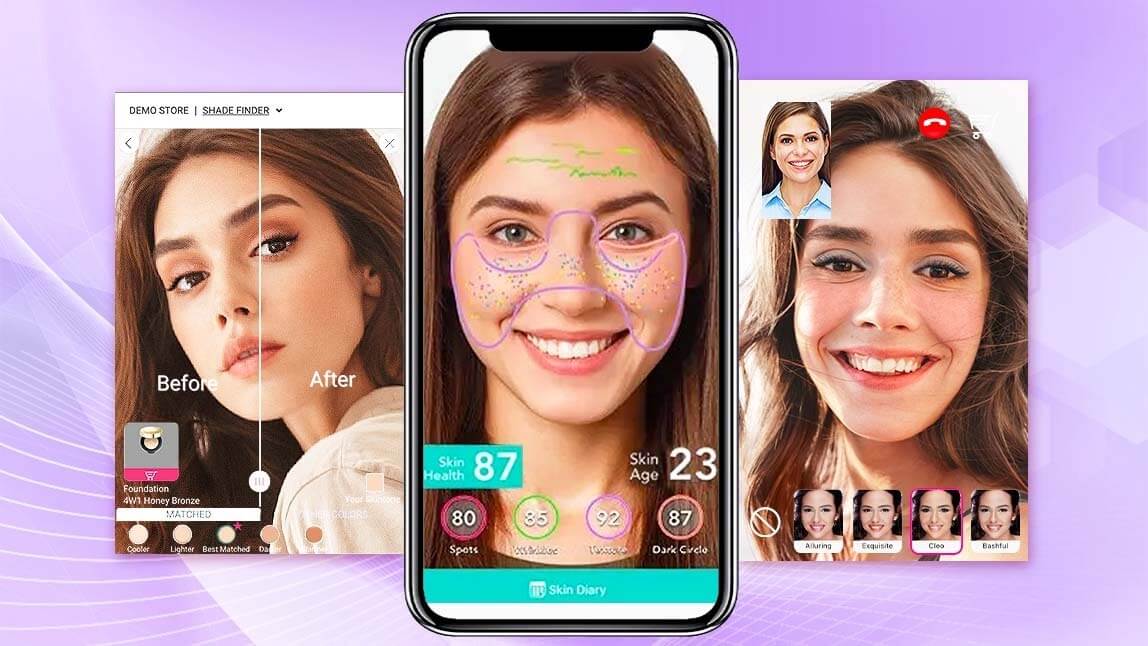
Let shoppers see lipstick, eyeshadow, brows, or hair color on their own face in real time. AR virtual makeup try-on turns "maybe" into "add to cart" by answering the only question that matters: does it look good on me? Put the try-on button on the PDP, in ads, and inside retailer listings.
2. Why is AI shade matching non-negotiable for complexion?
Foundation and concealer have the highest uncertainty—and the highest return risk. AI shade finders read skin tone and undertone from a selfie and recommend a shade from your range. That's trust, scaled.
3. How can AI skin analysis personalize skincare sales?

Skincare shoppers want a routine, not a random serum. An AI skin scan scores concerns like spots, wrinkles, and hydration, then maps them to your products. Want to see the experience first? Try the free AI beauty test.
4. Do beauty quizzes still work?
Yes—when they're short, visual, and backed by real analysis rather than guesswork. Pair a 3-question quiz with a selfie scan and you get both stated and observed preferences.
5. How should brands use UGC and creators?
Shoppers trust faces like theirs. Feature reviews with photos, creator tutorials, and try-on videos directly on PDPs.
6. How do you win on marketplaces like Amazon?
Optimize titles, A+ content, and imagery for search; keep shade naming consistent; and bring interactive try-on experiences wherever the platform allows.
7. What about social commerce?
Short-form video drives discovery. AR filters and shoppable try-on links shrink the path from scroll to checkout.
8. How does loyalty fit into e-commerce?
Personalized replenishment reminders (based on the routine a shopper built after a skin scan) lift repeat purchase without discount fatigue.
9. Why is first-party data the real prize?
Every try-on, shade match, and skin scan is a zero-party signal about what a customer wants. Use it to power merchandising, product development, and smarter ads.
Ready to close the touch-and-try gap? See how leading retailers like THE ICONIC use AI and AR to sell beauty online.
Which Tech Stack Does a Modern Beauty E-Commerce Brand Need?

| Layer | What it does | Why it matters for beauty |
|---|---|---|
| Commerce platform | Catalog, checkout, payments | Handles shade variants cleanly |
| AI/AR try-on | Makeup, hair, nail try-on | Removes "will it suit me?" doubt |
| AI skin & shade analysis | Skin scores, tone & undertone | Personalized routines and shade picks |
| Content & UGC | Reviews, video, creators | Social proof on real faces |
| Analytics/CDP | Unifies first-party data | Turns try-on signals into revenue |
Developers can move fast here: the YouCam AI API now plugs into AI assistants and agent workflows through YouCam MCP & Agent Skills, so a team can prototype try-on and skin analysis with plain-language prompts before writing production code.
How Do You Measure If Your Strategy Is Working?

- Conversion rate for sessions with vs. without try-on engagement
- Average order value (routines beat single items)
- Return rate on complexion products
- Repeat purchase rate within 60–90 days
- Engagement depth: shades tried, scans completed, time on PDP
Run A/B tests on the PDP first—that's where try-on and shade matching usually show their impact fastest. For broader context, read how beauty tech is revolutionizing the customer experience.
FAQs
What is the best e-commerce strategy for a beauty brand?
Combine a strong DTC site with marketplace reach, then remove purchase doubt with virtual try-on, AI shade matching, and skin analysis. Back it up with UGC and first-party data.
How do beauty brands increase online sales?
Make products "try-able" online, personalize recommendations, show real-face social proof, and use replenishment and loyalty to drive repeat orders.
Is virtual try-on worth it for small beauty brands?
Yes. Plug-in and API options mean indie brands can offer the same try-on experience as global players without building AR from scratch.
Why did Lady Gaga become CEO of Haus Labs?
Reports in October 2026 say she assumed commercial leadership after co-founder Ben Jones left; no specific reason was given publicly.
How does AI help beauty e-commerce?
AI powers shade matching, skin analysis, personalized routines, search, and content—turning every interaction into data that improves conversion.
Your products deserve to be tried, not just scrolled past.