 Author:
Key Takeaways
What Is Inclusive Marketing
Inclusive marketing is the intentional and ongoing practice of creating campaigns that genuinely resonate with people from all walks of life. It completely celebrate the rich, multifaceted tapestry of the real world. For beauty and fashion brands, this means ensuring every single consumer feels seen, valued, and represented in your brand's narrative.
Why Inclusion is Non-Negotiable for Modern Brands
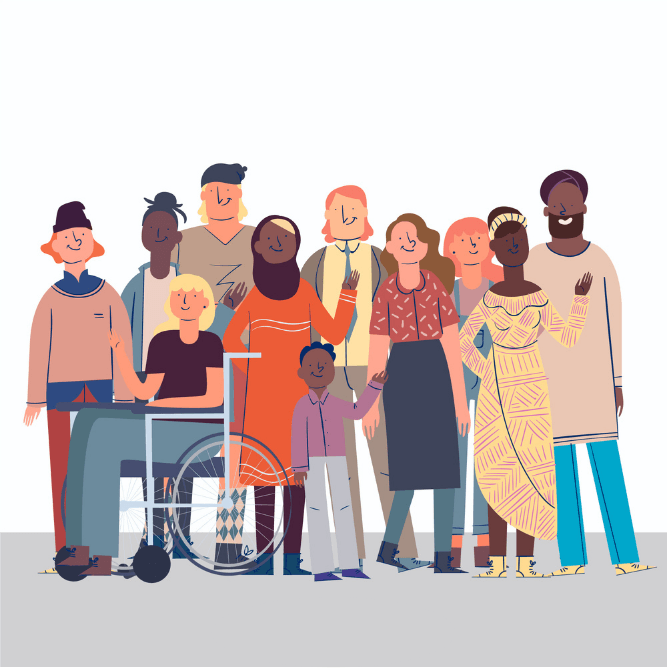
Inclusivity is no longer just a brand value, it’s a core driver of business growth. In today’s market, consumers actively choose brands that reflect their identity and values.
The Cost of Ignoring Inclusivity
- Lost revenue opportunities: Narrow reach, lost revenue.
- Brand irrelevance: Gen Z and Millennials disengage from brands that feel outdated or inauthentic.
- Weakened retail partnerships: Customer demand is driving retailers toward inclusive brands.
- Poor digital experience: Poor accessibility excludes users and kills conversions.
The Business Impact of Getting It Right
- Stronger customer loyalty: Consumers are more likely to support brands that genuinely reflect their values and identities.
- Higher conversion rates: Inclusive products and experiences resonate with a broader audience, driving both in-store and online sales.
- Lower customer acquisition costs: Satisfied customers become organic brand advocates, reducing reliance on paid marketing.
- Authentic brand advocacy: User-generated content and word-of-mouth build trust in ways traditional advertising cannot replicate.
Key Strategies for Effective Cultural Marketing
The foundation of effective cultural marketing strategies for inclusivity is authentic storytelling. Brands must actively elevate marginalized voices, allowing diverse creators to tell their own stories through the brand's platform. Here are some key strategies for effective culturla marketing in 2026:
Authentic Storytelling
Overview: Inclusive marketing starts with real stories. Instead of speaking for communities, brands should empower diverse creators to share their own voices.
Benefits:
- Builds deeper emotional connection and trust
- Avoids tokenism and performative messaging
- Strengthens brand credibility through real representation
Product–Marketing Alignment
Overview: Inclusivity in marketing must be reflected in the product itself. Campaign promises should match actual product offerings.
Benefits:
- Reinforces brand authenticity and consistency
- Expands market reach across diverse consumer groups
- Prevents backlash caused by mismatched messaging and products
Active Community Listening
Overview: Understanding diverse audiences requires continuous listening. Brands should actively gather insights from their communities.
Benefits:
- Ensures culturally sensitive and relevant campaigns
- Improves product and marketing decisions with real feedback
- Builds long-term loyalty through customer involvement
Natural Visual Representation
Overview: Representation should feel real, not staged. Authentic visuals resonate more than overly polished portrayals.
Benefits:
- Creates relatable and trustworthy brand imagery
- Celebrates real diversity in everyday contexts
- Enhances engagement through genuine storytelling
Digital Accessibility
Overview: Inclusivity extends beyond messaging to user experience. Digital platforms must be accessible to all users.
Benefits:
- Improves usability for people with different abilities
- Expands audience reach and engagement
- Delivers a seamless, inclusive brand experience across all touchpoints
How to Make Your Brand Stand Out with Data Insights and AI Tech?
Data and AI are completely revolutionizing how brands execute effective cultural marketing strategies for inclusivity. By leveraging advanced AI technologies, brands can turn inclusivity into actionable insights, delivering hyper-personalized experiences that truly resonate.
AI Shade Finder
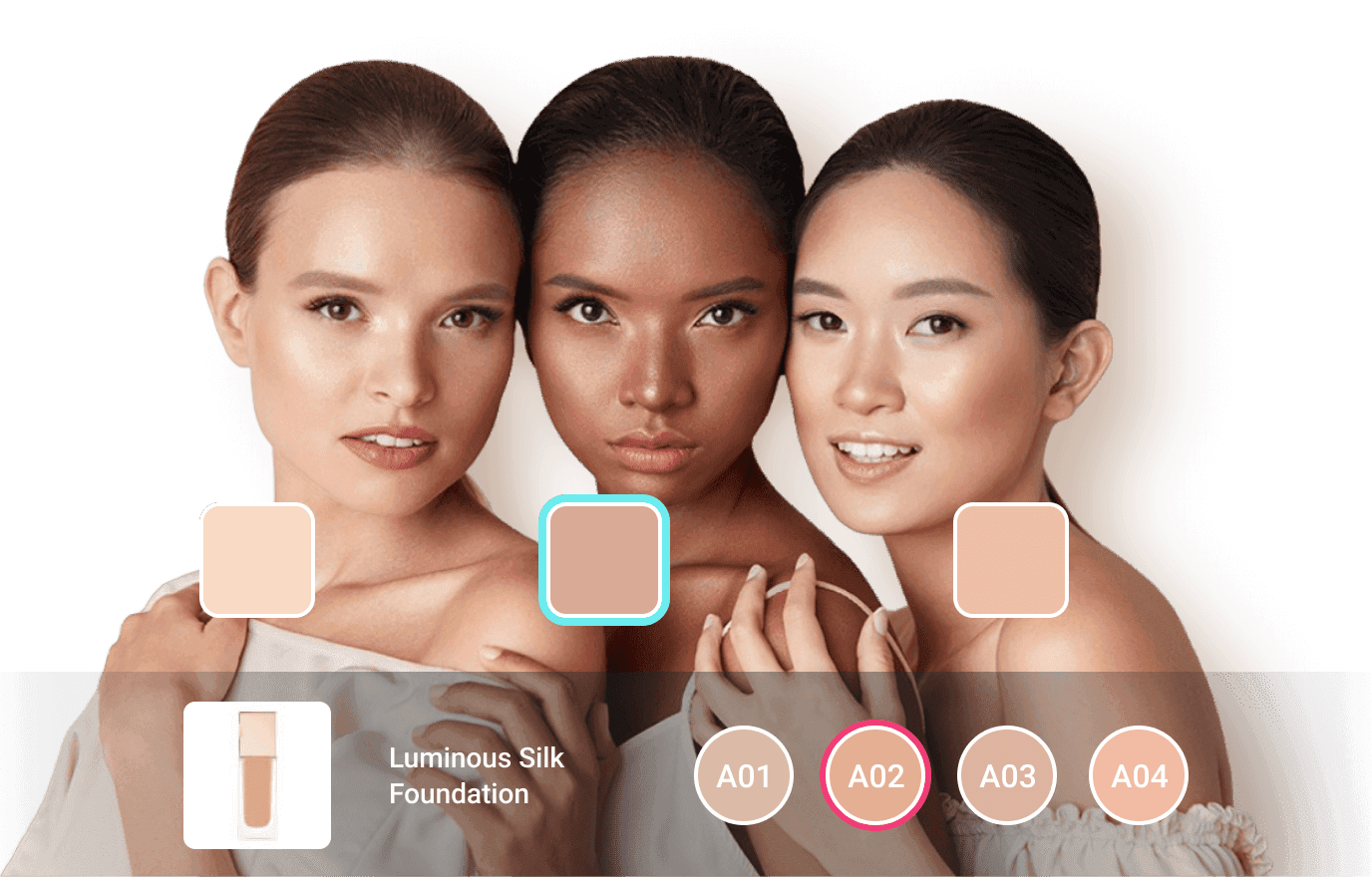
Overview: Skin Tone Analysis precisely detects facial features such as skin tone, undertones, and color variations to help users find their perfect match instantly.
Benefits:
- Delivers accurate shade matching for diverse skin tones
- Reduces product returns caused by mismatched purchases
- Enhances customer satisfaction and confidence Provides data insights on underserved shade ranges
Real-world application: Beauty retailers can integrate this API into their e-commerce or in-store experience, allowing customers to instantly find their ideal foundation shade while brands gather data to refine and expand product lines.
AI Hair Type Detector
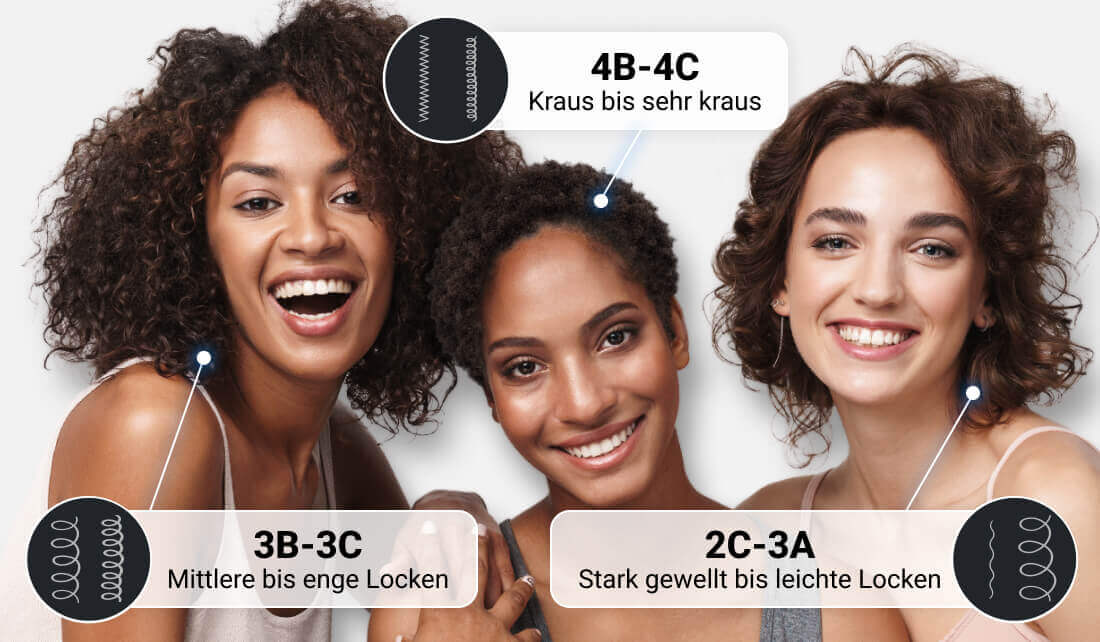
Overview: AI Hair Type Detection analyzes texture, thickness, and curl patterns to classify hair into precise categories, enabling tailored product recommendations.
Benefits:
- Supports inclusive haircare for all textures and curl types
- Identifies 10 curl patterns and mixed hair types.
- Enables highly personalized product recommendations
- Strengthens brand trust by addressing specific hair needs
Real-world application: Haircare brands can use this tool to guide users toward the most suitable products, transforming generic browsing into a personalized consultation experience that boosts engagement and loyalty.
AI Face Analyzer
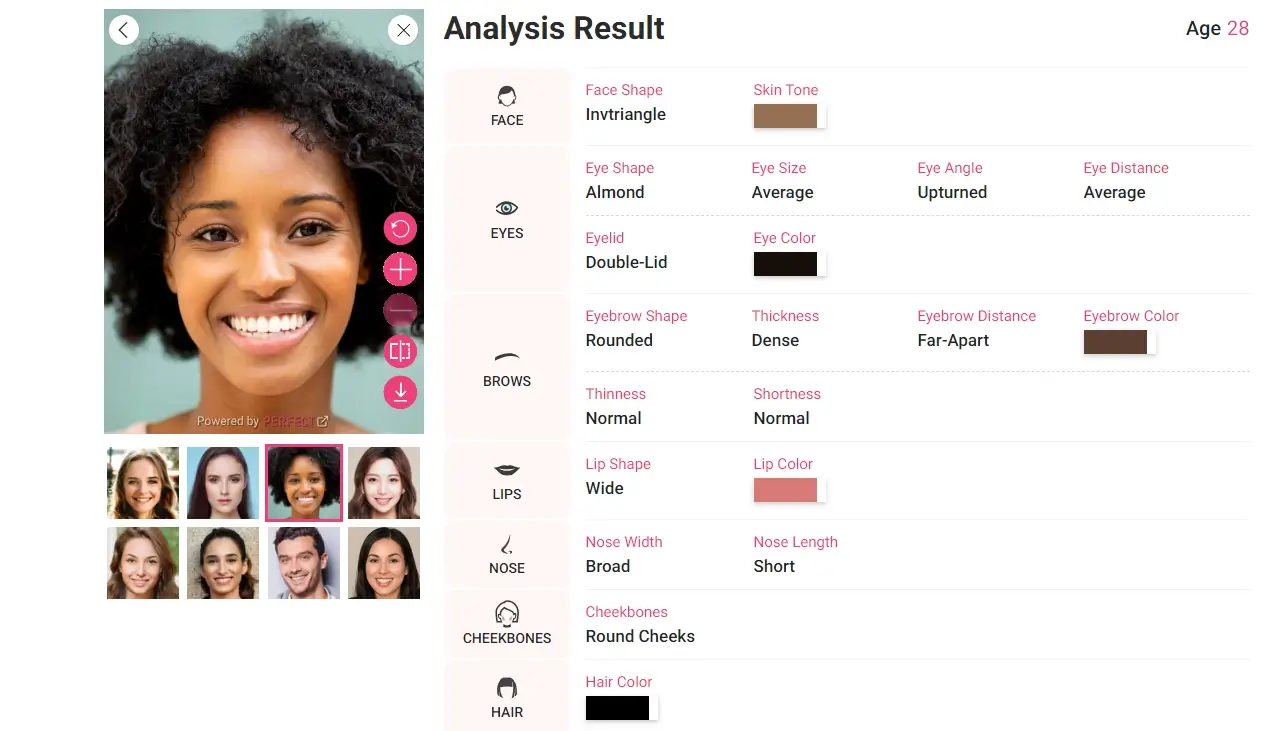
Overview: AI Face Analyzer examines detailed facial structures—including face shape, eyes, lips, and bone structure—to deliver highly customized beauty recommendations.
Benefits:
- Precise analysis of 70+ facial features, including face shape, eye shape, and lip shape
- Powered by a high-accuracy AI model trained on 70,000 diverse images
- Enables hyper-personalized product suggestions and tutorials
- Increases user engagement through tailored experiences
- Reinforces brand perception as inclusive and data-driven
Real-world application: Brands can integrate face analysis into virtual try-on tools, allowing users to preview products based on their unique features while collecting valuable insights to optimize marketing strategies and product development.
Why Choose Perfect Corp. as Your Partner?
To turn inclusion into measurable business impact, AI and AR are essential for data-driven audience insights. Here’s why Perfect Corp. is a strong choice:
Seamless Integration Across Platforms
Seamlessly integrate our solutions into your existing ecosystem with flexible APIs and SDKs. Whether it’s web, mobile, or in-store devices, deployment is fast, scalable, and built for omnichannel experiences.
High-Accuracy, Bias-Reduced AI
Powered by high-accuracy AI trained on over 70,000 diverse images, our technology minimizes bias and delivers reliable results across all skin tones, face shapes, and hair textures.
Privacy-First & Secure
We prioritize user data protection with enterprise-grade security standards, including HIPAA compliance. Your customers’ data stays safe, ensuring trust while enabling powerful AI-driven experiences.

Conclusion
Implementing effective cultural marketing strategies for inclusivity is no longer an optional tactic; it is the core foundation of modern brand survival and exponential growth. Consumers are fiercely loyal to brands that respect their individuality and celebrate their unique cultural identities through authentic, tangible actions.
By blending compassionate storytelling with cutting-edge innovations like Perfect Corp's AI Skin Tone Analysis, AI Hair Type Detection, and hyper-realistic Virtual Try-On, brands can deliver unparalleled personalized experiences. You have the power to democratize retail, boost your bottom line, and lead the industry toward a brighter, more inclusive future.
Now is the time to transform your brand's approach to diversity. Embrace the power of unbiased AI technology, listen closely to your diverse communities, and let Perfect Corp help you build an inclusive ecosystem where every customer truly belongs.
Inclusive Marketing FAQ
How to promote a culture of inclusivity?

Transition to gender-neutral phrasing (e.g., "everyone" instead of "guys") and ensure documentation is accessible. Using inclusive language isn't about being "politically correct"; it’s about reducing the cognitive load for marginalized groups so they can focus on their work rather than navigating exclusion.
What is the culture marketing strategy?
Cultural marketing is an approach that tailors a brand’s messaging, campaigns, and experiences to fit the cultural context of its target audience. What connects with one culture may not resonate—or could even be inappropriate—in another.