 Author: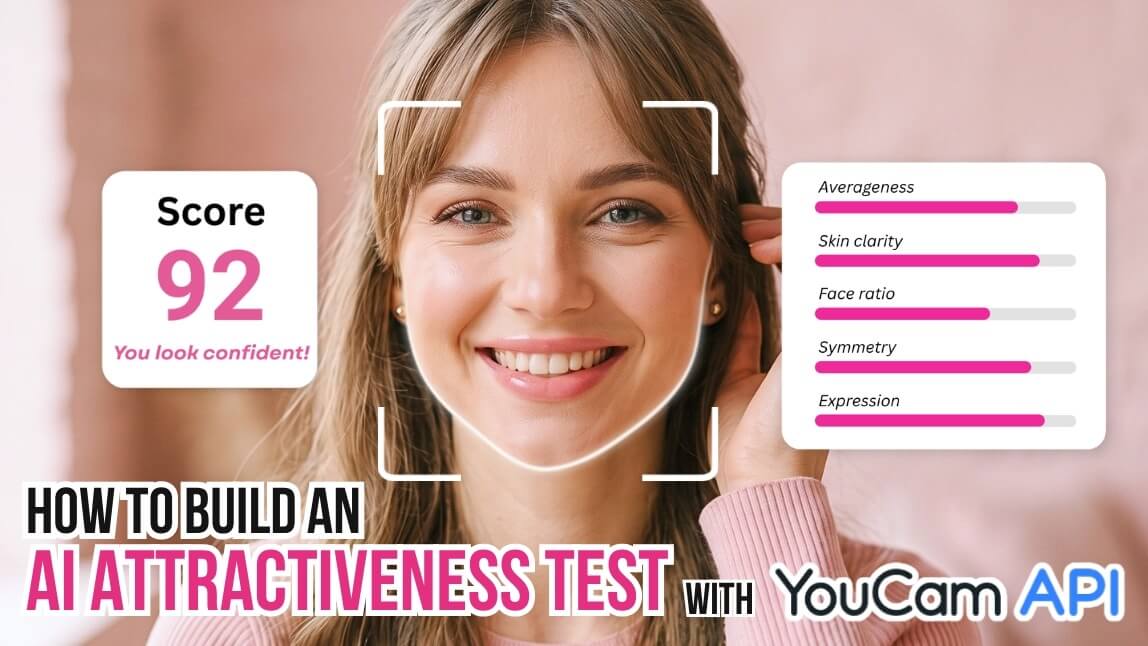
An attractiveness test is a tool that scores a face against measurable patterns such as symmetry, proportion, and skin clarity, usually on a 1 to 10 scale. Millions of people take one every month out of curiosity. Fewer people realize they can build their own version in an afternoon, using the YouCam API and a large language model to handle the parts that pure math cannot.
That is what this guide walks through. Not "how attractive am I," but "how do I ship an attractiveness test my users will actually want to try." We will cover the score science, the API calls, how to bring Claude or another AI tool into the pipeline for commentary and personalization, the privacy questions you need to answer before launch, and the business reasons brands are adding these quizzes to their sites in 2026.
If you have ever browsed one of the many consumer face-rating sites and thought "I could build this for my own brand," this is the practical version of that idea, written for the person who actually has to ship it.
What Is an Attractiveness Test, and Why Are Businesses Building Their Own?
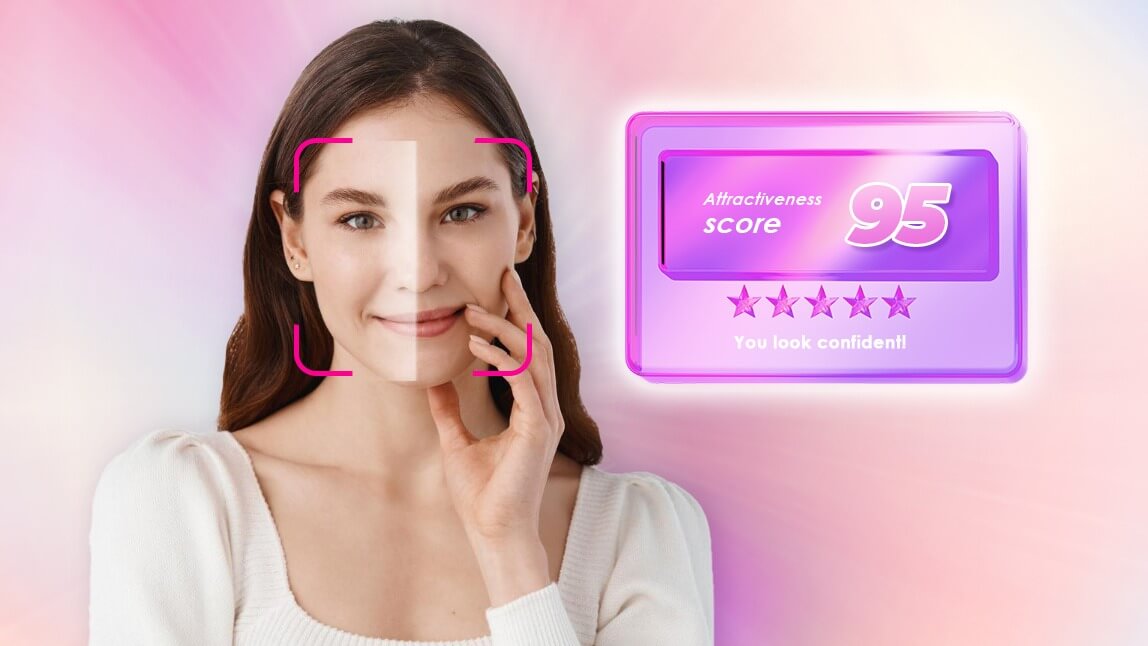
Consumer demand for face rating tools has stayed high since PSL (Personal Sexual Market Value) scoring spread from forums to TikTok filters. Standalone quiz sites now rank for the keyword by the dozen. What is missing from most of them is a business behind the experience: a beauty brand, a dating app, or a skincare retailer that wants the same mechanic wired into their own funnel, styled to their own brand, and connected to their own product recommendations.
Building your own attractiveness test means you control the input photo pipeline, the scoring logic, the copy on the result page, and what happens after someone gets their score (a discount code, a skincare routine, a matchmaking profile boost). An off-the-shelf quiz site cannot do any of that for you.
How Does an AI Attractiveness Test Actually Score a Face?
Most AI face scoring models blend a handful of measurable inputs rather than one magic number:
- Symmetry. The left and right halves of a face are compared for proportional balance. Small natural asymmetries are normal; the model looks at deviation as a percentage, not a pass/fail line.
- Averageness. Faces closer to the population's average proportions tend to score higher. This is one of the most replicated findings in facial attractiveness research, going back to Langlois and Roggman's 1990 composite-face studies, where blended composite faces consistently rated as more attractive than most individual faces used to build them.
- Golden ratio and facial thirds. Distance between eyes, nose width, and the balance between forehead, midface, and chin are checked against classical proportion ratios. These ratios are a useful signal, not a hard rule. Real faces that break them are rated highly all the time.
- Skin clarity and texture. Evenness of tone, visible texture, and blemish density feed into most modern scoring models, since skin quality reads as a health signal to the human eye and correlates strongly with perceived age.
- Expression and pose neutrality. A relaxed, front-facing, neutral expression produces more stable scores than a squint, a tilted head, or a wide grin, since those change apparent proportion measurements.
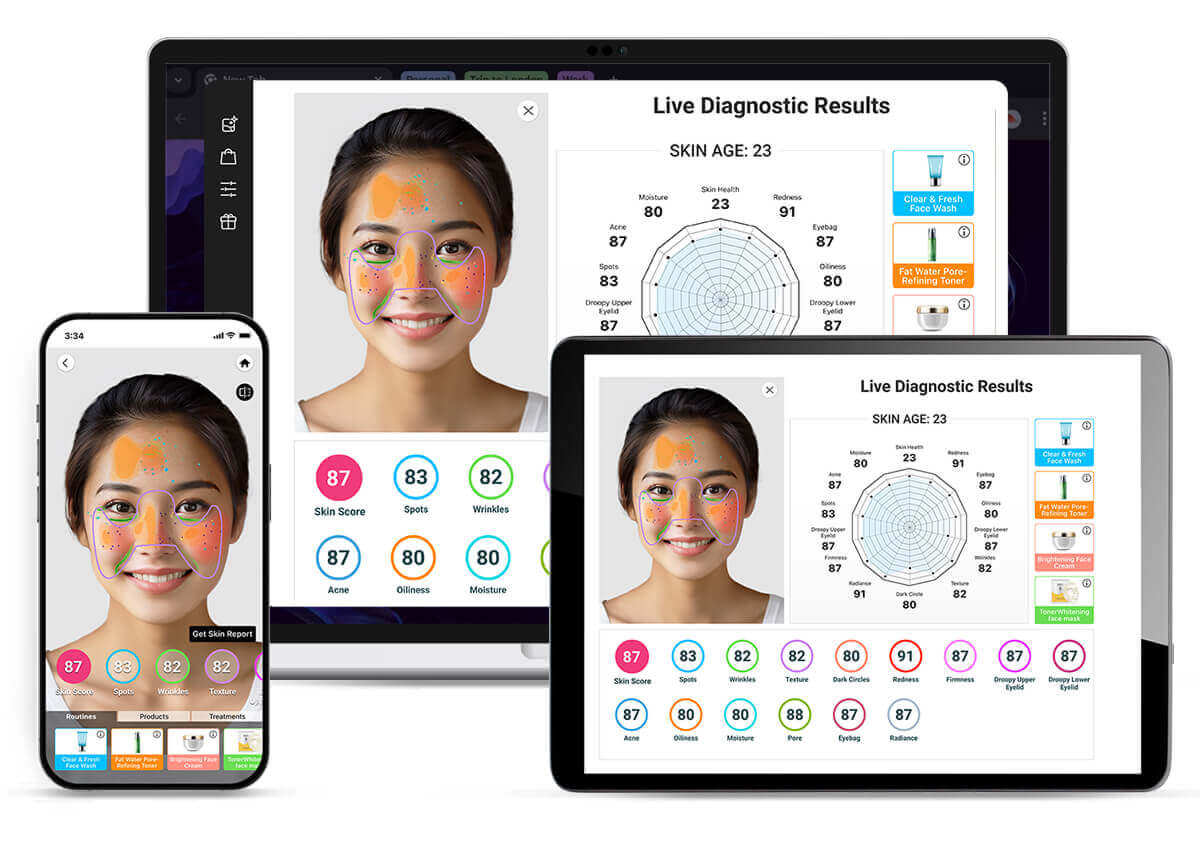
The YouCam API handles the underlying facial detection and analysis: it maps dozens of facial contour and skin metrics from a single photo, which you then translate into whatever scoring formula your product wants to expose. You are not training a model from scratch. You are building a scoring and presentation layer on top of analysis that Perfect Corp has already trained and refined across millions of processed photos.
What Do You Need Before You Start Building?
Before writing any code, gather these:
- A free YouCam API account and an API key
- A basic front end or notebook environment (React, Next.js, or even a Python script works for a prototype)
- A handful of test photos with varied lighting, so you can sanity-check the scoring output before launch
- Optional but recommended: access to an LLM (Claude, or another AI tool) to turn raw numbers into readable commentary

You do not need a computer vision background. The YouCam API is doing the heavy modeling; your job is orchestration and product design.
How Do You Get a YouCam API Key? (Step 1)
Head to the YouCam API console, create a free account, and generate a key from the dashboard. Keys are scoped per project, so create a dedicated one for your attractiveness test build rather than reusing a key from another integration. Keep it server side. Nothing about facial analysis should touch your client-side bundle.
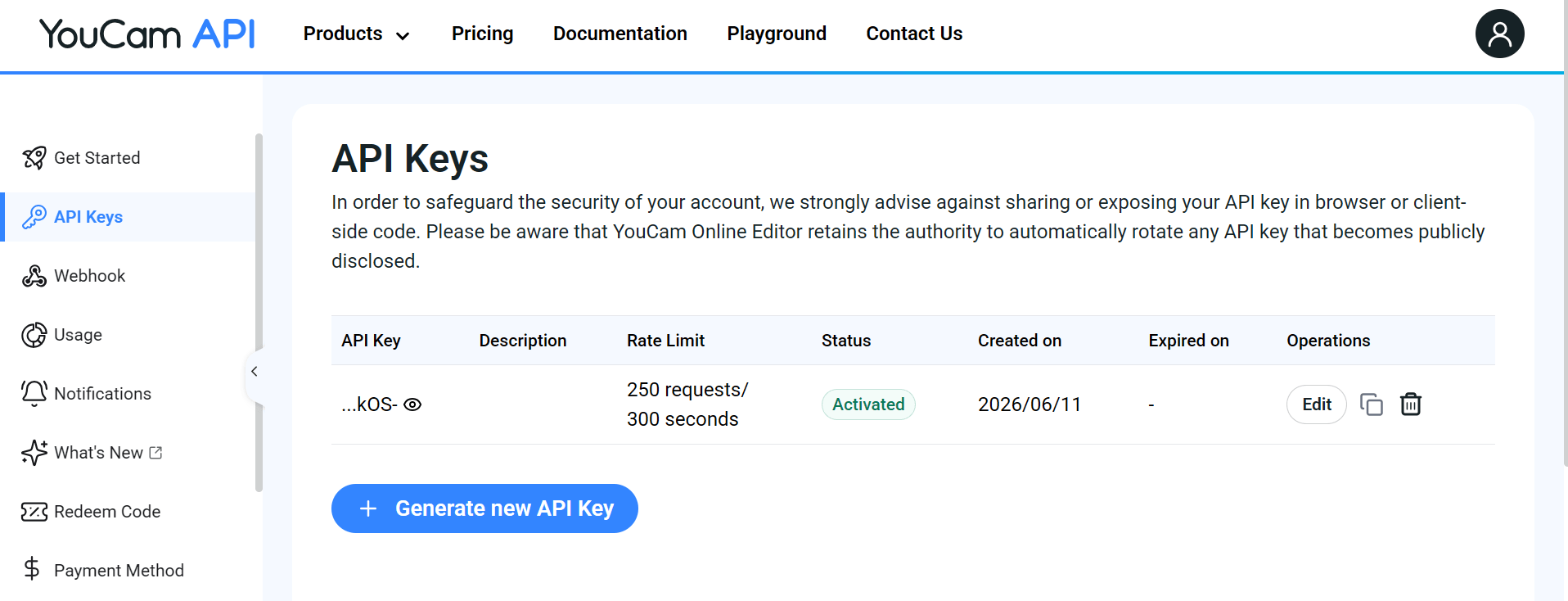
Try the API in Our AI Playground to see live requests and responses before you write a single line of production code.
How Do You Call the Face Analysis Endpoint to Generate a Score? (Step 2)
Once you have a key, the flow looks like this:
- Upload a selfie to the face analysis endpoint (a properly lit, front-facing photo produces the most reliable output)
- Receive a structured response with facial contour and skin metrics
- Normalize the returned values into your own 1 to 10 (or 1 to 100) scale using a weighted formula you define
- Store the score and metrics for your result page and, if relevant, your analytics
| Metric returned | What it feeds into |
|---|---|
| Facial symmetry index | Symmetry sub-score |
| Skin tone evenness | Skin sub-score |
| Proportion ratios (eyes, nose, jaw) | "Averageness" sub-score |
| Estimated age and expression | Context flags, not scoring inputs |

A minimal request looks roughly like this once you have your key:
POST https://yce.perfectcorp.com/s/v1.0/face/analyze
Authorization: Bearer YOUR_API_KEY
Content-Type: multipart/form-data

file: selfie.jpg
The response returns structured JSON with facial contour coordinates, skin metrics, and confidence values per attribute. Your backend then applies weights of your own choosing (for example, 40 percent symmetry, 30 percent averageness, 30 percent skin clarity) to produce the single headline number your users see. Keep the raw response server side. Only the final, rounded score and a short list of sub-scores need to reach the front end.
A word of caution: do not expose raw model confidence values as if they were a scientific verdict. Round, band, and soften. "Approximately 7.8 out of 10" reads honestly. "7.83291" reads like a bug.
How Can You Combine the YouCam API with Other AI Tools Like Claude? (Step 3)
The API gives you numbers. It does not give you a personality. This is where pairing YouCam with an LLM changes the product from "a calculator" into "a result page people screenshot and send to friends."
A common pattern in 2026 builds use Claude, connected through MCP (Model Context Protocol), to sit between the raw API output and the user-facing copy:
- YouCam API returns the structured metrics
- Claude receives those metrics with a prompt describing your brand's tone
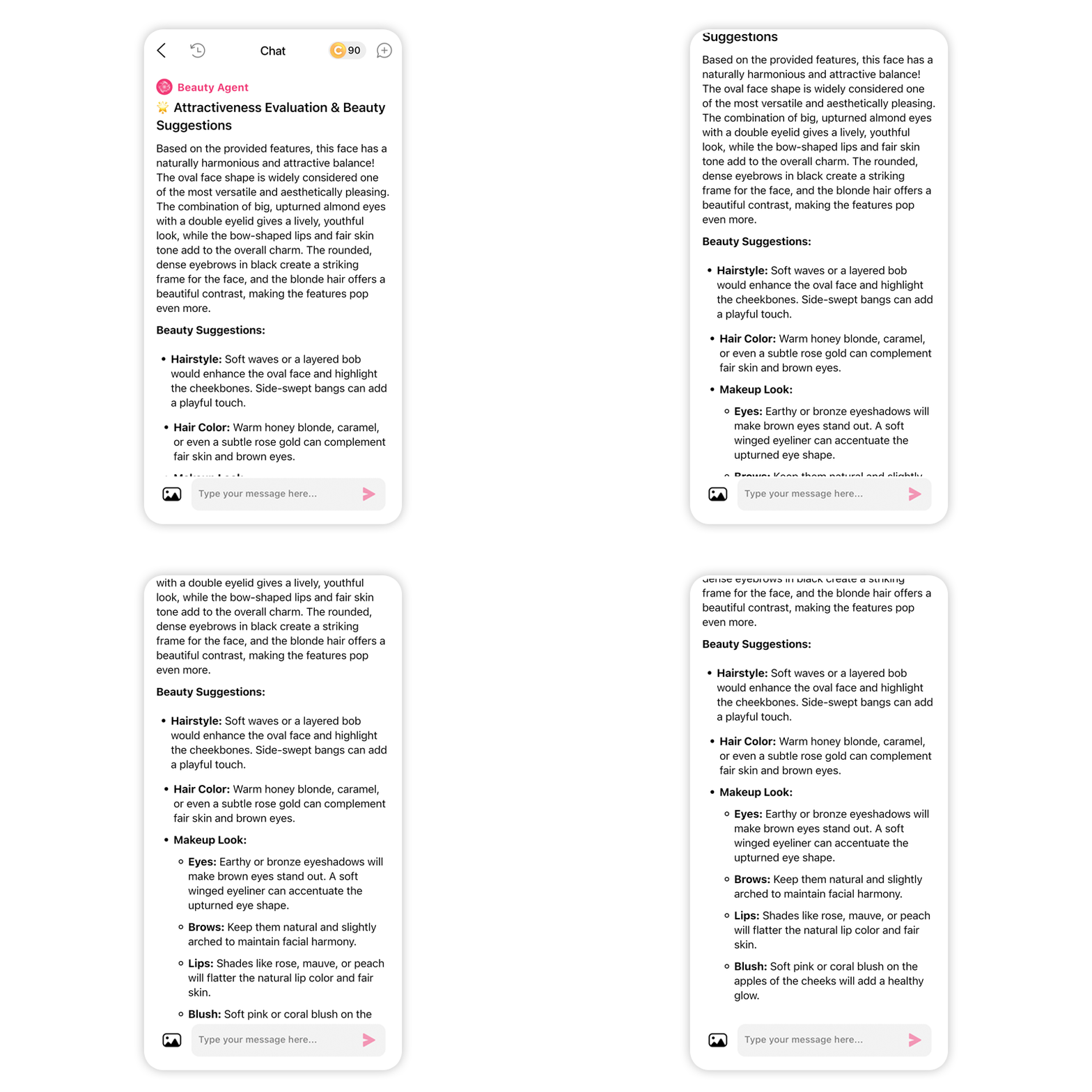
- Claude generates a short, personalized readout: what scored well, one gentle tip, and a call to action toward your product

This is the same architecture Perfect Corp documented in its guide to building a skincare app with Claude and the YouCam Skin Analysis API, and the pattern transfers directly to an attractiveness test: swap the skin diagnostic prompt for a face-scoring one, and the plumbing stays identical.
How Do You Turn Raw Scores into a Fun, Shareable Result? (Step 4)
Nobody shares a JSON blob. Design the result screen like a mini report card:
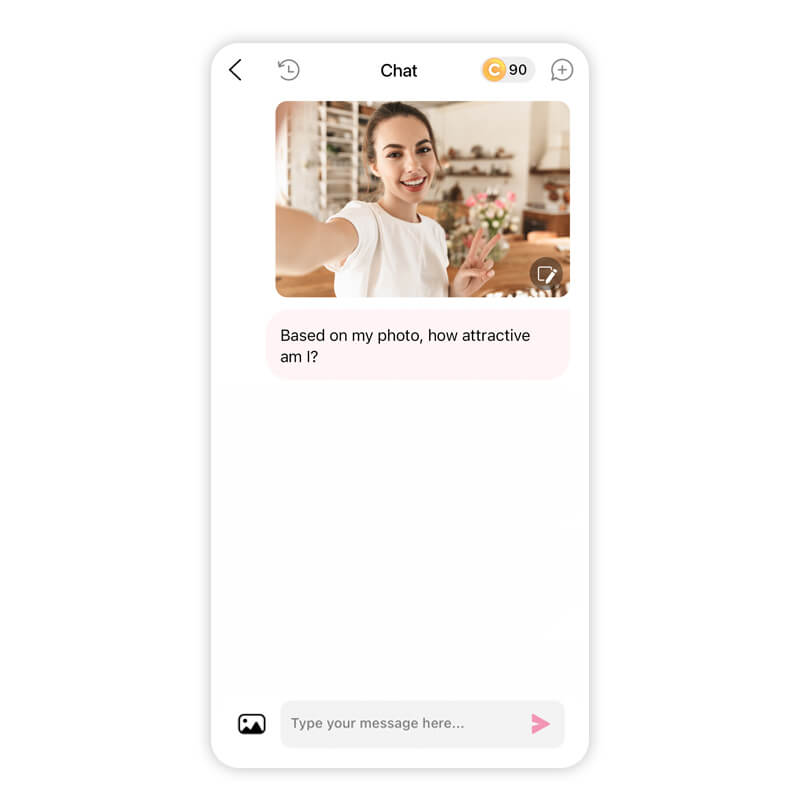
- Headline score, large and confident
- Two or three sub-scores (symmetry, skin, proportion) with plain-language labels instead of raw metric names
- One AI-generated line of encouragement or tip, never a lecture
- A share button that exports a branded image card, not a screenshot of your UI
If you want a scale reference, most public quizzes present results on a 1 to 10 scale, sometimes converted to the informal PSL scale. Building your own conversion table (rather than adopting someone else's) lets you set the tone: playful, clinical, or somewhere between.
Should You Build from the API, or Use a Ready-Made Widget?
Not every team needs a custom build. Here is the honest comparison:
| Approach | Best for | Trade-off |
|---|---|---|
| Off-the-shelf quiz embed | Quick campaigns, low dev budget | Little to no brand control, no product routing, generic copy |
| YouCam API, self-built | Brands that want the score tied to their own products, CRM, or app | Requires a developer and a few days of setup |
| YouCam API plus an LLM layer | Brands that want personalized, on-brand commentary and share cards | Slightly more orchestration, but the highest engagement payoff |
If the test is a one-off marketing stunt for a single campaign, an embed might be enough. If it is meant to sit permanently on your site and feed data back into your product recommendations, building on the API pays for itself quickly.
How Long Does It Take to Launch an Attractiveness Test?
Based on the pattern used across similar YouCam API integrations (skin diagnostics, face shape detectors, and now attractiveness scoring), a realistic timeline looks like this:
- Day 1: Get an API key, run test calls in the AI Playground, confirm the metrics you want to use
- Day 2 to 3: Build the scoring formula and a bare-bones result screen, test across a diverse set of sample photos
- Day 4 to 5: Wire in the LLM commentary layer and the shareable result card
- Week 2: QA across devices, add the privacy disclosure, soft-launch to a small audience before a full rollout

A single developer with API and prompt-engineering experience can realistically take a prototype to a shippable draft within one working week. Teams that skip the QA pass across skin tones, ages, and lighting conditions tend to pay for it later, in support tickets and social media callouts.
Is an AI Attractiveness Score Actually Accurate?
Be honest with your users here, because this is where trust is won or lost. AI facial scoring models are trained on the aesthetic patterns present in their training data, which means:
- They can reflect the biases of whatever dataset trained them, including skewed representation across ethnicities, ages, and gender presentation
- Lighting, camera angle, and expression change results meaningfully, sometimes by a full point or more
- A score measures geometry and surface texture. It does not measure charisma, kindness, style, or the thousand other things that make someone attractive in real life
Independent bodies such as NIST publish benchmark accuracy standards for biometric and facial analysis systems precisely because this space needs outside scrutiny, not vendor self-grading. Facial analysis technology itself, the part that detects contours and skin metrics, has gotten remarkably reliable over the past several years. Where products go wrong is almost never the underlying analysis. It is the scoring formula and the copy layered on top, which are entirely your product decisions, not the API's.
If you are building a public-facing test, disclose the limitation plainly in your copy. "For entertainment purposes" is not just legal boilerplate, it is accurate framing. A well-built attractiveness test should feel closer to a fun mirror than a courtroom verdict.
How Are Brands Using Attractiveness Tests to Drive Engagement?
This format earns its keep in a few specific business contexts:
| Industry | Use case |
|---|---|
| Beauty and skincare e-commerce | Score, then route users to product bundles that target their lowest sub-score |
| Dating and social apps | Profile confidence boosts, photo selection guidance before publishing |
| Photo and editing apps | Freemium hook: free score, paid unlock for full breakdown or editing tools |
| Marketing campaigns | Shareable, top-of-funnel content that drives organic reach without paid spend |
Perfect Corp works with more than 800 brand partners building exactly this kind of interactive, photo-based experience, from face shape detectors to skin diagnostics. A skincare retailer, for example, might route anyone who scores lower on the skin sub-score toward a targeted routine bundle, while a dating app might use the same API purely to help users pick their strongest profile photo rather than surfacing a public score at all. The mechanic is identical. The product decision about what to do with the result is where brands differentiate. If you want to see the pattern already live, explore our AI experience showcase before you scope your own build.
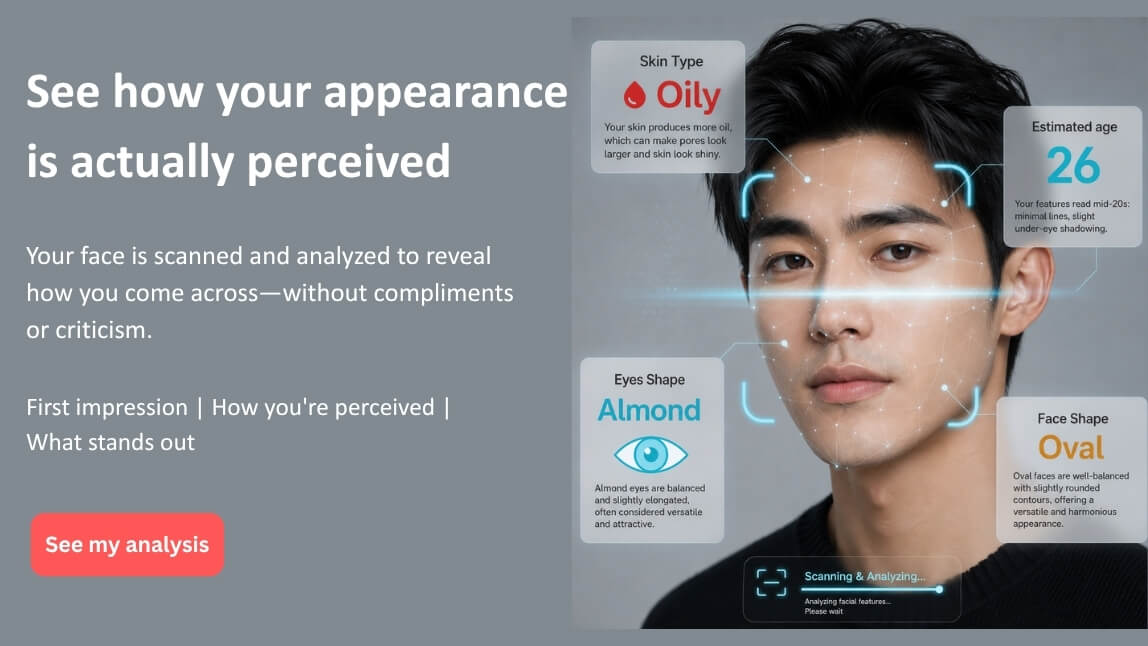
Explore our AI Face Analyzer to see a production version of this exact mechanic in action.
What Privacy and Compliance Rules Apply to Facial Scoring?
A face photo is biometric data in most legal frameworks, which puts it in a more sensitive category than an email address or a browsing cookie. A few things worth checking before launch, ideally with your legal team rather than a blog post:
- Consent language. Tell users, in plain wording before they upload a photo, what will be analyzed and what happens to the image afterward.
- Data minimization. If you do not need to retain the photo after scoring, do not retain it. Store the resulting numeric metrics instead of the raw image wherever your product allows it.
- Regional rules. Laws such as Illinois' Biometric Information Privacy Act (BIPA) and the EU's GDPR treat facial data as a special category requiring explicit consent and defined retention limits. Rules vary by state and country, so confirm requirements for every market you plan to launch in.
- Minors. Build an age gate if there is any realistic chance the tool reaches users under the age required for consent in your target markets, and do not target the experience at children.

None of this is a reason to avoid building the feature. It is a reason to build the consent screen and the retention policy at the same time as the scoring logic, not as an afterthought before launch.
What Mistakes Should You Avoid When Building One?
- Overpromising precision. A decimal-point score without context invites ridicule, not trust. Band your results into ranges internally even if the display shows a single number.
- Skipping the privacy notice. Tell users what happens to their photo, and delete it if you are not using it for anything beyond the single session. This is both a legal safeguard and a trust signal that shows up in how comfortable people feel sharing their result.
- Ignoring diverse test photos during QA. Test across skin tones, ages, lighting conditions, and camera angles before launch, not after a complaint. A five-minute QA pass with a mixed set of sample photos catches most embarrassing edge cases.
- Building the scoring formula in isolation. Loop in the same LLM you use for copy to sanity-check tone; an AI tool that is blunt about geometry can sound harsh without careful prompting. Read the generated commentary out loud before shipping it.
- Forgetting the "why." A score with no follow-up action is a dead end. Decide up front whether the result should lead to a product recommendation, a share prompt, or a next step, and design the page around that goal.
Frequently Asked Questions
How does an AI attractiveness test calculate a score?
It combines facial analysis metrics such as symmetry, proportion ratios, and skin clarity into a weighted formula, usually normalized to a 1 to 10 or 1 to 100 scale. The exact weighting is a product decision, not a fixed scientific standard, which is why the same face can score differently across different tests.
Is an attractiveness test accurate?
It is consistent, not objective. The same photo will score similarly each time under similar lighting and pose, but the underlying formula reflects the assumptions of whoever built it, not a universal standard of beauty. Treat it the way you would treat a fun personality quiz with a technical backbone, informative, not authoritative.
What is a good attractiveness score?
Most public tests center their scale so that an "average" face lands around 5 to 6 out of 10, with scores above 8 intentionally rare, similar to how a bell curve concentrates most results near the middle. Treat the number as a rough signal, not a verdict on how you look in person.
Is my photo stored when I use an attractiveness test?
That depends entirely on how the specific test is built. When you build your own with the YouCam API, you control retention: many teams choose to process the photo in memory and discard it immediately after returning the score, storing only the resulting numeric metrics if anything at all.
What makes a face attractive, according to research?
Decades of research point to averageness, symmetry, and skin health as the most consistently replicated factors, alongside cultural and individual variation, personal style, and expression that no formula fully captures. Attractiveness research measures aggregate rating patterns, not individual worth.
Does AI attractiveness scoring have bias?
It can. Any model trained on an unbalanced dataset will reflect that imbalance in its output, potentially rating some skin tones, ages, or facial structures less favorably simply because they were underrepresented during training. Test broadly across your actual user base and disclose the limitation rather than presenting the score as neutral fact.
Can I build my own attractiveness test without coding experience?
You will need some development help for a production build, but the YouCam API plus an AI coding assistant like Claude can get a working prototype running in a single session, even for a small team without a dedicated ML engineer. The heaviest lifting, the facial analysis itself, is already handled by the API.
Which API should I use to build an attractiveness test?
The YouCam API is purpose-built for facial and skin analysis, which covers the scoring inputs this format needs. Pairing it with an LLM for the commentary layer, as shown above, rounds out the experience and is the same architecture Perfect Corp has documented for skin diagnostic builds.
Is the YouCam API free to try?
Yes, new accounts can generate a free API key and test the endpoints in the AI Playground before committing to a paid plan, which is the fastest way to confirm the metrics you need are actually returned before you write production code.
How is an AI score different from a PSL rating?
PSL is an informal, crowd-derived scale that grew out of online forums and social media communities. An AI attractiveness score is generated algorithmically from measurable facial metrics rather than a pool of human raters. The two are often mapped onto similar 1 to 10 ranges, but they come from fundamentally different sources: community consensus versus computed geometry.
Key Takeaways
- An attractiveness test scores symmetry, averageness, proportion, and skin clarity, typically on a 1 to 10 scale
- The YouCam API handles facial detection and analysis; you define the scoring formula on top of it
- Pairing the API with an LLM like Claude turns raw metrics into personalized, shareable copy
- Disclose accuracy limitations and bias risk plainly. Trust is the actual product here
- Brands across beauty e-commerce, dating, and marketing use this format to drive engagement and route users toward relevant products
- Contact Perfect Corp. for a demo if you want a team that has already shipped this pattern for 800+ brands to help you scope the build