 Author:


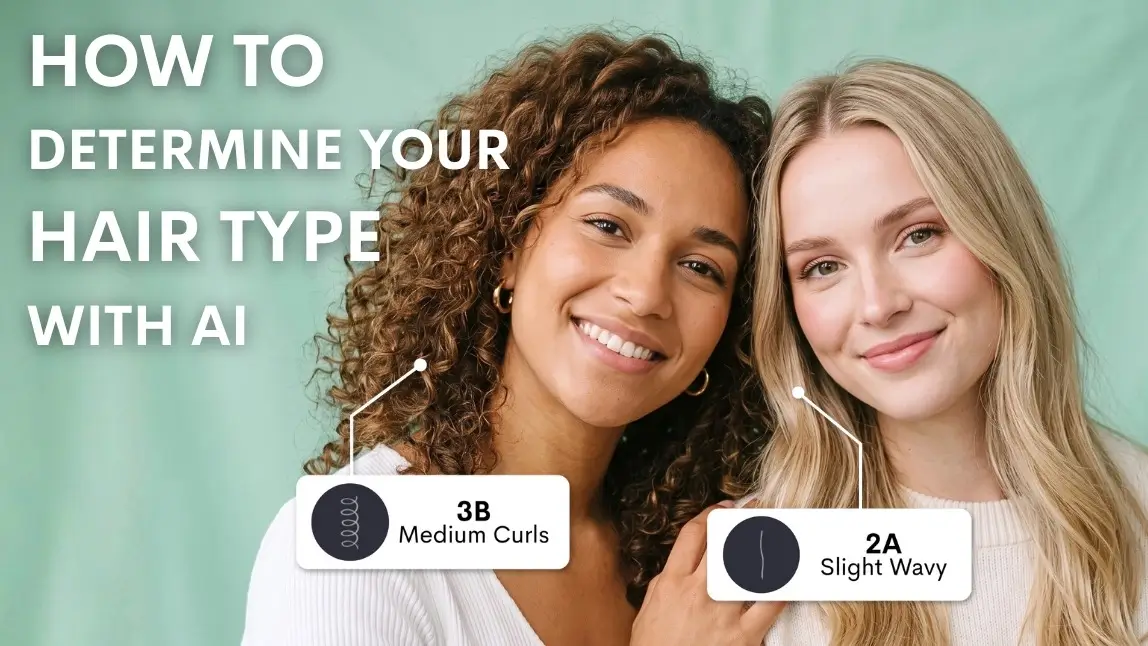
Most people have been buying the wrong hair products for years, and it usually traces back to one bad guess. You looked at a chart, decided you were "wavy," and built a decade of routines on top of that. Hair type is not one variable. It is four: curl pattern, strand thickness, density, and porosity. Get one wrong and the routine collapses. This guide walks through the four at-home tests that actually work, the exact reason self diagnosis fails so often, and how AI hair analysis reads texture from a single photo in about a second. Beauty and haircare brands are already using that same technology to replace guesswork with data.
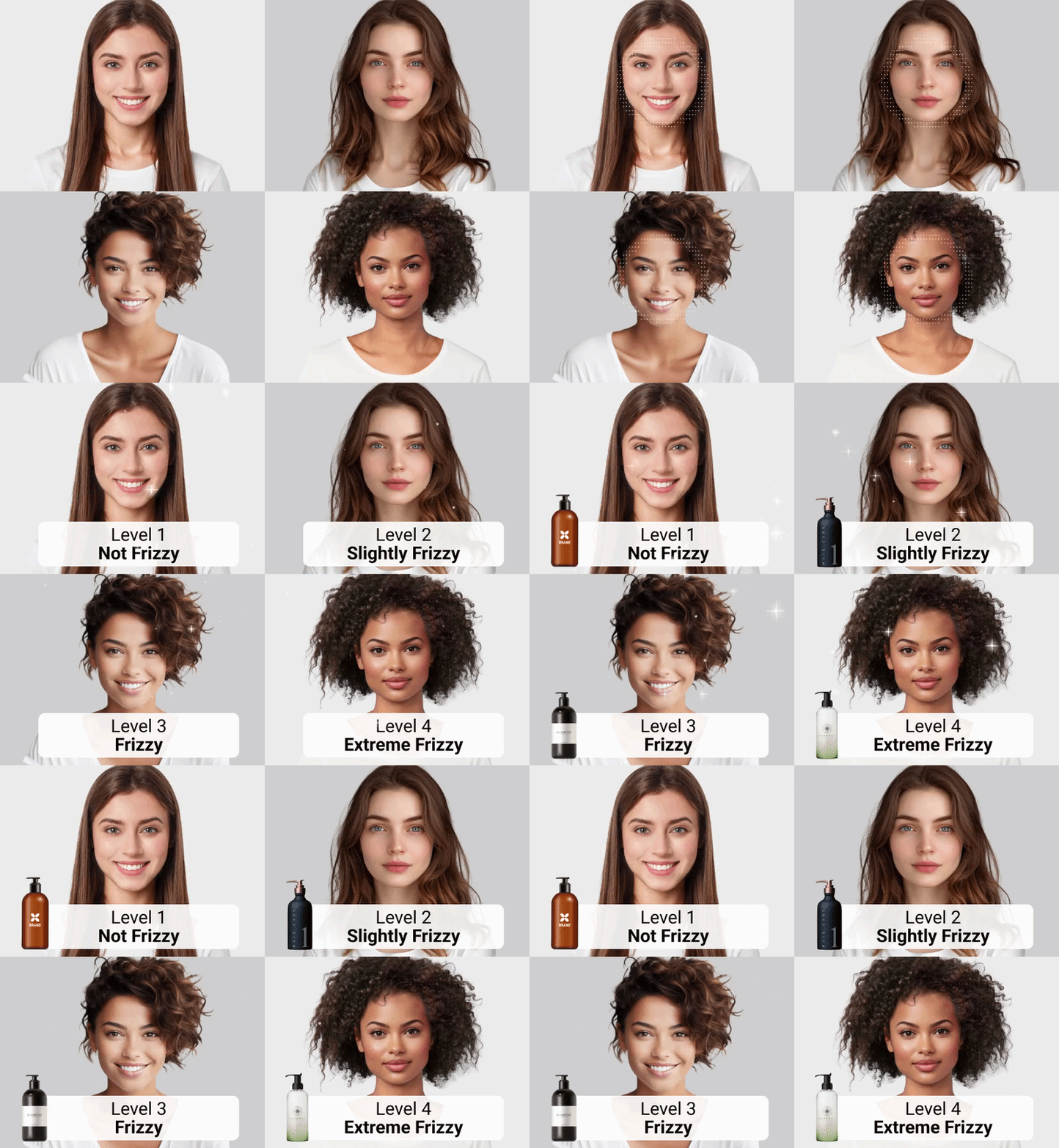
Find your true hair type in seconds with Perfect Corp's AI Hair Type Analyzer.
Table of Contents
- What Does "Hair Type" Actually Mean?
- How Do You Determine Your Hair Type at Home in 4 Tests?
- What Are the 4 Hair Types and 12 Subtypes?
- Why Is Self Diagnosing Your Hair Type So Often Wrong?
- How Do You Determine Your Hair Type With AI?
- Can You Have More Than One Hair Type?
- Does Your Hair Type Change Over Time?
- How Are Brands Using Hair Type Detection?
- How Do You Turn Your Hair Type Into a Routine That Works?
- FAQ
What Does "Hair Type" Actually Mean?
Your hair type is the combination of four measurable traits: curl pattern (Type 1 straight through Type 4 coily), strand thickness (fine, medium, coarse), density (how many strands per square inch of scalp), and porosity (how readily the cuticle absorbs and holds moisture). Curl pattern alone is only a quarter of the picture.
That distinction matters more than it sounds. Two people can both be textbook 3B curly and need completely opposite products, because one has fine, low density, high porosity hair that drowns under a heavy cream, and the other has coarse, high density, low porosity hair that shrugs off anything lighter than a butter. Same curl pattern. Different hair.

Hair type vs. hair texture vs. hair density: what is the difference?
These three get used interchangeably in product marketing, which is exactly why shoppers end up confused at the shelf. Here is the clean version.
| Term | What it measures | How it is scaled | How you test it |
|---|---|---|---|
| Hair type (curl pattern) | The shape your strand grows in | Type 1A to 4C | Wash, air dry, observe |
| Hair texture (thickness) | The diameter of one single strand | Fine, medium, coarse | Single strand vs. sewing thread |
| Hair density | How many strands you have per area of scalp | Low, medium, high | Ponytail circumference, scalp visibility |
| Porosity | How fast the cuticle takes in and loses water | Low, normal, high | Float test, dry time test |
| Scalp condition | Oil production and sensitivity at the root | Dry, balanced, oily | 48 hour post wash check |
You can be fine and coarse in different sections. You can be high density and low porosity at once. None of these traits cancel each other out, and a good diagnosis reports all of them.
How Do You Determine Your Hair Type at Home in 4 Tests?
Run all four. Skipping any one of them is how people end up mislabeled. Total time is about 20 minutes of active work plus one air dry cycle.
Test 1: What does the wash and air dry test reveal about your curl pattern?
Wash with a clarifying shampoo to strip out silicone and product buildup, because leftover product flattens waves and stretches curls into a straighter pattern than you actually have. Rinse, gently squeeze out water with a towel, then apply nothing at all. No cream, no gel, no oil. Let hair air dry completely without touching it, brushing it, or tucking it behind your ears.
Then read the result:
- Dries flat and straight with no bend: Type 1
- Dries with an S shape or loose bends: Type 2
- Dries into defined loops or spirals you could wrap around a finger: Type 3
- Dries into tight coils, zig zags, or dense springs: Type 4
The most common mistake here is diluting the test. Air drying with product on is a product test, not a hair test.

Test 2: How do you test whether your hair is fine, medium, or coarse?
Pull one shed strand (from your brush, not from your head) and lay it on a flat white surface next to a piece of standard sewing thread. Compare the width.
- Thinner than the thread: fine hair. It tangles easily, loses volume fast, and gets weighed down by heavy conditioners.
- About the same width: medium hair. The most forgiving category and the one most products are formulated around.
- Noticeably thicker than the thread: coarse hair. Strong, resilient, needs real moisture to stay soft, and resists color and heat styling.
Test three strands from three different areas of your head. Nape hair is frequently finer than crown hair, and one strand is not a sample.
Test 3: How do you measure your hair density at home?
Two quick methods, and they should agree with each other.
Scalp visibility check: stand in front of a mirror in bright light with dry, unstyled hair. Without parting it, look at your crown. If you can easily see scalp through the hair, you are low density. If you see scalp only where you deliberately part, medium. If scalp is hard to find at all, high density.
Ponytail circumference: gather all your hair into a single ponytail at the back of your head and measure the circumference of the base with a flexible tape.
| Ponytail circumference | Density | What it means for your routine |
|---|---|---|
| Under 2 inches | Low | Volumizing, lightweight formulas; avoid heavy oils at the root |
| 2 to 4 inches | Medium | Most standard formulations work as directed |
| Over 4 inches | High | Section your hair when applying; expect to use more product |

Find your true hair type in seconds with Perfect Corp's AI Hair Type Analyzer.
Density is the trait people confuse most often with thickness. A person can have a huge amount of very fine hair, which reads as "thick hair" in the mirror and behaves like fine hair in the bottle.
Test 4: How do you run the hair porosity float test?
Fill a clear glass with room temperature water. Drop in a single clean shed strand. Wait two to four minutes.
- Floats on the surface: low porosity. The cuticle is tightly sealed, so moisture struggles to get in and products tend to sit on top. Use lighter formulas and gentle heat to help absorption.
- Sinks slowly to the middle: normal porosity. Holds moisture and takes color predictably.
- Sinks fast to the bottom: high porosity. The cuticle has gaps, usually from color, heat, or mechanical damage, so hair soaks water in and loses it just as quickly. Prioritize protein and sealing layers.
One caveat worth knowing: the float test is directional, not laboratory grade. Surface tension and residual product can hold a strand up regardless of true porosity. Cross check with the dry time test. Hair that is still damp three hours after washing skews low porosity. Hair that is bone dry in 30 minutes skews high.
What Are the 4 Hair Types and 12 Subtypes?
The classification system runs from Type 1 (straight) to Type 4 (coily), with each type splitting into A, B, and C subtypes based on how tight the pattern gets. A is the loosest within its type, C is the tightest.
| Type | Pattern | Visual cue | Biggest care challenge |
|---|---|---|---|
| 1A | Straight, fine | No bend, very soft, hard to hold a curl | Gets oily and flat within a day |
| 1B | Straight, medium | Straight with slight body at the ends | Root volume |
| 1C | Straight, coarse | Straight but thick, occasional wave underneath | Frizz in humidity |
| 2A | Loose waves | Gentle bend starting mid length | Waves fall flat easily |
| 2B | Defined S waves | Clear S shape from mid shaft down | Frizz at the crown |
| 2C | Thick waves with some curl | S waves starting at the root, a few loose spirals | Frizz plus uneven pattern |
| 3A | Loose ringlets | Large loops, roughly sidewalk chalk width | Loses definition when touched |
| 3B | Springy spirals | Loops about the width of a marker | Dryness mid shaft |
| 3C | Tight corkscrews | Densely packed pencil width curls | Shrinkage and tangling |
| 4A | Defined coils | Springy coils roughly crochet needle width | Moisture retention |
| 4B | Zig zag bends | Sharp angles rather than curves | Breakage at the bend points |
| 4C | Tightest coils | Very little visible definition when dry, heavy shrinkage | Fragility and up to 75% shrinkage |

Type 1: straight hair
Straight hair has an oval to round follicle shape and the shortest path from scalp to end, which means scalp oil travels down the strand fast. That is why Type 1 hair looks greasy sooner than any other type and why dry shampoo sells so well in this segment. The upside is shine. Light reflects off a straight cuticle in a continuous line.
Type 2: wavy hair
Wavy hair sits in the frustrating middle. It is heavy enough to be pulled straight by product weight, and textured enough to frizz when humidity climbs. Type 2 shoppers churn through products faster than any other group, mostly because they get diagnosed as straight and handed the wrong formula.
Type 3: curly hair
Curly hair forms loops with a distinct circumference you can actually measure against everyday objects, which is the fastest way to separate 3A from 3C. The cuticle lifts at every turn of the curl, so Type 3 loses moisture through the shaft and needs sealing, not just hydration.
Type 4: coily hair
Type 4 hair has the most cuticle layers and the most bends per inch, which makes it simultaneously the strongest looking and the most fragile. Every bend is a potential break point. Shrinkage can reach up to 75%, so a person with 12 inches of hair may see three inches in the mirror, and that alone causes constant mislabeling in self assessment.
Why Is Self Diagnosing Your Hair Type So Often Wrong?
Because you are grading yourself from a bad seat. You see your hair styled, in your bathroom lighting, after your habits have shaped it for years. You cannot see your own crown pattern, you cannot compare your strand to a population baseline, and you almost certainly cannot separate your natural pattern from heat damage you have been layering on since high school.
The recurring failure modes look like this.
| Failure mode | What goes wrong | Result |
|---|---|---|
| Product residue | Silicone and oil buildup weigh the pattern down | Curly gets read as wavy, wavy as straight |
| Heat damage | Repeated styling permanently loosens the pattern in the damaged sections | People assume their natural type is looser than it is |
| Sampling one section | Only the front or the visible top is assessed | Nape and crown differences get missed entirely |
| Confusing density with thickness | A lot of fine hair reads as coarse hair | Overly heavy products, flat greasy result |
| Shrinkage illusion | Type 3C and 4 hair looks far shorter and tighter when dry | Subtype gets pushed one or two steps too tight |
| Quiz bias | Self reported answers reflect how you want your hair to behave | The quiz confirms your assumption instead of testing it |

That last one is the quiet problem with the traditional hair quiz. A quiz cannot see your hair. It can only score your description of your hair, which means the output is only as accurate as the self assessment you were trying to verify in the first place. We unpack that gap further in our breakdown of the complete hair chart.
How Do You Determine Your Hair Type With AI?
An AI hair analyzer looks at an actual photo of your hair and returns measured attributes instead of self reported ones. You upload or capture a photo, the model reads the image, and within about a second you get a curl pattern classification, a texture reading, a density estimate, and in most implementations a frizziness or damage score alongside it.
What does an AI hair analyzer actually measure?
Perfect Corp's AI hair type analysis was trained on a dataset of tens of thousands of real hair images spanning the full 1A to 4C range, and it reads several attributes at once rather than forcing a single label:
- Curl pattern: over 10 distinct patterns across the four main types, including mixed textures in the same head of hair
- Texture and thickness: fine, medium, or coarse strand character
- Density: relative fullness read from the image rather than guessed from a ponytail
- Frizziness: a graded score, useful for tracking improvement over weeks rather than a yes or no answer
- Scalp and root condition: available in the fuller diagnostic suite for salon and clinic use cases

Find your true hair type in seconds with Perfect Corp's AI Hair Type Analyzer.
The result is consistent in a way human judgement is not. The same photo returns the same answer every time, which is what makes the output usable as a data point rather than an opinion.
How do you get an accurate AI hair scan in 30 seconds?
- Start with clean, product free, fully air dried hair. Same rule as the manual test. The model reads what is in front of it, so buildup skews the result.
- Shoot in diffuse natural light. Near a window is ideal. Direct sun blows out texture detail and harsh overhead light exaggerates frizz.
- Capture the back and the side, not just the front. Your crown pattern usually differs from your hairline, and the back of your head is the part you never actually see.
- Keep hair loose and unstyled. No clips, no tucking, nothing pulled back.
- Run it twice on different days. Two matching results give you confidence. Two different results tell you something about your styling habits.

You can run this on your own hair right now with the AI hair type analyzer demo and compare the output against the four manual tests above.
Manual tests vs. hair quiz vs. AI analysis: which method wins?
| Method | Time | Reads real hair? | Repeatable? | Best for |
|---|---|---|---|---|
| 4 manual tests | 20 min plus air dry | Yes | Depends on the tester | Understanding why your hair behaves the way it does |
| Traditional quiz | 2 min | No, self reported | Yes, but repeats your bias | Rough starting point only |
| Salon consultation | 15 to 30 min | Yes | Varies by stylist | Cut and color decisions |
| AI photo analysis | Around 1 second | Yes, from the image | Yes, identical output per photo | Multi attribute reading and product matching at scale |
The honest answer is that they stack. Run the manual tests once so you understand your own hair, then use AI analysis for the repeatable measurement and for tracking change over time.
Try it yourself: test the AI Hair Analysis API in the AI Playground and see the raw attribute output before you build anything on top of it.
Can You Have More Than One Hair Type?
Yes, and most people do. Mixed texture is the norm, not the exception, which is precisely what the single label chart approach fails to capture.
The typical pattern map looks like this:
- Crown: usually the loosest zone, since it carries the most weight and gets the most heat exposure
- Nape: frequently the tightest and finest, and the section people forget exists
- Hairline and temples: often finer and more fragile, easily mistaken for damage
- Sides: the zone most affected by sleeping position and daily tucking habits

Find your true hair type in seconds with Perfect Corp's AI Hair Type Analyzer.
Practically, this means you should style in sections rather than treating your whole head as one type. It also explains why a product can work beautifully on the top of your head and do nothing underneath. Multi attribute AI analysis handles this natively, since it reports the mixed textures it finds instead of averaging them into one number.
Does Your Hair Type Change Over Time?
Your curl pattern is genetically set by follicle shape, but the way it actually presents shifts throughout your life. Hormones and structural changes both play a role.
| Trigger | Typical effect on hair | Reversible? |
|---|---|---|
| Puberty | Straight hair frequently develops waves or curls | Permanent shift |
| Pregnancy and postpartum | Density and pattern both change, often for 6 to 18 months | Usually reverses |
| Menopause | Strands get finer, density drops, curl can loosen | Largely permanent |
| Chemical treatment and color | Porosity rises immediately, curl definition loosens | Only by growing it out |
| Repeated heat styling | Localized pattern loss in the styled sections | Only by growing it out |
| Medication and thyroid changes | Texture and density can both shift noticeably | Often reverses with treatment |

The practical takeaway: re-test annually, and re-test after any of the events above. A hair type diagnosis from four years ago is a historical document, not a routine.
How Are Brands Using Hair Type Detection?
The reason this matters commercially is that hair type is the single strongest predictor of whether a haircare purchase gets repurchased. When a customer buys the wrong formula, the product does not fail. The diagnosis did. Perfect Corp works with 800+ brand partners across beauty and personal care, and hair diagnostics has become one of the fastest moving segments in that portfolio.
| Deployment | What it does | Business outcome |
|---|---|---|
| Ecommerce product finder | Replaces the self reported quiz with a photo based diagnosis | Higher confidence at checkout, fewer wrong purchases |
| Salon intake tool | Gives the stylist an objective baseline before the consultation | Faster consults, better service upsell |
| Subscription and custom formula brands | Feeds measured attributes into the formulation logic | Lower churn on personalized SKUs |
| Progress tracking in app | Re-scans frizz and texture scores over weeks | Proof of efficacy, strong retention hook |
| Returns reduction | Matches formula weight to density and porosity before shipping | Fewer wrong fit returns |

All of it runs on the same underlying model, delivered as an API or SDK, and it drops into an existing product finder flow without rebuilding the storefront. If you want to see what the full diagnostic stack looks like alongside skin and face analysis, browse our interactive demo showcase.
Ready to build? Contact Perfect Corp. for a demo and we will walk through the attribute output, latency, and integration path for your stack.
How Do You Turn Your Hair Type Into a Routine That Works?
A hair type diagnosis is only useful if it changes what you put on your head. Here is the translation layer.
| Your reading | Prioritize | Avoid |
|---|---|---|
| Type 1, fine, low density | Lightweight volumizers, root focused dry shampoo | Heavy oils, thick masks at the root |
| Type 2, medium, medium density | Light mousse, sea salt spray, air drying | Silicone heavy serums that drag waves flat |
| Type 3, any thickness | Leave in conditioner plus a defining gel, scrunch and diffuse | Brushing dry hair, sulfate heavy shampoos |
| Type 4, coarse, high density | Rich butters, sectioned application, protective styling | Detangling dry, high tension styles |
| Low porosity, any type | Humectants, warm towel to help absorption, lighter layers | Protein heavy products, cold water only routines |
| High porosity, any type | Protein treatments, oil as a sealing final layer | Additional heat, frequent chemical services |

Find your true hair type in seconds with Perfect Corp's AI Hair Type Analyzer.
Change one variable at a time and give it two weeks. Hair responds slowly, and switching four products at once tells you nothing about which one worked.
Frequently Asked Questions
How do I figure out what my hair type is?
Wash with a clarifying shampoo, apply nothing, let hair air dry fully, then read the pattern: flat is Type 1, S waves are Type 2, defined loops are Type 3, tight coils are Type 4. Then test strand thickness against a sewing thread, measure your ponytail circumference for density, and run the float test for porosity. All four readings together are your hair type. An AI hair analyzer returns the same set of attributes from a photo in about a second.
What are the 4 hair types?
Type 1 is straight, Type 2 is wavy, Type 3 is curly, and Type 4 is coily. Each splits into A, B, and C subtypes based on how tight the pattern is, giving 12 total classifications from 1A through 4C.
How do I know if my hair is 2A, 2B, or 2C?
Look at where the bend starts and how defined it is. 2A waves begin around mid length and are easily pulled straight. 2B forms a clear S shape from the mid shaft with some frizz at the crown. 2C starts waving at the root, is noticeably thicker, and includes a few loose spirals mixed in. If you cannot tell 2C from 3A, check whether any section forms a closed loop. A closed loop pushes you into Type 3.
What is the rarest hair type?
Type 1A, perfectly straight fine hair with no bend at all, is generally considered the rarest, with most people who think they have it actually landing in 1B. Type 4C is often called rare too, but it is common within specific populations and only looks scarce in global averages.
What is the most common hair type?
Type 2, wavy hair, is the most widely reported worldwide, with 1B and 2B being the most frequently identified individual subtypes. It is also the type most often misidentified as straight, because product buildup and heat styling flatten the wave.
Is hair texture the same as hair type?
No. Hair type refers to your curl pattern, from 1A to 4C. Hair texture refers to the diameter of an individual strand: fine, medium, or coarse. You can have coarse straight hair or fine coily hair. Product marketing blurs the two constantly, which is a large part of why shoppers pick wrong.
How do I test my hair porosity at home?
Drop one clean shed strand into a glass of room temperature water and wait a few minutes. Floating means low porosity, sinking to the middle means normal, sinking quickly means high. Cross check with dry time: still damp after three hours suggests low porosity, bone dry in half an hour suggests high.
Should my hair be wet or dry when I determine my hair type?
Fully dry, and air dried rather than blow dried. Wet hair stretches under its own weight and reads as a looser pattern than it actually is, which is the single most common reason people underestimate their type by a full step.
Can your hair type change over time?
Your follicle shape stays largely fixed, but how your hair presents changes with puberty, pregnancy, menopause, thyroid shifts, medication, chemical services, and heat damage. Density and porosity change far more readily than curl pattern. Re-test once a year and after any major hormonal or chemical event.
How can I tell if my hair is fine, medium, or coarse?
Compare a single shed strand to a piece of standard sewing thread on a white surface. Thinner is fine, similar is medium, thicker is coarse. Sample three strands from three areas, because nape hair is often finer than crown hair on the same head.
Can I have more than one hair type?
Yes, and it is the normal case. Crown, nape, hairline, and sides commonly differ by a full subtype or more. Style in sections rather than treating your whole head as one type, and choose a diagnostic method that reports mixed textures instead of averaging them.
Is an AI hair type analyzer more accurate than a hair quiz?
A quiz scores your own description of your hair, so it can only reflect the assumption you were trying to check. AI photo analysis reads the actual image and returns curl pattern, texture, density, and frizz level as measured attributes, with the same input producing the same output every time. For repeatability and for multi attribute reading, AI wins clearly. A hands on stylist consultation still adds value for cut and color decisions.
How long does an AI hair analysis take?
Roughly one second per image on Perfect Corp's model, which is what makes it viable inside a live ecommerce product finder rather than as a separate step customers abandon.
The Bottom Line
Determining your hair type is not a single question with a single answer. It is four readings: pattern, thickness, density, and porosity, taken on clean, product free, air dried hair. Run the manual tests once so you understand the mechanics, then use AI analysis for a measurement you can repeat and track. For brands, that same measurement is the difference between a shopper who guesses and a shopper who buys with confidence.
Explore the AI Hair Type Analyzer and see what your hair actually reads as, or talk to our team about deploying it in your own product experience.