Author:



Disclaimer: Some images in this article may have been created or modified by AI
Fair skin is a gift and a trap. Almost any color shows up beautifully on it, which also means the wrong color shows up just as loudly. Pick a shade that fights your undertone and you look tired, flushed, or slightly unwell under office lighting. Pick one that matches and your skin suddenly looks brighter, clearer, and more awake.
The good news: you do not need to guess. Two things decide which hair colors flatter fair skin, your undertone and your natural contrast. Below you will find 20 shades sorted by undertone, the colors most likely to wash you out, and a way to preview every option on your own face before a stylist touches your hair. For salons and hair color brands, we also cover how AI shade matching turns this guesswork into a conversion tool.

In this guide:
- What is the best hair color for fair skin?
- What counts as fair skin, and what is your undertone?
- Why does contrast matter as much as undertone?
- What are the 20 best hair colors for fair skin?
- Which hair colors wash out fair skin?
- How do eye color and brows change the pick?
- How much upkeep does each shade need?
- How can you test a shade before you dye?
- Why are salons and brands using AI shade matching?
- FAQ
What Is the Best Hair Color for Fair Skin?
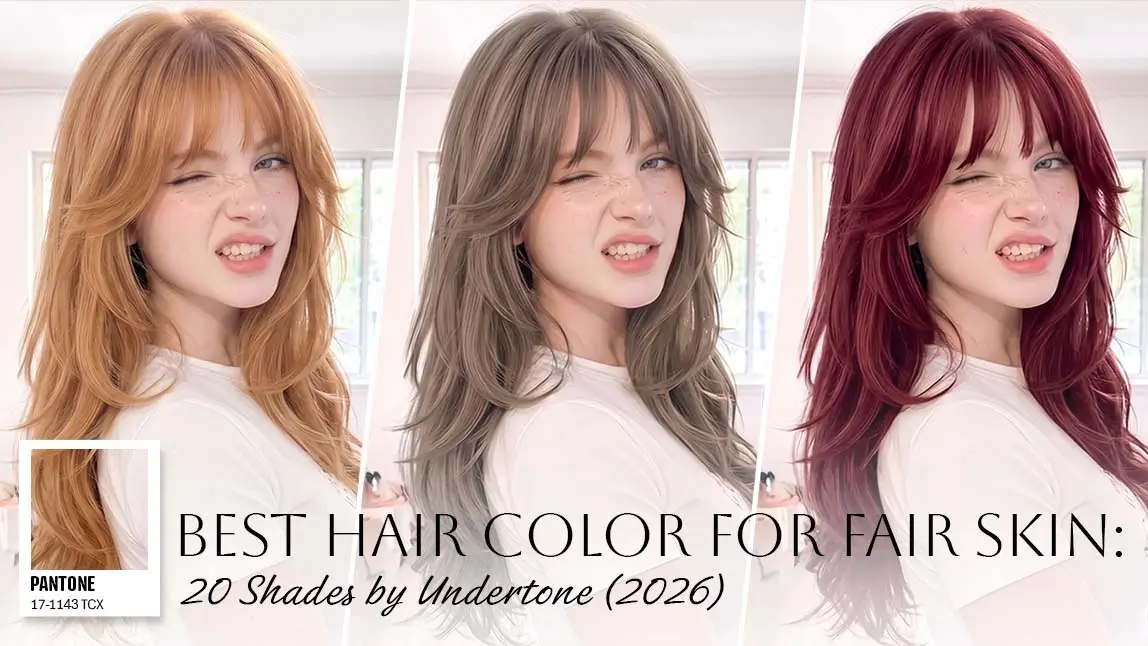
The best hair color for fair skin is one that matches your undertone. Cool fair skin looks best in ash blonde, platinum, mushroom brown, and burgundy. Warm fair skin glows in honey blonde, strawberry blonde, and copper. Neutral fair skin can wear champagne blonde, bronde, and milk chocolate brown, with room to borrow from both sides.
That is the short answer. The longer answer depends on how much contrast your face can handle, how much maintenance you want, and what your eyes and brows are doing. Let us work through each one.
What Counts as Fair Skin, and What Is Your Undertone?
Fair skin is the lightest group on most skin tone scales. It burns easily, tans slowly (if at all), and often shows visible veins at the wrist. On the Fitzpatrick scale, fair skin usually sits at Type I or Type II. If you want the full picture of where you fall, our skin tone chart guide breaks down every depth from porcelain to deep.

Find your undertone, then try matching shades in the hair color demo
Depth tells you how light you are. Undertone tells you which colors make that lightness look healthy. Try these three quick checks in natural daylight:
| Test | Cool undertone | Warm undertone | Neutral undertone |
|---|---|---|---|
| Wrist veins | Look blue or purple | Look green or olive | Hard to tell, a mix of both |
| Jewelry | Silver looks brighter on you | Gold looks brighter on you | Both look fine |
| White tee vs. cream tee | Stark white flatters you | Cream or ivory flatters you | Neither washes you out |
| Sun reaction | Burns, turns pink | Burns, then turns lightly golden | Burns, tans a little |
| Typical cheek color | Pink or rosy | Peachy or golden | Soft beige with a hint of both |
Still unsure? You are not alone. Undertone is notoriously hard to judge by eye, especially under warm bathroom bulbs. That is why many beauty brands now use AI to read it from a selfie. Our guide to AI skin tone detection explains how the technology separates depth from undertone and why it is more consistent than the vein test.
Why Does Contrast Matter as Much as Undertone?
Here is the part most hair color guides skip. Two people can share the same fair, cool skin and still need different hair colors, because one has dark brows and deep brown eyes while the other has pale brows and light blue eyes. That difference is called contrast, and it decides how far you can push lightness or darkness before the color starts wearing you.

- Low contrast (light eyes, light brows, light lashes): Soft, close-to-skin shades look natural. Think champagne, strawberry blonde, sandy blonde. Jet black can overwhelm you unless you commit to bold brows and makeup.
- Medium contrast (one feature is darker than the others): You have the widest range. Most blondes, light browns, and coppers work.
- High contrast (dark brows and eyes with fair skin): Deep shades like espresso, soft black, and burgundy look striking and intentional. Very pale blonde can make your brows look drawn on unless you lighten them too.
A quick rule of thumb: the further your new hair color sits from your natural brow color, the more upkeep it takes to look intentional.
What Are the 20 Best Hair Colors for Fair Skin?
We grouped these by undertone so you can skip straight to your section. Each pick includes who it suits best and what to ask your colorist for.
Cool Fair Skin: 6 Shades
1. Icy platinum. The classic for cool, pink-leaning fair skin. Platinum reads clean and bright against rosy cheeks. Ask for a cool platinum with a violet toner. Expect several lightening sessions if you start from brown.

See how ash and platinum shades render in our AI hair color try-on
2. Ash blonde. Ash blonde neutralizes redness, which makes it a favorite for fair skin that flushes easily. Ask for a level 8 or 9 ash blonde with a matte finish.
3. Mushroom brown. A smoky, earthy brown with no visible warmth. It is the cool brunette that will not turn brassy against pink skin. Ask for a light ash brown with a gray-beige toner.
4. Cool espresso. For high contrast faces only. A deep brown with blue undertones makes fair skin look like porcelain. Ask for a level 3 cool brown and keep it glossy.
5. Burgundy. The red for cool undertones. Wine and berry tones echo the natural pink in your cheeks instead of fighting it. Ask for a violet-red rather than an orange-red.
6. Soft black. Softer than jet black and much easier to wear. It works if you have dark brows and like a dramatic, gothic edge. Ask for a level 2 with a slight blue reflect.
Warm Fair Skin: 7 Shades
7. Honey blonde. Golden without going yellow. Honey blonde adds warmth to fair skin that looks sallow in winter. Ask for a level 8 golden blonde with soft caramel ribbons.

8. Golden blonde. Brighter and sunnier than honey. Great for peachy skin and light green or hazel eyes. Ask for a warm golden toner, not a yellow one.
9. Strawberry blonde. Arguably the most flattering shade on warm fair skin, because it mimics the color nature often pairs with it. Ask for a copper-blonde blend at level 8.
10. Copper. A true head-turner. Copper makes freckles look intentional and green eyes look greener. Ask for a bright copper with gold reflect.
11. Light auburn. Red-brown with warmth. It is softer than copper and easier to grow out. Ask for a level 6 or 7 auburn with gold, not violet.
12. Warm chestnut. The brunette for warm fair skin. Chestnut adds depth without turning you pale. Ask for a level 5 golden brown.
13. Caramel balayage. If you are a natural brunette, hand-painted caramel pieces brighten your face without a full commitment to blonde. Ask for face-framing caramel on a light brown base.
Neutral Fair Skin: 5 Shades
14. Champagne blonde. Pale, soft, and slightly pearly. It is neither warm nor cool, which is exactly why it suits neutral fair skin. Ask for a beige blonde with a touch of pearl.

Browse every Perfect Corp virtual try-on in the showcase
15. Bronde. The middle ground between brown and blonde. Bronde is low drama and grows out gracefully. Ask for a light brown base with blended blonde highlights.
16. Sandy beige blonde. A natural, beachy blonde with balanced warmth. Ask for a level 8 neutral blonde.
17. Milk chocolate brown. Richer than mushroom, softer than chestnut. It flatters neutral fair skin and almost every eye color. Ask for a level 5 or 6 neutral brown.
18. Rose gold. A fashion shade that still reads soft. Neutral and cool-leaning fair skin can wear it beautifully. Ask for a pale pink-copper blend on a light blonde base.
Low-Commitment Picks for Any Undertone: 2 Shades
19. Dirty blonde with a root melt. A darker root melting into dark blonde lengths. It flatters almost everyone with fair skin and buys you 10 to 12 weeks between appointments.

20. Your natural shade, one level brighter. Not exciting on paper, but often the most flattering result. A gloss or a few babylights one level lighter than your natural color lifts fair skin without changing who you are.
Want to see a few of these on your own face before you commit? Open the hair color try-on demo, upload a selfie, and flip between shades in seconds.
Which Hair Colors Wash Out Fair Skin?
No color is banned. But a few shades consistently make fair skin look flat, red, or tired. If you love one of these, the swap column gets you a similar vibe with less risk.

| Risky shade | Why it can wash you out | Safer swap |
|---|---|---|
| Brassy orange-blonde | Picks up redness in fair skin and makes it look irritated | Honey blonde or strawberry blonde |
| Flat medium brown | No warmth or coolness, so it makes skin look gray and dull | Milk chocolate or mushroom brown |
| Jet black on low contrast faces | Creates a harsh frame that makes light brows disappear | Soft black or cool espresso, with filled brows |
| Yellow-gold blonde on cool skin | Clashes with pink undertones and makes skin look ruddy | Ash or champagne blonde |
| Very ashy blonde on warm skin | Drains warmth, so peachy skin can look sallow | Golden or sandy beige blonde |
| Orange-red on cool skin | Fights the natural pink in your cheeks | Burgundy or berry red |
Notice the pattern? The problem is rarely the color family. It is the undertone inside the color. That is good news, because a skilled colorist can almost always tone a shade toward your undertone.
How Do Eye Color and Brows Change the Pick?
Your eyes are the second filter after undertone. The right hair color makes them look brighter. The wrong one makes them fade into the background.
| Eye color | Hair colors that make eyes pop | Why it works |
|---|---|---|
| Blue | Platinum, ash blonde, cool espresso, copper | Cool tones echo blue; copper is the opposite on the color wheel and makes blue intense |
| Green | Copper, auburn, strawberry blonde, burgundy | Red tones sit opposite green and intensify it |
| Hazel | Golden blonde, caramel, warm chestnut | Golden tones pull out the amber flecks in hazel eyes |
| Brown | Milk chocolate, bronde, soft black, burgundy | Rich browns and deep tones add depth without competing |
| Gray | Champagne, mushroom brown, icy platinum | Soft, smoky shades keep gray eyes looking silvery rather than dull |
Brows matter too. If you go more than three levels lighter or darker than your natural brow, plan on tinting or filling your brows so your face still looks balanced.
How Much Upkeep Does Each Shade Need?
Fair skin often comes with fine, light hair, which lifts quickly but also shows regrowth and fading faster. Be honest about how often you want to sit in the salon chair.
| Shade family | Typical salon visit | Main maintenance task | Commitment level |
|---|---|---|---|
| Icy platinum | Every 4 to 6 weeks | Root touch-ups, purple shampoo, bond repair treatments | High |
| Ash and champagne blonde | Every 6 to 8 weeks | Toner refresh to stop brassiness | Medium to high |
| Copper and strawberry | Every 4 to 6 weeks | Gloss refresh, red fades fastest | Medium to high |
| Burgundy and auburn | Every 6 weeks | Color-safe shampoo, cool water rinses | Medium |
| Browns and bronde | Every 8 to 10 weeks | Gloss every few months | Low to medium |
| Root melt or balayage | Every 10 to 12 weeks | Occasional toner | Low |
How Can You Test a Shade Before You Dye?
Swatch books are tiny. Celebrity photos come with professional lighting and a team of colorists. Neither tells you how a shade will look against your own fair skin on a Tuesday morning. A virtual try-on does.

Build this try-on into your own app with the YouCam API
Here is a simple three-step routine that works with any AI hair color tool:
- Take a clean selfie in daylight. Face a window, skip filters, and pull your hair off your face so the tool can see your skin clearly.
- Shortlist by undertone. Try three shades from your undertone group above, plus one wildcard. Comparing side by side is where the answer usually becomes obvious.
- Check your skin, not just your hair. The right shade makes your skin look clearer and your eyes brighter. If you notice more redness or dark circles, move on.
Perfect Corp's AI hair color try-on detects your starting hair color, from dark brunette to platinum, and renders how a new shade layers on top of it. You can test single colors, two-tone ombre, and multi-color looks, then adjust coverage and shine. For a deeper look at how these tools render color, read our hair color simulator guide.
Why Are Salons and Brands Using AI Shade Matching?
For shoppers, choosing a hair color is risky. For brands, that risk shows up as abandoned carts, unhappy clients, and box dye returns. AI shade matching takes the fear out of the decision, which is why hair color brands such as Aveda and Madison Reed use Perfect Corp's technology.

Bring AI hair color consultations to your salon or store
Here is what it changes for a business:
- Personalized recommendations. The tool can read skin tone and undertone, then surface shades that suit them. A fair, cool-skinned shopper sees ash and platinum first instead of scrolling through the entire shade catalog.
- Realistic previews. Because the AI factors in the shopper's current hair color, a brunette sees a realistic result, not a fantasy blonde that would take three appointments to reach.
- Faster salon consultations. Stylists can show a client five options in two minutes on a tablet or smart mirror, and agree on a direction before mixing a single bowl.
- Fast integration. The web module plugs into Shopify, Magento, and Salesforce sites, with mobile SDKs for iOS and Android and a RESTful API for custom builds.
Developers can test the hair color models directly in the YouCam API Playground. Brands planning a full rollout can contact Perfect Corp for a demo.
FAQ
What shade of blonde suits fair skin?
It depends on your undertone. Cool fair skin suits platinum, ash, and champagne blonde. Warm fair skin suits honey, golden, and strawberry blonde. Neutral fair skin can wear sandy beige blonde and bronde. If you are unsure, champagne is the safest starting point because it sits in the middle.
Does dark hair suit fair skin?
Yes, especially if you have dark brows or dark eyes. Cool espresso, soft black, and milk chocolate create a striking contrast that makes fair skin look luminous. If your brows and lashes are very light, choose a softer brown or plan to tint your brows.
Does pale skin look better with dark or light hair?
Neither wins by default. It comes down to contrast. Low contrast faces usually look best with light or medium shades, while high contrast faces can carry deep shades beautifully. Try both extremes in a virtual try-on and compare how your skin looks, not just your hair.
Can fair skin wear red hair?
Absolutely. Fair skin and red hair are a natural pairing. Warm undertones look great in copper, strawberry blonde, and light auburn. Cool undertones should lean toward burgundy and berry reds rather than orange-reds.
What colors wash out pale skin?
Brassy orange-blonde, flat medium brown with no tone, and jet black on low contrast faces are the most common culprits. Yellow blonde on cool skin and very ashy blonde on warm skin can also make pale skin look tired.
Should I dye my hair black if I have pale skin?
You can, but choose soft black rather than jet black unless you have naturally dark brows. Soft black has a little depth and reflect, so it frames fair skin without looking harsh. Expect visible regrowth, because the contrast against light roots shows quickly.
Why does my hair color look washed out with fair skin?
Usually the undertone of the dye does not match the undertone of your skin, or the shade is too close to your skin depth so there is no contrast. A toner that shifts the color warmer or cooler often fixes it without a full recolor.
What is a fair skin tone?
Fair skin is the lightest skin depth. It burns easily, tans very little, and often shows blue or green veins at the wrist. Fair skin can have cool, warm, or neutral undertones, and that undertone matters more than depth when choosing hair color.
Find Your Shade Before You Book
Fair skin has more flattering options than almost any other skin tone. The secret is matching your undertone, respecting your natural contrast, and seeing the result on your own face first. Start with three shades from your undertone group, test them in the Perfect Corp showcase, and walk into your salon appointment knowing exactly what to ask for.