Author: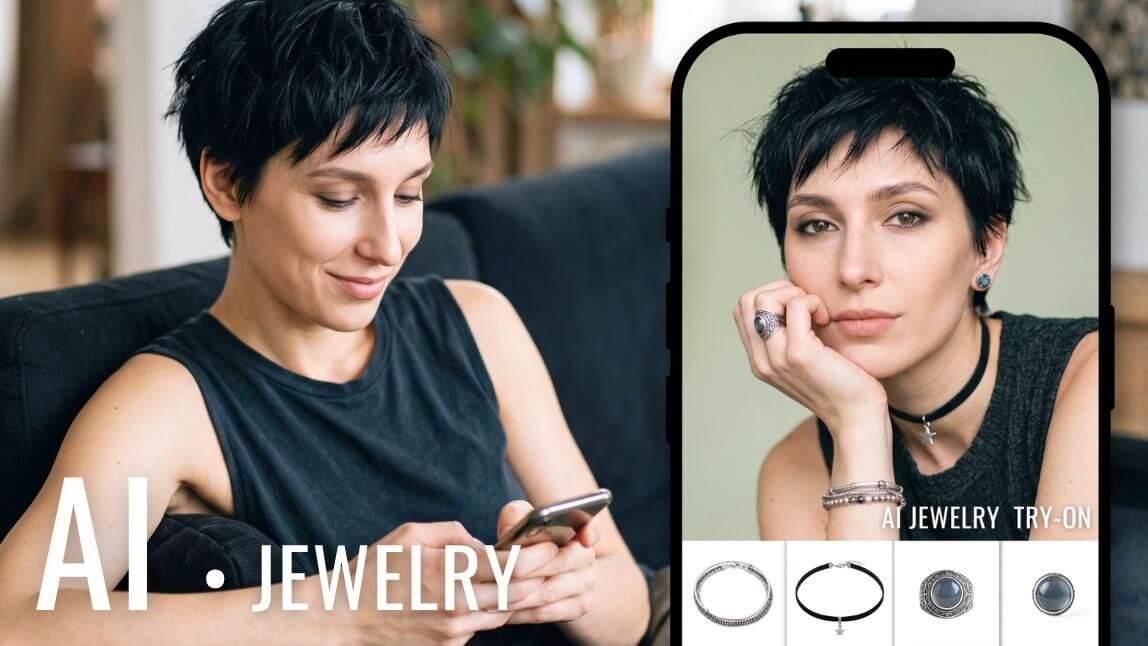
Disclaimer: Some images in this article may have been created or modified by AI
Jewelry used to be the one thing you could not buy online without a little prayer. Will the ring fit? Will the hoops look huge? Will that pendant sit at the collarbone or somewhere near the belly button? AI jewelry is quietly ending that guessing game. Today, AI helps brands sketch new collections in minutes, produce model shots without a studio, measure fingers from a phone camera, and let shoppers try on rings, earrings, necklaces, bracelets, and watches in real time.
For jewelry brands and retailers, that adds up to faster launches, lower content costs, more confident buyers, and fewer returns. This guide walks through every stage of the AI jewelry journey, from first idea to final checkout, with the tools, trade-offs, and API options that actually matter in 2026.
Table of Contents
- What Is AI Jewelry, Exactly?
- How Is AI Changing Jewelry Photography and Model Shots?
- How Does AI Jewelry Virtual Try-On Work?
- Can AI Really Measure Your Ring or Wrist Size?
- How Do Brands Turn One Product Photo Into a 3D Try-On?
- Which Type of AI Jewelry Tool Do You Actually Need?
- How Are Different Jewelry Businesses Using AI?
- What Does AI Jewelry Do for Sales and Returns?
- How Do You Add AI Jewelry Try-On to Your Store With an API?
- What Are the Limits and Risks of AI Jewelry?
- What Is Next for AI Jewelry?
- FAQ
What Is AI Jewelry, Exactly?
AI jewelry is the use of artificial intelligence to design, visualize, fit, and sell jewelry. It covers generative tools that turn text prompts into ring or necklace concepts, AI photography that places pieces on virtual models, and AR virtual try-on that uses computer vision to render jewelry on a shopper's own hand, ear, neck, or wrist in real time.
That is the short answer. The longer answer is that "AI jewelry" is not one tool. It is a stack of five different jobs, and most brands only need two or three of them.
| AI jewelry job | What it does | Who uses it most |
|---|---|---|
| Design generation | Turns a prompt or sketch into design concepts and renders | Designers, custom jewelers, product teams |
| AI photography | Creates product shots, lifestyle scenes, and model images | E-commerce and marketing teams |
| Virtual try-on | Renders jewelry on the shopper's body through the camera or a photo | Online and omnichannel retailers |
| Sizing | Estimates ring size or wrist size from a camera image | Ring, bracelet, and watch sellers |
| Personalization | Recommends styles based on the shopper and their choices | Retailers with large catalogs |
Think of it as a relay race. Design hands off to photography, photography hands off to try-on, and try-on hands off to checkout. The brands winning in 2026 are the ones that stopped treating each leg as a separate project.
How Does AI Jewelry Design Work?
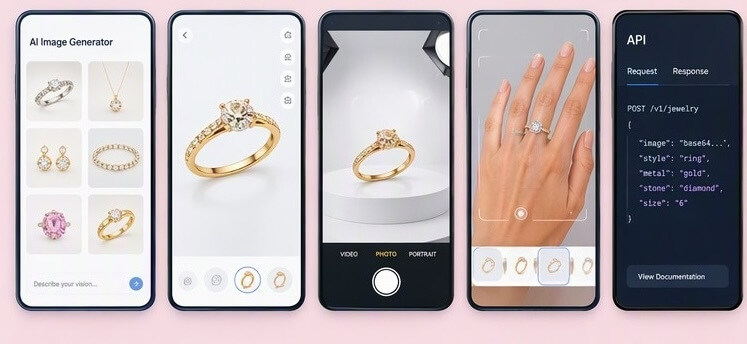
Explore the AI Jewelry Generator
AI jewelry design runs on generative models, most often diffusion models. You describe a piece ("an art deco emerald ring with a split shank in rose gold"), the model converts those words into weighted signals, then gradually turns random noise into an image that matches them. Run it again and you get a new variation. Tweak the prompt and the design shifts.
Speed is the headline. In a review published in GIA's Gems & Gemology, jewelry designer Michael Magee notes that generative AI can produce 16 or more design variations in roughly five minutes. That is a week of mood boards compressed into a coffee break.
Text to image: the idea machine
Text to image is where most people start. It is great for exploring directions, testing themes for a capsule collection, or showing a custom client three styles before lunch. It is less great at exact proportions, stone counts, and settings that a bench jeweler can actually build. Treat outputs as inspiration, not blueprints.
Sketch to render: keep the human hand
Many designers prefer uploading a rough pencil sketch and letting AI render it with metal, stones, and lighting. The silhouette stays yours. The polish comes faster. This workflow also makes ownership questions easier, because the core design starts with human input.
Image to 3D: the bridge to production
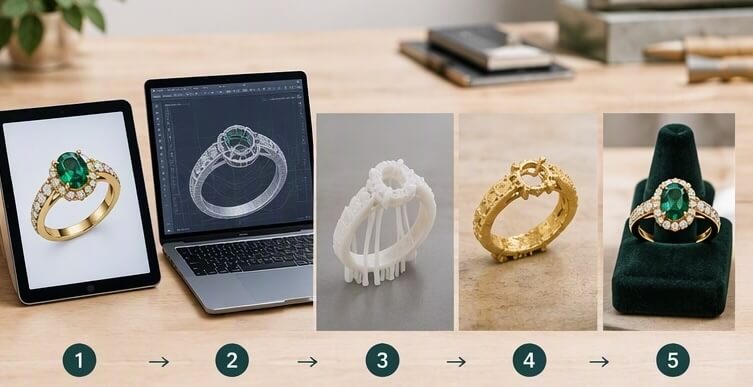
The newest frontier is converting 2D renders into depth maps or 3D meshes that CAD software can refine. It is still early, and complex pieces need a skilled CAD artist to clean up, but the gap between "pretty picture" and "castable file" is shrinking every quarter.
Contact us to turn flat photos into try-on assets
How Is AI Changing Jewelry Photography and Model Shots?
Jewelry photography is famously painful. Metals mirror everything in the room. Diamonds need precise lighting to sparkle instead of looking like frosted glass. And booking hand models for every new SKU gets expensive fast. AI photography tools promise studio-quality product shots, lifestyle scenes, and on-model images from a single clean product photo.
The "six fingers" problem
General image generators still struggle with hands. Extra knuckles, melted fingers, and rings that fuse into skin are common. For jewelry, where the hand is the stage, that is a deal breaker. Look for tools trained on jewelry and hands specifically, and always review every image before it goes live.
Reflections and scale
Two other quality checks matter. First, reflections: metal should reflect a believable environment, not random blobs. Second, scale: a 1.5 mm band should not look like a wedding band for a giant. If the AI cannot keep your product accurate, it is creating a trust problem, not solving a content problem.
Here is the catch with static AI photos, though. Even a perfect model shot shows the piece on someone else. The shopper still has to imagine it on their own hand. That is exactly the gap virtual try-on closes.
How Does AI Jewelry Virtual Try-On Work?
AI jewelry try-on combines three technologies. Computer vision detects the hand, ear, neck, or wrist and tracks it frame by frame. 3D rendering places the piece with correct angle, depth, and occlusion (so a ring disappears behind a finger when it should). Physically based rendering, or PBR, then simulates how gold, platinum, and gemstones actually respond to light, including sparkle and reflection.
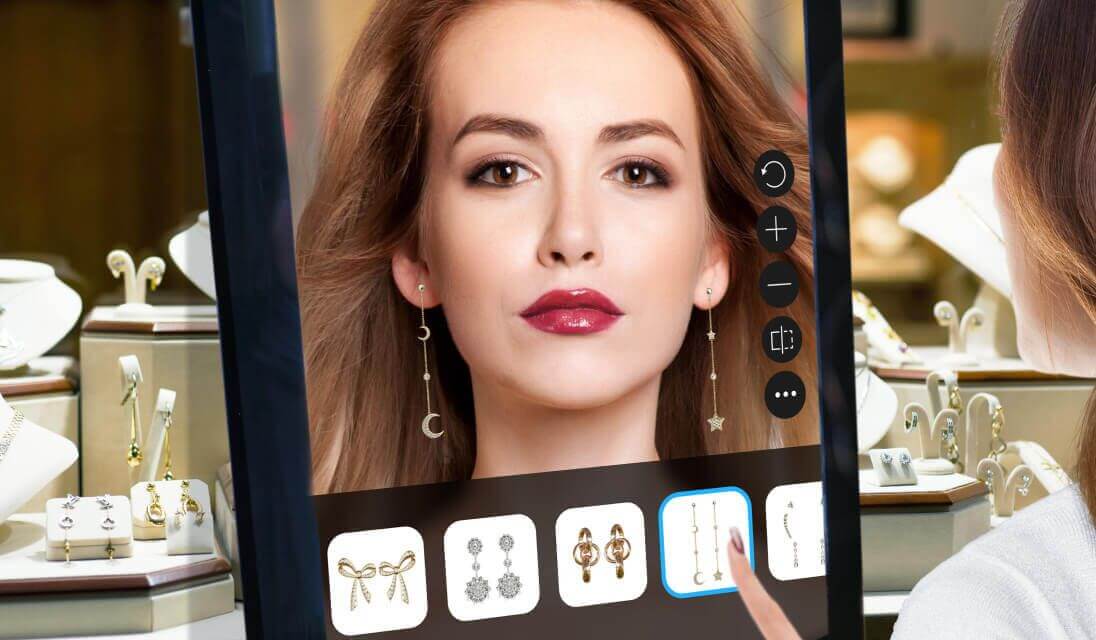
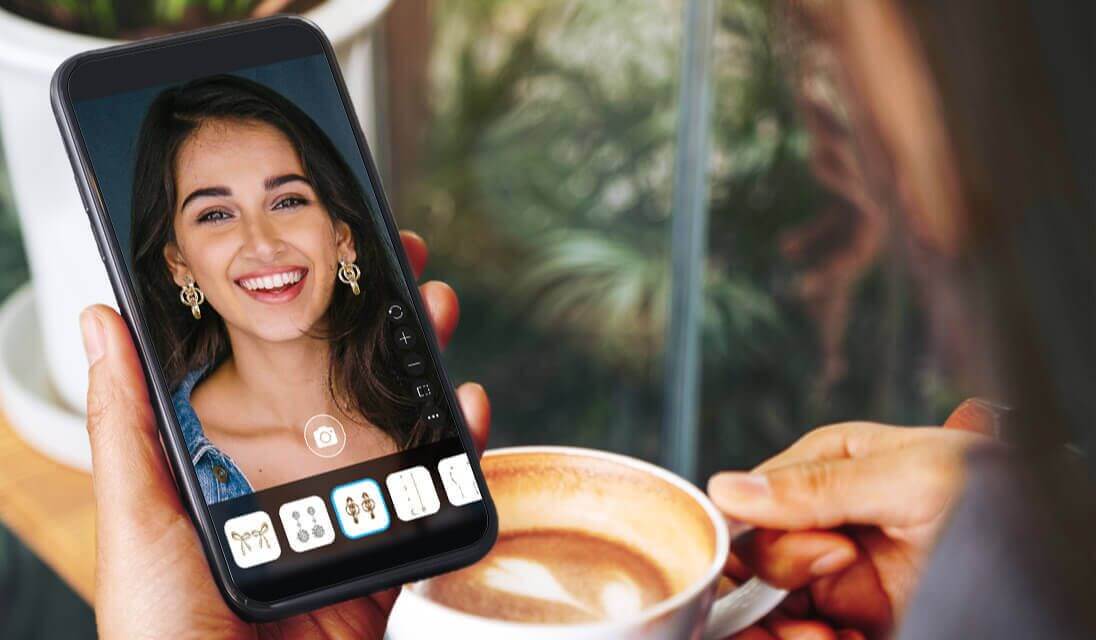
The result works in live camera mode or on an uploaded photo, on web, iOS, Android, desktop, and in store smart mirrors. No markers, no special hardware, just a phone camera.
How does virtual ring try-on work?

Explore AR Virtual Ring Try-On for your store
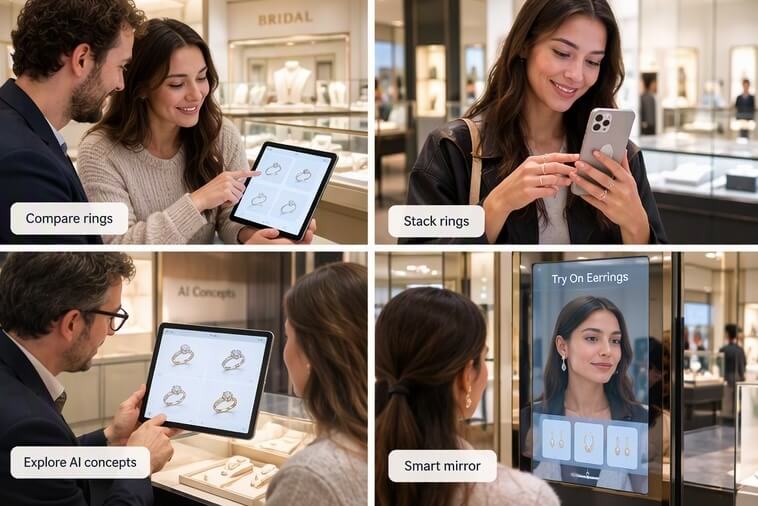
Rings are the hardest category because fingers move, bend, and overlap constantly. Perfect Corp.'s AR virtual ring try-on tracks bare fingers in real time and supports multi-finger stacking, so shoppers can build a full stack or compare an engagement ring with a wedding band side by side. Brands can use detailed 3D models with material variations like diamond, sapphire, gold, silver, and rose gold, or start from standard 2D product images.
How does virtual earring try-on work?
Build a curated ear stack in the earrings demo
Earrings add a twist: placement. The AR virtual earrings solution simulates 13 piercing placements across the lobe and cartilage, including helix, forward helix, conch, rook, daith, tragus, and industrial. Shoppers can mix studs, hoops, and cuffs into a curated ear stack, and motion physics lets drops and dangles swing naturally when they turn their head. That is a huge upgrade from a flat product photo of a single earring on white.
How does virtual necklace try-on work?
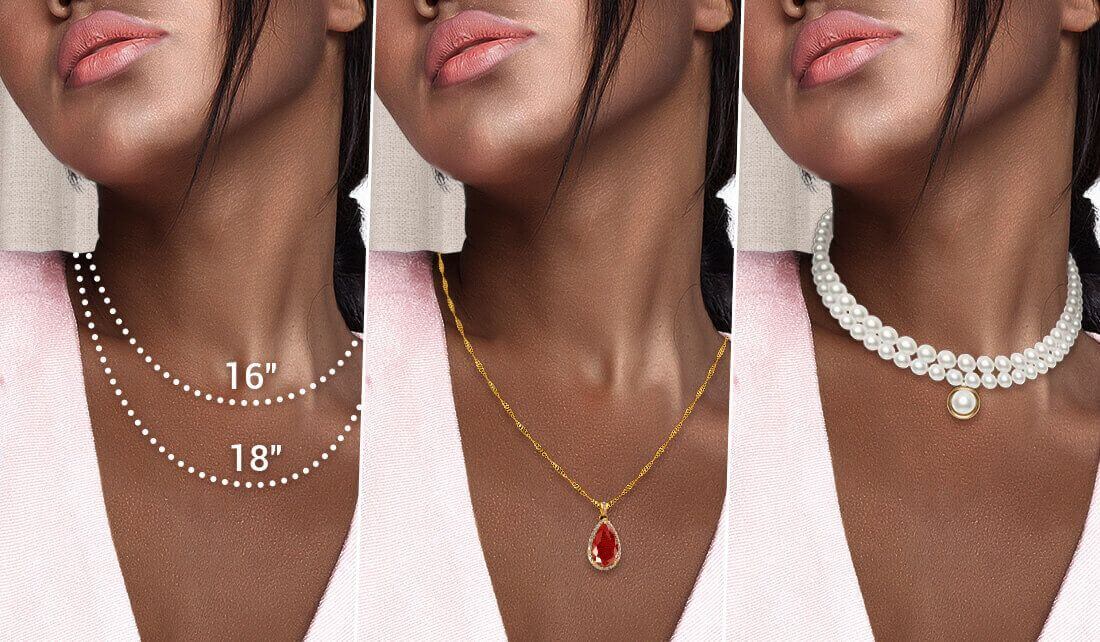
Necklaces are all about length and layering. A 16 inch chain and a 20 inch chain tell completely different stories. With AI virtual necklace try-on, shoppers can see exactly where a pendant lands against their neckline and stack chains for the layered look without ordering three lengths "just in case."
How does virtual bracelet and watch try-on work?
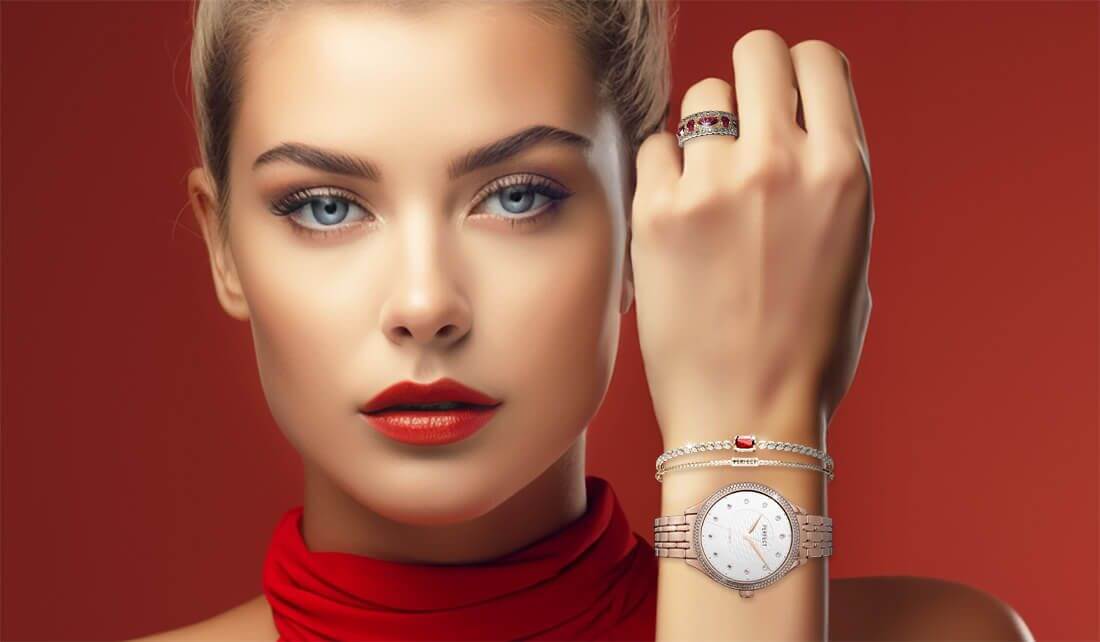
Contact us to add bracelet and watch try-on
Wrist pieces depend on proportion. A chunky cuff can overwhelm a slim wrist, and a 44 mm watch face might look oversized on some shoppers. AR bracelet try-on and watch try-on let people rotate their wrist and check fit, finish, and scale from every angle. It also opens the door to cross-selling, since shoppers can pair a watch with a bracelet stack in one session.
Can AI Really Measure Your Ring or Wrist Size?
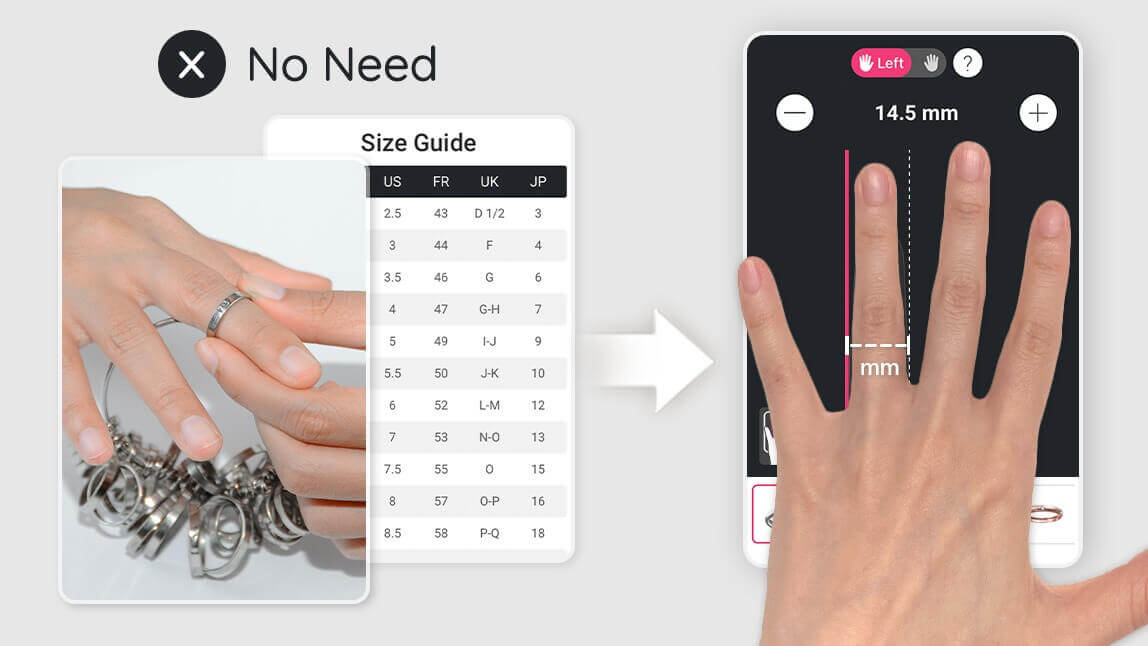
This is the part most "AI jewelry" guides skip, and it is where a lot of revenue hides. Wrong sizing is one of the top reasons jewelry gets returned, and resizing a band costs time and money for everyone.
AI ring sizers use the camera to detect the finger, estimate its width against a known reference, and recommend a ring size. Perfect Corp.'s virtual ring sizer includes auto ring size detection, so shoppers get a recommendation in a couple of simple steps instead of wrapping string around a finger and squinting at a ruler. For bracelets, AI can estimate wrist size the same way. We covered the full process in our guide on how to measure wrist size online.
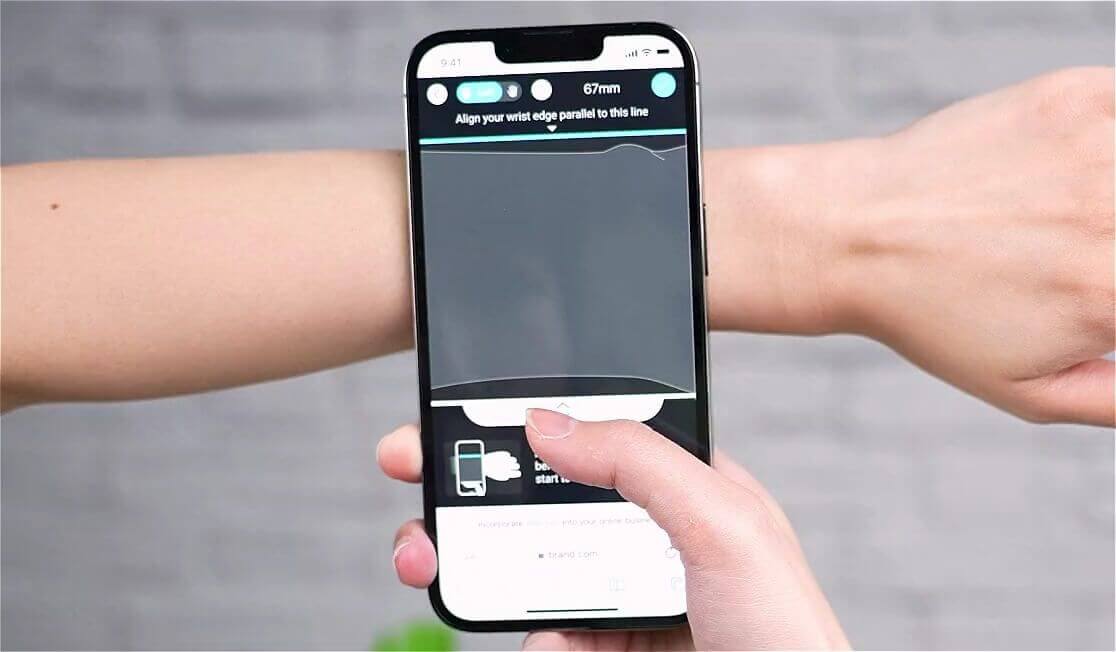
See AR Bracelet try-on with wrist sizing
A few tips for accurate results:
- Use good, even lighting and a plain background.
- Keep the hand flat and the camera parallel to it.
- Measure at the end of the day, when fingers are slightly larger.
- For wide bands (over 6 mm), consider going up a half size.
For high-value pieces like engagement rings, an AI recommendation paired with a free sizing kit or in store confirmation is the gold standard. Pun fully intended.
How Do Brands Turn One Product Photo Into a 3D Try-On?
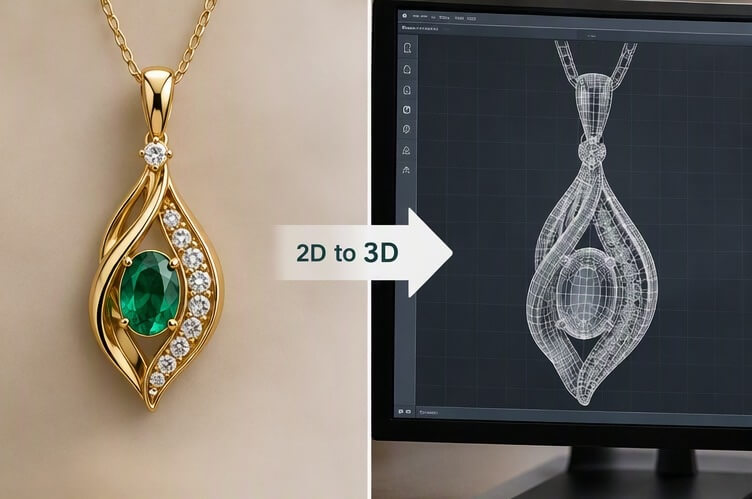
Here is the question every e-commerce manager asks: "Great, but do we need to 3D model 4,000 SKUs first?" Not anymore.
Traditional 3D modeling can take hours per piece and requires specialist artists. AI now closes that bottleneck in two ways:
- 2D to try-on. A single clean 2D product image can be converted into a try-on ready asset, which is ideal for large catalogs, earrings, and pendants.
- Faster 3D pipelines. For hero SKUs, Perfect Corp. supports the glTF 2.0 format, which packs wireframes, textures, texture maps, and lighting maps into one file. As Retail Dive reported, the switch streamlines and speeds up 3D SKU creation while improving how pieces look in AR.
Scale is real. In September 2026, Indian jewelry brand QWEEN launched PBR powered virtual try-on with Perfect Corp. across up to 2,300 SKUs. A smart split many brands use: full 3D for engagement rings and bestsellers, 2D conversion for the long tail.
Which Type of AI Jewelry Tool Do You Actually Need?
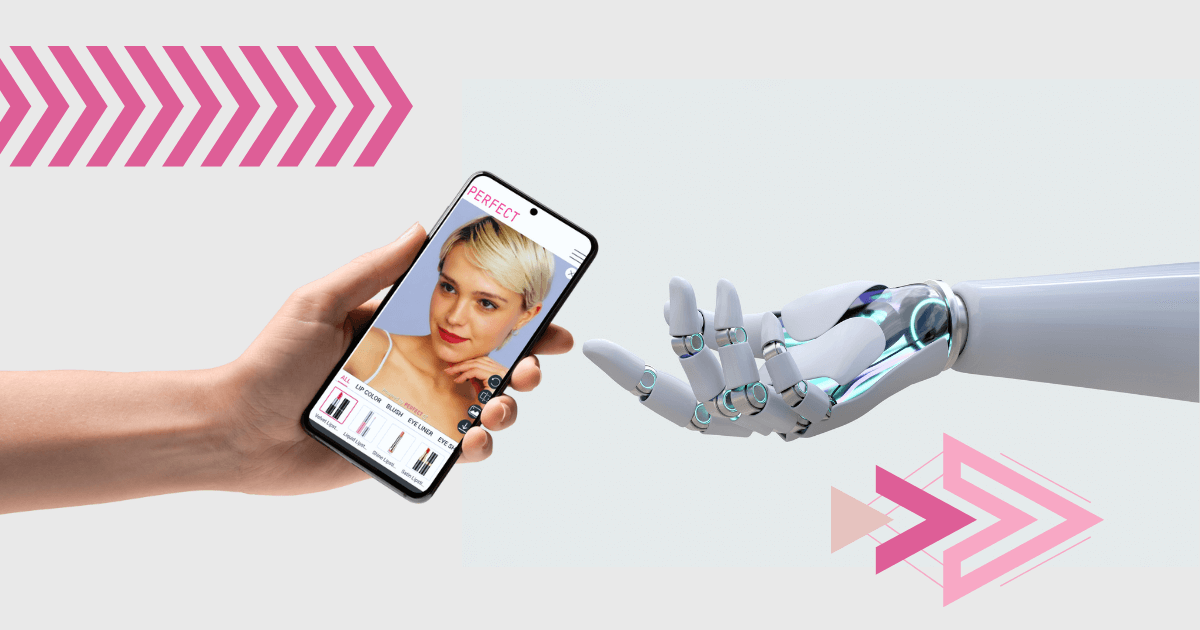
Try a full jewelry and watch set in the demo
There are dozens of "AI jewelry" tools out there, and plenty of listicles ranking them. The more useful question is which type of tool solves your bottleneck. Here is a quick comparison by approach.
| Tool type | Best for | Strength | Watch out for |
|---|---|---|---|
| General image generators | Mood boards and early ideas | Fast, cheap, endless variations | Inaccurate proportions, weird hands |
| Jewelry specific design AI | Designers and custom jewelers | Better metals, stones, and settings | Still needs CAD before production |
| AI product photography | Catalog and marketing images | Saves studio and model costs | Product accuracy must be checked |
| AR virtual try-on | E-commerce conversion and returns | Shopper sees the piece on themselves | Needs good 2D or 3D assets |
| Try-on and sizing APIs | Brands with their own site or app | Fully branded, scales to any catalog | Needs light developer work |
The verdict: if you design jewelry, start with a design generator and keep a CAD artist close. If you sell jewelry, static AI photos are nice, but virtual try-on and sizing are what move conversion and returns, because they answer the only question the shopper really has: "How will it look on me?"
What should you check before choosing an AI jewelry tool?
Before you sign anything, run through this quick checklist:
- Realism under real light. Test with your own hands, your own phone, and a normal room, not just the polished demo video.
- Catalog coverage. Does it handle every category you sell, including rings, earrings, necklaces, bracelets, and watches?
- Asset workflow. Can it start from 2D images, or does every SKU need a full 3D model?
- Sizing. Is ring or wrist sizing built in, or a separate vendor?
- Channels. Web, app, and in store mirrors from one integration saves a lot of rework.
- Analytics. You need try-on usage and conversion data to prove ROI.
- Privacy and security. Ask how camera images are processed and stored.
How Are Different Jewelry Businesses Using AI?
AI jewelry looks different depending on who is selling what. Here is how the main business types are putting it to work.
Bridal and engagement ring retailers
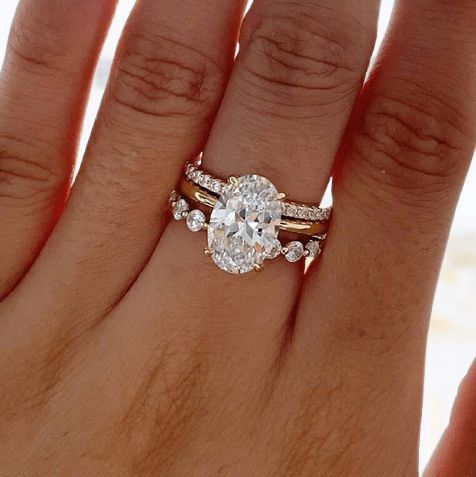
Engagement rings are high stakes, high price, and often bought as a surprise. That makes sizing and style confidence everything. Retailers let shoppers compare center stone shapes, try a band next to the ring, and get a size estimate before booking an appointment. The online visit becomes a warm lead instead of a bounce.
Direct to consumer fashion jewelry brands
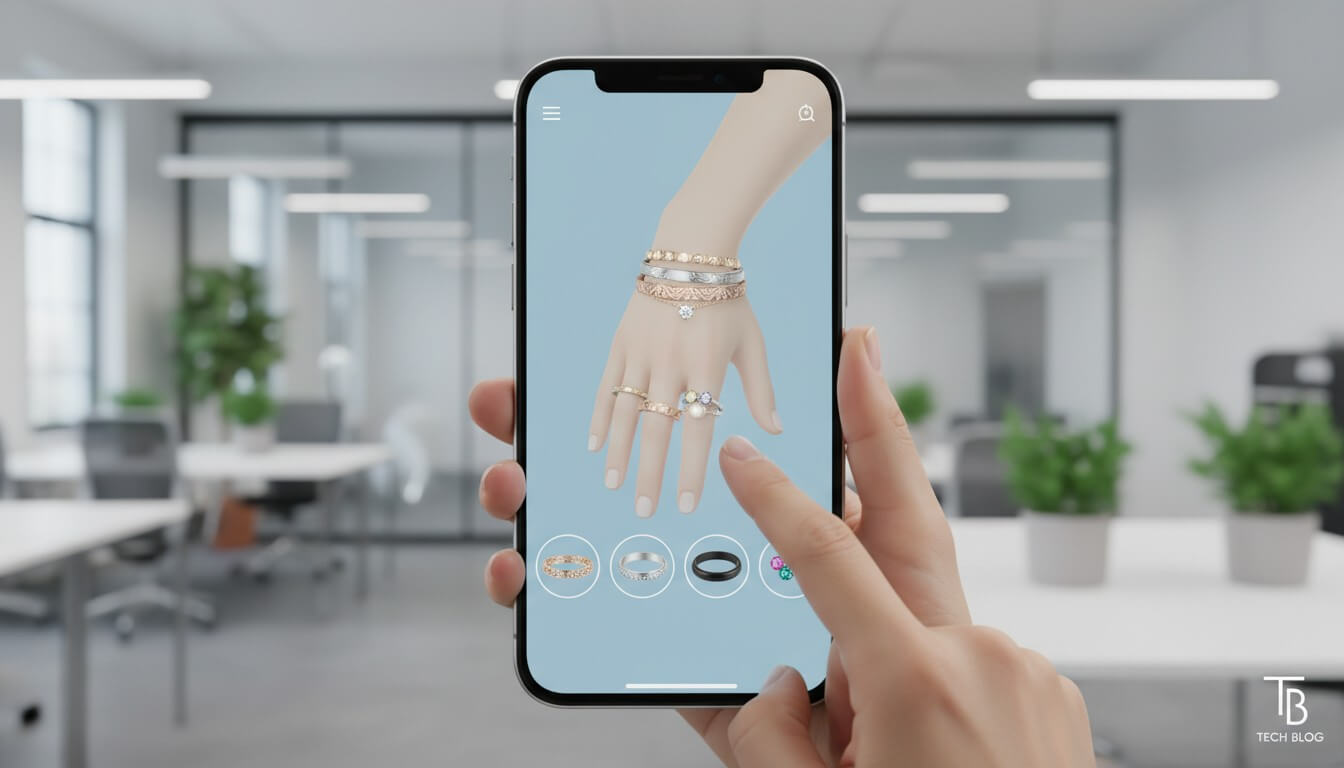
Contact us to launch try-on for your next drop
DTC brands live on social traffic and impulse buys. Try-on turns a scroll into play: shoppers stack rings, build ear stacks, and screenshot looks to share. Men's jewelry is a fast growing corner here, and our men's earring guide shows how try-on helps first time buyers pick a style. AI photography helps these brands launch drops weekly without a weekly photo shoot.
Custom and bespoke jewelers
For custom studios, AI design is the star. Generating a dozen concepts during a consultation keeps clients excited and shortens the back and forth. Once a design is approved, a try-on preview helps the client see scale before casting.
Department stores and omnichannel retailers
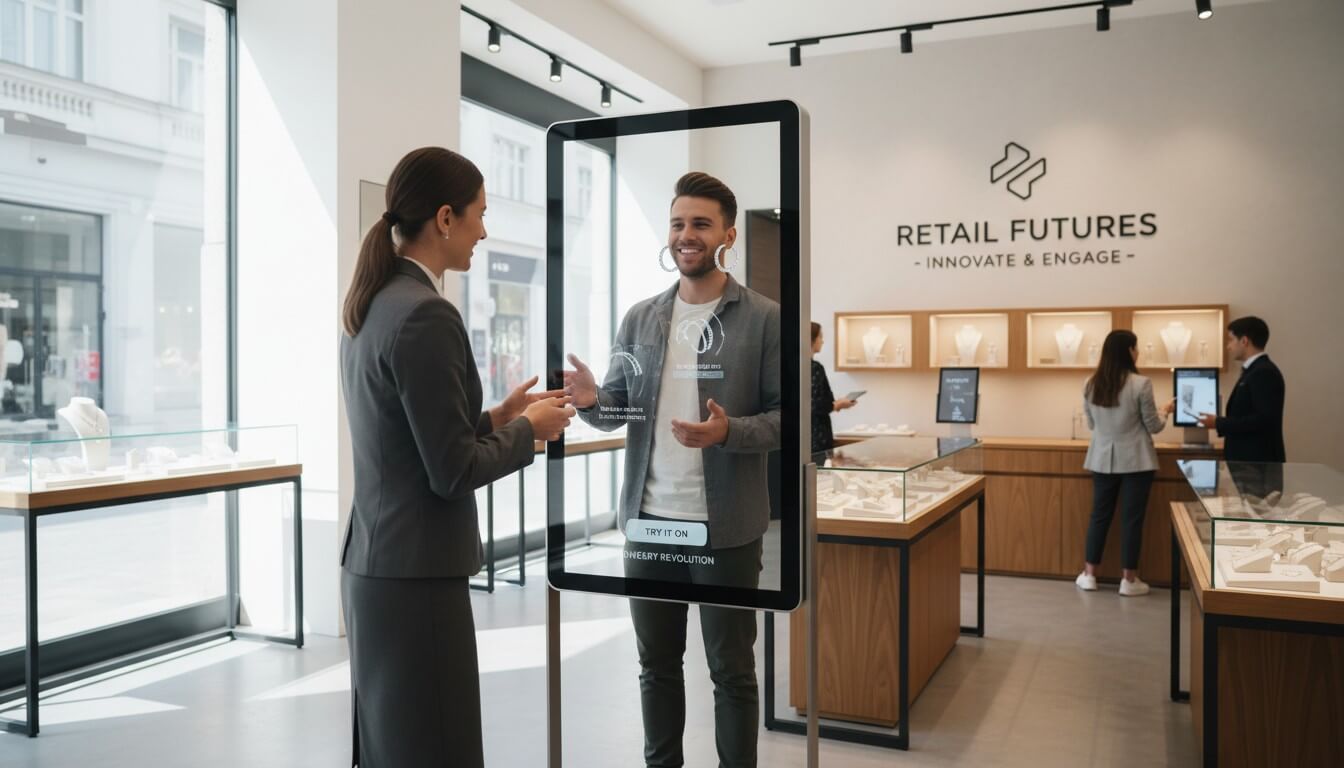
Big retailers care about consistency across channels. The same try-on experience on the website, in the app, and on an in store smart mirror means one asset library works everywhere, and store associates can use try-on to show pieces that are not in the display case.
Marketplace and small online sellers
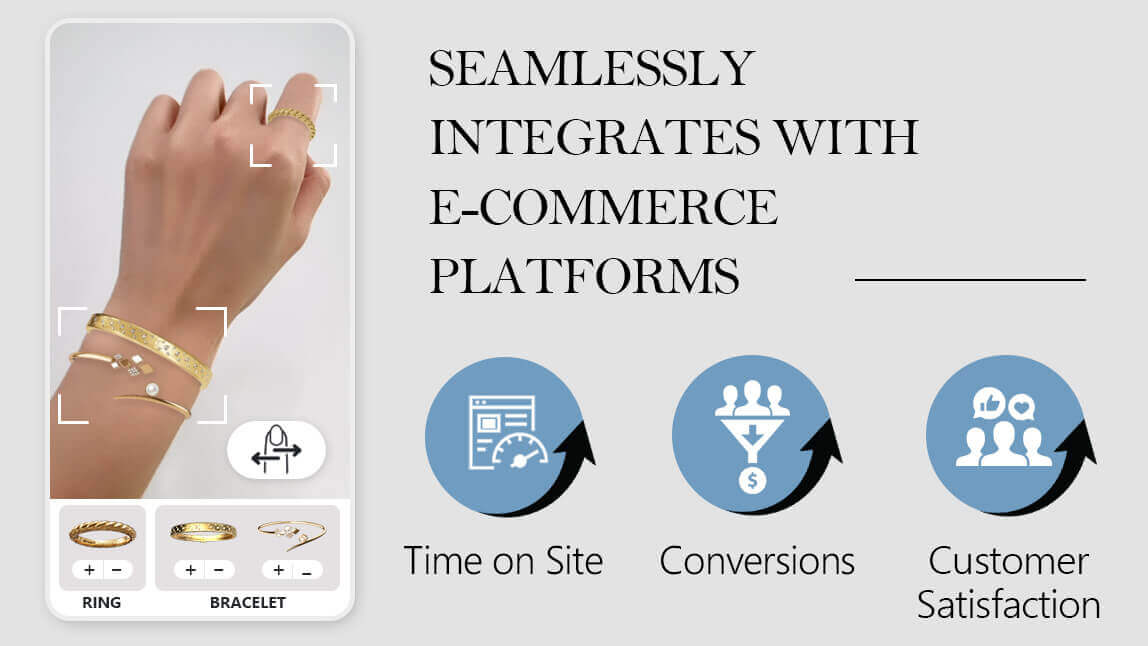
Smaller sellers often start with AI photography and lifestyle images to compete with bigger brands visually. As they grow, adding try-on through an API or plugin is the next step up.
What Does AI Jewelry Do for Sales and Returns?
Try the ring demo and see the sizer in action
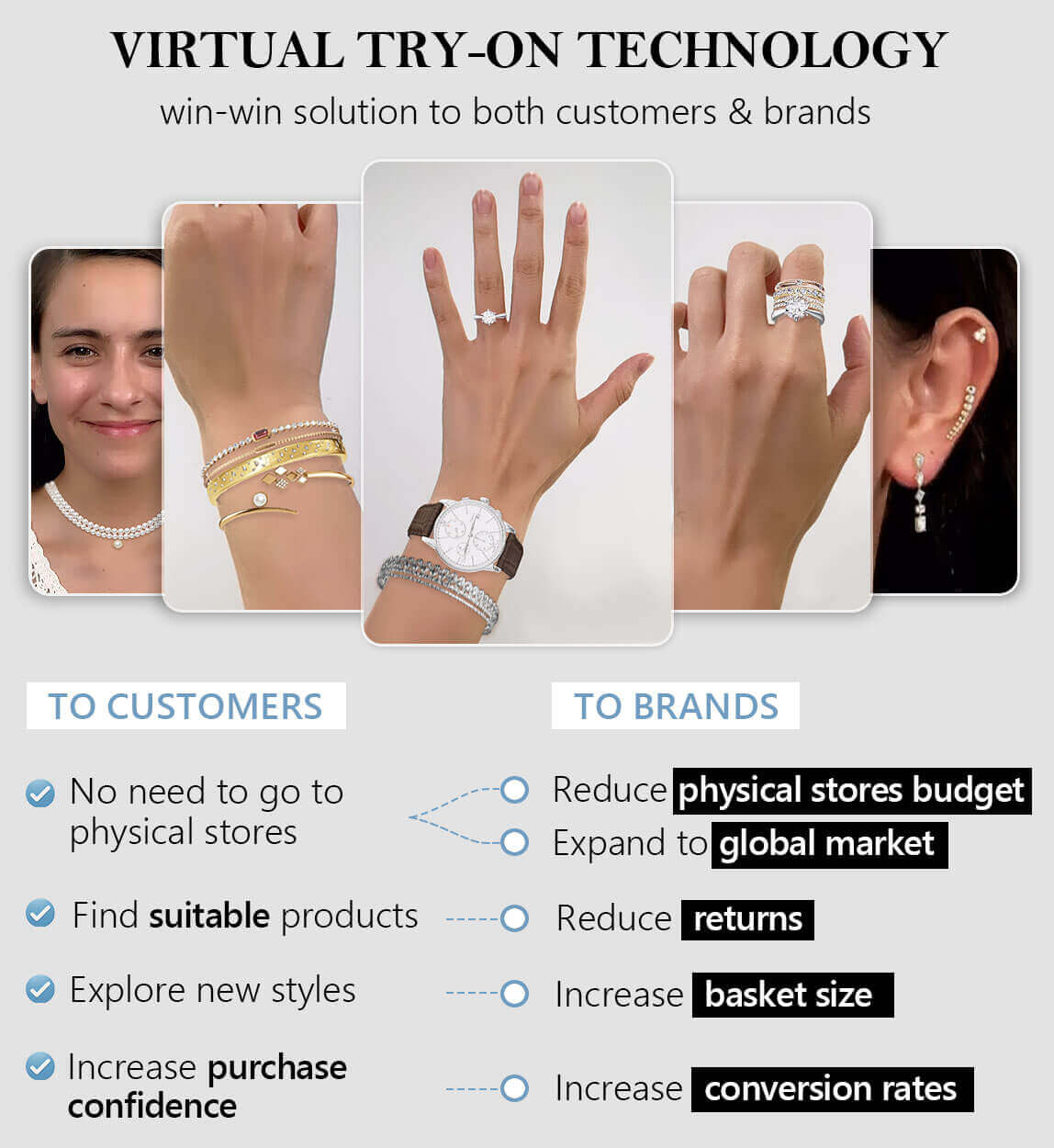
Jewelry has a conversion problem. Luxury and jewelry e-commerce typically converts at around 1.0% to 1.2%, below the roughly 1.4% average across e-commerce, according to Shopify benchmarks cited by commerce agency Nebulab. The same analysis points to Shopify data showing that interacting with a 3D model raises purchase likelihood by 27%, and that products with AR visualization see returns drop by roughly 5% to 10%.
Why does it work? Three reasons:
- Confidence. Seeing the piece on your own skin tone, hand, or neckline removes the biggest doubt.
- Engagement. Shoppers who try on tend to explore more styles, which lifts average order value through stacking and sets.
- Fit. Built in sizing cuts the "wrong size" returns that eat margins on rings and bracelets.
Results vary by brand, price point, and how well the experience is integrated, so measure your own baseline first, then A/B test try-on on your top product pages. Perfect Corp. powers AI and AR experiences for 800+ brand partners, and the pattern is consistent: the closer try-on sits to the Add to Cart button, the harder it works. If you want more ideas, our piece on virtual try-on for the jewelry stacking trend shows how stacking turns one sale into three.
How Do You Add AI Jewelry Try-On to Your Store With an API?
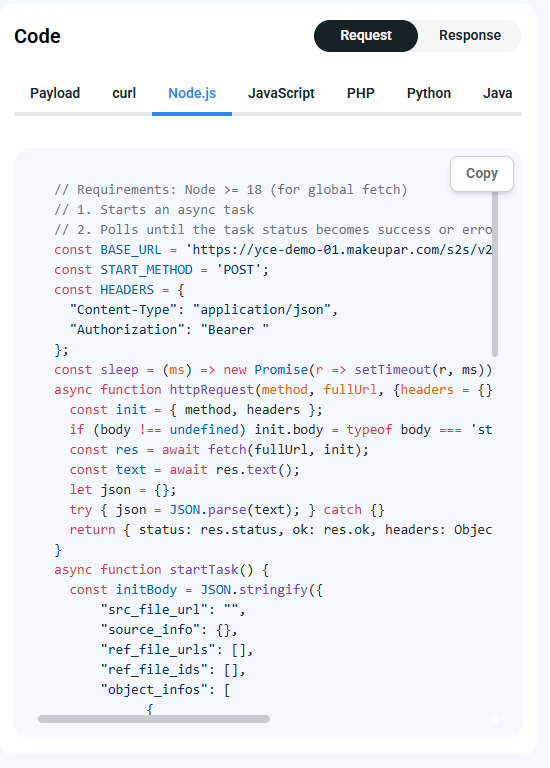
If you want try-on that looks and feels like your brand, an API is the way in. YouCam API offers dedicated endpoints for AI ring, earrings, necklace, bracelet, and watch virtual try-on, plus sizing, all designed to plug into an existing e-commerce site or app.
A typical rollout looks like this:
- Test it. Upload a few product images in the YouCam AI API Playground and see the results before writing a line of code.
- Prepare assets. Pick 2D images for the long tail and 3D models for hero SKUs.
- Integrate. Connect the API with Python, Node.js, or JavaScript and add a "Try it on" button to product pages.
- Launch and measure. Track try-on usage, add to cart rate, and returns in the analytics dashboard.
- Expand. Add sizing, stacking, and sets once the first category proves itself.
For a deeper walkthrough of features like lighting and shadow control, multi-jewelry stacking, and background removal, read our step by step guide on how to use an API for AI jewelry.
What Are the Limits and Risks of AI Jewelry?
AI jewelry is powerful, but it is not magic. Keep these in mind:
- Ownership. The U.S. Copyright Office's position is that copyright protects only material that is the product of human creativity. Purely AI generated designs may not be protectable, but substantial human modification can be. When in doubt, talk to an IP attorney.
- Accuracy. AI photos and renders must match the real product. Showing a stone bigger or brighter than it is will cost you trust and invite returns.
- Disclosure. If marketing images are AI generated, be transparent where regulations or platform rules require it.
- Privacy. Try-on uses camera images of hands, ears, and faces. Choose vendors with clear data handling and compliance practices.
- Craft. AI speeds up the boring parts. It does not replace the bench jeweler, the gemologist, or the designer with taste.
What Is Next for AI Jewelry?
Contact Perfect Corp. to plan your AI jewelry roadmap
Expect the relay race to become one continuous sprint. Design tools will export straight to 3D. That same 3D file will power try-on on the product page, in the app, and on the in store mirror. Sizing will run automatically in the background. And AI stylists will suggest the ring that matches the watch you already own.
Fashion is already moving this way. Perfect Corp. keeps expanding modular try-on APIs across watches, bags, clothes, and more, so jewelry can live inside a complete styling experience instead of a lonely product page. For shoppers, that means less guessing. For brands, it means every sparkle finally sells itself.
FAQ
What is AI jewelry?
AI jewelry refers to jewelry that is designed, visualized, sized, or sold with the help of artificial intelligence. That includes AI design generators, AI product photography, AR virtual try-on for rings, earrings, necklaces, bracelets, and watches, and AI powered ring and wrist sizing.
Can AI design jewelry?
Yes. AI can generate jewelry concepts from text prompts or sketches in minutes. Most designs still need a CAD designer to adjust proportions, stone settings, and wearability before they can be made.
What is the best free AI for jewelry design?
Several general image generators offer free tiers with monthly limits that work well for early ideas. For production ready results, jewelry specific tools and CAD software are worth the investment. Match the tool to the job: ideas, renders, photography, or try-on.
Can AI generated jewelry designs be manufactured?
Yes, once they are rebuilt as CAD files. A render is only an image, so a designer translates it into a 3D model with correct measurements, prototypes it in resin, then casts and finishes it like any other piece.
Will AI replace jewelry designers?
Unlikely. AI speeds up ideation and rendering, but taste, technical knowledge of metals and stones, and client relationships stay human. Designers who use AI simply get to the good ideas faster.
Who owns an AI generated jewelry design?
In the U.S., copyright protects only human authored work, so a design created purely by AI may not be protectable. Designs with meaningful human input or modification have a stronger claim. Consult an IP attorney for specific cases.
Can I try on jewelry virtually with AI?
Yes. AR virtual try-on uses your phone or computer camera to place rings, earrings, necklaces, bracelets, and watches on you in real time, with realistic lighting and reflections. You can test it in the necklace try-on demo.
How accurate is an AI ring sizer?
AI ring sizers give a reliable size recommendation when lighting is good and the hand is held flat to the camera. For high value purchases like engagement rings, pair the AI result with a sizing kit or an in store check.
Does virtual try-on reduce jewelry returns?
It can. Shopify data cited by industry analysts shows AR visualization can lower returns by roughly 5% to 10%, mainly by fixing style and size surprises. Results depend on your catalog and how well try-on is integrated.
How much does AI jewelry software cost?
Design generators range from free tiers to monthly subscriptions. Try-on and sizing for businesses is usually priced by usage, SKUs, or platform, so the easiest way to estimate is to test in an API playground and then request a quote.
Can I use AI jewelry images on Etsy or Shopify?
Generally yes, as long as images accurately represent the real product and follow each platform's rules on AI generated content. Misleading images can lead to disputes and returns, so always check them against the actual piece.
How do I add jewelry virtual try-on to my website?
The fastest route is an API or SDK. Test your product images in a playground, prepare 2D or 3D assets, integrate the try-on button on product pages, then measure conversion and returns. Perfect Corp. also supports web modules, mobile SDKs, and in store mirrors.
Ready to let shoppers see the sparkle on themselves? Start with a quick test in the AI API Playground, or book a demo to see how AI jewelry try-on fits your catalog.